
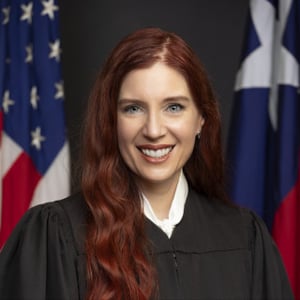
Justice, Texas First Court of Appeals
Susanna Dokupil was elected to the First Court of Appeals in November 2024. With over two decades of experience, Susanna’s career has spanned all three branches of government as well as private practice. She has been a Special Counsel and Assistant Solicitor General in the Office of the Attorney General of Texas as well as a Special Counsel to the United States Senate Judiciary Committee and a law clerk to the Hon. Jerry Smith on the U.S. Court of Appeals for the Fifth Circuit.
In her role as Special Counsel at the Texas Attorney General’s office, Susanna led teams of litigators focused on protecting Texas’s interests against agency regulations that exceeded the agency’s statutory and constitutional power. As an Assistant Solicitor General, she drafted briefs before the Fifth Circuit and United States Supreme Court, primarily focused on First Amendment issues. Susanna’s experience in private practice has combined traditional commercial litigation with advising technology companies and founders on strategic communications.
Susanna has been a prolific speaker and writer on law and public policy topics, including articles in The Harvard Journal of Law & Public Policy, The Texas Review of Law & Politics, American Enterprise, the Washington Times, and the Houston Chronicle, among others.
Susanna is a graduate of Harvard Law School and also holds degrees from The George Washington University and Baylor University. She lives in Houston and has four children.

Partner, Schaerr | Jaffe LLP
Erik Jaffe has been involved in appeals on a broad range of legal issues, including First Amendment challenges to campaign finance reform, Commerce Clause challenges to Health Care Reform and other federal legislation, Equal Protection Clause challenges to affirmative action in education, First Amendment challenges to school vouchers, Fifth Amendment challenges to takings of property, Second Amendment challenges to restrictions on gun ownership, and a wide variety of cases involving patents, copyrights, ERISA, securities fraud, federal preemption, environmental regulation, and other state and federal constitutional and statutory matters. He has represented businesses and non-profit groups, Judges, Senators, former government officials, Nobel Prize winners, and a broad cross-section of private individuals. Mr. Jaffe has been involved in over 120 Supreme Court matters, including filing over 30 cert. petitions, representing half-a-dozen parties on the merits, and filing over 70 amicus briefs at both the cert. and merits stages.
A 1990 graduate of the Columbia University School of Law, Mr. Jaffe was a law clerk to Judge Douglas H. Ginsburg of the United States Court of Appeals for the District of Columbia Circuit from 1990 to 1991. Following that clerkship he spent five years in litigation practice with the Washington, D.C. law firm of Williams & Connolly. In the summer of 1996 he left Williams & Connolly to clerk for Supreme Court Justice Clarence Thomas. At the end of that clerkship he started his own practice, and he was a sole practitioner from 1997 to 2018. He joined the firm of Schaerr | Jaffe LLP in 2018.

Thomas M. Siebel Senior Fellow, The Hoover Institution, Stanford University; Gary T. Schwartz Distinguished Professor of Law Emeritus, UCLA School of Law
Eugene Volokh is the Thomas M. Siebel Senior Fellow at the Hoover Institution (Stanford), as well as the Gary T. Schwartz Distinguished Professor of Law Emeritus and Distinguished Research Professor at UCLA School of Law. He recently retired from teaching at UCLA, after 30 years there, and is now focusing on research.
Volokh is the author of the textbooks The First Amendment and Related Statutes (8th ed. 2023), and Academic Legal Writing (5th ed. 2016), as well as over 100 academic law journal articles, mostly on First Amendment law. He is a member of The American Law Institute; the editor-in-chief of the Journal of Free Speech Law; and the creator and coauthor of The Volokh Conspiracy, a leading legal blog founded in 2002 (hosted at the Washington Post from 2014 to 2017 and now at Reason Magazine).
Milton R. Underwood Professor of Law Emeritus and Professor of History Emeritus, Vanderbilt University
James Ely is a renowned legal historian and property rights expert whose career accomplishments were recognized with both the Brigham-Kanner Property Rights Prize and the Owner's Counsel of American Crystal Eagle Award in 2006. He is the author of several books that have received widespread critical acclaim from legal scholars and historians, including The Guardian of Every Other Right: A Constitutional History of Property Rights, The Fuller Court: Justices, Rulings and Legacy in which he examines the work of the Supreme Court between 1888 and 1910, Railroads and American Law in which he systematically explores the way that the rise of the railroad shaped American legal culture, and The Contract Clause: A Constitutional History. He also is the author of numerous articles dealing with the rights of property owners. He served as an editor of both the Oxford Companion to the Supreme Court, and the second edition of the Oxford Guide to Supreme Court Decisions. Professor Ely received the Tennessee History Book Award in 2002 for A History of the Tennessee Supreme Court. Between 1987 and 1999, he served as an associate editor of the American Journal of Legal History. Since Professor Ely joined Vanderbilt faculty in 1972, he has been frequently recognized by students as one of the law school's outstanding teachers.
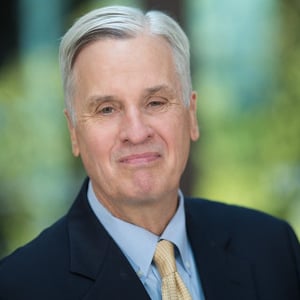
John T. Kipp Chair Emeritus in Corporate and Business Law, The University of Texas at Austin School of Law
Calvin H. Johnson is an American tax lawyer, author, and academic. He holds the John T. Kipp Chair Emeritus at the University of Texas School of Law.
Johnson's scholarship is in the fields of tax law and Constitutional history. His academic tax work has focused on defending the fairness, and efficiency of the tax base. In constitutional history, he relies on the original sources, usually to defend the plenary reach of the Federal government. He is the author of Righteous Anger at the Wicked States: The Meaning of the Founders' Constitution.
Johnson earned a B.A. in Philosophy from Columbia College in 1966, and received a Purple Heart for combat in an infantry reconnaissance unit in Vietnam in 1968. He earned a Juris Doctor from Stanford Law School in 1971 and practiced with Paul, Weiss, Goldberg, Rifkind, and Garrison in the tax department in New York City from 1971 to 1973. Following this he served in the U.S. Treasury, Office of Tax Legislative Council, from 1973 to 1975.
Johnson began his academic career in 1975 as an assistant professor, then associate professor at Rutgers Law School, Newark. He joined the University of Texas School of Law in 1981 as a professor. He now serves as a John T. Kipp Chair in Business and Corporate Law Emeritus at the University of Texas.
Johnson was a Fellow of the Tax Policy Center (joint program of Urban Institute and Brookings Institution) in 2011, a visiting professor at the Office of Chief Counsel, IRS, in 2007, a Member of the Academic Advisers on the Overall Health of the Tax System for the Joint Committee on Taxation in 2001, a Dean's Distinguished Visitor at Vanderbilt Law School in 2000, a Member of the IRS Commissioner's Advisory Group in 1989 and a Guest Scholar at The Brookings Institution in 1980.
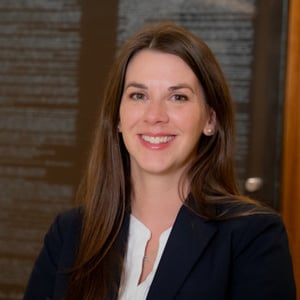
Vice President, Practice Groups, The Federalist Society
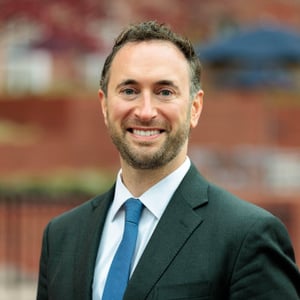
Associate Dean for Academic Affairs, The George Washington University Law School
Aram A. Gavoor is the Associate Dean for Academic Affairs and an internationally recognized scholar in American administrative law, national security, and federal courts. His co-authored work was cited by the U.S. Supreme Court in Department of Commerce v. New York (2019). His scholarship has earned placement in the Florida Law Review, Indiana Law Journal, Ohio State Law Journal, and other law journals. He has briefed and argued over a dozen high-profile public law cases before a majority of the U.S. Courts of Appeals and numerous cases before almost a third of the 94 U.S. District Courts. Associate Dean Gavoor frequently shares his national security, artificial intelligence policy, and federal courts expertise with international news media, including CNN, BBC World News, Wall Street Journal, NBC News, and ABC (Australia) World News. In 2021, the National Law Journal named Associate Dean Gavoor a Rising Star (top 40 under 40) honoree.
Earlier in his career, Associate Dean Gavoor served as Senior Counsel for National Security in the Civil Division of the U.S. Department of Justice, as third-in-rank Counselor to the Administrator of the Office of Information and Regulatory Affairs in the White House Office of Management and Budget, and in private practice. He received the Attorney General's Award for Distinguished Service in 2019, the Civil Division Special Commendation Award in 2020, 2019, and 2018, and a Commendation from the Human Rights and Special Prosecutions Section of the Criminal Division in 2018.
Associate Dean Gavoor previously served on the law school’s part-time faculty from 2008-2017 before accepting a term-limited position as Visiting Associate Professor from 2017-2019. He received GW Law’s Distinguished Adjunct Faculty Teaching Award from the 2020 and 2017 graduating classes. He currently teaches Constitutional Law II, Administrative Law, National Security Law, and Federal Courts.
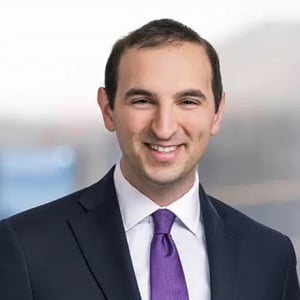
Associate, Covington & Burling LLP
Eli Nachmany is an associate at Covington & Burling LLP in the Washington, DC, office. He clerked for Judge Steven J. Menashi of the U.S. Court of Appeals for the Second Circuit. Eli graduated magna cum laude from Harvard Law School, where he was Editor-in-Chief of the Harvard Journal of Law & Public Policy. Prior to law school, Eli served as the speechwriter to the U.S. Secretary of the Interior and as a domestic policy aide in the White House Office of American Innovation. He graduated summa cum laude from New York University with a B.S. in Sports Management. Eli’s scholarship on administrative law and executive power has appeared in the BYU Law Review, George Mason Law Review, Wake Forest Law Review, and Yale Law Journal Forum.

Associate Attorney, Gibson, Dunn & Crutcher LLP
Laura Stanley is an associate in the Washington, D.C. office of Gibson, Dunn & Crutcher. She practices in the firm’s Litigation Department and is a member of the Environmental Litigation and Mass Tort Practice Group. Laura previously served as an economist at the U.S. Environmental Protection Agency where she developed regulations under the Resource Conservation and Recovery Act and the Comprehensive Environmental Response, Compensation, and Liability Act.
Laura graduated with high honors from The George Washington University Law School and was awarded Order of the Coif. Laura served as an Articles Editor of the George Washington Law Review, and she was awarded the ABA Gellhorn-Sargentich Award for the best student essay in administrative law. Laura received a Master of Arts degree in Economics from George Mason University and a Bachelor of Arts degree in Economics from James Madison University.
She previously served as a law clerk to the Honorable Ryan D. Nelson of the United States Court of Appeals for the Ninth Circuit and the Honorable Stephen S. Schwartz of the United States Court of Federal Claims.
She is admitted to practice law in the District of Columbia and before the United States Court of Appeals for the Ninth Circuit.
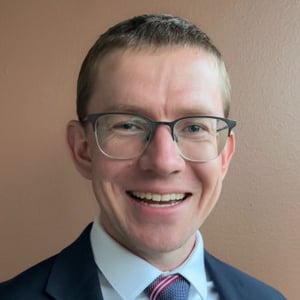
Law Clerk to Hon. Gregory Katsas, U.S. D.C. Circuit Court of Appeals
After growing up in Bozeman, Montana, Seanhenry attended Oklahoma Christian University and graduated with a B.S. in Computer Engineering in 2018. He earned a J.D. from Harvard Law School in 2021. During law school, he served as supervising editor for the Harvard Law Review and senior articles editor for the Harvard Journal of Law & Public Policy. He also served on the board of the Harvard Federalist Society and worked as a summer associate for Cooper & Kirk and Latham & Watkins.
Seanhenry clerked for Judge Andy Oldham of the U.S. Fifth Circuit Court of Appeals in the 2021 – 2022 Term. He is currently clerking for Judge Greg Katsas of the D.C. Circuit Court of Appeals.
Thomas M. Siebel Senior Fellow, The Hoover Institution, Stanford University; Gary T. Schwartz Distinguished Professor of Law Emeritus, UCLA School of Law
Eugene Volokh is the Thomas M. Siebel Senior Fellow at the Hoover Institution (Stanford), as well as the Gary T. Schwartz Distinguished Professor of Law Emeritus and Distinguished Research Professor at UCLA School of Law. He recently retired from teaching at UCLA, after 30 years there, and is now focusing on research.
Volokh is the author of the textbooks The First Amendment and Related Statutes (8th ed. 2023), and Academic Legal Writing (5th ed. 2016), as well as over 100 academic law journal articles, mostly on First Amendment law. He is a member of The American Law Institute; the editor-in-chief of the Journal of Free Speech Law; and the creator and coauthor of The Volokh Conspiracy, a leading legal blog founded in 2002 (hosted at the Washington Post from 2014 to 2017 and now at Reason Magazine).

Professor of Law, Northwestern University Pritzker School of Law
Joshua Kleinfeld teaches and writes about political, legal, and moral philosophy, criminal law, and criminal procedure. He also practices law in Northwestern's Juvenile Criminal Defense Clinic. He is a full professor with tenure at the Northwestern Pritzker School of the Law and (by courtesy) in Northwestern’s philosophy department. In 2017-18, he was a visiting professor at Harvard and Stanford Law Schools. He is the recipient of the Bator Award, given annually to one American law professor under the age of 40 who has demonstrated "excellence in legal scholarship, a commitment to teaching, a concern for students, and who has made a significant public impact."
In philosophy, Kleinfeld's research focuses on the idea of "embodied ethical life," as developed in the socio-theoretic tradition of Hegel, Weber, and Durkheim. This tradition aims to understand and critique social life by bringing to light the normative ideas implicit in social practices and institutions. In law, this means that the most interesting philosophical concepts are often those reflected or actualized in legal practice – in the law as judges and lawyers think of it and wield it.
In criminal law and procedure, Kleinfeld has developed a theory known as "reconstructivism," which holds that the chief office of criminal law is not to dole out retributive justice, nor to optimize crime and cost control, but to reconstruct a violated normative order in the wake of a crime. This work, which draws on the thought of Hegel, Durkheim, Jean Hampton, and Antony Duff, develops an alternative to retributive and utilitarian theories of criminal law by focusing on the distinctive social function and sense of justice at work in the criminal system.
Kleinfeld is also involved in practical criminal justice reform. In this vein, he defends children accused of homicide in the Northwestern Juvenile Criminal Defense clinic and assists in litigation efforts meant to reform American criminal law through the courts. He has also developed a view of criminal justice reform known as "democratization," which holds that the root of the American criminal justice crisis is a set of bureaucratic attitudes, structures, and incentives divorced from the American public’s concerns and sense of justice, and that the primary solution is to make criminal justice more community-focused and responsive to lay influences. Working with others, he has developed a number of policy proposals meant to reform American criminal justice in a democratic direction.
Kleinfeld holds a JD from Yale Law School, a PhD in philosophy from the Goethe University of Frankfurt (supervised by Axel Honneth, Klaus Günther, and Rainer Forst), and a BA in philosophy from Yale College. He clerked for Judge J. Harvie Wilkinson on the United States Court of Appeals for the Fourth Circuit; Judge Janice Rogers Brown on the United States Court of Appeals for the D.C. Circuit; and President (chief justice) Aharon Barak of the Supreme Court of Israel. He worked as an Associate at Debevoise & Plimpton LLP in Frankfurt, Germany, in the area of corporate criminal law. Before law school, he worked as a Senior Research Analyst at the White House’s Council on Bioethics.
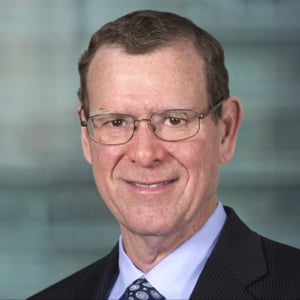
Executive in Residence, Wake Forest University School of Business
John Allison is an Executive in Residence at the Wake Forest School of Business. He is a member of the Cato Institute’s Board of Directors and Chairman of the Executive Advisory Council of the Cato Institute’s Center for Monetary and Financial Alternatives. Allison was president and CEO of the Cato Institute from October 2012 to April 2015. Prior to joining Cato, Allison was chairman and CEO of BB&T Corporation, the 10th-largest financial services holding company headquartered in the United States. During his tenure as CEO from 1989 to 2008, BB&T grew from $4.5 billion to $152 billion in assets. He was recognized by theHarvard Business Reviewas one of the top 100 most successful CEOs in the world over the last decade.
Allison has received the Corning Award for Distinguished Leadership, been inducted into the North Carolina Business Hall of Fame, and received the Lifetime Achievement Award from theAmerican Banker. He is the author of The Financial Crisis and the Free Market Cure: Why Pure Capitalism Is the World Economy’s Only Hope and The Leadership Crisis and the Free Market Cure: Why the Future of Business Depends on the Return to Life, Liberty, and the Pursuit of Happiness. In addition, he is a former Distinguished Professor of Practice at Wake Forest University School of Business, and serves on the Board of Visitors at the business schools at Wake Forest, Duke, and the University of North Carolina–Chapel Hill.
Allison is a Phi Beta Kappa graduate of the University of North Carolina–Chapel Hill. He received his master’s degree in management from Duke University and is also a graduate of the Stonier Graduate School of Banking. Allison is the recipient of six honorary doctorate degrees.

Senior Judge, United States Court of Appeals, District of Columbia Circuit
Circuit Judge Douglas H. Ginsburg was appointed to the United States Court of Appeals for the District of Columbia in 1986. After receiving his B.S. from Cornell University in 1970, and his J.D. from the University of Chicago Law School in 1973, he clerked on the D.C. Circuit and for Justice Thurgood Marshall on the United States Supreme Court. Thereafter, Judge Ginsburg was a professor at the Harvard Law School, the Deputy Assistant and then Assistant Attorney General for the Antitrust Division of the Department of Justice, as well as the Administrator of the Office of Information and Regulatory Affairs in the Office of Management and Budget. Concurrent with his service as a federal judge, Judge Ginsburg has taught at the University of Chicago Law School and the New York University School of Law. Judge Ginsburg is currently a Professor of Law at the George Mason University and a visiting professor at University College London, Faculty of Laws.
Judge Ginsburg is the Chairman of the International Advisory Board of the Global Antitrust Institute at the Law and Economics Center of the George Mason University School of Law. He also serves on the Advisory Boards of: Competition Policy International; the Harvard Journal of Law and Public Policy; the Journal of Competition Law and Economics; the Journal of Law, Economics & Policy; the Supreme Court Economic Review; the University of Chicago Law Review; the New York University Journal of Law and Liberty; and, at University College London, both the Centre for Law, Economics and Society and the Jevons Institute for Competition Law and Economics.
In 2020, Judge Ginsburg was the 11th recipient of the John Sherman Award, presented by the Antitrust Division of the Department of Justice in recognition of the awardee’s Lifetime Contributions to Antitrust Law and Policy.
In 2014, Judge Ginsburg received the Lifetime Achievement Award given annually by the Global Competition Review.
He is the author or co-author of several books and more than 100 articles on competition and regulation, including, most recently, Growing Convergence: The Limited Role of Antitrust in Standard Essential Patent Disputes, in CPI Antitrust Chronicle, Summer 2021, Vol. 1, No. 2.
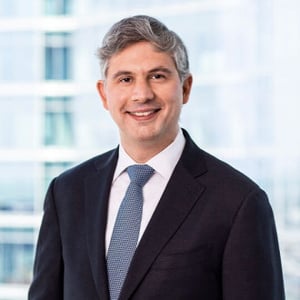
Partner, Keller Postman
Ashley Keller is one of the founding Partners of Keller Postman LLC. An experienced trial and appellate lawyer, Ashley helps set strategic direction across virtually all of the firm’s cases. He represents clients in a wide variety of practice areas and types of claims, including product-liability, antitrust, class action, and arbitration matters.
Ashley is one of the leaders of Keller Postman’s national product-liability practice. He leverages his ability to detangle complex concepts and develop novel legal theories to support individual client matters and as counsel on numerous product-liability multidistrict litigation matters. He chairs the plaintiffs’ Law & Briefing Committee in the Zantac (Ranitidine) Product Liability MDL in the U.S. District Court for the Southern District of Florida.
Ashley also litigates complex antitrust and class action matters. Among his notable cases, Ashley represents numerous States in antitrust litigation against Google for monopolizing products and services used by advertisers and publishers in online-display advertising.
Ashley also has played a central role in developing the firm’s pioneering arbitration practice, which includes pursuing individual arbitrations for clients whose claims are subject to arbitration clauses with class-action waivers. In part through managing the complexity of pursuing these individual claims simultaneously, the firm has secured millions in settlements for more than 500,000 employees and consumers.
Before launching Keller Postman, Ashley co-founded the litigation finance firm Gerchen Keller Capital, which grew to more than $1.3 billion in assets under management and was the world’s largest private investment manager focused on legal and regulatory risk prior to being acquired by Burford Capital in 2016.
Previously, Ashley was a partner at Bartlit Beck Herman Palenchar & Scott LLP, The American Lawyer’s litigation boutique of the year. While there, he handled various trial and appellate matters involving multi-billion-dollar securities and patent cases, contract disputes, mass torts, and class actions.
Ashley also worked as an analyst at Alyeska Investment Group, a Chicago-based market-neutral hedge fund, where he focused on investments in companies facing litigation and other complicated regulatory matters.
Ashley was named a 2021 Plaintiffs’ Lawyers Trailblazer by the National Law Journal. He is also listed on Lawdragon’s 500 Leading Lawyers in America, Lawdragon’s 500 Leading Plaintiff Consumer Lawyers, Lawdragon’s Leading Plaintiff Financial Lawyers, National Trial Lawyers’ Top 100, and Illinois Super Lawyers.
Ashley was a law clerk for Justice Anthony M. Kennedy at the Supreme Court of the United States and Judge Richard Posner at the U.S. Court of Appeals for the Seventh Circuit. He graduated magna cum laude from Harvard College, received his M.B.A. from the University of Chicago Booth School of Business and received his J.D. from the University of Chicago Law School, where he graduated first in his class.
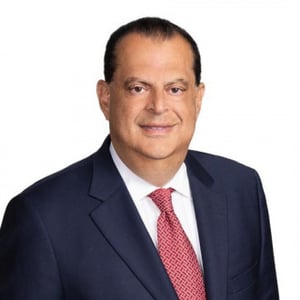
Chairman & CEO, The Abraham Group
Secretary Spencer Abraham is Chairman & CEO of The Abraham Group.
He served as the tenth Secretary of Energy of United States from 2001-2005. He helped President George W. Bush devise America’s first national energy plan in over a decade and oversaw its implementation. As part of this plan, he led efforts to broaden America’s international energy partnerships as well as forge closer ties to key oil producing nations.
Secretary Abraham has been a close observer of world energy markets, and under his leadership the Department of Energy conducted a number of important short and long-term studies of world oil, gas, electricity and other markets.
According to the Presidential Management Agenda scorecard, the Department of Energy went from “worst to first” of well-run agencies under Secretary Abraham’s leadership.
Prior to being a Cabinet Member, Secretary Abraham served as an effective and highly productive U.S. Senator from Michigan for six years. In the Senate, he was a member of the Senate Commerce, Judiciary and Budget Committees and served as chairman of the Senate Immigration Subcommittee and the Senate Commerce Subcommittee on Manufacturing and Competitiveness. He was also a senior official in the Administration of former President George H.W. Bush as Deputy Chief of Staff to the Vice President.
Secretary Abraham is a member of the Board of Directors of Occidental Petroleum, NRG Energy, PBF Energy, Uranium Energy Corp and Two Harbors Investment Corporation.
In addition, he is a frequent commentator on FOX News, CNN and Bloomberg TV as well as a periodic contributor of op-ed articles to the Financial Times, The Wall Street Journal, The Washington Post, The Weekly Standard and other publications.
Spencer Abraham and his wife, Jane, are the parents of adult children. He holds a law degree from Harvard University, where he co-founded the Federalist Society, and is a native of East Lansing, Michigan.

David McIntosh is a leader for the principles of limited constitutional government and individual freedom. He is president of the Club for Growth, the leading advocate for economic liberty.
Former Congressman David McIntosh represented Indiana's 2nd Congressional District in the United States Congress from 1995-2001. As a Freshman, David chaired the Subcommittee on Regulatory Relief. He passed the Congressional Review Act and held extensive oversight and field hearings to build a record of public support for regulatory relief initiatives in energy, biotechnology, pharmaceutical, healthcare, transportation and technology sectors. Another issue that he championed was the elimination of the marriage penalty in the Federal Tax Code.
David served during the Reagan administration as special assistant to Attorney General Edwin Meese III, and as special assistant to President Reagan for Domestic Affairs. During the first Bush administration, he served as executive director of the President's Council on Competitiveness and assistant to the Vice President. The Competitiveness Council coordinated the cost/benefit review of major regulations and promoted legal reform measures.
David is a co-founder of the Federalist Society for Law and Public Policy and serves on the Board of Directors. He remains active with several free market and conservative think tanks and grassroots organizations. David has also had stints at the Hudson Institute and as a Professor of Economics at Ball State School of Business.
Prior to the Club for Growth, David was a partner at Mayer Brown, LLP in Washington, DC.
David graduated from the University of Chicago Law School in 1983, and Yale University, BA, cum laude, in 1980. He and his wife, Ruthie, are the proud parents of Ellie age 17 and Davey age 13.
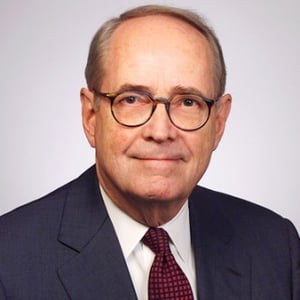
Former United States Attorney General
Richard Lewis Thornburgh was born on July 16, 1932 in Pittsburgh, Pennsylvania. He graduated with a bachelor’s degree in engineering from Yale University in 1954 and earned his LL.B degree from the University of Pittsburgh in 1957. Mr. Thornburgh also holds honorary degrees from 31 colleges and universities.
Following law school, Mr. Thornburgh worked in private industry until 1959 when he joined the Pittsburgh law firm then known as Kirkpatrick & Lockhart. In 1967, he was elected as a delegate to the Pennsylvania Constitutional Convention. From 1969 to 1975, Mr. Thornburgh was the U.S. Attorney for the Western District of Pennsylvania and was appointed Assistant Attorney General for the Criminal Division in 1975, serving two years in Washington, D.C. in that role before returning to private practice as a partner at Kirkpatrick & Lockhart. Pennsylvania elected Mr. Thornburgh governor in 1979 and he served two terms. Mr. Thornburgh also taught courses at the Harvard University Kennedy School of Government and directed that school’s Institute of Politics from 1987 to 1988.
Appointed by President Reagan, Richard Thornburgh was sworn in as Attorney General on August 12, 1988. President George H.W. Bush reinstated him as Attorney General in 1989 and he served until 1991. In 1992, the American Legion honored Mr. Thornburgh with its highest award, the “Distinguished Services Medal.” He published his autobiography in 2003 entitled, Where the Evidence Leads: The Autobiography of Dick Thornburgh.
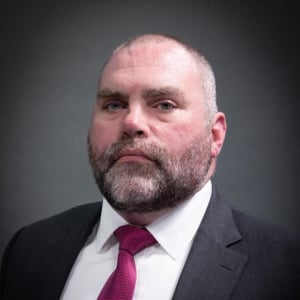
Senior Counsel, Corporate Engagement Team, Alliance Defending Freedom
Brian Knight serves as senior counsel on the Corporate Engagement Team. His work focuses on issues of financial access, debanking, and preventing the power of the private sector from being weaponized against people of faith by both public and private actors.
Prior to joining ADF, Knight spent almost nine years at the Mercatus Center at George Mason University, as both a senior research fellow and as a program director. In addition to managing a team of scholars, Knight’s research focused on financial regulation and the politicization of financial services. His research helped inform legislation and regulation at the federal and state level. He was also the lead author for two amicus briefs submitted to the U.S. Supreme Court in the case of National Rifle Association v. Vullo.
Before joining Mercatus, Knight worked at the Milken Institute, where he focused on financial technology. He was also an entrepreneur, co-founding a firm focused on compliance for crowdfunding.
Knight earned a Juris Doctor from the University of Virginia School of Law and a Bachelor of Arts from the College of William and Mary.
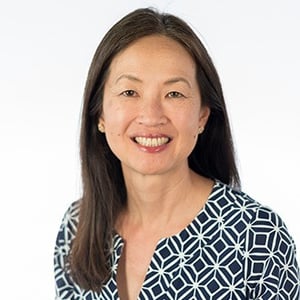
Senior Vice President and Deputy General Counsel, Conference of State Bank Supervisors
Margaret Liu is Senior Vice President and Deputy General Counsel at the Conference of State Bank Supervisors (CSBS). Margaret serves as a part of the CSBS legal and policy team, providing legal support for CSBS and its affiliated organizations as well as overseeing CSBS efforts representing the policy perspectives of state banking commissioners before Congress. She also serves as the lead CSBS staff member on fintech issues.
Margaret has worked as a consultant on financial services policy issues and in a variety of roles at Fannie Mae, including Vice President of Single Family Mortgage Business, Vice President for Industry Relations, and Vice President for Policy Communications at Fannie Mae.
Margaret is a graduate of Harvard College and the University of Chicago Law School.

Judge, United States Court of Appeals, Ninth Circuit
Judge Carlos Bea serves as a judge on the United States Court of Appeals for the Ninth Circuit. He received his Bachelor's Degree from Stanford University in 1956 and his J.D. from Stanford Law School in 1958. Judge Bea was born in San Sebastian, Spain, and immigrated with his family to Cuba in 1939. In 1952, he represented Cuba on the Cuban National basketball team in the Helsinki Olympics. Judge Bea became a naturalized citizen of the United States in 1958. He engaged in private practice in San Francisco, principally in the area of civil trials (jury and non-jury), from 1959-75 at Dunne, Phelps & Mills and from 1975-90 at Carlos Bea, A Law Corporation. He taught courses in civil litigation advocacy at Hastings College of Law and Stanford Law School. From 1990 to 2003, Judge Bea served as a judge of the San Francisco Superior Court. He was nominated by President George W. Bush to the United States Court of Appeals for the Ninth Circuit and was confirmed in 2003.
Judge Bea and his wife Louise reside in San Francisco, where they raised their four sons, Sebastian, Alexander, Nicholas, and Dominic.

Laurence A. Tisch Professor of Law and Director, Classical Liberal Institute, New York University School of Law; Senior Fellow, The Civitas Institute, University of Texas at Austin
Richard A. Epstein is the inaugural Laurence A. Tisch Professor of Law at NYU School of Law. Prior to his joining the faculty, he was a visiting law professor at NYU from 2007 through 2009. He served as the Peter and Kirstin Bedford Senior Fellow at the Hoover Institution from 2000 to 2024. Since 2024 to the present he is a senior lecturer at the Civitas Institute at the University of Texas—Austin. Epstein is also the James Parker Hall Distinguished Service Professor of Law Emeritus and a senior lecturer at the University of Chicago. His initial law school appointment was at the University of Southern California from 1968 to 1972. Epstein received an LL.D., h.c. from the University of Ghent, 2003. He has been a member of the American Academy of Arts and Sciences since 1985 and was a Senior Fellow of the Center for Clinical Medical Ethics at the University of Chicago Division of Biological Sciences, also from 1983. to 2022 He served as editor of the Journal of Legal Studies from 1981 to 1991, and of the Journal of Law and Economics from 1991-2001. From 2001 to 2010 he was a director of the John M. Olin Program in Law and Economics at the University of Chicago.
His newest book, The Myth of Birthright Citizenship: What the Fourteenth Amendment Really Says was published in 2026 (Encounter Books). Prior to that he has published many books including, The Dubious Morality of the Modern Administrative State (Roman & Littlefield 2020).Earlier he published th Classical Liberal Constitution: The Uncertain Quest for Limited Government (Harvard 2014) iHis previous books include Design for Liberty: Private Property, Public Administration and the Rule of Law (Harvard 2011); The Case Against the Employee Free Choice Act (Hoover 2009); Supreme Neglect: How to Revive the Constitutional Protection of Property Rights (Oxford 2008); Antitrust Decrees in Theory and Practice: Why Less is More (AEI 2007); Overdose: How Excessive Government Regulation Stifles Pharmaceutical Innovation (Yale University Press. 2006); How Progressives Rewrote the Constitution (Cato 2006); Cases and Materials on Torts (Aspen Law & Business; 8th ed. 2004); Skepticism and Freedom: A Modern Case for Classical Liberalism (University of Chicago, 2003); Torts (Aspen Law & Business 1999); Principles for a Free Society: Reconciling Individual Liberty with the Common Good (Perseus Books, 1998): Mortal Peril: Our Inalienable Rights to Health Care (Addison-Wesley, 1997); Simple Rules for a Complex World (Harvard, 1995); Bargaining With the State (Princeton, 1993); Forbidden Grounds: The Case Against Employment Discrimination Laws (Harvard , 1992); Takings: Private Property and the Power of Eminent Domain (Harvard, 1985); and Modern Products Liability Law (Greenwood Press, 1980). He has also edited(with Catherine M. Sharkey) Cases and Materials on the Law of Torts (10th edition 2012).
Professor Epstein has written numerous articles on a wide range of legal and interdisciplinary subjects. He has taught courses in administrative law, antitrust law, civil procedure, communications, constitutional law, contracts, corporations, criminal law, employment discrimination law, environmental law, food and drug law health law and policy, legal history, labor law, property, real estate development and finance, jurisprudence, labor law; land use planning, patents, individual, estate and corporate taxation, Roman Law; torts, and workers' compensation.
Professor Epstein also writes a regular column for Civitas Institute, which also sponsors his podcast, The Libertarian with Charles C.W. Cooke, and Law Talk, with Cooke and John Yoo. He also does a podcast with John Batchelor. And appears regularly on the Freedom File with Judge Andrew Napolitano.
Nomura Professor of International Financial Systems and Director, Harvard Law School
Hal S. Scott is the Nomura Professor and Director of the Program on International Financial Systems (PIFS) at Harvard Law School, where he has taught since 1975.
He teaches courses on Capital Markets Regulation, International Finance, and Securities Regulation. He has a B.A. from Princeton University (Woodrow Wilson School, 1965), an M.A. from Stanford University in Political Science (1967), and a J.D. from the University of Chicago Law School (1972). In 1974-1975, before joining Harvard, he clerked for Justice Byron White.
The Program on International Financial Systems, founded in 1986, engages in a variety of research projects. Its book, Capital Adequacy Beyond Basel (Oxford University Press 2004), examines capital adequacy rules for banks, insurance companies and securities firms. The Program also organizes the annual invitation-only U.S.-China, U.S.-Europe, U.S.-Japan, and U.S.-Latin America Symposia on Building the Financial System of the 21st Century, attended by financial system leaders in the concerned countries.
Professor Scott's books include the law school textbook International Finance: Transactions, Policy and Regulation (21st ed. Foundation Press 2016); Connectedness and Contagion (M.I.T. Press 2016) and The Global Financial Crisis (Foundation Press 2009).
Professor Scott is the Director of the Committee on Capital Markets Regulation, a bi-partisan non-profit organization dedicated to enhancing the competitiveness of U.S. capital markets and ensuring the stability of the U.S. financial system via research and advocacy. He is also a member of the Bretton Woods Committee, a member of the Market Monitoring Group of the Institute of International Finance, a past independent director of Lazard, Ltd. (2006-2016), a past President of the International Academy of Consumer and Commercial Law and a past Governor of the American Stock Exchange (2002-2005).
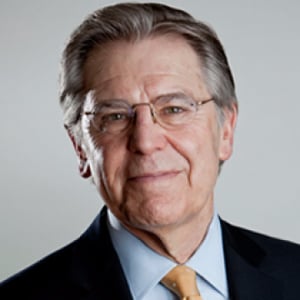
Senior Fellow, Arthur F. Burns Fellow in Financial Policy Studies, American Enterprise Institute
Peter J. Wallison holds the Arthur F. Burns Chair in Financial Policy Studies and is co-director of AEI’s program on Financial Policy Studies. Prior to joining AEI, he practiced banking, corporate and financial law at Gibson, Dunn & Crutcher in Washington, D.C., and New York. Mr. Wallison has held a number of government positions. From June 1981 to January 1985, he was General Counsel of the United States Treasury Department, where he had a significant role in the development of the Reagan Administration's proposals for deregulation in the financial services industry. During 1986 and 1987, Mr. Wallison was White House counsel to President Ronald Reagan, and between 1972 and 1976, he served first as Special Assistant to New York's Gov. Nelson A. Rockefeller and, subsequently, as counsel to Mr. Rockefeller as vice president of the United States.
Mr. Wallison was admitted to practice before the courts of New York and the District of Columbia, and is retired from practice in New York. He continues to be a member of the District of Columbia Bar Association. He received his undergraduate degree from Harvard College in 1963 and law degree from Harvard Law School in 1966.
Mr. Wallison is the author of Ronald Reagan: The Power of Conviction and the Success of His Presidency, published in December 2002 by Westview Press. On campaign finance, he is the author (with Joel Gora) of Better Parties, Better Government, (AEI Press 2009). On financial or regulatory matters, he is the author of Back From the Brink, a proposal for a private deposit insurance system, and co-author of Nationalizing Mortgage Risk: The Growth of Fannie Mae and Freddie Mac; The GAAP Gap: Corporate Disclosure in the Internet Age; Competitive Equity: A Better Way to Organize Mutual Funds; Bad History, Worse Policy: How a False Narrative about the Financial Crisis Led to the Dodd-Frank Act (AEI Press 2013); and Hidden In Plain Sight: What Caused the World’s Worst Financial Crisis and Why it Could Happen Again (Encounter Books 2015). His most recent book is Judicial Fortitude: The Last Chance to Rein in the Administrative State, published by Encounter Books in October 2018.
He testifies frequently before committees of Congress, and is a frequent contributor to the op-ed pages of the Wall Street Journal and other print and online journals. He has also been a speaker at many conferences on financial services, housing, the causes of the financial crisis, the Dodd-Frank Act, accounting, and corporate governance, and was a member of the Shadow Financial Regulatory Committee between 1995 and 2015. He was a member of the SEC Advisory Committee on Improvements to Financial Reporting (2008), co-Chair of the Pew Financial Reform Task Force (2009), and a member of the congressionally- appointed Financial Crisis Inquiry Commission (2009-2011). In May 2011, for his work in financial policy, Mr. Wallison received an honorary doctorate in Humane Letters from the University of Colorado.
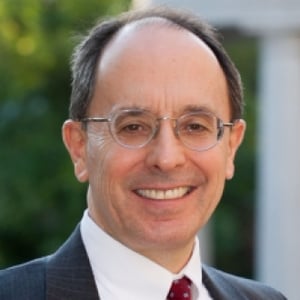
Professor Emeritus, The George Washington University Law School
Art Wilmarth is a Professor Emeritus of Law at George Washington University Law School (GW Law). He was a member of GW Law’s full-time faculty from 1986 to 2020. Prior to joining the faculty, he was a partner in Jones Day’s Washington, DC office. He served as Executive Director of GW Law’s Center for Law, Economics & Finance from 2011 to 2014.
Professor Wilmarth is the author of Taming the Megabanks: Why We Need a New Glass-Steagall Act (Oxford University Press, 2020), and co-editor of The Panic of 2008: Causes, Consequences, and Implications for Reform (Edward Elgar, 2010). He has published more than 50 law review articles and book chapters in the fields of financial regulation and American constitutional history.
In 2005, the American College of Consumer Financial Services Lawyers (ACCFSL) awarded Professor Wilmarth its annual prize for the best law review article published in the field of consumer financial services law. He has testified before committees of the U.S. Congress, the California legislature, and the U.K. House of Lords on financial regulatory issues. In 2010, he served as a consultant to the Financial Crisis Inquiry Commission, the body established by Congress to investigate the causes of the global financial crisis of 2007-09. He is a Fellow of ACCFSL and a member of the international advisory board of the Journal of Banking Regulation (Springer). He received his B.A. degree from Yale University and his J.D. degree from Harvard University.
President, The Ethics and Public Policy Center
Ryan T. Anderson, Ph.D., is the President of the Ethics and Public Policy Center. In May 2025, Anderson was appointed by President Trump to the Religious Liberty Commission.
He is the author or co-author of five books, including the just-released Tearing Us Apart: How Abortion Harms Everything and Solves Nothing. Previous books include When Harry Became Sally: Responding to the Transgender Moment, Truth Overruled: The Future of Marriage and Religious Freedom, What Is Marriage? Man and Woman: A Defense, and Debating Religious Liberty and Discrimination. He is the co-editor of A Liberalism Safe for Catholicism? Perspectives from “The Review of Politics.”
Anderson’s research has been cited by two U.S. Supreme Court justices, Justice Samuel Alito and Justice Clarence Thomas, in two Supreme Court cases.
He received his bachelor of arts degree from Princeton University, graduating Phi Beta Kappa and magna cum laude, and he received his doctoral degree in political philosophy from the University of Notre Dame. His dissertation was titled: “Neither Liberal Nor Libertarian: A Natural Law Approach to Social Justice and Economic Rights.”
Anderson has made appearances on ABC, CNN, CNBC, MSNBC, and Fox News. His work has been published by the New York Times, the Washington Post, the Wall Street Journal, Oxford University Press, Cambridge University Press, the Harvard Journal of Law and Public Policy, the Harvard Health Policy Review, the Georgetown Journal of Law and Public Policy, First Things, the Claremont Review of Books, and National Review.
He is the John Paul II Teaching Fellow in Social Thought at the University of Dallas, a member of the James Madison Society at Princeton University, and a Fellow of the Institute for Human Ecology at the Catholic University of America, as well as the Founding Editor of Public Discourse, the online journal of the Witherspoon Institute of Princeton, New Jersey.
For 9 years he was the William E. Simon senior research fellow at The Heritage Foundation, and has served as an adjunct professor of philosophy and political science at Christendom College, and a Visiting Fellow at the Veritas Center at Franciscan University. He has also served as an assistant editor of First Things.
William Rand Kenan, Jr. Distinguished Professor of Law, University of North Carolina School of Law
William (Bill) Marshall joined the Carolina Law faculty in 2001 and serves as the William R. Kenan Jr. Distinguished Professor of Law. His teaching and research interests include the first amendment, presidential power, election law, federal jurisdiction, federal judicial selection, civil procedure, and media law. Marshall is the author of numerous book chapters, articles, and essays on free speech, separation of powers, the Establishment Clause, and the Free Exercise Clause. His work has appeared in the Harvard Law Review, the Yale Law Journal, the Supreme Court Review, and the University of Chicago Law Review, among others.
Marshall received his law degree from the University of Chicago and his undergraduate degree from the University of Pennsylvania. Marshall was Deputy Counsel to the President and Deputy Assistant to the President during the Clinton Administration and also served as the Solicitor General for the State of Ohio. He has taught at the Northwestern, Boston University, Vanderbilt, Ohio State, DePaul, Case Western Reserve, William and Mary, and the University Connecticut law schools. Prior to beginning his teaching career, Marshall was a Special Assistant Attorney General for the State of Minnesota.

University Professor of Law and Religion and Director of the Eleanor H. McCullen Center for Law, Religion and Public Policy, Villanova University Charles Widger School of Law
Michael P. Moreland was appointed University Professor of Law and Religion and Director of the Eleanor H. McCullen Center for Law, Religion and Public Policy at Villanova University in 2017. Professor Moreland joined the Villanova faculty in 2006 and served as Vice Dean from 2012 to 2015. His research is primarily in the areas of torts, law and religion, constitutional law, and Catholic social thought, and he regularly teaches Torts, First Amendment, seminars in law and religion, and undergraduate courses in ethics.
Professor Moreland is the co-editor of Christianity and Private Law (Routledge, 2021), and his most recent publications include: “The Authority of Tradition: John Henry Newman and Legal Theory” in Christianity and the Making of Irish Law (Routledge, 2025); “Christianity and Torts” in The Oxford Handbook on Christianity and Law, (Oxford University Press, 2023); “Germaneness and Religious Liberty” in the Notre Dame Law Review (2023); “Contingency and Contestation in Christianity and Liberalism” in the Notre Dame Law Review (2023); “Friendship as the Primary Purpose of Law” in The American Journal of Jurisprudence 279 (2022); and “The Moral of Torts” (with Jeffrey Pojanowski) in Christianity and Private Law (Routledge, 2021).
Professor Moreland was a Visiting Professor of Law at the University of Notre Dame and the Mary Ann Remick Senior Visiting Fellow at the Notre Dame Center for Ethics and Culture from 2015 to 2017. He was the Forbes Visiting Fellow at Princeton University in the James Madison Program during academic year 2010-11. He has served as the project leader for grants from the John Templeton Foundation and the Charles Koch Foundation. He serves as the Chair of the Federalist Society’s Religious Liberties Practice Group Executive Committee and the Chair of the Board of Trustees of the Institute for Advanced Catholic Studies at the University of Southern California.
Professor Moreland received his BA in philosophy from the University of Notre Dame, his MA and PhD in theological ethics from Boston College, and his JD from the University of Michigan Law School. Following law school, Professor Moreland clerked for the Honorable Paul J. Kelly Jr., of the United States Court of Appeals for the Tenth Circuit and was an associate at Williams & Connolly LLP in Washington, DC, where he represented clients in First Amendment, professional liability, and products liability matters. Before coming to Villanova, he served as Associate Director for Domestic Policy at the White House under President George W. Bush, where he worked on a range of legal policy issues, including criminal justice, immigration, civil rights, and liability reform.
Chief Judge, Florida First District Court of Appeal
Judge Timothy Osterhaus was appointed to the First District Court of Appeal by Governor Rick Scott on May 20, 2013.
Before his appointment Judge Osterhaus served as the Solicitor General of Florida. As Florida’s SG, and as Deputy SG before that, he handled appeals on behalf of the State and its agencies in Florida’s district courts of appeal and in the Florida Supreme Court, as well in the federal courts, including in the United States Supreme Court. He also worked as counsel at the Florida Department of Education; worked in private practice in Washington, D.C.; and served as a law clerk to U.S. District Court Judge Kenneth Ryskamp in West Palm Beach (with a co-clerk who later became his wife).
Judge Osterhaus spent his childhood in South Florida, where he attended Westminster Christian School. After moving away from Florida with his family, he attended high school at Charlotte Christian School in North Carolina, before moving again and graduating from Bristol Tennessee High School in 1989.
Judge Osterhaus received his bachelor’s degree with highest honors from King College (Bristol, Tenn.) in 1993, and his law degree from the University of Virginia in 1997.

Government Speech and the First Amendment: Does the Government’s Own Expression Have Limits?
Susanna Dokupil, Erik S. Jaffe, Eugene Volokh
The government-speech doctrine generally permits the government to select and promote its own messages without...
Courthouse Steps Preview: Moore v. United States
James W. Ely, Calvin H. Johnson, Elizabeth Slattery
On December 5, 2023, the Supreme Court will hear oral argument in Moore v. United...
New Voices in Administrative Law: The Emerging Debates on AI Regulation
Aram A. Gavoor, Eli Nachmany, Laura Stanley, Seanhenry VanDyke
Artificial intelligence is a remarkable, disruptive force. AI services like ChatGPT already perform tasks once...
Open Minds with Prof. Eugene Volokh & Prof. Joshua Kleinfeld, Part II
Eugene Volokh, Joshua Kleinfeld
What are the fundamentals of how free speech law works and what are the outer...
13th Annual Rosenkranz Debate & Luncheon
John A. Allison, Douglas H. Ginsburg, Ashley Keller
The 2021 National Lawyers Convention took place November 11-13, 2021 at the Mayflower Hotel in...
Opening Address by Attorney General Richard Thornburgh [Archive Collection]
E. Spencer Abraham, David M. McIntosh, Richard Thornburgh
On January 19-20, 1990, The Federalist Society hosted a conference at the Mayflower Hotel in...
Fintech Licensing and the OCC Charter
Brian Knight, Margaret Liu
Innovations in financial technology have enabled financial services to be provided in new ways and...
Financial Regulation: The Apotheosis of the Administrative State?
Carlos T. Bea, Richard A. Epstein, Hal S. Scott, Peter J. Wallison, Arthur E. Wilmarth
Concern with “the regulatory state" often focuses on reforms to formal institutional structures and legal...
Conscience Cases and Religious Liberty - Podcast
Ryan T. Anderson, Anthony Kreis
With the legalization of gay marriage, numerous cases have arisen in which private citizens have...
Federalism and Religious Liberties
William P. Marshall, Michael P. Moreland, Timothy D. Osterhaus
This panel will address the religious rights of persons and corporate entities in the context...