
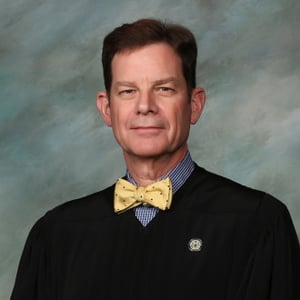
Judge, United States Court of Appeals, Fifth Circuit
Kurt D. Engelhardt was nominated for a seat on the United States Fifth Circuit Court of Appeals by President Donald J. Trump, confirmed by the Senate on May 9, 2018, and officially sworn in as a United States Circuit Judge on May 15, 2018. Judge Engelhardt is based in New Orleans, Louisiana, at the John Minor Wisdom U.S. Court of Appeals Building.
Judge Engelhardt was previously nominated for a seat on the United States District Court for the Eastern District of Louisiana by President George W. Bush, and upon confirmation, was officially sworn in as a United States District Judge on December 14, 2001. While a District Judge, Judge Engelhardt served by designation on nine different panels of the United States Fifth Circuit Court of Appeals. On October 1, 2015, he became Chief United States District Court Judge for the Eastern District of Louisiana, a position he held until joining the United States Fifth Circuit on May 15, 2018.
Judge Engelhardt attended Brother Martin High School in New Orleans, where he graduated with honors in 1978. He attended Louisiana State University in Baton Rouge, from which he graduated with a Bachelor of Arts in history in 1982. In the Fall of 1982, Judge Engelhardt commenced his legal education at the Paul M. Hebert Law Center at Louisiana State University, graduating in May of 1985.
Judge Engelhardt served a two-year clerkship with Judge Charles Grisbaum, Jr. of the Louisiana Fifth Circuit Court of Appeal, located in Gretna, Louisiana. From there, he became associated with the Metairie law firm of Little, Metzger and Lamz (APLC), and worked in the downtown New Orleans office of that firm in 1988-89. He then joined the law firm of Hailey, McNamara, Hall, Larmann & Papale, became a partner in July 1998, and practiced there until his confirmation to the federal bench in December 2001.
In 1995, Judge Engelhardt was nominated for a spot on the nine-member Louisiana Judiciary Commission, and was appointed by the Governor to serve a four-year term on that body. In 1998, he was elected by his fellow commission members to serve as Chairman, in which capacity he presided over the Commission’s trials of formal charges lodged against sitting state judges. His work on the Judiciary Commission has been cited for its excellence by the Louisiana Supreme Court.
Judge Engelhardt is a member of the Advisory Board of the New Orleans Chapter of The Federalist Society; a past member of the United States Judicial Conference Committee on Federal-State Jurisdiction; a member of the Board of Directors (and past president) of the New Orleans Chapter of the Federal Bar Association; a member of the American Judicature Society; and a member of the Federal Circuit Bar Association. He has served on the Fifth Circuit's Criminal Pattern Jury Instruction Committee, charged with updating and/or drafting pattern jury instructions for district judges within the jurisdiction of the United States Fifth Circuit. Recently, he was appointed by Fifth Circuit Chief Judge Carl Stewart to chair the Circuit's Judicial Impairment Protocol Committee, established to create a framework for the judiciary to internally address disabilities of all types which may impact a judge's ability to handle his/her docket.
Judge Engelhardt is also a member of the American Bar Association, Jefferson Bar Association, Louisiana State Bar Association, New Orleans Bar Association, and the Phi Alpha Delta Law Fraternity. Judge Engelhardt serves on the Board of Directors of the Cancer Association of Greater New Orleans.
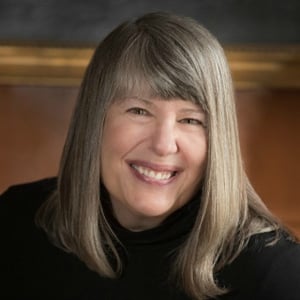
Class of 1937 Professor of Law, Tulane Law School
Amy Gajda, Tulane Law School’s Class of 1937 Professor of Law, is a journalist turned lawyer recognized internationally for her expertise in privacy and media law. Much of her scholarship explores the tensions between social regulation and First Amendment values, particularly the shifting boundaries of press freedoms and rising public anxieties about the erosion of privacy.
Viking published Gajda’s Seek and Hide: The Tangled History of the Right to Privacy in 2022 to significant critical acclaim. The New York Times called it “wry and fascinating” and named it as one of the 100 most notable books of the year; the courts of the United States Court of Appeals for the Seventh Circuit chose it as the Circuit’s inaugural “One Court. One Book” summer reading for 2022. Harvard University Press published her two earlier books, The First Amendment Bubble and The Trials of Academe.
Gajda’s scholarly articles have appeared in journals that include the American Historical Review, California Law Review, Georgia Law Review, Indiana Law Journal, and Washington Law Review; and, in addition to a number of chapter contributions, she is an author of the leading casebooks Media Law (Foundation Press) and Law and Higher Education (Carolina Academic Press). Gajda is also currently serving as an advisor on the American Law Institute’s new Restatement on Defamation and Privacy, a multi-year project.
On the journalism side, Gajda’s opinion pieces have appeared in The New York Times, Wired, Slate, Time, the Daily Beast, and the New York Daily News, among others, and she is regularly quoted and appears in media including The Guardian, The New Yorker, Marketplace, C-SPAN, and the CBS Morning News. Her weekly commentaries on legal issues aired on Illinois Public Radio stations and won seven Associated Press awards.
As a first-generation college student, Gajda is a particularly proud winner of both the Felix Frankfurter Award for Distinguished Teaching, Tulane Law School’s highest teaching honor, and the Tulane President's Award for Excellence in Teaching, Tulane University’s highest teaching honor.
Before joining Tulane’s faculty in 2010, Gajda worked as a television news anchor and reporter in cities mainly in the Northeast. After attending law school in Detroit, the city where she grew up, she practiced law in Washington, D.C., and thereafter held faculty appointments in the law and journalism schools at the University of Illinois. She’s been a visiting professor at Brooklyn Law School and at several universities in Europe and Asia, teaching mainly privacy law and media law. She has chaired the Association of American Law Schools’ Section on Defamation and Privacy and its Section on Communication, Media & Information Law, and also led the Law and Policy Division of the Association for Education in Journalism and Mass Communication.
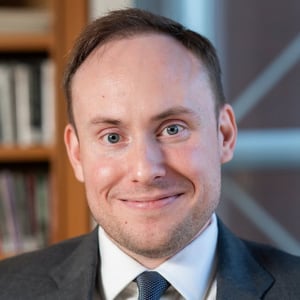
Director, Robert A. Levy Center for Constitutional Studies, Cato Institute
Thomas Berry is the director in the Cato Institute’s Robert A. Levy Center for Constitutional Studies and editor in chief of the Cato Supreme Court Review. Before joining Cato, he was an attorney at Pacific Legal Foundation and clerked for Judge E. Grady Jolly of the U.S. Court of Appeals for the Fifth Circuit. His academic work has appeared in NYU Journal of Law and Liberty, Washington and Lee Law Review Online, and Federalist Society Review. His popular writing has appeared in The Wall Street Journal, National Law Journal, Investor’s Business Daily, National Review Online, and The Hill Online. He has testified before the U.S. Senate, and his work has been cited by the U.S. District Court for the District of Columbia.
Berry holds a J.D. from Stanford Law School, where he was a senior editor on the Stanford Law and Policy Review and a Bradley Student Fellow in the Stanford Constitutional Law Center. He graduated with a B.A. in Liberal Arts from St. John’s College, Santa Fe.
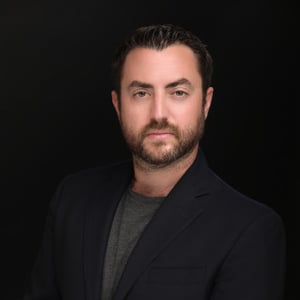
Newsweek Senior Editor-at-Large, Syndicated Columnist, Host of "The Josh Hammer Show," Article III Project Senior Counsel, Newsweek, Salem Media, Article III Project, David Horowitz Freedom Center
Josh Hammer is the senior editor-at-large of Newsweek and host of "The Josh Hammer Show," a podcast, a syndicated radio show, and TV program on Salem News Channel. A syndicated columnist through Creators Syndicate, Josh is a frequent pundit and essayist on political, legal, and cultural issues. He is also senior counsel for the Article III Project and Internet Accountability Project, as well as a Shillman Fellow with the David Horowitz Freedom Center and a fellow with the Palm Beach Freedom Institute.
An outspoken conservative, Josh opines on conservative intellectual trends, contemporary domestic and foreign policy debates, constitutional and legal issues, and the intersection of law, politics and culture. He has been published by many leading outlets, including the Los Angeles Times, the New York Post, Daily Mail, Newsweek, the Claremont Review of Books, National Affairs, American Affairs, The New Criterion, The National Interest, National Review, RealClearPolitics, First Things, City Journal, Public Discourse, Law & Liberty, Tablet Magazine, Deseret Magazine, Compact Magazine, Chronicles Magazine, The Spectator, The American Mind, The American Conservative, The European Conservative, American Greatness, American Compass, The Federalist, Blaze Media, TomKlingenstein.com, Townhall, The Daily Wire, The Daily Signal, The Daily Caller, The Epoch Times, Anchoring Truths, Fortune, Fox Business, The Jerusalem Post, The Times of Israel, The Forward, Jewish Telegraphic Agency and the Jewish Journal. He has also had legal scholarship published by the Harvard Journal of Law & Public Policy and the University of St. Thomas Law Journal.
Josh is a college campus speaker through Young America's Foundation and the Intercollegiate Studies Institute, and a law school campus speaker through the Federalist Society. Prior to Newsweek and The Daily Wire, where he was an editor, Josh worked at Kirkland & Ellis LLP and clerked for the Hon. James C. Ho on the U.S. Court of Appeals for the Fifth Circuit. Josh has also served as a John Marshall Fellow with the Claremont Institute and as a Fellow with the James Wilson Institute. He is the former host of "America on Trial with Josh Hammer," a one-season daily podcast with The First that covered the unique legal issues surrounding the 2024 presidential election.
Josh graduated from Duke University, where he majored in economics, and from the University of Chicago Law School. He lives in Florida, but remains an active member of the State Bar of Texas.

Chief Judge, United States Court of Appeals, Eleventh Circuit
William H. Pryor Jr. serves as Chief Circuit Judge on the United States Court of Appeals for the Eleventh Circuit.
In 2013–18, he served on the United States Sentencing Commission and, in 2017–18, served as Acting Chair.
He has taught as a visiting professor at the University of Alabama School of Law and previously taught as an adjunct professor at the Cumberland School of Law of Samford University.
He served as the 45th Attorney General of Alabama from 1997 to 2004. When he took office, he was the youngest attorney general in the nation. In his reelection, he received the highest percentage of votes of any statewide candidate.
He graduated magna cum laude from Tulane Law School where he finished first in the common-law curriculum and was editor in chief of the Tulane Law Review. He then served as a law clerk for Judge John Minor Wisdom of the U.S. Court of Appeals for the Fifth Circuit.
He is a member of The American Law Institute and an Adviser for the RESTATEMENT OF THE LAW THIRD, CONFLICT OF LAWS. He is a coauthor with Bryan Garner, Justices Gorsuch and Kavanaugh, and several other judges of a treatise, THE LAW OF JUDICIAL PRECEDENT. He has published in the Yale Law Journal, Columbia Law Review, Virginia Law Review, Notre Dame Law Review, Harvard Journal of Law & Public Policy, Yale Law & Policy Review, George Mason Law Review, Florida Law Review, Alabama Law Review, Case Western Reserve Law Review, and Tulane Law Review. He has published op-eds in The Wall Street Journal, The New York Times, National Review, and USA Today. He has debated at National Lawyers’ Conventions of the Federalist Society (including on National Public Radio) and at the Oxford Union in the United Kingdom. And he is listed among several “widely admired judicial writers” in Bryan Garner’s The Redbook: A Manual on Legal Style.
He is a member of the Tulane Law School Hall of Fame and has received the Defender of the Constitution Award from the Heritage Foundation, the Jurist of the Year Award from the Texas Review of Law & Politics, and the St. Thomas More Award from the St. Thomas More Society of Atlanta. Judge Pryor is also a proud member of the National Society of the Sons of the American Revolution.

Founder, Law Office of Eileen J. O'Connor PLLC
After nearly 30 years as a national tax specialist with the IRS and major accounting firms, Eileen J. O’Connor, now an attorney in private practice, was Assistant Attorney General for the Justice Department’s Tax Division for six years during the administration of President George W. Bush and a member of then-President-elect Trump’s Treasury Department Transition Team. She focuses on federal administrative and tax law.

J.B. and Maurice C. Shapiro Professor of Public Interest Law, The George Washington University Law School
Jonathan Turley is a nationally recognized legal scholar who has written extensively in areas ranging from constitutional law to legal theory to tort law. After a stint at Tulane Law School, Professor Turley joined the GW Law faculty in 1990, and in 1998, became the youngest chaired professor in the university's history.
He is the founder and executive director of the Project for Older Prisoners (POPS). He has written more than three dozen academic articles that have appeared in a variety of leading law journals including those of Cornell, Duke, Georgetown, Harvard, and Northwestern Universities, among others. He most recently completed a three-part study of the historical and constitutional evolution of the military system.
Professor Turley has served as counsel in some of the most notable cases in the last two decades, including his representation of the Area 51 workers at a secret air base in Nevada; the nuclear couriers at Oak Ridge, Tennessee; the Rocky Flats grand jury in Colorado; Dr. Eric Foretich, the husband in the Elizabeth Morgan custody controversy; and four former U.S. Attorney Generals during the Clinton impeachment litigation. Professor Turley also has served as counsel in a variety of national security and terrorism cases, and has been ranked as one of the top 10 lawyers handling military cases.
He has served as a consultant on statutory and constitutional issues, and he has been a witness in over 100 hearings before the House and Senate, including the impeachments of Presidents Bill Clinton and Donald Trump. He also is a nationally recognized legal commentator; he ranked 38th in the top 100 most cited ‘public intellectuals’ in a recent study by Judge Richard Posner and was found to be the second most cited law professor in the country.
He is a member of the USA Today board of contributors and the recipient of the “2005 Single Issue Advocate of the Year” – the annual opinion award for the Aspen Institute and The Week magazine. Hundreds of his articles on legal and policy issues regularly appear in national newspapers. He also has worked as the legal analyst for four networks, CBS, NBC, BBC, and Fox. After 30 years as a columnist and commentator, the Washington Post called him the "Dean of Legal Analysts."
He is a best-selling author, including his latest New York Times bestseller "Rage and the Republic: The Unfinished Story of the American Revolution." (Simon & Schuster 2026). Turley's blog, Res Ipsa (www.jonathanturley.org), is one of the most read legal sites in the country.

Professor of Law and Centennial Chair, South Texas College of Law Houston
Josh Blackman is a national thought leader on constitutional law and the United States Supreme Court. Josh’s work was quoted during two presidential impeachment trials. He has testified before Congress and advises federal and state lawmakers. Josh regularly appears on TV, including NBC, CBS, ABC, Fox, and the BBC. Josh is also a frequent guest on NPR and other syndicated radio programs. He has published commentaries in the New York Times, Wall Street Journal, Washington Post, and leading national publications.
Since 2012, Josh has served as a professor at the South Texas College of Law Houston. He holds the Centennial Chair of Constitutional Law. Josh is an Adjunct Fellow at the Manhattan Institute. Josh has written more than seven dozen law review articles that have been cited more than a thousand times. Josh was selected as the Jurist of the Year by the Texas Journal of Law & Public Policy, received the inaugural Meese III Originalism Award, and was awarded the Inaugural Joseph Story Award. Josh was selected by Forbes Magazine for the “30 Under 30” in Law and Policy. Josh is the President of the Harlan Institute, and founded FantasySCOTUS, the Internet’s Premier Supreme Court Fantasy League. He blogs at the Volokh Conspiracyand posts@JoshMBlackman.
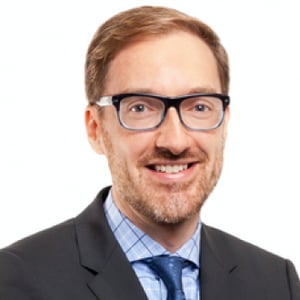
Professor of Law, Temple University Beasley School of Law
Professor Gugliuzza is an award-winning scholar and teacher who specializes in civil procedure, federal courts, and intellectual property law, with a particular focus on patent litigation. He has published articles in numerous leading law reviews, including the Emory Law Journal, the Georgetown Law Journal, the Iowa Law Review, the Notre Dame Law Review, the Texas Law Review, the Vanderbilt Law Review, and the Virginia Law Review.
Prior to joining the faculty at Temple, Professor Gugliuzza was a Professor of Law at Boston University School of Law, where he received the Dean’s Award in recognition of his teaching. Professor Gugliuzza’s article, “The Federal Circuit as a Federal Court,” received the annual best article award from the Federal Courts Section of the Association of American Law Schools (AALS). He has testified before both the U.S. Senate and the U.S. House of Representatives on the topic of patent litigation, and his scholarship has been cited in nearly a dozen judicial opinions across all levels of the state and federal courts.
Professor Gugliuzza graduated summa cum laude from Tulane University School of Law. After law school, he clerked for Judge Ronald M. Gould on the U.S. Court of Appeals for the Ninth Circuit, practiced in the Issues and Appeals group at Jones Day in Washington, D.C., and served as a Visiting Assistant Professor at the University of Florida Levin College of Law.
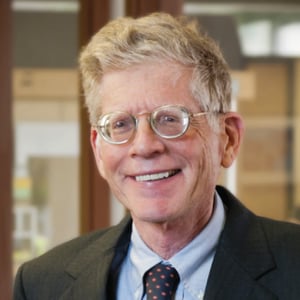
Professor of Law, University of Pittsburgh School of Law
Arthur D. Hellman, a professor of law (emeritus) at the University of Pittsburgh, is a nationally recognized scholar of the federal courts who has also written in the area of the First Amendment. His publications include numerous articles and several books, including casebooks in both areas, Federal Courts: Cases and Materials on Judicial Federalism and the Lawyering Process (5th edition 2022) (with David R. Stras, Ryan W. Scott, F. Andrew Hessick, and Derek T. Muller); and First Amendment Law: Freedom of Speech and Freedom of Religion (5th edition 2022) (with William D. Araiza, Thomas E. Baker, and Ashutosh A. Bhagwat).
In addition to his casebooks and academic writing, Processor Hellman has worked with the Judiciary Committees in the House and Senate in drafting federal courts legislation, including the most recent (2002) revision of the Judicial Conduct and Disability Act (Title 28, Chapter 16). The legislative histories of two major jurisdictional statutes – the Federal Courts Jurisdiction and Venue Clarification Act of 2011 and the “Holmes Group Fix” (enacted as part of the America Invents Act) – acknowledge his contributions.
Professor Hellman has testified as an invited witness at numerous hearings of both Judiciary Committees. His testimony has focused on a wide variety of legislative issues related to the federal courts, including the jurisdiction of the Supreme Court; proposals to divide the Ninth Circuit Court of Appeals; federal judicial discipline; unpublished appellate opinions; and the constitutionality of legislative restrictions on the powers of the federal courts.
In 2005 Professor Hellman was appointed as the inaugural holder of the Sally Ann Semenko Endowed Chair at the University. In 2002 he received the Chancellor’s Distinguished Research Award “as a faculty member who has an outstanding and continuing record of research and scholarly activity.”

Legal Scholar and Solo Practitioner
Jack received his B.A. in History from the University of Virginia in 1977, graduating with Highest Distinction. After graduating Yale Law School in 1980, he served active duty in the U.S. Army's JAG Corps, rising to the rank of Major, where he represented the United States in more than 250 cases.
He practiced for a decade as an Associate for Bradley Arant in Birmingham, Alabama. He proudly served the State of Alabama in the Office of the Attorney General, both as Deputy and Assistant Attorney General, handling complex civil and criminal litigation cases for the people of Alabama. In 2000, he won the "Best Brief Award" from the National Association of Attorneys General for his brief in a case decided by the U.S. Supreme Court, James Alexander v. Martha Sandoval – a case he won. He was Special Assistant to the Inspector General for the Corporation for National and Community Service, Visiting Legal Fellow for the Center for Judicial and Legal Studies for the Heritage Foundation, Of Counsel at Strickland Brockington Lewis, a solo practitioner, and General Counsel for Indigo Energy.
Most recently, he "re-upped" for military service, volunteering his legal services to the Georgia State Defense Force where twice each month he provided legal services for National Guardsmen who were being deployed. He wore his military uniform for the last time in October 2024.
Jack Park passed away on March 16, 2026.
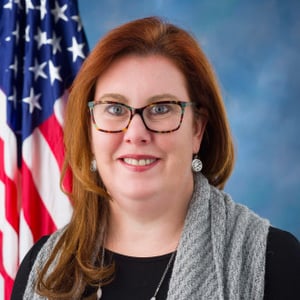
Chief Legal and Government Affairs Officer, BrightStar Care
Cheryl M. Stanton is Chief Legal and Government Affairs Officer at BrightStar Care. Prior to joining BrightStar Care, she served as Administrator of the Department of Labor’s Wage and Hour Division. She was sworn in as WHD’s Administrator by U.S. Secretary of Labor Alexander Acosta on April 29, 2019.
Stanton brought a wealth of experience to WHD, most recently having served as the Executive Director of the South Carolina Department of Employment and Workforce. Under her leadership, South Carolina’s jobless rate dropped to its lowest point in at least 50 years. During that time period, South Carolina’s workforce system helped place over 500,000 South Carolinians into jobs. Stanton also partnered with her colleague at the Department of Corrections to create a job re-entry program for ex-offenders, receiving national accolades. She also oversaw two major information technology modernization projects that improved customer service and increased efficiencies for employees.
Stanton served as the White House’s principal legal liaison to the DOL under President George W. Bush. She is a graduate of Williams College, and earned her law degree from the University of Chicago Law School.
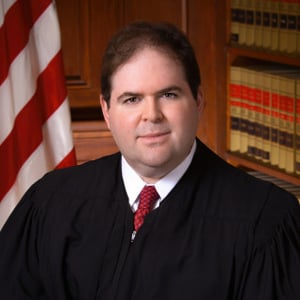
Judge, United States Court of Appeals, Eleventh Circuit
On November 19, 2019, Judge Robert J. Luck was appointed to the United States Court of Appeals for the Eleventh Circuit by President Donald Trump. Prior to serving on the federal bench, he was appointed to the Florida Supreme Court by Governor Ron DeSantis on January 14, 2019. He previously served on the Third District Court of Appeal in Miami after his appointment there by Governor Rick Scott in March 2017.
Earlier, Judge Luck served on the Eleventh Judicial Circuit Court of Florida from September 2013 to March 2017. He presided in the Criminal, Civil, and Appellate Divisions. Judge Luck, in his years as a trial court judge, tried seventy jury trials, and heard dozens of appeals from the county court and municipal agencies. Judge Luck was appointed to the circuit court in 2013 and was elected by the voters of Miami-Dade County to retain his seat in 2016.
Prior to his service on the bench, Judge Luck was an Assistant United States Attorney for the Southern District of Florida. In his years as a federal prosecutor, he was assigned to the Appeals, Major Crimes, and Economic Crimes Sections of the U.S. Attorney’s Office. Judge Luck tried nineteen jury trials before the federal district court and argued three appeals to the United States Court of Appeals for the Eleventh Circuit. In his final year in the Office, he was a Deputy Chief in the Major Crimes Section.
Earlier in his career, Judge Luck was a legislative correspondent for two United States Senators, a law clerk and staff attorney to Circuit Judge Edward E. Carnes on the United States Court of Appeals for the Eleventh Circuit, and a part of the Greenberg Traurig firm’s appellate section. Judge Luck received his Juris Doctor from the University of Florida Levin College of Law magna cum laude and was asked to join the Order of the Coif. Judge Luck also served as Editor-in-Chief of the Florida Law Review. Judge Luck received his Bachelor of Arts in Economics from the University of Florida with highest honors.
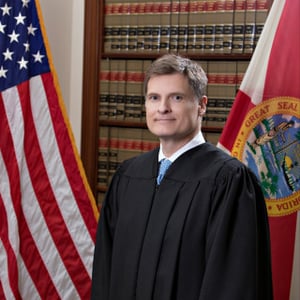
Chief Justice, Florida Supreme Court
Justice Carlos G. Muñiz was appointed to the Florida Supreme Court by Governor Ron DeSantis on January 22, 2019, becoming the 89th Justice since statehood was granted in 1845. Previously, he served as general counsel for the United States Department of Education, where he led the Office of the General Counsel and provided legal and policy advice to the United States Secretary of Education and to other senior department officials.
Justice Muñiz has wide-ranging legal and policy experience from his years as an attorney and consultant in private practice. He served for three years as the deputy attorney general and chief of staff to Florida Attorney General Pam Bondi. In that capacity he was responsible for managing a 400-lawyer staff and overseeing duties that included enforcement and litigation, legislative affairs, and communications.
During this time, Justice Muñiz worked with state attorneys general throughout the country and developed substantial experience in multistate enforcement actions, consumer protection issues, government investigations, and disputes between the states and the federal government.
In addition to his service in the Attorney General’s Office, Justice Muñiz held positions of responsibility throughout Florida state government. He served as deputy general counsel in the Office of Governor Jeb Bush, as a deputy chief of staff and counsel in the Office of the Speaker of the Florida House of Representatives, and as general counsel of the Florida Department of Financial Services.
Justice Muñiz is a graduate of the University of Virginia and of Yale Law School. Upon receipt of his law degree, he clerked for Judge José A. Cabranes of the U.S. Court of Appeals for the Second Circuit and for Judge Thomas A. Flannery of the U.S. District Court for the District of Columbia.
Chief Judge, United States Court of Appeals, Eleventh Circuit
William H. Pryor Jr. serves as Chief Circuit Judge on the United States Court of Appeals for the Eleventh Circuit.
In 2013–18, he served on the United States Sentencing Commission and, in 2017–18, served as Acting Chair.
He has taught as a visiting professor at the University of Alabama School of Law and previously taught as an adjunct professor at the Cumberland School of Law of Samford University.
He served as the 45th Attorney General of Alabama from 1997 to 2004. When he took office, he was the youngest attorney general in the nation. In his reelection, he received the highest percentage of votes of any statewide candidate.
He graduated magna cum laude from Tulane Law School where he finished first in the common-law curriculum and was editor in chief of the Tulane Law Review. He then served as a law clerk for Judge John Minor Wisdom of the U.S. Court of Appeals for the Fifth Circuit.
He is a member of The American Law Institute and an Adviser for the RESTATEMENT OF THE LAW THIRD, CONFLICT OF LAWS. He is a coauthor with Bryan Garner, Justices Gorsuch and Kavanaugh, and several other judges of a treatise, THE LAW OF JUDICIAL PRECEDENT. He has published in the Yale Law Journal, Columbia Law Review, Virginia Law Review, Notre Dame Law Review, Harvard Journal of Law & Public Policy, Yale Law & Policy Review, George Mason Law Review, Florida Law Review, Alabama Law Review, Case Western Reserve Law Review, and Tulane Law Review. He has published op-eds in The Wall Street Journal, The New York Times, National Review, and USA Today. He has debated at National Lawyers’ Conventions of the Federalist Society (including on National Public Radio) and at the Oxford Union in the United Kingdom. And he is listed among several “widely admired judicial writers” in Bryan Garner’s The Redbook: A Manual on Legal Style.
He is a member of the Tulane Law School Hall of Fame and has received the Defender of the Constitution Award from the Heritage Foundation, the Jurist of the Year Award from the Texas Review of Law & Politics, and the St. Thomas More Award from the St. Thomas More Society of Atlanta. Judge Pryor is also a proud member of the National Society of the Sons of the American Revolution.

SOC! SIDEBAR: Mardi Gras
Judicial Oversight of District Courts After CASA
CLE credit for this event is available at On-Demand CLE. In recent years, leaders of both...
In Memoriam: Professor John S. Baker Jr. (1946–2025)
It is with deep sadness that we share the passing on September 6, 2025, of...
Daniel Webster Debate Series: Should Americans Embrace Common-Good Constitutionalism?
Thomas Berry, Josh Hammer, William H. Pryor
The Federalist Society's Georgetown Law Chapter'sDaniel Webster Debate Series presents Daniel Webster Debate Series:Should...
SOC! SIDEBAR: College Football
William H. Pryor
The Federalist Society's Student Division & Yale Law School Chapterpresent SOC! SIDEBAR:College Football featuring Hon....
Talks with Authors: The Indispensable Right
Eileen J. O'Connor, Jonathan R. Turley
In his new book The Indispensable Right: Free Speech in an Age of Rage, Professor...
Newman v. Moore: Intra-Federal Circuit Dispute Raises Multiple Cross-Disciplinary Issues
Josh Blackman, Paul R. Gugliuzza, Arthur D. Hellman, John J. Park, Cheryl M. Stanton
In 1984, Hon. Pauline Newman became the first judge appointed directly to the United States...
Seek and Hide: The Tangled History of the Right to Privacy
Houston Lawyers Chapter
Houston, TXBanquet
Robert J. Luck, Carlos G. Muñiz, William H. Pryor
A Conversation with the Chiefs Featuring: Hon. William H. Pryor, Jr., Chief Judge, U.S. Court of...
Opening Address by Hon. William H. Pryor Jr.
William H. Pryor
The 2022 National Lawyers Convention took place Thursday, November 10 through Saturday, November 12 at...