
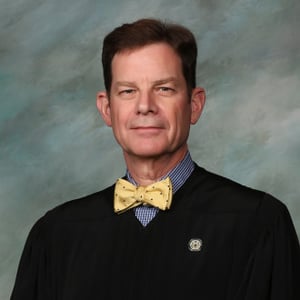
Judge, United States Court of Appeals, Fifth Circuit
Kurt D. Engelhardt was nominated for a seat on the United States Fifth Circuit Court of Appeals by President Donald J. Trump, confirmed by the Senate on May 9, 2018, and officially sworn in as a United States Circuit Judge on May 15, 2018. Judge Engelhardt is based in New Orleans, Louisiana, at the John Minor Wisdom U.S. Court of Appeals Building.
Judge Engelhardt was previously nominated for a seat on the United States District Court for the Eastern District of Louisiana by President George W. Bush, and upon confirmation, was officially sworn in as a United States District Judge on December 14, 2001. While a District Judge, Judge Engelhardt served by designation on nine different panels of the United States Fifth Circuit Court of Appeals. On October 1, 2015, he became Chief United States District Court Judge for the Eastern District of Louisiana, a position he held until joining the United States Fifth Circuit on May 15, 2018.
Judge Engelhardt attended Brother Martin High School in New Orleans, where he graduated with honors in 1978. He attended Louisiana State University in Baton Rouge, from which he graduated with a Bachelor of Arts in history in 1982. In the Fall of 1982, Judge Engelhardt commenced his legal education at the Paul M. Hebert Law Center at Louisiana State University, graduating in May of 1985.
Judge Engelhardt served a two-year clerkship with Judge Charles Grisbaum, Jr. of the Louisiana Fifth Circuit Court of Appeal, located in Gretna, Louisiana. From there, he became associated with the Metairie law firm of Little, Metzger and Lamz (APLC), and worked in the downtown New Orleans office of that firm in 1988-89. He then joined the law firm of Hailey, McNamara, Hall, Larmann & Papale, became a partner in July 1998, and practiced there until his confirmation to the federal bench in December 2001.
In 1995, Judge Engelhardt was nominated for a spot on the nine-member Louisiana Judiciary Commission, and was appointed by the Governor to serve a four-year term on that body. In 1998, he was elected by his fellow commission members to serve as Chairman, in which capacity he presided over the Commission’s trials of formal charges lodged against sitting state judges. His work on the Judiciary Commission has been cited for its excellence by the Louisiana Supreme Court.
Judge Engelhardt is a member of the Advisory Board of the New Orleans Chapter of The Federalist Society; a past member of the United States Judicial Conference Committee on Federal-State Jurisdiction; a member of the Board of Directors (and past president) of the New Orleans Chapter of the Federal Bar Association; a member of the American Judicature Society; and a member of the Federal Circuit Bar Association. He has served on the Fifth Circuit's Criminal Pattern Jury Instruction Committee, charged with updating and/or drafting pattern jury instructions for district judges within the jurisdiction of the United States Fifth Circuit. Recently, he was appointed by Fifth Circuit Chief Judge Carl Stewart to chair the Circuit's Judicial Impairment Protocol Committee, established to create a framework for the judiciary to internally address disabilities of all types which may impact a judge's ability to handle his/her docket.
Judge Engelhardt is also a member of the American Bar Association, Jefferson Bar Association, Louisiana State Bar Association, New Orleans Bar Association, and the Phi Alpha Delta Law Fraternity. Judge Engelhardt serves on the Board of Directors of the Cancer Association of Greater New Orleans.
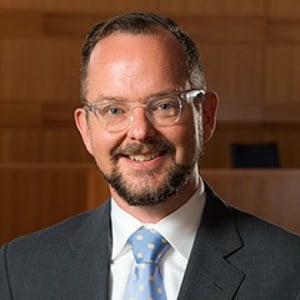
T.J. Maloney Chair in Business Law, Fordham University School of Law
Professor Griffith is an expert in corporate and financial regulatory law. He writes and speaks on corporate law, political economy, and the constitutional rights of corporations and other business associations. In addition to his academic writing, he has authored or contributed to many amicus briefs, including: Iowa v SEC, NCPPR v SEC, AFBR v SEC, and In re Tesla.
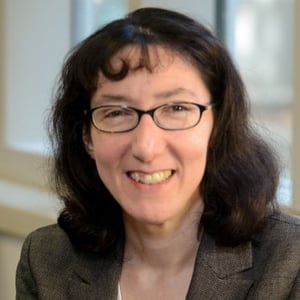
Michael M. Fleishman Associate Professor in Business Law and Entrepreneurship, Tulane University Law School
Ann M. Lipton is an experienced securities and corporate litigator who has handled class actions involving some of the world’s largest companies.
She joined the Tulane Law faculty in 2015 after two years as a visiting assistant professor at Duke University School of Law. In 2016, she was named as Tulane's first Michael M. Fleishman Associate Professor in Business Law and Entrepreneurship.
Lipton clerked for U.S. Supreme Court Justice David Souter and 3rd U.S. Circuit Court of Appeals Judge Edward Becker before handling securities and corporate litigation at the trial and appellate levels at law firms in New York City. She also worked briefly for the Securities and Exchange Commission.
As a scholar, Lipton explores corporate governance, the relationships between corporations and investors, and the role of corporations in society. Her articles have appeared in the Journal of Corporation Law, the Fordham Law Review, and the Georgetown Law Journal, among other publications. Beginning with the Ninth Edition, she will be one of the authors of the Securities Regulation: Cases and Materials casebook published by Aspen Publishers. She also blogs regularly for the Business Law Prof Blog.
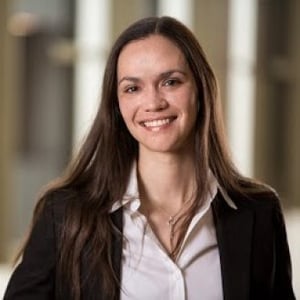
Assistant Professor, University of Toronto Faculty of Law
Adriana Robertson is an Assistant Professor in the Faculty of Law. Professor Robertson’s research focuses on the intersection of law and finance. Trained in both law and finance, her research draws heavily on both empirical and theoretical methods from financial economics.
Professor Robertson holds a BA from the University of Toronto (Trinity College), where she was awarded the Lorne T. Morgan Gold Medal in Economics, a PhD in Finance from the Yale School of Management, and a JD from Yale Law School, where she was on the board of the Yale Journal on Regulation and the Yale Journal of Law and Feminism. She is an Affiliated Fellow of the Information Society Project at Yale Law School. Her recent work has been featured in major media outlets including The New York Times, The Wall Street Journal, The Globe and Mail, and The Financial Times.
Jeremy Kidd graduated in 2007 with honors from George Mason University School of Law, where he was Executive Editor for the Journal of Law, Economics & Policy. He holds a BA in economics and political science and a Ph.D. in economics from Utah State University.
After law school, he practiced as a real estate associate with Ballard Spahr Andrews & Ingersoll in Washington, D.C. and later as a litigation associate with Strong & Hanni in Salt Lake City, Utah. He clerked for the Honorable Ted Stewart on the U.S. District Court for the District of Utah and the Honorable Alice Batchelder, Chief Judge of the U.S. Court of Appeals for the Sixth Circuit.
Professor Kidd's primary teaching interests are in the areas of business associations, torts, contracts, and law and economics. He was a Visiting Assistant Professor at George Mason University School of Law and has taught courses in business law and economics at Utah State University and Weber State University.
T.J. Maloney Chair in Business Law, Fordham University School of Law
Professor Griffith is an expert in corporate and financial regulatory law. He writes and speaks on corporate law, political economy, and the constitutional rights of corporations and other business associations. In addition to his academic writing, he has authored or contributed to many amicus briefs, including: Iowa v SEC, NCPPR v SEC, AFBR v SEC, and In re Tesla.
Jeremy Kidd graduated in 2007 with honors from George Mason University School of Law, where he was Executive Editor for the Journal of Law, Economics & Policy. He holds a BA in economics and political science and a Ph.D. in economics from Utah State University.
After law school, he practiced as a real estate associate with Ballard Spahr Andrews & Ingersoll in Washington, D.C. and later as a litigation associate with Strong & Hanni in Salt Lake City, Utah. He clerked for the Honorable Ted Stewart on the U.S. District Court for the District of Utah and the Honorable Alice Batchelder, Chief Judge of the U.S. Court of Appeals for the Sixth Circuit.
Professor Kidd's primary teaching interests are in the areas of business associations, torts, contracts, and law and economics. He was a Visiting Assistant Professor at George Mason University School of Law and has taught courses in business law and economics at Utah State University and Weber State University.
Michael M. Fleishman Associate Professor in Business Law and Entrepreneurship, Tulane University Law School
Ann M. Lipton is an experienced securities and corporate litigator who has handled class actions involving some of the world’s largest companies.
She joined the Tulane Law faculty in 2015 after two years as a visiting assistant professor at Duke University School of Law. In 2016, she was named as Tulane's first Michael M. Fleishman Associate Professor in Business Law and Entrepreneurship.
Lipton clerked for U.S. Supreme Court Justice David Souter and 3rd U.S. Circuit Court of Appeals Judge Edward Becker before handling securities and corporate litigation at the trial and appellate levels at law firms in New York City. She also worked briefly for the Securities and Exchange Commission.
As a scholar, Lipton explores corporate governance, the relationships between corporations and investors, and the role of corporations in society. Her articles have appeared in the Journal of Corporation Law, the Fordham Law Review, and the Georgetown Law Journal, among other publications. Beginning with the Ninth Edition, she will be one of the authors of the Securities Regulation: Cases and Materials casebook published by Aspen Publishers. She also blogs regularly for the Business Law Prof Blog.
Assistant Professor, University of Toronto Faculty of Law
Adriana Robertson is an Assistant Professor in the Faculty of Law. Professor Robertson’s research focuses on the intersection of law and finance. Trained in both law and finance, her research draws heavily on both empirical and theoretical methods from financial economics.
Professor Robertson holds a BA from the University of Toronto (Trinity College), where she was awarded the Lorne T. Morgan Gold Medal in Economics, a PhD in Finance from the Yale School of Management, and a JD from Yale Law School, where she was on the board of the Yale Journal on Regulation and the Yale Journal of Law and Feminism. She is an Affiliated Fellow of the Information Society Project at Yale Law School. Her recent work has been featured in major media outlets including The New York Times, The Wall Street Journal, The Globe and Mail, and The Financial Times.

Professor Emeritus, Paul M. Hebert Law Center, Louisiana State University
In memoriam
Dr. John Baker is Professor Emeritus of Law, and previously the Dale E. Bennett Professor of Law, at Louisiana State University Law School. He is currently Visiting Professor at Peking University School of Transnational Law (via Zoom) and has been Visiting Professor at The Center for the Constitution, Georgetown Law School (2013-2020). He has also been a Visiting Fellow at Oriel College, the University of Oxford (2012-2014) and taught at Blackfriars Hall, Oxford in 2014. Dr. Baker has also been an adjunct Fellow at the Heritage Foundation (Spring, 2008) and a Distinguished Scholar at the Catholic University of America Law School (2011-12). He has taught at Tulane Law School, George Mason Law School, Pepperdine Law School, New York Law School, Hong Kong University, and the University of Dallas, School of Management and also taught and/or lectured in 17 foreign countries. Notable among his foreign visits are the
following: Visiting Professor at the University of Lyon III (France) (1999-2011); Visiting Professor at the Universidad de los Andes, Chile (2012), as a Fulbright Specialist (2006); and a Fulbright Scholar at various universities in the Philippines. Dr. Baker received his J.D., with honors, from the University of Michigan Law School and his B.A., magna cum laude, from the University of Dallas. He also earned a Ph.D. in Political Thought from the University of London. Baker has taught over a dozen different subjects, mostly courses in public law. His main areas of interest are Constitutional Law (particularly federalism and separation of powers), Criminal Law, Anti-Terrorism Law, International Law, Health Care Law, Mediation, and Comparative Law.
In addition to law review articles and book chapters, Dr. Baker’s academic publications include Hall's Criminal Law: Cases and Materials (with Benson, Force and George; 5th ed. Michie, 1993); An Introduction to the Law of the United States (ed. with Levasseur; University Press of America, 1992). He has also published on Forbes.com, FoxNews.com, in The Washington Times, and a number of times in The Wall Street Journal. He argues in federal court, including two oral arguments in the U.S. Supreme Court. For many years, he co-taught courses for the Federalist Society on separation of powers with the late Supreme Court Justice Antonin Scalia. In September 2016, he co-taught a Supreme Court seminar in China with Justice Samuel Alito. Following law school, he served as a law clerk in federal district court and as an assistant district attorney in New Orleans before joining LSU in 1975. While a professor, he has been as a consultant to USAID, USIA (since rolled into the State Department), the Justice Department, the U.S. Senate Judiciary Subcommittee on Separation of Powers, and the Office of Planning in the White House. He served on an ABA Task Force which issued the report, The Federalization of Crime (1998) and later as a consultant to the “Bi-Partisan Task Force on the Over- federalization of Crime” (2012-2014) created by the U.S. House Judiciary Subcommittee on Crime. Dr. Baker was a co-founder of the first iteration (1995) of Stratfor Inc., a global intelligence agency. He co-authored its first book: The Intelligence Edge (with Friedman, Friedman and Chapman; Crown Books/Random House 1997). In 2022, he began a short, weekly video podcast available on YouTube and Rumble, The Baker Brief.
Judge, United States Court of Appeals, Ninth Circuit
Judge Carlos Bea serves as a judge on the United States Court of Appeals for the Ninth Circuit. He received his Bachelor's Degree from Stanford University in 1956 and his J.D. from Stanford Law School in 1958. Judge Bea was born in San Sebastian, Spain, and immigrated with his family to Cuba in 1939. In 1952, he represented Cuba on the Cuban National basketball team in the Helsinki Olympics. Judge Bea became a naturalized citizen of the United States in 1958. He engaged in private practice in San Francisco, principally in the area of civil trials (jury and non-jury), from 1959-75 at Dunne, Phelps & Mills and from 1975-90 at Carlos Bea, A Law Corporation. He taught courses in civil litigation advocacy at Hastings College of Law and Stanford Law School. From 1990 to 2003, Judge Bea served as a judge of the San Francisco Superior Court. He was nominated by President George W. Bush to the United States Court of Appeals for the Ninth Circuit and was confirmed in 2003.
Judge Bea and his wife Louise reside in San Francisco, where they raised their four sons, Sebastian, Alexander, Nicholas, and Dominic.

Dr. John Eastman is the former Henry Salvatori Professor of Law & Community Service and former Dean at Chapman University's Dale E. Fowler School of Law, where he had been a member of the faculty since 1999, specializing in Constitutional Law, Legal History, and Property. He is a founding director of the Center for Constitutional Jurisprudence, a public interest law firm affiliated with the Claremont Institute that he founded in 1999. He has a Ph.D. in Government from the Claremont Graduate School and a J.D. from the University of Chicago Law School, and a B.A. in Politics and Economics from the University of Dallas. He serves as the Chairman of the Board of the National Organization for Marriage.
Prior to joining the Chapman law faculty, Dr. Eastman served as a law clerk to the Honorable Clarence Thomas, Associate Justice, Supreme Court of the United States, and to the Honorable J. Michael Luttig, Judge, United States Court of Appeals for the Fourth Circuit and practiced law with the national law firm of Kirkland & Ellis. Dr. Eastman has also represented numerous clients in important constitutional law matters and has argued before the Supreme Court. On behalf of the Claremont Institute Center for Constitutional Jurisprudence, he has participated as amicus curiae before the Supreme Court of the United States, U.S. Courts of Appeals, and State Supreme Courts in more than one hundred cases of constitutional significance, including Boy Scouts of America v. Dale, Zelman v. Simmons-Harris (the school vouchers case), Kelo v. New London, Ct. (eminent domain), and Van Orden v. Perry (the 10 Commandments case). He has also appeared as an expert legal commentator on numerous television and radio programs, including C-SPAN, Fox News, PBS, NewsHour, and The O'Reilly Factor.
A.N. Yiannopoulos Professor in Comparative Law, Tulane University Law School
Professor of Law and Director, Program in Law and Government, Vanderbilt University Law School
Rob Mikos specializes in federalism and criminal law issues. His most recent scholarship analyzes the power struggles between the state and federal governments and their implications for law and public policy, addressing issues ranging from marijuana legalization to immigration reform. He has also written on the political safeguards of federalism, accuracy in criminal sanctions, the economics of private precautions against crime, and remedies in private law. Professor Mikos earned his J.D. summa cum laude from the University of Michigan Law School, where he served as articles editor on the Michigan Law Review and won numerous awards, including the Henry M. Bates Memorial Scholarship. After graduation, he clerked for Chief Judge Michael Boudin of the U.S. Court of Appeals for the First Circuit. Professor Mikos has taught at the University of California at Davis, where he was twice nominated for the school’s Distinguished Teaching Award, as well as at Notre Dame and the University of Michigan. He teaches courses in Federalism, Constitutional Law, Federal Criminal Law, and Drug Law and Policy.
Professor, Florida State University College of Law
Professor Ryan teaches in the areas of environmental and natural resources law, property and land use, water law, negotiation, and federalism. She has presented widely in the United States, Europe, and Asia, including the Ninth Circuit Judicial Conference, the National Association of Attorneys General, the United States Forest Service, and the United Nations Institute for Training and Research. She has advised National Sea Grant multilevel governance studies involving Chesapeake Bay and consulted with multiple institutions on developing sustainability programs. She has been featured in the Chicago Tribune, the London Financial Times, the Associated Press, Thomson-Reuters Beijing, the Huffington Post, National Public Radio, and NBC and CBS Television News. She is the author of many scholarly works, including Federalism and the Tug of War Within (Oxford University Press 2012).
Prior to law school, Ryan served as a U.S. Forest Service ranger on the Mono Lake District of the Inyo National Forest, east of Yosemite National Park. While a law student, she was an editor of the Harvard Law Review and a Hewlett Fellow at the Harvard Negotiation Research Project. She clerked for Judge James R. Browning, of the U.S. Court of Appeals for the Ninth Circuit, before practicing environmental, land use, and local government law in San Francisco. She began her academic career at the College of William & Mary, and then joined the faculty at the Northwestern School of Law at Lewis & Clark College. Ryan served as a Fulbright Scholar in China, where she taught American law, studied Chinese governance, and lectured throughout the country. She has also lectured at universities in Japan, Vietnam and India. She joined the Florida State University College of Law faculty in 2015.
Judge, United States Court of Appeals, Fifth Circuit
Kurt D. Engelhardt was nominated for a seat on the United States Fifth Circuit Court of Appeals by President Donald J. Trump, confirmed by the Senate on May 9, 2018, and officially sworn in as a United States Circuit Judge on May 15, 2018. Judge Engelhardt is based in New Orleans, Louisiana, at the John Minor Wisdom U.S. Court of Appeals Building.
Judge Engelhardt was previously nominated for a seat on the United States District Court for the Eastern District of Louisiana by President George W. Bush, and upon confirmation, was officially sworn in as a United States District Judge on December 14, 2001. While a District Judge, Judge Engelhardt served by designation on nine different panels of the United States Fifth Circuit Court of Appeals. On October 1, 2015, he became Chief United States District Court Judge for the Eastern District of Louisiana, a position he held until joining the United States Fifth Circuit on May 15, 2018.
Judge Engelhardt attended Brother Martin High School in New Orleans, where he graduated with honors in 1978. He attended Louisiana State University in Baton Rouge, from which he graduated with a Bachelor of Arts in history in 1982. In the Fall of 1982, Judge Engelhardt commenced his legal education at the Paul M. Hebert Law Center at Louisiana State University, graduating in May of 1985.
Judge Engelhardt served a two-year clerkship with Judge Charles Grisbaum, Jr. of the Louisiana Fifth Circuit Court of Appeal, located in Gretna, Louisiana. From there, he became associated with the Metairie law firm of Little, Metzger and Lamz (APLC), and worked in the downtown New Orleans office of that firm in 1988-89. He then joined the law firm of Hailey, McNamara, Hall, Larmann & Papale, became a partner in July 1998, and practiced there until his confirmation to the federal bench in December 2001.
In 1995, Judge Engelhardt was nominated for a spot on the nine-member Louisiana Judiciary Commission, and was appointed by the Governor to serve a four-year term on that body. In 1998, he was elected by his fellow commission members to serve as Chairman, in which capacity he presided over the Commission’s trials of formal charges lodged against sitting state judges. His work on the Judiciary Commission has been cited for its excellence by the Louisiana Supreme Court.
Judge Engelhardt is a member of the Advisory Board of the New Orleans Chapter of The Federalist Society; a past member of the United States Judicial Conference Committee on Federal-State Jurisdiction; a member of the Board of Directors (and past president) of the New Orleans Chapter of the Federal Bar Association; a member of the American Judicature Society; and a member of the Federal Circuit Bar Association. He has served on the Fifth Circuit's Criminal Pattern Jury Instruction Committee, charged with updating and/or drafting pattern jury instructions for district judges within the jurisdiction of the United States Fifth Circuit. Recently, he was appointed by Fifth Circuit Chief Judge Carl Stewart to chair the Circuit's Judicial Impairment Protocol Committee, established to create a framework for the judiciary to internally address disabilities of all types which may impact a judge's ability to handle his/her docket.
Judge Engelhardt is also a member of the American Bar Association, Jefferson Bar Association, Louisiana State Bar Association, New Orleans Bar Association, and the Phi Alpha Delta Law Fraternity. Judge Engelhardt serves on the Board of Directors of the Cancer Association of Greater New Orleans.
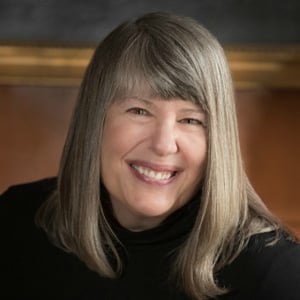
Class of 1937 Professor of Law, Tulane Law School
Amy Gajda, Tulane Law School’s Class of 1937 Professor of Law, is a journalist turned lawyer recognized internationally for her expertise in privacy and media law. Much of her scholarship explores the tensions between social regulation and First Amendment values, particularly the shifting boundaries of press freedoms and rising public anxieties about the erosion of privacy.
Viking published Gajda’s Seek and Hide: The Tangled History of the Right to Privacy in 2022 to significant critical acclaim. The New York Times called it “wry and fascinating” and named it as one of the 100 most notable books of the year; the courts of the United States Court of Appeals for the Seventh Circuit chose it as the Circuit’s inaugural “One Court. One Book” summer reading for 2022. Harvard University Press published her two earlier books, The First Amendment Bubble and The Trials of Academe.
Gajda’s scholarly articles have appeared in journals that include the American Historical Review, California Law Review, Georgia Law Review, Indiana Law Journal, and Washington Law Review; and, in addition to a number of chapter contributions, she is an author of the leading casebooks Media Law (Foundation Press) and Law and Higher Education (Carolina Academic Press). Gajda is also currently serving as an advisor on the American Law Institute’s new Restatement on Defamation and Privacy, a multi-year project.
On the journalism side, Gajda’s opinion pieces have appeared in The New York Times, Wired, Slate, Time, the Daily Beast, and the New York Daily News, among others, and she is regularly quoted and appears in media including The Guardian, The New Yorker, Marketplace, C-SPAN, and the CBS Morning News. Her weekly commentaries on legal issues aired on Illinois Public Radio stations and won seven Associated Press awards.
As a first-generation college student, Gajda is a particularly proud winner of both the Felix Frankfurter Award for Distinguished Teaching, Tulane Law School’s highest teaching honor, and the Tulane President's Award for Excellence in Teaching, Tulane University’s highest teaching honor.
Before joining Tulane’s faculty in 2010, Gajda worked as a television news anchor and reporter in cities mainly in the Northeast. After attending law school in Detroit, the city where she grew up, she practiced law in Washington, D.C., and thereafter held faculty appointments in the law and journalism schools at the University of Illinois. She’s been a visiting professor at Brooklyn Law School and at several universities in Europe and Asia, teaching mainly privacy law and media law. She has chaired the Association of American Law Schools’ Section on Defamation and Privacy and its Section on Communication, Media & Information Law, and also led the Law and Policy Division of the Association for Education in Journalism and Mass Communication.
T.J. Maloney Chair in Business Law, Fordham University School of Law
Professor Griffith is an expert in corporate and financial regulatory law. He writes and speaks on corporate law, political economy, and the constitutional rights of corporations and other business associations. In addition to his academic writing, he has authored or contributed to many amicus briefs, including: Iowa v SEC, NCPPR v SEC, AFBR v SEC, and In re Tesla.
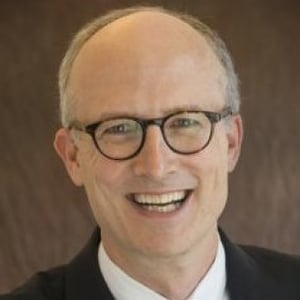
Michael J. Marks Professor of Law, University of Chicago Law School
M. Todd Henderson is the Michael J. Marks Professor of Law at the University of Chicago Law School. Professor Henderson’s research interests include corporations, securities regulation, and law and economics. He has taught classes ranging from Banking Regulation to Torts to American Indian Law.
Professor Henderson received an engineering degree cum laude from Princeton University in 1993. He worked for several years designing and building dams in California before matriculating at the Law School. While at the Law School, Todd was an editor of the Law Review and captained the Law School's all-University champion intramural football team. He graduated magna cum laude in 1998 and was elected to the Order of the Coif. Following law school, Todd served as clerk to the Hon. Dennis Jacobs of the US Court of Appeals for the Second Circuit. He then practiced appellate litigation at Kirkland & Ellis in Washington, DC, and was an engagement manager at McKinsey & Company in Boston, where he specialized in counseling telecommunications and high-tech clients on business and regulatory strategy.
Jeremy Kidd graduated in 2007 with honors from George Mason University School of Law, where he was Executive Editor for the Journal of Law, Economics & Policy. He holds a BA in economics and political science and a Ph.D. in economics from Utah State University.
After law school, he practiced as a real estate associate with Ballard Spahr Andrews & Ingersoll in Washington, D.C. and later as a litigation associate with Strong & Hanni in Salt Lake City, Utah. He clerked for the Honorable Ted Stewart on the U.S. District Court for the District of Utah and the Honorable Alice Batchelder, Chief Judge of the U.S. Court of Appeals for the Sixth Circuit.
Professor Kidd's primary teaching interests are in the areas of business associations, torts, contracts, and law and economics. He was a Visiting Assistant Professor at George Mason University School of Law and has taught courses in business law and economics at Utah State University and Weber State University.
Michael M. Fleishman Associate Professor in Business Law and Entrepreneurship, Tulane University Law School
Ann M. Lipton is an experienced securities and corporate litigator who has handled class actions involving some of the world’s largest companies.
She joined the Tulane Law faculty in 2015 after two years as a visiting assistant professor at Duke University School of Law. In 2016, she was named as Tulane's first Michael M. Fleishman Associate Professor in Business Law and Entrepreneurship.
Lipton clerked for U.S. Supreme Court Justice David Souter and 3rd U.S. Circuit Court of Appeals Judge Edward Becker before handling securities and corporate litigation at the trial and appellate levels at law firms in New York City. She also worked briefly for the Securities and Exchange Commission.
As a scholar, Lipton explores corporate governance, the relationships between corporations and investors, and the role of corporations in society. Her articles have appeared in the Journal of Corporation Law, the Fordham Law Review, and the Georgetown Law Journal, among other publications. Beginning with the Ninth Edition, she will be one of the authors of the Securities Regulation: Cases and Materials casebook published by Aspen Publishers. She also blogs regularly for the Business Law Prof Blog.
Assistant Professor, University of Toronto Faculty of Law
Adriana Robertson is an Assistant Professor in the Faculty of Law. Professor Robertson’s research focuses on the intersection of law and finance. Trained in both law and finance, her research draws heavily on both empirical and theoretical methods from financial economics.
Professor Robertson holds a BA from the University of Toronto (Trinity College), where she was awarded the Lorne T. Morgan Gold Medal in Economics, a PhD in Finance from the Yale School of Management, and a JD from Yale Law School, where she was on the board of the Yale Journal on Regulation and the Yale Journal of Law and Feminism. She is an Affiliated Fellow of the Information Society Project at Yale Law School. Her recent work has been featured in major media outlets including The New York Times, The Wall Street Journal, The Globe and Mail, and The Financial Times.

Former President & CEO, The Federalist Society for Law and Public Policy Studies
Eugene B. Meyer, former President and CEO of the Federalist Society, has served as Executive Director, CEO, and/or President of the organization for more than 40 years. He is responsible for shepherding the organization from a small group of law students to a community of 90,000 lawyers, law students, academics, judges, and others interested in the rule of law. The Society now includes a Student Chapter at nearly every ABA-accredited law school in the country and Lawyers Chapters in 220 major cities across the nation. Gene earned his B.A. in history at Yale in 1975 and his M.A. in political science from the London School of Economics in 1976. Gene currently serves on the boards of the U.S. Chess Center, the Holman Foundation, the Sarah Scaife Foundation, and the advisory board of the Adam Smith Society. He holds the title of International Chess Master.
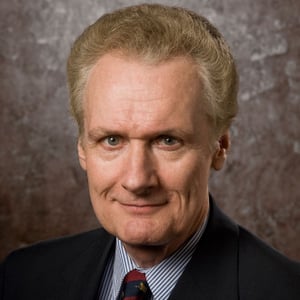
Vice President for Legal Affairs, Cato Institute
Roger Pilon is the Cato’s Institute’s vice president for legal affairs, the founding director of Cato’s Robert A. Levy Center for Constitutional Studies, the inaugural holder of Cato’s B. Kenneth Simon Chair in Constitutional Studies, and the founding publisher of the Cato Supreme Court Review.
Prior to joining Cato, Pilon held five senior posts in the Reagan administration, including at State and Justice, and was a national fellow at Stanford’s Hoover Institution. In 1989 the Bicentennial Commission presented him with its Benjamin Franklin Award for excellence in writing on the U.S. Constitution. In 2001 Columbia University’s School of General Studies awarded him its Alumni Medal of Distinction. Pilon lectures and debates at universities and law schools across the country and testifies often before Congress.
His writing has appeared in the Wall Street Journal, the Washington Post, the New York Times, the Los Angeles Times, Legal Times, National Law Journal, Harvard Journal of Law and Public Policy, Stanford Law and Policy Review, and elsewhere. He has appeared on ABC’s Nightline, CBS’s 60 Minutes II, Fox News Channel, NPR, CNN, MSNBC, CNBC, C-SPAN, and other media.
Pilon holds a BA from Columbia University, an MA and a PhD from the University of Chicago, and a JD from the George Washington University School of Law.

Chief Judge, United States Court of Appeals, Eleventh Circuit
William H. Pryor Jr. serves as Chief Circuit Judge on the United States Court of Appeals for the Eleventh Circuit.
In 2013–18, he served on the United States Sentencing Commission and, in 2017–18, served as Acting Chair.
He has taught as a visiting professor at the University of Alabama School of Law and previously taught as an adjunct professor at the Cumberland School of Law of Samford University.
He served as the 45th Attorney General of Alabama from 1997 to 2004. When he took office, he was the youngest attorney general in the nation. In his reelection, he received the highest percentage of votes of any statewide candidate.
He graduated magna cum laude from Tulane Law School where he finished first in the common-law curriculum and was editor in chief of the Tulane Law Review. He then served as a law clerk for Judge John Minor Wisdom of the U.S. Court of Appeals for the Fifth Circuit.
He is a member of The American Law Institute and an Adviser for the RESTATEMENT OF THE LAW THIRD, CONFLICT OF LAWS. He is a coauthor with Bryan Garner, Justices Gorsuch and Kavanaugh, and several other judges of a treatise, THE LAW OF JUDICIAL PRECEDENT. He has published in the Yale Law Journal, Columbia Law Review, Virginia Law Review, Notre Dame Law Review, Harvard Journal of Law & Public Policy, Yale Law & Policy Review, George Mason Law Review, Florida Law Review, Alabama Law Review, Case Western Reserve Law Review, and Tulane Law Review. He has published op-eds in The Wall Street Journal, The New York Times, National Review, and USA Today. He has debated at National Lawyers’ Conventions of the Federalist Society (including on National Public Radio) and at the Oxford Union in the United Kingdom. And he is listed among several “widely admired judicial writers” in Bryan Garner’s The Redbook: A Manual on Legal Style.
He is a member of the Tulane Law School Hall of Fame and has received the Defender of the Constitution Award from the Heritage Foundation, the Jurist of the Year Award from the Texas Review of Law & Politics, and the St. Thomas More Award from the St. Thomas More Society of Atlanta. Judge Pryor is also a proud member of the National Society of the Sons of the American Revolution.
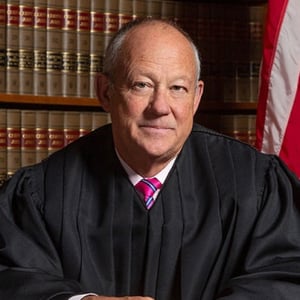
Judge, United States Court of Appeals, Tenth Circuit
Judge Tymkovich, of Denver, Colorado, was nominated to the Tenth Circuit Court of Appeals by President George W. Bush, and confirmed in April 2003. On October 1, 2015 he became Chief Circuit Judge and held this position until October 2022. He was Chair of the US Judicial Conference’s Committee on Judicial Resources from 2011 to 2015. Since 2008 he has been an adjunct professor of law at the University of Colorado School of Law, teaching Election Law. He is a member of the Doyle Inn of Court, the American Law Institute, and the International Society of Barristers. Since he joined the Circuit, Judge Tymkovich has hosted judicial delegations from Russia, Kazakhstan, and Afghanistan, and has also represented the United States in programs at Kiev and Yalta in Ukraine.

SOC! SIDEBAR: Mardi Gras
Kurt Damian Engelhardt
The Federalist Society's Student Division & Tulane Law School Chapterpresent SOC! SIDEBAR:Mardi Gras featuring Hon....
SOC! SIDEBAR: Mardi Gras
In Memoriam: Professor John S. Baker Jr. (1946–2025)
It is with deep sadness that we share the passing on September 6, 2025, of...
Seek and Hide: The Tangled History of the Right to Privacy
Houston Lawyers Chapter
Houston, TXPanel: Governance by Index: Mutual Fund Involvement in Corporate Governance
Sean J. Griffith, Ann M. Lipton, Adriana Z. Robertson, Jeremy Kidd
On January 3-4, 2020, the Federalist Society hosted its 22nd annual Faculty Conference at the...
Panel: Governance by Index: Mutual Fund Involvement in Corporate Governance
Sean J. Griffith, Jeremy Kidd, Ann M. Lipton, Adriana Z. Robertson
On January 3-4, 2020, the Federalist Society hosted its 22nd annual Faculty Conference at the...
Panel: Governance by Index: Mutual Fund Involvement in Corporate Governance
22nd Annual Federalist Society Faculty Conference
Washington, DC1st NOLA Fed-Soc Young Lawyers Happy Hour
New Orleans, LouisianaPolitical Structure, Federalism, and the Supreme Court - Twenty Years’ Perspective from Both Sides of the Bench
Birmingham, AlabamaFederalism: Competitive versus Cooperative Federalism
John S. Baker, Carlos T. Bea, John C. Eastman, Jörg Fedtke, Robert Mikos, Erin Ryan
The American system of federalism is at the heart of many disagreements over important constitutional...