
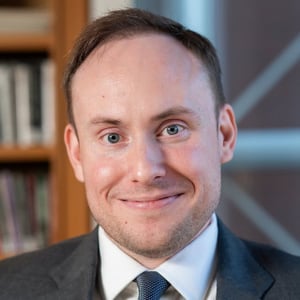
Director, Robert A. Levy Center for Constitutional Studies, Cato Institute
Thomas Berry is the director in the Cato Institute’s Robert A. Levy Center for Constitutional Studies and editor in chief of the Cato Supreme Court Review. Before joining Cato, he was an attorney at Pacific Legal Foundation and clerked for Judge E. Grady Jolly of the U.S. Court of Appeals for the Fifth Circuit. His academic work has appeared in NYU Journal of Law and Liberty, Washington and Lee Law Review Online, and Federalist Society Review. His popular writing has appeared in The Wall Street Journal, National Law Journal, Investor’s Business Daily, National Review Online, and The Hill Online. He has testified before the U.S. Senate, and his work has been cited by the U.S. District Court for the District of Columbia.
Berry holds a J.D. from Stanford Law School, where he was a senior editor on the Stanford Law and Policy Review and a Bradley Student Fellow in the Stanford Constitutional Law Center. He graduated with a B.A. in Liberal Arts from St. John’s College, Santa Fe.

Partner, Boyden Gray PLLC
Jimmy Conde is partner at Boyden Gray PLLC, specializing in energy, environmental, and administrative law, with particular expertise in the Clean Air Act. He has protected clients against agency overreach in cutting-edge and complex legal proceedings, including challenges to EPA, DOE, DOT, and California rules seeking to compel electrification of motor vehicles, the FCC’s universal service fund, Department of Labor Wage & Hour Division rules, and HHS rules interfering with the practice of medicine and sound insurance practices. His written commentary has been published and referenced in the Wall Street Journal, the Washington Examiner, Concurrences (an antitrust publication), and Newsweek, among others.
Mr. Conde began his legal career as an associate with Boyden Gray PLLC. He clerked for Judge Douglas H. Ginsburg in the U.S. Court of Appeals for the D.C. Circuit and Judge David J. Porter in the U.S. Court of Appeals for the Third Circuit.

Associate Chief Counsel, U.S. Chamber Litigation Center, U.S. Chamber of Commerce
Maria C. Monaghan is associate chief counsel at the U.S. Chamber Litigation Center, the litigation arm of the U.S. Chamber of Commerce. In this capacity, she handles a variety of litigation matters for the Chamber.
Before joining the Litigation Center, Monaghan practiced as an associate in the D.C. office of Gibson, Dunn & Crutcher LLP. She represented clients in the telecommunications, energy, transportation, and e-commerce sectors, with a focus on appellate litigation and regulatory matters.
Monaghan served as a law clerk to the Honorable Samuel A. Alito of the United States Supreme Court, the Honorable Ed Carnes of the U.S. Court of Appeals for the Eleventh Circuit, and the Honorable Amul R. Thapar of the U.S. Court of Appeals for the Sixth Circuit. She graduated Order of the Coif from the University of Virginia School of Law, where she served as Articles Development Editor for the Virginia Law Review and participated in the Supreme Court Litigation Clinic. She received her undergraduate degree in Human Resource Management and Labor Studies from Rutgers University.
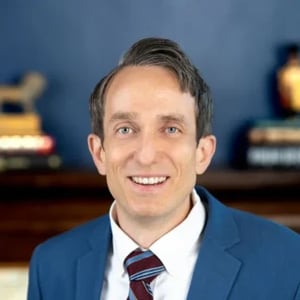
Senior Counsel, America First Legal Foundation
James Rogers is Senior Counsel at America First Legal Foundation, where he litigates in a number of areas, including border security, election integrity, parental rights, and administrative and constitutional law. Before joining America First Legal, from 2021 to 2022, he was Senior Litigation Counsel at the Solicitor General’s Office of the Arizona Attorney General’s Office. While there, he spearheaded lawsuits against the Biden Administration’s destructive open borders policies and its COVID19 vaccine mandates. From 2015 to 2021, James was a Foreign Service Officer at the U.S. Department of State, where he worked in the Office of the Assistant Legal Advisor for Consular Affairs, at the U.S. Consulate in Porto Alegre, Brazil, and at the U.S. Embassy in Windhoek, Namibia.
Prior to joining the Department of State, he was a commercial litigation partner at Osborn Maledon, a Phoenix-based firm with a #1 litigation ranking from Chambers and Partners. James earned a J.D. from Harvard Law School in 2009, an L.L.M. in International Law from the University of Cambridge in 2008, and a B.A., with honors, in International Studies from Brigham Young University in 2005. He is a sixth-generation Arizonan and lives in Mesa, Arizona, with his four children.

Partner, Marshall, Gerstein & Borun LLP
Ryan Schermerhorn is a registered patent attorney in the firm's Industrial & Mechanical Technologies Practice Group. His engineering background provides him with an understanding of clients’ technologies and enables him to effectively and efficiently provide a range of patent procurement services. He also leverages his experience to assist on intellectual property litigation as well as develop strategies for acquiring and protecting intellectual property.
Since 2017, Ryan has been listed as an "Emerging Lawyer" by Emerging Lawyers Magazine and has been selected for inclusion in the Illinois Rising Stars® lists. Ryan was recognized in Chicago Daily Law Bulletin's 2023 40 Under Forty list. Since 2024, Ryan has been selected for inclusion in The Best Lawyers in America© list in the practice areas of Litigation - Patent and Patent Law. In 2025, Ryan was selected by the Law Bulletin Publishing Company’s Leading Lawyer Network as a “Leading Lawyer.”
Director, Robert A. Levy Center for Constitutional Studies, Cato Institute
Thomas Berry is the director in the Cato Institute’s Robert A. Levy Center for Constitutional Studies and editor in chief of the Cato Supreme Court Review. Before joining Cato, he was an attorney at Pacific Legal Foundation and clerked for Judge E. Grady Jolly of the U.S. Court of Appeals for the Fifth Circuit. His academic work has appeared in NYU Journal of Law and Liberty, Washington and Lee Law Review Online, and Federalist Society Review. His popular writing has appeared in The Wall Street Journal, National Law Journal, Investor’s Business Daily, National Review Online, and The Hill Online. He has testified before the U.S. Senate, and his work has been cited by the U.S. District Court for the District of Columbia.
Berry holds a J.D. from Stanford Law School, where he was a senior editor on the Stanford Law and Policy Review and a Bradley Student Fellow in the Stanford Constitutional Law Center. He graduated with a B.A. in Liberal Arts from St. John’s College, Santa Fe.
Partner, Boyden Gray PLLC
Jimmy Conde is partner at Boyden Gray PLLC, specializing in energy, environmental, and administrative law, with particular expertise in the Clean Air Act. He has protected clients against agency overreach in cutting-edge and complex legal proceedings, including challenges to EPA, DOE, DOT, and California rules seeking to compel electrification of motor vehicles, the FCC’s universal service fund, Department of Labor Wage & Hour Division rules, and HHS rules interfering with the practice of medicine and sound insurance practices. His written commentary has been published and referenced in the Wall Street Journal, the Washington Examiner, Concurrences (an antitrust publication), and Newsweek, among others.
Mr. Conde began his legal career as an associate with Boyden Gray PLLC. He clerked for Judge Douglas H. Ginsburg in the U.S. Court of Appeals for the D.C. Circuit and Judge David J. Porter in the U.S. Court of Appeals for the Third Circuit.
Associate Chief Counsel, U.S. Chamber Litigation Center, U.S. Chamber of Commerce
Maria C. Monaghan is associate chief counsel at the U.S. Chamber Litigation Center, the litigation arm of the U.S. Chamber of Commerce. In this capacity, she handles a variety of litigation matters for the Chamber.
Before joining the Litigation Center, Monaghan practiced as an associate in the D.C. office of Gibson, Dunn & Crutcher LLP. She represented clients in the telecommunications, energy, transportation, and e-commerce sectors, with a focus on appellate litigation and regulatory matters.
Monaghan served as a law clerk to the Honorable Samuel A. Alito of the United States Supreme Court, the Honorable Ed Carnes of the U.S. Court of Appeals for the Eleventh Circuit, and the Honorable Amul R. Thapar of the U.S. Court of Appeals for the Sixth Circuit. She graduated Order of the Coif from the University of Virginia School of Law, where she served as Articles Development Editor for the Virginia Law Review and participated in the Supreme Court Litigation Clinic. She received her undergraduate degree in Human Resource Management and Labor Studies from Rutgers University.
Senior Counsel, America First Legal Foundation
James Rogers is Senior Counsel at America First Legal Foundation, where he litigates in a number of areas, including border security, election integrity, parental rights, and administrative and constitutional law. Before joining America First Legal, from 2021 to 2022, he was Senior Litigation Counsel at the Solicitor General’s Office of the Arizona Attorney General’s Office. While there, he spearheaded lawsuits against the Biden Administration’s destructive open borders policies and its COVID19 vaccine mandates. From 2015 to 2021, James was a Foreign Service Officer at the U.S. Department of State, where he worked in the Office of the Assistant Legal Advisor for Consular Affairs, at the U.S. Consulate in Porto Alegre, Brazil, and at the U.S. Embassy in Windhoek, Namibia.
Prior to joining the Department of State, he was a commercial litigation partner at Osborn Maledon, a Phoenix-based firm with a #1 litigation ranking from Chambers and Partners. James earned a J.D. from Harvard Law School in 2009, an L.L.M. in International Law from the University of Cambridge in 2008, and a B.A., with honors, in International Studies from Brigham Young University in 2005. He is a sixth-generation Arizonan and lives in Mesa, Arizona, with his four children.
Partner, Marshall, Gerstein & Borun LLP
Ryan Schermerhorn is a registered patent attorney in the firm's Industrial & Mechanical Technologies Practice Group. His engineering background provides him with an understanding of clients’ technologies and enables him to effectively and efficiently provide a range of patent procurement services. He also leverages his experience to assist on intellectual property litigation as well as develop strategies for acquiring and protecting intellectual property.
Since 2017, Ryan has been listed as an "Emerging Lawyer" by Emerging Lawyers Magazine and has been selected for inclusion in the Illinois Rising Stars® lists. Ryan was recognized in Chicago Daily Law Bulletin's 2023 40 Under Forty list. Since 2024, Ryan has been selected for inclusion in The Best Lawyers in America© list in the practice areas of Litigation - Patent and Patent Law. In 2025, Ryan was selected by the Law Bulletin Publishing Company’s Leading Lawyer Network as a “Leading Lawyer.”

Senior Attorney, Institute for Justice
Paul Avelar is the Managing Attorney of the Institute for Justice Arizona Office. He joined the Institute in March 2010 and litigates free speech, property rights, economic liberty, school choice and other constitutional cases in federal and state courts.
As the head of IJ’s national Braiding Freedom Initiative, Paul represents natural hair braiders across the country to protect their right to earn an honest living. The Initiative uses lawsuits, activism and research to remove laws that require potential braiders to undergo hundreds of costly training hours just to braid hair. Since IJ launched the Braiding Freedom Initiative in 2014, 12 additional states have freed braiders from unnecessary licensing burdens. Paul drafted the model Natural Hair Braiding Protection Act, which has been adopted in Arkansas, Indiana, Iowa, Kentucky, Nebraska, New Hampshire, Texas and South Dakota. He is currently representing braiders in Missouri, where state laws infringe upon their right to earn an honest living.
In his free speech work, Paul has challenged numerous laws that trample First Amendment rights. In Arizona Freedom Club PAC v. Bennett, he represented candidates and independent groups in a successful U.S. Supreme Court challenge to the “matching funds” provision of Arizona’s publicly financed elections system. He represented grassroots groups and individuals in Arizona, Mississippi and Washington, where state laws burdened their political speech by requiring them to register with the government, to navigate complex regulations and to face fines and possible criminal penalties merely because they talked about political issues. In Washington, Paul protected a lawyer’s right to defend, pro-bono, the First Amendment rights of political speakers. Through litigation and legislation, Paul leads the fight against abusive civil forfeiture laws in Arizona and elsewhere.
Paul also co-authored the most comprehensive published study of economic liberty protections in the Arizona Constitution. The Chief Justice of the Arizona Supreme Court appointed Paul to the Task Force on the Review of the Role and Governance Structure of the State Bar of Arizona, where he dissented from the majority report and called on leaders to substantially reform the Bar and state regulation of the practice of law. He often speaks at law schools across the country about constitutional issues and his work at IJ.
Prior to joining IJ-AZ, Paul worked as an attorney in Philadelphia. He clerked for Judge Roger Miner on the 2nd U.S. Circuit Court of Appeals, Justice Andrew Hurwitz on the Arizona Supreme Court, and Judge Daniel Barker on the Arizona Court of Appeals.
Paul graduated manga cum laude from the Arizona State University College of Law in 2004 and was elected to the Order of the Coif. He received his undergraduate degree from Princeton University in 2000.

Professor of Law and Faculty Director for the Georgetown Center for the Constitution, Georgetown University Law Center
Stephanie Barclay is a Professor of Law at Georgetown Law School, and the Faculty Director of the Georgetown Center for the Constitution. Her research focuses on the role our different democratic institutions play in protecting minority rights, particularly at the intersection of free speech and religious exercise. Barclay‘s work is published or is forthcoming in leading journals such as the Harvard Law Review, the Chicago Law Review, the University of Pennsylvania Law Review, and the Yale Law Journal Forum. One of her articles was also selected for the 2020 Stanford/Harvard/Yale Junior Faculty Forum. Her work has been featured in many media outlets, including The New York Times, The Wall Street Journal, The Washington Post, USA Today, Bloomberg BNA, The Hill, and Law 360. And her work has also been cited by the U.S. Supreme Court.
Prior to joining Georgetown, Barclay was twice voted Professor of the Year. Barclay has also litigated constitutional cases at both the trial and appellate level, including before the U.S. Supreme Court. Barclay served as a law clerk to Judge N. Randy Smith on the U.S. Court of Appeals for the Ninth Circuit, and to Justice Neil M. Gorsuch of the U.S. Supreme Court.
Barclay is a Faculty Affiliate at the Constitutional Law Center at Stanford Law School; and she is a Nootbaar Fellow at the Nootbaar Institute on Law, Religion, and Ethics at Pepperdine University. She currently serves as the Chair for the AALS Law and Religion Section and as a Member of the Executive Committee for the AALS Constitutional Law Section. She graduated summa cum laude from BYU Law School, where she was elected to the Order of the Coif. She is completing a Ph.D. in Law at Oxford University as a Clarendon Scholar and a Tang Scholar.
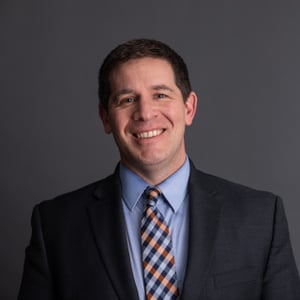
Vice President for Legal Strategy, Stand Together
Casey Mattox is Vice President for Legal Strategy at Stand Together and Senior Advisor at
Americans for Prosperity. In these roles he advocates for and creates strategies and
partnerships to ensure a constitutionally limited government that protects the civil liberties of all
Americans. Prior to joining Stand Together and AFP Casey’s legal career focused on defending
the First Amendment rights of students, faculty, healthcare workers and religious organizations.
Casey has a J.D. from Boston College School of Law and an undergraduate degree from the
University of Virginia. You can find him on Twitter at @CaseyMattox_ and on LinkedIn at
@Casey-Mattox-ST.

Associate Dean for Academic Affairs, Austin E. Owen Research Scholar & Professor of Law, The University of Richmond School of Law
Dean Kristen Jakobsen Osenga teaches and writes in the areas of patent law, antitrust, and legislation and regulation. Some of her recent scholarship focuses on standard development organizations, patent eligible subject matter, patent licensing firms, litigation and remedies for patent infringement, and patent law reform. She has written numerous law review articles on these and other topics, as well as book chapters and op eds on various aspects of patent law. Additionally, she has spoken on these issues at many academic conferences and bar events. Dean Osenga is Chief Policy Counselor for the Inventors Defense Alliance, as well as an active member of the Federal Circuit Bar Association and the American Intellectual Property Law Association.
Dean Osenga received a B.S. degree in Biomedical Engineering from the University of Iowa, an M.S. degree in Electrical Engineering from Southern Illinois University – Carbondale, and a J.D. from the University of Illinois College of Law, where she graduated magna cum laude. After law school, she practiced at the law firm of Finnegan, Henderson, Farabow, Garrett, & Dunner LLP, (now Finnegan) where she did patent prosecution and litigation. She then clerked for the Judge Richard Linn of the U.S. Court of Appeals for the Federal Circuit. After clerking, she entered academia, teaching first at Chicago-Kent College of Law and then at the University of Richmond, where she has been since 2006. She has also been a Visiting Professor at Emory University School of Law and at William & Mary School of Law.
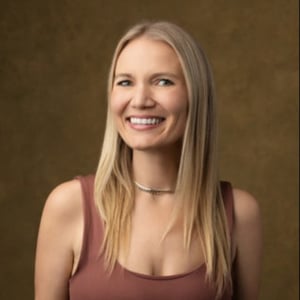
Constitutional Scholarship Director and Senior Legal Analyst, Pacific Legal Foundation
Anastasia Boden is Director of Constitutional Scholarship at Pacific Legal Foundation, where she leads the organization’s Supreme Court commentary and directs scholarly analysis in support of the firm’s litigation. She has represented entrepreneurs and small businesses nationwide in challenges to onerous licensing regimes, anti-competitive titling restrictions, Certificate of Need (“competitor’s veto”) laws, and other forms of unnecessary red tape that block economic opportunity.
Prior to this role, Anastasia developed nearly a dozen constitutional challenges to Certificate of Need laws across the country, helping spur legislative reform in Montana, Pennsylvania, and West Virginia. Her victories include a ruling invalidating Houston’s busking restrictions, multiple appellate decisions expanding access to the courts for civil rights plaintiffs, and the legislative repeal of Virginia’s happy-hour advertising ban.
Her writings on law and liberty have been featured in USA Today, The Washington Post, The Wall Street Journal, the Los Angeles Times, the Chicago Tribune, Forbes, and more, and she has appeared on Headline News, CBS News, Fox News, ReasonTV, Newsmax, and John Stossel. In 2020, she was featured on Libertarian Party presidential candidate Jo Jorgensen’s Supreme Court shortlist.
Anastasia earned her BA with dean’s honors from the University of California, Santa Barbara, and her JD from Georgetown University Law Center, where she was research assistant to Professor Randy E. Barnett—the “intellectual godfather” of the constitutional challenge to Obamacare. She is the co-creator of the podcast Dissed, about infamous Supreme Court dissents. She authors the biweekly newsletter SCOTUS Scoop and the column, “In Dissent” for SCOTUSblog.
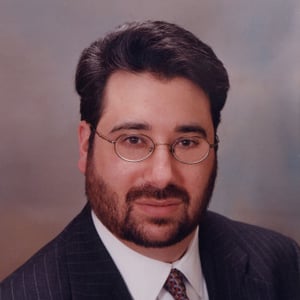
President, Phoenix Center for Advanced Legal and Economic Public Policy Studies
Lawrence J. Spiwak is President of the Phoenix Center for Advanced Legal & Economic Public Policy Studies, a non-profit 501(c)(3) organization that studies broad public-policy issues related to governance, social and economic conditions, with a particular emphasis on the law and economics of the digital age. Mr. Spiwak is a prolific scholar whose work is frequently cited by policymakers, major news media and academic journals around the world, and is in the top 1.3%of authors downloaded on the Social Science Research Network. Mr. Spiwak currently serves as the co-chair of the Federal Communications Bar Association’s (FCBA) committee responsible for overseeing the FEDERAL COMMUNICATIONS LAW JOURNAL and is a member of the program committee of the Telecommunications Policy Research Conference (“TPRC”). Mr. Spiwak is also the recipient of the FCBA’s Distinguished Service Award. Prior to joining the Phoenix Center, Mr. Spiwak was a Senior Attorney with the Competition Division in the FCC’s Office of General Counsel from 1994-1998. While in college, Mr. Spiwak was accepted into the Presidential Stay-In School program where he was responsible for delivering classified and confidential material among senior White House and Reagan Administration officials and received a full FBI security clearance. Mr. Spiwak received his B.A. with Special Honors from the George Washington University and his J.D. from the Benjamin N. Cardozo School of Law. Mr. Spiwak is a member in good standing of the bars of New York, Massachusetts, the District of Columbia, and the U.S. Court of Appeals for the D.C. Circuit.
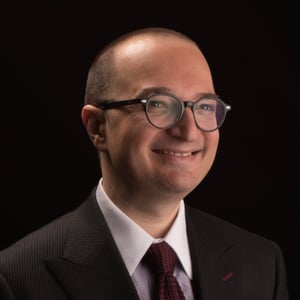
Professor of Law, University of Baltimore School of Law (on leave); Senior Counsel, U.S. Department of Justice
Professor Dolin’s scholarship centers on patent law with a specific focus on how the patent regime affects innovation, especially in bio-pharmaceutical areas. His work in these areas includes a number of scholarly articles, presentations, amicus briefs, and congressional testimony.
Dr. Dolin is currently on leave from his academic duties while he serves as Senior Counsel in the Civil Rights Division of the United States Department of Justice.
From January 2020 to January 2022, Professor Dolin served as a resident Associate Justice of the Supreme Court of the Republic of Palau. In this role, he (together with other members of the Court) heard appeals in civil, criminal, administrative, and constitutional law matters.
Prior to joining the University of Baltimore School of Law, Professor Dolin held visiting appointments in other law schools. He also served as a law clerk to the Hon. Pauline Newman, of the U.S. Court of Appeals for the Federal Circuit and the late Hon. H. Emory Widener Jr., of the U.S. Court of Appeals for the Fourth Circuit.
Rumors that he has a real Russian bear in his office are entirely true.

Of Counsel, Stanley Law Group
Stephen Gardner serves of counsel to the Dallas-based Stanley Law Group, a plaintiffs firm. Previously, Mr. Gardner was Director of Litigation for the Washington, DC based advocacy group Center for Science in the Public Interest 2004-2014); Of Counsel to the National Consumer Law Center (2002-2006); Assistant Dean of Clinical Education at Southern Methodist University School of Law (1994-1995); Visiting Assistant Professor of Law at Southern Methodist University School of Law (1992-1995); Assistant Attorney General in the Consumer Protection Division of the State of Texas (1984-1991); Assistant Attorney General in the Bureau of Consumer Frauds of the State of New York (1982-1984); Students Attorney at the University of Texas (1981-1982); and a staff attorney at the legal aid office in Austin, now part of Texas RioGrande Legal Services (1976-1981). He is a frequent author and speaker on consumer advocacy issues.
Director, Robert A. Levy Center for Constitutional Studies, Cato Institute
Thomas Berry is the director in the Cato Institute’s Robert A. Levy Center for Constitutional Studies and editor in chief of the Cato Supreme Court Review. Before joining Cato, he was an attorney at Pacific Legal Foundation and clerked for Judge E. Grady Jolly of the U.S. Court of Appeals for the Fifth Circuit. His academic work has appeared in NYU Journal of Law and Liberty, Washington and Lee Law Review Online, and Federalist Society Review. His popular writing has appeared in The Wall Street Journal, National Law Journal, Investor’s Business Daily, National Review Online, and The Hill Online. He has testified before the U.S. Senate, and his work has been cited by the U.S. District Court for the District of Columbia.
Berry holds a J.D. from Stanford Law School, where he was a senior editor on the Stanford Law and Policy Review and a Bradley Student Fellow in the Stanford Constitutional Law Center. He graduated with a B.A. in Liberal Arts from St. John’s College, Santa Fe.
Partner, Boyden Gray PLLC
Jimmy Conde is partner at Boyden Gray PLLC, specializing in energy, environmental, and administrative law, with particular expertise in the Clean Air Act. He has protected clients against agency overreach in cutting-edge and complex legal proceedings, including challenges to EPA, DOE, DOT, and California rules seeking to compel electrification of motor vehicles, the FCC’s universal service fund, Department of Labor Wage & Hour Division rules, and HHS rules interfering with the practice of medicine and sound insurance practices. His written commentary has been published and referenced in the Wall Street Journal, the Washington Examiner, Concurrences (an antitrust publication), and Newsweek, among others.
Mr. Conde began his legal career as an associate with Boyden Gray PLLC. He clerked for Judge Douglas H. Ginsburg in the U.S. Court of Appeals for the D.C. Circuit and Judge David J. Porter in the U.S. Court of Appeals for the Third Circuit.
Associate Chief Counsel, U.S. Chamber Litigation Center, U.S. Chamber of Commerce
Maria C. Monaghan is associate chief counsel at the U.S. Chamber Litigation Center, the litigation arm of the U.S. Chamber of Commerce. In this capacity, she handles a variety of litigation matters for the Chamber.
Before joining the Litigation Center, Monaghan practiced as an associate in the D.C. office of Gibson, Dunn & Crutcher LLP. She represented clients in the telecommunications, energy, transportation, and e-commerce sectors, with a focus on appellate litigation and regulatory matters.
Monaghan served as a law clerk to the Honorable Samuel A. Alito of the United States Supreme Court, the Honorable Ed Carnes of the U.S. Court of Appeals for the Eleventh Circuit, and the Honorable Amul R. Thapar of the U.S. Court of Appeals for the Sixth Circuit. She graduated Order of the Coif from the University of Virginia School of Law, where she served as Articles Development Editor for the Virginia Law Review and participated in the Supreme Court Litigation Clinic. She received her undergraduate degree in Human Resource Management and Labor Studies from Rutgers University.
Senior Counsel, America First Legal Foundation
James Rogers is Senior Counsel at America First Legal Foundation, where he litigates in a number of areas, including border security, election integrity, parental rights, and administrative and constitutional law. Before joining America First Legal, from 2021 to 2022, he was Senior Litigation Counsel at the Solicitor General’s Office of the Arizona Attorney General’s Office. While there, he spearheaded lawsuits against the Biden Administration’s destructive open borders policies and its COVID19 vaccine mandates. From 2015 to 2021, James was a Foreign Service Officer at the U.S. Department of State, where he worked in the Office of the Assistant Legal Advisor for Consular Affairs, at the U.S. Consulate in Porto Alegre, Brazil, and at the U.S. Embassy in Windhoek, Namibia.
Prior to joining the Department of State, he was a commercial litigation partner at Osborn Maledon, a Phoenix-based firm with a #1 litigation ranking from Chambers and Partners. James earned a J.D. from Harvard Law School in 2009, an L.L.M. in International Law from the University of Cambridge in 2008, and a B.A., with honors, in International Studies from Brigham Young University in 2005. He is a sixth-generation Arizonan and lives in Mesa, Arizona, with his four children.
Partner, Marshall, Gerstein & Borun LLP
Ryan Schermerhorn is a registered patent attorney in the firm's Industrial & Mechanical Technologies Practice Group. His engineering background provides him with an understanding of clients’ technologies and enables him to effectively and efficiently provide a range of patent procurement services. He also leverages his experience to assist on intellectual property litigation as well as develop strategies for acquiring and protecting intellectual property.
Since 2017, Ryan has been listed as an "Emerging Lawyer" by Emerging Lawyers Magazine and has been selected for inclusion in the Illinois Rising Stars® lists. Ryan was recognized in Chicago Daily Law Bulletin's 2023 40 Under Forty list. Since 2024, Ryan has been selected for inclusion in The Best Lawyers in America© list in the practice areas of Litigation - Patent and Patent Law. In 2025, Ryan was selected by the Law Bulletin Publishing Company’s Leading Lawyer Network as a “Leading Lawyer.”

A Seat at the Sitting - April 2026
Thomas Berry, James Conde, Maria Monaghan, James Rogers, Ryan Schermerhorn
Each month, a panel of constitutional experts convenes to discuss the Court’s upcoming docket sitting...
A Seat at the Sitting - April 2026
Thomas Berry, James Conde, Maria Monaghan, James Rogers, Ryan Schermerhorn
Each month, a panel of constitutional experts convenes to discuss the Court’s upcoming docket sitting...
A Seat at the Sitting - April 2026
Courthouse Steps Decision: Chiles v. Salazar
Paul Avelar, Stephanie Barclay, Casey Mattox
Chiles v. Salazar addressed whether a Colorado law prohibiting “conversion therapy” violates the First...
What is a Trademark? [Legal Terms]
Kristen Osenga
What constitutes a “trademark”? In this episode of Legal Terms, Kristen Osenga, Professor of Law...
Supreme Court Roundup: October Term 2019 [SCOTUSbrief]
Anastasia P. Boden
While the Supreme Court’s last term included a number of blockbuster decisions, the majority of...
The Preemption Predicament Over Broadband Internet Access Services
Lawrence J. Spiwak
Note from the Editor: The Federalist Society takes no positions on particular legal and public...
The Costs of Patent Reform: Early Data and Abuses in the Uneven Playing Field of Post-Issuance Review
Gregory Dolin
Note from the Editor: This article is a critical examination of patent reform. As always,...
The Problem with Metaullics
Stephen Gardner
INTRODUCTION The Supreme Court's and the Federal Circuit's opinions in Markman v. Westview Instruments, Inc.,...