
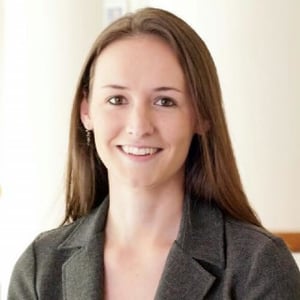
Attorney, Pacific Legal Foundation
Allison Daniel is an attorney at Pacific Legal Foundation, focusing on cases in which she can help restore the separation of powers between the branches of government and prevent federal agencies from creating laws through regulatory action. Her commitment to liberty began with an interest in politics and philosophy in high school and college. She was particularly inspired by Ron Paul and the works of Friedrich Hayek, Murray Rothbard, and Ayn Rand.
She received her law degree from the Florida State University College of Law, where she served as president of the Federalist Society chapter. She worked as a law clerk for Pacific Legal Foundation in the Sacramento office during her 1L summer. After law school, she joined the Institute for Justice as a staff attorney in the Florida office, where she defended the economic liberty and property rights of clients. Family commitments then led her to Ohio, where she clerked at the Ohio Court of Appeals and served as legal counsel to all statewide elected officeholders at the Ohio Attorney General’s Office.
She resides in Southwest Ohio with her husband and their four young children.

Of Counsel, Holtzman Vogel
Erielle Azerrad is Of Counsel with Holtzman Vogel and focuses her practice on commercial litigation, appellate law, and constitutional law matters.
Prior to joining the firm, Erielle clerked for the Honorable Steven J. Menashi on the U.S. Court of Appeals for the Second Circuit.
Erielle is also a co-founder of the Center for the Middle East and International Law through the Antonin Scalia Law School at George Mason University.

Vice President and Deputy Chief Counsel, U.S. Chamber Litigation Center, U.S. Chamber of Commerce
Jennifer B. Dickey is vice president and deputy chief counsel at the U.S. Chamber Litigation Center, the litigation arm of the U.S. Chamber of Commerce. Dickey handles a variety of litigation matters for the Chamber.
Dickey joined the Chamber following her service as Acting Assistant Attorney General and Principal Deputy Assistant Attorney General in the Civil Division at the U.S. Department of Justice. She also previously served as Deputy Associate Attorney General, providing strategic oversight of the Civil Division, Civil Rights Division, and Foreign Claims Settlement Commission, as well as Special Assistant to the President and Associate Counsel to the President. In the latter capacity, she provided legal advice on a wide array of executive actions and rulemakings, civil litigation, and judicial nominations.
Dickey also practiced law at Kirkland & Ellis LLP before her government service. She was a commercial and appellate litigator, representing businesses in federal and state courts.
Earlier in her career, Dickey served as a law clerk for the Honorable Clarence Thomas of the Supreme Court of the United States and the Honorable William H. Pryor Jr. of the United States Court of Appeals for the Eleventh Circuit.
Dickey earned her law degree magna cum laude from Duke University School of Law, where she was an Executive Editor of the Duke Law Journal, and her undergraduate degree magna cum laude from Dartmouth College.
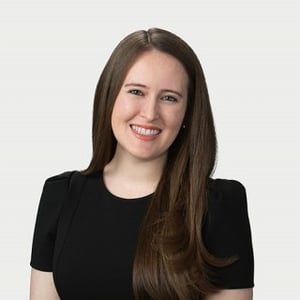
Associate, Gibson, Dunn & Crutcher LLP
Elizabeth A. Kiernan is a senior associate in the Appellate and Constitutional Law Practice Group at Gibson, Dunn & Crutcher, representing clients in their most consequential, high-stakes, and time-sensitive matters. Elizabeth specializes in appellate advocacy and sophisticated briefing. She has successfully argued before the Fifth Circuit and Texas Supreme Court and has supported arguments in various courts, including the U.S. Supreme Court and courts across the country.
Elizabeth’s most significant victories include obtaining and preserving at the Texas Supreme Court writs of mandamus directing dismissal of billions of dollars in personal injury and property damage claims across a 200-case, 20,000-plaintiff MDL; securing a landmark U.S. Supreme Court victory allowing an insurer responsible for millions of dollars in bankruptcy claims to be heard on objections to its insureds’ plan of reorganization; and persuading a unanimous Fifth Circuit panel to uphold dismissal of over $12 million in contractual and tort claims.
Chambers and Partners recently named Elizabeth an “Associate to Watch” for Litigation: Appellate (Texas), and she has been recognized as an Appellate “Rising Star” by Thomson Reuters’s Texas Super Lawyers magazine.
Prior to joining Gibson Dunn, Elizabeth earned her B.A. summa cum laude from the University of Alabama and her J.D. with Honors from the University of Chicago Law School. She served as a law clerk to the Honorable Jerry E. Smith of the U.S. Court of Appeals for the Fifth Circuit and the Honorable William H. Pryor Jr. of the U.S. Court of Appeals for the Eleventh Circuit. She also served as Special Counsel to U.S. Senator Josh Hawley for the confirmation of Justice Amy Coney Barrett.
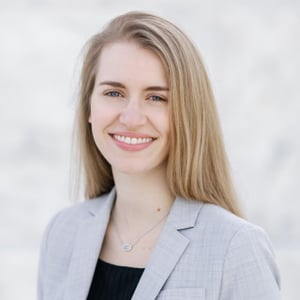
Counsel to the Assistant Attorney General, Civil Division, U.S. Department of Justice
Sarah Welch is an associate in the Firm's Issues & Appeals Practice based in the Cleveland Office of Jones Day.
Ms. Welch's practice focuses on appellate advocacy and significant motions. Before joining Jones Day, she served as a law clerk to the Associate Justice Brett M. Kavanaugh of the Supreme Court of the United States, the Honorable William H. Pryor Jr. of the U.S. Court of Appeals for the Eleventh Circuit, and the Honorable Jeffrey S. Sutton of the U.S. Court of Appeals for the Sixth Circuit.
During law school, Ms. Welch participated in briefing cases before the Supreme Court and federal courts of appeals through The University of Chicago Law School's Supreme Court and appellate clinic, as well as through internships with the Ohio and United States solicitors general. She volunteers on the case committee for Ohio's high school mock trial competition.

Partner, Gibson, Dunn & Crutcher LLP
Morgan Ratner is an experienced appellate advocate and legal-issues specialist who handles the most important cases around the country. She has argued ten cases before the U.S. Supreme Court, where she has had remarkable success at both the certiorari and merits stages.
Morgan regularly briefs and argues appeals and dispositive motions; provides strategic guidance for trial and administrative proceedings; and counsels clients confronting high-stakes legal issues. She has had particular success helping clients navigate—and, when appropriate, challenge—federal regulations. In the last 18 months, she has twice been named The American Lawyer’s “Litigator of the Week” (and her matters have been named three times more), including for prevailing in a landmark Delaware corporate-governance dispute and striking down the FCC’s net-neutrality rules. The American Lawyer named her the 2024 “Young Lawyer of the Year — Litigation”, and Law360 recently profiled her as one of “12 Lawyers Who Are The Future Of The Supreme Court Bar.”
Morgan served for more than four years in the Office of the Solicitor General at the U.S. Department of Justice, where she argued securities regulation, bankruptcy, employment, and intellectual property cases before the U.S. Supreme Court. During her tenure, she also filed more than 150 Supreme Court briefs at the merits and certiorari stages and received a John Marshall Award, DOJ’s highest award offered to lawyers for exceptional service to the Office of the Solicitor General and DOJ.
After graduating Harvard Law School—where she was awarded the Fay Diploma as the top student in her class—Morgan clerked for Chief Justice John G. Roberts, Jr. of the U.S. Supreme Court and then-Judge Brett M. Kavanaugh of the U.S. Court of Appeals for the D.C. Circuit. She is a member of the Edward Coke Appellate Inn of Court, a volunteer with Street Law, Inc., and a trustee of the Supreme Court Historical Society.

Partner, Taft Stettinius & Hollister
Robert McBride is the partner-in-charge of the Kentucky office of Taft Stettinius & Hollister. As a seasoned trial attorney, he is experienced in investigating and prosecuting a wide variety of criminal matters. As lead attorney, Bob prosecuted cases involving complex financial frauds, money laundering, federal tax violations, healthcare fraud, national security matters, violations of the Export Control Act, immigration, and human trafficking crimes, and public corruption. He also prosecuted narcotics trafficking organizations, firearms violations and crimes against children. As a prosecutor, Bob successfully tried many federal cases to jury verdict. Bob is also experienced in litigating forfeiture claims, habeas actions and appeals before the Sixth Circuit Court of Appeals.
Bob has a long record serving the United States as an attorney before entering private practice. He was an Assistant United States Attorney in the Eastern District of Kentucky for over 15 years. As an AUSA, Bob first chaired criminal jury trials in U.S. District Court and handled appeals before the Sixth Circuit Court of Appeals. Additionally, he was the District’s National Security Prosecutor and the Anti-Terrorism Advisory Council Coordinator. Bob also held several leadership positions. In 2006, he was assigned as the manager of the London Branch Office. Shortly thereafter, he was promoted to Criminal Chief and served in that position until January 2010. As Criminal Chief, Bob supervised the Criminal Division’s personnel and exercised oversight of all prosecutions in the District. More recently, he was the supervisor of the Ft. Mitchell Branch Office, where he handled a number of high profile investigations and prosecutions.
Bob also served in the United States Navy, Judge Advocate General’s Corps, for 10 years. His major assignments included senior prosecutor on the Island of Guam, Officer-in-Charge of a Detachment in New Orleans focusing on criminal defense, and Staff Judge Advocate, Recruit Training Command. Bob attained the rank of Lieutenant Commander. He was also an enlisted Combat Engineer in the Army National Guard.

General Counsel, American Suppressor Association
Michael first joined ASA in 2014, and served as ASA’s General Counsel from 2015 to 2016, before leaving to join the Administration in 2017.
Michael began his federal service at the White House Office of Management and Budget (OMB), where he served two years as an attorney in the Office of General Counsel and focused on federal budget and regulatory matters. He then transitioned to the West Wing in March of 2019, where he served as Deputy Assistant to the President and Counselor to White House Chief of Staff Mick Mulvaney. During his time in the West Wing, Michael advised the Chief of Staff and the President on numerous matters, and served as the top White House policy advisor on Second Amendment issues. Michael left the West Wing in July of 2020 to serve as Acting General Counsel at the US Department of Housing and Urban Development (HUD), where he managed a budget of over $100 million and supervised a staff of nearly 300 attorneys and 250 other professionals.
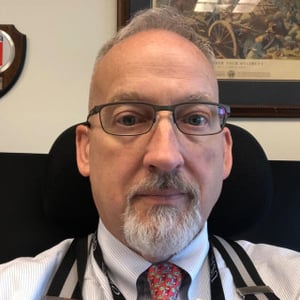
Appellate Counsel, Theodore Cooperstein PLLC
Theodore Cooperstein currently is an appellate attorney in the boutique law firm of Theodore Cooperstein PLLC, available for criminal and civil appeals in both state and federal courts. A former career prosecutor with twenty five years of service in the US Department of Justice, he was an Assistant United States Attorney for the Southern District of Florida and the Southern District of Mississippi, and has served as a Military Intelligence Officer in the Army Reserves from 1989 to 2011, retiring with the rank of Lieutenant Colonel. During the Trump Administration, he was appointed and served as the General Counsel of the U.S. Office of Personnel Management. Prior to joining the Southern District of Florida, Mr. Cooperstein served as a Special Assistant U.S. Attorney in the U.S. Attorney's Office for the District of Maryland. He previously had served as Counsel to the Deputy Attorney General at the Department of Justice, and as Assistant General Counsel in the FBI Office of the General Counsel.
A.B., Dartmouth College; J.D., Stanford University; LL.M., Comparative and International Law, Georgetown University Law Center; Masters of Strategic Studies, U.S. Army War College

James Madison Distinguished Professor of Law and Class of 1941 Research Professor of Law, University of Virginia School of Law
Professor John C. Harrison is the James Madison Distinguished Professor of Law and Class of 1941 Research Professor of Law at the University of Virginia School of Law. He joined the faculty at University of Virginia in 1993 as an associate professor of law after a distinguished career with the U.S. Department of Justice. His teaching subjects include constitutional history, federal courts, remedies, corporations, civil procedure, legislation and property. In 2008 he was on leave from the Law School to serve as counselor on international law in the Office of the Legal Adviser at the U.S. Department of State.
A 1977 graduate of the University of Virginia, Harrison earned his law degree in 1980 at Yale, where he served as editor of the Yale Law Journal and editor and articles editor of the Yale Studies in World Public Order. He was an associate at Patton Boggs & Blow in Washington, D.C., and clerked for Judge Robert Bork on the U.S. Court of Appeals for the District of Columbia Circuit. He worked with the Department of Justice from 1983-93, serving in numerous capacities, including deputy assistant attorney general in the Office of Legal Counsel (1990-93).

Judge, United States Court of Appeals, District of Columbia Circuit
Judge Katsas was appointed to the D.C. Circuit in December 2017. He graduated from Princeton University and Harvard Law School, where he was an executive editor on the Harvard Law Review. Between 1989 and 1992, he served as a law clerk to Judge Edward Becker on the Third Circuit, to then-Judge Clarence Thomas on the D.C. Circuit, and to Justice Thomas on the Supreme Court. Between 1992 and 2001, he was an associate and then partner in the Washington office of Jones Day, where he specialized in appellate and complex civil litigation. Between 2001 and 2009, he served in many senior positions in the Department of Justice, including as Assistant Attorney General for the Civil Division and as Acting Associate Attorney General. In 2009, he returned to Jones Day. From January to December 2017, he served as Deputy Assistant to the President and Deputy Counsel to the President.
Before joining the bench, Judge Katsas argued more than 75 appeals, including three cases in the Supreme Court, 13 cases in the D.C. Circuit, and cases in every other federal court of appeals. By appointment of the Chief Justice, he served on the Advisory Committee on Appellate Rules from 2013 to 2017. In 2016, he was elected to membership in the American Academy of Appellate Lawyers.
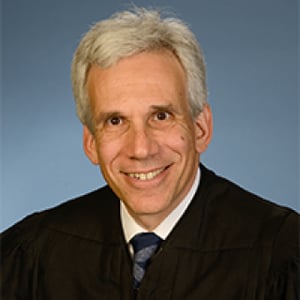
Chief Judge, US District Court, District of Columbia
Judge Randolph Daniel Moss was appointed to the District Court on November 14, 2014. Judge Moss received an A.B., summa cum laude, from Hamilton College in 1983, and a J.D. from Yale Law School in 1986.
After law school, Judge Moss served as a law clerk first for Judge Pierre N. Leval of the Southern District of New York and then for Justice John Paul Stevens of the United States Supreme Court. Following his clerkships, he worked at the law firm Wilmer, Cutler & Pickering from 1989 to 1996. He next joined the United States Department of Justice, Office of Legal Counsel, where he served as Deputy Assistant Attorney General from 1996 to 1998, Acting Assistant Attorney General from 1998 to 2000, and Assistant Attorney General from 2000 to 2001.
After leaving the Department of Justice, Judge Moss returned to the Washington office of his previous law firm, now Wilmer Cutler Pickering Hale and Dorr LLP, where he chaired the Regulatory and Government Affairs Department. He left the firm upon his confirmation to the bench in November 2014.
Judge Moss served as a member of the Criminal Law Committee of the Judicial Conference from 2017 to 2023 and as Chair of the Committee from 2020 to 2023. He currently serves as a member of the Defender Services Committee of the Judicial Conference, as a Liaison Representative to the Administrative Conference of the United States, and as a member of the American Law Institute.

Judge, United States Court of Appeals, Fifth Circuit
Andrew Oldham is a Circuit Judge on the United States Court of Appeals for the Fifth Circuit. Before ascending to the bench, Judge Oldham served as General Counsel to Texas Governor Greg Abbott, where he advised the Governor on a range of issues under federal and state law and managed litigation in which the Governor was an interested party. Before that he served as Deputy Solicitor General for the State of Texas, where he represented Texas in federal courts across the country, including twice before the United States Supreme Court. Before moving to Texas, Judge Oldham was an attorney at Kellogg Hansen Todd Figel & Frederick in Washington, D.C. His practice focused on appellate litigation in federal courts of appeals throughout the country. Before entering private practice, Judge Oldham served as a law clerk to Justice Samuel A. Alito, Jr., at the Supreme Court of the United States and to Judge David B. Sentelle of the U.S. Court of Appeals for the District of Columbia Circuit. He also worked as an attorney-adviser in the Office of Legal Counsel at the U.S. Department of Justice from 2006 to 2008. Judge Oldham earned a B.A. from the University of Virginia with highest honors, a Truman Scholarship for graduate school, an M. Phil., first class (with distinction), from Cambridge University, and a J.D., magna cum laude, from Harvard Law School.

Partner, King & Spalding
John Richter is a trial and investigations partner in the Special Matters and Investigations Practice Group, and represents and defends companies, Boards of Directors, Board committees, and individuals facing a variety of white-collar criminal and regulatory enforcement matters, parallel civil litigation, and internal corporate investigations. John previously served as the Acting Assistant Attorney General in charge of the Criminal Division at the U.S. Department of Justice and as the U.S. Attorney for the Western District of Oklahoma, having been nominated by President George W. Bush and confirmed by unanimous consent of the U.S. Senate.

Professor of Law, Michigan State University (currently serving as FCC General Counsel)
Professor Candeub joined the MSU Law faculty in fall 2004. He is also a Fellow with MSU's Institute of Public Utilities. Prior to joining MSU, he served as an advisor at the Federal Communications Commission (FCC). From 1998 to 2000, Professor Candeub was a litigation associate for the Washington D.C. firm of Jones, Day, Reavis & Pogue and also has served as a corporate associate with Cleary, Gottlieb, Steen & Hamilton, also in Washington, D.C. Immediately following law school, he clerked for Chief Judge J. Clifford Wallace, U.S. Court of Appeals for the Ninth Circuit. While in law school, Professor Candeub was an articles editor for the University of Pennsylvania Law Review.
Professor Candeub's scholarly interests focus on the law and regulation of communications, internet, technology. His numerous law review articles and scholarly papers have placed him at the center of legal and policy controversies, and he often writes for popular outlets such as the Wall Street Journal and US News. Federal courts, including the U.S. Supreme Court, have cited and relied upon his work.
He joined the Trump administration in 2019 as Deputy Assistant Secretary of Commerce for Telecommunications and Information and assumed the role of Acting Assistant Secretary. He later joined the Department of Justice as Deputy Associate Attorney General.
Professor Candeub is a senior fellow at the D.C.-based Center of Renewing America.
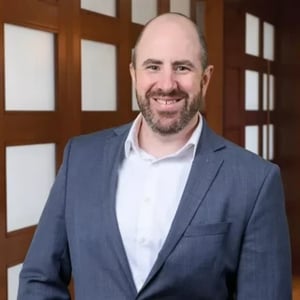
Shareholder, Reinhart Boerner Van Deuren s.c.
Robert Driscoll is a shareholder in Reinhart's Labor and Employment Practice. He is an experienced, accomplished attorney who works to understand his clients' goals and provide them with effective legal and business solutions.
Rob counsels employers to help them avoid disputes with an emphasis on discrimination (including disability discrimination), wage and hour issues and employment contracts of all kinds. Rob's practice also includes all areas of traditional labor law, such as collective bargaining, labor arbitrations, proceedings before the National Labor Relations Board, and advising employers of their rights under the National Labor Relations Act.
He understands that trials can be costly and time-consuming, and clients appreciate that he offers creative options to resolve disputes without litigation. However, when litigation is unavoidable, he's a confident and diligent legal partner, devising effective strategies for prevailing. Rob's litigation experience includes wage and hour claims (both individual and class actions), employment and fair housing discrimination and noncompetition agreements. He also represents clients in appeals.
Prior to joining the firm, Rob was a law clerk for the Hon. Diane S. Sykes, U.S. Court of Appeals for the Seventh Circuit in Milwaukee.
Rob proudly serves on the Board of Directors for GPS Education Partners, an organization that works to validate technical career paths and provide students and their communities pathways to prosperity.

President, Harned Strategies LLC
Karen Harned is President at Harned Strategies LLC. Previously, she served as Executive Director of the National Federation of Independent Business Small Business Legal Center, a post she held from 2002-2022. Prior to joining the Legal Center, Ms. Harned was an attorney at a Washington, D.C. law firm specializing in food and drug law, where she represented several small and large businesses and their respective trade associations before Congress and federal agencies. She also served as Assistant Press Secretary to U.S. Senator Don Nickles of Oklahoma from August of 1989 to March of 1993. Ms. Harned received her B.A. from the University of Oklahoma in 1989 and her J.D. from The George Washington University National Law Center in 1995. She is admitted to practice in the District of Columbia.
As Executive Director of the NFIB Small Business Legal Center, Ms. Harned commented regularly on small business cases before federal and state courts, as well as the U.S. Supreme Court. She has appeared on Fox News, Fox Business, NBC Nightly News, CNN, CNBC and MSNBC, as well as National Public Radio, CBS Radio, and radio outlets across the country. Her opinion editorials and articles regarding healthcare, lawsuit abuse, regulation, and other issues important to small business have been published in newspapers and other publications nationwide.
Ms. Harned has testified before Congress on the small business impact of regulation and the civil justice system. Additionally, she has conducted numerous webinars and legal compliance seminars for small business owners across the country on issues relating to employment law, including unionization and immigration.
Partner, King & Spalding
John Richter is a trial and investigations partner in the Special Matters and Investigations Practice Group, and represents and defends companies, Boards of Directors, Board committees, and individuals facing a variety of white-collar criminal and regulatory enforcement matters, parallel civil litigation, and internal corporate investigations. John previously served as the Acting Assistant Attorney General in charge of the Criminal Division at the U.S. Department of Justice and as the U.S. Attorney for the Western District of Oklahoma, having been nominated by President George W. Bush and confirmed by unanimous consent of the U.S. Senate.
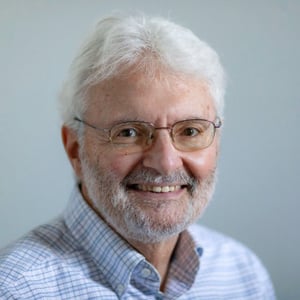
CEO, Asset Forfeiture Law, LLC
As a federal prosecutor, Stefan D. Cassella was one of the federal government’s leading experts on asset forfeiture and money laundering law for over thirty years. He now serves as an expert witness and consultant to law enforcement agencies and the private sector as the CEO of AssetForfeitureLaw, LLC.
As a Deputy Chief of the Justice Department’s Asset Forfeiture and Money Laundering Section and later as the Chief of the Asset Forfeiture and Money Laundering Section in the U.S. Attorney’s Office in Baltimore, Maryland, Mr. Cassella litigated some of the Government’s most significant forfeiture and money laundering cases and drafted many of the federal forfeiture and money laundering statutes.
He is the author of Asset Forfeiture Law in the United States, a one-volume resource designed to lead the practitioner, prosecutor, judge and policy maker through the labyrinth of statutes, rules and cases that govern this dynamic area of the law, and of more than 40 law review articles on money laundering and forfeiture. He has trained state and federal prosecutors and agents and their counterparts in numerous foreign countries, including over 200 lectures at the National Advocacy Center at the University of South Carolina.
Mr. Cassella is also the author and publisher of the Money Laundering and Forfeiture Digest, a monthly compendium of the forfeiture and money laundering cases decided by the federal courts that is circulated to hundreds of state, federal and foreign prosecutors and lawyers, law enforcement agents, academics and policy makers in the U.S. and abroad.
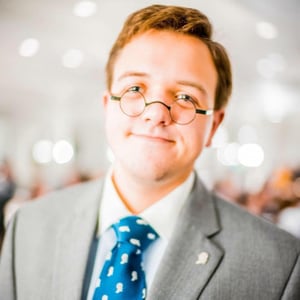
Adam Griffin is a graduate of the University of North Carolina School of Law. During law school, he served as a research assistant to Professor Stephen E. Sachs and UNC Law Dean Martin Brinkley. After law school, Adam spent two years litigating for liberty at the Institute for Justice as an inaugural Law and Liberty Fellow. He then served as a law clerk to Chief Judge Richard E. Myers in the United States District Court for the Eastern District of North Carolina, and previously worked at Pacific Legal Foundation and the Civil Rights Division of the Department of Justice.
Senior Attorney, Institute for Justice
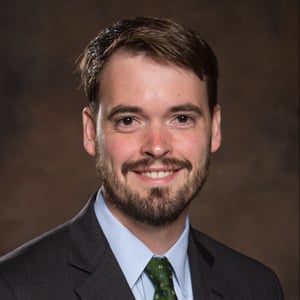
Rob Johnson is a senior attorney at the Institute for Justice, where he litigates to protect private property, free speech, and other individual rights. Rob is a nationally-recognized expert on civil forfeiture. He previously represented a series of small business owners who had their entire bank accounts seized by the IRS, and he launched an initiative that resulted in the IRS reopening hundreds of closed forfeiture cases and returning millions of dollars. He has also litigated cases challenging the constitutionality of civil forfeiture procedures, and he scored a victory striking down a forfeiture program as a violation of due process.
Beyond civil forfeiture, Rob has litigated cases defending a range of constitutional rights. He was part of teams that successfully challenged occupational licensing requirements for tour guides in Savannah and Charleston. He also developed a class action lawsuit fighting the NYPD’s use of a draconian “no-fault eviction” statute to coerce residents to waive their constitutional rights, which led New York City to reform the challenged law.
Rob’s writing has been published in the Wall Street Journal, Washington Post, Politico, and Reason, among other venues. Rob has testified about occupational licensing before the House and Senate Judiciary Committees and has twice testified about civil forfeiture before the House Ways & Means Oversight Subcommittee. He has also testified before state legislatures across the country.
From 2014-2017, Rob served as IJ’s first Elfie Gallun Fellow for Freedom and the Constitution. In that role, Rob wrote and spoke about the vital role the U.S. Constitution plays in protecting our most precious freedoms. He is currently at work on a book about the Fourteenth Amendment.
Rob studied literature and anthropology at Columbia University, and he studied law at Harvard Law School. Upon graduation, he clerked for Chief Judge Alex Kozinski on the Ninth Circuit and for Justice Anthony Kennedy on the Supreme Court.
Rob lives in Cleveland with his wife and two daughters—all named after characters in Shakespeare plays—and is an amateur large format photographer.
David B. Smith, PLLC
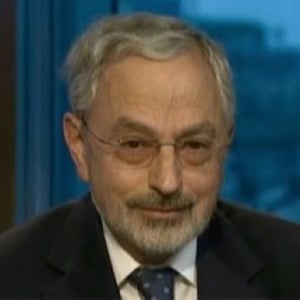
David B. Smith has over 35 years of white collar criminal experience. He has litigated scores of cases and argued more than one hundred federal criminal appeals as a federal prosecutor and defense attorney, including extensive experience with civil and criminal litigation in the Supreme Court of the United States. Mr. Smith has been repeatedly named in the list of preeminent lawyers in the field of white collar criminal defense by Best Lawyers in America (2012-2021) and Virginia Super Lawyers (2009-2020), and has received the President’s Commendation for outstanding service from the National Association of Criminal Defense Lawyers in 1993, 1994, and 2004. He served for nine years on the Board of the NACDL and has been Chair of its Forfeiture Committee since 1990. He is also a Vice-Chair of its Amicus Committee.
For nearly a decade prior to entering private practice, Mr. Smith was a prosecutor in the Criminal Division of the United States Department of Justice and at the United States Attorney’s Office for the Eastern District of Virginia, where he was involved in complex white collar criminal investigations, trials, and appeals involving defense procurement fraud, congressional bribery, espionage, tax evasion, mail fraud, false claims and other crimes. In 1995-1996, Mr. Smith served as an Associate Independent Counsel in the investigation of Michael Espy, the former secretary of agriculture.
Mr. Smith is regarded as the foremost expert in the country on asset forfeiture law and practice. He is the author of the leading two-volume legal treatise on forfeiture, Prosecution and Defense of Forfeiture Cases (2020), published by Matthew Bender, and co-author of Civil RICO (2020), also published by Matthew Bender. He has testified before congressional committees several times with respect to forfeiture, restitution, and money laundering legislation. Mr. Smith has regularly counseled the Senate and House Judiciary Committees on forfeiture legislation, and was heavily involved in drafting the Civil Asset Forfeiture Reform Act of 2000. He has also assisted the federal advisory committees in writing the procedural rules governing criminal and civil forfeiture proceedings. In 2000-2001, Mr. Smith was appointed by Senator Richard Shelby (R. Ala.), the Chairman of the Senate Intelligence Committee, to serve as a Commissioner with the Judicial Review Commission on Foreign Asset Control.

Professor of Law, Stanford Law School
Orin S. Kerr is a Professor of Law at Stanford Law School, where he teaches and writes in the areas of criminal procedure and computer crime law. Kerr earned mechanical engineering degrees from Princeton University and Stanford University before graduating with a J.D. from Harvard Law School. He is a former law clerk to Justice Anthony M. Kennedy at the United States Supreme Court and Judge Leonard I. Garth of the U.S. Court of Appeals for the Third Circuit.

A Seat at the Sitting - March 2025
Allison Daniel, Erielle Azerrad, Jennifer B. Dickey, Elizabeth Kiernan, Sarah Welch, Morgan Ratner
Each month, a panel of constitutional experts convenes to discuss the Court’s upcoming docket sitting...
Litigation Update: United States v. Peterson
Robert K. McBride, Michael Williams
In February 2025, the Fifth Circuit issued an opinion in United States v. Peterson, ruling...
Courthouse Steps Decision: Fischer v. United States
Theodore Cooperstein
Fischer v. United States concerned whether to prove a violation of 18 U.S.C. § 1512(c)(2)...
Topics
Pulsifer v. United States: The Statutory Interpretation Rubber Hits the Criminal Law Road
In Pulsifer v. United States, the Supreme Court examined the criteria for a defendant to...
Showcase Panel III: Originalism on the Ground
John C. Harrison, Gregory G. Katsas, Randolph D. Moss, Andrew Oldham, Jed Shugerman
Featuring: Prof. John C. Harrison, James Madison Distinguished Professor of Law, University of Virginia School of...
Topics
The Second Amendment, From Bruen to Rahimi
On November 7, the Supreme Court will hear oral arguments in United States v....
Courthouse Steps Oral Argument: Dubin v. United States
John C. Richter
On February 27, 2023, the United States Supreme Court is set to hear Oral Argument...
A Seat at the Sitting - February 2023
Adam Candeub, Robert S. Driscoll, Karen Harned, John C. Richter
Each month, a panel of constitutional experts convenes to discuss the Court’s upcoming docket...
Undue Delay or Due Process? Does the Due Process Clause Require a Prompt Post-Seizure Hearing When the Government Seizes an Individual’s Property?
Stefan D. Cassella, Adam F. Griffin, Robert E. Johnson, David B. Smith
The Institute for Justice (IJ) has filed a petition for certiorari in Serrano v. CPB, asking...
Van Buren v. United States - Post-Argument SCOTUScast
Orin S. Kerr
On November 30, 2020 the Supreme Court heard oral argument in Van Buren v. United...