
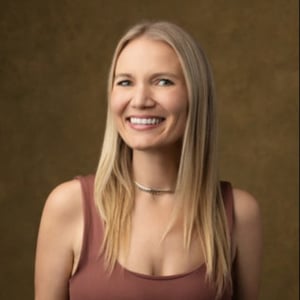
Constitutional Scholarship Director and Senior Legal Analyst, Pacific Legal Foundation
Anastasia Boden is Director of Constitutional Scholarship at Pacific Legal Foundation, where she leads the organization’s Supreme Court commentary and directs scholarly analysis in support of the firm’s litigation. She has represented entrepreneurs and small businesses nationwide in challenges to onerous licensing regimes, anti-competitive titling restrictions, Certificate of Need (“competitor’s veto”) laws, and other forms of unnecessary red tape that block economic opportunity.
Prior to this role, Anastasia developed nearly a dozen constitutional challenges to Certificate of Need laws across the country, helping spur legislative reform in Montana, Pennsylvania, and West Virginia. Her victories include a ruling invalidating Houston’s busking restrictions, multiple appellate decisions expanding access to the courts for civil rights plaintiffs, and the legislative repeal of Virginia’s happy-hour advertising ban.
Her writings on law and liberty have been featured in USA Today, The Washington Post, The Wall Street Journal, the Los Angeles Times, the Chicago Tribune, Forbes, and more, and she has appeared on Headline News, CBS News, Fox News, ReasonTV, Newsmax, and John Stossel. In 2020, she was featured on Libertarian Party presidential candidate Jo Jorgensen’s Supreme Court shortlist.
Anastasia earned her BA with dean’s honors from the University of California, Santa Barbara, and her JD from Georgetown University Law Center, where she was research assistant to Professor Randy E. Barnett—the “intellectual godfather” of the constitutional challenge to Obamacare. She is the co-creator of the podcast Dissed, about infamous Supreme Court dissents. She authors the biweekly newsletter SCOTUS Scoop and the column, “In Dissent” for SCOTUSblog.
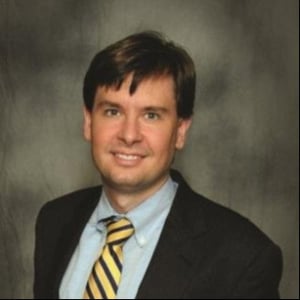
Policy Director, Fulcrum Foundation
Reeve T. Bull is the Policy Director of the Fulcrum Foundation. In this role, he promotes executive and legislative reforms designed to update and streamline the regulatory system. These reforms draw upon the work Mr. Bull undertook in his previous role as the Director of the Virginia Office of Regulatory Management (ORM). During his time at ORM, he led the Commonwealth's efforts related to regulatory streamlining and permitting transparency and the development and implementation of artificial intelligence policy.
Previously, Mr. Bull served as the Research Director of the Administrative Conference of the United States (ACUS). At ACUS, he worked on projects related to international regulatory cooperation, the use of science by administrative agencies, presidential review of agency rulemaking, cost-benefit analysis, government contractor ethics, and e-rulemaking, among other things. Mr. Bull has also served as an Adjunct Professor at the Antonin Scalia Law School and the George Washington University, teaching courses on Administrative Law. Mr. Bull has published numerous articles in highly regarded law journals, including the Administrative Law Review, George Washington Law Review, and Law and Contemporary Problems. Mr. Bull is an Elected Member of the American Law Institute and a Public Member of the Administrative Conference of the United States.
Earlier in his career, Mr. Bull worked in the private sector as an associate with the law firm Gibson, Dunn & Crutcher LLP and in government service as a law clerk to the Honorable Alvin A. Schall of the Federal Circuit Court of Appeals. During his time as an associate with Gibson Dunn, Mr. Bull worked on a variety of litigation and regulatory matters. He participated in cases appearing before the United States Supreme Court, several federal Courts of Appeals, and numerous federal district courts and state trial courts. His experience spanned a variety of practice areas, including administrative, constitutional, intellectual property, antitrust, environmental, securities, and white collar criminal law. During his clerkship for Judge Schall, Mr. Bull assisted with appeals in cases spanning a variety of areas, with particular emphasis on administrative and patent law.
Mr. Bull attended law school at Duke University, where he graduated with highest honors and was inducted into the Order of the Coif. He was one of two recipients of the Willis Smith Award for compiling the most outstanding academic record in the graduating class and the recipient of the James S. Bidlake Memorial Award for achieving the highest grade in his first year legal writing section. Mr. Bull also served as a Note Editor on the Duke Law Journal. Prior to law school, Mr. Bull attended the University of Oklahoma, where he graduated summa cum laude with a Bachelors in Chemistry and was inducted into Phi Beta Kappa.

Assistant Professor of Law, George Mason University Antonin Scalia Law School
Caroline Cecot is an Assistant Professor of Law at Antonin Scalia Law School at George Mason University. She teaches environmental and administrative law and has published articles in peer-reviewed journals and law reviews on cost-benefit analysis, regulatory reform, and environmental regulation.
Professor Cecot holds a JD from Vanderbilt Law School, where she received the Robert F. Jackson and Archie B. Martin Memorial Prizes for her grades; was elected to Order of the Coif; and served as Senior Articles Editor for the Vanderbilt Law Review and Articles Editor for the Environmental Law and Policy Annual Review. Professor Cecot also holds a PhD in law and economics from Vanderbilt University. Following her graduate studies, Professor Cecot was the Postdoctoral Research Scholar in Law and Economics at Vanderbilt Law School and clerked for the Honorable Raymond J. Lohier, Jr., of the United States Court of Appeals for the Second Circuit. She was also Legal Fellow at the Institute for Policy Integrity at New York University School of Law, where she authored amicus curiae briefs and submitted comments on environmental and regulatory issues. Professor Cecot graduated from Harvard College magna cum laude with an AB degree in economics.
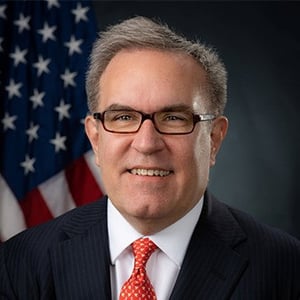
Holland & Hart, Partner
On February 28, 2019, the U.S. Senate confirmed Andrew Wheeler as the fifteenth Administrator of the Environmental Protection Agency. President Donald J. Trump had announced his appointment as the Acting EPA Administrator on July 5, 2018. Mr. Wheeler had previously been confirmed by the U.S. Senate as the EPA Deputy Administrator on April 12, 2018.
Mr. Wheeler has dedicated his career to advancing sound environmental policies. He began his career during the George H. W. Bush Administration as a Special Assistant in EPA’s Pollution Prevention and Toxics office.
He was a Principal and the team leader of the Energy and Environment Practice Group at FaegreBD Consulting, as well as Counsel at Faegre Baker Daniels law firm, where he practiced since 2009. He also served as the Co-chair of the Energy and Natural Resources Industry team across the entire firm.
Prior to his work with the firm, Mr. Wheeler served for six years as the Majority Staff Director and Chief Counsel, as well as the Minority Staff Director, of the Senate Committee on Environment and Public Works. Before his time at the full Senate EPW Committee, Mr. Wheeler served in a similar capacity for six years for the Subcommittee on Clean Air, Climate Change, Wetlands and Nuclear Safety.
Mr. Wheeler is the past Chairman of the National Energy Resource Organization (NERO) and a Stennis Fellow. Mr. Wheeler is also an Eagle Scout.
Mr. Wheeler is from Fairfield, Ohio. He completed his law degree at Washington University in St. Louis, his MBA at George Mason University, and his undergraduate work at Case Western Reserve University in English and Biology.
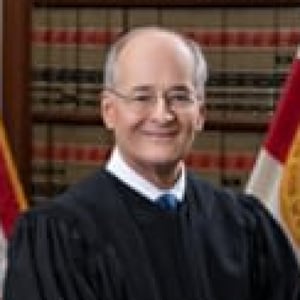
Chief Justice, Florida Supreme Court
Justice Charles Canady was born in Lakeland, Florida, in 1954. He is married to Jennifer Houghton, and they have two children. He received his B.A. from Haverford College in 1976 and his J.D. from the Yale Law School in 1979.
Justice Canady practiced law with the firm of Holland and Knight in Lakeland from 1979 through 1982. He practiced with the firm of Lane, Trohn, et al., from 1983 through 1992.
From November 1984 to November 1990, Justice Canady served three terms in the Florida House of Representatives, and from January 1993 to January 2001, he served four terms in the United States House of Representatives. Throughout his service in Congress, Justice Canady was a member of the House Judiciary Committee. For three terms, from January 1995 to January 2001, Justice Canady was the Chairman of the House Judiciary Subcommittee on the Constitution.
Upon leaving Congress, Justice Canady became General Counsel to Governor Jeb Bush. He was appointed by Governor Bush to the Second District Court of Appeal for a term beginning November 20, 2002.
On August 28, 2008, Justice Canady was appointed to the Florida Supreme Court by Governor Charlie Crist and took office on September 8, 2008. He served as Chief Justice from July 2010 through June 2012. In March 2018, he was elected by his colleagues to serve as Chief Justice for a second time, with his two-year term starting July 1, 2018, and a third time starting July 1, 2020.

Partner, McDermott Will & Emery
Robert (Bob) J. Cordy’s practice includes business litigation, white collar criminal defense, internal investigations, appellate work and major public/private projects.
Bob previously served for 16 years as an associate justice of the Massachusetts Supreme Judicial Court. He has worked with judges from Mexico, Russia, China, Kosovo, Turkey, Uzbekistan, Ukraine, Afghanistan and other countries on issues relating to judicial ethics, rule of law principles and the American judicial system. Bob also served as chair of the Supreme Judicial Court Rules Committee, co-chair of the Supreme Judicial Court Judiciary-Media Committee and member of the Committee for Capital Planning for the Judicial System.
Bob began his career working for the Massachusetts Public Defenders Office, and subsequently held positions with the Massachusetts Department of Revenue, the Massachusetts State Ethics Commission and the United States Attorney’s Office where he became the chief of the Public Corruption prosecution unit. Bob also served as chief legal counsel to Massachusetts Governor William F. Weld, working on a wide range of policy issues including regulatory and criminal justice reform, ethics in government and the appointment of judges. Before his appointment to the Supreme Judicial Court in 2001, Bob was a partner and head of McDermott’s Boston office.
Bob is also a member of our legal cannabis industry group. Our Cannabis Industry group is a multidisciplinary team of lawyers providing clients with regulatory, litigation, intellectual property, trade and tax services with respect to their investments and participation in the cannabis industry, all subject to the Firm’s obligations under federal and state laws and bar licensure rules.
U.S. District Court Judge, District of Massachusetts
Nathaniel M. Gorton is a federal judge for the United States District Court for the District of Massachusetts. He joined the court in 1992 after being nominated by President George H.W. Bush. At the time of appointment, he was a private practice in Massachusetts.
United States District Judge for the District of Massachusetts
Patti B. Saris is the Chief United States District Judge of the United States District Court for the District of Massachusetts. She is also the former Chair of the United States Sentencing Commission.

Chief Judge, United States Court of Appeals, Sixth Circuit
JEFFREY S. SUTTON is the Chief Judge of the United States Court of Appeals for the Sixth Circuit. He has served as Chair of the Federal Judicial Conference Committee on Rules of Practice and Procedure, Chair of the Advisory Committee on Appellate Rules, and Chair of the Supreme Court Fellows Commission. He currently serves as Chair of the Executive Committee of the Judicial Conference of the United States. Since 1993, Chief Judge Sutton has been an adjunct professor at The Ohio State University College of Law, where he teaches seminars on State Constitutional Law, the United States Supreme Court, and Appellate Advocacy. He also teaches a class on State Constitutional Law at Harvard Law School. Among other publications, he is the author of Who Decides? States as Laboratories of Constitutional Experimentation and 51 Imperfect Solutions: States and the Making of American Constitutional Law. He is the co-author of a casebook, State Constitutional Law: The Modern Experience, as well as The Law of Judicial Precedent. He is also the co-editor of The Essential Scalia: On the Constitution, the Courts, and the Rule of Law. In 2006, Chief Judge Sutton was elected to the American Law Institute, and in 2017 he was elected to its Council.
U.S. District Court Judge, District of Massachusetts
Douglas Preston Woodlock is a federal judge for the U.S. District Court for the District of Massachusetts. He joined the court in 1986 after being nominated by President Ronald Reagan. At the time of appointment, Woodlock served as Chairman of the Massachusetts Committee for Public Counsel Services.
U.S. District Court Judge, District of Massachusetts
Rya Weickert Zobel is a federal judge of the United States District Court for the District of Massachusetts. She joined the court in 1979 after being nominated by President Jimmy Carter. At the time of her appointment, Zobel was a private practice attorney inMassachusetts.

Adjunct Fellow, Manhattan Institute
Judith Miller is an adjunct fellow at the Manhattan Institute and a City Journal contributing editor. A best-selling author and Pulitzer Prize-winning investigative reporter formerly with the New York Times, she has won numerous awards for her articles and her defense of the First Amendment.
Since 2008, Ms. Miller has been a commentator for Fox News, speaking on terrorism and other national security issues, the Middle East, U.S. foreign policy, and the need to strike a delicate balance between protecting both national security and civil liberties in a post-9/11 world.
Prior to leaving the Times in October, 2005, she spent 85 days in jail to defend a reporter's right to protect confidential sources. That year she received the Society of Professional Journalists' "First Amendment Award" for her defense of an independent press. Since leaving jail, she has been advocating the enactment of a Federal shield law to protect the relationship between reporters and their sources and the public's right to know.
Ms. Miller has written four books and contributed chapters to several others. Her most recent book, "Germs: Biological Weapons and America's Secret War" (Simon & Schuster, 2001), written with two Times colleagues, topped the best seller's list in the wake of 9/11 and the anthrax letter terrorist attacks. Her previous book, "God Has Ninety-Nine Names", (Simon & Schuster, 1996) explores the spread of Islamic extremism in ten Middle Eastern countries, including Israel and Iran. "One, By One, By One" (Simon & Schuster, 1990) is a highly praised account of how people in six nations have distorted the memory of the Holocaust. That same year, she co-authored "Saddam Hussein and the Crisis in the Gulf" (Times Books), which also topped The Times Best Seller list during the 1991 Gulf war. Her new book, “The Story, A Reporter’s Journey,” is being published by Simon & Schuster this spring.
In 2002, Ms. Miller was part of a small team that won a Pulitzer Prize for "explanatory journalism" for her January, 2001 series on Osama bin Laden and Al Qaeda. That same year, she won an Emmy for her work on a Nova/New York Times documentary based on articles for her book, "Germs." She was part of the Times team that won the prestigious DuPont award for a series of programs on terrorism for PBS's "Frontline."
Ms. Miller holds a bachelor's degree from Barnard and a master's from Princeton University's Woodrow Wilson School of Public and International Affairs. She resides in New York City and Sag Harbor with her husband, Jason Epstein, a publisher and writer.

Visiting Scholar, American Enterprise Institute
Dr. Arthur Herman (Ph.D. Johns Hopkins, 1985) is the author of seven books, including the New York Times bestselling How the Scots Invented the Modern World (2001); the Pulitzer Prize Finalist Gandhi and Churchill (2008); To Rule the Waves: How the British Navy Shaped the Modern World (nominated for the UK’s Mountbatten Prize); and the highly acclaimed Freedom’s Forge: How American Business Produced Victory in World War II, which The Economist magazine picked as one of the Best Books of 2012.
His most recent work, The Cave and the Light: Plato Versus Aristotle and the Struggle for the Soul of Western Civilization, was published by Random House in 2013.
Educated at the University of Minnesota and Johns Hopkins University in history and classics, Dr. Herman is a frequent contributor on defense, energy, and technology issues to Commentary magazine, the New York Post, National Review, and the Wall Street Journal. He was also the first non-British citizen to be named to the Scottish Arts Council from 2007 to 2009.

Partner, Gibson Dunn & Crutcher
Douglas R. Cox is a partner in the Washington, D.C. office of Gibson, Dunn & Crutcher and Vice-Chair of the firm's Crisis Management Practice Group. He practices in the areas of constitutional and general commercial litigation, appellate law, and governmental matters.
Mr. Cox has represented numerous clients in litigation before federal and state trial and appellate courts. He played a principal role in the firm's successful representation of the prevailing candidate before the Supreme Court of the United States in Bush v. Palm Beach County Canvassing Board and Bush v. Gore, stemming from the 2000 presidential election, and in other cases before the Supreme Court involving equal protection, voting rights and election law, the scope of the jury trial right under the Seventh Amendment, and other constitutional and statutory issues.
Mr. Cox successfully represented the National Association of Securities Dealers ("NASD") in a series of trial and appellate matters, including DL Capital Group, LLC v. Nasdaq Stock Market, Inc., 409 F.3d 93 (2d Cir. 2005) and Sparta Surgical Corp. v. NASD, 159 F.3d 1209 (9th Cir. 1998).
Mr. Cox frequently represents accounting firms in a variety of matters, including matters involving the SEC and PCAOB. He also has substantial experience representing clients before congressional investigating committees.
Mr. Cox previously served for five years during the Reagan and Bush Administrations in the Justice Department's Office of Legal Counsel, becoming Principal Deputy Assistant Attorney General during the Bush Administration. In that Office, he provided legal advice to Executive Branch departments; resolved legal disputes on behalf of the Attorney General between Executive Branch departments; prepared formal opinions of the Attorney General; drafted and issued opinions on legal issues of importance to the Executive Branch; and advised Congress as to the constitutionality of pending legislation.
From 1981 through 1987, Mr. Cox practiced in New York City with a national firm, representing major corporations in state and federal courts. His practice focused on intellectual property, securities, and international tax litigation.
Mr. Cox received his law degree, cum laude, from Harvard Law School in 1980, where he served as Editor-in-Chief of the Harvard Journal of Law and Public Policy from 1979-1980. He received his undergraduate degree in history, magna cum laude, from Princeton University in 1977. He attended Oxford University on a Knox Scholarship in 1980-1981.
In 2005, Chief Justice Rehnquist appointed Mr. Cox to serve as a member of the Judicial Conference Standing Committee on Rules of Practice and Procedure. In 2008 he was reappointed by Chief Justice Roberts.

Partner, Gibson Dunn & Crutcher LLP
Miguel A. Estrada is a partner in the Washington, D.C. office of Gibson, Dunn & Crutcher.
Mr. Estrada has represented clients before federal and state courts throughout the country in a broad range of matters. He has argued 24 cases before the United States Supreme Court, and briefed many others. He has also argued dozens of appeals in the lower federal courts.
Best Lawyers® recognized Mr. Estrada as a 2020 Lawyer of the Year in Intellectual Property Litigation and as a Lawyer of the Year in Appellate Practice. He has been recognized by Benchmark Litigation as a 2020 U.S. Appellate Litigation “Star”. In 2014, The American Lawyer named Mr. Estrada a “Litigator of the Year,” praising his “brains and tenacity” and noting he is the lawyer to call for “a tough, potentially unwinnable case.” From 2014-2021, Chambers & Partners has named him as one of a handful of attorneys that it ranked in the top tier among the nation’s leading appellate lawyers. Chambers & Partners noted that “clients are impressed by his intellect and ability, with one saying, ‘His papers are just blindingly clear in what they say and devastating in how they marshal the arguments.’” The Atlantic described his oral argument in a 2014 high-profile separation-of-powers case as “one of the most dazzling arguments the marble chamber has heard in many years.”
Mr. Estrada was selected by his peers for inclusion in the 2020 edition of The Best Lawyers in America® in the area of Appellate Law, in addition to previous recognition by the publication in the specialties of Bet-the-Company Litigation, Commercial Litigation and Criminal Defense: White Collar, Intellectual Property Litigation, and Regulatory Enforcement Litigation in the areas of SEC, Telecom, and Energy. In 2017, he was elected as a member of the American Law Institute. In 2021, Mr. Estrada was named among the Lawdragon 500 Leading Lawyers in America. In 2004, Legal Times named him one of the top 12 appellate litigators in the D.C. area, noting that “people who follow appellate practice in Washington have known for several years that Estrada . . . is one of the best around.” Also in 2004, Washingtonian Magazine named him one of the top constitutional law lawyers “who could become one of the legends of the Supreme Court bar.”
Mr. Estrada joined Gibson Dunn in 1997, after serving for five years as Assistant to the Solicitor General of the United States. He previously served as Assistant U.S. Attorney and Deputy Chief of the Appellate Section, U.S. Attorney’s Office, Southern District of New York. In those capacities, Mr. Estrada represented the government in numerous jury trials and in many appeals before the U.S. Court of Appeals for the Second Circuit. Before joining the U.S. Attorney’s Office, Mr. Estrada practiced corporate law in New York with Wachtell, Lipton, Rosen & Katz.
Mr. Estrada is a Trustee of the Supreme Court Historical Society. He was formerly a member of the Board of Visitors of Harvard Law School.
Mr. Estrada served as a law clerk to the Honorable Anthony M. Kennedy in the U.S. Supreme Court from 1988 to 1989 and to the Honorable Amalya L. Kearse in the U.S. Court of Appeals for the Second Circuit from 1986 to 1987. He received a J.D. degree magna cum laude in 1986 from Harvard Law School, where he was editor of the Harvard Law Review. Mr. Estrada graduated with an A.B. degree magna cum laude and Phi Beta Kappa in 1983 from Columbia College, New York. He is fluent in Spanish and proficient in French.
Representative Supreme Court matters include:
In 2011, the Supreme Court appointed Mr. Estrada to brief and argue two criminal cases –Dorsey v. United States and Hill v. United States – in which the Solicitor General declined to defend the judgments of the court of appeals. Mr. Estrada was appointed to argue the position that the Solicitor General had declined to defend.
Mr. Estrada was also part of the team that successfully presented then Governor Bush’s position to the Supreme Court in Bush v. Gore (2000). Other cases that Mr. Estrada handled in the Supreme Court include Granholm v. Heald (2005) (dormant Commerce Clause and Twenty-First Amendment), Vermont Agency of Natural Resources v. United States ex rel. Stevens (2000) (False Claims Act, Article III standing and Eleventh Amendment immunity), Old Chief v. United States (1997) (rules of evidence), United States v. Mezzanatto (1995) (evidence and plea bargaining), United States v. Robertson (1995) (constitutional limits on Congress’s Commerce Clause powers), Citizens Bank of Maryland v. Strumpf (1995) (bankruptcy law), and NOW, Inc. v. Scheidler (1994) (RICO).
Recent Court of Appeals matters include:
In addition, Mr. Estrada is lead appellate counsel to Vivendi S.A. in two securities-fraud appeals from jury verdicts that are currently pending in the Second Circuit, and to the National Association of Broadcasters in a challenge to certain procedures promulgated by the FCC in connection with the upcoming Spectrum Auction. Mr. Estrada also recently presented argument before the D.C. Circuit on behalf of the tobacco industry in a first amendment challenge to certain compelled disclosures that were imposed as part of the government’s long-running civil RICO case against the industry.
Other matters:

Virginia’s New Approach to Regulatory Modernization
Anastasia P. Boden, Reeve T. Bull, Caroline Cecot, Andrew Wheeler
Regulatory modernization has been a topic of nationwide interest in recent months. With its recently...
Shakespeare and the Law: Measure for Measure
Charles T. Canady, Robert J. Cordy, Nathaniel M. Gorton, William Meade, Patti B. Saris, F Saylor, Jeffrey S. Sutton, Douglas P. Woodlock, Rya W. Zobel
The Federalist Society and Commonwealth Shakespeare Company presentShakespeare’s Measure by Measure and the Art of...
The Story: A Reporter's Journey - Podcast
Judith Miller, Arthur Herman
In her book, The Story: A Reporter's Journey, former New York Times reporter Judith Miller...
2011 Annual Supreme Court Round Up
Douglas R. Cox, Miguel A. Estrada
On July 12, 2011, Miguel Estrada of Gibson Dunn & Crutcher delivered the Annual Supreme Court...
Department of Education v. Academic Standards
Jennifer Nelson
On July 14, the U.S. Department of Education's Office of Civil Rights announced that it...