
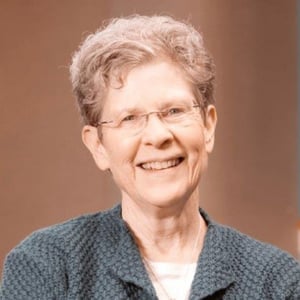
Senior Judge, U.S. Court of Appeals, Sixth Circuit
Alice M. Batchelder obtained her first judicial post as a judge on the U.S. Bankruptcy Court for the Northern District of Ohio in 1983. After two years, she was appointed by President Ronald Reagan to the U.S. District Court for the Northern District of Ohio. In 1991 President George H.W. Bush appointed her to her position on the U.S. Court of Appeals for the Sixth Circuit. From August 2009 to August 2014, Judge Batchelder served as Chief Judge of the Sixth Circuit. In March 2019, she took Senior Status and continues to work nearly full time.
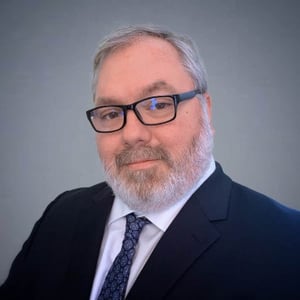
Director of Engagement, New Civil Liberties Alliance
NCLA’s Director of Engagement, Clegg Ivey, began his career as a software developer when he sold his first piece of code at the age of 15. Later, as a tech attorney, he represented clients like Google, Apple, Netscape, and Sun. Clegg then became a Silicon Valley tech entrepreneur, raising millions in venture capital for a series of startups he co-founded that were eventually acquired by firms like Cisco, Actel, and others. Most recently, he spent years building a local retail empire in Savannah that the COVID lockdown forced him to close.
Clegg has been fighting against the encroachment of the administrative state for three decades. As a tech lawyer in the ‘90s, he worked to keep the fledgling Internet free of government regulation. In the ‘00s he defended his own startups – against the FDA when it came after his energy drink company and against the FTC when it threatened his telephony and computer monitoring startups. During the ‘10s Clegg fought the good fight against countless state and local bureaucrats and regulatory agencies that made life difficult for his retail businesses.
Clegg is a graduate of Tulane University and the University of Chicago Law School. He also clerked for the Hon. Alice M. Batchelder on the U.S. Court of Appeals for the Sixth Circuit. He taught classes on technology and public policy as an adjunct at Tulane University and classes on entrepreneurship as a visiting professor at Zhejiang University.
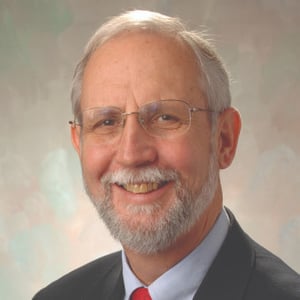
C. Blake McDowell, Jr. Professor of Law, University of Akron
William S. Jordan, III is Emeritus Professor of Law, retired from The University of Akron School of Law, where he taught Administrative Law. He also taught Property, Environmental Law, and Evidence. He received his B.A. from Stanford University and his J.D., cum laude, from the University of Michigan. He served as an attorney-advisor at the U.S. Department of Housing and Urban Development, then with the Washington, D.C., firm of Sheldon, Harmon, Roisman & Weiss, which became Harmon, Weiss, and Jordan, where he engaged primarily in environmental and administrative litigation. Dean Jordan is an active member and Fellow of the Section of Administrative Law and Regulatory Practice of the ABA. He has served on the Council of the Section, as Chair of the Judicial Review Committee, the Membership Committee, and the Publications Committee. He served for eighteen years as a contributing editor to the Administrative and Regulatory Law News.
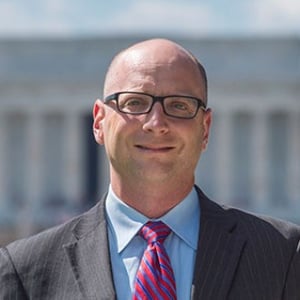
Partner, Consovoy McCarthy Park PLLC
Mr. Strawbridge provides clients with advice and representation at the pre-litigation, trial, and appellate stages. He has represented a broad range of individual and institutional clients on matters of constitutional law, financial and securities regulation, environmental laws, complex commercial disputes, and consumer protection statutes. His experience includes arbitrations, trial and appellate litigation, and administrative and regulatory proceedings.
Mr. Strawbridge served as a law clerk to Supreme Court Justice Clarence Thomas, Judge Morris Sheppard Arnold of the United States Court of Appeals for the Eighth Circuit, and Justice Howard Dana of the Supreme Judicial Court of Maine. Previously, Mr. Strawbridge was a partner at two large international law firms. He worked as a newspaper reporter for four years before attending law school. Mr. Strawbridge is an adjunct professor for the Supreme Court Clinic at the Antonin Scalia Law School at George Mason University.
Mr. Strawbridge earned a Bachelor of Journalism from the University of Missouri, and his J.D. summa cum laude from Creighton University School of Law. Mr. Strawbridge is a member of the Maine and Massachusetts bars.
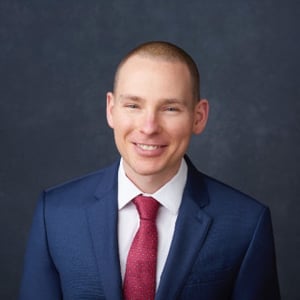
Shareholder & Co-Chair of the Workplace Policy Institute, Littler Mendelson P.C.
Alexander T. MacDonald advises employers on all aspects of the employment and labor landscape, focusing on emerging legislation and regulation. He has extensive experience advising businesses on worker classification, arbitration, the administrative and regulatory process, and the future of work. He frequently writes, publishes, and speaks on these subjects. His work has been cited by scholars and appellate courts. He is a recognized voice for the management perspective.
Alexander is a co-chair of the Workplace Policy Institute (WPI) team. With WPI, he advises employers on legislative, administrative, and regulatory developments at the state and federal level. He advocates for employers in the regulatory and administrative process. He also helps employers protect their businesses by understanding and anticipating cutting-edge legal developments.
Alexander also has extensive experience in traditional labor law. He represents management in all aspects of labor-management relations, including unfair labor practice charges, grievance arbitrations, representation elections, contract negotiations, and related litigation, including litigation in the U.S. courts of appeals.
Before joining Littler, Alexander served as the director, future of work, for a major technology company. He also worked in a national labor and employment law firm and a major public-sector general counsel’s office. He was a law clerk to the senior judges in the District of Columbia Court of Appeals.
He is also a veteran of the U.S. Air Force. He served in Operations Enduring Freedom and Iraqi Freedom. In law school, he graduated first in his class
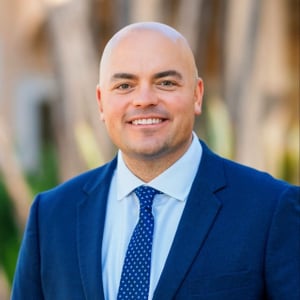
Solicitor General, State of Florida
Previously, David served as Senior Advisor to Florida Governor Ron DeSantis, Chief Deputy Attorney General of Idaho, and Solicitor General of Montana.
As an appointee of President Donald J. Trump, David served as the Principal Deputy General Counsel at the U.S. Department of Commerce, where he advised the Secretary on legal and policy matters implicating every corner of Commerce’s broad mandate. In this role, David worked closely with the White House to advance the President's agenda, and managed the Department’s expansive litigation portfolio. He also defended Department officials in Congressional investigations, and served as Commerce’s Regulatory Reform Officer and Chief Environmental Review Permitting Officer.
David clerked for Judge Lawrence VanDyke on the U.S. Court of Appeals for the Ninth Circuit, and helped create and lead the public interest litigation group at the Freedom Foundation, where he litigated constitutional, labor, and campaign finance cases before federal and state courts and administrative agencies.
David received his B.A. from Western Kentucky University. After a year teaching overseas, David earned his J.D. from The George Washington University Law School, where he served as symposium editor for the Harvard Journal of Law & Public Policy and President of the Federalist Society.
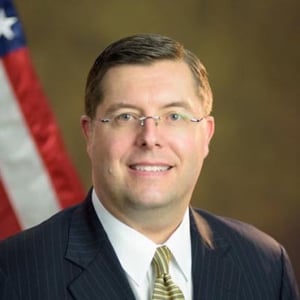
Chief Deputy Attorney General
Ryan Newman is currently Chief Deputy Attorney General for Florida Office of the Attorney General.
During the first Trump Administration, he served as Counselor to the United States Attorney General for national security and international affairs, Deputy General Counsel (Legal Counsel) for the Department of Defense, and Acting Assistant Attorney General for the Office of Legal Policy at the Department of Justice. Prior to serving in the Executive Branch, Ryan was Chief Counsel to United States Senator Ted Cruz during the 114th Congress.
Ryan served as a law clerk to the Honorable Samuel A. Alito, Jr. on the United States Supreme Court, the Honorable Richard J. Leon on the United States District Court for the District of Columbia, and the Honorable J.L. Edmondson on the United States Court of Appeals for the Eleventh Circuit.
Prior to law school, Ryan was an armor officer in the United States Army assigned to the 1st Squadron, 10th U.S. Cavalry Regiment (Buffalo Soldiers). He deployed to Iraq in 2003 for Operation Iraqi Freedom.
Ryan graduated from the United States Military Academy at West Point in 1998. He earned his law degree with high honors from The University of Texas School of Law in 2007.

Professor of Law and the James Edgar Hervey '50 Chair of Litigation, UC Hastings Law
Professor Dorit Rubinstein Reiss’ received her undergraduate degree in Law and Political Science from the Faculty of Law in the Hebrew University of Jerusalem and her Ph.D. from the Jurisprudence and Social Policy program in UC Berkeley, writing her dissertation on accountability in the liberalized telecommunications and electricity sectors in England, France and Sweden.
Professor Reiss’ initial research examined accountability of administrative agencies at the state, national and international level, using as case studies the California Public Utility Commission (CPUC), the FAA, and other agencies in the United States and Europe.
Her current research and activities focus on legal and policy issues related to vaccines. She writes about vaccines mandates, policy responses to non-vaccinating, tort issues and administrative issues related to vaccines, and the anti-vaccine movement.
Professor Reiss teaches torts, administrative law, public health law, and several seminars, and appreciates the opportunity to work with UC Hastings’ talented, hardworking body of students.

Professor of Law, Antonin Scalia Law School, George Mason University
ILYA SOMIN is Professor of Law at George Mason University and the B. Kenneth Simon Chair in Constitutional Studies at the Cato Institute. His research focuses on constitutional law, property law, democratic theory, federalism, and migration rights. He is the author of Free to Move: Foot Voting, Migration, and Political Freedom (Oxford University Press, revised and expanded edition, 2022), Democracy and Political Ignorance: Why Smaller Government is Smarter (Stanford University Press, revised and expanded second edition, 2016), and The Grasping Hand: Kelo v. City of New London and the Limits of Eminent Domain (University of Chicago Press, 2015, rev. paperback ed., 2016), coauthor of A Conspiracy Against Obamacare: The Volokh Conspiracy and the Health Care Case (Palgrave Macmillan, 2013), and co-editor of Eminent Domain: A Comparative Perspective (Cambridge University Press, 2017). Democracy and Political Ignorance has been translated into Italian and Japanese.
Somin’s work has appeared in numerous scholarly journals, including the Yale Law Journal, Stanford Law Review, Northwestern University Law Review, Georgetown Law Journal, Critical Review, and others. Somin has also published articles in a variety of popular press outlets, including the New York Times, Washington Post, Wall Street Journal, Los Angeles Times, CNN, NBC, The Atlantic, USA Today, Boston Globe, US News and World Report, South China Morning Post, National Law Journal and Reason. He has been quoted or interviewed by the New York Times, Washington Post, Wall Street Journal, Time, Newsweek, The Economist, the Christian Science Monitor, the Financial Times, The Guardian, the Associated Press, CBS, MSNBC, NPR, BBC, Reuters, the Canadian Broadcasting Corporation, the Australian Broadcasting Corporation, Radio Free Europe/Radio Liberty, Al Jazeera, and the Voice of America, among other media.
Somin’s writings have been cited in decisions by the United States Supreme Court, multiple state supreme courts and lower federal courts, and the Supreme Court of Israel. He is co-counsel for the plaintiffs in VOS Selections, Inc. v. Trump, a case challenging the constitutionality of President Trump’s “Liberation Day” tariffs. Somin has testified on the use of drones for targeted killing in the War on Terror before the US Senate Judiciary Subcommittee on the Constitution, Civil Rights, and Human Rights. In 2009, he testified on property rights issues at the United States Senate Judiciary Committee confirmation hearings for Supreme Court Justice Sonia Sotomayor. Somin writes regularly for the popular Volokh Conspiracy law and politics blog, now affiliated with Reason magazine (previously affiliated with the Washington Post from 2014 to 2017). From 2006 to 2013, he served as Co-Editor of the Supreme Court Economic Review, one of the country’s top-rated law and economics journals.
Somin has served as a visiting professor at the University of Pennsylvania Law School. He has also been a visiting professor or scholar at the Georgetown University Law Center, the University of Hamburg, Germany, the University of Torcuato Di Tella in Buenos Aires, Argentina, Uriel Reichman University in Israel, and Zhengzhou University in China. He is a University Affiliate of the Schar School of Policy and Government at George Mason University, and an affiliated faculty member of the George Mason University Institute for Immigration Research. Before joining the faculty at George Mason, Somin was the John M. Olin Fellow in Law at Northwestern University Law School in 2002-2003. In 2001-2002, he clerked for the Hon. Judge Jerry E. Smith of the U.S. Court of Appeals for the Fifth Circuit. Professor Somin earned his B.A., Summa Cum Laude, at Amherst College, M.A. in Political Science from Harvard University, and J.D. from Yale Law School.
Solicitor General, State of Florida
Previously, David served as Senior Advisor to Florida Governor Ron DeSantis, Chief Deputy Attorney General of Idaho, and Solicitor General of Montana.
As an appointee of President Donald J. Trump, David served as the Principal Deputy General Counsel at the U.S. Department of Commerce, where he advised the Secretary on legal and policy matters implicating every corner of Commerce’s broad mandate. In this role, David worked closely with the White House to advance the President's agenda, and managed the Department’s expansive litigation portfolio. He also defended Department officials in Congressional investigations, and served as Commerce’s Regulatory Reform Officer and Chief Environmental Review Permitting Officer.
David clerked for Judge Lawrence VanDyke on the U.S. Court of Appeals for the Ninth Circuit, and helped create and lead the public interest litigation group at the Freedom Foundation, where he litigated constitutional, labor, and campaign finance cases before federal and state courts and administrative agencies.
David received his B.A. from Western Kentucky University. After a year teaching overseas, David earned his J.D. from The George Washington University Law School, where he served as symposium editor for the Harvard Journal of Law & Public Policy and President of the Federalist Society.
Chief Deputy Attorney General
Ryan Newman is currently Chief Deputy Attorney General for Florida Office of the Attorney General.
During the first Trump Administration, he served as Counselor to the United States Attorney General for national security and international affairs, Deputy General Counsel (Legal Counsel) for the Department of Defense, and Acting Assistant Attorney General for the Office of Legal Policy at the Department of Justice. Prior to serving in the Executive Branch, Ryan was Chief Counsel to United States Senator Ted Cruz during the 114th Congress.
Ryan served as a law clerk to the Honorable Samuel A. Alito, Jr. on the United States Supreme Court, the Honorable Richard J. Leon on the United States District Court for the District of Columbia, and the Honorable J.L. Edmondson on the United States Court of Appeals for the Eleventh Circuit.
Prior to law school, Ryan was an armor officer in the United States Army assigned to the 1st Squadron, 10th U.S. Cavalry Regiment (Buffalo Soldiers). He deployed to Iraq in 2003 for Operation Iraqi Freedom.
Ryan graduated from the United States Military Academy at West Point in 1998. He earned his law degree with high honors from The University of Texas School of Law in 2007.
Professor of Law and the James Edgar Hervey '50 Chair of Litigation, UC Hastings Law
Professor Dorit Rubinstein Reiss’ received her undergraduate degree in Law and Political Science from the Faculty of Law in the Hebrew University of Jerusalem and her Ph.D. from the Jurisprudence and Social Policy program in UC Berkeley, writing her dissertation on accountability in the liberalized telecommunications and electricity sectors in England, France and Sweden.
Professor Reiss’ initial research examined accountability of administrative agencies at the state, national and international level, using as case studies the California Public Utility Commission (CPUC), the FAA, and other agencies in the United States and Europe.
Her current research and activities focus on legal and policy issues related to vaccines. She writes about vaccines mandates, policy responses to non-vaccinating, tort issues and administrative issues related to vaccines, and the anti-vaccine movement.
Professor Reiss teaches torts, administrative law, public health law, and several seminars, and appreciates the opportunity to work with UC Hastings’ talented, hardworking body of students.
Professor of Law, Antonin Scalia Law School, George Mason University
ILYA SOMIN is Professor of Law at George Mason University and the B. Kenneth Simon Chair in Constitutional Studies at the Cato Institute. His research focuses on constitutional law, property law, democratic theory, federalism, and migration rights. He is the author of Free to Move: Foot Voting, Migration, and Political Freedom (Oxford University Press, revised and expanded edition, 2022), Democracy and Political Ignorance: Why Smaller Government is Smarter (Stanford University Press, revised and expanded second edition, 2016), and The Grasping Hand: Kelo v. City of New London and the Limits of Eminent Domain (University of Chicago Press, 2015, rev. paperback ed., 2016), coauthor of A Conspiracy Against Obamacare: The Volokh Conspiracy and the Health Care Case (Palgrave Macmillan, 2013), and co-editor of Eminent Domain: A Comparative Perspective (Cambridge University Press, 2017). Democracy and Political Ignorance has been translated into Italian and Japanese.
Somin’s work has appeared in numerous scholarly journals, including the Yale Law Journal, Stanford Law Review, Northwestern University Law Review, Georgetown Law Journal, Critical Review, and others. Somin has also published articles in a variety of popular press outlets, including the New York Times, Washington Post, Wall Street Journal, Los Angeles Times, CNN, NBC, The Atlantic, USA Today, Boston Globe, US News and World Report, South China Morning Post, National Law Journal and Reason. He has been quoted or interviewed by the New York Times, Washington Post, Wall Street Journal, Time, Newsweek, The Economist, the Christian Science Monitor, the Financial Times, The Guardian, the Associated Press, CBS, MSNBC, NPR, BBC, Reuters, the Canadian Broadcasting Corporation, the Australian Broadcasting Corporation, Radio Free Europe/Radio Liberty, Al Jazeera, and the Voice of America, among other media.
Somin’s writings have been cited in decisions by the United States Supreme Court, multiple state supreme courts and lower federal courts, and the Supreme Court of Israel. He is co-counsel for the plaintiffs in VOS Selections, Inc. v. Trump, a case challenging the constitutionality of President Trump’s “Liberation Day” tariffs. Somin has testified on the use of drones for targeted killing in the War on Terror before the US Senate Judiciary Subcommittee on the Constitution, Civil Rights, and Human Rights. In 2009, he testified on property rights issues at the United States Senate Judiciary Committee confirmation hearings for Supreme Court Justice Sonia Sotomayor. Somin writes regularly for the popular Volokh Conspiracy law and politics blog, now affiliated with Reason magazine (previously affiliated with the Washington Post from 2014 to 2017). From 2006 to 2013, he served as Co-Editor of the Supreme Court Economic Review, one of the country’s top-rated law and economics journals.
Somin has served as a visiting professor at the University of Pennsylvania Law School. He has also been a visiting professor or scholar at the Georgetown University Law Center, the University of Hamburg, Germany, the University of Torcuato Di Tella in Buenos Aires, Argentina, Uriel Reichman University in Israel, and Zhengzhou University in China. He is a University Affiliate of the Schar School of Policy and Government at George Mason University, and an affiliated faculty member of the George Mason University Institute for Immigration Research. Before joining the faculty at George Mason, Somin was the John M. Olin Fellow in Law at Northwestern University Law School in 2002-2003. In 2001-2002, he clerked for the Hon. Judge Jerry E. Smith of the U.S. Court of Appeals for the Fifth Circuit. Professor Somin earned his B.A., Summa Cum Laude, at Amherst College, M.A. in Political Science from Harvard University, and J.D. from Yale Law School.

President, Harned Strategies LLC
Karen Harned is President at Harned Strategies LLC. Previously, she served as Executive Director of the National Federation of Independent Business Small Business Legal Center, a post she held from 2002-2022. Prior to joining the Legal Center, Ms. Harned was an attorney at a Washington, D.C. law firm specializing in food and drug law, where she represented several small and large businesses and their respective trade associations before Congress and federal agencies. She also served as Assistant Press Secretary to U.S. Senator Don Nickles of Oklahoma from August of 1989 to March of 1993. Ms. Harned received her B.A. from the University of Oklahoma in 1989 and her J.D. from The George Washington University National Law Center in 1995. She is admitted to practice in the District of Columbia.
As Executive Director of the NFIB Small Business Legal Center, Ms. Harned commented regularly on small business cases before federal and state courts, as well as the U.S. Supreme Court. She has appeared on Fox News, Fox Business, NBC Nightly News, CNN, CNBC and MSNBC, as well as National Public Radio, CBS Radio, and radio outlets across the country. Her opinion editorials and articles regarding healthcare, lawsuit abuse, regulation, and other issues important to small business have been published in newspapers and other publications nationwide.
Ms. Harned has testified before Congress on the small business impact of regulation and the civil justice system. Additionally, she has conducted numerous webinars and legal compliance seminars for small business owners across the country on issues relating to employment law, including unionization and immigration.

Professor, University of Minnesota Law School
Ilan Wurman is the Julius E. Davis Professor of Law at the University of Minnesota, where he teaches administrative law and constitutional law. He previously taught at Arizona State University. He writes primarily on the Fourteenth Amendment, administrative law, separation of powers, and constitutionalism. His academic writing has appeared in the Yale Law Journal, the Stanford Law Review, the University of Chicago Law Review, the University of Pennsylvania Law Review, the Virginia Law Review, the Duke Law Journal, the Minnesota Law Review, the Notre Dame Law Review, and the Texas Law Review among other journals.
Professor Wurman is the author of a casebook, Administrative Law Theory and Fundamentals: An Integrated Approach (Foundation Press 2d ed. 2024). He is also the author of A Debt Against the Living: An Introduction to Originalism (Cambridge 2017), and The Second Founding: An Introduction to the Fourteenth Amendment (Cambridge 2020). His next book, The Constitution of 1789: A New Introduction, is also forthcoming with Cambridge University Press.
Professor Wurman practices law with the firm Tully Bailey. He has litigated a variety of administrative law and constitutional law cases, including cases involving COVID-19 restrictions, transmission lines, and Appointments Clause challenges. He also devised winning public nuisance theories to force city governments to address the increasingly challenging public camping crises throughout the country.
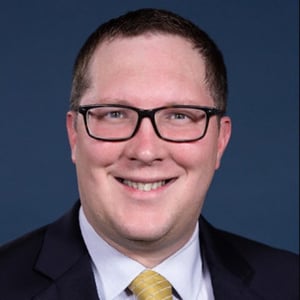
Attorney, Pacific Legal Foundation
Luke A. Wake is an attorney at the Pacific Legal Foundation. Prior to joining PLF, he was a senior staff attorney at the NFIB Small Business Legal Center.
Wake has particular expertise on environmental and land use issues, and has worked on numerous other constitutional issues and matters of importance to small business owners. He is an ardent defender of private property rights, which he believes are essential to the free enterprise system and the foundation of American liberty. As a strong advocate of individual rights and economic liberties, he has built his career defending small business interests.
Wake has focused on a whole host of issues, from employment law matters to regulatory compliance. In addition to serving as a resource for small business owners, Wake is committed to ensuring that the voice of small business is heard in the nation’s courts. As an appellate practitioner, Wake has focused particularly on informing the courts on matters of administrative law and on issues under the Fifth Amendment’s Takings Clause. He is also working to advance small business interests in law review articles, and was recently published in the Berkeley Journal of Law & Ecology. See R.S. Radford & Luke A. Wake, Deciphering and Extrapolating: Searching for Sense in Penn Central, 38 Ecology L.Q. 731, 746-747 (2011).
Before joining the Legal Center’s team, Wake completed a prestigious two-year fellowship as an attorney in the Pacific Legal Foundation’s College of Public Interest Law. Wake is a graduate of Case Western Reserve University School of Law in Cleveland Ohio, and is a member of the California Bar. He completed his undergraduate studies at Elon University in North Carolina in 2006 where he focused on political theory and corporate communications.
Senior Judge, U.S. Court of Appeals, Sixth Circuit
Alice M. Batchelder obtained her first judicial post as a judge on the U.S. Bankruptcy Court for the Northern District of Ohio in 1983. After two years, she was appointed by President Ronald Reagan to the U.S. District Court for the Northern District of Ohio. In 1991 President George H.W. Bush appointed her to her position on the U.S. Court of Appeals for the Sixth Circuit. From August 2009 to August 2014, Judge Batchelder served as Chief Judge of the Sixth Circuit. In March 2019, she took Senior Status and continues to work nearly full time.
Director of Engagement, New Civil Liberties Alliance
NCLA’s Director of Engagement, Clegg Ivey, began his career as a software developer when he sold his first piece of code at the age of 15. Later, as a tech attorney, he represented clients like Google, Apple, Netscape, and Sun. Clegg then became a Silicon Valley tech entrepreneur, raising millions in venture capital for a series of startups he co-founded that were eventually acquired by firms like Cisco, Actel, and others. Most recently, he spent years building a local retail empire in Savannah that the COVID lockdown forced him to close.
Clegg has been fighting against the encroachment of the administrative state for three decades. As a tech lawyer in the ‘90s, he worked to keep the fledgling Internet free of government regulation. In the ‘00s he defended his own startups – against the FDA when it came after his energy drink company and against the FTC when it threatened his telephony and computer monitoring startups. During the ‘10s Clegg fought the good fight against countless state and local bureaucrats and regulatory agencies that made life difficult for his retail businesses.
Clegg is a graduate of Tulane University and the University of Chicago Law School. He also clerked for the Hon. Alice M. Batchelder on the U.S. Court of Appeals for the Sixth Circuit. He taught classes on technology and public policy as an adjunct at Tulane University and classes on entrepreneurship as a visiting professor at Zhejiang University.
C. Blake McDowell, Jr. Professor of Law, University of Akron
William S. Jordan, III is Emeritus Professor of Law, retired from The University of Akron School of Law, where he taught Administrative Law. He also taught Property, Environmental Law, and Evidence. He received his B.A. from Stanford University and his J.D., cum laude, from the University of Michigan. He served as an attorney-advisor at the U.S. Department of Housing and Urban Development, then with the Washington, D.C., firm of Sheldon, Harmon, Roisman & Weiss, which became Harmon, Weiss, and Jordan, where he engaged primarily in environmental and administrative litigation. Dean Jordan is an active member and Fellow of the Section of Administrative Law and Regulatory Practice of the ABA. He has served on the Council of the Section, as Chair of the Judicial Review Committee, the Membership Committee, and the Publications Committee. He served for eighteen years as a contributing editor to the Administrative and Regulatory Law News.
Partner, Consovoy McCarthy Park PLLC
Mr. Strawbridge provides clients with advice and representation at the pre-litigation, trial, and appellate stages. He has represented a broad range of individual and institutional clients on matters of constitutional law, financial and securities regulation, environmental laws, complex commercial disputes, and consumer protection statutes. His experience includes arbitrations, trial and appellate litigation, and administrative and regulatory proceedings.
Mr. Strawbridge served as a law clerk to Supreme Court Justice Clarence Thomas, Judge Morris Sheppard Arnold of the United States Court of Appeals for the Eighth Circuit, and Justice Howard Dana of the Supreme Judicial Court of Maine. Previously, Mr. Strawbridge was a partner at two large international law firms. He worked as a newspaper reporter for four years before attending law school. Mr. Strawbridge is an adjunct professor for the Supreme Court Clinic at the Antonin Scalia Law School at George Mason University.
Mr. Strawbridge earned a Bachelor of Journalism from the University of Missouri, and his J.D. summa cum laude from Creighton University School of Law. Mr. Strawbridge is a member of the Maine and Massachusetts bars.
Partner, Consovoy McCarthy
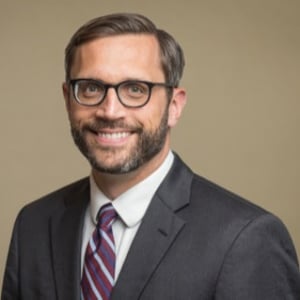
Mr. Green helps clients litigate constitutional, statutory, and regulatory issues in courts and agencies throughout the country. Before joining the firm, he served as the Solicitor General of the State of Utah for five years. In that role, he oversaw all civil and criminal appellate matters in which the State of Utah or its officers or agencies were a party. While serving as solicitor general, he successfully argued cases before the Supreme Court of the United States, the U.S. Court of Appeals for the Tenth Circuit, and the Utah Supreme Court. He also led the Utah Attorney General office’s multistate litigation efforts, both challenging and defending regulatory actions by the federal government and other states. And he oversaw the division of the Utah Attorney General’s office responsible for defending cases challenging the constitutionality of state law. Before his service to the State of Utah, Mr. Green was Deputy Chief Counsel for Litigation at the U.S. Chamber Litigation Center. He began his career at Gibson, Dunn & Crutcher LLP’s Washington, D.C. office, where he litigated a variety of appellate and trial-court cases. Mr. Green served as a law clerk to Justice Clarence Thomas at the U.S. Supreme Court, to Judge Michael McConnell at the U.S. Court of Appeals for the Tenth Circuit, and to Judge Paul Cassell at the U.S. District Court for the District of Utah. He earned both his undergraduate and law degrees from the University of Utah. At the College of Law, he served as Editor in Chief of the Utah Law Review and graduated Order of the Coif and first in his class. He currently serves on the Utah Supreme Court’s advisory committee for the Utah Rules of Appellate Procedure and has been named one of Utah’s Legal Elite by Utah Business magazine.
Partner, Consovoy McCarthy
Mr. Green helps clients litigate constitutional, statutory, and regulatory issues in courts and agencies throughout the country. Before joining the firm, he served as the Solicitor General of the State of Utah for five years. In that role, he oversaw all civil and criminal appellate matters in which the State of Utah or its officers or agencies were a party. While serving as solicitor general, he successfully argued cases before the Supreme Court of the United States, the U.S. Court of Appeals for the Tenth Circuit, and the Utah Supreme Court. He also led the Utah Attorney General office’s multistate litigation efforts, both challenging and defending regulatory actions by the federal government and other states. And he oversaw the division of the Utah Attorney General’s office responsible for defending cases challenging the constitutionality of state law. Before his service to the State of Utah, Mr. Green was Deputy Chief Counsel for Litigation at the U.S. Chamber Litigation Center. He began his career at Gibson, Dunn & Crutcher LLP’s Washington, D.C. office, where he litigated a variety of appellate and trial-court cases. Mr. Green served as a law clerk to Justice Clarence Thomas at the U.S. Supreme Court, to Judge Michael McConnell at the U.S. Court of Appeals for the Tenth Circuit, and to Judge Paul Cassell at the U.S. District Court for the District of Utah. He earned both his undergraduate and law degrees from the University of Utah. At the College of Law, he served as Editor in Chief of the Utah Law Review and graduated Order of the Coif and first in his class. He currently serves on the Utah Supreme Court’s advisory committee for the Utah Rules of Appellate Procedure and has been named one of Utah’s Legal Elite by Utah Business magazine.

Panel Two: Is the Administrative State a Threat to Individual Liberty?
Alice Batchelder, Clegg Ivey, William S. Jordan, Patrick Strawbridge
Law in the form of regulation is increasingly made, enforced, and adjudicated by administrative agencies,...
Bargaining Rights Gone Wrong: How State Courts Invented a Constitutional Duty to Bargain and How It Harms Individual Workers
Alexander T. MacDonald
Constitutions often give you the right to do things. They give you the right to...
Panel Two: Is the Administrative State a Threat to Individual Liberty?
Columbus, OHTopics
Religious Liberty Update on Congress and the Biden Administration
Congress 1. The Fairness For All Act (FFAA) is likely dead after House Republican Chair...
From OSHA to the Waterfront: Vaccine Mandates and the Constitution
Arkansas-Fayetteville Student Chapter
Fayetteville, ARFrom OSHA to the Waterfront: Litigating Vaccine Mandates
Stanford Student Chapter
Stanford, CAVaccine Policy: Who Decides?
David Dewhirst, Ryan Dean Newman, Dorit Reiss, Ilya Somin, Kate Comerford Todd
The Supreme Court recently issued its decisions in two federal vaccine mandate cases. Several states...
Vaccine Policy: Who Decides?
David Dewhirst, Ryan Dean Newman, Dorit Reiss, Ilya Somin, Kate Comerford Todd
The Supreme Court recently issued its decisions in two federal vaccine mandate cases. Several states...
Explainer Episode 32 – The Vaccine Mandate Cases and the Future of Administrative Law
Karen Harned, Ilan Wurman, Luke A. Wake
On January 13, the Supreme Court stayed the Occupational Safety and Health Administration's (OSHA) COVID-19 vaccine-or-test...
Topics
35 Naval Special Warfare Soldiers Obtain Preliminary Injunction Against Vaccine Mandate Under the Free Exercise Clause and Religious Freedom Restoration Act
On January 3, Judge Reed O’Connor of the Northern District of Texas preliminarily enjoined Navy...