
Partner (retd.), Foley & Lardner LLP
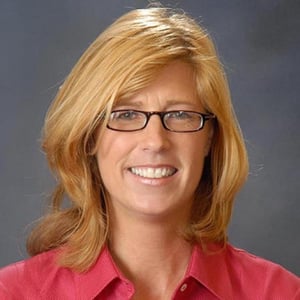
Cleta Mitchell was a partner and political law attorney in the Washington, D.C. office of Foley & Lardner LLP and a member of the firm’s Political Law Practice. With more than 40 years of experience in law, politics and public policy, Ms. Mitchell advised nonprofit and issue organizations, corporations, candidates, campaigns, and individuals on state and federal campaign finance law, election law, and compliance issues related to lobbying, ethics and financial disclosure. Ms. Mitchell practiced before the Federal Election Commission, the ethics committees of the US House and Senate and similar state and local enforcement bodies and agencies.
Ms. Mitchell has extensive experience on the federal lobbying and ethics law enacted by Congress in 2007, having taught dozens of seminars on the subject since its passage. In 2008, Ms. Mitchell authored The Lobbying Compliance Handbook, published by Columbia Books, Inc.
Ms. Mitchell represented numerous candidates, campaigns and members of Congress, as well as state and national political party committees. She has served as legal counsel to the National Republican Senatorial Committee and the National Republican Congressional Committee. Ms. Mitchell served as co-counsel for the National Rifle Association in the Supreme Court case involving the 2002 federal campaign finance law.
Ms. Mitchell has testified before Congress on numerous occasions related to election law, campaign finance and lobbying and ethics laws, and is a frequent speaker and guest commentator on political law. In 1999, she authored "The Rise of America’s Two National Pastimes: Baseball and the Law," published by the University of Michigan Law Review, and in 2012, Ms. Mitchell authored “Donor Disclosure: Undermining The First Amendment,” published by the Minnesota Law Review. In 2013, she was interviewed by The Wall Street Journal, “How to Investigate the IRS.”
Ms. Mitchell served on the advisory council to the American Bar Association’s Standing Committee on Election Law and as an advisor on the American Law Institute's Election Law Project entitled, “Principles of Election Law: Dispute Resolution.” She serves on the board of directors of the Lynde and Harry Bradley Foundation, is chairman of the American Conservative Union Foundation, and has served as the president of the Republican National Lawyers Association.
Ms. Mitchell was a member of the Oklahoma House of Representatives from 1976-1984 where she chaired the House Appropriations and Budget Committee. She served on the executive committee of the National Conference of State Legislatures.
Ms. Mitchell was in private law practice in Oklahoma City in litigation and administrative law until 1991 when she became director and general counsel of the Term Limits Legal Institute in Washington, D.C. She litigated cases in state and federal courts nationwide on congressional term limits and served as co-counsel with former U.S. Attorney General Griffin Bell in the Supreme Court of the United States case on term limits for members of Congress.
Ms. Mitchell earned both her B.A., magna cum laude, and J.D. from the University of Oklahoma.
Welpton & Wise Professor of Law, University of Nebraska College of Law
Professor Rick Duncan is the Welpton & Wise Professor of Law at the University Of Nebraska College Of Law. He is a graduate of the Cornell Law School and served as an editor of the Cornell Law Review. He teaches Constitutional Law with a special emphasis on the law of religious freedom, free speech, and federalism. Duncan has written numerous books, articles, and commentaries on a wide variety of legal topics. His recent publications include an article on Justice Scalia’s legacy, another on Kermit Gosnell and Roe v. Wade, a piece on the Electoral College and Federalism, a 2019 piece on Masterpiece Cakeshop and the First Amendment, and three recent articles on the “no compelled speech” doctrine as a First Amendment defense against authoritarianism and tyranny. His most recent article, on School Choice and the First Amendment, will be published in 2023 in Case Western Law Review. He is also the co-author of a book on Secured Transactions under Article 9 of the UCC. He served as Chairman of the Nebraska Advisory Committee to the U.S. Commission on Civil Rights during the Reagan Administration. He also loves to speak at Federalist Society meetings around the country on life, liberty, and the pursuit of federalism.
Duncan has five children, five grandchildren, and a wonderful wife who help him pursue happiness. He loves lifting weights (particularly going heavy on the incline bench press), attending Broadway musicals and plays, including Hamilton: An American Musical which he has seen 12 times (possibly a Nebraska record). He regularly reads both the Bible and the New York Times because it is important to keep up with what both sides have to say. He loves following major league baseball, especially the San Diego Padres. And his favorite legal aphorism is “first come rights then comes government to secure those rights.”
Welpton & Wise Professor of Law, University of Nebraska College of Law
Professor Rick Duncan is the Welpton & Wise Professor of Law at the University Of Nebraska College Of Law. He is a graduate of the Cornell Law School and served as an editor of the Cornell Law Review. He teaches Constitutional Law with a special emphasis on the law of religious freedom, free speech, and federalism. Duncan has written numerous books, articles, and commentaries on a wide variety of legal topics. His recent publications include an article on Justice Scalia’s legacy, another on Kermit Gosnell and Roe v. Wade, a piece on the Electoral College and Federalism, a 2019 piece on Masterpiece Cakeshop and the First Amendment, and three recent articles on the “no compelled speech” doctrine as a First Amendment defense against authoritarianism and tyranny. His most recent article, on School Choice and the First Amendment, will be published in 2023 in Case Western Law Review. He is also the co-author of a book on Secured Transactions under Article 9 of the UCC. He served as Chairman of the Nebraska Advisory Committee to the U.S. Commission on Civil Rights during the Reagan Administration. He also loves to speak at Federalist Society meetings around the country on life, liberty, and the pursuit of federalism.
Duncan has five children, five grandchildren, and a wonderful wife who help him pursue happiness. He loves lifting weights (particularly going heavy on the incline bench press), attending Broadway musicals and plays, including Hamilton: An American Musical which he has seen 12 times (possibly a Nebraska record). He regularly reads both the Bible and the New York Times because it is important to keep up with what both sides have to say. He loves following major league baseball, especially the San Diego Padres. And his favorite legal aphorism is “first come rights then comes government to secure those rights.”
Vice President for Legal Affairs, Cato Institute
Roger Pilon is the Cato’s Institute’s vice president for legal affairs, the founding director of Cato’s Robert A. Levy Center for Constitutional Studies, the inaugural holder of Cato’s B. Kenneth Simon Chair in Constitutional Studies, and the founding publisher of the Cato Supreme Court Review.
Prior to joining Cato, Pilon held five senior posts in the Reagan administration, including at State and Justice, and was a national fellow at Stanford’s Hoover Institution. In 1989 the Bicentennial Commission presented him with its Benjamin Franklin Award for excellence in writing on the U.S. Constitution. In 2001 Columbia University’s School of General Studies awarded him its Alumni Medal of Distinction. Pilon lectures and debates at universities and law schools across the country and testifies often before Congress.
His writing has appeared in the Wall Street Journal, the Washington Post, the New York Times, the Los Angeles Times, Legal Times, National Law Journal, Harvard Journal of Law and Public Policy, Stanford Law and Policy Review, and elsewhere. He has appeared on ABC’s Nightline, CBS’s 60 Minutes II, Fox News Channel, NPR, CNN, MSNBC, CNBC, C-SPAN, and other media.
Pilon holds a BA from Columbia University, an MA and a PhD from the University of Chicago, and a JD from the George Washington University School of Law.
Roger Williams University School of Law
While serving as an associate at Shearman & Sterling in Washington, D.C., Professor Goldstein became one of the first civilian lawyers allowed into the Guantanamo Bay prison, in conjunction with his representation of several families of Kuwaiti detainees.
After resistance from the U.S. Government, the Supreme Court agreed to hear the case Rasul v. Bush. Professor Goldstein’s involvement with the Guantanamo cases included drafting district, appellate and Supreme Court briefs on behalf of the detainees. He continues his work with the detainees through his scholarship at RWU, and is a national expert on the applicability of habeas corpus to the Guantanamo Bay detainees. He has published numerous articles on the topic and penned an Op-ed reprinted in newspapers around the country.
Additionally, Professor Goldstein was a Bristow Fellow in the Office of the United States Solicitor General and served as an attorney for the Department of Justice, working in the appellate section of the Environment and Natural Resources division, where he drafted briefs on behalf of the United States in several Supreme Court cases. He received numerous awards while working at the Department of Justice including the Special Commendation for Outstanding Service and the National Oceanic and Atmospheric Administration General Counsel’s award.
Professor Goldstein teaches Constitutional Law and an array of Environmental Law courses. He regularly publishes in top law journals and because of his nationally recognized expertise, he has authored numerous briefs in the Supreme Court of the United States. Professor Goldstein is a graduate of Vassar and Michigan (J.D., magna cum laude).

Topics
And the Walls Came Tumbling Down: The Liberation of Civil Society
As anyone who has seen a building collapse or a bridge buckle can attest, it...
David Boaz on The Libertarian Mind
Palo Alto, CaliforniaThe IRS, Non-Profit Organizations, and Freedom of Speech: Neutrally Enforcing the Law or Targeting the Tea Party?
Coral Gables, FloridaThe Tea Party & the Constitution: Populist Originalism
University, MississippiThe Constitution and The Tea Party: Populist Originalism
Chicago, IllinoisThe Tea Party: Three Principles - Faculty Book Podcast
Elizabeth Price Foley, Jared Goldstein
This Federalist Society Faculty Book Podcast features Professor Elizabeth Price Foley’s new book, The Tea Party:...
Do the Courts Subvert the Constitution?
Austin, TexasThe Tea Party's Constitution and Federalism 101
The Tea Party's Constitution
The Tea Party and the Constitution: Restoring the Document's Roots in Natural Law