
Senior Policy Analyst, The George Washington University Regulatory Studies Center
Sofie Miller's regulatory research portfolio includes economic analysis of energy efficiency standards, analysis of regulatory benefits, use of cost benefit analysis by agencies, retrospective review of existing rules, regressive effects of regulations, and the efficacy of public participation within the rulemaking process. Sofie has submitted public comments on regulations establishing energy efficiency standards, airline passenger protections, consumer product safety, and standards to prevent foodborne illnesses. Sofie has published articles in Regulation Magazine and the journal Engage, and is the editor of the GW Regulatory Studies Center's weekly Regulation Digest, which tracks regulatory developments in federal agencies, think tanks, and the media.
Director, GW Regulatory Studies Center & Distinguished Professor of Practice, Trachtenberg School of Public Policy & Public Administration, The George Washington University
Susan Dudley is the Founder and Director of the George Washington University Regulatory Studies Center, established in 2009 to raise awareness of regulations’ effects and improve regulatory policy through research, education, and outreach. She is also a distinguished professor of practice in the Trachtenberg School of Public Policy and Public Administration. She is past-president of the Society for Benefit Cost Analysis, a senior fellow of the Administrative Conference of the United States, and on the Regulatory Transparency Project Regulatory Practice Working Group. Her book, Regulation: A Primer, with Jerry Brito, is available on Amazon.com.
From April 2007 through January 2009, Professor Dudley served as the Presidentially-appointed Administrator of the Office of Information and Regulatory Affairs in the U.S. Office of Management and Budget and was responsible for the review of draft executive branch regulations under Executive Order 12866, the collection of federal-government-wide information under the Paperwork Reduction Act, the development and implementation of government-wide policies in the areas of information policy, privacy, and statistical policy, and international regulatory cooperation efforts.
Prior to OIRA, she directed the Regulatory Studies Program at the Mercatus Center at George Mason University, and taught courses on regulation at the George Mason University School of Law. Earlier in her career, Professor Dudley served as an economist at OIRA, as well as the Environmental Protection Agency and the Commodity Futures Trading Commission. She was also a consultant to government and private clients at Economists Incorporated. She holds a Master of Science degree from the Sloan School of Management at MIT and a Bachelor of Science degree (summa cum laude) in Resource Economics from the University of Massachusetts, Amherst.

Daryl Joseffer is executive vice president and chief counsel at the U.S. Chamber Litigation Center, the litigation arm of the U.S. Chamber of Commerce. A former principal deputy solicitor general, Joseffer has argued 12 cases in the U.S. Supreme Court and dozens of other appeals across the country.
Before joining the Chamber, Joseffer practiced law with King & Spalding LLP, where he was a partner and head of the firm’s appellate group. Previously, he served in the Solicitor General’s Office and as a deputy general counsel in the White House Office of Management and Budget, a partner at Kirkland & Ellis, and a law clerk to the Honorable Jerry E. Smith, Circuit Judge of the U.S. Court of Appeals for the Fifth Circuit.
Joseffer graduated magna cum laude from Harvard Law School and received a B.A. in economics from Stanford University.

Edward F. Howrey Professor of Law, University of Virginia
Michael Livermore joined the faculty in 2013. He teaches environmental law, administrative law, regulatory law and policy, and advanced seminars on these topics. His research focuses on environmental law, regulation, bureaucratic oversight and the computational analysis of law. He frequently collaborates on interdisciplinary projects with researchers in other academic fields, including economics, computer science and neurology. His work has appeared in leading law journals, including the Yale Law Journal, University of Chicago Law Review, New York University Law Review, Georgetown Law Journal and Duke Law Journal. Livermore is a leading expert on the use of cost-benefit analysis to evaluate environmental regulation, and he is the co-author of Retaking Rationality: How Cost-Benefit Analysis Can Better Protect the Environment and Our Health (Oxford University Press, 2008) and co-editor of The Globalization of Cost-Benefit Analysis in Environmental Policy (Oxford University Press, 2013).
Prior to joining the faculty, Livermore was the founding executive director of the Institute for Policy Integrity at New York University School of Law, a think tank dedicated to improving the quality of government decision-making. In that capacity, he participated in dozens of regulatory proceedings on a diverse set of issues ranging from climate change to prison safety. He remains an active participant in environmental policy discussions. Livermore earned his J.D. magna cum laude from NYU Law, where he was a Furman Scholar, was elected to the Order of the Coif, and served as a managing editor of the Law Review. After law school, he spent a year as a fellow at NYU Law’s Center on Environmental and Land Use Law before clerking for Judge Harry T. Edwards on the U.S. Court of Appeals for the D.C. Circuit.
During the 2018-19 academic year, Livermore is leading an Online Workshop on the Computational Analysis of Law.
U.S. Court of Appeals, D.C. Circuit
Judge Williams practiced law in New York City (at the firm of Debevoise Plimpton and as an Assistant U.S. Attorney) and then taught law at the University of Colorado Law School from 1969 to 1986, with visiting years at UCLA, SMU, and the University of Chicago (where he was also a fellow in law and economics). He was appointed to the U.S. Court of Appeals for the D.C. Circuit in 1986. His most recent book is a biography of Vasily Maklakov, The Reformer: How One Liberal Fought to Preempt the Russian Revolution (Encounter Books, 2017).
Director, GW Regulatory Studies Center & Distinguished Professor of Practice, Trachtenberg School of Public Policy & Public Administration, The George Washington University
Susan Dudley is the Founder and Director of the George Washington University Regulatory Studies Center, established in 2009 to raise awareness of regulations’ effects and improve regulatory policy through research, education, and outreach. She is also a distinguished professor of practice in the Trachtenberg School of Public Policy and Public Administration. She is past-president of the Society for Benefit Cost Analysis, a senior fellow of the Administrative Conference of the United States, and on the Regulatory Transparency Project Regulatory Practice Working Group. Her book, Regulation: A Primer, with Jerry Brito, is available on Amazon.com.
From April 2007 through January 2009, Professor Dudley served as the Presidentially-appointed Administrator of the Office of Information and Regulatory Affairs in the U.S. Office of Management and Budget and was responsible for the review of draft executive branch regulations under Executive Order 12866, the collection of federal-government-wide information under the Paperwork Reduction Act, the development and implementation of government-wide policies in the areas of information policy, privacy, and statistical policy, and international regulatory cooperation efforts.
Prior to OIRA, she directed the Regulatory Studies Program at the Mercatus Center at George Mason University, and taught courses on regulation at the George Mason University School of Law. Earlier in her career, Professor Dudley served as an economist at OIRA, as well as the Environmental Protection Agency and the Commodity Futures Trading Commission. She was also a consultant to government and private clients at Economists Incorporated. She holds a Master of Science degree from the Sloan School of Management at MIT and a Bachelor of Science degree (summa cum laude) in Resource Economics from the University of Massachusetts, Amherst.
Daryl Joseffer is executive vice president and chief counsel at the U.S. Chamber Litigation Center, the litigation arm of the U.S. Chamber of Commerce. A former principal deputy solicitor general, Joseffer has argued 12 cases in the U.S. Supreme Court and dozens of other appeals across the country.
Before joining the Chamber, Joseffer practiced law with King & Spalding LLP, where he was a partner and head of the firm’s appellate group. Previously, he served in the Solicitor General’s Office and as a deputy general counsel in the White House Office of Management and Budget, a partner at Kirkland & Ellis, and a law clerk to the Honorable Jerry E. Smith, Circuit Judge of the U.S. Court of Appeals for the Fifth Circuit.
Joseffer graduated magna cum laude from Harvard Law School and received a B.A. in economics from Stanford University.
Edward F. Howrey Professor of Law, University of Virginia
Michael Livermore joined the faculty in 2013. He teaches environmental law, administrative law, regulatory law and policy, and advanced seminars on these topics. His research focuses on environmental law, regulation, bureaucratic oversight and the computational analysis of law. He frequently collaborates on interdisciplinary projects with researchers in other academic fields, including economics, computer science and neurology. His work has appeared in leading law journals, including the Yale Law Journal, University of Chicago Law Review, New York University Law Review, Georgetown Law Journal and Duke Law Journal. Livermore is a leading expert on the use of cost-benefit analysis to evaluate environmental regulation, and he is the co-author of Retaking Rationality: How Cost-Benefit Analysis Can Better Protect the Environment and Our Health (Oxford University Press, 2008) and co-editor of The Globalization of Cost-Benefit Analysis in Environmental Policy (Oxford University Press, 2013).
Prior to joining the faculty, Livermore was the founding executive director of the Institute for Policy Integrity at New York University School of Law, a think tank dedicated to improving the quality of government decision-making. In that capacity, he participated in dozens of regulatory proceedings on a diverse set of issues ranging from climate change to prison safety. He remains an active participant in environmental policy discussions. Livermore earned his J.D. magna cum laude from NYU Law, where he was a Furman Scholar, was elected to the Order of the Coif, and served as a managing editor of the Law Review. After law school, he spent a year as a fellow at NYU Law’s Center on Environmental and Land Use Law before clerking for Judge Harry T. Edwards on the U.S. Court of Appeals for the D.C. Circuit.
During the 2018-19 academic year, Livermore is leading an Online Workshop on the Computational Analysis of Law.
U.S. Court of Appeals, D.C. Circuit
Judge Williams practiced law in New York City (at the firm of Debevoise Plimpton and as an Assistant U.S. Attorney) and then taught law at the University of Colorado Law School from 1969 to 1986, with visiting years at UCLA, SMU, and the University of Chicago (where he was also a fellow in law and economics). He was appointed to the U.S. Court of Appeals for the D.C. Circuit in 1986. His most recent book is a biography of Vasily Maklakov, The Reformer: How One Liberal Fought to Preempt the Russian Revolution (Encounter Books, 2017).
Director, GW Regulatory Studies Center & Distinguished Professor of Practice, Trachtenberg School of Public Policy & Public Administration, The George Washington University
Susan Dudley is the Founder and Director of the George Washington University Regulatory Studies Center, established in 2009 to raise awareness of regulations’ effects and improve regulatory policy through research, education, and outreach. She is also a distinguished professor of practice in the Trachtenberg School of Public Policy and Public Administration. She is past-president of the Society for Benefit Cost Analysis, a senior fellow of the Administrative Conference of the United States, and on the Regulatory Transparency Project Regulatory Practice Working Group. Her book, Regulation: A Primer, with Jerry Brito, is available on Amazon.com.
From April 2007 through January 2009, Professor Dudley served as the Presidentially-appointed Administrator of the Office of Information and Regulatory Affairs in the U.S. Office of Management and Budget and was responsible for the review of draft executive branch regulations under Executive Order 12866, the collection of federal-government-wide information under the Paperwork Reduction Act, the development and implementation of government-wide policies in the areas of information policy, privacy, and statistical policy, and international regulatory cooperation efforts.
Prior to OIRA, she directed the Regulatory Studies Program at the Mercatus Center at George Mason University, and taught courses on regulation at the George Mason University School of Law. Earlier in her career, Professor Dudley served as an economist at OIRA, as well as the Environmental Protection Agency and the Commodity Futures Trading Commission. She was also a consultant to government and private clients at Economists Incorporated. She holds a Master of Science degree from the Sloan School of Management at MIT and a Bachelor of Science degree (summa cum laude) in Resource Economics from the University of Massachusetts, Amherst.
Director, GW Regulatory Studies Center & Distinguished Professor of Practice, Trachtenberg School of Public Policy & Public Administration, The George Washington University
Susan Dudley is the Founder and Director of the George Washington University Regulatory Studies Center, established in 2009 to raise awareness of regulations’ effects and improve regulatory policy through research, education, and outreach. She is also a distinguished professor of practice in the Trachtenberg School of Public Policy and Public Administration. She is past-president of the Society for Benefit Cost Analysis, a senior fellow of the Administrative Conference of the United States, and on the Regulatory Transparency Project Regulatory Practice Working Group. Her book, Regulation: A Primer, with Jerry Brito, is available on Amazon.com.
From April 2007 through January 2009, Professor Dudley served as the Presidentially-appointed Administrator of the Office of Information and Regulatory Affairs in the U.S. Office of Management and Budget and was responsible for the review of draft executive branch regulations under Executive Order 12866, the collection of federal-government-wide information under the Paperwork Reduction Act, the development and implementation of government-wide policies in the areas of information policy, privacy, and statistical policy, and international regulatory cooperation efforts.
Prior to OIRA, she directed the Regulatory Studies Program at the Mercatus Center at George Mason University, and taught courses on regulation at the George Mason University School of Law. Earlier in her career, Professor Dudley served as an economist at OIRA, as well as the Environmental Protection Agency and the Commodity Futures Trading Commission. She was also a consultant to government and private clients at Economists Incorporated. She holds a Master of Science degree from the Sloan School of Management at MIT and a Bachelor of Science degree (summa cum laude) in Resource Economics from the University of Massachusetts, Amherst.

Assistant Professor of Law, The Ohio State University - Moritz College of Law
Bridget Dooling is a nationally recognized expert on administrative law and regulatory policy. Her scholarship on regulatory matters has been or will be published in leading legal journals including the Duke Law Journal, the Administrative Law Review, the Minnesota Law Review Headnotes, the American University Law Review and The Annals of Health Law.
Professor Dooling teaches courses on legislation and regulation, administrative law and other regulatory topics. She is a Senior Fellow at the Administrative Conference of the United States (ACUS) and recently served on the Council of the American Bar Association’s Section of Administrative Law and Regulatory Practice.
Prior to joining the faculty at Ohio State, Dooling was a research professor with the George Washington University Regulatory Studies Center and a professor of law (by courtesy) at GW Law. Before that, Professor Dooling spent over 10 years in the federal government as a deputy chief, senior policy analyst and attorney for the Office of Information and Regulatory Affairs at the U.S. Office of Management and Budget.
Director, GW Regulatory Studies Center & Distinguished Professor of Practice, Trachtenberg School of Public Policy & Public Administration, The George Washington University
Susan Dudley is the Founder and Director of the George Washington University Regulatory Studies Center, established in 2009 to raise awareness of regulations’ effects and improve regulatory policy through research, education, and outreach. She is also a distinguished professor of practice in the Trachtenberg School of Public Policy and Public Administration. She is past-president of the Society for Benefit Cost Analysis, a senior fellow of the Administrative Conference of the United States, and on the Regulatory Transparency Project Regulatory Practice Working Group. Her book, Regulation: A Primer, with Jerry Brito, is available on Amazon.com.
From April 2007 through January 2009, Professor Dudley served as the Presidentially-appointed Administrator of the Office of Information and Regulatory Affairs in the U.S. Office of Management and Budget and was responsible for the review of draft executive branch regulations under Executive Order 12866, the collection of federal-government-wide information under the Paperwork Reduction Act, the development and implementation of government-wide policies in the areas of information policy, privacy, and statistical policy, and international regulatory cooperation efforts.
Prior to OIRA, she directed the Regulatory Studies Program at the Mercatus Center at George Mason University, and taught courses on regulation at the George Mason University School of Law. Earlier in her career, Professor Dudley served as an economist at OIRA, as well as the Environmental Protection Agency and the Commodity Futures Trading Commission. She was also a consultant to government and private clients at Economists Incorporated. She holds a Master of Science degree from the Sloan School of Management at MIT and a Bachelor of Science degree (summa cum laude) in Resource Economics from the University of Massachusetts, Amherst.
Senior Counsel and Director of Global Regulatory Matters, ConsenSys Software
Bill Hughes is senior counsel and director of global regulatory matters for ConsenSys Software, the leading Ethereum blockchain software company. Bill focuses on the diverse and ever evolving crypto global regulatory landscape, and the legal and public policy issues with which ConsenSys and the broader crypto ecosystem is grappling.
Bill joined ConsenSys after serving as an Associate Deputy Attorney General at the Department of Justice, where he managed, among other things, the Department’s work on prospective regulations, legislative proposals, and policies across a broad spectrum of legal and operational issues. He worked closely with the White House and other federal agencies on regulatory and policy initiatives and coordinated DOJ’s law enforcement response to COVID-19-related consumer fraud and money laundering. Bill also has served at the White House, where he oversaw various operational components. Bill began his career by clerking for a federal judge in New York and litigating with the firm of Sullivan & Cromwell LLP. Bill received his JD from the University of Virginia School of Law and his BA from Vanderbilt University.
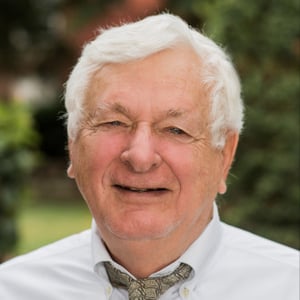
Lyle T. Alverson Professor of Law, George Washington University Law School
Professor Pierce is author of over twenty books and 130 articles on administrative law, government regulation, and the effects of various forms of government intervention on the performance of markets. His books and articles have been cited in hundreds of judicial opinions, including over a dozen opinions of the U.S. Supreme Court.

Laurence H. Silberman Chair in Constitutional Governance and Senior Fellow, American Enterprise Institute; Co-Director, Antonin Scalia Law School’s C. Boyden Gray Center for the Study of the Administrative State
Adam J. White is the Laurence H. Silberman Chair in Constitutional Governance and senior fellow at the American Enterprise Institute, where he focuses on the Supreme Court and the administrative state. Concurrently, he codirects the Antonin Scalia Law School’s C. Boyden Gray Center for the Study of the Administrative State.
Mr. White practiced constitutional and administrative law, particularly in the regulation of energy and financial markets. He started his legal career as a law clerk for Judge David B. Sentelle at the US Court of Appeals for the DC Circuit.
Mr. White has written for the Wall Street Journal, the New York Times, the Washington Post, National Affairs, Commentary, Harvard Journal of Law & Public Policy, and Notre Dame Law Review, among other publications. He is a regular contributor to the Yale Journal on Regulation’s Notice and Comment blog, and for many years, he was one of the Weekly Standard’s lead writers on constitutional law and the Supreme Court.
Mr. White has testified often before Congress, including before the Senate’s Committees on the Judiciary; Commerce, Science, and Transportation; and Homeland Security and Governmental Affairs and before the House’s Judiciary and Financial Services Committees. In 2018, the Senate Committee on the Judiciary called him to testify in Brett Kavanaugh’s Supreme Court confirmation hearings to advise senators on Kavanaugh’s approach to administrative law.
In 2021, he served on the Presidential Commission on the Supreme Court of the United States, where he criticized “Court packing” and other efforts to restructure the Supreme Court. In 2017, he was appointed to serve on the Administrative Conference of the United States. He also serves on the leadership council for the American Bar Association’s Administrative Law and Regulatory Practice Section, which he will chair in 2023–24. Before joining AEI, he was a research fellow at Stanford University’s Hoover Institution and an adjunct fellow at the Manhattan Institute.
Mr. White has a JD from Harvard Law School and a bachelor of business administration from the College of Business at the University of Iowa.
Principal, Stuntz, Davis & Staffier, P.C.
Randall Davis is currently a member of the law firm of Stuntz, Davis & Staffier, P.C., specializing in legislative and regulatory matters affecting the energy industries. Prior to co founding the firm of Stuntz, Davis & Staffier, P.C., Mr. Davis was a partner in the law firm of Jones, Day, Reavis & Pogue. Prior to joining Jones, Day in March, 1987, Mr. Davis was Associate Director for Natural Resources, Energy and Science at the Office of Management and Budget. He joined the Office of Management and Budget in April, 1985.
Mr. Davis came to the Office of Management and Budget from the White House Office of Policy Development, where he was Special Assistant to the President for Energy and Natural Resources and principal staff member to the Cabinet Council on Natural Resources and the Environment. Prior to that, Mr. Davis served as Special Assistant to the President for Legislative Affairs, where he helped to formulate and implement strategy on subjects such as foreign affairs, budget, tax, and regulatory issues.
Before joining the White House staff in January, 1983, Mr. Davis was the Minority Counsel and Staff Director of the U.S. House of Representatives' Committee on Energy and Commerce from January, 1981 to January 1983 and was Associate Minority Counsel of the House Interstate and Foreign Commerce Committee from July, 1978 until January, 1981.
Mr. Davis received his Juris Doctor degree from Catholic University of America in 1977 and his B.A. in Economics and Business Administration from Wilmington College in 1973. He is a member of the District of Columbia Bar.
Director, GW Regulatory Studies Center & Distinguished Professor of Practice, Trachtenberg School of Public Policy & Public Administration, The George Washington University
Susan Dudley is the Founder and Director of the George Washington University Regulatory Studies Center, established in 2009 to raise awareness of regulations’ effects and improve regulatory policy through research, education, and outreach. She is also a distinguished professor of practice in the Trachtenberg School of Public Policy and Public Administration. She is past-president of the Society for Benefit Cost Analysis, a senior fellow of the Administrative Conference of the United States, and on the Regulatory Transparency Project Regulatory Practice Working Group. Her book, Regulation: A Primer, with Jerry Brito, is available on Amazon.com.
From April 2007 through January 2009, Professor Dudley served as the Presidentially-appointed Administrator of the Office of Information and Regulatory Affairs in the U.S. Office of Management and Budget and was responsible for the review of draft executive branch regulations under Executive Order 12866, the collection of federal-government-wide information under the Paperwork Reduction Act, the development and implementation of government-wide policies in the areas of information policy, privacy, and statistical policy, and international regulatory cooperation efforts.
Prior to OIRA, she directed the Regulatory Studies Program at the Mercatus Center at George Mason University, and taught courses on regulation at the George Mason University School of Law. Earlier in her career, Professor Dudley served as an economist at OIRA, as well as the Environmental Protection Agency and the Commodity Futures Trading Commission. She was also a consultant to government and private clients at Economists Incorporated. She holds a Master of Science degree from the Sloan School of Management at MIT and a Bachelor of Science degree (summa cum laude) in Resource Economics from the University of Massachusetts, Amherst.
Director, GW Regulatory Studies Center & Distinguished Professor of Practice, Trachtenberg School of Public Policy & Public Administration, The George Washington University
Susan Dudley is the Founder and Director of the George Washington University Regulatory Studies Center, established in 2009 to raise awareness of regulations’ effects and improve regulatory policy through research, education, and outreach. She is also a distinguished professor of practice in the Trachtenberg School of Public Policy and Public Administration. She is past-president of the Society for Benefit Cost Analysis, a senior fellow of the Administrative Conference of the United States, and on the Regulatory Transparency Project Regulatory Practice Working Group. Her book, Regulation: A Primer, with Jerry Brito, is available on Amazon.com.
From April 2007 through January 2009, Professor Dudley served as the Presidentially-appointed Administrator of the Office of Information and Regulatory Affairs in the U.S. Office of Management and Budget and was responsible for the review of draft executive branch regulations under Executive Order 12866, the collection of federal-government-wide information under the Paperwork Reduction Act, the development and implementation of government-wide policies in the areas of information policy, privacy, and statistical policy, and international regulatory cooperation efforts.
Prior to OIRA, she directed the Regulatory Studies Program at the Mercatus Center at George Mason University, and taught courses on regulation at the George Mason University School of Law. Earlier in her career, Professor Dudley served as an economist at OIRA, as well as the Environmental Protection Agency and the Commodity Futures Trading Commission. She was also a consultant to government and private clients at Economists Incorporated. She holds a Master of Science degree from the Sloan School of Management at MIT and a Bachelor of Science degree (summa cum laude) in Resource Economics from the University of Massachusetts, Amherst.

Partner, Earth and Water Law; retired Yale Law School professor (1981-2025), Yangtze River Distinguished Professor, Guangzhou Law School, ChinaDistinguished Adjunct Professor at Antonin Scalia Law School
E. Donald Elliott is a Florence Rogatz Visiting Professor of Law at Yale Law School and a leading academic scholar, as well as practitioner, in the fields of administrative and environmental law. He is “one of the most well-known, well-regarded environmental law professors in the nation,” according to John Cruden, former President of the Environmental Law Institute and Assistant Attorney General, Environment and Natural Resources Division, U.S. Department of Justice during the Obama administration. Elliott has been on the Yale Law faculty since 1981 and currently teaches courses in environmental law, energy law, administrative law and civil procedure. He is also senior of counsel in the Washington D.C. office of Covington & Burling LLP, and co-chair of the firm's Environmental Practice Group. From 2003 until he joined Covington in 2013, he was a partner in Willkie Farr & Gallagher LLP, chairing the firm’s worldwide Environment, Health and Safety Department.
From 1989 to 1991, Elliott served as Assistant Administrator and General Counsel of the U.S. Environmental Protection Agency (EPA). In 1993, he was named to the first endowed chair in environmental law and policy at any major American law school, the Julien and Virginia Cornell Chair in Environmental Law and Litigation at Yale Law School. From 2003-2009, he was a member of the National Academy of Sciences Board on Environmental Studies and Toxicology, which advises the federal government on environmental issues. Elliott also testifies frequently in Congress on environmental issues.
He has served as a consultant on improving the relationship of law and science to the Federal Courts Study Committee, which was chartered by Congress to make recommendations for improving the federal courts, and to the Carnegie Commission for Law, Science and Government. He co-chaired the National Environmental Policy Institute’s Committee on Improving Science at EPA.
Elliott is a Senior Fellow of the Administrative Conference of the United States (ACUS) and an elected member of the American College of Environmental Lawyers and the American Law Institute. He serves on the Board of the Connecticut Fund for the Environment and as chair of its legal committee, as well on the Advisory Board for NYU’s Institute for Policy Integrity. He is a former member of the boards of the Environmental Law Institute, and the Center for Clean Air Policy. He is the author or coauthor of seven books and has published more than 70 articles in professional journals. He was named one of the top 25 environmental attorneys in the United States by the National Law Journal and is highly ranked in Chambers USA: Leading Lawyers for Business; Best Lawyers in America; D.C. Super Lawyers; Who’s Who in American Law; and Who’s Who in the World.
He earned both his B.A., summa cum laude and Phi Beta Kappa, and his J.D. from Yale. Following graduation, he was a law clerk for Gerhard Gesell in the U.S. District Court for the District of Columbia, and for Chief Judge David Bazelon of the U.S. Court of Appeals for the District of Columbia Circuit.

Director, Government Affairs, Natural Resources Defense Council
David Goldston is director of government affairs for NRDC in Washington, D.C. and is responsible for its governmental strategies, bringing together NRDC's interactions with Congress, the administration and the public. He has more than twenty years of experience on Capitol Hill, working mainly on science and environmental policy and served as chief of staff of the House Committee on Science from 2001 through 2006. He has been a visiting lecturer at Princeton and Harvard Universities and a columnist for the journal Nature. In 2008 and 2009, he was project director for the Bipartisan Policy Center report, "Improving the Use of Science in Regulatory Policy" and he has served on several panels at the National Academy of Sciences. David graduated from Cornell University in 1978 with a B.A. in history and completed the course work for a Ph.D. in American history at the University of Pennsylvania.
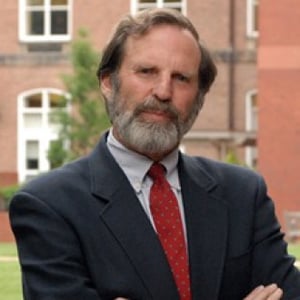
Adjunct Professor, George Washington University Law School
Director, GW Regulatory Studies Center & Distinguished Professor of Practice, Trachtenberg School of Public Policy & Public Administration, The George Washington University
Susan Dudley is the Founder and Director of the George Washington University Regulatory Studies Center, established in 2009 to raise awareness of regulations’ effects and improve regulatory policy through research, education, and outreach. She is also a distinguished professor of practice in the Trachtenberg School of Public Policy and Public Administration. She is past-president of the Society for Benefit Cost Analysis, a senior fellow of the Administrative Conference of the United States, and on the Regulatory Transparency Project Regulatory Practice Working Group. Her book, Regulation: A Primer, with Jerry Brito, is available on Amazon.com.
From April 2007 through January 2009, Professor Dudley served as the Presidentially-appointed Administrator of the Office of Information and Regulatory Affairs in the U.S. Office of Management and Budget and was responsible for the review of draft executive branch regulations under Executive Order 12866, the collection of federal-government-wide information under the Paperwork Reduction Act, the development and implementation of government-wide policies in the areas of information policy, privacy, and statistical policy, and international regulatory cooperation efforts.
Prior to OIRA, she directed the Regulatory Studies Program at the Mercatus Center at George Mason University, and taught courses on regulation at the George Mason University School of Law. Earlier in her career, Professor Dudley served as an economist at OIRA, as well as the Environmental Protection Agency and the Commodity Futures Trading Commission. She was also a consultant to government and private clients at Economists Incorporated. She holds a Master of Science degree from the Sloan School of Management at MIT and a Bachelor of Science degree (summa cum laude) in Resource Economics from the University of Massachusetts, Amherst.
Daryl Joseffer is executive vice president and chief counsel at the U.S. Chamber Litigation Center, the litigation arm of the U.S. Chamber of Commerce. A former principal deputy solicitor general, Joseffer has argued 12 cases in the U.S. Supreme Court and dozens of other appeals across the country.
Before joining the Chamber, Joseffer practiced law with King & Spalding LLP, where he was a partner and head of the firm’s appellate group. Previously, he served in the Solicitor General’s Office and as a deputy general counsel in the White House Office of Management and Budget, a partner at Kirkland & Ellis, and a law clerk to the Honorable Jerry E. Smith, Circuit Judge of the U.S. Court of Appeals for the Fifth Circuit.
Joseffer graduated magna cum laude from Harvard Law School and received a B.A. in economics from Stanford University.
Edward F. Howrey Professor of Law, University of Virginia
Michael Livermore joined the faculty in 2013. He teaches environmental law, administrative law, regulatory law and policy, and advanced seminars on these topics. His research focuses on environmental law, regulation, bureaucratic oversight and the computational analysis of law. He frequently collaborates on interdisciplinary projects with researchers in other academic fields, including economics, computer science and neurology. His work has appeared in leading law journals, including the Yale Law Journal, University of Chicago Law Review, New York University Law Review, Georgetown Law Journal and Duke Law Journal. Livermore is a leading expert on the use of cost-benefit analysis to evaluate environmental regulation, and he is the co-author of Retaking Rationality: How Cost-Benefit Analysis Can Better Protect the Environment and Our Health (Oxford University Press, 2008) and co-editor of The Globalization of Cost-Benefit Analysis in Environmental Policy (Oxford University Press, 2013).
Prior to joining the faculty, Livermore was the founding executive director of the Institute for Policy Integrity at New York University School of Law, a think tank dedicated to improving the quality of government decision-making. In that capacity, he participated in dozens of regulatory proceedings on a diverse set of issues ranging from climate change to prison safety. He remains an active participant in environmental policy discussions. Livermore earned his J.D. magna cum laude from NYU Law, where he was a Furman Scholar, was elected to the Order of the Coif, and served as a managing editor of the Law Review. After law school, he spent a year as a fellow at NYU Law’s Center on Environmental and Land Use Law before clerking for Judge Harry T. Edwards on the U.S. Court of Appeals for the D.C. Circuit.
During the 2018-19 academic year, Livermore is leading an Online Workshop on the Computational Analysis of Law.
U.S. Court of Appeals, D.C. Circuit
Judge Williams practiced law in New York City (at the firm of Debevoise Plimpton and as an Assistant U.S. Attorney) and then taught law at the University of Colorado Law School from 1969 to 1986, with visiting years at UCLA, SMU, and the University of Chicago (where he was also a fellow in law and economics). He was appointed to the U.S. Court of Appeals for the D.C. Circuit in 1986. His most recent book is a biography of Vasily Maklakov, The Reformer: How One Liberal Fought to Preempt the Russian Revolution (Encounter Books, 2017).

EPA’s Retrospective Review of Regulations: Will It Reduce Manufacturing Burdens?
Sofie E. Miller
Introduction Through a series of Executive Orders, President Obama has encouraged federal regulatory agencies to...
Cost and Benefits of FY 2012 Regulations
TeleforumImproving the Use of Science for Policy
Administrative Law & Regulation Practice Group Teleforum
TeleforumEnvironmental Law: The Future of Cost-Benefit Analysis in Environmental Policy
Susan E. Dudley, Daryl Joseffer, Michael Livermore, Stephen F. Williams
In the scheme of regulation, the wisdom of “look before you leap” has always been...
Environmental Law: The Future of Cost-Benefit Analysis in Environmental Policy
Susan E. Dudley, Daryl Joseffer, Michael Livermore, Stephen F. Williams
In the scheme of regulation, the wisdom of “look before you leap” has always been...
Environmental Law: The Future of Cost-Benefit Analysis in Environmental Policy
2009 National Lawyers Convention
Washington, DCScientific Integrity and the Role of Science in Developing Regulations
Susan E. Dudley
Brought to you by the Administrative Law & Regulation Practice GroupOn March 9, 2009, President Obama issued...
Executive Order Concerning Regulatory Planning and Review
Susan E. Dudley
Brought to you by the Administrative Law & Regulation Practice GroupEvery president since Ronald Reagan has relied...
Necessary & Proper Episode 96: The Art of Deregulation: Executive Orders and Limited Government
Bridget Dooling, Susan E. Dudley, William C. Hughes, Richard J. Pierce, Adam White
Since taking office on January 20, 2025, President Trump has emphasized deregulation. Deregulatory efforts have...