

Professor of Law and Executive Director, Law and Economics Center, Antonin Scalia Law School, George Mason University
Donald Kochan is Professor of Law and Executive Director of the Law & Economics Center (LEC). Professor Kochan is an elected member of the American Law Institute (ALI) and serves as an Adviser to ALI's Restatement of the Law Fourth, Property project. Professor Kochan is a Nonresident Scholar at the Center for the Constitution at Georgetown University Law Center, where he was a Visiting Scholar in residence during Fall 2018. Before joining the Antonin Scalia Law School faculty, he was the Parker S. Kennedy Professor in Law at Chapman University’s Dale E. Fowler School of Law from 2004 to 2020. From 2003 to 2004, Professor Kochan was an Olin Fellow at the University of Virginia School of Law. During 2002-2003, he was a Visiting Assistant Professor of Law at George Mason’s Scalia Law School.
Professor Kochan’s scholarship focuses on areas of property law, constitutional law, administrative law, local government law, natural resources and environmental law, and law & economics. He has published several books and more than 50 scholarly articles and essays in well-regarded law journals. His work has been cited in more than a dozen state and federal court opinions, in more than 75 briefs filed in state and federal courts including more than 25 filed in the U.S. Supreme Court, in dozens of books and treatises, and in more than 800 scholarly articles.
Professor Kochan received his JD from Cornell Law School, where he was a John M. Olin Scholar in Law and Economics and managing editor of the Cornell International Law Journal. During law school, he also served as editor and executive editor of the Harvard Journal of Law & Public Policy symposium issues in 1997 and 1998. He received his BA from Western Michigan University, magna cum laude, with majors in both political science and philosophy, where he studied as the John W. Gill Medallion Scholar and was honored as the Presidential Scholar (awarded to the top graduate in the political science department).
After graduating from law school, Professor Kochan was a law clerk to The Honorable Richard F. Suhrheinrich of the United States Court of Appeals for the Sixth Circuit. Following his clerkship, Professor Kochan was an associate with the firm of Crowell & Moring LLP in Washington, D.C., where he specialized in natural resources & environmental law as well as tort, products, and consumer civil litigation & legislative affairs.
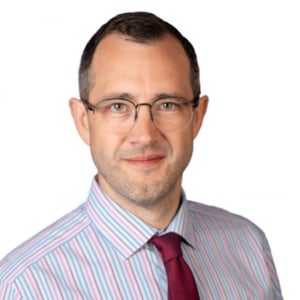
Attorney, Pacific Legal Foundation
Jeremy is an attorney in Pacific Legal Foundation’s Property Rights practice. He focuses on the fundamental rights of landowners to use and develop their property. He also leads PLF’s Coastal Land Rights Project, which puts him routinely at odds with the California Coastal Commission—but he wouldn’t mind being contacted about any government abuses in Hawaii or the U.S. Virgin Islands.
Some of his career highlights at PLF include forcing the mayor of Mount Dora, Florida, to publicly apologize for the city’s vendetta against the owners of a home painted like Van Gogh’s “Starry Night,” and obtaining an opinion ordering just compensation for the owners of a small offshore island in Florida (that just happened to be named after their war hero father), after government regulations stripped all economic uses of the property.
Jeremy obtained his undergraduate degree in communications from the University of Central Florida, but for every minute he spent in classes, he spent five more playing guitar or bass in several noteworthy-for-their-obscurity rock bands. A few tours across the country later, Jeremy realized he was spending all of his free time reading about the principles of liberty and decided to make a career out of it.
He graduated cum laude from Chapman University, Fowler School of Law in Orange, California, where he was president of the Federalist Society, senior articles editor of the Chapman Law Review, and “that guy who keeps trying to talk about the Constitution” on the Chapman moot court team. His two favorite parts of law school were externing for Judge Andrew J. Guilford in the Central District of California and getting the top grade in administrative law from his favorite professor.
Jeremy’s free time is almost never actually free, because he has 11-year-old twin boys and a golden retriever named Ripley (yes, as in Ellen Ripley, warrant officer of the Nostromo). But he will always find time to talk your ear off about freedom, guitars, or Nebraska football.
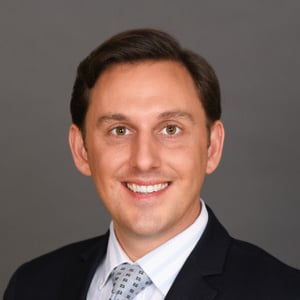
Senior Counsel - Civil Rights Division, US Department of Justice
Andrew Darlington was appointed in 2025 to serve as Senior Counsel to the US Department of Justice Civil Rights Division. He graduated the US Naval Academy in May, 2010 and was commissioned into the United States Marine Corps. He deployed twice to Afghanistan as an infantry officer. For his actions, he was awarded the Purple Heart and other personal combat awards. He later graduated Fordham University School of Law, and has since served as a prosecutor and in private practice. He joined the Florida Department of State in 2022 and was appointed Director of the Office of Election Crimes and Security in March, 2023. He is a member of the Madison Club, the National Security and International Law Practice Group, and the Washington, DC, Chapter.
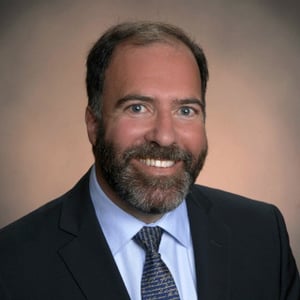
Professor of Law, Widener University Commonwealth Law School
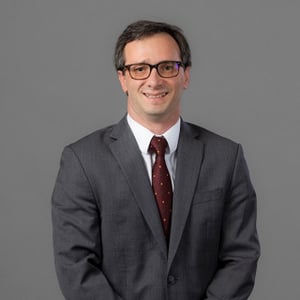
Assistant Professor of Law, George Mason University, Antonin Scalia Law School
Robert Leider is an Assistant Professor of Law at Antonin Scalia Law School, George Mason University. His scholarly interests are in criminal law, criminal procedure, and constitutional law, especially concerning questions about the use of force and the rule of law. He has written on the law of self-defense, the constitutional allocation of military power, and gun control. Among other places, he has published in the Florida Law Review (forthcoming), the Indiana Law Journal, and the Wall Street Journal.
Before joining Antonin Scalia Law School, Professor Leider was at Arnold & Porter in Washington, DC. He was previously with Mayer Brown LLP and was an Olin-Searle-Smith Fellow at the University of Pennsylvania Law School. He has clerked for Judge Diane S. Sykes, of the U.S. Court of Appeals for the Seventh Circuit, and Justice Clarence Thomas. Professor Leider earned a BA, summa cum laude, from The George Washington University, a JD from Yale Law School, and a PhD in Philosophy (dissertation defended with distinction) from Georgetown University. While at Yale, he served as an articles editor for the Yale Law Journal.
Professor Leider teaches criminal law and torts.
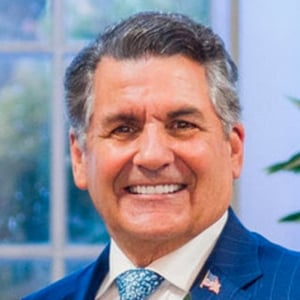
Federal Special Master, US District Court For The District Of Columbia
Julian McCarthy has had a distinguished career in both military and civilian legal service. He graduated from the United States Naval Academy in 1977 and served as a Surface Warfare Officer aboard the USS Dale (CG-19) from 1977 to 1980. Following his military service at sea, he pursued legal studies, earning his Juris Doctor with honors from Duke University School of Law in 1983.
McCarthy began his legal career as a Trial Counsel at the Naval Legal Service Office in Jacksonville, Florida, from 1983 to 1986. He then served as the Staff Judge Advocate at Subic Bay, Republic of the Philippines, from 1986 to 1990. In 1991, he earned a Master of Laws degree with highest honors from The George Washington University Law School. He subsequently served as Executive Assistant to the Navy Judge Advocate General from 1991 to 1992 and as Special Assistant to the Secretary of the Navy from 1992 to 1998. He later commanded the Trial Service Office Southeast from 1998 to 2002, before retiring as a Captain in the United States Navy.
Following his military career, McCarthy continued his service in the legal profession and public sector. He practiced law at Holland & Knight before becoming the Director of Military Affairs, Veterans Services, and Disabled Services for the City of Jacksonville. He later served as the Chief Assistant State Attorney for Florida’s Fourth Judicial Circuit. McCarthy also worked as the Director of Special Programs for the Wounded Warrior Project and served as the Marshal of Florida’s First District Court of Appeal.
Currently, he serves as a Federal Special Master, where he continues his commitment to justice and public service.
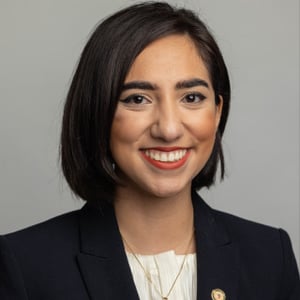
Litigation Fellow, Institute for Justice
Tahmineh Dehbozorgi is a Litigation Fellow at the Institute for Justice. Prior to joining IJ, Tahmineh served as a summer associate at AT&T Global Public Policy, where she focused on cybersecurity and consumer privacy regulatory matters. She also gained valuable legal experience as a law clerk at the Federal Communications Commission, where she worked on communications law and regulatory processes. She also served as a law clerk for the New Civil Liberties Alliance, where she concentrated on administrative law and impact litigation.
Tahmineh earned her J.D. from The George Washington University Law School, with a concentration in National Security and Cybersecurity Law. While at GW Law, she served as a Research Assistant to Professor Robert J. Cottrol and contributed to the book “To Trust the People with Arms: The Supreme Court and the Second Amendment.” Tahmineh also earned the silver medal at the 30th Annual National Telecommunications and Technology Moot Court Competition in 2023. In 2024, she received the President’s Volunteer Service Award from President Joseph R. Biden for her exemplary pro bono work. Tahmineh received her Bachelor of Arts in political science with a concentration in international relations magna cum laude from the University of California, Los Angeles. In 2020, she was awarded UCLA Chancellor’s Service Award.
Tahmineh spent her childhood in Iran. On 4th of July 2015, she left everything behind and came to the United States to seek freedom. Her upbringing ignites an unyielding passion to defend civil liberties and separation of powers.
In addition to her legal career, Tahmineh is a multilingual author with a background in public relations and media. Her writings have appeared in prominent outlets such as Fox News, National Review, RealClear Defense, and the Orange County Register, etc. Outside of her professional endeavors, Tahmineh is a classical musician and has been a member of The George Washington University Chamber Ensemble and UCLA Chorale.
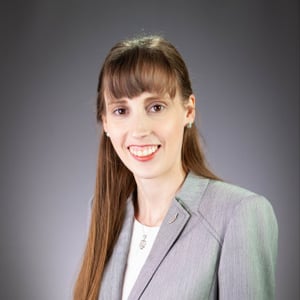
Legal Counsel, Alliance Defending Freedom
Julia Payne serves as legal counsel for Alliance Defending Freedom’s Center for Life. In this role, she defends the sanctity of life by litigating both beginning and end of life issues.
Before joining ADF, Payne worked at the Office of the Indiana Attorney General as a deputy attorney general for five years. While at the AG’s office, she managed all of Indiana’s pro-life litigation and also worked on cases concerning immigration, religious liberty, federalism, the Commerce Clause, criminal procedure, federal habeas corpus procedures, civil asset forfeiture, local and special laws, and the common law powers of the attorney general. She has argued cases before the U.S. Court of Appeals for the 7th Circuit, the Southern District of Indiana, and Indiana state courts.
Payne graduated cum laude from Indiana University Maurer School of Law in 2017, where she served as an editor on the Indiana Law Journal and won best brief in the Sherman Minton Moot Court Competition. During law school, Payne interned as a clerk for Indiana Solicitor General Tom Fisher and as a Blackstone Fellow with ADF’s Center for Academic Freedom in Atlanta. She also served as president of the Christian Legal Society and as an officer for the Advocates for Life and the Federalist Society.
Before law school, Payne graduated summa cum laude from Western Kentucky University with a B.A. in History and a B.A. in Spanish. As an undergraduate, Payne studied abroad in both Spain and China. On campus, she served on the Student Government Association Judicial Council, led the music ministry for the Catholic Campus Center, and was an active member of Omega Phi Alpha Service Sorority. Payne was also a founding member of the Hilltoppers for Life, which helped spur her interest in First Amendment and pro-life issues. Payne is a member of the bars of the Indiana Supreme Court, the Northern and Southern Districts of Indiana, and the Seventh Circuit.

Chairman, Center for Equal Opportunity
Linda Chavez is Chairman of the Center for Equal Opportunity. She has published opinions and columns in newspapers across the country and appears regularly on cable news. Chavez is the author of the three books: Out of the Barrio: Toward a New Politics of Hispanic Assimilation, An Unlikely Conservative: The Transformation of an Ex-Liberal, and Betrayal: How Union Bosses Shake Down Their Members and Corrupt American Politics. She has been honored by the Library of Congress as a "Living Legend" and as nominee for Secretary of Labor by President George W. Bush.
Chavez has held many appointed positions and has served on numerous corporate and nonprofit boards. Among her appointed positions has been Chairman, National Commission on Migrant Education (1988-1992); White House Director of Public Liaison (1985); Staff Director of the U.S. Commission on Civil Rights (1983-1985); and member of the Administrative Conference of the United States (1984-1986). Chavez was also the Republican nominee for U.S. Senator from Maryland in 1986 and was elected by the United Nations' Human Rights Commission to serve a four-year term as U.S. Expert to the U.N. Sub-commission on the Prevention of Discrimination and Protection of Minorities.
Chavez earned her BA from the University of Colorado.
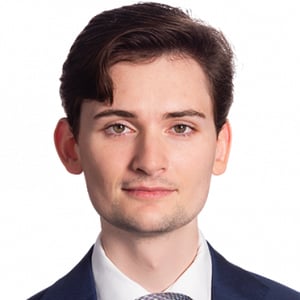
Principal Deputy Assistant Attorney General, Office of Legal Policy, United States Department of Justice
GianCarlo Canaparo serves as the Principal Deputy Assistant Attorney General in the Office of Legal Policy at the Department of Justice. He oversees the Office's regulatory work, assists the White House in the process of selecting nominees for federal judgeships and advises Department leadership on policy and legal matters.
Before joining the Department, Canaparo was a senior legal fellow at The Heritage Foundation’s Edwin Meese III Center for Legal and Judicial Studies where he researched constitutional law, administrative law, and civil rights.
Canaparo’s scholarship has appeared in various law reviews and periodicals. His research has been cited by Justice Neil Gorsuch and featured in the Wall Street Journal and Washington Post.
Canaparo co-hosted The Heritage Foundation’s SCOTUS 101 podcast, which followed the Supreme Court’s arguments and opinions and featured interviews with judges, advocates, and scholars.
After graduating Georgetown law, Canaparo spent three years at the law firm of Skadden, Arps, Slate, Meagher & Flom and two years as a federal law clerk. He earned his bachelor’s degree in economics from the University of California at Davis.
Canaparo is a classical pianist.
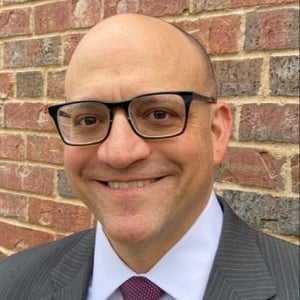
Executive Director & Secretary, American Civil Rights Project
Dan Morenoff is the executive director at the American Civil Rights Project and an adjunct fellow at the Manhattan Institute.
His work focuses on protecting and, where necessary, restoring the primacy of all Americans' shared civil rights against the identitarian alternative.
Before practicing law, Morenoff served on the legislative staff of Sen. Phil Gramm (R-TX). Morenoff holds a B.A. from Columbia College of Columbia University in the City of New York and a J.D. from the University of Chicago Law School. He has also served as an officer or director of several community organizations in Dallas, Texas.
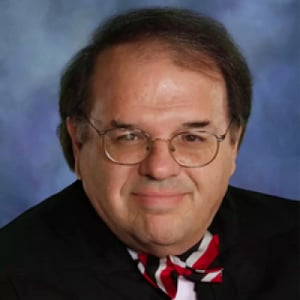
Senior Judge, United States District Court, District of Columbia
Judge Leon was appointed to the United States District Court in February 2002. He received his A.B. from Holy Cross College in 1971, his J.D. cum laude from Suffolk Law School in 1974, and his LL.M. from Harvard Law School in 1981. Immediately prior to his appointment to the bench, Judge Leon was engaged in private practice in Washington, D.C., as a partner in the Washington office of Baker & Hostetler (1989-1999), and Vorys, Sater, Seymour and Pease (1999-2002). Prior to and while in private practice, Judge Leon served as counsel to Congress in the investigations of three sitting Presidents. In 1987, he was the Deputy Chief Minority Counsel for the U.S. House Select “Iran-Contra” Committee. From 1992-1993, he was the Chief Minority Counsel to the U.S. House Foreign Affairs Committee’s “October Surprise” Task Force. In 1994, Judge Leon was Special Counsel to the U.S. House Banking Committee for its “Whitewater” investigation. He also served in 1997 as Special Counsel to the bipartisan U.S. House Ethics Reform Task Force. Earlier in his career, Judge Leon served at the U.S. Department of Justice in a number of positions including Deputy Assistant Attorney General in the Environment Division, Senior Trial Attorney in the Criminal Section of the Tax Division, and as a Special Assistant United States Attorney in the Southern District of New York. He also served as a Commissioner on the White House Fellows Commission and the Judicial Review Commission on Foreign Asset Control. A former full-time law professor at St. John’s Law School (1979-1983), Judge Leon is currently an adjunct law professor at the Georgetown University Law Center and the George Washington University Law School.
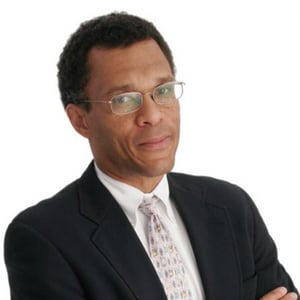
Raymond & Miriam Ehrlich Chair in US Constitutional Law, University of Florida Levin College of Law
Tracey Maclin is Professor of Law and Raymond & Miriam Ehrlich Eminent Scholar Chair. Prior to joining the University of Florida faculty, he was a professor of law and Joseph Lipsitt Faculty Research Scholar at Boston University School of Law. He has also taught at Cornell Law School, Harvard Law School and the University of Kentucky College of Law. Before entering law teaching, Professor Maclin served as a law clerk to Judge Boyce F. Martin, Jr. of the United States Court of Appeals for the Sixth Circuit and worked at Cahill, Gordon & Reindel.
Professor Maclin teaches courses in Constitutional Law and Constitutional Criminal Procedure. He also teaches a seminar on the Supreme Court’s cases in criminal procedure, criminal law, habeas corpus and the death penalty. His scholarship focuses on the Fourth Amendment and the Self-Incrimination Clause of the Fifth Amendment. He has published many law review articles and book chapters on constitutional criminal procedure topics. He is the author of The Supreme Court and the Fourth Amendment’s Exclusionary Rule (Oxford University Press 2013). In addition to his legal scholarship, Professor Maclin has authored over a dozen amicus curiae briefs and served as counsel of record for the American Civil Liberties Union, the National Association of Criminal Defense Lawyers and the Cato Institute in Fourth Amendment cases in the United States Supreme Court.
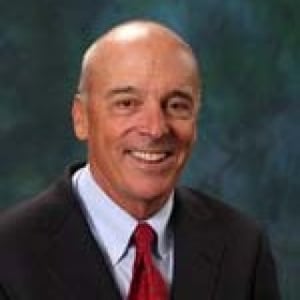
Emeritus Faculty, University of Colorado Law School
William Pizzi has been a member of the Colorado Law School faculty since 1975. He came to Colorado in 1975, after spending a few years as Assistant U.S. Attorney in New Jersey. He specializes in criminal law, with special interest in foreign criminal trial systems. Professor Pizzi's belief in the comparative study of law has compelled him to coordinate many of the law school's study abroad programs, and he recently served as a professor on the Semester-at-Sea program. Professor Pizzi has always been active in Colorado's legal community, working on the Colorado Bar Association's Ethics Committee and, most recently, serving as the reporter for the Governor's Columbine Review Commission. His task was to take the information from more than a year of meetings, testimony and interviews, and put together a cohesive report. He worked to produce the report with help from other members of the commission, while continuing his regular teaching schedule at Colorado Law School. "It was a very difficult task, because there was no model to follow. It was very much a team effort," Professor Pizzi said of the report. He was pleased with the results of the commission and said, "I'm proud of the recommendations that will help make Colorado schools safer."

Explainer Episode 85 - Rebuilding California: Lessons from the Pacific Palisades Fire
Donald J. Kochan, Jeremy Talcott
The 2025 Pacific Palisades Fire has underscored the challenges of building in California’s complex regulatory...
Political Speech of Retired Admirals & Generals
Andrew Darlington, Michael R. Dimino, Robert Leider, J. Daniel McCarthy
What constitutional protections exist for retired admirals and generals commenting on political candidates, campaigns, and sitting presidents?...
Topics
President Trump Formally Prohibits Government Jawboning, But Will the Administrative State Comply?
The right to free speech guaranteed by the First Amendment is a fundamental tenet of...
Ohio Supreme Court Rules Police Can Extend Traffic Stops to Verify Driver’s License
Tahmineh Dehbozorgi
The Ohio Supreme Court’s decision in State v. Dunlap arose from a routine traffic stop...
Montana Supreme Court Strikes Down Parental Consent Abortion Law
Julia Payne Koon
Twenty-seven states require parental consent for a minor to have an abortion.[1] And fifteen...
McGirt, the Supreme Court, and the Future of Federal Indian Law
Stanford Student Chapter
Stanford, CAExplainer Episode 84 - How Far Do the Executive Orders Go Towards Ending DEI?
Linda L. Chavez, GianCarlo Canaparo, Dan Morenoff
Linda Chavez, Chairman for the Center for Equal Opportunity, moderates a discussion between the Heritage...
Daniel Webster Debate Series: Is It Time to Abolish the Exclusionary Rule?
Richard J. Leon, Tracey Maclin, William T. Pizzi
The Federalist Society's Georgetown Law Chapter'sDaniel Webster Debate Series presents Daniel Webster Debate Series:Is It...
Topics
Markel v. Union of Orthodox Jewish Congregations of America: Welcome Developments in the Law of Church Autonomy
In its recent decision in Markel v. Union of Orthodox Jewish Congregations of America, the...
Topics
Supreme Court to Weigh Whether Religious Parents Have Right of Opt-Out from Controversial Curriculum
The Supreme Court’s term is already chock full of cases with culture war implications: pornography...