
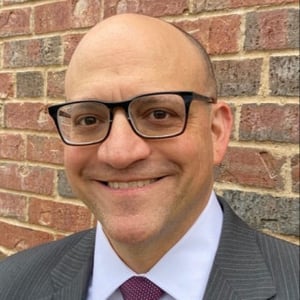
Executive Director & Secretary, American Civil Rights Project
Dan Morenoff is the executive director at the American Civil Rights Project and an adjunct fellow at the Manhattan Institute.
His work focuses on protecting and, where necessary, restoring the primacy of all Americans' shared civil rights against the identitarian alternative.
Before practicing law, Morenoff served on the legislative staff of Sen. Phil Gramm (R-TX). Morenoff holds a B.A. from Columbia College of Columbia University in the City of New York and a J.D. from the University of Chicago Law School. He has also served as an officer or director of several community organizations in Dallas, Texas.
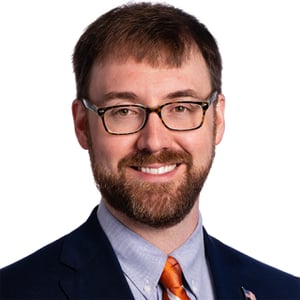
Senior Legal Fellow, Courts and the Constitution, Legal Policy Center, The Heritage Foundation
Zack is a Senior Legal Fellow of Courts and the Constitution at The Heritage Foundation.
He previously served for several years as an Assistant United States Attorney in the Northern District of Florida. Prior to that, he spent two years as an associate in the Washington, D.C. office of Cleary Gottlieb Steen & Hamilton, which he joined after clerking for the Hon. Emmett R. Cox on the United States Court of Appeals for the Eleventh Circuit.
Smith received his undergraduate, master’s, and law degrees from the University of Florida. During law school, Smith served as the Editor in Chief of the Florida Law Review and served on the executive boards of several student organizations, including the UF Chapter of the Federalist Society.
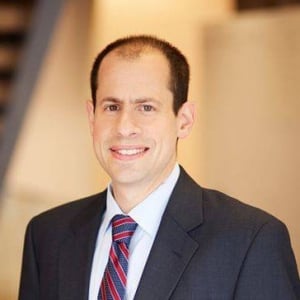
Partner, Jenner & Block LLP
Adam Unikowsky is a partner in Jenner & Block LLP’s Appellate & Supreme Court Practice Group, where he has worked since 2011.
Prior to his time at Jenner & Block, Mr. Unikowsky served as a Judicial Law Clerk to former Justice Antonin Scalia. He also previously clerked for Judge Douglas Ginsberg at the U.S. Courts of Appeals for the D.C. Circuit.
Mr. Unikowsky got his JD from Harvard University, following achieving his Masters of Engineering & Bachelors of Science from Massachusetts Institute of Technology.
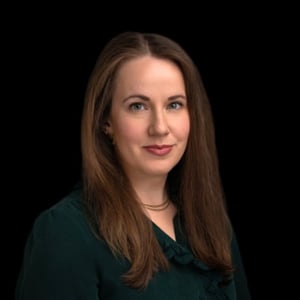
Partner, Cooper & Kirk
Megan M. Wold focuses her practice on legal issues and brief-writing in complex commercial matters, constitutional litigation, and administrative law disputes. She has argued cases in both state and federal court, drafted briefs at all levels of state and federal litigation, and regularly practices before the U.S. Supreme Court. She has represented Fortune 500 clients in international arbitrations, complex tort and fraud litigation, class actions, commercial property disputes, and complex multi-district litigation. She has frequently represented clients in regulatory disputes with state and federal agencies.
Ms. Wold previously served as a Simon Karas Fellow and Deputy Solicitor General in the Ohio Attorney General’s Office. Ms. Wold has practiced as an associate at Bancroft PLLC and as a partner in the Washington, D.C. office of Kirkland & Ellis LLP.
Ms. Wold served as a law clerk to Justice Samuel A. Alito of the U.S. Supreme Court and to Judge Jeffrey Sutton of the U.S. Court of Appeals for the Sixth Circuit. She graduated from the University of Notre Dame School of Law in 2011 and is a member of the bars of Ohio and the District of Columbia. Ms. Wold graduated summa cum laude from Ohio Wesleyan University in 2008 with an undergraduate degree in international studies and religion. She was a member of Phi Beta Kappa and a recipient of the Meek Family Service Leadership Prize.
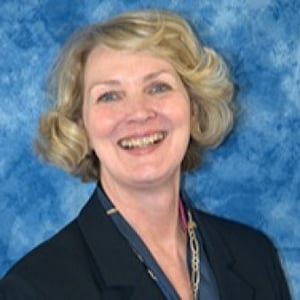
Professor and Director, Prolife Center, University of St. Thomas School of Law
Teresa Collett, J.D., is professor at the University of St. Thomas School of Law, where she serves as director of the school's Prolife Center. Collett received her doctorate at the University of Oklahoma College of Law. As a well-known advocate for the protection of human life and the family, Collett specializes in the subjects of marriage, religion and bioethics in her research.
Collett has published numerous legal articles and is the co-author of a law casebook on professional responsibility and co-editor of a collection of essays exploring “catholic” and “Catholic” perspectives on American law. She is an elected member of the American Law Institute, and has testified before committees of the U.S. Senate and House of Representatives, as well as before legislative committees in several states.
In 2009, Pope Benedict XVI appointed Collett to a five-year term on the Pontifical Council for the Family. Her appointment was renewed by His Holiness Pope Francis until 2016 when the responsibilities of the Council were assumed by the Dicastery for the Laity, Family and Life. In 2013, she served as a delegate to the International Conference on Population and Development (ICPD) for the Mission of the Holy See to the United Nations.
She represented Congressman Ron Paul and various medical groups in the defense of the U.S. federal ban of partial-birth abortion, and the governors of Minnesota and North Dakota defending the N.H. requirement of state parental involvement prior to performance of an abortion on a minor before the U.S. Supreme Court. Collett is often asked to represent the interests of government officials before federal appellate courts. She has served as special attorney general for the states of Oklahoma and Kansas, as well as assisting other state attorneys general in defending laws protecting human life and marriage. Prior to joining St. Thomas in 2003, Collett taught at the South Texas College of Law, where she established the nation's first annual symposium on legal ethics.
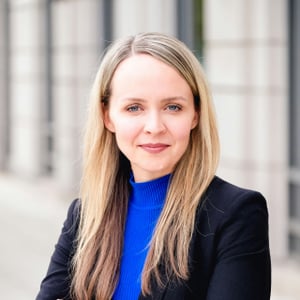
Professor of Law and Faculty Director for the Georgetown Center for the Constitution, Georgetown University Law Center
Stephanie Barclay is a Professor of Law at Georgetown Law School, and the Faculty Director of the Georgetown Center for the Constitution. Her research focuses on the role our different democratic institutions play in protecting minority rights, particularly at the intersection of free speech and religious exercise. Barclay‘s work is published or is forthcoming in leading journals such as the Harvard Law Review, the Chicago Law Review, the University of Pennsylvania Law Review, and the Yale Law Journal Forum. One of her articles was also selected for the 2020 Stanford/Harvard/Yale Junior Faculty Forum. Her work has been featured in many media outlets, including The New York Times, The Wall Street Journal, The Washington Post, USA Today, Bloomberg BNA, The Hill, and Law 360. And her work has also been cited by the U.S. Supreme Court.
Prior to joining Georgetown, Barclay was twice voted Professor of the Year. Barclay has also litigated constitutional cases at both the trial and appellate level, including before the U.S. Supreme Court. Barclay served as a law clerk to Judge N. Randy Smith on the U.S. Court of Appeals for the Ninth Circuit, and to Justice Neil M. Gorsuch of the U.S. Supreme Court.
Barclay is a Faculty Affiliate at the Constitutional Law Center at Stanford Law School; and she is a Nootbaar Fellow at the Nootbaar Institute on Law, Religion, and Ethics at Pepperdine University. She currently serves as the Chair for the AALS Law and Religion Section and as a Member of the Executive Committee for the AALS Constitutional Law Section. She graduated summa cum laude from BYU Law School, where she was elected to the Order of the Coif. She is completing a Ph.D. in Law at Oxford University as a Clarendon Scholar and a Tang Scholar.

Professor of History, Southern Methodist University
Kate Carté (Ph.D., history, University of Wisconsin; B.A., Haverford College) is a Professor of History at Southern Methodist University, specializing in early American and Atlantic history. She is the author of Religion and the American Revolution: An Imperial History (UNC Press for the Omohundro Institute, 2021) and Religion and Profit: Moravians in Early America (Philadelphia: University of Pennsylvania Press, 2009, paper 2011), which was awarded the 2010 Dale W. Brown Award for Outstanding Scholarship in Anabaptist and Pietist Studies. Her articles have appeared in the William and Mary Quarterly, Church History, and Early American Studies, as well as a variety of edited collections. Carté has been a Charles A. Ryskamp Fellow of the American Council of Learned Societies, an affiliate fellow of the Center for the Study of Religion at Princeton University, a Franklin Fellow of the American Philosophical Society, and a Barra Postdoctoral Fellow at the McNeil Center for Early American Studies.
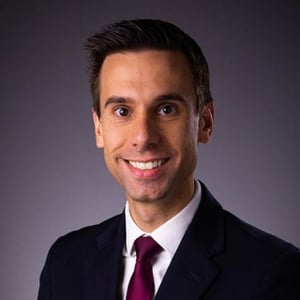
Senior Counsel, Alliance Defending Freedom's Appellate Advocacy Team
Chris Schandevel serves as senior counsel on Alliance Defending Freedom’s Appellate Advocacy Team. In that role, he represents ADF clients of all stripes at the appellate level, preserving lower-court victories and seeking to overturn unjust results.
Among other clients, he has represented a faith-based pregnancy resource center and adoption agency, a Christian photographer, a college student and conservative student group, a former Planned Parenthood clinic manager, female track-and-field athletes, and a high-school French teacher. Schandevel also was on the team of attorneys who successfully represented the Thomas More Law Center in the U.S. Supreme Court. And he regularly represents clients in friend-of-the-court briefs filed in state and federal appellate courts and in the U.S. Supreme Court.
Before joining ADF, Schandevel served as an assistant attorney general in the Criminal Appeals Section at the Office of the Attorney General of Virginia. During his five years in that office, Schandevel briefed and argued 14 appeals in the Supreme Court of Virginia and more than 60 appeals in the Court of Appeals of Virginia. Before his time at the Virginia attorney general’s office, Schandevel clerked for the Honorable Stephen R. McCullough on the Court of Appeals of Virginia.
Schandevel earned his J.D. from the University of Virginia School of Law in 2012. During law school, he founded a student organization called Advocates for Life at Virginia Law. He also completed ADF’s Blackstone Legal Fellowship and was commissioned as a Blackstone Fellow in 2010 after an internship with ADF’s Center for Life. Schandevel earned his B.A. in Social Work from Harding University in 2009.
A member of the state bar of Virginia, Schandevel is admitted to practice before the U.S. Supreme Court and various state and federal trial and appellate courts.
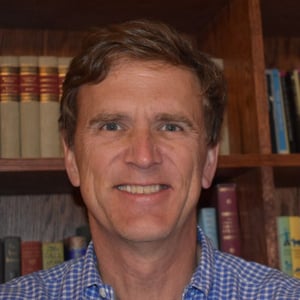
Senior Counsel, Storzer and Associates; Adjunct Professor at the Catholic University of America Columbus School of Law
Eric Treene is Senior Counsel at Storzer and Associates in Washington, D.C., and an Adjunct Professor at the Catholic University of America School of Canon Law. He served for 19 years in four administrations in the U.S. Department of Justice as Special Counsel for Religious Discrimination, where he provided leadership for the Department on a wide range of religious liberty issues, including developing and overseeing the Department’s enforcement program for the Religious Land Use and Institutionalized Persons Act (RLUIPA), testifying before the U.S. Senate on religious hate crimes and developing training programs to protect places of worship from violence, and leading the Department’s efforts to protect religious liberty rights during the COVID-19 epidemic. Prior to serving at the Department of Justice, Mr. Treene was Litigation Director at the Becket Fund for Religious Liberty in Washington, D.C, and was a law clerk to the Hon. John M. Walker, Jr. on the U.S. Court of Appeals for the Second Circuit. He is a graduate of Amherst College and Harvard Law School.
Partner, Jenner & Block LLP
Adam Unikowsky is a partner in Jenner & Block LLP’s Appellate & Supreme Court Practice Group, where he has worked since 2011.
Prior to his time at Jenner & Block, Mr. Unikowsky served as a Judicial Law Clerk to former Justice Antonin Scalia. He also previously clerked for Judge Douglas Ginsberg at the U.S. Courts of Appeals for the D.C. Circuit.
Mr. Unikowsky got his JD from Harvard University, following achieving his Masters of Engineering & Bachelors of Science from Massachusetts Institute of Technology.
Professor of Law and Faculty Director for the Georgetown Center for the Constitution, Georgetown University Law Center
Stephanie Barclay is a Professor of Law at Georgetown Law School, and the Faculty Director of the Georgetown Center for the Constitution. Her research focuses on the role our different democratic institutions play in protecting minority rights, particularly at the intersection of free speech and religious exercise. Barclay‘s work is published or is forthcoming in leading journals such as the Harvard Law Review, the Chicago Law Review, the University of Pennsylvania Law Review, and the Yale Law Journal Forum. One of her articles was also selected for the 2020 Stanford/Harvard/Yale Junior Faculty Forum. Her work has been featured in many media outlets, including The New York Times, The Wall Street Journal, The Washington Post, USA Today, Bloomberg BNA, The Hill, and Law 360. And her work has also been cited by the U.S. Supreme Court.
Prior to joining Georgetown, Barclay was twice voted Professor of the Year. Barclay has also litigated constitutional cases at both the trial and appellate level, including before the U.S. Supreme Court. Barclay served as a law clerk to Judge N. Randy Smith on the U.S. Court of Appeals for the Ninth Circuit, and to Justice Neil M. Gorsuch of the U.S. Supreme Court.
Barclay is a Faculty Affiliate at the Constitutional Law Center at Stanford Law School; and she is a Nootbaar Fellow at the Nootbaar Institute on Law, Religion, and Ethics at Pepperdine University. She currently serves as the Chair for the AALS Law and Religion Section and as a Member of the Executive Committee for the AALS Constitutional Law Section. She graduated summa cum laude from BYU Law School, where she was elected to the Order of the Coif. She is completing a Ph.D. in Law at Oxford University as a Clarendon Scholar and a Tang Scholar.
Professor of History, Southern Methodist University
Kate Carté (Ph.D., history, University of Wisconsin; B.A., Haverford College) is a Professor of History at Southern Methodist University, specializing in early American and Atlantic history. She is the author of Religion and the American Revolution: An Imperial History (UNC Press for the Omohundro Institute, 2021) and Religion and Profit: Moravians in Early America (Philadelphia: University of Pennsylvania Press, 2009, paper 2011), which was awarded the 2010 Dale W. Brown Award for Outstanding Scholarship in Anabaptist and Pietist Studies. Her articles have appeared in the William and Mary Quarterly, Church History, and Early American Studies, as well as a variety of edited collections. Carté has been a Charles A. Ryskamp Fellow of the American Council of Learned Societies, an affiliate fellow of the Center for the Study of Religion at Princeton University, a Franklin Fellow of the American Philosophical Society, and a Barra Postdoctoral Fellow at the McNeil Center for Early American Studies.
Senior Counsel, Alliance Defending Freedom's Appellate Advocacy Team
Chris Schandevel serves as senior counsel on Alliance Defending Freedom’s Appellate Advocacy Team. In that role, he represents ADF clients of all stripes at the appellate level, preserving lower-court victories and seeking to overturn unjust results.
Among other clients, he has represented a faith-based pregnancy resource center and adoption agency, a Christian photographer, a college student and conservative student group, a former Planned Parenthood clinic manager, female track-and-field athletes, and a high-school French teacher. Schandevel also was on the team of attorneys who successfully represented the Thomas More Law Center in the U.S. Supreme Court. And he regularly represents clients in friend-of-the-court briefs filed in state and federal appellate courts and in the U.S. Supreme Court.
Before joining ADF, Schandevel served as an assistant attorney general in the Criminal Appeals Section at the Office of the Attorney General of Virginia. During his five years in that office, Schandevel briefed and argued 14 appeals in the Supreme Court of Virginia and more than 60 appeals in the Court of Appeals of Virginia. Before his time at the Virginia attorney general’s office, Schandevel clerked for the Honorable Stephen R. McCullough on the Court of Appeals of Virginia.
Schandevel earned his J.D. from the University of Virginia School of Law in 2012. During law school, he founded a student organization called Advocates for Life at Virginia Law. He also completed ADF’s Blackstone Legal Fellowship and was commissioned as a Blackstone Fellow in 2010 after an internship with ADF’s Center for Life. Schandevel earned his B.A. in Social Work from Harding University in 2009.
A member of the state bar of Virginia, Schandevel is admitted to practice before the U.S. Supreme Court and various state and federal trial and appellate courts.
Senior Counsel, Storzer and Associates; Adjunct Professor at the Catholic University of America Columbus School of Law
Eric Treene is Senior Counsel at Storzer and Associates in Washington, D.C., and an Adjunct Professor at the Catholic University of America School of Canon Law. He served for 19 years in four administrations in the U.S. Department of Justice as Special Counsel for Religious Discrimination, where he provided leadership for the Department on a wide range of religious liberty issues, including developing and overseeing the Department’s enforcement program for the Religious Land Use and Institutionalized Persons Act (RLUIPA), testifying before the U.S. Senate on religious hate crimes and developing training programs to protect places of worship from violence, and leading the Department’s efforts to protect religious liberty rights during the COVID-19 epidemic. Prior to serving at the Department of Justice, Mr. Treene was Litigation Director at the Becket Fund for Religious Liberty in Washington, D.C, and was a law clerk to the Hon. John M. Walker, Jr. on the U.S. Court of Appeals for the Second Circuit. He is a graduate of Amherst College and Harvard Law School.
Partner, Jenner & Block LLP
Adam Unikowsky is a partner in Jenner & Block LLP’s Appellate & Supreme Court Practice Group, where he has worked since 2011.
Prior to his time at Jenner & Block, Mr. Unikowsky served as a Judicial Law Clerk to former Justice Antonin Scalia. He also previously clerked for Judge Douglas Ginsberg at the U.S. Courts of Appeals for the D.C. Circuit.
Mr. Unikowsky got his JD from Harvard University, following achieving his Masters of Engineering & Bachelors of Science from Massachusetts Institute of Technology.

Partner and Co-Chair, Constitutional and Appellate Law Practice Group, Gibson, Dunn & Crutcher LLP
Allyson N. Ho is a partner in the Dallas office of Gibson, Dunn & Crutcher LLP and co‐chair of the Firm’s nationwide Appellate and Constitutional Law practice group.
Mrs. Ho is “undoubtedly one of the premier appellate lawyers in the United States” (Chambers). She has presented over 100 oral arguments in federal and state courts nationwide, including multiple high‐stakes cases on behalf of business before the U.S. Supreme Court.
Her most significant winning arguments include a U.S. Supreme Court reversal worth billions of dollars for unionized employers in the Sixth Circuit; a U.S. Supreme Court reversal limiting the power of federal regulators; a multi‐billion dollar environmental win in the Fifth Circuit; a multi‐billion dollar commercial victory for the founder of a technology company in the Appellate Division of the New York Supreme Court; a billion dollar environmental win in the Houston Court of Appeals; a nine‐figure commercial victory in the Corpus Christi Court of Appeals; and a nine‐figure arbitration win in the Fifth Circuit.
Among her numerous accolades, Mrs. Ho is one of only a small group of appellate lawyers nationwide, and the only one in Texas, to be nationally ranked by Chambers every year for the past ten years (2012‐21). She is also one of the few appellate lawyers nationwide to be named to the BTI Client Service All‐Stars List, an honor bestowed by the corporate counsel community for lawyers “who stand above all the others in delivering the absolute best in client service.” She is also routinely named as a leading appellate lawyer by Benchmark, The Best Lawyers in America®, The Legal 500, Texas Super Lawyers, and D Magazine.
Mrs. Ho has received the Gregory S. Coleman Outstanding Appellate Lawyer Award (Texas Bar Foundation, June 22, 2018), been named a “Distinguished Leader” (Texas Lawyer, Sep. 1, 2017) and “Appellate MVP” (Law360, Nov. 23, 2015), and been recognized on the “Appellate Hot List” (National Law Journal, Nov. 16, 2015). In addition, she has been profiled in “Texas Powerhouse” (Law360, Aug. 2, 2021), “Texas Appellate Power Couple” (Texas Lawbook, January 7, 2021), “Litigators of the Week” (The American Lawyer, May 8, 2020), “Litigation Powerhouse” (Law360, Aug. 10, 2016), “Supreme Court Insider” (National Law Journal, July 21, 2016), “Supreme Court Specialists, Mostly Male, Dominated Arguments This Term” (National Law Journal, May 11, 2016), “Attorney of the Year Finalist” (Texas Lawyer, Nov. 2, 2015), “Litigation Department of the Year” (Texas Lawyer, June 1, 2015), “Employment Group of the Year” (Law360, Jan. 13, 2015), “A Supreme Month: Lawyer Credits Preparedness in Ability to Argue Two U.S. High Court Cases in Three Weeks” (Texas Lawyer, Dec. 8, 2014), “High Court Debuts for Two Lawyers” (National Law Journal, Nov. 3, 2014), “Women in Business Awards” (Dallas Business Journal, Aug 29, 2014), “Litigation Departments of the Year” (Texas Lawyer, June 2, 2014), “Winning Women” (Texas Lawyer, Aug. 22, 2011), and “High court practitioners: increasingly diverse” (National Law Journal, June 6, 2011).
Federal and State Appellate Practice
Mrs. Ho has argued a series of high stakes, landmark cases on behalf of the business community before the U.S. Supreme Court. National Law Journal called her a “Veteran SCOTUS Advocate” in the “upper echelons of Supreme Court practice.” Law360 named her a “Supreme Court Star” and “one of the nation’s preeminent appellate lawyers.” And EmpiricalSCOTUS.com ranked her among “the most successful attorneys that currently practice before the Court.” Mrs. Ho once argued two significant business cases before the Court within the span of 21 days—including a “significant ruling for employers” that “paved a new path for companies paying millions of dollars in retiree health care benefits” (Law360), as well as a landmark administrative law dispute in which “several justices agreed with Ho’s contention that SCOTUS should revisit and overrule its own precedent” (Law360). She also prevailed against the EEOC in a case that the employment defense bar called “good news for employers across the country.” And in “the most important patent case in modern history” according to patent law experts, her argument before the Court was credited for “pick[ing] up two votes that pundits thought unreachable.”
She has appeared before every federal court of appeals in the country, including en banc arguments before the Fourth and Sixth Circuits. She has successfully represented business clients in every circuit, including the First (Pruco Life Insurance Company), Second (Swiss Federation; Rite Aid), Third (Johnson & Johnson), Fourth (Genex Services), Fifth (United Space Alliance LLC; Elliott Co.; MERSCORP; 24 Hour Fitness USA, Inc.; Stream Energy; Health Management Systems), Sixth (Deutsche Bank; American Airlines; M&G Polymers), Seventh (Expedia), Eighth (Cotter), Ninth (Boeing; JP Morgan Chase Bank), Tenth (Mitchell International), Eleventh (AstraZeneca), D.C. (FedEx), and Federal (Repros Therapeutics) Circuits.
In addition, Mrs. Ho regularly appears in state appellate courts across the country. She has argued numerous cases in the Texas Supreme Court, Texas appellate courts in Dallas, Houston, San Antonio, Corpus Christi, and Eastland, and state appellate courts in Arizona, Michigan, New York, Ohio, Oklahoma, and West Virginia, prevailing on behalf of Ford Motor Company, PepsiCo, International Paper, Tenet, GameStop, Deutsche Bank, and Unit.
Government and Public Service Experience
Mrs. Ho has a distinguished record of experience at the highest levels of the federal government. She served as Special Assistant to President George W. Bush, Counselor to Attorney General John Ashcroft, and law clerk to Justice Sandra Day O’Connor of the U.S. Supreme Court and Judge Jacques L. Wiener Jr. of the U.S. Court of Appeals for the Fifth Circuit.
Her record of public service also includes appointments to various boards and commissions. Among the most notable are her election as a member of the Administrative Conference of the United States, a trustee of the United States Supreme Court Historical Society, and a trustee of the Texas Supreme Court Historical Society. She is also vice chair of the Federal Judicial Evaluation Committee, appointed by U.S. Senators John Cornyn and Ted Cruz to evaluate potential appointments of all federal judges and U.S. Attorneys in Texas, and has previously served on the U.S. Magistrate Judge Merit Selection Panel for the Northern District of Texas.
Other Background Information
An active pro bono litigator, Mrs. Ho works most frequently with the First Liberty Institute and as amicus counsel for the State and Local Legal Center, the National Organization for Victim Assistance, and the National Crime Victim Law Institute. She is a frequent public speaker and active member of the Federalist Society, the American Law Institute, and the Washington Legal Foundation’s Legal Policy Advisory Board.
Mrs. Ho graduated from Duke University magna cum laude with a B.A. in English, Rice University with an M.A. and Ph.D. in English Literature, and the University of Chicago Law School with high honors. She was a member of the Law Review and Order of the Coif. She and her husband Jim, a federal judge, have a twin daughter and son.
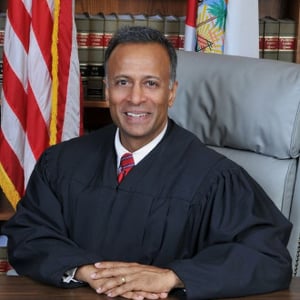
United States District Judge, United States District Court for the Southern District of Florida
On December 20, 2019, Raag Singhal received his judicial commission to serve on the United States District Court for the Southern District of Florida. Judge Singhal is the first Asian American in history to serve as an Article III judge in the jurisdiction of the Eleventh Circuit (Alabama, Georgia and Florida).
Immediately prior to becoming a federal judge, Judge Singhal spent eight years as a State Circuit Court Judge in Broward County, Florida, having been appointed by then-Governor Rick Scott in 2011. During that period of time, Singhal served, at times, in the Criminal, Civil and Mental Health divisions and was fortunate enough to sit as an Associate Judge on Florida’s Fourth District Court of Appeal on four occasions.
As a lawyer, Singhal gained experience at a civil litigation firm followed by three years as an Assistant State Attorney. After that, Singhal ran a successful criminal defense practice in Fort Lauderdale for eighteen years. During that time, he handled more than two hundred jury trials including thirty first-degree murder cases.
Judge Singhal has had leadership roles in many law-related groups. He is past-President of the Broward Association of Criminal Defense Lawyers and the Stephen H. Booher Chapter of the American Inns of Court. He was on the Board of Directors of the Broward County Bar Association, and is a frequent speaker at events for various local Bar groups such as the Asian Pacific American Bar Association and the Federalist Society. Singhal was also Associate Dean of the Florida College for Advanced Judicial Studies upon his elevation to the federal court system.
Judge Singhal received his law degree from Wake Forest University School of Law in 1989 where he was very active in Moot Court activities, and was on the winning team of the J. Braxton Craven National Moot Court Competition (4th Amendment). He received his undergraduate degree in Political Science from Rice University in 1986.

Racially Discriminatory Corporate Policies: Who's Liable?
Dan Morenoff
Laws banning discrimination have been on the books across America for more than a century...
U.S. Supreme Court October Term 2023 Review
Iowa Lawyers Chapter
Des Moines, IAOriginalism, Ballot Initiatives, and Abortion in Florida
Zack Smith
With its June 2022 Dobbs v. Jackson Women’s Health Organization decision, the U.S. Supreme Court...
Topics
Texas District Court Sets Aside FTC's Ban on Non-Compete Agreements
In Ryan LLC v. FTC, decided on August 20, the U.S. District Court for the...
Supreme Court Roundup At Sea with Hon. Raag Singhal
Maine Lawyers Chapter
Bailey Island, METopics
The Sixth Circuit Stays the FCC’s Latest Net Neutrality Flip-Flop
At last! There’s now a good chance the two decades-old “net neutrality” wars may be...
Topics
Reviving the Lost Liberty: Why the Assembly Clause Matters Today
Protests on a range of sensitive issues have roiled college campuses across the nation this...
FDA v. AHM - Post-Decision SCOTUScast
Adam Unikowsky, Megan M. Wold, Teresa Stanton Collett
On June 13, 2024, the Supreme Court issued its ruling in Food and Drug Administration...
Free Exercise, History and Tradition, and Preferred Pronouns: Key Takeaways from Vlaming v. West Point School Board
Stephanie Barclay, Kate Carté, Chris Schandevel, Eric W. Treene, Adam Unikowsky
High school French teacher Peter Vlaming was fired from his job in West Point, Virginia,...
Free Exercise, History and Tradition, and Preferred Pronouns: Key Takeaways from Vlaming v. West Point School Board
Stephanie Barclay, Kate Carté, Chris Schandevel, Eric W. Treene, Adam Unikowsky
High school French teacher Peter Vlaming was fired from his job in West Point, Virginia,...