
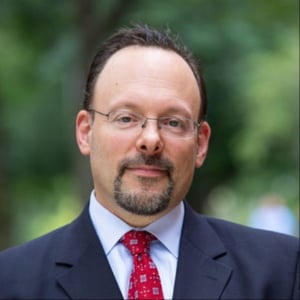
Tazewell Taylor Professor of Law and William H. Cabell Research Professor, William & Mary Law School
Jonathan H. Adler joined the William & Mary law faculty as the Tazwell Taylor Professor of Law and William H. Cabell Research Professor in 2025. Prior to joining the faculty, he was the inaugural Johan Verheij Memorial Professor of Law and the founding Director of the Coleman P. Burke Center for Environmental Law at the Case Western Reserve University School of Law.
Professor Adler is the author or editor of seven books, including Climate Liberalism: Perspectives on Liberty, Property and Pollution (Palgrave, 2023), Marijuana Federalism: Uncle Sam and Mary Jane (Brookings Institution Press, 2020), Business and the Roberts Court (Oxford University Press, 2016) and Rebuilding the Ark: New Perspectives on Endangered Species Act Reform (AEI Press, 2011).
His articles have appeared in publications ranging from the Harvard Environmental Law Review and Yale Journal on Regulation to the Wall Street Journal, New York Times, and Washington Post. He has testified before Congress a dozen times, and his work has been cited in the U.S. Supreme Court. A 2024 study identified Professor Adler as the seventh most cited legal academic in administrative and environmental law from 2019 to 2023.
Professor Adler is a contributing editor to Civitas Outlook and a regular contributor to the popular legal blog, The Volokh Conspiracy. A regular commentator on constitutional and regulatory issues, he has appeared on numerous radio and television programs, ranging from the PBS Newshour and National Public Radio to the Fox News Channel and Entertainment Tonight.
Professor Adler is a senior fellow at the Property & Environment Research Center in Bozeman, Montana. In 2018, Professor Adler was elected to membership in the American Law Institute and helped co-found the organization Checks and Balances. In 2024, Professor Adler was appointed a public member of the Administrative Conference of the United States.
Professor Adler clerked for the Honorable David B. Sentelle on the U.S. Court of Appeals for the District of Columbia Circuit.
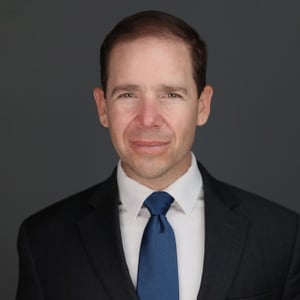
Founder and CEO, Lexpat Global Services
Adam Pearlman is the Founder and Chief Executive Officer of Lexpat Global Services. He is a National Security Law expert and a proven senior leader with experience across the U.S. Departments of Justice, Defense, and State, in the White House, and with the U.S. Federal Judiciary.
Before founding Lexpat, Mr. Pearlman served as the Senior Advisor for Legal Policy in the State Department’s Bureau of Counterterrorism. There, he counseled senior officials on matters covering the entire spectrum of programs and operations to counter terrorism and violent extremism. While participating in sensitive diplomatic engagements and helping to coordinate military operations, he also advised in the development of sanctions policy and initiatives to build legal and operational capacity in partner nations. Mr. Pearlman also managed the Bureau’s participation in federal litigation and led U.S. delegations in multilateral forums concerning criminal justice and rule of law. Separately, Mr. Pearlman supported the State Department’s Bureau of International Narcotics and Law Enforcement Affairs (INL) as the contracted Senior Justice and Rule of Law Advisor in Cabo Verde, Africa. There he was the chief implementer of a Foreign Assistance program that grew eight-fold during his tenure, building host nation capacity across the law enforcement, justice sector, rule of law, anti-money laundering, and corrections disciplines.
A former Associate Deputy General Counsel of the Department of Defense, Mr. Pearlman was agency counsel for complex civil and criminal national security matters in federal and military courts. He also led the Supreme Court and appellate unit of the team dedicated to litigating classified counterterrorism cases. His earlier service in the Department of Justice spanned four litigating divisions and the Office of the Deputy Attorney General. His diverse experience included reviewing complex international transactions and mergers, and advising on immigration removal proceedings, human rights abuses, and terrorist financing investigations. Mr. Pearlman also served with distinction in Iraq as an early advisor to the Iraqi High Tribunal’s prosecution of Saddam Hussein. He was a law clerk for The Honorable Royce C. Lamberth of the U.S. District Court for the District of Columbia, and during law school interned in the White House Counsel’s Office.
Mr. Pearlman is a Senior Fellow at the National Security Institute at George Mason University’s Antonin Scalia Law School, a member of the American Bar Association’s Advisory Committee on Law and National Security, and the Editor-in-Chief of the U.S. Intelligence Community Law Sourcebook. Previously, he has been a Term Member of the Council on Foreign Relations, National Security Fellow at the Foundation for Defense of Democracies, member of the ABA’s Africa Law Initiative Council and of the Center for Strategic & International Studies’ (CSIS) Project on Nuclear Issues, vice chairman of the ABA Section of International Law’s committees on national security, and aerospace and defense, and a liaison to the Board of Directors of the ABA’s Rule of Law Initiative. He has published articles in the Harvard National Security Journal, Stanford Law & Policy Review, Intelligence & National Security, The Foreign Service Journal, Lawfare, and many other outlets.
Mr. Pearlman earned his B.A., with honors, from UCLA, and his J.D., with honors, from The George Washington University Law School, where he was a member of the International Law Review. He also earned a Master of Science of Strategic Intelligence degree from the National Intelligence University, where he was the inaugural recipient of the Kornblum Award for national security law and ethics. Mr. Pearlman is a Certified Financial Crime Specialist and holds certificates in international human rights law from the University of Oxford and in anti-corruption law from American University’s Washington College of Law. He is admitted to the State Bars of California and Virginia, as well as to the Bar of the United States Supreme Court. He speaks and reads Portuguese at the intermediate level.
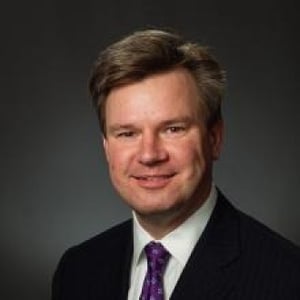
Senior Counsel & Director of the Center for Religious Schools, Alliance Defending Freedom
Gregory S. Baylor serves as senior counsel with Alliance Defending Freedom, where he is the director of the Center for Religious Schools and senior counsel with the Center for Public Policy.
Since joining ADF in 2009, Baylor has focused on defending and advancing the religious freedom of faith-based educational institutions through advice, education, legislative and public advocacy, and representation in disputes. He has testified about religious liberty issues three times before congressional committees and numerous times before state legislative committees.
Greg serves on the board of directors of the International Alliance for Christian Education, the board of directors of the Association for Biblical Higher Education, the board of directors of the Association for Christian Schools International, the board of advisors of the Museum of the Bible, and advisory board of the Center for Academic Faithfulness and Flourishing.
Greg earned his Juris Doctor in 1990 from Duke University School of Law, where he graduated Order of the Coif, with high honors, and served on the editorial board of the Duke Law Journal. He received his bachelor’s degree in Honors English in 1987 from Dartmouth College. Following graduation from law school, he served as law clerk to the Hon. Jerry E. Smith on the U.S. Court of Appeals for the Fifth Circuit. He practiced labor and employment law at two large international law firms for three years before joining the staff of Christian Legal Society’s Center for Law and Religious Freedom, where he served for 15 years prior to joining ADF. He lives in Northern Virginia with his wife (a medical doctor) and two daughters.
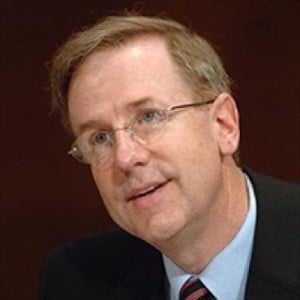
Board Member, Center for Equal Opportunity
Roger Clegg is a Board Member at and former President and General Counsel of the Center for Equal Opportunity. He focuses on legal issues arising from civil rights laws--including the regulatory impact on business and the problems in higher education created by affirmative action. A former Deputy Assistant Attorney General in the Reagan and Bush administrations, Clegg held the second highest positions in both the Civil Rights Division (1987-91) and in the Environment and Natural Resources Division (1991-93). He has held several other positions at the U.S. Justice Department, including Assistant to the Solicitor General (1985-87), Associate Deputy Attorney General (1984-85), and Acting Assistant Attorney General in the Office of Legal Policy (1984). Clegg is a graduate of Yale University Law School (1981).
Former Solicitor General of Texas
Gregory Scott Coleman was an American lawyer and the first Solicitor General of Texas, serving in that capacity from 1999 to 2001.
Chief Legal Officer & General Counsel, Americans United for Life
Steven H. Aden serves as Chief Legal Officer & General Counsel at Americans United for Life. Aden joined Americans United for Life in August 2017, overseeing all legal operations of America’s most effective pro-life organization. Aden is a highly experienced litigator, having appeared in court against Planned Parenthood and the abortion industry dozens of times and appointed by the attorneys general of six states to defend prolife laws. Mr. Aden secured court victories that upheld an Arizona law that resulted in six abortion businesses ceasing to offer abortion, applied Missouri’s abortion laws to chemical abortion and upheld the right of Louisiana regulators to shut down dangerous abortion facilities. A prolific author and analyst on sanctity of life issues and constitutional jurisprudence, Aden is admitted to the bars of the District of Columbia, Virginia, and Hawaii (inactive), and is a member of the bars of the U.S. Supreme Court and numerous federal circuit and district courts. He has practiced law since 1990 and earned his J.D. (cum laude) from Georgetown University Law Center and his B.A. from the University of Hawaii.
Board Member, Center for Equal Opportunity
Roger Clegg is a Board Member at and former President and General Counsel of the Center for Equal Opportunity. He focuses on legal issues arising from civil rights laws--including the regulatory impact on business and the problems in higher education created by affirmative action. A former Deputy Assistant Attorney General in the Reagan and Bush administrations, Clegg held the second highest positions in both the Civil Rights Division (1987-91) and in the Environment and Natural Resources Division (1991-93). He has held several other positions at the U.S. Justice Department, including Assistant to the Solicitor General (1985-87), Associate Deputy Attorney General (1984-85), and Acting Assistant Attorney General in the Office of Legal Policy (1984). Clegg is a graduate of Yale University Law School (1981).
Senior Counsel, Schaerr Jaffe LLP
Ken Klukowski is senior counsel at the law firm Schaerr Jaffe, focusing on constitutional, administrative, and election law, and the federal courts. He has served in politically appointed positions in the U.S. government, including senior counsel in the Civil Division of the U.S. Department of Justice, and prior to that in the White House as special counsel in the Office of Management and Budget. He was also the constitutional rights advisor on the Presidential Transition Team of President Donald J. Trump. In the private sector, he has worked as a senior fellow of the American Constitutional Rights Union, senior counsel at First Liberty Institute, and a legal journalist. He litigates constitutional cases in the U.S. Supreme Court and lower federal courts, and contributes to media coverage of the nation’s highest court and legal issues. Earlier in his career, Klukowski served as special deputy attorney general of Indiana, and worked on faculty at Liberty University School of Law. His academic works have been published by journals such as the Federalist Society’s Harvard Journal of Law & Public Policy, and his columns have appeared in the Wall Street Journal and other national publications. His amicus briefs and nine law review articles have been cited by various federal courts and top legal journals. He has participated in numerous Supreme Court cases, and lectured and debated at 100 law school events nationwide. Klukowski received his bachelor’s degree from the University of Notre Dame, studied history at Arizona State University, earned his law degree from Scalia Law School at George Mason University, and served as a law clerk to Chief Judge Alice Batchelder on the U.S. Court of Appeals for the Sixth Circuit.

The Record of the Roberts Court in Environmental Cases: Pro-Business or Pro-Government?
Jonathan H. Adler
The Supreme Court’s October 2008 Term was not particularly good for environmentalist groups. Indeed, it...
Proposed Federal Legislation Seeks to Overturn Supreme Court Limits on Aiding and Abetting Liability in Certain Securities Cases
Jeffrey J. Jones, J Kennard, Marjorie P. Duffy
Under recently-introduced legislation, a company’s bankers, auditors, business partners, and outside lawyers could be held...
Putting Terrorists out of Business: Using Sarbanes-Oxley to Prosecute Terror Financiers
Adam R. Pearlman
Assume a charity solicited contributions from donors willing to support a religious or social cause...
The Future of Work Status Legislation and E-Verify
Samson R. Elsbernd
In the current debate over unauthorized immigration, many policymakers have proposed improvements to the nation’s...
Christian Legal Society v. Martinez: Religious Student Groups, Nondiscrimination Rules, and the Constitution
Gregory Baylor
In Christian Legal Society v. Martinez, the United States Supreme Court will decide whether the...
Northwest Austin Municipal Utility District Number One v. Holder and the Voting Rights Act
Laughlin McDonald, Roger B. Clegg, Gregory S. Coleman
Northwest Austin Municipal Utility District Number One (NAMUDNO) filed suit seeking exemption from Section 5...
Should Terrorists Face Courts Martial?: A Proposal for a Pragmatic Military Solution
Charlotte, North CarolinaThe Employment Non-Discrimination Act
Steven H. Aden
Brought to you by the Religious Liberties Practice Group The "Employment Non-Discrimination Act" ("ENDA") would amend...
H.R. 3335: “The Democracy Restoration Act”
Roger B. Clegg
Brought to you by the Free Speech & Election Law Practice Group Last year, H.R. 3335,...
Review of the 2010 SCOTUS Term