

Richard and Frances Mallery Professor of Law and Faculty Director, Constitutional Law Center, Stanford Law School
Michael W. McConnell is the Richard and Frances Mallery Professor and Faculty Director of the Constitutional Law Center at Stanford Law School, and a Senior Fellow at the Hoover Institution. From 2002 to 2009, he served as a Circuit Judge on the United States Court of Appeals for the Tenth Circuit. He was nominated by President George W. Bush, a Republican, and confirmed by a Democratic Senate by unanimous consent. McConnell has previously held chaired professorships at the University of Chicago and the University of Utah, and visiting professorships at Harvard and NYU. He teaches courses on constitutional law, constitutional history, First Amendment, and interpretive theory. He has published widely in the fields of constitutional law and theory, especially church and state, equal protection, and separation of powers. His book, “The President Who Would Not Be King: Executive Power Under the Constitution,” was published by Princeton University Press in 2020, based on the Tanner Lectures in Human Values, which he delivered at Princeton in 2019. His latest book, co-authored with Nathan Chapman, “Agreeing to Disagree: How the Establishment Clause Protects Religious Diversity and Freedom of Conscience,” was published by Oxford University Press in mid-2023. McConnell has argued sixteen cases in the United States Supreme Court, most recently Carney v. Adams (2020). defending a provision of the Delaware Constitution requiring political balance on that state’s courts. More recently, he was co-counsel in Gonzalez v. Google. He earned his B.A. from Michigan State University and his J.D. from the University of Chicago, and has received honorary degrees from Notre Dame University and Michigan State. He served as law clerk to Supreme Court Justice William J. Brennan, Jr. and D.C. Circuit Chief Judge J. Skelly Wright. He has been Assistant General Counsel of the Office of Management & Budget, Assistant to the Solicitor General of the Department of Justice, and a member of the President’s Intelligence Oversight Board. He is Senior of Counsel to the law firm Wilson, Sonsini, Goodrich & Rosati, and is co-chair of Meta’s Oversight Review Board.

Professor of Law, Vermont Law School
John Echeverria is a Professor of Law at Vermont Law School where he teaches Property, Public Law and a wide range of environmental and natural resource law courses. Prior to joining the Vermont Law School faculty in 2009, he served for 12 years as Executive Director of the Georgetown Environmental Law & Policy Institute at Georgetown University Law Center. He also was General Counsel of the National Audubon Society and General Counsel and Conservation Director of American Rivers, Inc., and was an Associate for four years in the Washington, D.C. office of Hughes, Hubbard & Reed. He served for one year as law clerk to the Honorable Gerhard A. Gesell of the U.S. District Court for the District of Columbia immediately after graduating from law school.
Professor Echeverria has written several books and numerous scholarly articles on environmental and natural resource law topics. He has published pieces for more general audiences in The New York Times, The Washington Post, and The Christian Science Monitor. He has represented state and local governments, environmental organizations, and planning groups in a variety of legal matters at all levels of the federal and state court systems. In 2007, Professor Echeverria received the Jefferson Fordham Advocacy Award from the American Bar Association to recognize outstanding excellence within the area of state and local government law over a lifetime of achievement. In addition to teaching at Vermont Law School, he has served as a Visiting Professor at Harvard Law School and Georgetown University Law Center.
Professor Echeverria received a JD degree from the Yale Law School. He received a Master’s degree from the Yale School of Forestry and Environmental Studies as well as a BA degree from Yale College (summa cum laude).

Judge, United States Court of Appeals, Sixth Circuit
Judge Readler earned his undergraduate and law degrees from the University of Michigan. After graduating, he served as a law clerk to Judge Alan Norris of the United States Court of Appeals for the Sixth Circuit. Judge Readler then began practicing law in the Columbus office of the international law firm Jones Day, eventually spending ten years as a partner in the firm’s Issues and Appeals Practice Group. While at Jones Day, Judge Readler appeared in state and federal trial and appellate courts around the country, most frequently the Supreme Court of Ohio and the Sixth Circuit. Judge Readler also successfully argued before the United States Supreme Court in McQuiggin v. Perkins on behalf of an inmate claiming actual innocence. His other pro bono representations include representing capital defendants before the Tenth Circuit and the Supreme Court of Ohio, as well as representing defendants sentenced to life in prison before the Sixth Circuit. While at Jones Day, Judge Readler traveled to Nairobi with Lawyers Without Borders to train Kenyan lawyers in prosecuting domestic violence cases, and he was also a recipient of the American Marshall Memorial Fellowship awarded by the German Marshall Fund of the United States. Following his career in private practice, Judge Readler served as Acting Assistant Attorney General for the Civil Division of the United States Department of Justice from 2017 to 2019. In that role, Judge Readler led and supervised over 1,000 lawyers in the Department’s largest litigating division, briefing and arguing several cases on behalf of the United States in federal courts across the country, including high-profile cases significant to the Administration and the Department. In March 2019, Judge Readler was confirmed to serve as a Circuit Judge on the Sixth Circuit. He resides in Columbus.
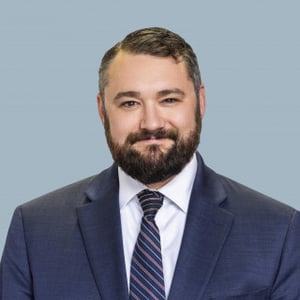
Partner, Ashbrook Byrne Kresge Flowers LLC
Ben Flowers, a partner at Ashbrook Byrne Kresge Flowers LLC, is an accomplished litigator with experience briefing, arguing, and winning high-stakes cases in courts throughout the country.
Before joining the law firm, Ben served as Ohio's 10th Solicitor General. In that role he regularly represented the State of Ohio before the Supreme Court of the United States, the United States Court of Appeals for the Sixth Circuit, and the Supreme Court of Ohio. Most prominently, in National Federation of Independent Business v. Department of Labor, Ben led a multi-state challenge to OSHA's vaccine mandate, ultimately prevailing before the Supreme Court.
Ben is a graduate of The Ohio State University and the University of Chicago Law School. Following law school, Ben clerked for Judge Sandra Ikuta of the U.S. Court of Appeals for the Ninth Circuit and for Justice Antonin Scalia of the Supreme Court of this United States. Ben lives in Upper Arlington, Ohio with his wife Denise and their three very active children.
Professor of Law, Vermont Law School
John Echeverria is a Professor of Law at Vermont Law School where he teaches Property, Public Law and a wide range of environmental and natural resource law courses. Prior to joining the Vermont Law School faculty in 2009, he served for 12 years as Executive Director of the Georgetown Environmental Law & Policy Institute at Georgetown University Law Center. He also was General Counsel of the National Audubon Society and General Counsel and Conservation Director of American Rivers, Inc., and was an Associate for four years in the Washington, D.C. office of Hughes, Hubbard & Reed. He served for one year as law clerk to the Honorable Gerhard A. Gesell of the U.S. District Court for the District of Columbia immediately after graduating from law school.
Professor Echeverria has written several books and numerous scholarly articles on environmental and natural resource law topics. He has published pieces for more general audiences in The New York Times, The Washington Post, and The Christian Science Monitor. He has represented state and local governments, environmental organizations, and planning groups in a variety of legal matters at all levels of the federal and state court systems. In 2007, Professor Echeverria received the Jefferson Fordham Advocacy Award from the American Bar Association to recognize outstanding excellence within the area of state and local government law over a lifetime of achievement. In addition to teaching at Vermont Law School, he has served as a Visiting Professor at Harvard Law School and Georgetown University Law Center.
Professor Echeverria received a JD degree from the Yale Law School. He received a Master’s degree from the Yale School of Forestry and Environmental Studies as well as a BA degree from Yale College (summa cum laude).
Richard and Frances Mallery Professor of Law and Faculty Director, Constitutional Law Center, Stanford Law School
Michael W. McConnell is the Richard and Frances Mallery Professor and Faculty Director of the Constitutional Law Center at Stanford Law School, and a Senior Fellow at the Hoover Institution. From 2002 to 2009, he served as a Circuit Judge on the United States Court of Appeals for the Tenth Circuit. He was nominated by President George W. Bush, a Republican, and confirmed by a Democratic Senate by unanimous consent. McConnell has previously held chaired professorships at the University of Chicago and the University of Utah, and visiting professorships at Harvard and NYU. He teaches courses on constitutional law, constitutional history, First Amendment, and interpretive theory. He has published widely in the fields of constitutional law and theory, especially church and state, equal protection, and separation of powers. His book, “The President Who Would Not Be King: Executive Power Under the Constitution,” was published by Princeton University Press in 2020, based on the Tanner Lectures in Human Values, which he delivered at Princeton in 2019. His latest book, co-authored with Nathan Chapman, “Agreeing to Disagree: How the Establishment Clause Protects Religious Diversity and Freedom of Conscience,” was published by Oxford University Press in mid-2023. McConnell has argued sixteen cases in the United States Supreme Court, most recently Carney v. Adams (2020). defending a provision of the Delaware Constitution requiring political balance on that state’s courts. More recently, he was co-counsel in Gonzalez v. Google. He earned his B.A. from Michigan State University and his J.D. from the University of Chicago, and has received honorary degrees from Notre Dame University and Michigan State. He served as law clerk to Supreme Court Justice William J. Brennan, Jr. and D.C. Circuit Chief Judge J. Skelly Wright. He has been Assistant General Counsel of the Office of Management & Budget, Assistant to the Solicitor General of the Department of Justice, and a member of the President’s Intelligence Oversight Board. He is Senior of Counsel to the law firm Wilson, Sonsini, Goodrich & Rosati, and is co-chair of Meta’s Oversight Review Board.

Topics
Article: Supreme Court Season of Turmoil
At the Washington Examiner, Adam White and Adam Gustafson discuss the contentious nature of the...
Topics
Supreme Court Preview: Fisher II
Two years ago, the Supreme Court’s 7-1 ruling in Fisher v. UT-Austin (Fisher I) made clear that...
Topics
SCOTUS Orders: 10/5/2015
Following on the cert grants from late last week, the Supreme Court issued another order...
How Long are Horne's Horns? - Podcast
Michael W. McConnell, John D. Echeverria
In Horne v. U.S. Department of Agriculture, eight justices of the Supreme Court agreed that...
Topics
2015 Texas Chapters Conference Recap
The Texan contingent of the Federalist Society met for the 2015 Texas Chapters Conference on...
Topics
Supreme Court Preview: Criminal Law
The U.S. Supreme Court returns to begin its new term on the first Monday in...
State Court Docket Watch News Clips: 10/1/2015
The execution of Richard Glossip—the inmate at the center of last Supreme Court term's major...
Felix v. Ganley Chevrolet, Inc.
Chad A. Readler, Benjamin M. Flowers
When the Ohio Supreme Court interprets state class-action law, it often relies on decisions from...
How Long are Horne's Horns?
TeleforumTopics
Supreme Court Preview: Evenwel v. Abbott
SCOTUS Preview: The next term at the United States Supreme Court starts Monday, October 5. Our...