

Senior Vice President for Legal Studies, Cato Institute
Clark Neily is senior vice president for legal studies at the Cato Institute. His areas of interest include constitutional law, overcriminalization, civil forfeiture, police accountability, and gun rights. Neily is the author of Terms of Engagement: How Our Courts Should Enforce the Constitution’s Promise of Limited Government. His writing has appeared in the Wall Street Journal, Forbes, and National Review Online, as well as various law reviews, including the Harvard Journal of Law and Public Policy, George Mason Law Review, Georgetown Journal of Law and Public Policy, NYU Journal of Law and Liberty, and Texas Review of Law and Politics. Neily is a frequent guest speaker and lecturer for the Federalist Society, Institute for Humane Studies, and American Constitution Society.
Before joining Cato in 2017, Neily was a senior attorney and constitutional litigator at the Institute for Justice and director of the Institute’s Center for Judicial Engagement. He is also an adjunct professor at the University of Texas School of Law, where he teaches constitutional litigation and public-interest law.
Neily served as co-counsel in District of Columbia v. Heller, the historic case in which the Supreme Court held for the first time that the Second Amendment protects an individual right to own a gun for self-defense.
Neily began his legal career as a law clerk to Judge Royce Lamberth on the U.S. District Court for the District of Columbia. After that he spent four years in the trial department of the Dallas-based firm Thompson & Knight. Neily received his undergraduate and law degrees from the University of Texas, where he was Chief Articles Editor of the Texas Law Review.
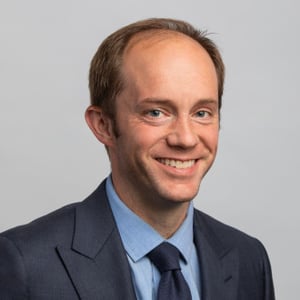
Attorney, Institute for Justice
Jeffrey Redfern joined the Institute for Justice in 2016, and he litigates constitutional cases protecting property rights and free speech.
Before joining IJ, Jeffrey was a member of the appellate group at Mayer Brown LLP, where he authored briefs on various constitutional issues in the U.S. Supreme Court and in lower federal and state courts. He has argued cases before the First and Seventh Circuits. Jeffrey clerked for Judge Laurence Silberman of the U.S. Court of Appeals for the D.C. Circuit.
Jeffrey earned his J.D., cum laude, from Harvard Law School in 2012. Between his first and second years of law school, he clerked at IJ’s Minnesota office. That experience inspired him to file his own pro se constitutional lawsuit against the government while still in school. (After over two years of litigation, the government finally provided the relief he requested.)
Before law school, Jeffrey taught English at a prep school in Southern California. He earned his MA in humanities from the University of Chicago in 2006 and his BA in English, magna cum laude, from Carleton College in 2005. Jeffrey enjoys competitive distance running, and he has a marathon personal best of 2 hours and 30 minutes.

Associate, Wiley Rein LLP
Krystal represents and advises clients in a variety of complex litigation and appellate matters in state and federal courts. She has served in legal capacities in both public and private entities, including the U.S. Department of Justice and federal trial and appellate courts, and has extensive litigation experience ranging from pre-complaint investigations and discovery disputes to critical motions practice, trial preparation, and appeals. Krystal specializes in providing creative litigation solutions to give her clients a strategic advantage, both in and out of the courtroom.
Her experience spans a wide variety of practice areas, including government contracts, intellectual property, environment and product regulation, telecommunications, health care, as well as election law and government ethics. Krystal’s appellate work, including before the U.S. Supreme Court, has focused on significant First Amendment issues.
Krystal served as a law clerk for the Honorable Mark S. Davis on the U.S. District Court for the Eastern District of Virginia (the “Rocket Docket”). In addition, she served as a law clerk for the Honorable Alice M. Batchelder on the U.S. Court of Appeals for the Sixth Circuit.
Krystal also maintains an active pro bono practice, and for two consecutive years has won firm awards for her contributions. Most recently, she briefed and argued a multi-issue appeal of a trial verdict in the Ninth Circuit, and successfully obtained remand from the Board of Immigration Appeals after her client was denied protection under the U.N. Convention Against Torture.
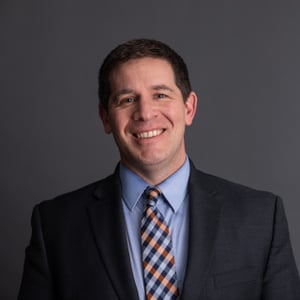
Vice President for Legal Strategy, Stand Together
Casey Mattox is Vice President for Legal Strategy at Stand Together and Senior Advisor at
Americans for Prosperity. In these roles he advocates for and creates strategies and
partnerships to ensure a constitutionally limited government that protects the civil liberties of all
Americans. Prior to joining Stand Together and AFP Casey’s legal career focused on defending
the First Amendment rights of students, faculty, healthcare workers and religious organizations.
Casey has a J.D. from Boston College School of Law and an undergraduate degree from the
University of Virginia. You can find him on Twitter at @CaseyMattox_ and on LinkedIn at
@Casey-Mattox-ST.
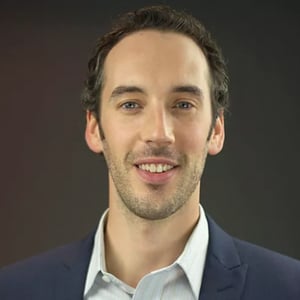
Senior Fellow, Economic Opportunity, Charles Koch Institute

Senior Policy Counsel, Legal & Judicial Policy Team, Americans for Prosperity Foundation
At American for Prosperity Foundation, Lee oversees the tax, labor, foreign affairs, and poverty portfolios of the Legal and Judicial Policy Team. He also works with Cause of Action Institute, where he has particular experience with the Freedom of Information Act and the Federal Records Act. Before that, Lee spent many years in private practice with the international arbitration group of White & Case LLP in Washington, D.C.
Lee is a graduate of the University of Virginia School of Law (1998) and Wheaton College in Wheaton, Illinois (1985). In between college and law school, Lee also earned an M.A. in linguistics (University of Texas at Arlington, 1991).
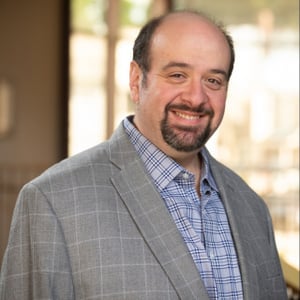
Associate Professor, UNH Franklin Pierce School of Law
Zvi S. Rosen is an Associate Professor at UNH Franklin Pierce School of Law and the Faculty Director of the Franklin Pierce Society for Intellectual Property. He has served as a Assistant Professor at the Southern Illinois University School of Law, as a Visiting Assistant Professor at the Maurice A. Deane School of Law at Hofstra University, and as a Visiting Scholar and Professorial Lecturer in Law at George Washington University School of Law.
In 2015-2016, he was the Abraham L. Kaminstein Scholar in Residence at the U.S. Copyright Office. Mr. Rosen received his J.D. from Northwestern University School of Law in 2005 and LLM in Intellectual Property in 2006 from the George Washington University Law School. He has practiced at Fried, Frank, Harris, Shriver & Jacobson LLP as well as smaller firms and his own practice, and clerked for the Hon. Thomas B. Bennett of the U.S. Bankruptcy Court for the Northern District of Alabama. He has written extensively on the development of modern copyright and trademark law, as well as on bankruptcy law.

Partner, Jackson Walker
Arthur offers clients a winning combination of trial and appellate experience gained as a federal prosecutor and more than 20 years of experience in handling patent, copyright, trademark, and trade secrets litigation.
While his practice concentrates on intellectual property litigation, Arthur also has significant experience in internal investigations, False Claims Act suits, partnership and breach of fiduciary duty, breach of contract, and employment litigation. Arthur also has represented clients testifying before Congressional committees.
Arthur writes and speaks frequently on topics ranging from the case against Boston bomber Dzhokhar Tsarnaev to patent litigation reform.
Prior to joining Michael Best, Arthur served as an Assistant United States Attorney in the Southern District of New York, where he was the lead prosecutor in criminal trials, including federal intellectual property crimes. He also argued numerous appeals.

Professor of Law, Indiana University Robert H. McKinney School of Law
Margaret Ryznar is an Associate Professor of Law at Indiana University Robert H. McKinney School of Law. She teaches and researches in the areas of family law, tax, trusts & estates, property, and juvenile law. Her scholarship focuses on the rights of family members under federal and state law, with particular emphasis on how family members hold and transfer property among themselves. Professor Ryznar edits the Family Law Prof Blog and has published over twenty law journal articles. Her work has been featured in the media and cited in law journals and judicial materials.
Prior to joining the faculty in 2012, Professor Ryznar served as a law clerk to the Honorable Myron H. Bright of the United States Court of Appeals for the Eighth Circuit and practiced law with Cadwalader, Wickersham & Taft LLP in Washington, DC.
Professor Ryznar is a graduate of Notre Dame Law School, where she served as a Note Editor of the Notre Dame Law Review, competed in the Philip C. Jessup International Law Moot Court, and received the Bainbridge Fellowship for the Study of International and Comparative Law. She holds a master’s degree in European Studies from Jagiellonian University and a bachelor’s degree from the University of Chicago with majors in Economics; English Language & Literature; Political Science; and Law, Letters, & Society.
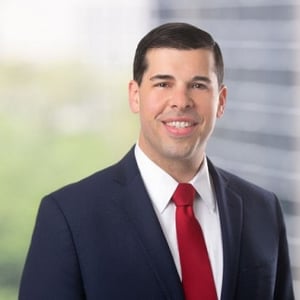
Partner, Boies Schiller Flexner LLP
Jesse, the former third-ranking official at the U.S. Department of Justice, helps clients with their most difficult litigation and regulatory issues─whether that means defending against an enforcement action, pursuing high-stakes litigation and appeals, navigating regulatory thickets at federal and state agencies, or crafting a comprehensive strategy to manage a crisis. He approaches these problems with the knowledge gained both from his broad private-practice experience and from having served at the highest levels of federal and state government.
Jesse has experience across a range of substantive and regulatory areas. He has sued the federal government and has also been one of its top law-enforcement officials; he has represented states and has also navigated their regulatory agencies on behalf of clients; and he has represented companies in business disputes, both as defendants and plaintiffs.
Before joining the firm, Jesse was the Acting Associate Attorney General at the United States Department of Justice. In that role, he oversaw the civil and criminal work of the Antitrust, Civil, Civil Rights, Environment and Natural Resources, and Tax Divisions. During Jesse’s tenure, the Associate’s office closely managed the Department’s most significant litigation, including matters involving large financial institutions, healthcare companies, automakers, energy companies, and state and local governments. In addition, Jesse served as Chair of DOJ’s Regulatory Reform Task Force and Vice Chair of DOJ’s Task Force on Market Integrity and Consumer Fraud. Jesse regularly provided legal and strategic advice to the highest-level decision makers in the federal government, including the Attorney General and Deputy Attorney General, general counsels across the spectrum of federal agencies, and White House officials.
Jesse served for three years as the secretary of Florida’s labor, economic-development, and land-use agency, the Florida Department of Economic Opportunity. Before that, he served as Governor (now Senator) Rick Scott’s general counsel.
Jesse maintains offices in both Washington D.C. and Florida. From Washington, he focuses on federal litigation and crisis management. In Florida, in addition to federal litigation, Jesse employs his knowledge of state government and regulation to help clients in courts across the state, from trial through the Florida Supreme Court.
Jesse currently serves on the Florida Supreme Court Judicial Nominating Commission, the body that provides the governor with nominees for appointment to the Florida Supreme Court. Jesse is also a fellow at the Center for the Study of the Administrative State at the Scalia Law School at George Mason University, where he writes and speaks about administrative law.

Partner, Barr & Klein PLLC
Steve Klein, a partner at Barr & Klein PLLC, is an experienced free speech attorney who has successfully fought for the First Amendment rights of his clients against local, state and federal regulators. As a lobbyist, Steve’s advocacy has led to the successful amendment of state laws to respect political engagement and prevented the enactment of laws that burden it. Steve has published articles in several legal journals, and his commentary has appeared in The Wall Street Journal, The Washington Times, The Detroit News, and other outlets. Steve earned a bachelors degree in politics at Hillsdale College and a law degree from Ave Maria School of Law, where he served as Managing Editor of the Ave Maria Law Review. He is licensed to practice law in the District of Columbia, Illinois and Michigan.
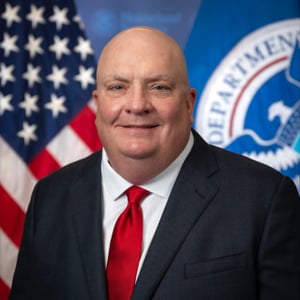
Acting Assistant Commissioner of Customs and Border Protection, Office of Professional Responsibility, U.S. Department of Homeland Security
Brian M. Fish is currently the Senior Advisor to the General Counsel at the Department of Homeland Security where he works on immigration and law enforcement issues. Previously, he was a trial attorney with the United States Immigration and Customs Enforcement, where he represented the Department of Homeland Security in removal hearings before the U.S. Immigration Court. Additionally, he was a Special Assistant United States Attorney and a Baltimore City homicide prosecutor. He is a member of the Federalist Society's Criminal Law & Procedure Practice Group Executive Committee and the President of its Baltimore Lawyers Chapter. He earned his B.A. from LaSalle University in 1992 and his J.D. from Loyola University New Orleans School of Law in 1998.
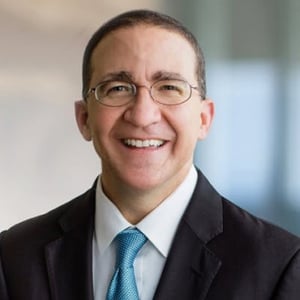
Chair, Supreme Court and Appellate Practice, Alexander Dubose Jefferson
Daniel L. Geyser is Chair of the firm’s U.S. Supreme Court and Federal Appellate Practice. He focuses on complex and high-stakes appellate litigation, representing clients in the Supreme Court of the United States and in courts of appeals nationwide. He was named one of Law360’s 2019 “Appellate MVPs,” an honor awarded to only four lawyers in the United States.
Dan is widely regarded as one of the nation’s leading Supreme Court and appellate lawyers. The Legal 500 reports that Dan is “recognized by peers and clients alike as ‘an extraordinary oral advocate and brief writer,’” “stand[ing] out for his sheer brainpower and creative thinking”; clients say “Geyser’s intellect and analysis are peerless”; “‘[h]is legal analysis is brilliant and on point, and his written and oral advocacy is very strong and powerful.’” Chambers USA describes Dan as a “‘superb lawyer with impeccable judgment and a wonderful manner in oral arguments,’” adding he has “‘that rare ability to make clients and legal counsel at ease, even under difficult circumstances. He instills confidence.’”
Dan is among an elite group of lawyers who regularly handles significant cases in the U.S. Supreme Court. He has argued eleven U.S. Supreme Court cases in private practice, more than any other active Texas lawyer. He recently had three cert. petitions granted in a 12-month period (a feat matched by few global firms), and personally handled over 5% of the Court’s merits docket in OT 2018. He has been named to the National Law Journal’s “Appellate Hot List,” earned weekly honors as a Law360 “Legal Lion,” achieved national appellate rankings in Chambers & Partners and The Legal 500, and was listed among the “veritable who’s who of the Supreme Court bar” (Empirical SCOTUS). His petitions are regularly featured among the “Petitions of the Week” on SCOTUSblog, and he was named OT 2017’s “top performing” brief-writer among the Court’s repeat players (based on a 2018 empirical study using brief-analyzing software). He is a three-time winner of the National Association of Attorneys General’s Best Brief Award for excellence in brief-writing before the Supreme Court.
Dan routinely matches up against the top litigators in the country. He has convinced the Supreme Court to grant review over the opposition of elite appellate groups at multiple Am Law 20 firms, and his recent wins have come against superstars at Am Law 10 firms and the Solicitor General’s Office. In the past half-decade, Dan is among the top five lawyers nationwide for total Supreme Court arguments in private practice, notching “rare victor[ies]” (SCOTUSblog) and “huge win[s]” (Reuters) in cases that industry experts said could not be won. And Dan is already set to argue another major case in the Supreme Court’s upcoming Term, a closely watched battle involving the Federal Arbitration Act and federal jurisdiction; the case was one of Dan’s two cert. grants in 2021 alone.
Beyond the Supreme Court, Dan handles high-stakes matters in appellate courts nationwide, litigating cases in virtually every major area of federal law (especially securities, bankruptcy, patents, ERISA, and arbitration). For plaintiffs, he has crafted legal strategy in matters generating over a half-billion in recovery. For defendants, he has won appeals in 8- and 9-figure disputes. He has special expertise at the rehearing stage, and has argued before the en banc Ninth Circuit (winning 10-1). In addition to an active federal practice, Dan has handled landmark state-court appeals, including arguing seven times before the Texas Supreme Court.
Before joining ADJ, Dan ran his own award-winning appellate practice; served as the appellate chair of a prominent litigation boutique (also leading that firm to the National Law Journal’s “Appellate Hot List” and a Chambers USA national-appellate ranking); and was an appellate partner in one of the nation’s top litigation firms, building its appellate practice while focusing especially on complex patent appeals and bankruptcy cases.
From 2007-2011, Dan served in the Office of the Solicitor General of Texas, where he conducted and supervised appellate litigation for the State. In addition to handling his own docket, his experience in the office included advising other divisions on appellate and trial strategy, revising countless briefs in cases across all subject areas, and extensively preparing other attorneys (in moot courts and otherwise) for oral argument. In his last week on the job, Dan argued before the Texas Supreme Court in Severance v. Patterson, one of the State’s most important cases in recent memory—a constitutional attack on the public’s historic access to open beaches; he had earlier won “a rare motion to rehear the case” (Austin American-Statesman, 2011). The same week, Dan also won a major case in the U.S. Supreme Court, Sossamon v. Texas, involving Congress’s spending power and state sovereignty; Dan wrote the State’s briefs in that case and crafted its core legal theories and appellate strategy. He was also the principal writer of the State’s invitation brief in Rhine v. Deaton, a case marking the very first time the U.S. Supreme Court called for a state solicitor general to file a brief expressing the views of a State.
Dan graduated Phi Beta Kappa, with honors and distinction, from Stanford University, and with honors from Harvard Law School, where he was the Notes Chair of the Harvard Law Review, a best-brief winner and oralist on the championship team of Harvard’s moot-court competition, and a research assistant to Professor Laurence H. Tribe, working on his academic writing and appellate docket. After law school, Dan clerked for the Hon. Alex Kozinski of the U.S. Court of Appeals for the Ninth Circuit. He has received the State Bar of California’s Wiley W. Manuel Award for Pro Bono Legal Services and is a past appointee to the U.S. Court of Appeals for the Second Circuit Pro Bono Panel.
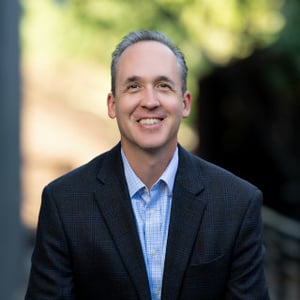
Legal Director, The Center for the Rights of Abused Children
Tim Keller is a lawyer who works to ensure all abused and abandoned children are safe and have access to their constitutionally guaranteed rights.
As senior vice president and legal director at the Center for the Rights of Abused Children, Tim’s public interest legal work seeks to defend the constitutional rights of children to be safe from abuse, to prompt timely placement with permanent parents, and to assure a child’s representation by legal counsel. In addition to constitutional litigation, Tim oversees the lawyers in the Center for the Rights of Abused Children’s one-of-a-kind pro bono Children’s Law Clinic and guides its policy initiatives.
When he and his wife, Lisa, hosted a teenage exchange student from Brazil several years ago, they realized how much they enjoyed helping a child thrive. The two felt called to help more kids. Over the following years, Tim and Lisa would become foster parents. Today, they enjoy offering respite care for children in foster care.
Intensely motivated by his time fostering children who’d been abused and neglected, Tim sees his work to ensure children have a constitutional right to counsel as a matter of life and death. As such, he’s particularly proud that in 2021 the Center for the Rights of Abused Children secured the rights of all children in Arizona’s foster system to be represented by legal counsel.
Before joining the Center for the Rights of Abused Children, Tim worked for nearly 20 years at the Institute for Justice. He served as lead counsel in Arizona Christian School Tuition Organization v. Winn, a U.S. Supreme Court victory that protected Arizona’s pioneering school scholarship program. Tim also led the team that secured a U.S. Supreme Court victory in Espinoza v. Montana Department of Revenue, which prevents states from discriminating against religious families and schools in educational choice programs. He has also litigated economic liberty and property rights cases in state and federal courts.
Tim earned his bachelor’s and law degrees from Arizona State University. He clerked for Robert D. Myers, at the time the presiding judge of the Maricopa County Superior Court, and for Ann A. Scott Timmer on the Arizona Court of Appeals.
Tim and Lisa live in Chandler, Ariz., with their four sons, Daniel, Benjamin, Ethan and Noah, and a miniature schnauzer named Gus who has more than 12,000 Instagram followers. The Kellers have traveled to 49 of the 50 United States, and are always looking for recommendations for new card or board games for family game nights.

Is There a "Police Power" Exception to the Fifth Amendment's Just Compensation Clause?
Clark Neily, Jeffrey H. Redfern
Police in Greenwood Village, CO, chased a shoplifting suspect into a home belonging to Leo...
United States Agency for International Development v. Alliance for Open Society International, Inc. - Post-Argument SCOTUScast
Krystal Brunner Swendsboe, Casey Mattox
On May 5, 2020, the Supreme Court heard oral argument in United States Agency for...
State Court Docket Watch: Normand v. Walmart.com
Adam A. Millsap, Lee A. Steven
Walmart.com is an e-commerce platform operated by Walmart, Inc. In addition to products offered for...
Courthouse Steps Oral Argument Teleforum: Our Lady of Guadalupe School v. Morrissey-Berru
TeleforumUS Patent and Trademark Office v. Booking.com B.V. - Post-Argument SCOTUScast
Zvi Rosen, Arthur Gollwitzer
On May 4, 2020, the U.S. Supreme Court heard argument in United States Patent and...
Courthouse Steps Decision Teleforum: Kelly v. United States
TeleforumCourthouse Steps Decision Teleforum: United States v. Sineneng-Smith
TeleforumCourthouse Steps Decision Teleforum: Thryv, Inc. v. Click-To-Call Technologies, LP
TeleforumMonasky v. Taglieri - Post-Decision SCOTUScast
Margaret Ryznar
On Feb. 25, 2020, in a vote of 9-0 the U.S. Supreme Court decided Monasky...
A Virtual Conversation with Tim Keller: Espinoza v. Montana & School Choice in Vermont
Vermont Lawyers Chapter- Online Event