
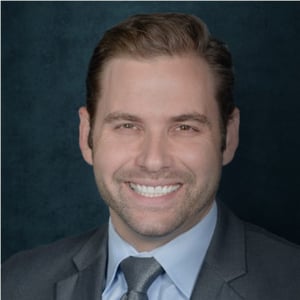
Vice President for the Program on Technology, Criminal Justice and Civil Liberties, Lincoln Network
Arthur Rizer is the Vice President for the Program on Technology, Criminal Justice and Civil Liberties at Lincoln Network. In addition to his work at Lincoln, Arthur is a visiting lecturer at University College London, and an adjunct professor at George Mason University’s Antonin Scalia Law School. Arthur is also a member of Columbia University Justice Lab’s Executive Session for the Future of Justice Policy, the Federalist Society’s Executive Committee of the Criminal Law Practice Group, the Virginia Advisory Committee to the U.S. Commission on Civil Rights, and other advisory bodies.
Before joining Lincoln, Arthur was founding director of the R Street Institute’s program on criminal justice and civil liberties. Prior to that, Arthur taught at West Virginia University’s College of Law, and was a visiting professor at Georgetown University Law Center. He also served as a trial attorney with the U.S. Justice Department, primarily as a federal prosecutor in the Criminal Division, where he targeted command-and-control drug cartel leaders and narco-terrorists. He also served as a prosecutor in the U.S. Attorney’s Office for the Southern District of California and in the civil division. Earlier in his career, Arthur served in the U.S. Army, originally enlisting as a private before later receiving a commission. He served as an armor officer, later becoming the commander of a military police company and a Reserve Officers’ Training Corps assistant professor. He deployed to Fallujah, Iraq, with the mission to train the Iraqi Infantry and served as an MP acting battalion commander and executive officer. He retired as a lieutenant colonel from the U.S. Army (WVNG). During his Army career, Arthur received the Bronze Star, Purple Heart, Meritorious Service and Iraq Campaign medals.
Arthur is the author of three books: Lincoln’s Counsel (2010); The National Security Implications of Immigration Law (2013); and Jefferson’s Pen: The Art of Persuasion (2016).
Arthur earned his bachelor’s degree in political science from Pacific Lutheran University; a master of laws, with distinction, from Georgetown University’s Law Center; and his JD, magna cum laude, from Gonzaga University School of Law. He is also a graduate of the U.S. Marine Corps’ Command Staff College. He is in the final stages of a doctorate at the University of Oxford, Faculty of Law, Centre of Criminology that focuses on policing.
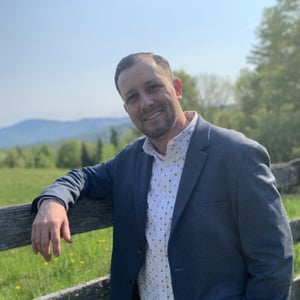
Assistant Professor of Law and Assistant Director of the Academic Success Program, Vermont Law School
Professor Richard Sala is the Assistant Director of the Academic Success Program and an Assistant Professor of Law. He joined the VLS faculty in 2019.
Professor Sala enlisted in the United States Marine Corps in 1997, and served as an infantryman for more than a decade, achieving the rank of Staff Sergeant. Professor Sala’s enlisted time included service with Marine Corps Ground Defense/Security Force, Guantanamo Bay, Cuba, 2nd Battalion, 6th Marines, Camp Lejeune, North Carolina, and 6th Marines Regimental Headquarters, Camp Lejeune, North Carolina —during which time he deployed with the 22nd Marine Expeditionary Unit, Special Operations Capable, participating in operations in and around the former Yugoslavia, including Operation Dynamic Response in Kosovo.
In 2001, Professor Sala was selected for commissioned service through the Broadened Opportunity for Officer Selection and Training program. Professor Sala graduated from the University of Colorado in 2003 with bachelor’s degrees in Political Science and International Affairs, a minor in Italian, and a certificate in Central and Eastern European History. He was commissioned as a Second Lieutenant in 2007 through the Naval Reserve Officer Training Corps program. After completing The Basic School and Infantry Officer Course, he reported to 1st Light Armored Reconnaissance Battalion, in Camp Pendleton, California, where he served as a platoon commander, and company executive officer with Company C—completing a deployment in support of Operation Iraqi Freedom.
In 2010, Professor Sala was selected for service a Judge Advocate through the Excess Leave Program. He attended Vermont Law School graduating with a Juris Doctorate (Cum Laude) and a Masters in Environmental Law and Policy (Magna Cum Laude). He was also the recipient of the Maximilian W. Kempner Award.
After completing law school, Professor Sala reported to Legal Services Support Team, Camp Pendleton where he served as a criminal prosecutor with Legal Team Echo and later, as a criminal prosecutor and Officer-in-Charge of Legal Team Delta.
In 2015, Professor Sala joined 1st Battalion, 4th Marines aboard Camp Pendleton, California, where he served as Judge Advocate to the Commanding Officer of Marine Rotational Force-Darwin—completing a deployment to Darwin, Australia in support of bilateral and multilateral training with the Australian Defense Force and regional allies and partners throughout the Indo-Pacific.
Upon returning from Australia, Professor Sala served as Assistant Deputy Staff Judge Advocate to the Commanding General of the 1st Marine Division.
In 2016, Professor Sala was selected to serve as Assistant Professor and Marine Officer Instructor at the University of Rochester where he also earned a Masters in Business Administration from the University of Rochester’s Simon Business School.
Professor Sala retired from the United States Marine Corps in 2018.
Upon retiring, Professor Sala joined the New Hampshire Department of Justice serving as the Attorney to the Commissioner of the New Hampshire Department of Education.
His personal decorations include the Navy and Marine Corps Commendation Medal (x2) and the Navy and Marine Corps Achievement Medal (x2). He is also the recipient of the Lieutenant Colonel Vic Taylor/Major General Edwin B. Wheeler Award for being the Distinguished Graduate of Infantry Officer’s Course, Class 2-08.

President, Harned Strategies LLC
Karen Harned is President at Harned Strategies LLC. Previously, she served as Executive Director of the National Federation of Independent Business Small Business Legal Center, a post she held from 2002-2022. Prior to joining the Legal Center, Ms. Harned was an attorney at a Washington, D.C. law firm specializing in food and drug law, where she represented several small and large businesses and their respective trade associations before Congress and federal agencies. She also served as Assistant Press Secretary to U.S. Senator Don Nickles of Oklahoma from August of 1989 to March of 1993. Ms. Harned received her B.A. from the University of Oklahoma in 1989 and her J.D. from The George Washington University National Law Center in 1995. She is admitted to practice in the District of Columbia.
As Executive Director of the NFIB Small Business Legal Center, Ms. Harned commented regularly on small business cases before federal and state courts, as well as the U.S. Supreme Court. She has appeared on Fox News, Fox Business, NBC Nightly News, CNN, CNBC and MSNBC, as well as National Public Radio, CBS Radio, and radio outlets across the country. Her opinion editorials and articles regarding healthcare, lawsuit abuse, regulation, and other issues important to small business have been published in newspapers and other publications nationwide.
Ms. Harned has testified before Congress on the small business impact of regulation and the civil justice system. Additionally, she has conducted numerous webinars and legal compliance seminars for small business owners across the country on issues relating to employment law, including unionization and immigration.
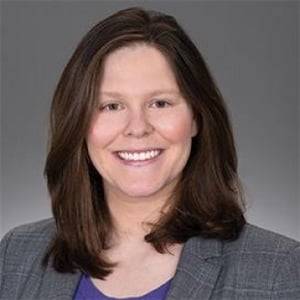
Partner, Goodwin Procter LLP
Jaime A. Santos is a partner in the firm’s Appellate Litigation practice. Her work focuses on appellate matters and complex civil litigation in federal courts, and she has experience in a wide range of areas including ERISA litigation, patent litigation, constitutional law, and product litigation. Ms. Santos has been the primary author of dozens of briefs filed in the Supreme Court, many more briefs filed in federal courts of appeals and federal district courts, and she has presented oral argument in state and federal trial and appellate courts. Ms. Santos also co-hosts the Supreme Court podcast Strict Scrutiny.
Ms. Santos maintains an active pro bono practice. She has been counsel of record in numerous criminal, immigration, and civil rights appeals in the Fourth, Seventh, and Ninth Circuits. She has also advocated on behalf of transgender litigants asserting constitutional claims before the Fourth Circuit and the Supreme Court, and represented a criminal defendant challenging his sentence before the Supreme Court. In 2015, Ms. Santos was honored by the Lawyers’ Committee for Civil Rights for her commitment to pro bono civil rights work.
In addition to her pro bono practice, Ms. Santos has been a thought leader in preventing and addressing bias and harassment in the legal profession. She speaks at conferences across the country and has published several articles on the topic. Since January 2018, she has advised numerous state and federal courts on improving the policies and processes governing inappropriate conduct in the workplace.
Ms. Santos serves on the MacArthur Justice Center Supreme Court & Appellate Advisory Board, and on the National Women’s Law Center’s Leadership Advisory Council.
Before joining Goodwin in 2013, Ms. Santos served as a law clerk to the Honorable George H. King of the U.S. District Court for the Central District of California, and to the Honorable Raymond C. Fisher of the U.S. Court of Appeals for the Ninth Circuit. In law school, she was a supervising editor for the Harvard Law Review.
Vice President for the Program on Technology, Criminal Justice and Civil Liberties, Lincoln Network
Arthur Rizer is the Vice President for the Program on Technology, Criminal Justice and Civil Liberties at Lincoln Network. In addition to his work at Lincoln, Arthur is a visiting lecturer at University College London, and an adjunct professor at George Mason University’s Antonin Scalia Law School. Arthur is also a member of Columbia University Justice Lab’s Executive Session for the Future of Justice Policy, the Federalist Society’s Executive Committee of the Criminal Law Practice Group, the Virginia Advisory Committee to the U.S. Commission on Civil Rights, and other advisory bodies.
Before joining Lincoln, Arthur was founding director of the R Street Institute’s program on criminal justice and civil liberties. Prior to that, Arthur taught at West Virginia University’s College of Law, and was a visiting professor at Georgetown University Law Center. He also served as a trial attorney with the U.S. Justice Department, primarily as a federal prosecutor in the Criminal Division, where he targeted command-and-control drug cartel leaders and narco-terrorists. He also served as a prosecutor in the U.S. Attorney’s Office for the Southern District of California and in the civil division. Earlier in his career, Arthur served in the U.S. Army, originally enlisting as a private before later receiving a commission. He served as an armor officer, later becoming the commander of a military police company and a Reserve Officers’ Training Corps assistant professor. He deployed to Fallujah, Iraq, with the mission to train the Iraqi Infantry and served as an MP acting battalion commander and executive officer. He retired as a lieutenant colonel from the U.S. Army (WVNG). During his Army career, Arthur received the Bronze Star, Purple Heart, Meritorious Service and Iraq Campaign medals.
Arthur is the author of three books: Lincoln’s Counsel (2010); The National Security Implications of Immigration Law (2013); and Jefferson’s Pen: The Art of Persuasion (2016).
Arthur earned his bachelor’s degree in political science from Pacific Lutheran University; a master of laws, with distinction, from Georgetown University’s Law Center; and his JD, magna cum laude, from Gonzaga University School of Law. He is also a graduate of the U.S. Marine Corps’ Command Staff College. He is in the final stages of a doctorate at the University of Oxford, Faculty of Law, Centre of Criminology that focuses on policing.
Assistant Professor of Law and Assistant Director of the Academic Success Program, Vermont Law School
Professor Richard Sala is the Assistant Director of the Academic Success Program and an Assistant Professor of Law. He joined the VLS faculty in 2019.
Professor Sala enlisted in the United States Marine Corps in 1997, and served as an infantryman for more than a decade, achieving the rank of Staff Sergeant. Professor Sala’s enlisted time included service with Marine Corps Ground Defense/Security Force, Guantanamo Bay, Cuba, 2nd Battalion, 6th Marines, Camp Lejeune, North Carolina, and 6th Marines Regimental Headquarters, Camp Lejeune, North Carolina —during which time he deployed with the 22nd Marine Expeditionary Unit, Special Operations Capable, participating in operations in and around the former Yugoslavia, including Operation Dynamic Response in Kosovo.
In 2001, Professor Sala was selected for commissioned service through the Broadened Opportunity for Officer Selection and Training program. Professor Sala graduated from the University of Colorado in 2003 with bachelor’s degrees in Political Science and International Affairs, a minor in Italian, and a certificate in Central and Eastern European History. He was commissioned as a Second Lieutenant in 2007 through the Naval Reserve Officer Training Corps program. After completing The Basic School and Infantry Officer Course, he reported to 1st Light Armored Reconnaissance Battalion, in Camp Pendleton, California, where he served as a platoon commander, and company executive officer with Company C—completing a deployment in support of Operation Iraqi Freedom.
In 2010, Professor Sala was selected for service a Judge Advocate through the Excess Leave Program. He attended Vermont Law School graduating with a Juris Doctorate (Cum Laude) and a Masters in Environmental Law and Policy (Magna Cum Laude). He was also the recipient of the Maximilian W. Kempner Award.
After completing law school, Professor Sala reported to Legal Services Support Team, Camp Pendleton where he served as a criminal prosecutor with Legal Team Echo and later, as a criminal prosecutor and Officer-in-Charge of Legal Team Delta.
In 2015, Professor Sala joined 1st Battalion, 4th Marines aboard Camp Pendleton, California, where he served as Judge Advocate to the Commanding Officer of Marine Rotational Force-Darwin—completing a deployment to Darwin, Australia in support of bilateral and multilateral training with the Australian Defense Force and regional allies and partners throughout the Indo-Pacific.
Upon returning from Australia, Professor Sala served as Assistant Deputy Staff Judge Advocate to the Commanding General of the 1st Marine Division.
In 2016, Professor Sala was selected to serve as Assistant Professor and Marine Officer Instructor at the University of Rochester where he also earned a Masters in Business Administration from the University of Rochester’s Simon Business School.
Professor Sala retired from the United States Marine Corps in 2018.
Upon retiring, Professor Sala joined the New Hampshire Department of Justice serving as the Attorney to the Commissioner of the New Hampshire Department of Education.
His personal decorations include the Navy and Marine Corps Commendation Medal (x2) and the Navy and Marine Corps Achievement Medal (x2). He is also the recipient of the Lieutenant Colonel Vic Taylor/Major General Edwin B. Wheeler Award for being the Distinguished Graduate of Infantry Officer’s Course, Class 2-08.

Senior Counsel, First Liberty Institute
Stephanie N. Taub serves as Senior Counsel with First Liberty Institute, focusing on litigation, appellate advocacy, and legal education.
While at First Liberty, her article on the rights of faith-based organizations under Title VII of the Civil Rights Act of 1964 has been published in the Texas Review of Law and Politics. She has also authored pieces published in National Review, the Daily Signal, the Washington Times, the Des Moines Register, and the New York Daily News. In 2017, Taub was named one of 15 recipients of the James Wilson Fellowship in natural law.
Before joining First Liberty, Taub worked as a law clerk to the Honorable Reed O’Connor in the U.S. District Court of the Northern District of Texas.
Taub is a Harvard Law School graduate in the class of 2014 and a Blackstone Fellow in the class of 2012. During law school, she served as Co-President of the HLS Christian Fellowship and Managing Technical Editor of the Harvard Human Rights Journal. Taub spent her law school summers defending religious liberty in public interest law firms and clerking in the Texas Office of Solicitor General.
For her undergraduate studies at the University of Southern California, Taub graduated summa cum laude, majoring in Business Administration with a minor in Philosophy.
Professor of Law, Widener University Commonwealth Law School
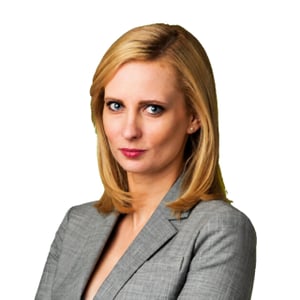
Executive Director, Committee for Justice
Ashley Baker is Executive Director of the Committee for Justice and founder of the Alliance on Antitrust coalition. Her work focuses on antitrust law, technology regulation, administrative-agency authority, the Supreme Court, and judicial nominations. She closely follows the Federal Trade Commission and the Department of Justice’s Antitrust Division, with particular attention to merger review, agency procedure, and the effects of regulation on American innovation and competitiveness. She is also founder of the Alliance on Antitrust Coalition.
Ashley has testified before the United States Senate on antitrust law. Her writing has appeared in Fox News, USA Today, The Boston Globe, The Hill, RealClearPolitics, The American Spectator, and other national publications. She also provides policy analysis through congressional testimony and correspondence, regulatory comments, and public commentary.
Ashley serves on the Federalist Society’s Regulatory Transparency Project and Antitrust and Consumer Protection Practice Group Executive Committee. She is also active in the Republican National Lawyers Association and has spoken on the Supreme Court and the federal judiciary. An authority on the judicial-confirmation process, she worked closely on the successful confirmation efforts for Justices Neil Gorsuch and Brett Kavanaugh, as well as multiple federal appellate judges.
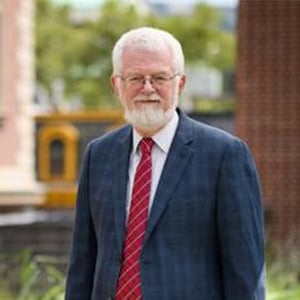
James G. Dinan University Professor, Carey Law School, University of Pennsylvania
Herbert Hovenkamp is a Fellow of the American Academy of Arts and Sciences, and in 2008 won the Justice Department’s John Sherman Award for his lifetime contributions to antitrust law. In 2012 he served on the ABA’s Committee to advise the President-elect on antitrust matters. His principal writing includes The Opening of American Law: Neoclassical Legal Thought, 1870-1970 (Oxford, 2015); Antitrust Law (formerly with Phillip E. Areeda and Donald F. Turner) (22 vols., Aspen 2008-18); Principles of Antitrust (West, 2017); Creation Without Restraint: Promoting Liberty and Rivalry in Innovation (Oxford, 2012, with Bohannan); The Making of Competition Policy (Oxford, 2012, with Crane); The Antitrust Enterprise: Principle and Execution (Harvard, 2006); Federal Antitrust Policy: The Law of Competition and Its Practice (West, 5th ed. 2015); IP and Antitrust (2 vols., Aspen, 2017, with Janis, Lemley, Leslie, and Carrier); and Enterprise and American Law, 1836-1937 (Harvard, 1991). He has also co-authored casebooks in antitrust, property law, and a free open source casebook on innovation and competition policy. He has consulted on numerous antitrust cases for various government entities and private plaintiffs. He has two sons.
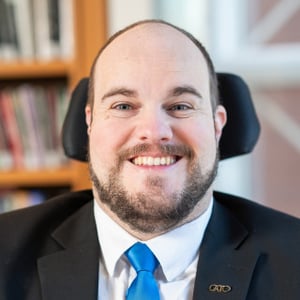
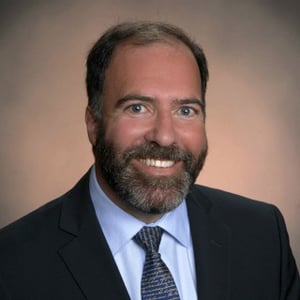
Director, Project on Criminal Justice, Cato Institute
Matthew Cavedon is the Director of the Cato Institute’s Project on Criminal Justice. He focuses on reforming plea-driven mass adjudication, ensuring police accountability, and defending constitutional criminal originalism. Cavedon’s scholarship has been published (or is forthcoming in) publications including the Arizona State Law Journal, Cato Supreme Court Review, Seattle University Law Review, and Georgetown Journal of Law and Public Policy. Formerly a Georgia public defender and fellow at the Institute for Justice, Cavedon has taught law school courses on criminal law and procedure, as well as the First Amendment. Cavedon clerked for a U.S. district court and the Supreme Court of Georgia. He came to Cato following a fellowship at the Emory University Center for the Study of Law and Religion.
Assistant Attorney General & Senior Trial Counsel to the Criminal Bureau, Massachusetts Attorney General
Director, William E. and Carol G. Simon Center on Religion and t, The Witherspoon Institute
Matthew J. Franck is the Director of the William E. and Carol G. Simon Center on Religion and the Constitution at the Witherspoon Institute in Princeton, New Jersey. He is Professor Emeritus of Political Science at Radford University, in Virginia, where he taught constitutional law, American politics, and political philosophy from 1989 to 2010, and was Chairman of the Department of Political Science from 1995 to 2010. He is also a Visiting Lecturer in Politics at Princeton University.
Professor Franck earned his B.A. in political science from Virginia Wesleyan College, and his M.A. and Ph.D. in political science from Northern Illinois University. He has taught at Marquette University and Southern Illinois University, and was a Fulbright Professor of American Studies at the Graduate School of International Studies, Yonsei University, Seoul, Korea, in 1998, and a Visiting Fellow in the James Madison Program in American Ideals and Institutions at Princeton University, in 2008-09.
He is the author, editor of, or contributor to several books on religious freedom, constitutional law, the Supreme Court, and American politics, and has published essays and reviews in numerous academic journals, as well as many general-interest articles and commentaries in newspapers, magazines, and online, including the Washington Post, First Things, National Review, and Public Discourse, the daily online essay publication of the Witherspoon Institute.
Professor Franck is a regular blogger on National Review Online’s “Bench Memos” page and the “First Thoughts” page at First Things magazine, and has appeared numerous times on Bill Bennett’s “Morning in America” radio show, as well as on CNN, Fox News Channel, NPR, and Relevant Radio.

Vice President, Edwin Meese III Institute for the Rule of Law, Advancing American Freedom
John G. Malcolm oversees Advancing American Freedom’s work to increase understanding of the Constitution and the rule of law as Vice President of the organization’s Edwin Meese III Institute for the Rule of Law. Malcolm brings to the challenge a wealth of legal expertise and experience in both the public and private sectors.
Prior to joining Advancing American Freedom in 2025, Malcolm was the Vice President of the Institute for Constitutional Government and the Director of the Meese Center for Legal and Judicial Studies at the Heritage Foundation. Prior to joining Heritage in 2012, Malcolm was general counsel at the U.S. Commission on International Religious Freedom, as well as a distinguished practitioner in residence at Pepperdine Law School. From 2004 to 2009, Malcolm was executive vice president and director of worldwide anti-piracy operations for the Motion Picture Association.
Malcolm served as a deputy assistant attorney general in the Department of Justice’s Criminal Division from 2001 to 2004, where he oversaw sections on computer crime and intellectual property, domestic security, child exploitation and obscenity, and special investigations. Immediately prior to that, he was a founding partner in the Atlanta law firm of Malcolm & Schroeder, LLP.
From 1990 to 1997, Malcolm was an assistant U.S. attorney in Atlanta, assigned to the fraud and public corruption section, and also an associate independent counsel, investigating fraud and abuse in the Department of Housing and Urban Development. He was honored with the Director’s Award for Superior Performance for his work in connection with the successful prosecution of Walter Leroy Moody Jr., who assassinated an 11th Circuit judge and the head of the Savannah chapter of the NAACP.
A graduate of Harvard Law School and Columbia College, Malcolm began his career as a law clerk to a federal district court judge and a federal appellate court judge, and as an associate at the Atlanta-based law firm of Sutherland, Asbill & Brennan (new Eversheds Sutherland).
Malcolm, who resides in Washington, D.C., serves on the Board of Trustees of the Washington National Opera and is a Senate-confirmed member of the Board of Directors of the Legal Services Corporation, the largest funder of civil legal aid in the United States.

Emanuel S. Heller Professor of Law, University of California at Berkeley; Senior Research Fellow, School of Civic Leadership, Civitas Institute, University of Texas at Austin; Nonresident Senior Fellow, American Enterprise Institute
John Yoo is the Emanuel Heller Professor of Law. He is also Distinguished Visiting Scholar, School of Civic Leadership and Senior Research Fellow, Civitas Institute, at the University of Texas at Austin. He is also a Nonresident Senior Fellow at the American Enterprise Institute.
His most recent book, The Politically Incorrect Guide to the Supreme Court, co-authored with Robert Delahunty, was published in 2023. Professor Yoo’s other books include Defender-in-Chief: Trump’s Fight for Presidential Power; Striking Power: How Cyber, Robots, and Space Weapons Change the Rules for War, Point of Attack: Preventive War, International Law, and Global Welfare, and Crisis and Command: A History of Executive Power from George Washington to George Bush.
Professor Yoo has published more than 100 articles in academic journals on subjects including national security, constitutional law, international law, and the Supreme Court. He also regularly contributes to the editorial pages of the Wall Street Journal, New York Times, Washington Post, Los Angeles Times, and National Review, among others.
Professor Yoo has served in all three branches of government. He was an official in the U.S. Department of Justice, where he worked on national security and terrorism issues after the 9/11 attacks. He served as general counsel of the U.S. Senate Judiciary Committee. He has been a law clerk for Supreme Court Justice Clarence Thomas and federal appeals Judge Laurence Silberman. He has been a visiting professor at Seoul National University in South Korea, the Interdisciplinary Center in Israel, Keio University in Japan, Trento University in Italy, the University of Chicago, and the Free University of Amsterdam.
Professor Yoo supervises the Public Law and Policy Program and the California Constitution Center. He also serves on the boards of the Pacific Legal Foundation, the Federalist Society’s Separation of Powers and Federalism Division, the Universidad Cientifica del Sur Law School, and the Asia-Pacific Law Institute at Seoul National University. He is a winner of the Federalist Society’s Paul Bator award and been the Edwin Meese III Originalism Lecturer at the Heritage Foundation.
Professor Yoo graduated from Yale Law School and summa cum laude from Harvard College.
Vice President for the Program on Technology, Criminal Justice and Civil Liberties, Lincoln Network
Arthur Rizer is the Vice President for the Program on Technology, Criminal Justice and Civil Liberties at Lincoln Network. In addition to his work at Lincoln, Arthur is a visiting lecturer at University College London, and an adjunct professor at George Mason University’s Antonin Scalia Law School. Arthur is also a member of Columbia University Justice Lab’s Executive Session for the Future of Justice Policy, the Federalist Society’s Executive Committee of the Criminal Law Practice Group, the Virginia Advisory Committee to the U.S. Commission on Civil Rights, and other advisory bodies.
Before joining Lincoln, Arthur was founding director of the R Street Institute’s program on criminal justice and civil liberties. Prior to that, Arthur taught at West Virginia University’s College of Law, and was a visiting professor at Georgetown University Law Center. He also served as a trial attorney with the U.S. Justice Department, primarily as a federal prosecutor in the Criminal Division, where he targeted command-and-control drug cartel leaders and narco-terrorists. He also served as a prosecutor in the U.S. Attorney’s Office for the Southern District of California and in the civil division. Earlier in his career, Arthur served in the U.S. Army, originally enlisting as a private before later receiving a commission. He served as an armor officer, later becoming the commander of a military police company and a Reserve Officers’ Training Corps assistant professor. He deployed to Fallujah, Iraq, with the mission to train the Iraqi Infantry and served as an MP acting battalion commander and executive officer. He retired as a lieutenant colonel from the U.S. Army (WVNG). During his Army career, Arthur received the Bronze Star, Purple Heart, Meritorious Service and Iraq Campaign medals.
Arthur is the author of three books: Lincoln’s Counsel (2010); The National Security Implications of Immigration Law (2013); and Jefferson’s Pen: The Art of Persuasion (2016).
Arthur earned his bachelor’s degree in political science from Pacific Lutheran University; a master of laws, with distinction, from Georgetown University’s Law Center; and his JD, magna cum laude, from Gonzaga University School of Law. He is also a graduate of the U.S. Marine Corps’ Command Staff College. He is in the final stages of a doctorate at the University of Oxford, Faculty of Law, Centre of Criminology that focuses on policing.
Assistant Professor of Law and Assistant Director of the Academic Success Program, Vermont Law School
Professor Richard Sala is the Assistant Director of the Academic Success Program and an Assistant Professor of Law. He joined the VLS faculty in 2019.
Professor Sala enlisted in the United States Marine Corps in 1997, and served as an infantryman for more than a decade, achieving the rank of Staff Sergeant. Professor Sala’s enlisted time included service with Marine Corps Ground Defense/Security Force, Guantanamo Bay, Cuba, 2nd Battalion, 6th Marines, Camp Lejeune, North Carolina, and 6th Marines Regimental Headquarters, Camp Lejeune, North Carolina —during which time he deployed with the 22nd Marine Expeditionary Unit, Special Operations Capable, participating in operations in and around the former Yugoslavia, including Operation Dynamic Response in Kosovo.
In 2001, Professor Sala was selected for commissioned service through the Broadened Opportunity for Officer Selection and Training program. Professor Sala graduated from the University of Colorado in 2003 with bachelor’s degrees in Political Science and International Affairs, a minor in Italian, and a certificate in Central and Eastern European History. He was commissioned as a Second Lieutenant in 2007 through the Naval Reserve Officer Training Corps program. After completing The Basic School and Infantry Officer Course, he reported to 1st Light Armored Reconnaissance Battalion, in Camp Pendleton, California, where he served as a platoon commander, and company executive officer with Company C—completing a deployment in support of Operation Iraqi Freedom.
In 2010, Professor Sala was selected for service a Judge Advocate through the Excess Leave Program. He attended Vermont Law School graduating with a Juris Doctorate (Cum Laude) and a Masters in Environmental Law and Policy (Magna Cum Laude). He was also the recipient of the Maximilian W. Kempner Award.
After completing law school, Professor Sala reported to Legal Services Support Team, Camp Pendleton where he served as a criminal prosecutor with Legal Team Echo and later, as a criminal prosecutor and Officer-in-Charge of Legal Team Delta.
In 2015, Professor Sala joined 1st Battalion, 4th Marines aboard Camp Pendleton, California, where he served as Judge Advocate to the Commanding Officer of Marine Rotational Force-Darwin—completing a deployment to Darwin, Australia in support of bilateral and multilateral training with the Australian Defense Force and regional allies and partners throughout the Indo-Pacific.
Upon returning from Australia, Professor Sala served as Assistant Deputy Staff Judge Advocate to the Commanding General of the 1st Marine Division.
In 2016, Professor Sala was selected to serve as Assistant Professor and Marine Officer Instructor at the University of Rochester where he also earned a Masters in Business Administration from the University of Rochester’s Simon Business School.
Professor Sala retired from the United States Marine Corps in 2018.
Upon retiring, Professor Sala joined the New Hampshire Department of Justice serving as the Attorney to the Commissioner of the New Hampshire Department of Education.
His personal decorations include the Navy and Marine Corps Commendation Medal (x2) and the Navy and Marine Corps Achievement Medal (x2). He is also the recipient of the Lieutenant Colonel Vic Taylor/Major General Edwin B. Wheeler Award for being the Distinguished Graduate of Infantry Officer’s Course, Class 2-08.

Courthouse Steps Oral Argument Teleforum: United States v. Collins
Arthur Rizer, Richard K. Sala
Consolidated with United States v. Collins, United States v. Briggs challenges the idea that a...
Supreme Court Criminal Law Roundup: A Look Back and a Look Ahead
TeleforumReligious Liberty is Important, But It's Not Enough: On the SCOTUS 2019-2020 Term
Princeton Student Chapter
Princeton, NJCourthouse Steps Oral Argument Teleforum: Ford Motor Company v. Montana Eighth Judicial District Court
Karen Harned, Jaime A. Santos
Liability in motor vehicle accidents is frequently an issue necessitating litigation, but not typically at...
United States v. Briggs- Post-Argument SCOTUScast
Arthur Rizer, Richard K. Sala
On October 13, 2020, The Supreme Court heard oral arguments regarding United States v. Collins...
The Executive Branch, the Supreme Court, and More
TeleforumTanzin v. Tanvir - Post-Argument SCOTUScast
Stephanie Taub
On October 6, 2020, the Supreme Court heard oral arguments regarding Tanzin v. Tanvir, a...
Carney v. Adams - Post-Argument SCOTUScast
Michael R. Dimino
On October 5, 2020, the Supreme Court heard oral arguments regarding Carney v. Adams, a...
Courthouse Steps Oral Argument Teleforum: United States v. Collins
TeleforumAntitrust Populism and the Conservative Movement
Ashley Baker, Herbert Hovenkamp
On October 7, 2020, the Federalist Society's Pennsylvania Student Chapter and the Regulatory Transparency Project...