
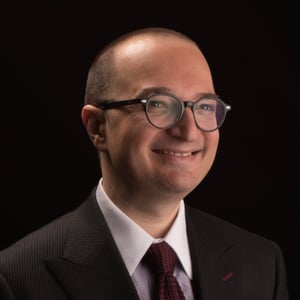
Professor of Law, University of Baltimore School of Law (on leave); Senior Counsel, U.S. Department of Justice
Professor Dolin’s scholarship centers on patent law with a specific focus on how the patent regime affects innovation, especially in bio-pharmaceutical areas. His work in these areas includes a number of scholarly articles, presentations, amicus briefs, and congressional testimony.
Dr. Dolin is currently on leave from his academic duties while he serves as Senior Counsel in the Civil Rights Division of the United States Department of Justice.
From January 2020 to January 2022, Professor Dolin served as a resident Associate Justice of the Supreme Court of the Republic of Palau. In this role, he (together with other members of the Court) heard appeals in civil, criminal, administrative, and constitutional law matters.
Prior to joining the University of Baltimore School of Law, Professor Dolin held visiting appointments in other law schools. He also served as a law clerk to the Hon. Pauline Newman, of the U.S. Court of Appeals for the Federal Circuit and the late Hon. H. Emory Widener Jr., of the U.S. Court of Appeals for the Fourth Circuit.
Rumors that he has a real Russian bear in his office are entirely true.
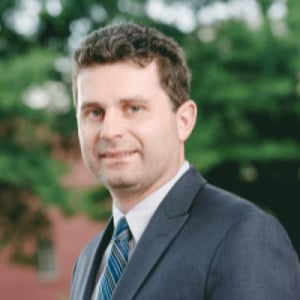
Associate Professor of Law, George Washington University Law School
Dmitry Karshtedt's primary research interest is in patent law. His legal scholarship has been published in the Vanderbilt Law Review, Washington University Law Review, and Iowa Law Review, among other outlets, and cited in three of the leading patent law casebooks, a casebook on intellectual property, and three treatises. Professor Karshtedt's academic work has won several awards, including the Samsung-Stanford Patent Prize and the scholarship grant for judicial clerks sponsored by the University of Houston Law Center Institute for Intellectual Property and Information Law.
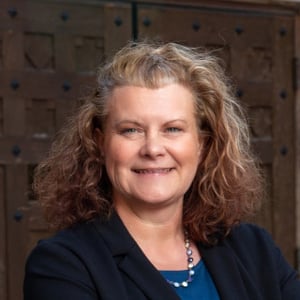
Associate Dean for Academic Affairs, Austin E. Owen Research Scholar & Professor of Law, The University of Richmond School of Law
Dean Kristen Jakobsen Osenga teaches and writes in the areas of patent law, antitrust, and legislation and regulation. Some of her recent scholarship focuses on standard development organizations, patent eligible subject matter, patent licensing firms, litigation and remedies for patent infringement, and patent law reform. She has written numerous law review articles on these and other topics, as well as book chapters and op eds on various aspects of patent law. Additionally, she has spoken on these issues at many academic conferences and bar events. Dean Osenga is Chief Policy Counselor for the Inventors Defense Alliance, as well as an active member of the Federal Circuit Bar Association and the American Intellectual Property Law Association.
Dean Osenga received a B.S. degree in Biomedical Engineering from the University of Iowa, an M.S. degree in Electrical Engineering from Southern Illinois University – Carbondale, and a J.D. from the University of Illinois College of Law, where she graduated magna cum laude. After law school, she practiced at the law firm of Finnegan, Henderson, Farabow, Garrett, & Dunner LLP, (now Finnegan) where she did patent prosecution and litigation. She then clerked for the Judge Richard Linn of the U.S. Court of Appeals for the Federal Circuit. After clerking, she entered academia, teaching first at Chicago-Kent College of Law and then at the University of Richmond, where she has been since 2006. She has also been a Visiting Professor at Emory University School of Law and at William & Mary School of Law.
Professor of Law, University of Baltimore School of Law (on leave); Senior Counsel, U.S. Department of Justice
Professor Dolin’s scholarship centers on patent law with a specific focus on how the patent regime affects innovation, especially in bio-pharmaceutical areas. His work in these areas includes a number of scholarly articles, presentations, amicus briefs, and congressional testimony.
Dr. Dolin is currently on leave from his academic duties while he serves as Senior Counsel in the Civil Rights Division of the United States Department of Justice.
From January 2020 to January 2022, Professor Dolin served as a resident Associate Justice of the Supreme Court of the Republic of Palau. In this role, he (together with other members of the Court) heard appeals in civil, criminal, administrative, and constitutional law matters.
Prior to joining the University of Baltimore School of Law, Professor Dolin held visiting appointments in other law schools. He also served as a law clerk to the Hon. Pauline Newman, of the U.S. Court of Appeals for the Federal Circuit and the late Hon. H. Emory Widener Jr., of the U.S. Court of Appeals for the Fourth Circuit.
Rumors that he has a real Russian bear in his office are entirely true.
Associate Professor of Law, George Washington University Law School
Dmitry Karshtedt's primary research interest is in patent law. His legal scholarship has been published in the Vanderbilt Law Review, Washington University Law Review, and Iowa Law Review, among other outlets, and cited in three of the leading patent law casebooks, a casebook on intellectual property, and three treatises. Professor Karshtedt's academic work has won several awards, including the Samsung-Stanford Patent Prize and the scholarship grant for judicial clerks sponsored by the University of Houston Law Center Institute for Intellectual Property and Information Law.
Associate Dean for Academic Affairs, Austin E. Owen Research Scholar & Professor of Law, The University of Richmond School of Law
Dean Kristen Jakobsen Osenga teaches and writes in the areas of patent law, antitrust, and legislation and regulation. Some of her recent scholarship focuses on standard development organizations, patent eligible subject matter, patent licensing firms, litigation and remedies for patent infringement, and patent law reform. She has written numerous law review articles on these and other topics, as well as book chapters and op eds on various aspects of patent law. Additionally, she has spoken on these issues at many academic conferences and bar events. Dean Osenga is Chief Policy Counselor for the Inventors Defense Alliance, as well as an active member of the Federal Circuit Bar Association and the American Intellectual Property Law Association.
Dean Osenga received a B.S. degree in Biomedical Engineering from the University of Iowa, an M.S. degree in Electrical Engineering from Southern Illinois University – Carbondale, and a J.D. from the University of Illinois College of Law, where she graduated magna cum laude. After law school, she practiced at the law firm of Finnegan, Henderson, Farabow, Garrett, & Dunner LLP, (now Finnegan) where she did patent prosecution and litigation. She then clerked for the Judge Richard Linn of the U.S. Court of Appeals for the Federal Circuit. After clerking, she entered academia, teaching first at Chicago-Kent College of Law and then at the University of Richmond, where she has been since 2006. She has also been a Visiting Professor at Emory University School of Law and at William & Mary School of Law.

Tazewell Taylor Professor of Law and William H. Cabell Research Professor, William & Mary Law School
Jonathan H. Adler joined the William & Mary law faculty as the Tazwell Taylor Professor of Law and William H. Cabell Research Professor in 2025. Prior to joining the faculty, he was the inaugural Johan Verheij Memorial Professor of Law and the founding Director of the Coleman P. Burke Center for Environmental Law at the Case Western Reserve University School of Law.
Professor Adler is the author or editor of seven books, including Climate Liberalism: Perspectives on Liberty, Property and Pollution (Palgrave, 2023), Marijuana Federalism: Uncle Sam and Mary Jane (Brookings Institution Press, 2020), Business and the Roberts Court (Oxford University Press, 2016) and Rebuilding the Ark: New Perspectives on Endangered Species Act Reform (AEI Press, 2011).
His articles have appeared in publications ranging from the Harvard Environmental Law Review and Yale Journal on Regulation to the Wall Street Journal, New York Times, and Washington Post. He has testified before Congress a dozen times, and his work has been cited in the U.S. Supreme Court. A 2024 study identified Professor Adler as the seventh most cited legal academic in administrative and environmental law from 2019 to 2023.
Professor Adler is a contributing editor to Civitas Outlook and a regular contributor to the popular legal blog, The Volokh Conspiracy. A regular commentator on constitutional and regulatory issues, he has appeared on numerous radio and television programs, ranging from the PBS Newshour and National Public Radio to the Fox News Channel and Entertainment Tonight.
Professor Adler is a senior fellow at the Property & Environment Research Center in Bozeman, Montana. In 2018, Professor Adler was elected to membership in the American Law Institute and helped co-found the organization Checks and Balances. In 2024, Professor Adler was appointed a public member of the Administrative Conference of the United States.
Professor Adler clerked for the Honorable David B. Sentelle on the U.S. Court of Appeals for the District of Columbia Circuit.
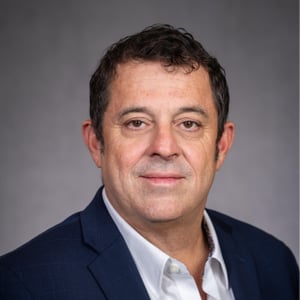
Senior Fellow for Law, Economics, and Technology, The Heritage Foundation; Professor, Florida International University
Mario Loyola is a Senior Fellow for Law, Economics, and Technology at The Heritage Foundation.
Loyola served in the Trump Administration as Associate Director for Regulatory Reform at the White House Council on Environmental Quality. In that role, he was one of the principal drafters of the One Federal Decision policy, which helped to streamline the permitting and environmental review of large infrastructure projects. While at CEQ, he was a member of the U.S. delegation to the USMCA free trade negotiations with Mexico and Canada, as well as the United Nations conference on biodiversity on the high seas. Loyola initially joined the White House in February 2017 as a Presidential Speechwriter, employing his expertise in many areas of foreign and domestic policy.
After beginning his career in M&A and corporate finance law, Loyola served in the Bush 43 Administration as a special assistant to the Undersecretary of Defense for Policy. He left that position to start writing on national defense issues in magazines such as National Review and The Weekly Standard, reporting from the front lines of the war on terrorism in Lebanon, Israel, and Iraq. He finished the Bush Administration as Foreign and Defense Counsel to the U.S. Senate Republican Policy Committee, then under the chairmanship of Senator Kay Bailey Hutchison of Texas. He subsequently moved to Texas and joined the Texas Public Policy Foundation, where he specialized in energy, environment, and federalism.
Loyola is a frequent contributor to The Wall Street Journal, National Review, and The Atlantic, among others. He teaches environmental and administrative law at Florida International University, where he is Founding Director of the Environmental Finance and Risk Management program in FIU’s prestigious Institute of Environment. He received a bachelor’s degree in European history from the University of Wisconsin–Madison and a J.D. from Washington University School of Law.

Vice President of Legal Affairs, Beacon Center of Tennessee
Wen Fa is the Vice President of Legal Affairs at the Beacon Center of Tennessee. He also serves on Beacon’s senior leadership team. Wen leads Beacon’s legal department in its efforts to protect the constitutional rights of property owners, entrepreneurs, and other Americans in courts across the United States. Having immigrated to America from Beijing, Wen believes that property rights, economic liberty, and equality under the law are essential to a free society and strives to advance those principles through his work.
Before joining Beacon, Wen was a senior attorney with Pacific Legal Foundation, where he litigated numerous cases involving equality under the law, free speech, economic liberty, and property rights. Wen litigated two Supreme Court cases: Minnesota Voters Alliance v. Mansky, which vindicated the free speech rights of voters, and Cedar Point Nursery v. Hassid, which secured the property rights of agricultural businesses. Wen has also secured important victories for farmers standing up against a racially discriminatory federal farm loan forgiveness program and small business owners who fought back against racial preferences in small business grants.
In addition to litigation, Wen promotes liberty through speeches, debates, and op-eds. Wen testified before Congress in 2021 and has published numerous op-eds in newspapers such as the Wall Street Journal, the Hill, and San Francisco Chronicle. He has spoken about his work in podcasts, on television, and in speeches to students at Georgetown, Duke, and law schools around the country.
Wen graduated with a bachelor’s degree in finance from the University of Texas-Dallas, a master’s degree in political theory from the London School of Economics, where he studied under libertarian scholar Chandran Kukathas, and a law degree from the University of Michigan. Wen is licensed to practice law in California, Texas, and several federal courts, including the Supreme Court of the United States.
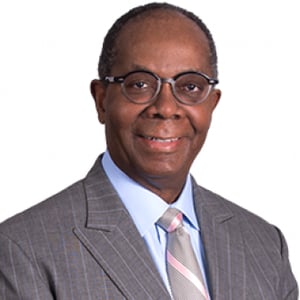
Managing Partner, Crabbe Brown & James LLP
Larry James has been at the heart of the Columbus business, legal, civic, and political scene for the last thirty years. He is a respected litigator, as well as an advisor to local and national leaders. In recognition of his many achievements, the law firm changed its name from Crabbe, Brown, Jones, Potts & Schmidt to Crabbe, Brown & James in January 2001.
In 2011, The Ohio State University selected Mr. James as lead counsel to represent its student athletes in NCAA investigations. In 2013, Armen Keteyian published his book The System: The Glory and Scandal of Big-Time College Football, a chapter of which is dedicated to Larry’s work in representing the OSU football players.
In 2012, Mr. James and his wife, Donna, were awarded the American Red Cross of Greater Columbus’ Humanitarians of the Year Award. In 2015, noted journalist Wil Haygood published his award-winning book Showdown: Thurgood Marshall and the Supreme Court Nomination That Changed America, which he dedicated to Mr. James.
Mr. James is a life member of the Sixth Circuit Judicial Conference, and he has served as General Counsel of the National Fraternal Order of Police since 2001.

Senior Vice President for Legal Studies, Cato Institute
Clark Neily is senior vice president for legal studies at the Cato Institute. His areas of interest include constitutional law, overcriminalization, civil forfeiture, police accountability, and gun rights. Neily is the author of Terms of Engagement: How Our Courts Should Enforce the Constitution’s Promise of Limited Government. His writing has appeared in the Wall Street Journal, Forbes, and National Review Online, as well as various law reviews, including the Harvard Journal of Law and Public Policy, George Mason Law Review, Georgetown Journal of Law and Public Policy, NYU Journal of Law and Liberty, and Texas Review of Law and Politics. Neily is a frequent guest speaker and lecturer for the Federalist Society, Institute for Humane Studies, and American Constitution Society.
Before joining Cato in 2017, Neily was a senior attorney and constitutional litigator at the Institute for Justice and director of the Institute’s Center for Judicial Engagement. He is also an adjunct professor at the University of Texas School of Law, where he teaches constitutional litigation and public-interest law.
Neily served as co-counsel in District of Columbia v. Heller, the historic case in which the Supreme Court held for the first time that the Second Amendment protects an individual right to own a gun for self-defense.
Neily began his legal career as a law clerk to Judge Royce Lamberth on the U.S. District Court for the District of Columbia. After that he spent four years in the trial department of the Dallas-based firm Thompson & Knight. Neily received his undergraduate and law degrees from the University of Texas, where he was Chief Articles Editor of the Texas Law Review.
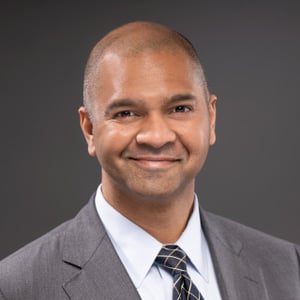
Senior Fellow, Stand Together Trust
Vikrant Reddy is a senior fellow at Stand Together Trust, specializing in the area of criminal justice reform. Reddy previously served as a senior policy analyst at the Texas Public Policy Foundation (TPPF), where he managed the launch of TPPF’s national Right on Crime initiative in 2010. He has worked as a research assistant at the Cato Institute, as a judicial clerk to the Hon. Gina M. Benavides in Texas, and as an attorney in private practice. He is a member of the State Bar of Texas, and he serves on the Executive Committee of the Criminal Law Practice Group of the Federalist Society. He is also an appointee to the U.S. Commission on Civil Rights Texas State Advisory Committee.
Reddy’s research and scholarly opinions have appeared in a range of national media outlets, including USA Today, National Review, The Federalist, and others.
Reddy earned his law degree from the Southern Methodist University School of Law. He received his undergraduate degree from the University of Texas at Austin.
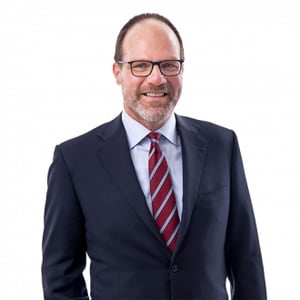
Shareholder, GreenbergTraurig
Steve Baird works with clients to address their most difficult trademark problems. Steve provides strategic guidance on trademark usage and clearance, branding strategies, domestic and worldwide portfolio management, litigation and enforcement, internet domain name and trademark disputes, licensing, and prosecution. Clients turn to him for his deep experience in trademark and branding matters for startups; design and creative firms; colleges and universities; apparel; jewelry; consumer products; sporting, hunting, and other outdoor goods; food products and ingredients; building materials; medical devices and pharmaceuticals; chemicals, insecticides, and adhesive brands; all kinds of manufacturers; accounting, architecture, engineering, construction, and real estate development firms; restaurants; casinos; software companies; banks; and financial institutions. Steve earned his J.D., with high distinction, from University of Iowa College of Law and a B.S., with distinction, from University of Iowa College of Pharmacy. He clerked for the Hon. Wilson Cowen, U.S. Court of Appeals for the Federal Circuit.
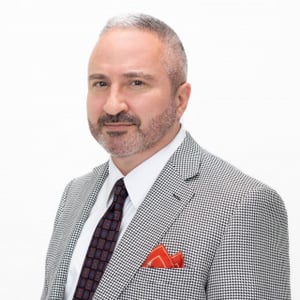
Shareholder, Greenberg Traurig
Greenberg Traurig Phoenix Litigation chair Andy Halaby advises clients on professional responsibility and related matters, including discipline defense, disqualification, and lawyer liability matters, as well as issues and opportunities arising from Arizona’s Alternative Business Structure (ABS) law. He has served on the Arizona Supreme Court's Task Forces on Lawyer Ethics, Professionalism, and the Unauthorized Practice of Law, and Judicial Performance Review, and chaired the State Bar of Arizona's Conflict Case Committee. Andy also practices extensively in intellectual property litigation. A former professional engineer registered with the United States Patent and Trademark Office, Andy has served as lead counsel in dozens of patent infringement and other IP matters. His published work has been cited in, among other things, treatises on intellectual property law, remedies, evidence, professional responsibility and the First Amendment, as well as in numerous scholarly articles. He has taught multiple semesters of Professional Responsibility, Patent Litigation, and other courses at the Sandra Day O’Connor College of Law at Arizona State University.
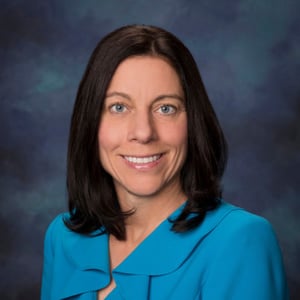
Founder, Antoinette M. Tease, PLLC
Antoinette (Toni) Tease is a registered patent attorney who practices in the areas of intellectual property and technology law. Before forming her own law firm in 2003, Ms. Tease was General Counsel for Rocky Mountain Technology Group, Inc., a software development company with its worldwide headquarters in Billings, Montana. From 1995 to 2001, Ms. Tease was a member of the law firm of Crowley, Haughey, Hanson, Toole & Deitrich, P.L.L.P., the region's largest law firm, where she represented clients in both high-tech and traditional industries in intellectual property matters. While at Crowley, Ms. Tease was a partner and Chair of the firm's Intellectual Property and Technology Practice Group. Before moving to Montana in 1995, Ms. Tease practiced with the law firms of Wiley, Rein & Fielding in Washington, D.C., and Shearman & Sterling in New York City. After graduation from law school in 1990, Ms. Tease clerked for United States District Judge David A. Ezra in Honolulu, Hawaii. Ms. Tease attended law school at the University of Connecticut School of Law, where she was a Notes and Comments Editor for the Connecticut Law Review, and where she graduated with High Honors in the top 3% of her class. Ms. Tease obtained a Bachelor of Arts degree from Harvard University, where she majored in Economics.
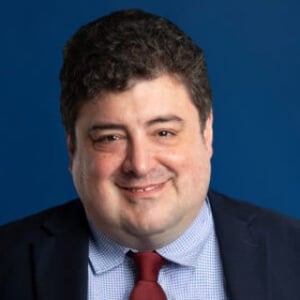
Senior Fellow and Director of Finance Policy, Competitive Enterprise Institute
John Berlau is a senior fellow and Director of Finance Policy at the Competitive Enterprise Institute. His work focuses on how public policy affects access to capital, entrepreneurship, and investments made by the public and business community alike. In recent years, he has studied the consequences of financial reform efforts passed by Congress like the Sarbanes-Oxley Act, the government’s response to the 2008 financial crisis including the Dodd-Frank Act, the placement of Fannie Mae and Freddie Mac into conservatorship, and the rise of cryptocurrency.
He is also the author of the book George Washington: Entrepreneur: How Our Founding Father’s Private Business Pursuits Changed America and the World. The book received rave reviews in the Wall Street Journal and other forums, and was endorsed by eminent historians and scholars such as Richard Brookhiser, Amity Shlaes, and Craig Shirley.
Berlau is a contributing writer for Forbes. His work has been published and cited in The Wall Street Journal, The New York Times, The Washington Post, Financial Times, Bloomberg News, The Atlantic, Politico, Daily Caller, Washington Examiner, Investor’s Business Daily, National Journal, National Review, American Spectator, Reason Magazine, and more. He is a frequent guest on radio and television programs, including CNBC’s “The Call,” “Power Lunch” and “Closing Bell,” Fox News’ “Fox & Friends” and “Your World with Neil Cavuto,” and Fox Business’ “Cavuto.”
He has testified on the impact of financial regulation before the House Committee on Financial Services and the House Committee on Energy and Commerce. A recognized expert on the phenomenon of crowdfunding, Berlau has spoken at prominent conferences such as South by Southwest Interactive in Austin, Money 20/20 in Las Vegas, the FinTech Global Expo in San Diego, the CFGE Crowdfund Banking and Lending Summit in San Francisco and the Crowdfund Intermediary Regulatory Advocates (CFIRA) Summit in Washington, D.C. He is also author of the widely cited paper “Declaration of Crowdfunding Independence: Finance of the People, by the People, and for the People.”
Berlau is an award-winning financial and political journalist. He served as Washington correspondent for Investor’s Business Daily and as a staff writer for Insight magazine, published by The Washington Times. In 2002, he received the Sandy Hume Memorial Award for Excellence in Political Journalism from Washington’s National Press Club. He was a media fellow at the Hoover Institution in 2003. He graduated from the University of Missouri-Columbia in 1994 with degrees in journalism and economics.
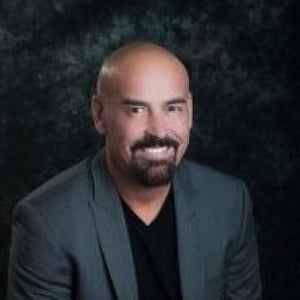
Managing Partner, Deaton Law Firm
John Deaton, Managing Partner of the Deaton Law Firm, founded his law practice in 2006. Prior to establishing DLF, John worked for a national plaintiffs’ firm, specializing in asbestos litigation, products liability, toxic torts, and personal injury. John also served as one of the firm’s principal trial attorneys in New York, Rhode Island, and Connecticut. John tried cases against national defense lawyers, litigation firms, and high profile corporations. He earned a reputation as an aggressive but fair trial advocate.
Prior to his work as a plaintiffs’ attorney, John joined the United States Marine Corp while in law school. In 1994, he was commissioned a Second Lieutenant. John served as a federal prosecutor and a criminal defense attorney for seven years of active duty. He tried dozens of jury trials to verdict throughout his career. As a direct result of his efforts, John was awarded the Meritorious Service Medal and Navy Marine Corps Commendation Medal, and was selected to the rank of Major.
John attended law school at the New England School of Law and graduated Cum Laude in 1995. At New England School of Law, John received the American Jurisprudence Award for Clinical Evidence and was selected for the law school’s National Mock Trial Team, an honor awarded to few. John graduated Magna Cum Laude from Eastern Michigan University in 1989.
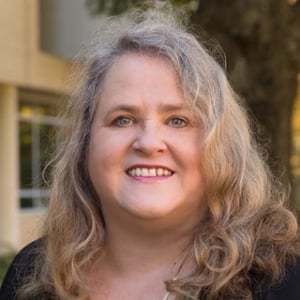
University Professor and Clayton N. Little Professor of Law, University of Arkansas School of Law
Professor Goforth specializes in business associations and securities regulation, and she has become a leading expert on the regulation of cryptoassets and transactions. West Academic published her new textbook, Regulation of Cryptotransactions, in March 2020. To the best of her knowledge, this was the first comprehensive textbook on the subject. She writes and comments frequently on crypto, including serving as an expert commentator for CoinTelegraph, with her posts regularly receiving thousands of views. She is also on the board of advisors to Honeycomb Digital Investments.
In 1999, she was elected to the prestigious American Law Institute, which welcomes distinguished federal and state judges, lawyers, and law professors. She has also been an official observer to a Uniform Law Commission drafting committee, and serves as the Arkansas Liaison to the Corporate Laws Committee of the Business Law Section of the American Bar Association. She is also a member of the Academic Faculty Network at the Sam M. Walton College of Business Blockchain Center of Excellence.
Prof. Goforth is a University Professor and the Clayton N. Little Professor of Law at the University of Arkansas School of Law. She is a former Associate Dean for Academic Affairs and a former Arkansas Bar Foundation Professor of Law.
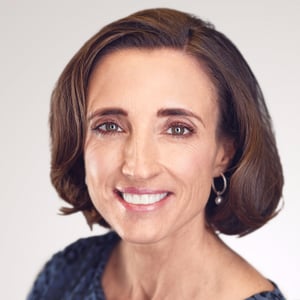
Senior Vice President, Strand Consult
Roslyn Layton, PhD is a leading international expert on technology policy. She is Senior Vice President of Strand Consult, an independent consultancy serving the global mobile telecom industry. She is also a Visiting Researcher at Aalborg University Copenhagen where she earned a doctoral thesis on network neutrality by measuring the outcome of the policy across 53 countries over 5 years. She served on the Presidential Transition Team for the Federal Communications Commission (FCC), and her work was critical to the FCC’s defense for the Restoring Internet Freedom Order. She has testified to the United States Senate and House on multiple topics including spectrum, broadband, mobile mergers, competition, and privacy. She founded the think tank China Tech Threat to study the problems of technology produced by the People’s Republic of China. She serves as the Program Chair for the Telecom Policy Research Conference, the leading interdisciplinary academic gathering. Her recent paper on rural broadband describes the empirical case for policy reform to recover network infrastructure costs from streaming video entertainment providers. She is a Senior Contributor to Forbes.
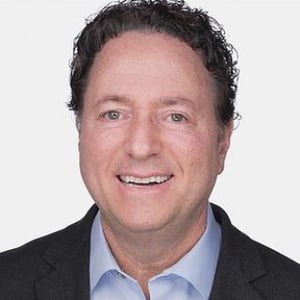
President, Committee for Justice
Curt Levey is President of the Committee For Justice, an organization devoted to advancing constitutionally limited government and individual liberty. He is a veteran of Supreme Court and other judicial confirmation battles and serves on the executive committee of the Federalist Society's Civil Rights Practice Group.
After graduating Harvard Law School with honors and clerking for the U.S. Court of Appeals for the Sixth Circuit, Mr. Levey served as Director of Legal & Public Affairs at the Center for Individual Rights (CIR). There he worked on landmark Supreme Court cases, including the University of Michigan affirmative action cases and the successful constitutional challenge to the Violence Against Women Act. After CIR, Mr. Levey headed the Title IX policy group at the U.S. Department of Education.
Before attending law school, Mr. Levey earned an M.S. and B.A. in computer science from Brown University and worked in the field of artificial intelligence (AI). He invented a new type of AI technology, for which he wrote a successful patent application.
Professor of Law, University of Baltimore School of Law (on leave); Senior Counsel, U.S. Department of Justice
Professor Dolin’s scholarship centers on patent law with a specific focus on how the patent regime affects innovation, especially in bio-pharmaceutical areas. His work in these areas includes a number of scholarly articles, presentations, amicus briefs, and congressional testimony.
Dr. Dolin is currently on leave from his academic duties while he serves as Senior Counsel in the Civil Rights Division of the United States Department of Justice.
From January 2020 to January 2022, Professor Dolin served as a resident Associate Justice of the Supreme Court of the Republic of Palau. In this role, he (together with other members of the Court) heard appeals in civil, criminal, administrative, and constitutional law matters.
Prior to joining the University of Baltimore School of Law, Professor Dolin held visiting appointments in other law schools. He also served as a law clerk to the Hon. Pauline Newman, of the U.S. Court of Appeals for the Federal Circuit and the late Hon. H. Emory Widener Jr., of the U.S. Court of Appeals for the Fourth Circuit.
Rumors that he has a real Russian bear in his office are entirely true.
Associate Professor of Law, George Washington University Law School
Dmitry Karshtedt's primary research interest is in patent law. His legal scholarship has been published in the Vanderbilt Law Review, Washington University Law Review, and Iowa Law Review, among other outlets, and cited in three of the leading patent law casebooks, a casebook on intellectual property, and three treatises. Professor Karshtedt's academic work has won several awards, including the Samsung-Stanford Patent Prize and the scholarship grant for judicial clerks sponsored by the University of Houston Law Center Institute for Intellectual Property and Information Law.
Associate Dean for Academic Affairs, Austin E. Owen Research Scholar & Professor of Law, The University of Richmond School of Law
Dean Kristen Jakobsen Osenga teaches and writes in the areas of patent law, antitrust, and legislation and regulation. Some of her recent scholarship focuses on standard development organizations, patent eligible subject matter, patent licensing firms, litigation and remedies for patent infringement, and patent law reform. She has written numerous law review articles on these and other topics, as well as book chapters and op eds on various aspects of patent law. Additionally, she has spoken on these issues at many academic conferences and bar events. Dean Osenga is Chief Policy Counselor for the Inventors Defense Alliance, as well as an active member of the Federal Circuit Bar Association and the American Intellectual Property Law Association.
Dean Osenga received a B.S. degree in Biomedical Engineering from the University of Iowa, an M.S. degree in Electrical Engineering from Southern Illinois University – Carbondale, and a J.D. from the University of Illinois College of Law, where she graduated magna cum laude. After law school, she practiced at the law firm of Finnegan, Henderson, Farabow, Garrett, & Dunner LLP, (now Finnegan) where she did patent prosecution and litigation. She then clerked for the Judge Richard Linn of the U.S. Court of Appeals for the Federal Circuit. After clerking, she entered academia, teaching first at Chicago-Kent College of Law and then at the University of Richmond, where she has been since 2006. She has also been a Visiting Professor at Emory University School of Law and at William & Mary School of Law.

Courthouse Steps Decision Webinar: United States v. Arthrex
Gregory Dolin, Dmitry Karshtedt, Kristen Osenga
On June 21, 2021, the US Supreme Court decided United States v. Arthrex, Inc. Writing for...
Courthouse Steps Decision Webinar: United States v. Arthrex
Gregory Dolin, Dmitry Karshtedt, Kristen Osenga
On June 21, 2021, the US Supreme Court decided United States v. Arthrex, Inc. Writing for...
Topics
The Equal Rights Amendment, Then and Now – Part II
Recap In 1920, the U.S. Constitution was amended to extend to women the right to...
Courthouse Steps Decision Webinar: Lange v. California
Criminal Law & Procedure Practice Group Teleforum
TeleforumTopics
The Equal Rights Amendment, Then and Now – Part I
In the Beginning In 2020, the United States marked the 100th anniversary of the addition...
Courthouse Steps Decision Webinar: California v. Texas
Jonathan H. Adler, Mario Loyola
On June 17, 2021, the U.S. Supreme Court decided California v. Texas. Writing for the...
Recent Evolution (or Revolution?) in Federal Trademark and Unfair Competition Law
Intellectual Property Practice Group Teleforum
TeleforumDeep Dive Episode 185 – SEC v. Ripple Labs: Cryptocurrency and “Regulation by Enforcement”
Regulatory Transparency Project's Fourth Branch Podcast
TeleforumCourthouse Steps Decision Webinar: United States v. Arthrex
TeleforumCedar Point Nursery v. Hassid - Post-Decision SCOTUScast
Wencong Fa
On June 23rd, 2021 the Supreme Court decided Cedar Point Nursery v. Hassid, a case...