
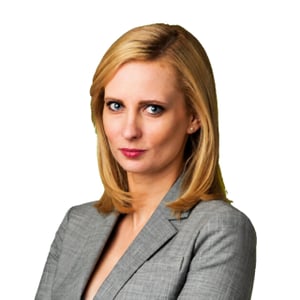
Executive Director, Committee for Justice
Ashley Baker is Executive Director of the Committee for Justice and founder of the Alliance on Antitrust coalition. Her work focuses on antitrust law, technology regulation, administrative-agency authority, the Supreme Court, and judicial nominations. She closely follows the Federal Trade Commission and the Department of Justice’s Antitrust Division, with particular attention to merger review, agency procedure, and the effects of regulation on American innovation and competitiveness. She is also founder of the Alliance on Antitrust Coalition.
Ashley has testified before the United States Senate on antitrust law. Her writing has appeared in Fox News, USA Today, The Boston Globe, The Hill, RealClearPolitics, The American Spectator, and other national publications. She also provides policy analysis through congressional testimony and correspondence, regulatory comments, and public commentary.
Ashley serves on the Federalist Society’s Regulatory Transparency Project and Antitrust and Consumer Protection Practice Group Executive Committee. She is also active in the Republican National Lawyers Association and has spoken on the Supreme Court and the federal judiciary. An authority on the judicial-confirmation process, she worked closely on the successful confirmation efforts for Justices Neil Gorsuch and Brett Kavanaugh, as well as multiple federal appellate judges.

President, Cass & Associates, PC
Ronald A. Cass is Dean Emeritus of Boston University School of Law (where he was Dean from 1990-2004), President of Cass & Associates, PC, former Vice-Chairman and Commissioner of the U.S. International Trade Commission, former faculty member at Boston University School of Law and the University of Virginia Law School, and Distinguished Senior Fellow at the C. Boyden Gray Center for the Study of the Administrative State. Dean Cass also sits as an arbitrator for commercial, international, and intellectual property rights disputes, and is a former United States member of the Panel of Conciliators of the International Centre for Settlement of Investment Disputes. He is a member of the Council of the Administrative Conference of the United States and has received seven presidential appointments, spanning Presidents Ronald Reagan to Donald J. Trump.
As a law professor, lecturer, and scholar, Dean Cass has been teaching and writing about a wide array of legal issues on topics such as administrative law and regulation, antitrust, constitutional law, communications, intellectual property, international trade, separation of powers, and legal process. He has published more than 160 scholarly books, chapters, articles, and papers, including a leading casebook on administrative law. Dean Cass has taught judges as well as students in schools of law, economics, business, and public policy and has held academic appointments in the United States, Europe, and Latin America.
In addition to his academic work, Dean Cass has participated in numerous important legal cases as an amicus, consultant, or expert, and has advised businesses, law firms, investment funds, and government agencies on a range of trade, antitrust, intellectual property, and regulatory issues. He has a broad range of affiliations with professional groups, and has received numerous honors, fellowships and awards.
Dean Cass is a graduate of the University of Virginia and the University of Chicago Law School.
Partner, Gibson, Dunn & Crutcher, LLP
Svetlana S. Gans is a partner in the Washington, D.C. office of Gibson, Dunn & Crutcher, LLP where she helps clients navigate complex consumer protection, privacy, and competition related regulatory proceedings before the U.S. Federal Trade Commission (FTC), , U.S. Department of Justice Antitrust Division, State Attorneys General and other enforcement bodies. Ms. Gans also assists on litigation matters and provides strategic counseling and advice related to public policy issues.
Before joining Gibson Dunn, she served as the Vice President & Associate General Counsel at NCTA, the Internet & Television Association, where she helped lead the association’s consumer protection and competition policy work. Prior to joining NCTA, Ms. Gans served with distinction as Chief of Staff to Acting Chairman Maureen K. Ohlhausen at the FTC. As the agency chief of staff, Ms. Gans managed and oversaw agency operations, including bureau and office heads reporting to the Chairman, a seven-member office staff, and an agency budget of over $300 million. She also served as the Acting Chairman’s key advisor on consumer protection and competition investigations and litigation, working with a diverse team of attorneys and economists to preserve competition and protect U.S. consumers. She created, executed, and oversaw several strategic initiatives for the agency, including the agency process reform, regulatory reform, and data security transparency initiatives. Previously, Ms. Gans had the unique experience of serving in both litigating bureaus of the FTC: the Bureau of Competition and the Bureau of Consumer Protection.
Prior to her time in government, Ms. Gans worked as an antitrust associate at major law firms. Her practice focused on defending consumer product, financial services, and trade association clients in regulatory and private investigations alleging conspiracy and violations of antitrust and consumer protection laws.
Ms. Gans has been an active leader in the ABA Antitrust Law Section (“Section”) for two decades, and currently serves as the Section’s Marketing Officer. Ms. Gans helped create the Section’s Young Lawyer Representative Program, now in its 10th year, and the Section’s Law Ambassador Program, each aimed at developing and promoting the next generation of consumer protection and competition attorneys. Ms. Gans is also active in the Federal Communications Bar Association, currently serving as Co-Chair of the Diversity Pipeline Initiative and the Women’s Leadership Committee.
Ms. Gans received her law degree with high honors from the University of Denver College of Law. During law school, Ms. Gans served as a Judicial Intern to the Honorable John L. Kane, Jr. and as an Honors Program Paralegal for the United States Department of Justice Antitrust Division, Merger Taskforce. Ms. Gans earned her undergraduate degree cum laude from Boston University.

Program Director and Faculty, National Institute for Trial Advocacy
Henry Su is a seasoned trial lawyer, teacher, and thought leader whose legal work has focused on what he calls the “three A’s”—Antitrust, Advocacy, and Access to Justice.
Based in Washington, DC, he has spent the bulk of his career practicing in the fields of antitrust, consumer protection, intellectual property, and technology law, which are critical to ensuring that we all continue to enjoy the benefits of competition and innovation. He provides a unique combination of experience and expertise in (1) law enforcement, regulation, legislation, and policymaking—as a former senior official with the U.S. Federal Trade Commission (FTC) for nearly seven years, and (2) technology, innovation, business strategy, and startup activity—as a Silicon Valley-based senior litigator for nearly ten years.
His government service at the FTC included two stints as a senior trial lawyer in the agency’s Bureau of Competition (January 2013 to February 2015, February 2017 to August 2017), litigating merger and conduct cases (e.g., St. Luke’s/Saltzer, 1-800 Contacts) and participating in the investigation of several others. Additionally, he served as an attorney advisor to Commissioner J. Thomas Rosch (January 2011 to January 2013) and Chairwoman Edith Ramirez (February 2015 to February 2017), providing advice and counsel to each Commissioner on a wide range of antitrust and competition matters, topics, and issues.
A veteran member of the American Bar Association (ABA) Antitrust Law Section’s leadership, he currently serves as a member of the governing Council and as co-chair of the Antitrust Fall Forum. He is also a member of the U.S. Advisory Board of the Institute for Consumer Antitrust Studies at the Loyola University Chicago School of Law.
He is a longtime program director and faculty member with the National Institute for Trial Advocacy (NITA), a nonprofit organization that has been dedicated since 1971 to the training and development of effective and ethical courtroom advocates, who are essential to preserving and improving our adversarial system of justice. His teaching runs the gamut of NITA’s programming—from trainings on trial, motion, and deposition practice to webcasts and podcasts on topics like evidentiary foundations and lawyer well-being. In 2021 he was recognized by NITA for his outstanding service as faculty with the 2020 Hon. Robert E. Keeton Award. He is also a Senior Fellow of the Litigation Counsel of America.
When it comes to trial and appellate work, he deeply appreciates the value of “learning by doing.” Some skills cannot be effectively acquired or developed except through practice, as he found out when he cut his teeth handling criminal and civil cases pending in the United States District Court for the Eastern District of Virginia—the original “Rocket Docket.” He wishes he had known some of the NITA techniques and drills when he was a junior lawyer. That is a big reason why nowadays he does his part to make NITA training widely available to upcoming generations of lawyers through programs, including public service courses, offered around the country.
Last but not least, he chairs the ABA Standing Committee on Pro Bono and Public Service, whose mission is to ensure access to justice through the expansion and enhancement of the delivery of legal and other law-related services to the underserved through volunteer efforts of legal professionals nationwide. He strives to lead by example, participating for instance as a volunteer attorney with ABA Free Legal Answers. In 2021 he was recognized as an ABA Free Legal Answers 2020 Pro Bono Leader for his pro bono service. He also serves on the Virginia State Bar’s Access to Legal Services Committee, and he is a Patron Fellow of the American Bar Foundation.
He graduated cum laude from Yale University with a B.S. degree in Biology, and then attended the University of Virginia School of Law, where he earned a J.D. degree and received the John M. Olin Prize in Law and Economics. He is a member of the California, District of Columbia, and Virginia bars.

Senior Fellow and Director of Constitutional Studies, Manhattan Institute
Ilya Shapiro is a senior fellow and director of constitutional studies at the Manhattan Institute and a contributing editor of City Journal. Previously he was executive director and senior lecturer at the Georgetown Center for the Constitution, and before that a vice president of the Cato Institute.
Shapiro is the author of Lawless: The Miseducation of America’s Elites (2025) and Supreme Disorder: Judicial Nominations and the Politics of America’s Highest Court (2020), coauthor of Religious Liberties for Corporations? (2014), and editor of 11 volumes of the Cato Supreme Court Review (2008-18). He has contributed to a variety of academic, popular, and professional publications, including the Wall Street Journal, Harvard Journal of Law & Public Policy, Washington Post, Los Angeles Times, USA Today, National Review, and Newsweek. He also regularly provides commentary for various media outlets, writes the Shapiro’s Gavel newsletter on Substack, and once appeared on the Colbert Report.
Shapiro has testified many times before Congress and state legislatures and has filed more than 500 amicus curiae “friend of the court” briefs in the Supreme Court. He lectures regularly on behalf of the Federalist Society, is a member of the board of fellows of the Jewish Policy Center, was an inaugural Washington Fellow at the National Review Institute, and has been an adjunct law professor at the George Washington University and University of Mississippi. He is also the chairman of the board of advisers of the Mississippi Justice Institute, a barrister in the Edward Coke Appellate Inn of Court, and a former member of the Virginia Advisory Committee to the U.S. Commission on Civil Rights.
Earlier in his career, Shapiro was a special assistant/adviser to the Multi-National Force in Iraq on rule-of-law issues and practiced at Patton Boggs and Cleary Gottlieb. Before entering private practice, he clerked for Judge E. Grady Jolly of the U.S. Court of Appeals for the Fifth Circuit. He holds an AB from Princeton University, an MSc from the London School of Economics, and a JD from the University of Chicago Law School.

Professor of Law, Stanford Law School
Orin S. Kerr is a Professor of Law at Stanford Law School, where he teaches and writes in the areas of criminal procedure and computer crime law. Kerr earned mechanical engineering degrees from Princeton University and Stanford University before graduating with a J.D. from Harvard Law School. He is a former law clerk to Justice Anthony M. Kennedy at the United States Supreme Court and Judge Leonard I. Garth of the U.S. Court of Appeals for the Third Circuit.
Adjunct Professor of Law, University of Pennsylvania Carey Law School
Michael Levy was an Assistant United States Attorney in the Eastern District of Pennsylvania for more than 37 years. From September 2001 until September 2017, he was the Chief of Computer Crimes at the United States Attorney’s Office. He is now retired from the Department of Justice.
He served in the U.S. Department of Justice from 1980 with two one-year excursions into private practice. He prosecuted fraud, drug, tax, and organized crime cases, as well as handling civil and criminal forfeiture actions. From 1991 to 1993, he was the Deputy Chief of the Criminal Division. From 1993 until 2001, he was the First Assistant United States Attorney. From April until September 2001 and from May 2009 until May 2010, he was appointed by the Attorney General to serve as interim United States Attorney until the confirmation of a presidentially appointed U.S. Attorney.
As Chief of Computer Crime, Mr. Levy prosecuted computer intrusion, computer fraud, theft of trade secrets, counterfeit goods, and federal crimes involving the sexual exploitation of children.
Before joining the U.S. Attorney’s office, Mr. Levy worked as a Public Defender and as an Assistant District Attorney in Philadelphia and as an Assistant Attorney General for the Commonwealth of Pennsylvania. He also had his own law practice for four years. He is a 1966 graduate (cum laude) of Brown University and a 1969 Penn Law graduate, where he was a finalist in the Keedy Cup Moot Court Competition.
Mr. Levy is a Fellow of the American College of Trial Lawyers.

Partner, King & Spalding
John Richter is a trial and investigations partner in the Special Matters and Investigations Practice Group, and represents and defends companies, Boards of Directors, Board committees, and individuals facing a variety of white-collar criminal and regulatory enforcement matters, parallel civil litigation, and internal corporate investigations. John previously served as the Acting Assistant Attorney General in charge of the Criminal Division at the U.S. Department of Justice and as the U.S. Attorney for the Western District of Oklahoma, having been nominated by President George W. Bush and confirmed by unanimous consent of the U.S. Senate.
Professor of Law, Stanford Law School
Orin S. Kerr is a Professor of Law at Stanford Law School, where he teaches and writes in the areas of criminal procedure and computer crime law. Kerr earned mechanical engineering degrees from Princeton University and Stanford University before graduating with a J.D. from Harvard Law School. He is a former law clerk to Justice Anthony M. Kennedy at the United States Supreme Court and Judge Leonard I. Garth of the U.S. Court of Appeals for the Third Circuit.
Adjunct Professor of Law, University of Pennsylvania Carey Law School
Michael Levy was an Assistant United States Attorney in the Eastern District of Pennsylvania for more than 37 years. From September 2001 until September 2017, he was the Chief of Computer Crimes at the United States Attorney’s Office. He is now retired from the Department of Justice.
He served in the U.S. Department of Justice from 1980 with two one-year excursions into private practice. He prosecuted fraud, drug, tax, and organized crime cases, as well as handling civil and criminal forfeiture actions. From 1991 to 1993, he was the Deputy Chief of the Criminal Division. From 1993 until 2001, he was the First Assistant United States Attorney. From April until September 2001 and from May 2009 until May 2010, he was appointed by the Attorney General to serve as interim United States Attorney until the confirmation of a presidentially appointed U.S. Attorney.
As Chief of Computer Crime, Mr. Levy prosecuted computer intrusion, computer fraud, theft of trade secrets, counterfeit goods, and federal crimes involving the sexual exploitation of children.
Before joining the U.S. Attorney’s office, Mr. Levy worked as a Public Defender and as an Assistant District Attorney in Philadelphia and as an Assistant Attorney General for the Commonwealth of Pennsylvania. He also had his own law practice for four years. He is a 1966 graduate (cum laude) of Brown University and a 1969 Penn Law graduate, where he was a finalist in the Keedy Cup Moot Court Competition.
Mr. Levy is a Fellow of the American College of Trial Lawyers.
Partner, King & Spalding
John Richter is a trial and investigations partner in the Special Matters and Investigations Practice Group, and represents and defends companies, Boards of Directors, Board committees, and individuals facing a variety of white-collar criminal and regulatory enforcement matters, parallel civil litigation, and internal corporate investigations. John previously served as the Acting Assistant Attorney General in charge of the Criminal Division at the U.S. Department of Justice and as the U.S. Attorney for the Western District of Oklahoma, having been nominated by President George W. Bush and confirmed by unanimous consent of the U.S. Senate.
Professor of Law, Widener University Commonwealth Law School
Executive Director, Committee for Justice
Ashley Baker is Executive Director of the Committee for Justice and founder of the Alliance on Antitrust coalition. Her work focuses on antitrust law, technology regulation, administrative-agency authority, the Supreme Court, and judicial nominations. She closely follows the Federal Trade Commission and the Department of Justice’s Antitrust Division, with particular attention to merger review, agency procedure, and the effects of regulation on American innovation and competitiveness. She is also founder of the Alliance on Antitrust Coalition.
Ashley has testified before the United States Senate on antitrust law. Her writing has appeared in Fox News, USA Today, The Boston Globe, The Hill, RealClearPolitics, The American Spectator, and other national publications. She also provides policy analysis through congressional testimony and correspondence, regulatory comments, and public commentary.
Ashley serves on the Federalist Society’s Regulatory Transparency Project and Antitrust and Consumer Protection Practice Group Executive Committee. She is also active in the Republican National Lawyers Association and has spoken on the Supreme Court and the federal judiciary. An authority on the judicial-confirmation process, she worked closely on the successful confirmation efforts for Justices Neil Gorsuch and Brett Kavanaugh, as well as multiple federal appellate judges.
President, Cass & Associates, PC
Ronald A. Cass is Dean Emeritus of Boston University School of Law (where he was Dean from 1990-2004), President of Cass & Associates, PC, former Vice-Chairman and Commissioner of the U.S. International Trade Commission, former faculty member at Boston University School of Law and the University of Virginia Law School, and Distinguished Senior Fellow at the C. Boyden Gray Center for the Study of the Administrative State. Dean Cass also sits as an arbitrator for commercial, international, and intellectual property rights disputes, and is a former United States member of the Panel of Conciliators of the International Centre for Settlement of Investment Disputes. He is a member of the Council of the Administrative Conference of the United States and has received seven presidential appointments, spanning Presidents Ronald Reagan to Donald J. Trump.
As a law professor, lecturer, and scholar, Dean Cass has been teaching and writing about a wide array of legal issues on topics such as administrative law and regulation, antitrust, constitutional law, communications, intellectual property, international trade, separation of powers, and legal process. He has published more than 160 scholarly books, chapters, articles, and papers, including a leading casebook on administrative law. Dean Cass has taught judges as well as students in schools of law, economics, business, and public policy and has held academic appointments in the United States, Europe, and Latin America.
In addition to his academic work, Dean Cass has participated in numerous important legal cases as an amicus, consultant, or expert, and has advised businesses, law firms, investment funds, and government agencies on a range of trade, antitrust, intellectual property, and regulatory issues. He has a broad range of affiliations with professional groups, and has received numerous honors, fellowships and awards.
Dean Cass is a graduate of the University of Virginia and the University of Chicago Law School.
Partner, Gibson, Dunn & Crutcher, LLP
Svetlana S. Gans is a partner in the Washington, D.C. office of Gibson, Dunn & Crutcher, LLP where she helps clients navigate complex consumer protection, privacy, and competition related regulatory proceedings before the U.S. Federal Trade Commission (FTC), , U.S. Department of Justice Antitrust Division, State Attorneys General and other enforcement bodies. Ms. Gans also assists on litigation matters and provides strategic counseling and advice related to public policy issues.
Before joining Gibson Dunn, she served as the Vice President & Associate General Counsel at NCTA, the Internet & Television Association, where she helped lead the association’s consumer protection and competition policy work. Prior to joining NCTA, Ms. Gans served with distinction as Chief of Staff to Acting Chairman Maureen K. Ohlhausen at the FTC. As the agency chief of staff, Ms. Gans managed and oversaw agency operations, including bureau and office heads reporting to the Chairman, a seven-member office staff, and an agency budget of over $300 million. She also served as the Acting Chairman’s key advisor on consumer protection and competition investigations and litigation, working with a diverse team of attorneys and economists to preserve competition and protect U.S. consumers. She created, executed, and oversaw several strategic initiatives for the agency, including the agency process reform, regulatory reform, and data security transparency initiatives. Previously, Ms. Gans had the unique experience of serving in both litigating bureaus of the FTC: the Bureau of Competition and the Bureau of Consumer Protection.
Prior to her time in government, Ms. Gans worked as an antitrust associate at major law firms. Her practice focused on defending consumer product, financial services, and trade association clients in regulatory and private investigations alleging conspiracy and violations of antitrust and consumer protection laws.
Ms. Gans has been an active leader in the ABA Antitrust Law Section (“Section”) for two decades, and currently serves as the Section’s Marketing Officer. Ms. Gans helped create the Section’s Young Lawyer Representative Program, now in its 10th year, and the Section’s Law Ambassador Program, each aimed at developing and promoting the next generation of consumer protection and competition attorneys. Ms. Gans is also active in the Federal Communications Bar Association, currently serving as Co-Chair of the Diversity Pipeline Initiative and the Women’s Leadership Committee.
Ms. Gans received her law degree with high honors from the University of Denver College of Law. During law school, Ms. Gans served as a Judicial Intern to the Honorable John L. Kane, Jr. and as an Honors Program Paralegal for the United States Department of Justice Antitrust Division, Merger Taskforce. Ms. Gans earned her undergraduate degree cum laude from Boston University.
Program Director and Faculty, National Institute for Trial Advocacy
Henry Su is a seasoned trial lawyer, teacher, and thought leader whose legal work has focused on what he calls the “three A’s”—Antitrust, Advocacy, and Access to Justice.
Based in Washington, DC, he has spent the bulk of his career practicing in the fields of antitrust, consumer protection, intellectual property, and technology law, which are critical to ensuring that we all continue to enjoy the benefits of competition and innovation. He provides a unique combination of experience and expertise in (1) law enforcement, regulation, legislation, and policymaking—as a former senior official with the U.S. Federal Trade Commission (FTC) for nearly seven years, and (2) technology, innovation, business strategy, and startup activity—as a Silicon Valley-based senior litigator for nearly ten years.
His government service at the FTC included two stints as a senior trial lawyer in the agency’s Bureau of Competition (January 2013 to February 2015, February 2017 to August 2017), litigating merger and conduct cases (e.g., St. Luke’s/Saltzer, 1-800 Contacts) and participating in the investigation of several others. Additionally, he served as an attorney advisor to Commissioner J. Thomas Rosch (January 2011 to January 2013) and Chairwoman Edith Ramirez (February 2015 to February 2017), providing advice and counsel to each Commissioner on a wide range of antitrust and competition matters, topics, and issues.
A veteran member of the American Bar Association (ABA) Antitrust Law Section’s leadership, he currently serves as a member of the governing Council and as co-chair of the Antitrust Fall Forum. He is also a member of the U.S. Advisory Board of the Institute for Consumer Antitrust Studies at the Loyola University Chicago School of Law.
He is a longtime program director and faculty member with the National Institute for Trial Advocacy (NITA), a nonprofit organization that has been dedicated since 1971 to the training and development of effective and ethical courtroom advocates, who are essential to preserving and improving our adversarial system of justice. His teaching runs the gamut of NITA’s programming—from trainings on trial, motion, and deposition practice to webcasts and podcasts on topics like evidentiary foundations and lawyer well-being. In 2021 he was recognized by NITA for his outstanding service as faculty with the 2020 Hon. Robert E. Keeton Award. He is also a Senior Fellow of the Litigation Counsel of America.
When it comes to trial and appellate work, he deeply appreciates the value of “learning by doing.” Some skills cannot be effectively acquired or developed except through practice, as he found out when he cut his teeth handling criminal and civil cases pending in the United States District Court for the Eastern District of Virginia—the original “Rocket Docket.” He wishes he had known some of the NITA techniques and drills when he was a junior lawyer. That is a big reason why nowadays he does his part to make NITA training widely available to upcoming generations of lawyers through programs, including public service courses, offered around the country.
Last but not least, he chairs the ABA Standing Committee on Pro Bono and Public Service, whose mission is to ensure access to justice through the expansion and enhancement of the delivery of legal and other law-related services to the underserved through volunteer efforts of legal professionals nationwide. He strives to lead by example, participating for instance as a volunteer attorney with ABA Free Legal Answers. In 2021 he was recognized as an ABA Free Legal Answers 2020 Pro Bono Leader for his pro bono service. He also serves on the Virginia State Bar’s Access to Legal Services Committee, and he is a Patron Fellow of the American Bar Foundation.
He graduated cum laude from Yale University with a B.S. degree in Biology, and then attended the University of Virginia School of Law, where he earned a J.D. degree and received the John M. Olin Prize in Law and Economics. He is a member of the California, District of Columbia, and Virginia bars.
Professor of Law, Stanford Law School
Orin S. Kerr is a Professor of Law at Stanford Law School, where he teaches and writes in the areas of criminal procedure and computer crime law. Kerr earned mechanical engineering degrees from Princeton University and Stanford University before graduating with a J.D. from Harvard Law School. He is a former law clerk to Justice Anthony M. Kennedy at the United States Supreme Court and Judge Leonard I. Garth of the U.S. Court of Appeals for the Third Circuit.
Adjunct Professor of Law, University of Pennsylvania Carey Law School
Michael Levy was an Assistant United States Attorney in the Eastern District of Pennsylvania for more than 37 years. From September 2001 until September 2017, he was the Chief of Computer Crimes at the United States Attorney’s Office. He is now retired from the Department of Justice.
He served in the U.S. Department of Justice from 1980 with two one-year excursions into private practice. He prosecuted fraud, drug, tax, and organized crime cases, as well as handling civil and criminal forfeiture actions. From 1991 to 1993, he was the Deputy Chief of the Criminal Division. From 1993 until 2001, he was the First Assistant United States Attorney. From April until September 2001 and from May 2009 until May 2010, he was appointed by the Attorney General to serve as interim United States Attorney until the confirmation of a presidentially appointed U.S. Attorney.
As Chief of Computer Crime, Mr. Levy prosecuted computer intrusion, computer fraud, theft of trade secrets, counterfeit goods, and federal crimes involving the sexual exploitation of children.
Before joining the U.S. Attorney’s office, Mr. Levy worked as a Public Defender and as an Assistant District Attorney in Philadelphia and as an Assistant Attorney General for the Commonwealth of Pennsylvania. He also had his own law practice for four years. He is a 1966 graduate (cum laude) of Brown University and a 1969 Penn Law graduate, where he was a finalist in the Keedy Cup Moot Court Competition.
Mr. Levy is a Fellow of the American College of Trial Lawyers.
Partner, King & Spalding
John Richter is a trial and investigations partner in the Special Matters and Investigations Practice Group, and represents and defends companies, Boards of Directors, Board committees, and individuals facing a variety of white-collar criminal and regulatory enforcement matters, parallel civil litigation, and internal corporate investigations. John previously served as the Acting Assistant Attorney General in charge of the Criminal Division at the U.S. Department of Justice and as the U.S. Attorney for the Western District of Oklahoma, having been nominated by President George W. Bush and confirmed by unanimous consent of the U.S. Senate.

Topics
Wilkins v. United States: Is the Quiet Title Act’s Statute of Limitations Jurisdictional, and How Does the Answer Affect Property Rights?
An age-old legal maxim—going back to Blackstone—states, “where there is a right, there must be...
Deep Dive Episode 245 - Courthouse Steps Oral Argument: Axon v. Federal Trade Commission
Ashley Baker, Ronald A. Cass, Svetlana Gans, Henry Su
On November 7, the U.S. Supreme Court heard Axon Enterprise, Inc. v. Federal Trade Commission, to...
National Pork Producers Council v. Ross - Post-Argument SCOTUScast
Ilya Shapiro
In National Pork Producers Council v. Ross, the Supreme Court will address the dormant commerce...
Recent DOJ Policy for Charging Cases under the Computer Fraud and Abuse Act: Fair or Foul?
Orin S. Kerr, Michael Levy, John C. Richter
The Justice Department recently announced the issuance of a revised internal policy for charging cases...
Recent DOJ Policy for Charging Cases under the Computer Fraud and Abuse Act: Fair or Foul?
Orin S. Kerr, Michael Levy, John C. Richter
The Justice Department recently announced the issuance of a revised internal policy for charging cases...
Recent DOJ Policy for Charging Cases under the Computer Fraud and Abuse Act: Fair or Foul?
TeleforumTopics
And the Walls Came Tumbling Down: The Liberation of Civil Society
As anyone who has seen a building collapse or a bridge buckle can attest, it...
Merrill v. Milligan - Post-Argument SCOTUScast
Michael R. Dimino
On October 4, 2022 the U.S. Supreme Court heard oral argument in Merrill v. Milligan. Following...
Topics
Religious Liberty Update on U.S. Congress and Executive Branch Actions
Congress HOUSE 1. On October 14, 2022, Rep. Suzanne Bonamici (D-OR-1) introduced H.R. 9175, entitled,...
Courthouse Steps Oral Argument: Axon v. Federal Trade Commission
Ashley Baker, Ronald A. Cass, Svetlana Gans, Henry Su
On November 7, the U.S. Supreme Court heard Axon Enterprise, Inc. v. Federal Trade Commission, to...