
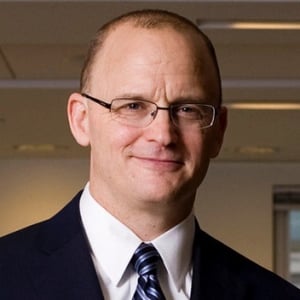
Partner, Latham & Watkins LLP
Gregory Garre is a partner in the Washington, D.C. office of Latham & Watkins and Global Chair of the firm's Supreme Court and Appellate Practice Group. He recently served as the 44th Solicitor General of the United States. As Solicitor General, he was the federal government's top lawyer before the Supreme Court and was responsible for overseeing the government's litigation in the federal appellate courts. Prior to his nomination by the President and unanimous confirmation as Solicitor General by the Senate, he served as Principal Deputy Solicitor General from 2005 to 2008, and then as Acting Solicitor General. In addition, he served as an Assistant to the Solicitor General from 2000 to 2004. He is the only person to have held all of those positions within the Office of the Solicitor General.
Mr. Garre has argued 29 cases before the Supreme Court, including two cases during the current term, and has served as counsel of record in hundreds of cases before the Court. During the past term, he won each of the cases he argued as Solicitor General, including the landmark case of Ashcroft v. Iqbal, which clarified the gateway requirements for civil litigation in the federal courts, as well as FCC v. Fox Television Stations, and Winter v. NRDC. He has also argued and briefed cases involving a wide array of other nationally important matters, including in the areas of administrative law, alien tort statute, antitrust, business and employment law, education, environmental law, First Amendment, intellectual property, international law, media and telecommunications, separation of powers and voting rights.
Mr. Garre has also successfully argued numerous cases before the federal courts of appeals, including some of the most significant cases heard by the appellate courts in recent years. And, as Acting Solicitor General, he successfully argued on behalf of the government in the first adversarial appeal heard by the Foreign Intelligence Surveillance Court of Review in its 30-year history.
Mr. Garre has received numerous awards for his public service, including the Attorney General's Medallion for his service as Solicitor General and the Navy's Distinguished Public Service Award-the Navy's highest civilian honor-for his successful argument in Winter v. NRDC, which secured a path-marking Supreme Court ruling overturning an order that restrained critically important naval exercises. He has also received the Attorney General's Distinguished Service Award, the Attorney General's Award for Excellence in Furthering Interests of US National Security, and additional honors from the Department of Justice for his work on nationally important litigation matters.
In November 2009, Mr. Garre was named to Washingtonian Magazine's list of top Supreme Court lawyers. In 2006, he was named to The American Lawyer's "Fab 50" list of top litigators under the age of 45 expected to be "leading the field for years to come." And in 2005, he was named to Chambers USA's list of leading appellate litigators in Washington, D.C.
Mr. Garre received his JD degree with high honors from the George Washington University Law School, where he served as editor-in-chief of the law review and was selected to Order of the Coif, and his BA degree cum laude from Dartmouth College, where he was a Rufus Choate Scholar. Following his graduation from law school, he served as a law clerk to Chief Justice William H. Rehnquist, and to Judge Anthony J. Scirica of the United States Court of Appeals for the Third Circuit.
Mr. Garre is a member of the advisory board of the Georgetown University Law School Supreme Court Institute and of the Edward Coke Appellate Inn of Court. He has taught constitutional law and Supreme Court practice for many years at the George Washington University Law School. He has testified before Congress and speaks frequently on issues related to the Supreme Court and appellate practice.

Litigation Associate, Weil, Gotshal & Manges LLP
Jill Jacobson is an Appeals and Strategic Counseling and Complex Commercial Litigation associate at Weil, Gotshal & Manges LLP. She is a former law clerk to Judge Aileen M. Cannon on the District Court for the Southern District of Florida and a future law clerk to Judge Elizabeth L. Branch on the Court of Appeals for the Eleventh Circuit.
Jill a fellow emeritus at the Independent Women's Law Center and a Senior Contributor at Young Voices. She has also been a Litigation Contractor at the Institute for Justice. She holds a J.D. from Boston College Law School and a Masters from Northeastern University.
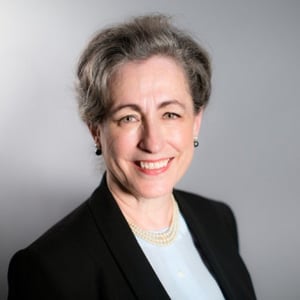
Senior Litigation Counsel, New Civil Liberties Alliance
Peggy Little, Senior Counsel at New Civil Liberties Alliance, a new public interest law firm challenging the administrative state founded in 2017 by Professor Philip Hamburger, has over three decades of experience as a trial and appellate litigator in complex, high-stakes regulatory, mass-tort, class-action, products liability, securities, commercial and civil rights litigation representing individuals and high-profile litigants including Fortune 50 companies, financial institutions, public companies, and universities in state and federal courts, including the United States Supreme Court.
Peggy is a graduate of Yale College and Yale Law School, where she was awarded the Potter Stewart Prize. She was a law clerk to the Hon. Ralph K. Winter on the U.S. Court of Appeals for the Second Circuit. Prior to starting her own trial and appellate law firm in 1997, where she was appellate consulting counsel to the New Haven firefighters in Ricci v.DeStefano, a landmark 2009 United States Supreme Court decision, Peggy was a partner at Tyler, Cooper & Alcorn in New Haven, Connecticut. From 2004 to early 2018, Peggy directed, part-time, the Federalist Society Pro Bono Center.
Peggy has participated in many national conferences and symposia addressing issues of current importance in constitutional law – specifically state and federal constitutional questions regarding the separation of powers and the first amendment – and regularly speaks, blogs and publishes on the topic of the unconstitutional exercise of governmental power. In May of 2017, she presented her paper, Pirates at the Parchment Gates, to a conference of state and federal judges at the Law and Economics Center at the Antonin Scalia Law School. Her work has been published by law reviews, legal publications, the Federalist Society, the Wall Street Journal, Law and Liberty and the Manhattan Institute.
Recent publications include: How the SEC silences its critics, The SEC should listen to Sen. Cotton, Lucia v. SEC, Opening Salvos in the Opioid Litigation Wars, Straight Dope on the Opioid Crisis
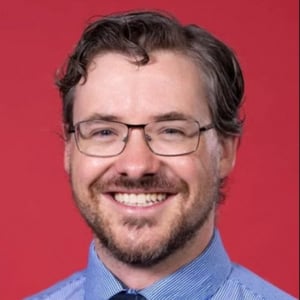
Senior Legal Fellow, Pacific Legal Foundation
Ethan Blevins is a senior legal fellow working primarily on equality and opportunity issues and property rights on PLF’s Constitutional Scholarship team. He previously worked as a staff attorney with PLF, mostly suing his favorite defendant, the City of Seattle. He earned a nickname from The Seattle Times as “the sharpest pin around to the council’s liberal bubble.” He’s had a lifelong dream to earn a superhero name, so he proudly accepts the teasing title of “The Pin” from his coworkers.
In addition to his legal work, Ethan has spoken and written on a variety of legal and policy issues. He has appeared on numerous radio and television programs, and his writings have appeared in The Wall Street Journal, The Seattle Times, The Salt Lake Tribune, The Hill, and other major publications.
Ethan’s introduction to liberty began as a teenager when he read Arthur Koestler’s chilling account of communism in Darkness at Noon. He was living in China at the time, and he saw firsthand the corruption and poverty wrought by dictatorship.
He felt inspired to dedicate his legal career to fighting for liberty after clerking for then-Justice Don Willett on the Texas Supreme Court, a judge known for his fierce commitment to constitutional rights (and his Twitter presence).
Ethan earned his law degree cum laude from Duke School of Law, as well as a master’s degree in international and comparative law. He writes poetry and fiction and has completed two fantasy novels, with several other books always in the works. He also enjoys mnemonics, comic books, gaming, and playing the ukulele. He lives in Bountiful, Utah, with his wife and four kids.
Ethan is a member of the bar only in the states of Montana, Utah and Washington.

Partner, Briscoe Prows Kao Ivester & Bazel LLP
Tony Francois is experienced in Water and Real Property Law, Land Use and Zoning, Environmental Regulation, Natural Resources Development, Agricultural Law, and Constitutional Law. He has represented homeowners, builders, farmers and ranchers, trade associations, and water districts in administrative, civil, and criminal proceedings before state and federal administrative agencies and state and federal trial and appellate courts. He is a member of the California State Bar and the Northern, Eastern, and Central Districts of California and the Districts of New Mexico and North Dakota, and has litigated cases in federal courts in California, Oregon, Washington, Idaho, Montana, Nevada, Arizona, New Mexico, Colorado, North and South Dakota, Minnesota, Massachusetts, Maryland, South Carolina, and the District of Columbia, as well as the Sixth, Eighth, Ninth, and Tenth Circuit Courts of Appeals. He has appeared before the Supreme Courts of California, Idaho, Nevada, and the United States.
Prior to attending law school, he served as an infantry officer in the United States Army, and was stationed in the former West Germany during the fall of the Berlin Wall.
Tony was an Attorney at Pacific Legal Foundation from 2012 to 2021. He was a lobbyist for 10 years, first with California Farm Bureau Federation from 2003 to 2007, and then with KP Public Affairs from 2007 to 2012. He was an attorney at McQuaid, Bedford & Van Zandt in San Francisco from 1999 – 2003.
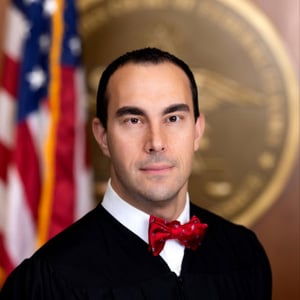
U.S. Court of Federal Claims and Jurist-In-Residence Professor of Law, The University of Akron School of Law
Judge Ryan T. Holte was sworn in as a judge on the United States Court of Federal Claims in July 2019. Prior to confirmation he served as the David L. Brennan Professor of Law and Director of the Center for Intellectual Property Law and Technology at The University of Akron School of Law (2017-2019) and an assistant professor of law at Southern Illinois University School of Law (2013-2017). Judge Holte has written and presented widely on patent law subjects and empirical legal studies of Federal Circuit and district court patent law cases. His most recent articles were published in the Iowa Law Review (2019), George Mason Law Review (2018), and Washington Law Review (2017).
In practice, Judge Holte served for six years as general counsel and partner of an electrical engineering technology company and is co-inventor of multiple patents related to Systems and Methods for Countering Satellite-Navigated Munitions. Prior to entering academia, Judge Holte practiced as a litigation attorney at the Federal Trade Commission and an associate in the Intellectual Property Practice Group at Jones Day. Prior to practice, he served as a law clerk to Judge Stanley F. Birch, Jr. on the United States Court of Appeals for the Eleventh Circuit and as a law clerk to Judge Loren A. Smith on the United States Court of Federal Claims.
Judge Holte received his JD from the University of California Davis School of Law and his BS, magna cum laude, in engineering from the California Maritime Academy where he was a First Class graduate of the Corps of Cadets Third Engineering Division and sailed as a U.S. Merchant Marine oiler.
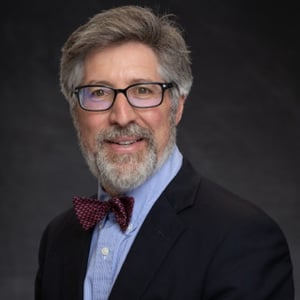
Associate Professor of Government, Hillsdale College, Washington, D.C. Campus
Richard Samuelson is an Associate Professor of Government at Hillsdale College’s Washington, D.C., campus. Dr. Samuelson is an historian of the American founding and of American politics and constitutional thought. He graduated from Bates College and received his MA and PhD in American history from the University of Virginia. Dr. Samuelson taught at California State University San Bernardino from 2007 to 2022. He was the 2009-2010 Garwood Visiting Fellow at Princeton University’s James Madison Program.
Dr. Samuelson has written extensively on John Adams and on the Adams family of Massachusetts, and on the constitutional politics of the founding more largely. His work also connects the founding with more contemporary issues, with a particular focus on religious liberty, and the challenge the modern American state, and contemporary civil rights laws present to religious liberty.
His essays and reviews have appeared in The Review of Politics, The William and Mary Quarterly, Commentary, The Claremont Review of Books, The Public Interest, National Review, and other publications. He has also contributed many essays and reviews to such online publications as Mosaic, Law and Liberty, Realclearpolitics, and other platforms.
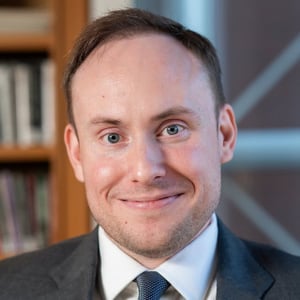
Director, Robert A. Levy Center for Constitutional Studies, Cato Institute
Thomas Berry is the director in the Cato Institute’s Robert A. Levy Center for Constitutional Studies and editor in chief of the Cato Supreme Court Review. Before joining Cato, he was an attorney at Pacific Legal Foundation and clerked for Judge E. Grady Jolly of the U.S. Court of Appeals for the Fifth Circuit. His academic work has appeared in NYU Journal of Law and Liberty, Washington and Lee Law Review Online, and Federalist Society Review. His popular writing has appeared in The Wall Street Journal, National Law Journal, Investor’s Business Daily, National Review Online, and The Hill Online. He has testified before the U.S. Senate, and his work has been cited by the U.S. District Court for the District of Columbia.
Berry holds a J.D. from Stanford Law School, where he was a senior editor on the Stanford Law and Policy Review and a Bradley Student Fellow in the Stanford Constitutional Law Center. He graduated with a B.A. in Liberal Arts from St. John’s College, Santa Fe.

Attorney, Separation of Powers, Pacific Legal Foundation
Josh Robbins is an attorney in Pacific Legal Foundation’s separation of powers group. He litigates cases to defend the structural protections of the U.S. and state constitutions that guarantee liberty for all Americans. He wants to help ensure Americans receive due process from the government when their lives and property are at stake and that the laws are made by our democratically elected representatives and not by unaccountable bureaucrats.
As an attorney in private practice, Josh saw firsthand how the government can embroil people (and even large corporations) in years-long legal battles. At PLF, he works to provide those without great resources an opportunity to vindicate their right to a properly ordered government, which is the right of all Americans.
Prior to joining PLF, Josh was an associate at a large law firm where he litigated cases in federal and state courts. He clerked for the Honorable Jerry E. Smith of the United States Court of Appeals for the Fifth Circuit in Houston.
Josh earned a B.A. in economics and international studies from Yale University and a J.D. from the University of Virginia School of Law. While at UVA, he served as an articles editor for the Virginia Law Review. He lives in Alexandria, Virginia, and enjoys hiking, swimming, and attending Washington Nationals games.
Josh is a member of the bar only in the states of Virginia and D.C.
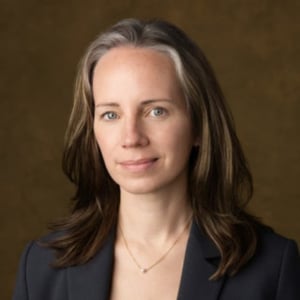
Senior Fellow in Executive Power, Cato Institute
Molly Nixon is a senior fellow at the Cato Institute, where she focuses on the scope, use, and history of executive power as well as its limits under the Constitution. Molly was previously an attorney with Pacific Legal Foundation’s separation of powers practice, where she litigated cases challenging congressional delegations of legislative power and executive branch overreach. Before that, she served as an Attorney-Advisor at the Department of the Interior and as Legislative Counsel for Congressman Justin Amash.
Molly holds a J.D. from New York University School of Law and a B.A. in History and International Relations from Boston University. She clerked for the U.S. District Court for the District of Alaska and practiced law at a firm in New York City for several years before moving to Washington, D.C.
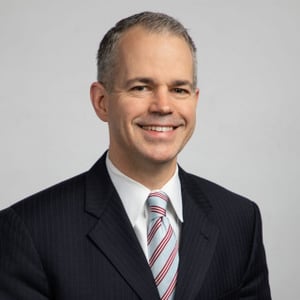
Senior Attorney, Institute for Justice
Michael Bindas is a senior attorney with the Institute for Justice (IJ) and leads IJ’s educational choice team. In this role, he oversees a talented group of IJ attorneys who help policymakers design constitutionally defensible educational choice programs and who defend educational choice programs in courtrooms nationwide. He joined IJ in 2005.
Michael was part of IJ’s litigation team in Espinoza v. Montana Department of Revenue, in which the U.S. Supreme Court held the exclusion of religious options from Montana’s educational choice program unconstitutional, and he led IJ’s defense of the Choice Scholarship Program for elementary and secondary students in Douglas County, Colorado. He also successfully challenged Washington’s denial of special education services to children in religious schools, as well as the state’s exclusion of sectarian options from its state work study program. Currently, he leads IJ’s team in Carson v. Makin, challenging Maine’s exclusion of religious options from its educational choice program.
Prior to leading IJ’s educational choice team, Michael litigated extensively to secure economic liberty, property rights, and freedom of speech throughout the nation. He was counsel of record at the U.S. Supreme Court for Kimbrough Fine Wine & Spirits in Tennessee Wine and Spirits Retailers Association v. Thomas, a successful challenge to Tennessee’s durational residency requirements for retail liquor licenses. He also led successful challenges to the municipal sign codes of St. Louis, Mo. and Norfolk, Va., after those cities attempted to silence protests of their abusive eminent domain practices.
Prior to joining IJ, Michael spent three years as an attorney with Perkins Coie LLP. He is a former law clerk to Judge Rhesa Hawkins Barksdale of the U.S. Court of Appeals for the Fifth Circuit and served as an engineer officer in the United States Army and Pennsylvania Army National Guard before beginning his legal career.
Michael received his law degree cum laude from the University of Pennsylvania Law School in 2001, where he served as Articles Editor for the Journal of Constitutional Law and was elected to the Order of the Coif. He received his undergraduate degree from the United States Military Academy at West Point in 1995.
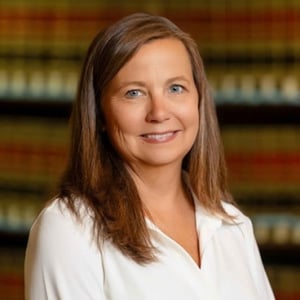
John P. Murphy Foundation Professor of Law and Associate Dean for External Engagement, University of Notre Dame Law School
Nicole Stelle Garnett is the John P. Murphy Foundation Professor of Law at Notre Dame Law School, where she also serves as the Associate Dean for External Engagement and directs the Notre Dame Education Law Project. Her teaching and research focus on education law and policy, religious liberty, and topics related to property law (especially land use and urban development policies). In addition to dozens of articles on these subjects, she is the author of Lost Classroom, Lost Community: Catholic Schools' Importance in Urban America (University of Chicago Press, 2014) and Ordering the City: Land Use, Policing and the Restoration of Urban America (Yale University Press, 2009).
Garnett received her B.A. with distinction in Political Science from Stanford University and her J.D. from Yale Law School. After law school, she clerked for the Honorable Morris S. Arnold of the United States Court of Appeals for the Eighth Circuit and for Associate Justice Clarence Thomas of the Supreme Court of the United States. Before joining the law school faculty in 1999, she worked for two years as a staff attorney at the Institute for Justice, a non-profit public-interest law firm in Washington, D.C., where she helped to defend the constitutionality of the nation's first private-school-choice programs.
At Notre Dame, Garnett is a faculty fellow in the Institute for Educational Initiatives, Kellogg Institute for International Studies, Fitzgerald Institute for Real Estate, and deNicola Center for Ethics and Culture. She also is an elected member of the American Law Institute and a Senior Fellow at the Manhattan Institute.
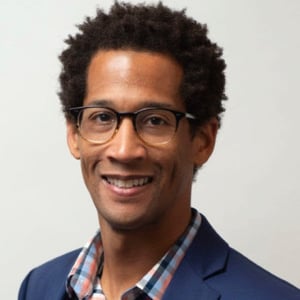
Senior Fellow, American Federation for Children
Shaka Mitchell serves as a Senior Fellow for the American Federation for Children.
He brings experience from several high-performing charter school networks, including Rocketship Education and LEAD Public schools, that serve over 2,500 students in Nashville.
Shaka began his career in education as the Associate Director of Policy and Planning at the D.C.-based Center for Education Reform. He then led outreach efforts at the Institute for Justice, a constitutional law firm based in Arlington, VA.
He is an alumnus of Belmont University where he teaches American Government and Constitutional Law as an adjunct faculty member. He earned his Juris Doctorate from the Wake Forest University School of Law where he sits on the Board of Advisors for the Journal of Law and Policy. Shaka is a co-founder of MoreMarrowDonors.org, a non-profit committed to providing scholarships to bone marrow donors who are matches for patients with various blood diseases. Shaka is the Chair of the Tennessee State Advisory Committee to the U.S. Commission on Civil Rights.
He is a member of the American Enterprise Institute’s Leadership Network and Aspen Institute Civil Society Fellowship. Shaka and his wife Stephanie are members of Edgefield Church in Nashville and are active in several non-profit organizations.
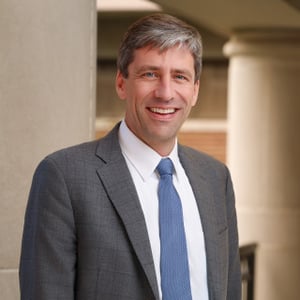
Associate Professor and C. Boyden Gray Distinguished Scholar, University of North Carolina School of Law
Mark Storslee joined the Carolina Law faculty in 2025 and serves as Associate Professor and C. Boyden Gray Distinguished Scholar. His teaching and research interests include constitutional law, civil procedure, administrative law, and federal courts. Among other topics, his scholarship focuses on constitutional history, religious freedom, and First Amendment law generally. Storslee’s work has appeared in publications such as the University of Chicago Law Review, the University of Pennsylvania Law Review, the University of Virginia Law Review, Vanderbilt University Law Review, and the Journal of Law & Religion.
Storslee holds a J.D. from Stanford Law School and a Ph.D. in Religious Studies (ethics) from the University of Virginia. He also holds masters degrees from Duke University and the University of Edinburgh and a B.A. from Furman University. After law school, Storslee clerked for Judge Diarmuid O’Scannlain on the United States Court of Appeals for the Ninth Circuit, and later for Associate Justice Neil Gorsuch on the United States Supreme Court. He previously taught at Penn State Law School and Emory Law School, and served as the Executive Director of the Constitutional Law Center at Stanford Law School. He also worked as an appellate litigator at Williams & Connolly LLP.
Senior Attorney, Institute for Justice
Michael Bindas is a senior attorney with the Institute for Justice (IJ) and leads IJ’s educational choice team. In this role, he oversees a talented group of IJ attorneys who help policymakers design constitutionally defensible educational choice programs and who defend educational choice programs in courtrooms nationwide. He joined IJ in 2005.
Michael was part of IJ’s litigation team in Espinoza v. Montana Department of Revenue, in which the U.S. Supreme Court held the exclusion of religious options from Montana’s educational choice program unconstitutional, and he led IJ’s defense of the Choice Scholarship Program for elementary and secondary students in Douglas County, Colorado. He also successfully challenged Washington’s denial of special education services to children in religious schools, as well as the state’s exclusion of sectarian options from its state work study program. Currently, he leads IJ’s team in Carson v. Makin, challenging Maine’s exclusion of religious options from its educational choice program.
Prior to leading IJ’s educational choice team, Michael litigated extensively to secure economic liberty, property rights, and freedom of speech throughout the nation. He was counsel of record at the U.S. Supreme Court for Kimbrough Fine Wine & Spirits in Tennessee Wine and Spirits Retailers Association v. Thomas, a successful challenge to Tennessee’s durational residency requirements for retail liquor licenses. He also led successful challenges to the municipal sign codes of St. Louis, Mo. and Norfolk, Va., after those cities attempted to silence protests of their abusive eminent domain practices.
Prior to joining IJ, Michael spent three years as an attorney with Perkins Coie LLP. He is a former law clerk to Judge Rhesa Hawkins Barksdale of the U.S. Court of Appeals for the Fifth Circuit and served as an engineer officer in the United States Army and Pennsylvania Army National Guard before beginning his legal career.
Michael received his law degree cum laude from the University of Pennsylvania Law School in 2001, where he served as Articles Editor for the Journal of Constitutional Law and was elected to the Order of the Coif. He received his undergraduate degree from the United States Military Academy at West Point in 1995.
John P. Murphy Foundation Professor of Law and Associate Dean for External Engagement, University of Notre Dame Law School
Nicole Stelle Garnett is the John P. Murphy Foundation Professor of Law at Notre Dame Law School, where she also serves as the Associate Dean for External Engagement and directs the Notre Dame Education Law Project. Her teaching and research focus on education law and policy, religious liberty, and topics related to property law (especially land use and urban development policies). In addition to dozens of articles on these subjects, she is the author of Lost Classroom, Lost Community: Catholic Schools' Importance in Urban America (University of Chicago Press, 2014) and Ordering the City: Land Use, Policing and the Restoration of Urban America (Yale University Press, 2009).
Garnett received her B.A. with distinction in Political Science from Stanford University and her J.D. from Yale Law School. After law school, she clerked for the Honorable Morris S. Arnold of the United States Court of Appeals for the Eighth Circuit and for Associate Justice Clarence Thomas of the Supreme Court of the United States. Before joining the law school faculty in 1999, she worked for two years as a staff attorney at the Institute for Justice, a non-profit public-interest law firm in Washington, D.C., where she helped to defend the constitutionality of the nation's first private-school-choice programs.
At Notre Dame, Garnett is a faculty fellow in the Institute for Educational Initiatives, Kellogg Institute for International Studies, Fitzgerald Institute for Real Estate, and deNicola Center for Ethics and Culture. She also is an elected member of the American Law Institute and a Senior Fellow at the Manhattan Institute.
Senior Fellow, American Federation for Children
Shaka Mitchell serves as a Senior Fellow for the American Federation for Children.
He brings experience from several high-performing charter school networks, including Rocketship Education and LEAD Public schools, that serve over 2,500 students in Nashville.
Shaka began his career in education as the Associate Director of Policy and Planning at the D.C.-based Center for Education Reform. He then led outreach efforts at the Institute for Justice, a constitutional law firm based in Arlington, VA.
He is an alumnus of Belmont University where he teaches American Government and Constitutional Law as an adjunct faculty member. He earned his Juris Doctorate from the Wake Forest University School of Law where he sits on the Board of Advisors for the Journal of Law and Policy. Shaka is a co-founder of MoreMarrowDonors.org, a non-profit committed to providing scholarships to bone marrow donors who are matches for patients with various blood diseases. Shaka is the Chair of the Tennessee State Advisory Committee to the U.S. Commission on Civil Rights.
He is a member of the American Enterprise Institute’s Leadership Network and Aspen Institute Civil Society Fellowship. Shaka and his wife Stephanie are members of Edgefield Church in Nashville and are active in several non-profit organizations.
Associate Professor and C. Boyden Gray Distinguished Scholar, University of North Carolina School of Law
Mark Storslee joined the Carolina Law faculty in 2025 and serves as Associate Professor and C. Boyden Gray Distinguished Scholar. His teaching and research interests include constitutional law, civil procedure, administrative law, and federal courts. Among other topics, his scholarship focuses on constitutional history, religious freedom, and First Amendment law generally. Storslee’s work has appeared in publications such as the University of Chicago Law Review, the University of Pennsylvania Law Review, the University of Virginia Law Review, Vanderbilt University Law Review, and the Journal of Law & Religion.
Storslee holds a J.D. from Stanford Law School and a Ph.D. in Religious Studies (ethics) from the University of Virginia. He also holds masters degrees from Duke University and the University of Edinburgh and a B.A. from Furman University. After law school, Storslee clerked for Judge Diarmuid O’Scannlain on the United States Court of Appeals for the Ninth Circuit, and later for Associate Justice Neil Gorsuch on the United States Supreme Court. He previously taught at Penn State Law School and Emory Law School, and served as the Executive Director of the Constitutional Law Center at Stanford Law School. He also worked as an appellate litigator at Williams & Connolly LLP.
Senior Attorney, Institute for Justice
Michael Bindas is a senior attorney with the Institute for Justice (IJ) and leads IJ’s educational choice team. In this role, he oversees a talented group of IJ attorneys who help policymakers design constitutionally defensible educational choice programs and who defend educational choice programs in courtrooms nationwide. He joined IJ in 2005.
Michael was part of IJ’s litigation team in Espinoza v. Montana Department of Revenue, in which the U.S. Supreme Court held the exclusion of religious options from Montana’s educational choice program unconstitutional, and he led IJ’s defense of the Choice Scholarship Program for elementary and secondary students in Douglas County, Colorado. He also successfully challenged Washington’s denial of special education services to children in religious schools, as well as the state’s exclusion of sectarian options from its state work study program. Currently, he leads IJ’s team in Carson v. Makin, challenging Maine’s exclusion of religious options from its educational choice program.
Prior to leading IJ’s educational choice team, Michael litigated extensively to secure economic liberty, property rights, and freedom of speech throughout the nation. He was counsel of record at the U.S. Supreme Court for Kimbrough Fine Wine & Spirits in Tennessee Wine and Spirits Retailers Association v. Thomas, a successful challenge to Tennessee’s durational residency requirements for retail liquor licenses. He also led successful challenges to the municipal sign codes of St. Louis, Mo. and Norfolk, Va., after those cities attempted to silence protests of their abusive eminent domain practices.
Prior to joining IJ, Michael spent three years as an attorney with Perkins Coie LLP. He is a former law clerk to Judge Rhesa Hawkins Barksdale of the U.S. Court of Appeals for the Fifth Circuit and served as an engineer officer in the United States Army and Pennsylvania Army National Guard before beginning his legal career.
Michael received his law degree cum laude from the University of Pennsylvania Law School in 2001, where he served as Articles Editor for the Journal of Constitutional Law and was elected to the Order of the Coif. He received his undergraduate degree from the United States Military Academy at West Point in 1995.
John P. Murphy Foundation Professor of Law and Associate Dean for External Engagement, University of Notre Dame Law School
Nicole Stelle Garnett is the John P. Murphy Foundation Professor of Law at Notre Dame Law School, where she also serves as the Associate Dean for External Engagement and directs the Notre Dame Education Law Project. Her teaching and research focus on education law and policy, religious liberty, and topics related to property law (especially land use and urban development policies). In addition to dozens of articles on these subjects, she is the author of Lost Classroom, Lost Community: Catholic Schools' Importance in Urban America (University of Chicago Press, 2014) and Ordering the City: Land Use, Policing and the Restoration of Urban America (Yale University Press, 2009).
Garnett received her B.A. with distinction in Political Science from Stanford University and her J.D. from Yale Law School. After law school, she clerked for the Honorable Morris S. Arnold of the United States Court of Appeals for the Eighth Circuit and for Associate Justice Clarence Thomas of the Supreme Court of the United States. Before joining the law school faculty in 1999, she worked for two years as a staff attorney at the Institute for Justice, a non-profit public-interest law firm in Washington, D.C., where she helped to defend the constitutionality of the nation's first private-school-choice programs.
At Notre Dame, Garnett is a faculty fellow in the Institute for Educational Initiatives, Kellogg Institute for International Studies, Fitzgerald Institute for Real Estate, and deNicola Center for Ethics and Culture. She also is an elected member of the American Law Institute and a Senior Fellow at the Manhattan Institute.
Senior Fellow, American Federation for Children
Shaka Mitchell serves as a Senior Fellow for the American Federation for Children.
He brings experience from several high-performing charter school networks, including Rocketship Education and LEAD Public schools, that serve over 2,500 students in Nashville.
Shaka began his career in education as the Associate Director of Policy and Planning at the D.C.-based Center for Education Reform. He then led outreach efforts at the Institute for Justice, a constitutional law firm based in Arlington, VA.
He is an alumnus of Belmont University where he teaches American Government and Constitutional Law as an adjunct faculty member. He earned his Juris Doctorate from the Wake Forest University School of Law where he sits on the Board of Advisors for the Journal of Law and Policy. Shaka is a co-founder of MoreMarrowDonors.org, a non-profit committed to providing scholarships to bone marrow donors who are matches for patients with various blood diseases. Shaka is the Chair of the Tennessee State Advisory Committee to the U.S. Commission on Civil Rights.
He is a member of the American Enterprise Institute’s Leadership Network and Aspen Institute Civil Society Fellowship. Shaka and his wife Stephanie are members of Edgefield Church in Nashville and are active in several non-profit organizations.
Associate Professor and C. Boyden Gray Distinguished Scholar, University of North Carolina School of Law
Mark Storslee joined the Carolina Law faculty in 2025 and serves as Associate Professor and C. Boyden Gray Distinguished Scholar. His teaching and research interests include constitutional law, civil procedure, administrative law, and federal courts. Among other topics, his scholarship focuses on constitutional history, religious freedom, and First Amendment law generally. Storslee’s work has appeared in publications such as the University of Chicago Law Review, the University of Pennsylvania Law Review, the University of Virginia Law Review, Vanderbilt University Law Review, and the Journal of Law & Religion.
Storslee holds a J.D. from Stanford Law School and a Ph.D. in Religious Studies (ethics) from the University of Virginia. He also holds masters degrees from Duke University and the University of Edinburgh and a B.A. from Furman University. After law school, Storslee clerked for Judge Diarmuid O’Scannlain on the United States Court of Appeals for the Ninth Circuit, and later for Associate Justice Neil Gorsuch on the United States Supreme Court. He previously taught at Penn State Law School and Emory Law School, and served as the Executive Director of the Constitutional Law Center at Stanford Law School. He also worked as an appellate litigator at Williams & Connolly LLP.
Director, Robert A. Levy Center for Constitutional Studies, Cato Institute
Thomas Berry is the director in the Cato Institute’s Robert A. Levy Center for Constitutional Studies and editor in chief of the Cato Supreme Court Review. Before joining Cato, he was an attorney at Pacific Legal Foundation and clerked for Judge E. Grady Jolly of the U.S. Court of Appeals for the Fifth Circuit. His academic work has appeared in NYU Journal of Law and Liberty, Washington and Lee Law Review Online, and Federalist Society Review. His popular writing has appeared in The Wall Street Journal, National Law Journal, Investor’s Business Daily, National Review Online, and The Hill Online. He has testified before the U.S. Senate, and his work has been cited by the U.S. District Court for the District of Columbia.
Berry holds a J.D. from Stanford Law School, where he was a senior editor on the Stanford Law and Policy Review and a Bradley Student Fellow in the Stanford Constitutional Law Center. He graduated with a B.A. in Liberal Arts from St. John’s College, Santa Fe.
Attorney, Separation of Powers, Pacific Legal Foundation
Josh Robbins is an attorney in Pacific Legal Foundation’s separation of powers group. He litigates cases to defend the structural protections of the U.S. and state constitutions that guarantee liberty for all Americans. He wants to help ensure Americans receive due process from the government when their lives and property are at stake and that the laws are made by our democratically elected representatives and not by unaccountable bureaucrats.
As an attorney in private practice, Josh saw firsthand how the government can embroil people (and even large corporations) in years-long legal battles. At PLF, he works to provide those without great resources an opportunity to vindicate their right to a properly ordered government, which is the right of all Americans.
Prior to joining PLF, Josh was an associate at a large law firm where he litigated cases in federal and state courts. He clerked for the Honorable Jerry E. Smith of the United States Court of Appeals for the Fifth Circuit in Houston.
Josh earned a B.A. in economics and international studies from Yale University and a J.D. from the University of Virginia School of Law. While at UVA, he served as an articles editor for the Virginia Law Review. He lives in Alexandria, Virginia, and enjoys hiking, swimming, and attending Washington Nationals games.
Josh is a member of the bar only in the states of Virginia and D.C.
Director, Robert A. Levy Center for Constitutional Studies, Cato Institute
Thomas Berry is the director in the Cato Institute’s Robert A. Levy Center for Constitutional Studies and editor in chief of the Cato Supreme Court Review. Before joining Cato, he was an attorney at Pacific Legal Foundation and clerked for Judge E. Grady Jolly of the U.S. Court of Appeals for the Fifth Circuit. His academic work has appeared in NYU Journal of Law and Liberty, Washington and Lee Law Review Online, and Federalist Society Review. His popular writing has appeared in The Wall Street Journal, National Law Journal, Investor’s Business Daily, National Review Online, and The Hill Online. He has testified before the U.S. Senate, and his work has been cited by the U.S. District Court for the District of Columbia.
Berry holds a J.D. from Stanford Law School, where he was a senior editor on the Stanford Law and Policy Review and a Bradley Student Fellow in the Stanford Constitutional Law Center. He graduated with a B.A. in Liberal Arts from St. John’s College, Santa Fe.
Attorney, Separation of Powers, Pacific Legal Foundation
Josh Robbins is an attorney in Pacific Legal Foundation’s separation of powers group. He litigates cases to defend the structural protections of the U.S. and state constitutions that guarantee liberty for all Americans. He wants to help ensure Americans receive due process from the government when their lives and property are at stake and that the laws are made by our democratically elected representatives and not by unaccountable bureaucrats.
As an attorney in private practice, Josh saw firsthand how the government can embroil people (and even large corporations) in years-long legal battles. At PLF, he works to provide those without great resources an opportunity to vindicate their right to a properly ordered government, which is the right of all Americans.
Prior to joining PLF, Josh was an associate at a large law firm where he litigated cases in federal and state courts. He clerked for the Honorable Jerry E. Smith of the United States Court of Appeals for the Fifth Circuit in Houston.
Josh earned a B.A. in economics and international studies from Yale University and a J.D. from the University of Virginia School of Law. While at UVA, he served as an articles editor for the Virginia Law Review. He lives in Alexandria, Virginia, and enjoys hiking, swimming, and attending Washington Nationals games.
Josh is a member of the bar only in the states of Virginia and D.C.

Litigation Update: Powell v. SEC
Public Lands at the Founding
The Founders Gave Us the Tools Series
How Did the Founders View the Role of Education?
Michael Bindas, Nicole Stelle Garnett, Shaka Laurence Mitchell, Mark Storslee
In this Federalist Society America 250 series, experts analyze modern legal and policy debates through...
How Did the Founders View the Role of Education?
Michael Bindas, Nicole Stelle Garnett, Shaka Laurence Mitchell, Mark Storslee
In this Federalist Society America 250 series, experts analyze modern legal and policy debates through...
Postponed - Federalism, Farming, and Food Freedom
Los Angeles Lawyers Chapter
Los Angeles, CAFrom the Courthouse Steps: FCC v. AT&T
Thomas Berry, Josh Robbins
In FCC v. AT&T, the Supreme Court was asked to decide whether a jury trial is...
From the Courthouse Steps: FCC v. AT&T
Thomas Berry, Josh Robbins
In FCC v. AT&T, the Supreme Court was asked to decide whether a jury trial is...
From the Courthouse Steps: FCC v. AT&T
Article II Unleashed: The Constitutional Limits of Executive Power
Alaska Lawyer Chapter
Anchorage, AKHow Did the Founders View the Role of Education?
The Founders Gave Us the Tools Series