
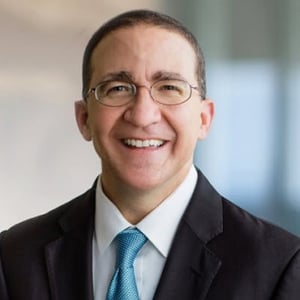
Chair, Supreme Court and Appellate Practice, Alexander Dubose Jefferson
Daniel L. Geyser is Chair of the firm’s U.S. Supreme Court and Federal Appellate Practice. He focuses on complex and high-stakes appellate litigation, representing clients in the Supreme Court of the United States and in courts of appeals nationwide. He was named one of Law360’s 2019 “Appellate MVPs,” an honor awarded to only four lawyers in the United States.
Dan is widely regarded as one of the nation’s leading Supreme Court and appellate lawyers. The Legal 500 reports that Dan is “recognized by peers and clients alike as ‘an extraordinary oral advocate and brief writer,’” “stand[ing] out for his sheer brainpower and creative thinking”; clients say “Geyser’s intellect and analysis are peerless”; “‘[h]is legal analysis is brilliant and on point, and his written and oral advocacy is very strong and powerful.’” Chambers USA describes Dan as a “‘superb lawyer with impeccable judgment and a wonderful manner in oral arguments,’” adding he has “‘that rare ability to make clients and legal counsel at ease, even under difficult circumstances. He instills confidence.’”
Dan is among an elite group of lawyers who regularly handles significant cases in the U.S. Supreme Court. He has argued eleven U.S. Supreme Court cases in private practice, more than any other active Texas lawyer. He recently had three cert. petitions granted in a 12-month period (a feat matched by few global firms), and personally handled over 5% of the Court’s merits docket in OT 2018. He has been named to the National Law Journal’s “Appellate Hot List,” earned weekly honors as a Law360 “Legal Lion,” achieved national appellate rankings in Chambers & Partners and The Legal 500, and was listed among the “veritable who’s who of the Supreme Court bar” (Empirical SCOTUS). His petitions are regularly featured among the “Petitions of the Week” on SCOTUSblog, and he was named OT 2017’s “top performing” brief-writer among the Court’s repeat players (based on a 2018 empirical study using brief-analyzing software). He is a three-time winner of the National Association of Attorneys General’s Best Brief Award for excellence in brief-writing before the Supreme Court.
Dan routinely matches up against the top litigators in the country. He has convinced the Supreme Court to grant review over the opposition of elite appellate groups at multiple Am Law 20 firms, and his recent wins have come against superstars at Am Law 10 firms and the Solicitor General’s Office. In the past half-decade, Dan is among the top five lawyers nationwide for total Supreme Court arguments in private practice, notching “rare victor[ies]” (SCOTUSblog) and “huge win[s]” (Reuters) in cases that industry experts said could not be won. And Dan is already set to argue another major case in the Supreme Court’s upcoming Term, a closely watched battle involving the Federal Arbitration Act and federal jurisdiction; the case was one of Dan’s two cert. grants in 2021 alone.
Beyond the Supreme Court, Dan handles high-stakes matters in appellate courts nationwide, litigating cases in virtually every major area of federal law (especially securities, bankruptcy, patents, ERISA, and arbitration). For plaintiffs, he has crafted legal strategy in matters generating over a half-billion in recovery. For defendants, he has won appeals in 8- and 9-figure disputes. He has special expertise at the rehearing stage, and has argued before the en banc Ninth Circuit (winning 10-1). In addition to an active federal practice, Dan has handled landmark state-court appeals, including arguing seven times before the Texas Supreme Court.
Before joining ADJ, Dan ran his own award-winning appellate practice; served as the appellate chair of a prominent litigation boutique (also leading that firm to the National Law Journal’s “Appellate Hot List” and a Chambers USA national-appellate ranking); and was an appellate partner in one of the nation’s top litigation firms, building its appellate practice while focusing especially on complex patent appeals and bankruptcy cases.
From 2007-2011, Dan served in the Office of the Solicitor General of Texas, where he conducted and supervised appellate litigation for the State. In addition to handling his own docket, his experience in the office included advising other divisions on appellate and trial strategy, revising countless briefs in cases across all subject areas, and extensively preparing other attorneys (in moot courts and otherwise) for oral argument. In his last week on the job, Dan argued before the Texas Supreme Court in Severance v. Patterson, one of the State’s most important cases in recent memory—a constitutional attack on the public’s historic access to open beaches; he had earlier won “a rare motion to rehear the case” (Austin American-Statesman, 2011). The same week, Dan also won a major case in the U.S. Supreme Court, Sossamon v. Texas, involving Congress’s spending power and state sovereignty; Dan wrote the State’s briefs in that case and crafted its core legal theories and appellate strategy. He was also the principal writer of the State’s invitation brief in Rhine v. Deaton, a case marking the very first time the U.S. Supreme Court called for a state solicitor general to file a brief expressing the views of a State.
Dan graduated Phi Beta Kappa, with honors and distinction, from Stanford University, and with honors from Harvard Law School, where he was the Notes Chair of the Harvard Law Review, a best-brief winner and oralist on the championship team of Harvard’s moot-court competition, and a research assistant to Professor Laurence H. Tribe, working on his academic writing and appellate docket. After law school, Dan clerked for the Hon. Alex Kozinski of the U.S. Court of Appeals for the Ninth Circuit. He has received the State Bar of California’s Wiley W. Manuel Award for Pro Bono Legal Services and is a past appointee to the U.S. Court of Appeals for the Second Circuit Pro Bono Panel.
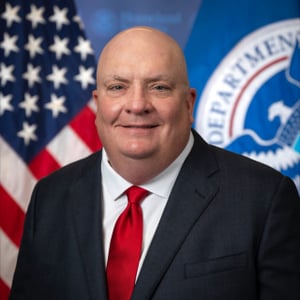
Acting Assistant Commissioner of Customs and Border Protection, Office of Professional Responsibility, U.S. Department of Homeland Security
Brian M. Fish is currently the Senior Advisor to the General Counsel at the Department of Homeland Security where he works on immigration and law enforcement issues. Previously, he was a trial attorney with the United States Immigration and Customs Enforcement, where he represented the Department of Homeland Security in removal hearings before the U.S. Immigration Court. Additionally, he was a Special Assistant United States Attorney and a Baltimore City homicide prosecutor. He is a member of the Federalist Society's Criminal Law & Procedure Practice Group Executive Committee and the President of its Baltimore Lawyers Chapter. He earned his B.A. from LaSalle University in 1992 and his J.D. from Loyola University New Orleans School of Law in 1998.

Laurence A. Tisch Professor of Law and Director, Classical Liberal Institute, New York University School of Law; Senior Fellow, The Civitas Institute, University of Texas at Austin
Richard A. Epstein is the inaugural Laurence A. Tisch Professor of Law at NYU School of Law. Prior to his joining the faculty, he was a visiting law professor at NYU from 2007 through 2009. He served as the Peter and Kirstin Bedford Senior Fellow at the Hoover Institution from 2000 to 2024. Since 2024 to the present he is a senior lecturer at the Civitas Institute at the University of Texas—Austin. Epstein is also the James Parker Hall Distinguished Service Professor of Law Emeritus and a senior lecturer at the University of Chicago. His initial law school appointment was at the University of Southern California from 1968 to 1972. Epstein received an LL.D., h.c. from the University of Ghent, 2003. He has been a member of the American Academy of Arts and Sciences since 1985 and was a Senior Fellow of the Center for Clinical Medical Ethics at the University of Chicago Division of Biological Sciences, also from 1983. to 2022 He served as editor of the Journal of Legal Studies from 1981 to 1991, and of the Journal of Law and Economics from 1991-2001. From 2001 to 2010 he was a director of the John M. Olin Program in Law and Economics at the University of Chicago.
His newest book, The Myth of Birthright Citizenship: What the Fourteenth Amendment Really Says was published in 2026 (Encounter Books). Prior to that he has published many books including, The Dubious Morality of the Modern Administrative State (Roman & Littlefield 2020).Earlier he published th Classical Liberal Constitution: The Uncertain Quest for Limited Government (Harvard 2014) iHis previous books include Design for Liberty: Private Property, Public Administration and the Rule of Law (Harvard 2011); The Case Against the Employee Free Choice Act (Hoover 2009); Supreme Neglect: How to Revive the Constitutional Protection of Property Rights (Oxford 2008); Antitrust Decrees in Theory and Practice: Why Less is More (AEI 2007); Overdose: How Excessive Government Regulation Stifles Pharmaceutical Innovation (Yale University Press. 2006); How Progressives Rewrote the Constitution (Cato 2006); Cases and Materials on Torts (Aspen Law & Business; 8th ed. 2004); Skepticism and Freedom: A Modern Case for Classical Liberalism (University of Chicago, 2003); Torts (Aspen Law & Business 1999); Principles for a Free Society: Reconciling Individual Liberty with the Common Good (Perseus Books, 1998): Mortal Peril: Our Inalienable Rights to Health Care (Addison-Wesley, 1997); Simple Rules for a Complex World (Harvard, 1995); Bargaining With the State (Princeton, 1993); Forbidden Grounds: The Case Against Employment Discrimination Laws (Harvard , 1992); Takings: Private Property and the Power of Eminent Domain (Harvard, 1985); and Modern Products Liability Law (Greenwood Press, 1980). He has also edited(with Catherine M. Sharkey) Cases and Materials on the Law of Torts (10th edition 2012).
Professor Epstein has written numerous articles on a wide range of legal and interdisciplinary subjects. He has taught courses in administrative law, antitrust law, civil procedure, communications, constitutional law, contracts, corporations, criminal law, employment discrimination law, environmental law, food and drug law health law and policy, legal history, labor law, property, real estate development and finance, jurisprudence, labor law; land use planning, patents, individual, estate and corporate taxation, Roman Law; torts, and workers' compensation.
Professor Epstein also writes a regular column for Civitas Institute, which also sponsors his podcast, The Libertarian with Charles C.W. Cooke, and Law Talk, with Cooke and John Yoo. He also does a podcast with John Batchelor. And appears regularly on the Freedom File with Judge Andrew Napolitano.
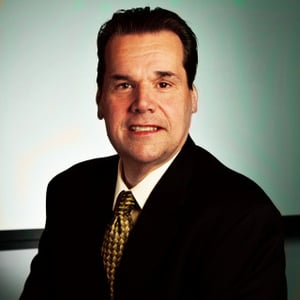
Partner, Patrick Doerr
Mr. Rando has represented clients in matters involving computer hardware and software, silicon chip manufacturing, biotechnology, medical devices, pharmaceuticals, chemical compounds, food additives, alternative energy, AI, autonomous vehicles, blockchain, consumer electronics, communications, internet, and e-commerce. He has appeared in courts across the country, including the Southern and Eastern Districts of New York and multiple U.S. Courts of Appeals.
As appellate counsel, Mr. Rando has served as counsel of record or co-counsel in more than 30 amicus briefs filed before the U.S. Supreme Court and Federal Circuit on issues of patent law, statutory interpretation, separation of powers, and constitutional law. Noteworthy filings include eBay Inc. v. MercExchange (2006), Oil States v. Greene’s Energy (2017), American Axle v. Neapco (2021), Amgen v. Sanofi (2023), and Cellect v. Vidal (2024).
Mr. Rando is a Fellow of the Academy of Court-Appointed Masters, having served by judicial appointment as Special Master in numerous complex patent cases, including multi-day Markman hearings and post-discovery proceedings. He also serves as a court-appointed Mediator and Neutral in both patent and commercial disputes.
He has played an active role in judicial and legislative engagement. Mr. Rando co-developed and conducted lecture series for the SDNY and EDNY Patent Pilot Program Judges and Clerks, covering the America Invents Act and Section 101 eligibility post-Alice and Mayo. He represented both the Federal Bar Association (FBA) and New York Intellectual Property Law Association (NYIPLA) at the Tillis/Coons Section 101 Patent Reform Roundtable, and submitted written testimony to the U.S. Senate Judiciary Committee in 2019.
Mr. Rando is a former president of the NYIPLA (2023–2024) and has held nearly every leadership position in the organization. He also served as Chair of the FBA’s Intellectual Property Law Section and was a founding member and president of the FBA’s EDNY Chapter. He is a founding member of the Association of Amicus Counsel, and an active contributor to the Federalist Society IP Practice Group Executive Committee.
He frequently lectures at CLE programs, universities, and legal associations on IP, constitutional law, and appellate advocacy. He has been quoted extensively in publications such as Law360, Bloomberg Law, WIPR, and National Law Journal. His scholarly publications include articles in The Federal Lawyer, Touro Law Review, and IPWatchdog.

Judge, United States Court of Appeals, Ninth Circuit
Judge O’Scannlain was appointed United States Circuit Judge for the Ninth Circuit by President Reagan on September 26, 1986. He received a J.D. degree in 1963 from Harvard Law School and a B.A. in 1957 from St. John’s University. He also earned the LL.M. (Judicial Process) degree at University of Virginia Law School in 1992. He was awarded the LL.D. (honoris causa) degree by the University of Notre Dame in 2002, the LL.D. (honoris causa) degree by Lewis & Clark College in 2003 and the LL.D. (honoris causa) degree by the University of Portland in 2011.
As a judge on the U.S. Court of Appeals for the Ninth Circuit, Judge O’Scannlain has participated in over 6,000 federal cases and has written hundreds of published opinions on a broad range of subjects including constitutional law, international law, securities law, administrative law, and criminal law. He hears appeals in San Francisco (court headquarters), as well as in Los Angeles (Pasadena), Portland, Seattle, Anchorage and Honolulu. The late Chief Justice Rehnquist appointed Judge O'Scannlain to the Federal Judicial Center's Advisory Committee on Appellate Judge Education. In 2009, Chief Justice Roberts appointed Judge O’Scannlain to the International Judicial Relations Committee of the U.S. Judicial Conference and subsequently appointed him Chairman in 2010.
President George W. Bush appointed Judge O’Scannlain to the Board of Trustees of the James Madison Memorial Fellowship Foundation in 2004. Pope Benedict XVI conferred the Order of Saint Gregory the Great on Judge and Mrs. O’Scannlain in 2007.
Judge O’Scannlain’s professional interests also include judicial administration and reform, and continuing legal education. Judge O’Scannlain is former Chair of the Judicial Division of the American Bar Association and has previously chaired the ABA’s Appellate Judges Conference, its Committee on Appellate Practice, and its 9th Appellate Practice Institute. He has testified before the Senate Judiciary Committee on several occasions, the House Judiciary Subcommittee on Courts and Intellectual Property, and the Commission on Structural Alternatives for the Federal Courts of Appeals on the subject of court reorganization. In addition to serving as a faculty member at numerous federal appellate practice seminars for judges and attorneys, including New York University Law School’s Institute for Judicial Administration, Judge O’Scannlain is an Adjunct Professor at Lewis & Clark Law School where he teaches a seminar on the Supreme Court. He has served as a Moot Court Judge at distinguished law schools across the United States including Harvard, Yale Stanford, Boalt Hall (Berkeley Law), Virginia, Cornell, Notre Dame, Fordham, Alabama, University of Southern California, King Hall (U.C. Davis) and Loyola Marymount University and in China at Xiamen and Renmin Universities.
Between graduation from Harvard and investiture as a federal judge, Judge O’Scannlain was primarily engaged in private law practice. Between 1969 and 1974, he was consecutively the Deputy Attorney General of Oregon, the Public Utility Commissioner of Oregon, and Director of the Oregon Department of Environmental Quality. He retired from the U.S. Army Reserve in 1978 as a Major after 23 years Reserve and National Guard service, including four years as an enlisted man.
A first generation Irish-American son of immigrant parents from Sligo and Derry, Judge O’Scannlain is married to the former Maura Nolan and has eight children: Sean, Jane, Brendan, Kevin, Megan, Christopher, Anne, and Kate, and nineteen grandchildren. His chambers are in the Pioneer Courthouse in Portland, Oregon.
Partner, Patrick Doerr
Mr. Rando has represented clients in matters involving computer hardware and software, silicon chip manufacturing, biotechnology, medical devices, pharmaceuticals, chemical compounds, food additives, alternative energy, AI, autonomous vehicles, blockchain, consumer electronics, communications, internet, and e-commerce. He has appeared in courts across the country, including the Southern and Eastern Districts of New York and multiple U.S. Courts of Appeals.
As appellate counsel, Mr. Rando has served as counsel of record or co-counsel in more than 30 amicus briefs filed before the U.S. Supreme Court and Federal Circuit on issues of patent law, statutory interpretation, separation of powers, and constitutional law. Noteworthy filings include eBay Inc. v. MercExchange (2006), Oil States v. Greene’s Energy (2017), American Axle v. Neapco (2021), Amgen v. Sanofi (2023), and Cellect v. Vidal (2024).
Mr. Rando is a Fellow of the Academy of Court-Appointed Masters, having served by judicial appointment as Special Master in numerous complex patent cases, including multi-day Markman hearings and post-discovery proceedings. He also serves as a court-appointed Mediator and Neutral in both patent and commercial disputes.
He has played an active role in judicial and legislative engagement. Mr. Rando co-developed and conducted lecture series for the SDNY and EDNY Patent Pilot Program Judges and Clerks, covering the America Invents Act and Section 101 eligibility post-Alice and Mayo. He represented both the Federal Bar Association (FBA) and New York Intellectual Property Law Association (NYIPLA) at the Tillis/Coons Section 101 Patent Reform Roundtable, and submitted written testimony to the U.S. Senate Judiciary Committee in 2019.
Mr. Rando is a former president of the NYIPLA (2023–2024) and has held nearly every leadership position in the organization. He also served as Chair of the FBA’s Intellectual Property Law Section and was a founding member and president of the FBA’s EDNY Chapter. He is a founding member of the Association of Amicus Counsel, and an active contributor to the Federalist Society IP Practice Group Executive Committee.
He frequently lectures at CLE programs, universities, and legal associations on IP, constitutional law, and appellate advocacy. He has been quoted extensively in publications such as Law360, Bloomberg Law, WIPR, and National Law Journal. His scholarly publications include articles in The Federal Lawyer, Touro Law Review, and IPWatchdog.

President, Harned Strategies LLC
Karen Harned is President at Harned Strategies LLC. Previously, she served as Executive Director of the National Federation of Independent Business Small Business Legal Center, a post she held from 2002-2022. Prior to joining the Legal Center, Ms. Harned was an attorney at a Washington, D.C. law firm specializing in food and drug law, where she represented several small and large businesses and their respective trade associations before Congress and federal agencies. She also served as Assistant Press Secretary to U.S. Senator Don Nickles of Oklahoma from August of 1989 to March of 1993. Ms. Harned received her B.A. from the University of Oklahoma in 1989 and her J.D. from The George Washington University National Law Center in 1995. She is admitted to practice in the District of Columbia.
As Executive Director of the NFIB Small Business Legal Center, Ms. Harned commented regularly on small business cases before federal and state courts, as well as the U.S. Supreme Court. She has appeared on Fox News, Fox Business, NBC Nightly News, CNN, CNBC and MSNBC, as well as National Public Radio, CBS Radio, and radio outlets across the country. Her opinion editorials and articles regarding healthcare, lawsuit abuse, regulation, and other issues important to small business have been published in newspapers and other publications nationwide.
Ms. Harned has testified before Congress on the small business impact of regulation and the civil justice system. Additionally, she has conducted numerous webinars and legal compliance seminars for small business owners across the country on issues relating to employment law, including unionization and immigration.

Deputy Secretary of Agriculture, U.S. Department of Agriculture
Judge Stephen Alexander Vaden was appointed as the Deputy Secretary of the U.S. Department of Agriculture on July 7, 2025. Alongside Secretary Brooke L. Rollins, Deputy Secretary Vaden leads the Department’s operations and implements policies that support America’s food and farm systems. A native of Union City, Tennessee, Deputy Secretary Vaden brings expertise in agricultural policy, law, and rural development. Previously, he served as a judge on the U.S. Court of International Trade and as General Counsel of USDA. Throughout Deputy Secretary Vaden’s time as General Counsel, he led successful Supreme Court litigation, advanced regulatory reform, and supported the implementation of the 2018 Farm Bill. He is a graduate of Yale Law School and Vanderbilt University. A public servant with strong agricultural roots, Deputy Secretary Vaden is committed to revitalizing rural America and ensuring an abundant, affordable, and safe U.S. food supply.

Tammy McCutchen is a leading authority on federal and state wage-hour laws and prevailing wage laws. She counsels businesses on wage-hour compliance, including conducting internal audits on independent contractor status, overtime exemptions, and other pay practices. She also represents employers during investigations by the U.S. Department of Labor and serves as an expert witness in wage-hour class actions. She was a founding officer of ComplianceHR, a law and technology company, where she created AI-based applications to evaluate independent contractor and overtime exempt status.
Ms. McCutchen served as Administrator of the U.S. Department of Labor’s Wage and Hour Division, appointed by President Bush and confirmed by the Senate in 2001. She was the primary architect of the 2004 revisions to the overtime exemption regulations, the first major changes to the regulations in 55 years.
Before joining DOL, she was senior counsel for the Hershey Company in Hershey, Pennsylvania.
Ms. McCutchen has been a volunteer leader of the Federalist Society since 1989. She served in leadership roles for the Northwestern Student Chapter and Chicago Lawyers Chapter. She currently serves in leadership for the Labor & Employment Practice Group, the Regulatory Transparency Project, and the Knoxville, TN Lawyers Chapter. She served on the Editorial Advisory Board of Law360, the Labor Committee of the U.S. Chamber of Commerce, the Small Business Legal Advisory Board of the National Federation of Independent Business, and a Policy Fellow at the ACU Foundation.
Ms. McCutchen is a graduate of Western Illinois University and Northwestern University School of Law. She clerked for the Hon. Daniel Manion on the U.S. Court of Appeals for the Seventh Circuit.

Courthouse Steps Decision Teleforum: Thryv, Inc. v. Click-To-Call Technologies, LP
Daniel L. Geyser
In Thryv, Inc. v. Click-To-Call Technologies, LP (Supreme Court, April 20, 2020), the Supreme Court held that...
Courthouse Steps Oral Argument: U.S. v. Sineneng-Smith
Brian M. Fish
On February 25, the Supreme Court heard oral arguments in the case of United States v....
The Dubious Morality of Modern Administrative Law
Richard A. Epstein
Event Audio: The Dubious Morality of Modern Administrative Law
Courthouse Steps Decision Teleforum: Peter v. NantKwest Inc.
Robert J. Rando
On December 11, 2019, the Supreme Court issued its decision in Peter v. NantKwest Inc....
Courthouse Steps Oral Argument Teleforum: Thryv, Inc. v. Click-To-Call Technologies, LP
Robert J. Rando
In Thryv, Inc. v. Click-To-Call Technologies, LP (originally Dex Media Inc. v. Click-To-Call Technologies, LP),...
The Future of the Federal Judiciary
Diarmuid F. O'Scannlain
Note from the Editor: The Federalist Society takes no positions on particular legal and public...
Courthouse Steps Oral Argument Teleforum: Peter v. NantKwest Inc.
Robert J. Rando
At issue is whether the phrase “[a]ll the expenses of the proceedings” in 35 U.S.C....
Courthouse Steps Decision: Iancu v Brunetti
Remember “The Slants,” the Asian-American rock band who were denied a trademark because the U.S....
Judicial Deference Determined: Kisor v. Wilkie
Karen Harned, Stephen Alexander Vaden
This morning the Supreme Court decided the much-anticipated Kisor v. Wilkie case. The Court had granted...
One Year Later: Impact of Encino Motorcars on FLSA Litigation
Tammy Dee McCutchen
Just over a year ago, in a case involving an obscure car dealership exemption from...