
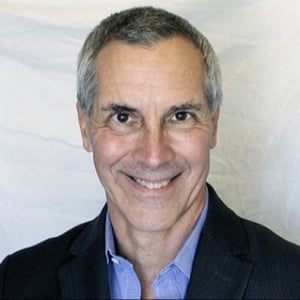
Assistant Professor of Law, University of Akron School of Law
Professor Horvath joined the Akron faculty as an assistant professor of law in 2020. His scholarly interest focus on the ways in which constitutional, statutory, and regulatory inputs intersect with the health care enterprise to determine the access to and quality of U.S. medical care. His teaching includes Torts and various topics in Health Care law. Prior to joining the Akron faculty, Professor Horvath was a post-doctoral Fellow in Public Law at the University of California, Berkeley, School of Law. He also clerked for Judge John T. Noonan, Jr. on the Ninth Circuit Court of Appeals. Professor Horvath earned his J.D. at Berkeley Law, where he served as Editor-in-Chief of the California Law Review. He earned his M.D. at Temple University Medical School.
Professor Horvath's scholarship has explored gaps in the regulation of drug-device combination products through FDA approval and tort law, statutory and regulatory determinants of FDA-approved high-risk medical device failures, and ways in which drug labeling might be improved. His work has been published in Washington Law Review, BYU Law Review, California Law Review, Albany Law Review, Cincinnati Law Review, and the Annals of Health Law and Life Sciences.
Prior to his legal career, Professor Horvath was a cardiologist who specialized in the treatment of heart rhythm disorders. He authored or co-authored over twenty article that were published in the Journal of the American College of Cardiology, Circulation, Archives of Internal Medicine, and other medical journals.

Professor of Law, Antonin Scalia Law School, George Mason University
Adam Mossoff is Professor of Law at Antonin Scalia Law School, George Mason University. He has published extensively on why patents, copyrights, and other intellectual property rights have been—and should be—legally secured to innovators and creators as property rights. His scholarship has been relied on by the United States Supreme Court, by lower federal courts, and by U.S. federal agencies. He has been invited to testify numerous times before the U.S. Senate and the House of Representatives on intellectual property legislation. His writings on intellectual property policy have also appeared in the Wall Street Journal, New York Times, Forbes, Investors Business Daily, and in other media outlets. His journal articles can be downloaded here.
Professor Mossoff is a longstanding member of the Executive Committee of the Intellectual Property Practice Group of the Federalist Society, on which he served as Chairperson from 2016-2018, and he is Chair of the Intellectual Property Working Group of the Regulatory Transparency Project of the Federalist Society. He is a Senior Fellow and Chair of the Forum for Intellectual Property at the Hudson Institute, a Visiting Intellectual Property Fellow at the Heritage Foundation, and a member of the Board of Directors of the Center for Intellectual Property Understanding. He is a member of the Intellectual Property Rights Policy Committee of ANSI and he has served as Chair and Vice-Chair of the Intellectual Property Committee of the IEEE-USA, on which he remains a member in good standing.
Associate Professor, University of Akron School of Law
Professor Camilla A. Hrdy is Associate Professor of Law and Director of Faculty Research & Development at The University of Akron School of Law.
Her primary teaching areas are Intellectual Property Law, Trade Secret Law, Trademark Law, Patent Law, State and Local Government Law, and Civil Procedure (Due Process and Federalism).
Professor Hrdy’s research has focused on the role of federal, state, and local governments in promoting innovation and economic development; the history of United States patent law; the law and policy of trade secrets and unfair competition; and the relationship between intellectual property law, innovation, and human well-being.
Her articles have appeared or will soon appear in various law journals, including Stanford Law Review, Boston College Law Review, Florida Law Review, Colorado Law Review, Wisconsin Law Review, Lewis & Clark Law Review, and Berkeley Law & Technology Journal. She is a three-time recipient of the Thomas G. Byers Outstanding Faculty Scholarly Publication.
She is also a regular blogger on the IP scholarship blog, Written Description, where she writes on IP scholarship related to trade secrets, trademarks, patents, IP theory, the history of intellectual property in America, and numerous other topics.
Professor Hrdy holds a J.D. from Berkeley Law, a B.A. from Harvard University, and an M.Phil. in from the University of Cambridge, Department of History & Philosophy of Science. She received Harvard’s Hoopes prize, and a Redhead Prize from the University of Cambridge Department of History & Philosophy of Science.
Before coming to Akron Law, she was a resident fellow at the Yale Law School Information Society Project and a teaching fellow at the University of Pennsylvania Law School Center for Innovation, Technology & Competition.
She clerked for U.S. District Judge Janis Graham Jack in the Southern District of Texas.

Dr. John Eastman is the former Henry Salvatori Professor of Law & Community Service and former Dean at Chapman University's Dale E. Fowler School of Law, where he had been a member of the faculty since 1999, specializing in Constitutional Law, Legal History, and Property. He is a founding director of the Center for Constitutional Jurisprudence, a public interest law firm affiliated with the Claremont Institute that he founded in 1999. He has a Ph.D. in Government from the Claremont Graduate School and a J.D. from the University of Chicago Law School, and a B.A. in Politics and Economics from the University of Dallas. He serves as the Chairman of the Board of the National Organization for Marriage.
Prior to joining the Chapman law faculty, Dr. Eastman served as a law clerk to the Honorable Clarence Thomas, Associate Justice, Supreme Court of the United States, and to the Honorable J. Michael Luttig, Judge, United States Court of Appeals for the Fourth Circuit and practiced law with the national law firm of Kirkland & Ellis. Dr. Eastman has also represented numerous clients in important constitutional law matters and has argued before the Supreme Court. On behalf of the Claremont Institute Center for Constitutional Jurisprudence, he has participated as amicus curiae before the Supreme Court of the United States, U.S. Courts of Appeals, and State Supreme Courts in more than one hundred cases of constitutional significance, including Boy Scouts of America v. Dale, Zelman v. Simmons-Harris (the school vouchers case), Kelo v. New London, Ct. (eminent domain), and Van Orden v. Perry (the 10 Commandments case). He has also appeared as an expert legal commentator on numerous television and radio programs, including C-SPAN, Fox News, PBS, NewsHour, and The O'Reilly Factor.
United States District Court, Central District of California
Andrew Guilford is a federal judge for the United States District Court for the Central District of California. He joined the court in 2006 after being nominated by President George W. Bush.
Born in Santa Monica, California, Guilford graduated from the University of California-Los Angeles with his Bachelor's Degree in 1972 and his Juris Doctor degree in 1975.

Thomas M. Siebel Senior Fellow, The Hoover Institution, Stanford University; Gary T. Schwartz Distinguished Professor of Law Emeritus, UCLA School of Law
Eugene Volokh is the Thomas M. Siebel Senior Fellow at the Hoover Institution (Stanford), as well as the Gary T. Schwartz Distinguished Professor of Law Emeritus and Distinguished Research Professor at UCLA School of Law. He recently retired from teaching at UCLA, after 30 years there, and is now focusing on research.
Volokh is the author of the textbooks The First Amendment and Related Statutes (8th ed. 2023), and Academic Legal Writing (5th ed. 2016), as well as over 100 academic law journal articles, mostly on First Amendment law. He is a member of The American Law Institute; the editor-in-chief of the Journal of Free Speech Law; and the creator and coauthor of The Volokh Conspiracy, a leading legal blog founded in 2002 (hosted at the Washington Post from 2014 to 2017 and now at Reason Magazine).
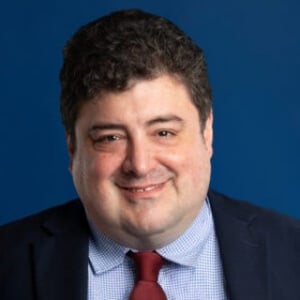
Senior Fellow and Director of Finance Policy, Competitive Enterprise Institute
John Berlau is a senior fellow and Director of Finance Policy at the Competitive Enterprise Institute. His work focuses on how public policy affects access to capital, entrepreneurship, and investments made by the public and business community alike. In recent years, he has studied the consequences of financial reform efforts passed by Congress like the Sarbanes-Oxley Act, the government’s response to the 2008 financial crisis including the Dodd-Frank Act, the placement of Fannie Mae and Freddie Mac into conservatorship, and the rise of cryptocurrency.
He is also the author of the book George Washington: Entrepreneur: How Our Founding Father’s Private Business Pursuits Changed America and the World. The book received rave reviews in the Wall Street Journal and other forums, and was endorsed by eminent historians and scholars such as Richard Brookhiser, Amity Shlaes, and Craig Shirley.
Berlau is a contributing writer for Forbes. His work has been published and cited in The Wall Street Journal, The New York Times, The Washington Post, Financial Times, Bloomberg News, The Atlantic, Politico, Daily Caller, Washington Examiner, Investor’s Business Daily, National Journal, National Review, American Spectator, Reason Magazine, and more. He is a frequent guest on radio and television programs, including CNBC’s “The Call,” “Power Lunch” and “Closing Bell,” Fox News’ “Fox & Friends” and “Your World with Neil Cavuto,” and Fox Business’ “Cavuto.”
He has testified on the impact of financial regulation before the House Committee on Financial Services and the House Committee on Energy and Commerce. A recognized expert on the phenomenon of crowdfunding, Berlau has spoken at prominent conferences such as South by Southwest Interactive in Austin, Money 20/20 in Las Vegas, the FinTech Global Expo in San Diego, the CFGE Crowdfund Banking and Lending Summit in San Francisco and the Crowdfund Intermediary Regulatory Advocates (CFIRA) Summit in Washington, D.C. He is also author of the widely cited paper “Declaration of Crowdfunding Independence: Finance of the People, by the People, and for the People.”
Berlau is an award-winning financial and political journalist. He served as Washington correspondent for Investor’s Business Daily and as a staff writer for Insight magazine, published by The Washington Times. In 2002, he received the Sandy Hume Memorial Award for Excellence in Political Journalism from Washington’s National Press Club. He was a media fellow at the Hoover Institution in 2003. He graduated from the University of Missouri-Columbia in 1994 with degrees in journalism and economics.
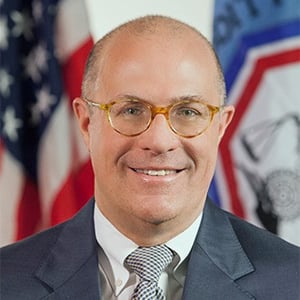
Senior Counsel, Willkie Farr & Gallagher LLP
J. Christopher “Chris” Giancarlo is senior counsel at Willkie Farr & Gallagher LLP, based in the firm’s New York office. Chris served as the thirteenth Chairman of the U.S. Commodity Futures Trading Commission (CFTC), where he oversaw regulation of the futures, options and swaps derivatives markets. Chris was also a successful entrepreneur helping GFI Group Inc. grow into a leading trading platform and technology vendor to global markets for OTC swaps and other derivatives and managing GFI’s successful private equity financing and IPO.
Chris is a renowned blockchain technology advocate and key contributor to the global discourse on cryptocurrencies and digital assets. During his tenure at the CFTC (2014-2019), Chris oversaw the first bitcoin futures products entering the marketplace and applied a “Do No Harm” regulatory approach towards blockchain technology.
Chris has testified often about financial and derivatives markets before the U.S. Congress and EU Parliament and is a frequent guest on broadcast radio and television, including BloombergTV, CNBC, Fox Business and the BBC, as well as podcasts such as “Unchained” and “CoinDesk.” Chris has written and spoken extensively on public policy, legal and other matters involving technology and the financial markets and has authored numerous white papers, articles and op-eds that have been published in The Wall Street Journal, Financial Times, Cato Journal, New York Law Journal, Les Echos and Coinbase.
Chris has over 45,000 followers on Twitter as @giancarloMKTS where he is known as “CryptoDad.”
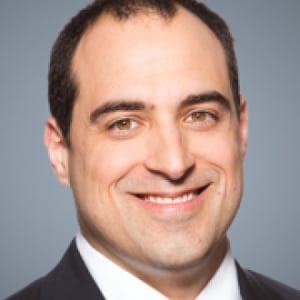
Vice President and Director, Center for Monetary and Financial Alternatives, Cato Institute
Norbert Michel is vice president and director of the Cato Institute’s Center for Monetary and Financial Alternatives, where he specializes on issues pertaining to financial markets and monetary policy. Michel was most recently the Director for Data Analysis at the Heritage Foundation where he edited, and contributed chapters, to two books: The Case Against Dodd–Frank: How the “Consumer Protection” Law Endangers Americans, and Prosperity Unleashed: Smarter Financial Regulation
Michel was previously a tenured professor at Nicholls State University’s College of Business, teaching finance, economics and statistics. Before that, he worked at Heritage as a tax policy analyst in the think tank’s Center for Data Analysis from 2002 to 2005. He previously was with the global energy company Entergy, where he worked on models to help predict bankruptcies of commercial clients.
Michel holds a doctoral degree in financial economics from the University of New Orleans. He received his bachelor of business administration degree in finance and economics from Loyola University. He currently resides in Virginia.
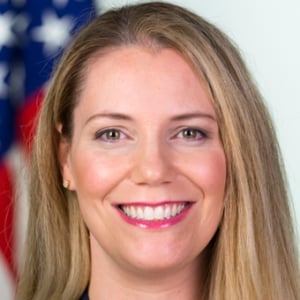
Chief Counsel, U.S. Food and Drug Administration; Deputy General Counsel, Department of Health and Human Services
Stacy Cline Amin serves as Chief Counsel of the Food and Drug Administration and Deputy General Counsel of the Department of Health and Human Services. Stacy serves as the senior legal advisor to the Commissioner, FDA leadership, the HHS General Counsel and Departmental leadership on FDA regulatory and litigation matters. Stacy leads an office of 165 lawyers and support staff that provide counseling and litigation support to the agency.
Stacy previously served as Special Assistant to the President and Senior Associate Counsel to the President, serving as the senior legal advisor on matters relating to the Department of Health and Human Services. In that role, Stacy advised on critical matters arising under the Food Drug and Cosmetic Act, helped lead the Administration's efforts to combat the opioid crisis, led multi-agency teams in the evaluation of high profile administrative actions, and successfully coordinated litigation strategy with the Department of Justice.
Prior to joining the White House, Stacy served as the Chief Counsel of the Senate Health, Education, Labor and Pensions Committee and as a Counsel for the House Energy & Commerce Committee. In Congress, Stacy frequently advised on Food Drug and Cosmetic Act issues and led bipartisan and bicameral investigations to promote patient safety and global public health. These efforts supported a number of legislative accomplishments, including passage of the Drug Quality and Security Act of 2013 and the 21st Century Cures Act of 2016.
Earlier in her career, she served as an Associate at Sullivan & Cromwell LLP and as a law clerk to the Hon. John R. Gibson on the U.S. Court of Appeals for the Eighth Circuit. She graduated cum laude from Harvard Law School and summa cum laude from The George Washington University.
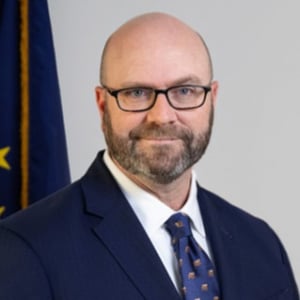
Attorney General, Alaska
Stephen J. Cox serves as the 28th Attorney General of the State of Alaska, where he oversees the state’s legal affairs and serves as the chief prosecutor with oversight of all district attorneys, general counsel to the Governor and executive branch, and represents the State in all civil and criminal cases in federal and state court. He brings to the role a proven record of public service at the highest levels of the U.S. Department of Justice, combined with deep experience in Alaska’s private sector and community life.
Before his appointment, he was Senior Vice President, Chief Legal and Strategy Officer of Bristol Bay Industrial—an investment platform of the Bristol Bay Native Corporation—acting as the chief legal officer for the industrial services portfolio on behalf of the Alaska Native shareholders in the Bristol Bay region. In that role, he led legal, compliance, and strategic planning for major energy, infrastructure, and utility projects across the State and in the Lower 48.
Earlier in his career, beginning in 2011, Cox served as in-house counsel for Apache Corporation, where he was the principal attorney for Apache Alaska and focused on new ventures and exploratory work in Cook Inlet, including seismic initiatives and ongoing regulatory coordination with state agencies.
Cox is deeply rooted in Anchorage’s community and faith life. He and his family attend Holy Family Old Cathedral in downtown Anchorage and support Mission Alaska, the Dominican friars’ outreach ministry under the Western Dominican Province. He was the founding board president and chairman of a new classical school in South Anchorage.
On the national stage, Cox held senior leadership roles in the U.S. Department of Justice under the Trump Administration. As Deputy Associate Attorney General, he co-chaired the DOJ’s Regulatory Reform Task Force and the Working Group on Corporate Enforcement and Accountability, and helped implement landmark policies aimed at curbing regulatory overreach and aligning enforcement with fairness and oversight. Later, as U.S. Attorney for the Eastern District of Texas, he oversaw prosecutions and civil litigation spanning 43 counties, prioritizing healthcare fraud, elder fraud, and violent crime while ensuring enforcement remained transparent and fair.
Earlier in his career, Cox practiced complex litigation at a major international law firm, served as counselor to the Director of U.S. Immigration and Customs Enforcement, and helped lead the William H. Webster Commission, which reviewed FBI counterterrorism intelligence and operations following the Fort Hood tragedy.
He began his legal career with a clerkship for Judge J. L. Edmondson of the U.S. Court of Appeals for the Eleventh Circuit. Cox earned a B.S. in Computer Science from Texas A&M University and a J.D., summa cum laude, from the University of Houston Law Center. He and his wife, Cristina, are raising their three children in Anchorage, and have made Alaska their home.
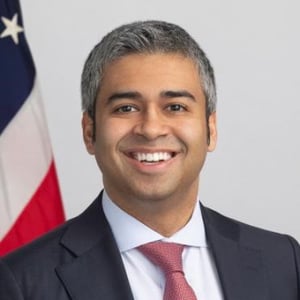
Operating Advisor, Clayton, Dubilier & Rice
Anand Shah, MD, is an Operating Advisor at private equity firm Clayton, Dubilier & Rice. Dr. Shah develops and identifies potential investment opportunities in the healthcare industry with a focus on health care services, including the provider, payer, and HCIT sectors. He also serves as an advisor to the firm’s portfolio companies.
A nationally recognized physician leader and health policy expert, Dr. Shah has extensive healthcare experience in the senior-most levels of the U.S. government, private sector, and as a physician. He was previously the Deputy Commissioner for Medical and Scientific Affairs at the U.S. Food and Drug Administration (FDA). Dr. Shah led consensus policy development for fit-for-purpose programs including Advanced Manufacturing, the Coronavirus Treatment Acceleration Program, Covid vaccine development, digital health, consumer protection, and decentralized clinical trials. During the Covid pandemic, he led FDA’s policy development for preparedness and recovery efforts. Dr. Shah represented FDA with top-level policy makers of the White House and Cabinet, Governors and local governments, and regularly led briefings with Congressional leadership.
He previously served in two senior leadership roles at the Centers for Medicare & Medicaid Services (CMS). As Senior Medical Advisor, he was the primary counselor for agency-wide policy related to medical and scientific innovation. Dr. Shah established consensus on several critical policy initiatives including aligning payment and prevention to increase Medicare beneficiaries’ access to novel antimicrobials, expanding patients’ access to cell and gene therapies, and streamlining Medicare access to breakthrough technologies. As the Chief Medical Officer of the Center for Medicare & Medicaid Innovation (CMMI), Dr. Shah led the clinical design of novel value-based payment and service delivery models including those for primary and specialty care.
Dr. Shah specializes in the early detection, surveillance, and treatment of prostate cancer, and previously developed and led a survivorship clinic for patients on cancer clinical trials at the National Institutes of Health. His scientific track record includes publications in the New England Journal of Medicine, JAMA, Health Affairs, Cancer, and Nature Reviews Drug Discovery. Dr. Shah is an Adjunct Professor with the Department of Medical Ethics and Health Policy and an Adjunct Senior Fellow at the Leonard Davis Institute of Health Economics at the University of Pennsylvania.
Dr. Shah was chief resident during his radiation oncology residency at Columbia University. He concurrently earned his MD from the University of Pennsylvania and an MPH in health care management and policy from the Harvard School of Public Health. Dr. Shah graduated with honors from Duke University with a degree in economics. He also served as a Canada-U.S. Fulbright Scholar.

Judge, Arizona Court of Appeals, Division One
The Honorable Jennifer M. Perkins began service on the Arizona Court of Appeals, Division One, on October 30, 2017. At the time of her appointment by Governor Douglas Ducey, Judge Perkins was Assistant Solicitor General for the State of Arizona.
Judge Perkins was born in Portales, New Mexico, and primarily raised in Albuquerque. She attended the prestigious Albuquerque Academy from 1988-1995, before moving to Washington D.C. to attend the Elliott School of International Affairs at the George Washington University as a National Merit Scholar. Therafter, she relocated again to Dallas, Texas, and earned her juris doctor from the SMU Dedman School of Law, graduating cum laude in 2002.
Judge Perkins started her career at the law firm of Browning & Peifer (now Peifer, Hanson, Mullins, and Baker) in Albuquerque, New Mexico. While there, she litigated complex commercial matters including class action plaintiff and defense work, and assisted with employment and contract litigation. In 2003, the judge accompanied the Honorable James O. Browning in transitioning to the federal district court bench, serving as his first law clerk.
After her clerkship, Judge Perkins moved to Arizona to work for the Institute for Justice, Arizona Chapter, a public interest law firm. She spent five years with IJ-AZ litigating civil rights cases in Arizona and across the country. In 2009, the judge became Disciplinary Counsel for the Arizona Commission on Judicial Conduct, where she reviewed and prosecuted ethics complaints against state court judges throughout Arizona. After five years serving the state in this capacity, Judge Perkins entered private practice by joining an appellate law firm in Phoenix. While there, she worked on state and federal appeals involving a wide range of legal subjects, including complex business disputes, property rights, judicial ethics, and personal injury matters.
In January 2015, Judge Perkins joined the Office of the Arizona Attorney General to serve as the first Assistant Solicitor General; in that capacity, she was responsible for oversight of Attorney General Opinions and served as ethics counsel to the entire office. In addition to these two primary roles, the judge assisted on a variety of matters including trial and appellate litigation of election-related matters; federal appellate litigation with the Federalism Unit; state criminal appeals; and drafting amicus briefs on behalf of Arizona in state and federal courts.

Julius E. Davis Professor of Law, University of Minnesota Law School
Ilan Wurman is the Julius E. Davis Professor of Law at the University of Minnesota, where he teaches administrative law and constitutional law. He previously taught at Arizona State University. He writes primarily on the Fourteenth Amendment, administrative law, separation of powers, and constitutionalism. His academic writing has appeared in the Yale Law Journal, the Stanford Law Review, the University of Chicago Law Review, the University of Pennsylvania Law Review, the Virginia Law Review, the Duke Law Journal, the Minnesota Law Review, the Notre Dame Law Review, and the Texas Law Review among other journals.
Professor Wurman is the author of the new book The Constitution of 1789: A New Introduction (Cambridge 2026). His previous books include A Debt Against the Living: An Introduction to Originalism (Cambridge 2017), and The Second Founding: An Introduction to the Fourteenth Amendment (Cambridge 2020). He is also the author of the casebook, Administrative Law Theory and Fundamentals: An Integrated Approach (Foundation Press 3d ed. 2025).
Professor Wurman practices law with the firm Tully Bailey. He has litigated a variety of administrative law and constitutional law cases, including cases involving COVID-19 restrictions, transmission lines, and Appointments Clause challenges. He also devised winning public nuisance theories to force city governments to address the increasingly challenging public camping crises throughout the country.
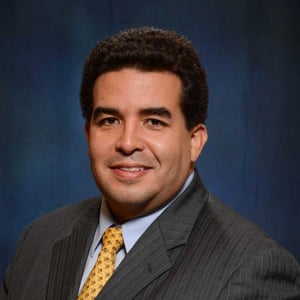
Associate Dean for Graduate Studies and Global Engagement Professor of Law, Florida International University College of Law
Manuel A. Gómez is Associate Dean of International and Graduate Studies and Associate Professor of Law at Florida International University College of Law where he regularly teaches courses on Complex Litigation, International Arbitration, Alternative Dispute Resolution, Law and Society, and Introduction to International and Comparative Law, with emphasis on Latin America. Professor Gómez also has law teaching experience at other US universities such as Stanford and Iowa, and has been at numerous Latin American, European, and Asian universities, either as guest lecturer, speaker or visiting professor. Professor Gómez’s research and academic writing focuses on dispute resolution and governance, legal and institutional reform in Latin America, the globalization of the legal profession, and innovations in legal education. More specifically, professor Gómez studies the use of different dispute resolution mechanisms and fora in an array of contexts, ranging from transnational litigation and international arbitration, to domestic litigation and other non-institutionalized mechanisms. He is also an expert on institutional and legal reform in Latin America, and is also interested in the globalization of lawyers, the role of Judges, and innovations in legal education. Professor Gómez has also served as legal expert in the context of domestic and transnational litigation, and International Arbitration proceedings in the US and Latin America. He is a founding member of the Miami International Arbitration Society (MIAS), member of the Faculty Council of the International Law Section of the Florida Bar, member of the Academic Council at the Institute of Transnational Arbitration (ITA), and member of the Academic Council of the Latin American and Caribbean Center at FIU, among others.
Professor Gómez’s research has earned important awards such as the Law and Society Association’s Dissertation Prize, the Richard S. Goldsmith Award in Dispute Resolution at Stanford University, and the prize awarded by the Venezuelan Studies Section of the Latin American Studies Association (LASA). At FIU, Professor Gómez received the Inaugural Bhagwan Mahavir Junior Faculty Summer Fellowship in 2011, a CIBER Faculty Research Award in 2013, and was recently nominated to FIU President’s Council Worlds Ahead Faculty Award. Professor Gómez has also been appointed as a Research Fellow at the Universidad Metropolitana Law School, Faculty Fellow at FIU CIBER, and a Fellow at Stanford Law School’s Center for the Legal Profession. Leading academic publishers such as Stanford University Press, Cambridge University Press, Routledge, and Hart Publishing, have disseminated Professor Gomez’s work. Professor Gómez’s articles have appeared in leading academic journals such as the Missouri Dispute Resolution Journal, the Stanford Journal of Complex Litigation, the University of Miami Inter-American Law Review, the ILSA Journal of International and Comparative Law, the Georgia Journal of International and Comparative Law, the University of San Francisco Law Review, the FIU Law Review, and the Revista del Instituto Mexicano de Derecho Comparado, among others.
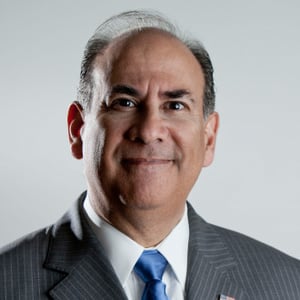
Visiting Fellow, American Enterprise Institute
Ambassador Roger F. Noriega has more than two decades of public policy experience focusing on U.S. interests in the Western Hemisphere. Twice appointed by President George W. Bush (and confirmed by the U.S. Senate) and with 10-year career on Capitol Hill, Ambassador Noriega's breadth of experience and contacts offer strategic vision and practical insight on U.S. foreign policy and aid programs. Noriega is the founder and managing director of VisiónAméricas LLC, which advises U.S. and foreign clients on international business issues, and also is a visiting fellow at the prestigious American Enterprise Institute for Public Policy Research. He serves as Vice Chairman of the Board of Directors of the Congressional Award Foundation and as a member of the advisory boards of the Canadian American Border Trade Partnership and The Americano, an online forum reaching out to Latino voters.
As Assistant Secretary of State for Western Hemisphere Affairs (July 2003 to October 2005), Ambassador Noriega managed a 3,000-person team of professionals in Washington and 50 diplomatic posts to design and implement political and economic strategies in Canada, Latin America, and the Caribbean. He was a leader in an inter-agency team that actively expanded trade and investment opportunities to spur economic growth and to create opportunities for U.S. companies and consumers. He also helped design and execute an annual plan for the effective use of $1.7 billion in U.S. economic assistance in two dozen countries.
As U.S. Ambassador to the Organization of American States (OAS) (August 2001 to July 2003), Noriega coordinated complex and sensitive multilateral diplomacy in a 34-member international organization to bolster OAS efforts to promote trade, fight illicit drugs, and defend democracy.
On Capitol Hill, Noriega counseled powerful Congressional leaders on all aspects of U.S. interests in the Americas, drafted historic legislation, and oversaw U.S. aid programs, the Peace Corps, and international narcotics affairs. From July 1997 to August 2001, he was a member of the Senate Foreign Relations Committee staff of Chairman Jesse A. Helms (R-NC), and from July 1994 to July 1997, he served on the House International Relations Committee staff of Chairman Benjamin A. Gilman (R-NY).
Other experiences include: senior advisor, OAS (July 1993 to July 1994); senior policy advisor, U.S. Mission to the OAS (August 1990 to January 1993); various program management and public affairs positions, U.S. Agency for International Development and U.S. Department of State (November 1986 to July 1990); press secretary and foreign policy advisor, U.S. Representative Robert Whittaker (R-KS) (May 1983 to October 1986); and research assistant, Kansas Secretary of State (December 1981 to April 1983). He has a Bachelor of Arts degree from Washburn University of Topeka, Kansas. Ambassador Noriega has been decorated by Governments of Nicaragua and of Peru and has received numerous awards for public service from organizations committed to the promotion of democracy in the Americas. He serves as Vice Chairman of the Board of Directors of the Congressional Award Foundation and as a member of the advisory boards of the Hispanic Community for Policy, the Canadian American Border Trade Partnership, and the Hispanic American Civics Foundation.
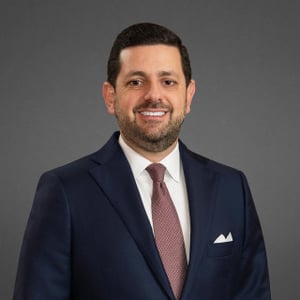
Of Counsel, DLA Piper LLP (US)
Harout J. Samra – a Board Certified Specialist in International Law – focuses his practice on international dispute resolution and arbitration matters, including international civil litigation in US courts.
Harout has represented clients from both the public and private sectors, including foreign governments, public officials and clients from a variety of industries. He has experience in international arbitrations administered under the International Chamber of Commerce (ICC), International Centre for Dispute Resolution (ICDR), United Nations Commission on International Trade Law (UNCITRAL), China International Economic and Trade Arbitration Commission (CIETAC), Bogota Chamber of Commerce, Madrid Court of Arbitration and International Centre for Settlement of Investment Disputes (ICSID) arbitration rules.
Harout currently serves as a member of the Florida Supreme Court Judicial Nominating Commission, by appointment of Governor Ron DeSantis. He previously served, by appointment of Governor Rick Scott, as a member of the Florida Third District Court of Appeal Judicial Nominating Commission, and was elected as Chair of the Commission from 2018-2019.

Laurence A. Tisch Professor of Law and Director, Classical Liberal Institute, New York University School of Law; Senior Fellow, The Civitas Institute, University of Texas at Austin
Richard A. Epstein is the inaugural Laurence A. Tisch Professor of Law at NYU School of Law. Prior to his joining the faculty, he was a visiting law professor at NYU from 2007 through 2009. He served as the Peter and Kirstin Bedford Senior Fellow at the Hoover Institution from 2000 to 2024. Since 2024 to the present he is a senior lecturer at the Civitas Institute at the University of Texas—Austin. Epstein is also the James Parker Hall Distinguished Service Professor of Law Emeritus and a senior lecturer at the University of Chicago. His initial law school appointment was at the University of Southern California from 1968 to 1972. Epstein received an LL.D., h.c. from the University of Ghent, 2003. He has been a member of the American Academy of Arts and Sciences since 1985 and was a Senior Fellow of the Center for Clinical Medical Ethics at the University of Chicago Division of Biological Sciences, also from 1983. to 2022 He served as editor of the Journal of Legal Studies from 1981 to 1991, and of the Journal of Law and Economics from 1991-2001. From 2001 to 2010 he was a director of the John M. Olin Program in Law and Economics at the University of Chicago.
His newest book, The Myth of Birthright Citizenship: What the Fourteenth Amendment Really Says was published in 2026 (Encounter Books). Prior to that he has published many books including, The Dubious Morality of the Modern Administrative State (Roman & Littlefield 2020).Earlier he published th Classical Liberal Constitution: The Uncertain Quest for Limited Government (Harvard 2014) iHis previous books include Design for Liberty: Private Property, Public Administration and the Rule of Law (Harvard 2011); The Case Against the Employee Free Choice Act (Hoover 2009); Supreme Neglect: How to Revive the Constitutional Protection of Property Rights (Oxford 2008); Antitrust Decrees in Theory and Practice: Why Less is More (AEI 2007); Overdose: How Excessive Government Regulation Stifles Pharmaceutical Innovation (Yale University Press. 2006); How Progressives Rewrote the Constitution (Cato 2006); Cases and Materials on Torts (Aspen Law & Business; 8th ed. 2004); Skepticism and Freedom: A Modern Case for Classical Liberalism (University of Chicago, 2003); Torts (Aspen Law & Business 1999); Principles for a Free Society: Reconciling Individual Liberty with the Common Good (Perseus Books, 1998): Mortal Peril: Our Inalienable Rights to Health Care (Addison-Wesley, 1997); Simple Rules for a Complex World (Harvard, 1995); Bargaining With the State (Princeton, 1993); Forbidden Grounds: The Case Against Employment Discrimination Laws (Harvard , 1992); Takings: Private Property and the Power of Eminent Domain (Harvard, 1985); and Modern Products Liability Law (Greenwood Press, 1980). He has also edited(with Catherine M. Sharkey) Cases and Materials on the Law of Torts (10th edition 2012).
Professor Epstein has written numerous articles on a wide range of legal and interdisciplinary subjects. He has taught courses in administrative law, antitrust law, civil procedure, communications, constitutional law, contracts, corporations, criminal law, employment discrimination law, environmental law, food and drug law health law and policy, legal history, labor law, property, real estate development and finance, jurisprudence, labor law; land use planning, patents, individual, estate and corporate taxation, Roman Law; torts, and workers' compensation.
Professor Epstein also writes a regular column for Civitas Institute, which also sponsors his podcast, The Libertarian with Charles C.W. Cooke, and Law Talk, with Cooke and John Yoo. He also does a podcast with John Batchelor. And appears regularly on the Freedom File with Judge Andrew Napolitano.

Laurence H. Silberman Chair in Constitutional Governance, American Enterprise Institute; Executive Director, Antonin Scalia Law School’s C. Boyden Gray Center for the Study of the Administrative State
Adam J. White is the Laurence H. Silberman Chair in Constitutional Governance and senior fellow at the American Enterprise Institute, where he focuses on the Supreme Court and the administrative state. He also directs the Antonin Scalia Law School’s C. Boyden Gray Center for the Study of the Administrative State.
He writes on regulation and constitutional government for a variety of publications. He practiced law in Washington, D.C., after clerking for the D.C. Circuit's Judge David Sentelle. He also has been chairman of the ABA's Administrative Law Section.
In 2021, he served on the Presidential Commission on the Supreme Court of the United States, where he criticized “Court packing” and other efforts to restructure the Supreme Court.
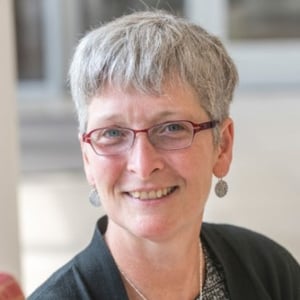
Director, Technology Licensing Office & Director, Catalysts, Office of Strategic Alliances & Technology Transfer, MIT
Lesley is formerly the director of the Office of Technology Management at the University of Illinois at Urbana-Champaign (UIUC), where she had responsibility for the oversight of all technology transfer activities across the university. In this position, Lesley demonstrated leadership in all phases of the commercialization of technology and intellectual property, ranging from proof of concept programs to enable the launch of startup companies through patenting and licensing processes. She played a major role in developing a thriving innovation ecosystem at UIUC, marked by strong corporate engagement. Beyond her university focus, Lesley has been a prominent speaker nationally and internationally on the economic importance of technology transfer.
Lesley holds bachelor’s and master’s degrees in education from the University of Edinburgh and the University of Georgia, respectively, and an MBA from UIUC.
Professor of Law, Antonin Scalia Law School, George Mason University
Adam Mossoff is Professor of Law at Antonin Scalia Law School, George Mason University. He has published extensively on why patents, copyrights, and other intellectual property rights have been—and should be—legally secured to innovators and creators as property rights. His scholarship has been relied on by the United States Supreme Court, by lower federal courts, and by U.S. federal agencies. He has been invited to testify numerous times before the U.S. Senate and the House of Representatives on intellectual property legislation. His writings on intellectual property policy have also appeared in the Wall Street Journal, New York Times, Forbes, Investors Business Daily, and in other media outlets. His journal articles can be downloaded here.
Professor Mossoff is a longstanding member of the Executive Committee of the Intellectual Property Practice Group of the Federalist Society, on which he served as Chairperson from 2016-2018, and he is Chair of the Intellectual Property Working Group of the Regulatory Transparency Project of the Federalist Society. He is a Senior Fellow and Chair of the Forum for Intellectual Property at the Hudson Institute, a Visiting Intellectual Property Fellow at the Heritage Foundation, and a member of the Board of Directors of the Center for Intellectual Property Understanding. He is a member of the Intellectual Property Rights Policy Committee of ANSI and he has served as Chair and Vice-Chair of the Intellectual Property Committee of the IEEE-USA, on which he remains a member in good standing.
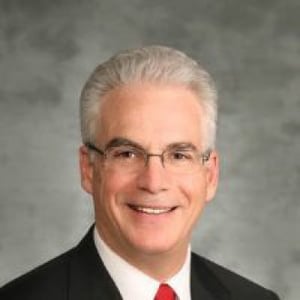
Dinsmore & Shohl LLP, Partner
Brian is chair of Dinsmore’s IP Transactions and Licensing Group. He is a past president of the Licensing Executives Society (USA and Canada), Inc. (LES), the leading professional society devoted to commercial transactions and licensing of intangible property. He continues to serve LES as senior vice president for public policy. He has extensive experience in a wide variety of commercial transactions involving intangible property, and is known for creative licensing strategies to promote collaboration and resolve IP-related disputes.
He is a registered patent attorney with more than 30 years of experience before the U.S. Patent and Trademark Office and in structuring global IP portfolios and strategies. He has extensive experience in contested proceedings before the USPTO Patent Trial and Appeal Board (interferences, Inter Partes Reviews and Post Grant Reviews), as well as contested matters in federal courts and the International Trade Commission. His wide-ranging experience affords a broad, informed perspective and facilitates creative approaches to intellectual property management, licensing, and enforcement.
In addition to his leadership of LES, Brian served on the LES Board of Directors 2007 – 2018. In his ongoing role as senior vice president for public policy he is responsible for coordinating the society’s public policy positions, amicus briefs, and congressional outreach. He works with legislators, the executive branch, and the courts toward consistent, reliable, and prudent IP laws and policies that advance innovation and economic development. He has also served LES as trustee for education, and has long served as an author, editor, and faculty member of LES educational programs focusing on best practices in IP licensing.
He is also active in the global society, LES International (LESI). Among his various roles in LESI, he has served as co-chair of the External Relations Committee, coordinating public policy and advocacy for effective IP laws and policies among the 33 regional LES societies, and with various non-governmental organizations such as WIPO and EPO. In 2019, he received the LES International President’s Service Recognition Award.
Brian also serves as Chair of the Board of Directors of the Bayh Dole Coalition, a 501(c)(4) corporation dedicated to promoting and preserving the Bayh Dole Act. He is a member of the Founding Board of Directors of the United States Intellectual Property Alliance (USIPA), an organization dedicated to raising public awareness of, and appreciation for, the role of IP in fostering innovation for the public good; and he has served on the DC Bar Intellectual Property Section Steering Committee (2013 – 2016).
In 2016, Brian testified before the U.S. Senate Committee on Small Business and Entrepreneurship on the effects of the America Invents Act on small business and entrepreneurs in a hearing entitled “An Examination of Changes to the U.S. Patent System & Impacts on America's Small Businesses.”
With his longstanding and diverse patent practice, in both private practice and in-house, Brian advises corporate leaders and entrepreneurs in effective IP procurement practices, and in maximizing value from IP assets. He has been retained as a testifying witness in IP and licensing disputes by the U.S. Department of Justice, the U.S. Department of the Treasury, and by various private enterprises.
Brian has been acknowledged by IAM magazine as among its “IAM Strategy 300”, the world’s leading IP strategists, and among “The World's Leading Patent and Technology Licensing Lawyers.”
He earned B.S. and M.S. degrees from the Department of Chemistry, Rochester Institute of Technology, Rochester, NY; and Juris Doctor from Syracuse University, College of Law, Syracuse, NY (1986).
Brian has served his alma mater as president of the RIT Alumni Association 2005 – 2009; and now serves on the RIT Board of Trustees as a member of its Executive Committee, chair of its Student Life Committee, and vice-chair of its Committee on Trustees. In 2013, Brian was awarded RIT’s Outstanding Alumnus Award, and in 2005 he was awarded the Distinguished Alumnus Award by RIT’s College of Science.
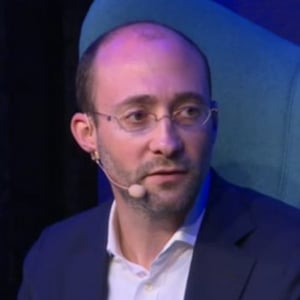
Vice President, Global Head IP Affairs, Novartis
Corey Salsberg is the Vice President of Global Head IP Affairs in Novartis. He leads the Global IP Affairs function for Novartis, a multinational Fortune Global 200 healthcare company and world leader in innovative medicines and biosimilars.
Corey is a member of the Steering Committee and founder of the WIPO-World Economic Forum Inventors Assistance Program (IAP), an innovative international program aimed at providing pro bono IP services to under-resourced inventors and small businesses in developing countries.
Furthermore, he is one of architects of the Patent Information Initiative for Medicines (Pat-INFORMED), a voluntary global online database of patent information now co-sponsored and hosted by WIPO and the International Federation of Pharmaceutical Manufacturers (IFPMA).
Globally recognized thought leader, advocate, and speaker on IP, innovation and related topics. Recent engagements include testimony before the US Senate Judiciary, keynote address at the 7th Annual IBA World Life Sciences Conference, and many others.
Corey is a Stanford University of Law School graduate and Yale University undergraduate.
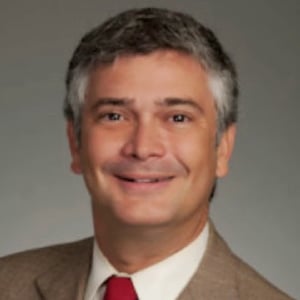
Instructor of Accounting, University of Central Florida College of Business
Professor F. E. Guerra-Pujol was born in Los Angeles, Calif., to Francisco Guerra and Oilda Pujol. He attended college at the University of California at Santa Barbara, graduating with highest honors, and received his Juris Doctorate from Yale Law School. After practicing business law for several years, Professor Guerra-Pujol began his academic career at the Pontifical Catholic University of Puerto Rico. He is currently teaching at the University of Central Florida. His areas of research include markets, property rights and the philosophy of law. He is also the author of many scholarly papers, journal articles and book chapters, including “Gödel’s Loophole,” “A Bayesian Model of Litigation” and “The Poker-Litigation Game.” You can access his work here:
https://papers.ssrn.com/sol3/cf_dev/AbsByAuth.cfm?per_id=649450

Professor of Law, Antonin Scalia Law School, George Mason University
ILYA SOMIN is Professor of Law at George Mason University and the B. Kenneth Simon Chair in Constitutional Studies at the Cato Institute. His research focuses on constitutional law, property law, democratic theory, federalism, and migration rights. He is the author of Free to Move: Foot Voting, Migration, and Political Freedom (Oxford University Press, revised and expanded edition, 2022), Democracy and Political Ignorance: Why Smaller Government is Smarter (Stanford University Press, revised and expanded second edition, 2016), and The Grasping Hand: Kelo v. City of New London and the Limits of Eminent Domain (University of Chicago Press, 2015, rev. paperback ed., 2016), coauthor of A Conspiracy Against Obamacare: The Volokh Conspiracy and the Health Care Case (Palgrave Macmillan, 2013), and co-editor of Eminent Domain: A Comparative Perspective (Cambridge University Press, 2017). Democracy and Political Ignorance has been translated into Italian and Japanese.
Somin’s work has appeared in numerous scholarly journals, including the Yale Law Journal, Stanford Law Review, Northwestern University Law Review, Georgetown Law Journal, Critical Review, and others. Somin has also published articles in a variety of popular press outlets, including the New York Times, Washington Post, Wall Street Journal, Los Angeles Times, CNN, NBC, The Atlantic, USA Today, Boston Globe, US News and World Report, South China Morning Post, National Law Journal and Reason. He has been quoted or interviewed by the New York Times, Washington Post, Wall Street Journal, Time, Newsweek, The Economist, the Christian Science Monitor, the Financial Times, The Guardian, the Associated Press, CBS, MSNBC, NPR, BBC, Reuters, the Canadian Broadcasting Corporation, the Australian Broadcasting Corporation, Radio Free Europe/Radio Liberty, Al Jazeera, and the Voice of America, among other media.
Somin’s writings have been cited in decisions by the United States Supreme Court, multiple state supreme courts and lower federal courts, and the Supreme Court of Israel. He is co-counsel for the plaintiffs in VOS Selections, Inc. v. Trump, a case challenging the constitutionality of President Trump’s “Liberation Day” tariffs. Somin has testified on the use of drones for targeted killing in the War on Terror before the US Senate Judiciary Subcommittee on the Constitution, Civil Rights, and Human Rights. In 2009, he testified on property rights issues at the United States Senate Judiciary Committee confirmation hearings for Supreme Court Justice Sonia Sotomayor. Somin writes regularly for the popular Volokh Conspiracy law and politics blog, now affiliated with Reason magazine (previously affiliated with the Washington Post from 2014 to 2017). From 2006 to 2013, he served as Co-Editor of the Supreme Court Economic Review, one of the country’s top-rated law and economics journals.
Somin has served as a visiting professor at the University of Pennsylvania Law School. He has also been a visiting professor or scholar at the Georgetown University Law Center, the University of Hamburg, Germany, the University of Torcuato Di Tella in Buenos Aires, Argentina, Uriel Reichman University in Israel, and Zhengzhou University in China. He is a University Affiliate of the Schar School of Policy and Government at George Mason University, and an affiliated faculty member of the George Mason University Institute for Immigration Research. Before joining the faculty at George Mason, Somin was the John M. Olin Fellow in Law at Northwestern University Law School in 2002-2003. In 2001-2002, he clerked for the Hon. Judge Jerry E. Smith of the U.S. Court of Appeals for the Fifth Circuit. Professor Somin earned his B.A., Summa Cum Laude, at Amherst College, M.A. in Political Science from Harvard University, and J.D. from Yale Law School.
Director of Property Rights Litigation, Pacific Legal Foundation
Robert Thomas is Pacific Legal Foundation’s director of its Property Rights practice group. He is an expert on property rights, takings, land use, and eminent domain issues.
After more than three decades in private practice in Hawaii and California representing property owners in takings, eminent domain, and land use cases, Robert joined PLF’s team of freedom fighters in 2021.
He has litigated cases in both state and federal court. As counsel for the property owners in County of Hawaii v. C&J Coupe Family Limited Partnership, he helped establish the rule that courts are not mere “rubber stamps” when a local government is taking property by eminent domain. Another case, Hamilton ex rel. Lethem v. Lethem, held that a parent’s liberty interest in raising and disciplining his child included a right to fair procedures, including notice and a judicial hearing before the family court could restrict parent-child contact.
Robert is a frequent speaker on property rights, takings, land use, and eminent domain issues nationwide. He also regularly publishes scholarly and practical articles in his area of practice, most recently including, “Hoist the Yellow Flag and Spam® Up: The Separation of Powers Limitation on Hawaii’s Emergency Authority”, 43 U. Haw. L. Rev. 71 (2020) and “Evaluating Emergency Takings: Flattening the Economic Curve”, 29 Wm. & Mary Bill Rts. J. 1145 (2021).
An elected member of the American Law Institute, Robert received his LLM, with honors, from Columbia Law School, where he was a Harlan Fiske Stone Scholar, and his JD from the University of Hawaii School of Law, where he served as editor of the Law Review. He also serves as the inaugural Joseph T. Waldo Visiting Chair in Property Rights Law at William & Mary Law School in Williamsburg, Virginia, where he teaches upper-division courses in eminent domain, land use, property rights, and property law.
When he’s not working, you might find Robert writing and publishing his blog on land use, property, and takings law, inversecondemnation.com, one of the most widely read blogs on those subjects.

Deep Dive Episode 143 – Pandemics & Patents: Do Patents Help or Hinder Medical Innovation?
George Horvath, Adam Mossoff, Camilla Hrdy
On October 28, 2020 the Federalist Society's Akron Student Chapter hosted George Horvath and Adam...
Born in the USA: A Debate on the Meaning of the Constitution’s Citizenship Clauses
John C. Eastman, Andrew J. Guilford, Eugene Volokh
Zoom Webinar ID: Webinar ID: 941 2457 3082 Please click the link below to join...
Deep Dive Episode 127 – Should the Fed Create Fedcoin, Digital Dollars, and Fed Accounts?
John Berlau, J. Christopher Giancarlo, Norbert J. Michel
As cryptocurrencies have proliferated in the private sector, central banks are now contemplating getting into...
Capital Conversations: COVID-19 and FDA; Medical, Legal, and Regulatory Perspectives
Stacy Cline Amin, Stephen Cox, Anand Shah
During the COVID-19 pandemic, the United States Food and Drug Administration (FDA) has sought to...
Arizona COVID Litigation: A Challenge to Executive Authority
Jennifer Perkins, Ilan Wurman
This month, more than 50 bar owners across Arizona filed a special action challenging Governor...
Prosecuting Dictators: The Indictment of Nicolas Maduro
Manuel A. Gomez, Roger F. Noriega, Harout J. Samra
The U.S. Department of Justice recently announced indictments of Venezuelan strongman Nicolas Maduro and several...
Book Review: The Dubious Morality of Modern Administrative Law by Richard Epstein
Richard A. Epstein, Adam White
Richard Epstein’s The Dubious Morality of Modern Administrative Law examines how the growth of the...
Deep Dive Episode 118 – Can Patents and Bayh-Dole Fuel Innovation in the Time of COVID-19?
Lesley Millar-Nicholson, Adam Mossoff, Brian O'Shaughnessy, Corey Salsberg
Activists and politicians have responded to the worldwide COVID-19 pandemic by calling for the elimination...
Topics
The Real COVID-19 Crisis
In late 2019, the first cases of COVID-19, a highly contagious disease caused by...
COVID-19 & Property Rights: Do Government Actions in Response to the Coronavirus Pandemic Create Compensable Takings?
F. E. (Enrique) Guerra-Pujol, Ilya Somin, Robert H. Thomas
Numerous businesses around the country have been shuttered by state government shutdown orders adopted to...