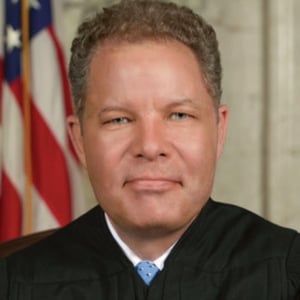

Former Justice, Wisconsin Supreme Court
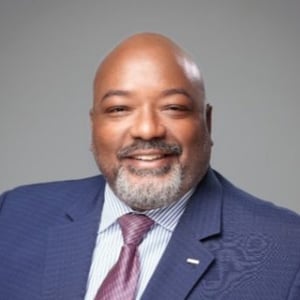
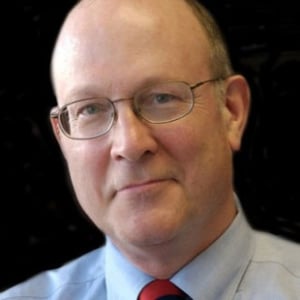
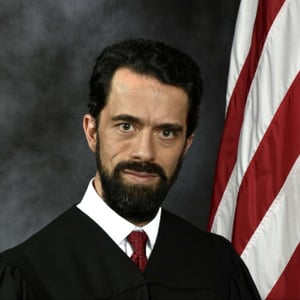
Justice Daniel Kelly was appointed to the Supreme Court by Gov. Scott Walker in 2016 to fill the vacancy created by the retirement of Justice David T. Prosser, Jr.
A native of Santa Barbara, California, Kelly grew up in Arvada, Colorado. He came to Waukesha, Wisconsin to study at Carroll College (now Carroll University), where he earned a bachelor's degree in Political Science and Spanish in 1986. He earned his law degree from Regent University School of Law in Virginia Beach, Virginia in 1991.
Before joining the Court, Kelly had 19 years' experience as a private practice attorney in Wisconsin and represented clients in cases before the Wisconsin Supreme Court and the U.S. Supreme Court. Kelly spent most of his private practice career at one of the largest and oldest law firms in Wisconsin. Subsequently, he served as vice president and general counsel for a philanthropic foundation, and then practiced law at a firm he owned and founded in Waukesha.
Early in his legal career, Kelly was a law clerk and then staff attorney for the Office of Special Masters of the U.S. Court of Federal Claims, from 1992 to 1996. He worked as a law clerk for the late Wisconsin Court of Appeals Judge Ralph Adam Fine from 1991 to 1992.
Kelly is a member of the board of advisors and past president of the Milwaukee Lawyer's Chapter of the Federalist Society. He serves on the Carroll University President's Advisory Council and is a former member of the Wisconsin Advisory Committee of the U.S. Commission on Civil Rights.
Kelly is married and has five children. He lives in North Prairie, Wisconsin.
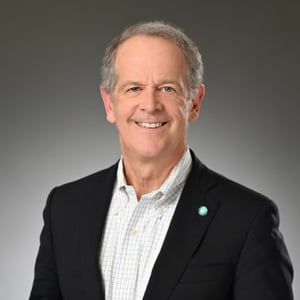
James Madison Distinguished Professor of Law and Class of 1941 Research Professor of Law, University of Virginia School of Law
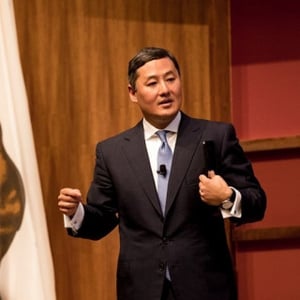
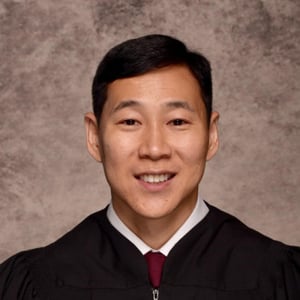
Professor John C. Harrison is the James Madison Distinguished Professor of Law and Class of 1941 Research Professor of Law at the University of Virginia School of Law. He joined the faculty at University of Virginia in 1993 as an associate professor of law after a distinguished career with the U.S. Department of Justice. His teaching subjects include constitutional history, federal courts, remedies, corporations, civil procedure, legislation and property. In 2008 he was on leave from the Law School to serve as counselor on international law in the Office of the Legal Adviser at the U.S. Department of State.
A 1977 graduate of the University of Virginia, Harrison earned his law degree in 1980 at Yale, where he served as editor of the Yale Law Journal and editor and articles editor of the Yale Studies in World Public Order. He was an associate at Patton Boggs & Blow in Washington, D.C., and clerked for Judge Robert Bork on the U.S. Court of Appeals for the District of Columbia Circuit. He worked with the Department of Justice from 1983-93, serving in numerous capacities, including deputy assistant attorney general in the Office of Legal Counsel (1990-93).
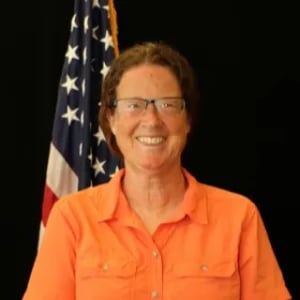
UC Foundation Assistant Professor, U.T. Chattanooga
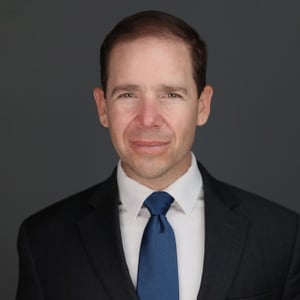
Executive Director & Secretary, American Civil Rights Project
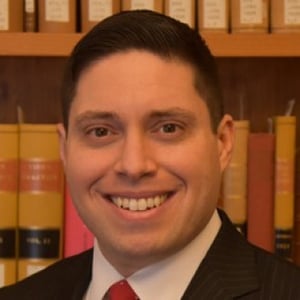
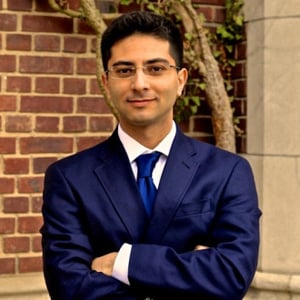
Dan Morenoff is the executive director at the American Civil Rights Project and an adjunct fellow at the Manhattan Institute.
His work focuses on protecting and, where necessary, restoring the primacy of all Americans' shared civil rights against the identitarian alternative.
Before practicing law, Morenoff served on the legislative staff of Sen. Phil Gramm (R-TX). Morenoff holds a B.A. from Columbia College of Columbia University in the City of New York and a J.D. from the University of Chicago Law School. He has also served as an officer or director of several community organizations in Dallas, Texas.
Professor Emeritus of Political Science and Professor Emeritus of Public Policy, Univ. of Maryland Baltimore County
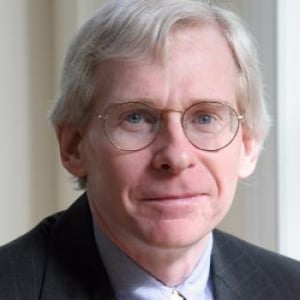
George R. La Noue is Professor Emeritus of Political Science and Professor Emeritus of Public Policy at the University of Maryland Baltimore County. He has served as a trial expert in twenty cases involving public procurement preferences. For thirty years, he was Director of the Project on Civil Rights and Public Contracts at UMBC which recently contributed 289 public contracting disparity studies to the Library of Congress. He has been a consultant to nine governments and trial expert in thirty cases where the validity of disparity studies was at issue.
Prof. La Noue can be reached by email at glanoue@umbc.edu.
James Madison Distinguished Professor of Law and Class of 1941 Research Professor of Law, University of Virginia School of Law
Professor John C. Harrison is the James Madison Distinguished Professor of Law and Class of 1941 Research Professor of Law at the University of Virginia School of Law. He joined the faculty at University of Virginia in 1993 as an associate professor of law after a distinguished career with the U.S. Department of Justice. His teaching subjects include constitutional history, federal courts, remedies, corporations, civil procedure, legislation and property. In 2008 he was on leave from the Law School to serve as counselor on international law in the Office of the Legal Adviser at the U.S. Department of State.
A 1977 graduate of the University of Virginia, Harrison earned his law degree in 1980 at Yale, where he served as editor of the Yale Law Journal and editor and articles editor of the Yale Studies in World Public Order. He was an associate at Patton Boggs & Blow in Washington, D.C., and clerked for Judge Robert Bork on the U.S. Court of Appeals for the District of Columbia Circuit. He worked with the Department of Justice from 1983-93, serving in numerous capacities, including deputy assistant attorney general in the Office of Legal Counsel (1990-93).
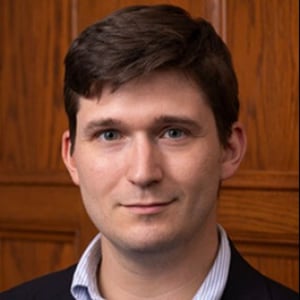
John Sullivan has specialized in disparity studies since 1990. In that time he has served as expert witness in six challenges to racial preference programs in public contracting. He has published widely on disparity studies in law and public policy journals and in the Wall Street Journal and the Christian Science Monitor. He testified before a Congressional subcommittee on the only federal government-wide disparity study.
2023 Judge Rudolph T. Randa Lecture and Award
Milwaukee Lawyers Chapter
Milwaukee, WITopics
New Civil Rights Report on FEMA Hurricane Response
Every year, by law, the United States Commission on Civil Rights publishes a statutory enforcement...
What Happened to Natural Law in American Jurisprudence?
Kody Cooper
A Review of The Decline of Natural Law: How American Lawyers Once Used Natural Law and...
Mistaken Heritage: How a Statutory Misreading Has Denied Congress’ Intended Beneficiaries Protection for Half a Century
Dan Morenoff
When the Voting Rights Act (VRA) came up for renewal of its pre-clearance mechanism for...
The Race Card in ARPA’s Food Supply Deck
George R. La Noue
It is an old aphorism that a prudent person should not watch the making of...
Topics
The Real COVID-19 Crisis
In late 2019, the first cases of COVID-19, a highly contagious disease caused by...
COVID-19, State Power, and Civil Liberties: An Historical Perspective
John C. Harrison
In 1787, there existed a well-developed body of law on the subject of infectious diseases. Over the...
COVID-19, State Power, and Civil Liberties: An Historical Perspective
TeleforumWhite House Science Squad Blasts Forensics: The Good, the Bad, and the Ugly
Fans of Law & Order or CSI Miami have been duped! Rarely does scientific evidence...
Anecdotes as Evidence: Proving Public Contracting Discrimination in a Strict Scrutiny World
John Sullivan
Note from the Editor: This article is about the use of anecdotal evidence to justify...