
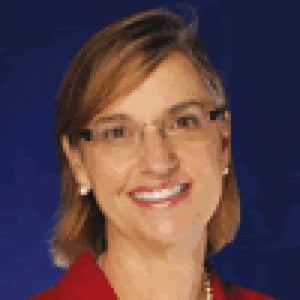
Consultant in Media Policy and Law
Jane Mago began her communications law career in 1978 as a staff attorney at the Federal Communications Commission. She stayed at the FCC for more than 26 years, serving in many high level roles, including General Counsel, Chief of Strategic Planning and Policy Analysis, Deputy Chief of the Enforcement Bureau, Chief of Staff for Commissioners Rachelle Chong and Michael Powell, and Legal Advisor to Commissioner Anne Jones. During her FCC career, she also worked as an appellate litigator defending the FCC’s decisions in such matters as Radio and TV Deregulation, Broadcast Indecency and Must-Carry Rules.
Jane joined the National Association of Broadcasters in 2004 where she stayed until retiring in October 2014 as the Executive Vice President and General Counsel. She led the NAB legal team during many significant shifts in the regulatory landscape, including two rounds of review of the broadcast ownership rules.
Jane is a member of the New York Bar. She has an extensive background in appellate litigation and expertise in Constitutional issues (particularly First Amendment matters), FCC ownership rules, political broadcasting, EEO, administrative law, enforcement and licensing matters.
Jane holds BA, MA and JD degrees from the State University of New York at Buffalo.
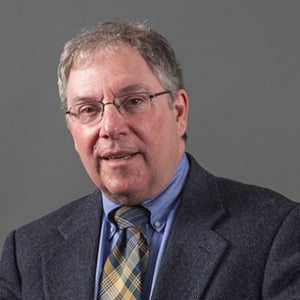
Professor Emeritus of Law, Antonin Scalia Law School, George Mason University
In 1994, Professor of Law Michael I. Krauss became the law school's first recipient of the university's "Teacher of the Year" award for his engaging and challenging approach in the classroom. Born in the United States but raised in Canada, Professor Krauss speaks legalese in two languages. He earned his B.A. cum laude from Carleton University, his LL.B. summa cum laude from the Université de Sherbrooke, and his LL.M. from Yale Law School, where he was a Commonwealth Scholar. He was Columbia University's Law and Economics Fellow in 1981. He has been teaching at George Mason since 1987 and also has taught at the law schools of Seattle University, the University of Toronto, and the Université de Sherbrooke.
Hired as a law clerk by Justice Louis-Philippe Pigeon of Canada's Supreme Court, Professor Krauss practiced law for Quebec City's largest law firm before entering academia. He also served for five years on Québec's Human Rights Commission. A Salvatori Fellow of the Heritage Foundation and an academic fellow of the Foundation for the Defense of Democracies, Professor Krauss sits on the advisory boards of several think tanks. He served as president of the Virginia Association of Scholars and on the Board of Governors of the Education Section of the Virginia State Bar, and is currently a member of the Board of Governors of the National Association of Scholars.
Professor Krauss teaches Torts, Legal Ethics and Jurisprudence, and has a strong interest in national security issues. His research on torts and ethics is nationally known. He co-authored the first edition of Legal Ethics in a Nutshell in May 2003. This book digests the Model Rules in an engaging and often critical fashion. The second edition was published in 2006. Professor Krauss is now under contract with West Publications to produce an innovative textbook on Products Liability in late 2008.
Professor Krauss received his B.A. cum laude from Carleton University, his LL.B. summa cum laude from the Université de Sherbrooke, and his LL.M. from Yale Law School.
J.D. Candidate, George Mason University

Laurence H. Silberman Chair in Constitutional Governance, American Enterprise Institute; Executive Director, Antonin Scalia Law School’s C. Boyden Gray Center for the Study of the Administrative State
Adam J. White is the Laurence H. Silberman Chair in Constitutional Governance and senior fellow at the American Enterprise Institute, where he focuses on the Supreme Court and the administrative state. He also directs the Antonin Scalia Law School’s C. Boyden Gray Center for the Study of the Administrative State.
He writes on regulation and constitutional government for a variety of publications. He practiced law in Washington, D.C., after clerking for the D.C. Circuit's Judge David Sentelle. He also has been chairman of the ABA's Administrative Law Section.
In 2021, he served on the Presidential Commission on the Supreme Court of the United States, where he criticized “Court packing” and other efforts to restructure the Supreme Court.
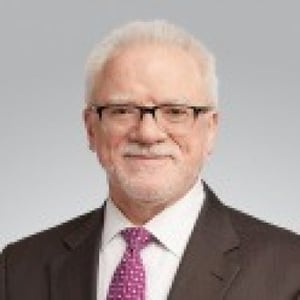
Partner, Williams & John LTD
David L. Applegate is a partner of Williams & John Ltd., where he chairs the firm's intellectual property practice group and is a member of the commercial litigation practice group. He focuses his practice on patent, trademark, copyright, trade secret, unfair competition, and business litigation and arbitration, and on U. S. Supreme Court and related amicus brief practice.
Mr. Applegate is a Fellow of Litigation Counsel of America, the Intellectual Property Institute, and the Diversity Law Institute; a Senior Master Member of the Richard Linn American Inn of Court; a Past President of the Chicago Lincoln American Inn of Court; and a Legal Policy Advisor to The Heartland Institute. He is "AV Preeminent" peer review rated by Martindale-Hubbell, reflecting the highest peer recognition for both ethical standards and legal ability, and has been named by his peers for inclusion in Illinois Leading Lawyers and IllinoisSuper Lawyers in both commercial and intellectual property litigation for decades.
Throughout his career, Mr. Applegate has represented corporations and individuals as both plaintiffs and defendants in state and federal litigation at the trial and appellate levels. He has tried multiple cases to verdict in both jury and bench trials nationwide and has argued appeals in the Illinois appellate courts and the U.S. Court of Appeals for the Seventh and Federal Circuits; his amicus brief was cited twice in the U. S. Supreme Court’s 5-4 majority opinion in the Janus case. Mr. Applegate also has extensive commercial arbitration and private mediation experience in both national and international dispute resolution forums, and is a former member of the Chicago International Dispute Resolution Association. In 2001, the U. S. District Court for the Northern District of Illinois and the Chicago Chapter of the Federal Bar Association recognized him for his outstanding individual commitment to pro bono service to indigent clients throughout the Northern District of Illinois.
In addition to his legal practice, Mr. Applegate has written and spoken frequently on matters of law and public policy, including on both local and national television and radio. He is an avid collector and amateur historian of original comic strip and editorial cartoon art, and has written extensively in that field as well for over three decades.
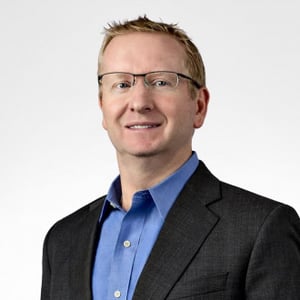
Partner, Jackson Walker
Arthur offers clients a winning combination of trial and appellate experience gained as a federal prosecutor and more than 20 years of experience in handling patent, copyright, trademark, and trade secrets litigation.
While his practice concentrates on intellectual property litigation, Arthur also has significant experience in internal investigations, False Claims Act suits, partnership and breach of fiduciary duty, breach of contract, and employment litigation. Arthur also has represented clients testifying before Congressional committees.
Arthur writes and speaks frequently on topics ranging from the case against Boston bomber Dzhokhar Tsarnaev to patent litigation reform.
Prior to joining Michael Best, Arthur served as an Assistant United States Attorney in the Southern District of New York, where he was the lead prosecutor in criminal trials, including federal intellectual property crimes. He also argued numerous appeals.
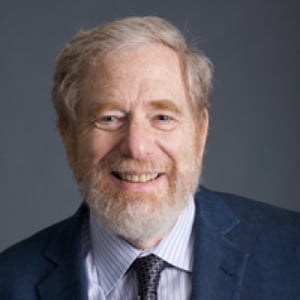
Carmack Waterhouse Professor of Constitutional Law, Georgetown Law
After graduating from Harvard Law School in 1971, Professor Seidman served as a law clerk for J. Skelly Wright of the D.C. Circuit and U.S. Supreme Court Justice Thurgood Marshall. He then was a staff attorney with the D.C. Public Defender Service until joining the Law Center faculty in 1976. He teaches a variety of courses in the fields of constitutional and criminal law. He is co-author of a constitutional law casebook and the author of many articles concerning criminal justice and constitutional law. His most recent books are Silence and Freedom (Stanford 2007), Our Unsettled Constitution: A New Defense of Constitutionalism and Judicial Review (Yale 2001) and Equal Protection of the Laws (Foundation 2002).
Counsel, The Judicial Confirmation Network
Wendy Long is legal counsel to the Judicial Confirmation Network. Until March 2005, she was a litigation partner in the New York office of Kirkland & Ellis LLP. Wendy was a law clerk to U.S. Supreme Court Justice Clarence Thomas and to Judge Ralph Winter of the U.S. Court of Appeals for the Second Circuit in New York. She is a graduate of Northwestern University School of Law, cum laude and Order of the Coif, where she was articles editor of the Northwestern University Law Review, and of Dartmouth College. She previously served as a press secretary in the U.S. Senate, for former U.S. Senator Bill Armstrong (R-Colo.) and former U.S. Senator Gordon Humphrey (R-N.H.).
Director, William E. and Carol G. Simon Center on Religion and t, The Witherspoon Institute
Matthew J. Franck is the Director of the William E. and Carol G. Simon Center on Religion and the Constitution at the Witherspoon Institute in Princeton, New Jersey. He is Professor Emeritus of Political Science at Radford University, in Virginia, where he taught constitutional law, American politics, and political philosophy from 1989 to 2010, and was Chairman of the Department of Political Science from 1995 to 2010. He is also a Visiting Lecturer in Politics at Princeton University.
Professor Franck earned his B.A. in political science from Virginia Wesleyan College, and his M.A. and Ph.D. in political science from Northern Illinois University. He has taught at Marquette University and Southern Illinois University, and was a Fulbright Professor of American Studies at the Graduate School of International Studies, Yonsei University, Seoul, Korea, in 1998, and a Visiting Fellow in the James Madison Program in American Ideals and Institutions at Princeton University, in 2008-09.
He is the author, editor of, or contributor to several books on religious freedom, constitutional law, the Supreme Court, and American politics, and has published essays and reviews in numerous academic journals, as well as many general-interest articles and commentaries in newspapers, magazines, and online, including the Washington Post, First Things, National Review, and Public Discourse, the daily online essay publication of the Witherspoon Institute.
Professor Franck is a regular blogger on National Review Online’s “Bench Memos” page and the “First Thoughts” page at First Things magazine, and has appeared numerous times on Bill Bennett’s “Morning in America” radio show, as well as on CNN, Fox News Channel, NPR, and Relevant Radio.
Partner, Goldstein & Russell PC
Thomas C. Goldstein has argued 28 cases before the Supreme Court, including matters involving federal patent law, class action practice, labor and employment, and disability law. In addition to practicing law, Tom teaches Supreme Court Litigation at Harvard Law School and taught at Stanford Law School as well from 2004-2012.
In the Supreme Court and elsewhere, Mr. Goldstein litigates and advises clients in a broad range of issues. For example, he regularly litigates and lectures on questions of federal patent law. Mr. Goldstein frequently advises clients, litigates, and consults on legislative matters relating to the First Amendment. And he regularly represents parties in questions relating to the game of poker, including its lawfulness as a matter of federal and state law. Tom's clients include plaintiffs, criminal defendants, and major corporations such as BG Group, Home Depot, Humana, IMS Health, Nike, PokerStars, POM Wonderful, and Pemex.
In addition to practicing law, Tom founded, and is the publisher of, SCOTUSblog, which in 2013 became the only weblog ever to receive the Peabody Award for excellence in electronic media. It also won the 2013 Society of Professional Journalists (Sigma Delta Chi) prize for deadline reporting for its coverage of the Supreme Court’s healthcare ruling. In 2010, it became the first blog to receive the American Bar Association’s Silver Gavel Award for fostering the American public’s understanding of law and the legal system.
Tom has been repeatedly recognized as a leading member of the bar. In 2010, The National Law Journal named him one of the 40 most influential lawyers of the decade; Tom notably was ten years younger than any other law firm partner listed. Legal Times named him one of the “90 Greatest Washington Lawyers of the Last 30 Years” and praised him for “transforming the practice” of law before the Supreme Court. He is also included in both of the National Law Journal’s most recent lists of the nation’s 100 most influential lawyers (2006 and 2013). He has been repeatedly recognized as one of the nation’s top appellate advocates. GQ Magazine named him one of the 50 most powerful people in Washington, D.C.
Tom is an elected Fellow of the American Academy of Appellate Lawyers, and a member of the American Law Institute. He is involved with a number of professional organizations. He serves as the vice chair of the Amicus Committee of the ABA’s Intellectual Property Section and previously served for two years on the ABA’s Standing Committee on Amicus Curiae Briefs. In those capacities, he has authored several Supreme Court amicus briefs for the ABA. In addition, Tom serves on the boards of advisors of the Washington Legal Foundation and the Georgetown University Supreme Court Institute.
Before founding Goldstein & Howe in 1999, Tom practiced law at Boies & Schiller, LLP and at Jones Day Reavis & Pogue. Tom left the firm he founded in 2006 to create the Supreme Court Practice at Akin, Gump, Strauss, Hauer & Feld, where he also was a partner and principal co-chair of the firmwide litigation practice. He returned to what is now Goldstein & Russell in 2011.
Tom clerked for the Honorable Patricia M. Wald of the U.S. Court of Appeals for the D.C. Circuit.
Associate Professor of Law, University of Colorado Law School
Scott Moss joined CU Law School in 2007 after six years as an attorney in New York City and three years as a professor at Marquette Law School, where he was the 2007 recipient of the James D. Ghiardi Faculty Award for Outstanding Teaching, Student Body Support, and Scholarship. In New York, Professor Moss was a law clerk to U.S. District Judge Constance Baker Motley and then a plaintiff's employment lawyer at Outten & Golden LLP, the largest plaintiff-side employment law practice in the country, where he litigated individual and class action cases of discrimination, harassment, and minimum/overtime wage violations. He also has argued and briefed appeals of employment cases and has undertaken pro bono projects such as First Amendment right-to-protest litigation with the New York Civil Liberties Union, low-income worker clinics in lower Manhattan, and court-sponsored mediations for pro se litigants. Professor Moss received his J.D. (magna cum laude) in 1998 from Harvard Law School, where he was a Senior Editor of the Harvard Civil Rights-Civil Liberties Law Review; his B.A. (Economics) and M.A. (Media Studies) are from Stanford University. Professor Moss's research interests have included employment law, discrimination, constitutional law, various civil procedure rules, and economic analysis of all of the preceding topics.
B.A., Stanford
M.A., Stanford
J.D., Harvard

Judge, United States Court of Appeals, Eighth Circuit
David Stras became a judge on the United States Court of Appeals for the Eighth Circuit on January 31, 2018. Before serving on the Eighth Circuit, Judge Stras was an Associate Justice of the Minnesota Supreme Court, a position he occupied from July 1, 2010 until his appointment to the Eighth Circuit.
Prior to becoming a judge, Stras was a member of the faculty of the University of Minnesota Law School from 2004 through 2010. He taught and wrote in the areas of federal courts and jurisdiction, constitutional law, criminal law, and law and politics.
Judge Stras received his Bachelor of Arts degree, with highest distinction, in 1995 and his Master of Business Administration in 1999, both from the University of Kansas. He also received his law degree from the University of Kansas School of Law in 1999, where he served as Editor-in-Chief of the Criminal Procedure Edition of the Kansas Law Review.
Following law school, Stras clerked for The Honorable Melvin Brunetti of the United States Court of Appeals for the Ninth Circuit and then for The Honorable J. Michael Luttig of the United States Court of Appeals for the Fourth Circuit.
From 2001 to 2002, he practiced white-collar criminal and appellate litigation with the Washington, D.C., office of Sidley Austin Brown & Wood. Following his year in practice, he clerked for The Honorable Clarence Thomas of the Supreme Court of the United States.
Distinguished Senior Fellow and Antonin Scalia Chair in Constitutional Studies, Ethics and Public Policy Center
Edward Whelan is a Distinguished Senior Fellow of the Ethics and Public Policy Center and holds EPPC’s Antonin Scalia Chair in Constitutional Studies. He is the longest-serving President in EPPC’s history, having held that position from March 2004 through January 2021.
Mr. Whelan directs EPPC’s program on The Constitution, the Courts, and the Culture. His areas of expertise include constitutional law and the judicial confirmation process. As a contributor to National Review Online’s Bench Memos blog, he has been a leading commentator on nominations to the Supreme Court and the lower courts and on issues of constitutional law. He has written essays and op-eds for leading newspapers—including the Wall Street Journal, the New York Times, and the Washington Post—opinion journals, and academic symposia and law reviews. The National Law Journal has named Mr. Whelan among its “Champions and Visionaries” in the practice of law in D.C.
Mr. Whelan is co-editor of three volumes of Supreme Court Justice Antonin Scalia’s work: Scalia Speaks: Reflections on Law, Faith, and Life Well Lived (Crown Forum, 2017), a New York Times bestselling collection of speeches by Justice Scalia; On Faith: Lessons from an American Believer (Crown Forum, 2019), a collection of Justice Scalia’s writings on faith and religion; and The Essential Scalia: On the Constitution, the Courts, and the Rule of Law (Crown Forum, 2020), a collection of Justice Scalia’s views on legal issues.
Mr. Whelan, a lawyer and a former law clerk to Justice Scalia, has served in positions of responsibility in all three branches of the federal government. From just before the terrorist attacks of September 11, 2001, until joining EPPC in 2004, Mr. Whelan was the Principal Deputy Assistant Attorney General for the Office of Legal Counsel in the U.S. Department of Justice. In that capacity, he advised the White House Counsel’s Office, the Attorney General and other senior DOJ officials, and departments and agencies throughout the executive branch on difficult and sensitive legal questions. Mr. Whelan previously served on Capitol Hill as General Counsel to the U.S. Senate Committee on the Judiciary. In addition to clerking for Justice Scalia, he was a law clerk to Judge J. Clifford Wallace of the U.S. Court of Appeals for the Ninth Circuit.
In 1981 Mr. Whelan graduated with honors from Harvard College and was inducted into Phi Beta Kappa. He received his J.D. magna cum laude in 1985 from Harvard Law School, where he was a member of the Board of Editors of the Harvard Law Review.
For more on Mr. Whelan’s background, see this interview.

Dr. John Eastman is the former Henry Salvatori Professor of Law & Community Service and former Dean at Chapman University's Dale E. Fowler School of Law, where he had been a member of the faculty since 1999, specializing in Constitutional Law, Legal History, and Property. He is a founding director of the Center for Constitutional Jurisprudence, a public interest law firm affiliated with the Claremont Institute that he founded in 1999. He has a Ph.D. in Government from the Claremont Graduate School and a J.D. from the University of Chicago Law School, and a B.A. in Politics and Economics from the University of Dallas. He serves as the Chairman of the Board of the National Organization for Marriage.
Prior to joining the Chapman law faculty, Dr. Eastman served as a law clerk to the Honorable Clarence Thomas, Associate Justice, Supreme Court of the United States, and to the Honorable J. Michael Luttig, Judge, United States Court of Appeals for the Fourth Circuit and practiced law with the national law firm of Kirkland & Ellis. Dr. Eastman has also represented numerous clients in important constitutional law matters and has argued before the Supreme Court. On behalf of the Claremont Institute Center for Constitutional Jurisprudence, he has participated as amicus curiae before the Supreme Court of the United States, U.S. Courts of Appeals, and State Supreme Courts in more than one hundred cases of constitutional significance, including Boy Scouts of America v. Dale, Zelman v. Simmons-Harris (the school vouchers case), Kelo v. New London, Ct. (eminent domain), and Van Orden v. Perry (the 10 Commandments case). He has also appeared as an expert legal commentator on numerous television and radio programs, including C-SPAN, Fox News, PBS, NewsHour, and The O'Reilly Factor.
Counsel to the Firm, Cascadia Cross-Border Law
Margaret Stock focuses her practice on immigration and citizenship law. She is a nationally known expert on immigration and national security laws, and has testified regularly before Congressional committees on immigration, homeland security, and military matters. As a retired Lieutenant Colonel in the Military Police, U.S. Army Reserve, Margaret has extensive experience with U.S. military issues. She has also worked as a professor at the United States Military Academy at West Point, and she has served as an adjunct instructor at the University of Alaska. Margaret served as a member of the American Bar Association Commission on Immigration from 2008-2012. She regularly authors articles on military-related immigration issues, and is well-versed on “parole in place” for military family members and the Military Accessions Vital to the National Interest (“MAVNI”) Program. Margaret authored the book Immigration Law & the Military, which was published by the American Immigration Lawyers Association in 2012.
Vice President, Edwin Meese III Institute for the Rule of Law, Advancing American Freedom
John G. Malcolm oversees Advancing American Freedom’s work to increase understanding of the Constitution and the rule of law as Vice President of the organization’s Edwin Meese III Institute for the Rule of Law. Malcolm brings to the challenge a wealth of legal expertise and experience in both the public and private sectors.
Prior to joining Advancing American Freedom in 2025, Malcolm was the Vice President of the Institute for Constitutional Government and the Director of the Meese Center for Legal and Judicial Studies at the Heritage Foundation. Prior to joining Heritage in 2012, Malcolm was general counsel at the U.S. Commission on International Religious Freedom, as well as a distinguished practitioner in residence at Pepperdine Law School. From 2004 to 2009, Malcolm was executive vice president and director of worldwide anti-piracy operations for the Motion Picture Association.
Malcolm served as a deputy assistant attorney general in the Department of Justice’s Criminal Division from 2001 to 2004, where he oversaw sections on computer crime and intellectual property, domestic security, child exploitation and obscenity, and special investigations. Immediately prior to that, he was a founding partner in the Atlanta law firm of Malcolm & Schroeder, LLP.
From 1990 to 1997, Malcolm was an assistant U.S. attorney in Atlanta, assigned to the fraud and public corruption section, and also an associate independent counsel, investigating fraud and abuse in the Department of Housing and Urban Development. He was honored with the Director’s Award for Superior Performance for his work in connection with the successful prosecution of Walter Leroy Moody Jr., who assassinated an 11th Circuit judge and the head of the Savannah chapter of the NAACP.
A graduate of Harvard Law School and Columbia College, Malcolm began his career as a law clerk to a federal district court judge and a federal appellate court judge, and as an associate at the Atlanta-based law firm of Sutherland, Asbill & Brennan (new Eversheds Sutherland).
Malcolm, who resides in Washington, D.C., serves on the Board of Trustees of the Washington National Opera and is a Senate-confirmed member of the Board of Directors of the Legal Services Corporation, the largest funder of civil legal aid in the United States.
Former Adjunct Professor of Law; former Special Counsel to the President; former federal prosecutor, Georgetown Law (ret.)
Bill Otis is a former Adjunct Professor of Law at Georgetown University, a one-time federal prosecutor, and a former Special White House Counsel for President George H. W. Bush. After graduating from Stanford Law School, he started his career in the Criminal Division of the Justice Department, then became chief of appeals for the US Attorney's Office for the Eastern District of Virginia. In the 1980's he served on the Department's "Train the Trainer" team, which taught US Attorneys Offices across the county how to implement the then-new Sentencing Reform Act. He has held several posts in the federal government, including Special Assistant to the Secretary of Energy and Counselor to the head of the Drug Enforcement Administration, in addition to the White House post. He has testified before Congress on issues in criminal procedure, illegal drugs, the US Sentencing Commission, and the death penalty, and has given numerous media interviews on those and other subjects. He currently teaches a seminar at Georgetown Law titled "Conservatism in Law in America" with his wife, Federalist Society co-founder Lee Liberman Otis.
William K. Townsend Professor of Law, Yale Law School
Nicholas R. Parrillo is Townsend Professor of Law at Yale, with a secondary appointment as Professor of History. His research and teaching focus on administrative law and government bureaucracy and extend to legal history, remedies, and legislation. He has received the ABA’s award for the year’s best scholarship in administrative law and the Law and Society Association’s Hurst Prize for the year’s best book in legal history.
Parrillo’s Yale Law Journal article finding new originalist evidence of broad congressional delegations to agencies was discussed in the Solicitor General’s winning brief in the Supreme Court’s latest nondelegation case and in the en banc 5th Circuit opinion in that case. His Harvard Law Review article on how the judiciary handles the federal government’s disobedience to court orders has been discussed in The Washington Post, The Wall Street Journal, and The New York Times. Parrillo also authored a study that provided the empirical basis for best practices adopted by the Administrative Conference of the United States (ACUS) on the federal government’s ubiquitous but controversial use of guidance documents. Peer scholars at Jotwell, in selecting the “best new scholarship” in law, selected each of these three publications (one of them twice). Parrillo’s most recent article, invited for GW’s annual administrative law issue, reveals and analyzes dramatic variation among industries in their willingness to sue their federal health-and-safety regulators.
Parrillo has testified before Congress, been quoted by the Supreme Court, is a senior fellow of ACUS, and has been an instructor at the New York Historical Society’s graduate institute and an invited speaker before the 2nd Circuit Judicial Conference, the U.S. Department of Justice (in 2019 and again in 2024), the ACLU’s national legal staff, and the Federalist Society’s national convention (two times). He is a recipient of the Law School’s annual teaching award.
Jacob D. Fuchsberg Professor of Law, New York University School of Law
Professor Friedman is one of the country’s leading authorities on constitutional law and the federal courts. He is a prolific scholar, working at the intersections of law, politics and history. Friedman teaches a wide variety of courses including Constitutional Law, Federal Courts, and Criminal Procedure. He writes extensively about judicial review, constitutional law and theory, federal jurisdiction and judicial behavior. His scholarship appears regularly in the nation’s top law and peer-edited reviews. He is the author of widely-recognized The Will of the People: How Public Opinion Has Influenced the Supreme Court and Shaped the Meaning of the Constitution (Farrar, Strauss & Giroux, 2009), which examines the history of the relationship between popular opinion and the Supreme Court, from 1776 to the present. Along with his co-author Stephen Burbank, Friedman co-edited and contributed to Judicial Independence at the Crossroads: An Interdisciplinary Approach, which questions common assumptions about the nature of judicial independence and how it can be protected. The book has been cited and relied upon countless times by scholars and policymakers alike. Professor Friedman is a frequent contributor to the nation's leading journals, both on-line and print. His work has appeared in The New York Times, Salon, The Los Angeles Times, Politico andThe New Republic, among others.
Professor Friedman is a frequent speaker at events of all sorts. Given the interdisciplinary nature of his work, Professor Friedman regularly appears at conferences in law, political science and history. He is a founder and co-convener of the “roughly biennial” Constitutional Theory Conference. He organizes many multi-disciplinary conferences, including one on Modeling Law, and another – done under the auspices of the American Constitution Society – on Reconstruction: America’s Second Founding. He presents papers regularly at home and abroad. He has been a visiting scholar and lecturer at the Rockefeller Foundation Study and Conference Center in Bellagio, Italy, the Groupe d’Etudes et de Recherches sur law Justice Constitutionnelle Aix-en-Provence, Sciences-Po in Aix-en-Provence, and Hong Kong University.
Professor Friedman regularly serves as a litigator or litigation consultant in a variety of matters in the federal and state courts. He has represented a wide range of clients, both public and private. Notably, he represents both civil liberties claimants and state and local governments. He has been active in the areas of reproductive rights, the jurisdictional allocation of cases between the federal and state courts, and the proper scope of the federal government’s commerce power. He has filed a number of amicus briefs with the U.S. Supreme Court.
Actively engaged in a range of important service activities, at NYU Professor Friedman created the Academic Careers Program and founded and is now co-director of the Furman Academic Program. Both programs are dedicated to preparing young scholars for academic careers. In the past he was extensively involved with the American Judicature Society, was President of the Tennessee Civil Liberties Union, served on the Board of the State and Local Legal Center, and on the steering committee of New York University’s Institute for Law and Society. He recently completed a term as Vice Dean of New York University School of Law.
Professor Friedman graduated from the University of Chicago and received his law degree magna cum laude from Georgetown University Law Center. He clerked for the Honorable Phyllis A. Kravitch of the U.S. Court of Appeals for the 11th Circuit and also worked as a litigation associate at Davis, Polk & Wardwell in Washington D.C. He was a professor at Vanderbilt Law School before joining the NYU faculty in 2000. In 1995 he won the Clarence Darrow Award from the ACLU of Tennessee for his work in defense of civil liberties.
J.D., Georgetown University Law Center, 1982
B.A., University of Chicago, 1978
Adjunct Professor, Fordham University School of Law
Ms. McAvoy is an attorney, a former federal prosecutor and former in-house counsel for financial institutions. She specializes in Anti-Money Laundering and Terrorist Financing issues. She is an adjunct professor at Fordham Law School and heads Fordham’s Adjunct Faculty Committee. Ms. McAvoy has been politically active as well, including having run for the position of Comptroller of the City of New York as Rudy Giuliani’s running mate. She also was on John McCain’s NY Steering Committee and was Co-Chair of NY Women for McCain during his most recent presidential bid.
She obtained a Bachelor of Arts degree from St. John’s University in 1984, where she graduated summa cum laude as valedictorian and was NYS debate champion. Ms. McAvoy received a Juris Doctor degree from Fordham Law School in 1987 where she participated as a member of its National Moot Court team.
Ms. McAvoy began practicing law as a litigation associate at Mudge Rose Guthrie & Ferdon. After that she became an Assistant U.S. Attorney in the EDNY’s Civil and Criminal Divisions, where she received awards from both the U.S. Customs Service and the U.S. Department of Agriculture. She practiced in US District Court, the US Court of Appeals for the 2d Circuit, Surrogate’s Court and US Bankruptcy Court. Civil cases she handled included employment discrimination, forfeitures, medical malpractice, suits brought against government employees, Social Security disability, personal injury and tax cases. The criminal matters she handled included money laundering, bank robbery, mail fraud, illegal weapons sales, insurance fraud, credit card fraud, Food Stamp fraud, counterfeiting and narcotics violations.
After leaving the US Attorney’s Office, Ms. McAvoy became Senior Attorney at Morgan Stanley, where she was in charge of anti-money laundering prevention efforts and the reporting of suspicious activity. She also handled insider trading matters, fraud issues, general securities litigation and criminal matters. She received an award from the U.S. Secret Service for her work and as a member of the Securities Industry Ad Hoc Bank Secrecy Act Group she assisted the U.S. Treasury Department and the Federal Reserve Board in drafting suspicious activity regulations relating to the securities industry.
Ms. McAvoy thereafter joined Citigroup, where she was Senior Legal Counsel for Citigroup Corporate Security and Investigative Services, providing legal advice on fraud issues, corporate security, investigations and anti-money laundering compliance for Citigroup’s businesses, including Citibank, Travelers Insurance, Salomon Smith Barney and Primerica Financial Services.
Since 2000 Ms. McAvoy has been doing private consulting work for the financial industry. She has conducted extensive training for banks, securities firms, the NASD and law enforcement. She has also participated in internal corporate investigations and look-backs at financial institutions, has helped institutions develop appropriate policies and procedures and has acted as an expert consulting witness for law firms. She also continues to teach at Fordham Law School as an adjunct professor and remains active in politics.
Ms. McAvoy has provided legal, political and business commentary on a variety of television networks and on radio. She is a regular commentator on foxnews.com’s Strategy Room and has appeared on various programs on the Fox Cable News Channel including The O’Reilly Factor. She is a legal contributor for the Grinder Show on NY 970 The Apple, a nationally broadcast radio show which also streams live on the internet.

Disparate Regulation of Television Broadcasters Will Harm Local Communities
Jane Mago
Note from the Editor: This article is a discussion about the Federal Communication Commission’s rules...
Smarter Sentencing Act
TeleforumWorse Than You Think: Cincinnati's Underfunded Pensions and an Analysis of Potential Reforms
Cincinnati, OhioPennsylvania Supreme Court Permits Waivers for Future Negligence by Third Parties
Michael I. Krauss, Samantha Rocci
On April 25, 2013, in Bowman v. Sunoco, a divided Pennsylvania Supreme Court held that...
Astrue v. Capato - Post-Argument SCOTUScast
Adam White
On March 19, 2012 the Supreme Court heard oral argument in Astrue v. Capato. The question...
The Future of Social Security
Yale Student Chapter
New Haven, CTWhat’s Right (and Wrong) with the Confirmation Process . . . And Elena Kagan
New York, New YorkHealth Care Reform: Implications for the Intellectual Property Community
David L. Applegate, Arthur Gollwitzer
Brought to you by the Intellectual Property Practice Group The Federalist Society takes no position on...
The Sotomayor Nomination, Part II
Louis Michael Seidman, Wendy Long, Matthew J. Franck, Thomas C. Goldstein, Scott Moss, David R. Stras, Edward Whelan
On May 26, President Obama nominated Sonia Sotomayor to replace David Souter as an Associate...
Five Questions on Immigration Reform
John C. Eastman, Margaret D. Stock
Below, two Federalist Society members pose and then answer questions about the Immigration Reform measures...