

Professor of Law, South Texas College of Law Houston
Josh Blackman is a national thought leader on constitutional law and the United States Supreme Court. Josh’s work was quoted during two presidential impeachment trials. He has testified before Congress and advises federal and state lawmakers. Josh regularly appears on TV, including NBC, CBS, ABC, Fox, and the BBC. Josh is also a frequent guest on NPR and other syndicated radio programs. He has published commentaries in the New York Times, Wall Street Journal, Washington Post, and leading national publications.
Since 2012, Josh has served as a professor at the South Texas College of Law Houston. He holds the Centennial Chair of Constitutional Law. Josh is an Adjunct Fellow at the Manhattan Institute. Josh has written more than seven dozen law review articles that have been cited more than a thousand times. Josh was selected as the Jurist of the Year by the Texas Journal of Law & Public Policy, received the inaugural Meese III Originalism Award, and was awarded the Inaugural Joseph Story Award. Josh was selected by Forbes Magazine for the “30 Under 30” in Law and Policy. Josh is the President of the Harlan Institute, and founded FantasySCOTUS, the Internet’s Premier Supreme Court Fantasy League. He blogs at the Volokh Conspiracyand posts@JoshMBlackman.

Justice, Fifth District Court of Appeals
Justice John Browning was appointed to the Fifth District Court of Appeals by Governor Greg Abbott on August 24, 2020. Before joining the Court, he was a trial and appellate lawyer for thirty-one years as a partner with large national law firms and his own small law firm. While in private practice, Justice Browning’s vast experience encompassed personal injury and wrongful death; product liability; commercial litigation; intellectual property disputes; employment matters; consumer protection and DTPA cases; professional liability; health care; class action litigation; defamation and media law; and cyberliability and data privacy. He is admitted in both Texas and Oklahoma, as well as before the U.S. District Courts for the Northern, Southern, Eastern, and Western Districts of Texas, the Western District of Oklahoma, the U.S. Court of Appeals for the Fifth Circuit, and the U.S. Supreme Court.
Justice Browning received bachelors degrees in History and Comparative Literature in 1986 from Rutgers University, where he was a National Merit Scholar, Phi Beta Kappa, and Henry Rutgers Scholar. He received his J.D. in 1989 from the University of Texas School of Law, where he received awards for legal writing and advocacy. A former varsity tennis player and teaching professional, Justice Browning won tournaments at the local, state, national, and international levels. During his years in private practice, Justice Browning was rated “AV Preeminent” (5.0 out of 5.0) by Martindale-Hubbell, designated a “Texas Super Lawyer” from 2005-2020, and named to a variety of “Best Lawyers” lists and trial lawyer honorary societies.
Justice Browning has a long record of leadership and service to the bar, and has served as Chair of the Texas Bar Journal Editorial Advisory Board, as Chair of the Computer & Technology Section of the State Bar, as an appointed member of the Professional Ethics Committee, as a member of the State Bar Grievance Committee, as a member of the State Bar Jury Service Committee, and as President of the Rockwall County Bar Association. He also serves on the UT Law Alumni Association Executive Committee. Justice Browning is an elected member of the American Law Institute, a board member of SCRIBES, and a member of the Board of Trustees of the Texas Supreme Court Historical Society.
A noted legal author and CLE speaker, Justice Browning has received the Bar’s highest honors for legal writing, legal ethics, and public service. These include the State Bar of Texas Presidents’ Certificate of Merit; the Texas Bar Foundation’s Dan Rugeley Price Memorial Award; the Lola Wright Foundation Award for lifetime contributions to legal ethics; the Texas Bar College’s Patrick Nester Award for Outstanding Achievement in Continuing Legal Education; the Texas Bar College’s Jim Bowmer Professionalism Award; the Texas Bar Foundation’s Outstanding Law Review Article of the Year Award; the Texas Bar College’s Outstanding CLE Article of the Year Award; the Houston Bar Foundation’s Outstanding Legal Article of the Year Award; the DRI’s G. Duffield Smith Outstanding Publication of the Year Award; the J.L. Turner Foundation Award for Contributions to Legal History; and the Burton Award for Distinguished Achievement in Legal Writing (2009, 2010, 2012, 2014). Justice Browning is the author of four law books, more than forty law review articles, and hundreds of other articles on legal subjects.
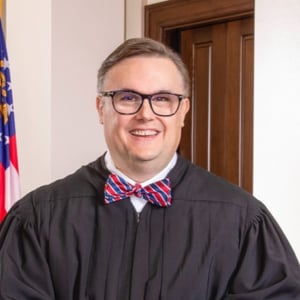
Presiding Judge, Georgia Court of Appeals
Presiding Judge Stephen Louis A. Dillard was appointed as the 73rd judge of the Court of Appeals of the State of Georgia on November 1, 2010 by Governor Sonny Perdue. Prior to his appointment, Judge Dillard was in private practice with James, Bates, Pope & Spivey in Macon, serving as chairman of the firm’s appellate practice group. Judge Dillard was elected and then reelected by his fellow Georgians in 2012, 2018, and 2024. On July 1, 2017, Judge Dillard was sworn in as the 30th Chief Judge of the Court of Appeals of Georgia for a two-year term that ended on June 30, 2019. He currently serves as the presiding judge of the Court’s Fourth Division, and will begin serving as the presiding judge of the Court’s Third Division in 2026.
Judge Dillard was born in Nashville, Tennessee on November 13, 1969. He attended and graduated from Hillwood High School in Nashville, Tennessee; Samford University (B.A. 1992); Mississippi College School of Law (J.D., cum laude, 1996); and Duke University School of Law (LL.M., Judicial Studies, 2025). In college, Judge Dillard was a member of The Sigma Chi Fraternity and Omicron Delta Kappa. He was also given the Evelyn Meadows Historical Essay Award, as well as the William McMillian Rogers Colonial Dames Overall Essay Award, for “The Tempting of America to be America: Alexander Hamilton and the Federalist Papers.” During law school, Judge Dillard was a member of the Moot Court Board and received the Judge Robert G. Gillespie Outstanding Achievement in Appellate Advocacy Award, as well as the American Jurisprudence Award in Appellate Advocacy. He also served as president of the Mississippi College Chapter of the Federalist Society for Law and Public Policy Studies.
After graduating from law school, Judge Dillard joined the Macon law firm of Stone and Baxter, where he practiced from 1996 until 2001. In September 2001, he left private practice for a two-year period to serve as a law clerk at the U.S. Court of Appeals for the Seventh Circuit for Judge Daniel A. Manion (who was appointed by President Ronald W. Reagan in 1986 and served until 2022). In September 2003, Judge Dillard joined James Bates as of counsel, specialized in appellate practice and complex litigation, and served as chairperson of the firm’s appellate practice group. While in practice, he received an AV® Preeminent™ Peer-Review Rating from Martindale-Hubbell and was named by Super Lawyers as one of Georgia’s “rising stars.”
Additionally, Judge Dillard was appointed by Governor Sonny Perdue to the Judicial Nominating Commission and the Public Defender Selection Panel for the Macon Judicial Circuit. He has published scholarly essays in the Encyclopedia of Civil Liberties, the Encyclopedia of Great American Judges, the Encyclopedia of Great American Lawyers, Judicature, the Green Bag Almanac & Reader, the Journal of Appellate Practice & Process, as well as two articles in the Mercer Law Review regarding the inner workings and culture of the Court of Appeals of the State of Georgia. He was also a participating lawyer with the Criminal Justice Act Appellate Panel for the U.S. Court of Appeals for the Eleventh Circuit, handling pro bono publico appeals for indigent individuals. Judge Dillard is a member of the State Bar of Georgia’s Appellate Practice and Judicial Sections, the Macon Bar Association, the Atlanta Bar Association, the Lawyers Club of Atlanta, the Saint Thomas More Society, the Judge Clarence Cooper American Inn of Court, the Logan E. Bleckley American Inn of Court, the William Augustus Bootle American Inn of Court, the Federalist Society for Law and Public Policy Studies, the Palaver Club of Macon, and the Samford Bulldog Club. He also has served as a mentor for The Appellate Project, which is “focused on empowering law students of color to pursue appellate work.”
Since joining the Court of Appeals, Judge Dillard has spoken to numerous organizations, participated in countless state and national seminars, held a wide variety of leadership positions, and received many awards. In 2025, one of Judge Dillard’s opinions—his concurrence in Board of Commissioners of Brantley County v. Brantley County Development Partners LLC et al.—was selected by The Green Bag Almanac and Reader as one of its works of “exemplary writing.” Judge Dillard was also named as the Milvain Chair in Advocacy by the University of Calgary Law Faculty that year, and he is the first American jurist and 43rd person to ever receive this honor. In 2024, Judge Dillard was appointed by Chief Justice Michael P. Boggs as co-chair of the Supreme Court of Georgia’s Study Committee on Legal Regulatory Reform, joined The Legal Accountability Project’s Advisory Board, and also gave the “Last Senior Lecture” to the Samford University Class of 2024. In 2023, Judge Dillard began serving his second term on Samford University’s Board of Overseers, and started the L.L.M. program for Judicial Studies at the Duke University School of Law. In 2022, he began serving on the Communications Committee of the Council of Chief Judges of the State Courts of Appeal. In 2021, Judge Dillard was given the “Significant Sig” award by The Sigma Chi Fraternity (one of its highest honors), which “recognizes those alumni members whose exemplary achievements in their fields of endeavor have brought great honor and prestige to the name of Sigma Chi.” He also began serving that year on the Dean Search Committee for Samford University’s Cumberland School of Law, and completed his work on that committee in April 2022. In 2020, Judge Dillard began serving his second two-year term as the president of the Samford University Alumni Association, a three-year term on Samford University’s Board of Overseers, as an advisor to the Pi Chapter of The Sigma Chi Fraternity at Samford University, and as a member of the Samford University Presidential Search Committee and the Samford University Task Force on Racial Justice. He was also given the Distinguished Judicial Service Award that year by the Young Lawyers Division of the State Bar of Georgia for the second time in his career. In 2019, Judge Dillard began teaching Appellate Practice and Procedure at Mercer University Law School and joined the National Advisory Board for The Constitutional Sources Project (“ConSource”), an organization dedicated to increasing access to and understanding of the United States Constitution and its history and creation. He was also named that year as the “Tweeter Laureate” of Georgia by the Georgia House of Representatives, as one of Atlanta’s 500 most powerful leaders by Atlanta Magazine, and as “Best Social Mediator” by the Fulton County Daily Report. In 2018, Judge Dillard began serving his first two-year term as president of the Samford University Alumni Association, as well as a member of the Samford University Athletic Director’s Cabinet. He also began his service that year as a member of the Supreme Court of Georgia’s Justice for Children Committee. In 2017, Judge Dillard was named Samford University’s “Alumnus of the Year,” which is the highest honor the university bestows on its graduates. In 2016, Judge Dillard began serving a two-year term as president of Samford University’s Atlanta Alumni chapter. He was also appointed that year as the co-chairperson of the Georgia Judicial Council’s Strategic Plan Standing Committee, and as a member of the Council’s Standing Committee on Technology. Finally, he was also named Samford University’s 2016 “Featured Alumnus” for the Howard College of Arts and Sciences. In 2015, Judge Dillard was appointed by Governor Nathan Deal to the Georgia Appellate Jurisdiction Review Commission. He was also appointed that year to serve on the Georgia Judicial Council, and as the chairperson of the Court Reporting Matters Committee. In 2014, Judge Dillard was named the “State Judge of the Year” by his alma mater, the Mississippi College School of Law, for his outstanding judicial service; and he also received the “Fastcase 50” award, which honors leaders in the world of law, scholarship, and legal technology. In 2013, Judge Dillard was awarded the Distinguished Judicial Service Award by the Young Lawyers Division of the State Bar of Georgia, recognizing his outstanding service on the bench and commitment to improving the practice of law. In 2012, Judge Dillard was appointed to the Code of Judicial Conduct Review Committee by Chief Judge John J. Ellington, and he also began serving as the special consultant to the Georgia High School Mock Trial Committee.
Among his many accomplishments in leadership at the Court of Appeals, Judge Dillard restructured the Court’s Central Staff Attorney Office, advocated for and implemented livestreaming and archiving of the Court’s oral arguments, helped design and shepherd a complete overhaul of the Court’s operational structure, had the primary responsibility for overseeing the Court’s move to the Nathan Deal Judicial Center (during his time as chief judge), drafted numerous Court rules (including the rule abolishing “physical precedent”) and IOM revisions, and lead the implementation of the Court’s transition to its first typography change in twenty years (i.e., the “Equity” font). Finally, he created, designed, and continues to oversee the Judge Herbert E. Phipps Fellowship program in partnership with Morehouse College.
Judge Dillard is married to the former Krista McDaniel, and they have three children. He is a parishioner of Saint Joseph Catholic Church and the former president of the School Board for Saint Joseph’s Catholic School.
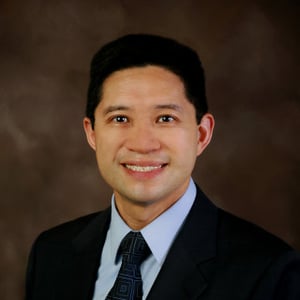
Founder, Original Jurisdiction
David Lat is a lawyer turned writer. He publishes Original Jurisdiction, a newsletter on Substack about law and legal affairs, and he writes for newspapers and magazines, including the New York Times, Washington Post, and Wall Street Journal. Prior to launching Original Jurisdiction, David founded Above the Law, one of the nation's most widely read legal news websites, and Underneath Their Robes, a popular blog about federal judges that he wrote under a pseudonym. He is also the author of a novel set in the world of the federal courts, Supreme Ambitions. Before entering the media world, David worked as a federal prosecutor in Newark, New Jersey; a litigation associate at Wachtell, Lipton, Rosen & Katz, in New York; and a law clerk to Judge Diarmuid F. O’Scannlain of the U.S. Court of Appeals for the Ninth Circuit. David graduated from Harvard College and Yale Law School, where he served as an editor of the Yale Law Journal.
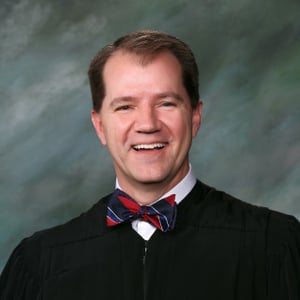
Judge, U.S. Court of Appeals, Fifth Circuit
Don Willett serves on the United States Court of Appeals for the Fifth Circuit. Before joining the federal bench, he served 13 years on the Supreme Court of Texas. His career spans decades of public service, including roles as legal counsel to a Texas Attorney General, a Texas Governor, a U.S. Attorney General, and the President of the United States. Raised by a heroic, widowed mom in a town of 32 people, Judge Willett is his family’s first college graduate. He earned a triple-major B.B.A. from Baylor University (where he serves on the Board of Regents) and three degrees from Duke University (where he served on the Board of Visitors): a J.D. with honors, an M.A. in political science, and an LL.M. in judicial studies. After law school, he clerked on the Fifth Circuit and practiced at Haynes and Boone before entering public service. Judge Willett writes and speaks widely on law, judging, and civic life. He serves on the Advisory Board of the School of Civic Leadership at the University of Texas at Austin, was the longtime editor-in-chief of Judicature: The Scholarly Journal for Judges, teaches at various law schools, and publishes in leading law journals and the popular press. He has received more than a dozen Green Bag honors for “exemplary legal writing,” was named Distinguished Jurist of the Year by the Texas Review of Law & Politics and is a member of the American Law Institute and a Life Fellow of the American, Texas, and Austin Bar Foundations. A former rodeo bull rider and professional drummer, Judge Willett was named “Tweeter Laureate of Texas” in 2015. He is the namesake of Don R. Willett Elementary School—home of mighty Willett Wranglers—located barely a mile from where the Willett family doublewide once stood. He and his radiant wife, Tiffany have three children—Jacob, Shane-David, and Geneviève—plus the family pup, Amicus.
Professor of Law, South Texas College of Law Houston
Josh Blackman is a national thought leader on constitutional law and the United States Supreme Court. Josh’s work was quoted during two presidential impeachment trials. He has testified before Congress and advises federal and state lawmakers. Josh regularly appears on TV, including NBC, CBS, ABC, Fox, and the BBC. Josh is also a frequent guest on NPR and other syndicated radio programs. He has published commentaries in the New York Times, Wall Street Journal, Washington Post, and leading national publications.
Since 2012, Josh has served as a professor at the South Texas College of Law Houston. He holds the Centennial Chair of Constitutional Law. Josh is an Adjunct Fellow at the Manhattan Institute. Josh has written more than seven dozen law review articles that have been cited more than a thousand times. Josh was selected as the Jurist of the Year by the Texas Journal of Law & Public Policy, received the inaugural Meese III Originalism Award, and was awarded the Inaugural Joseph Story Award. Josh was selected by Forbes Magazine for the “30 Under 30” in Law and Policy. Josh is the President of the Harlan Institute, and founded FantasySCOTUS, the Internet’s Premier Supreme Court Fantasy League. He blogs at the Volokh Conspiracyand posts@JoshMBlackman.
Justice, Fifth District Court of Appeals
Justice John Browning was appointed to the Fifth District Court of Appeals by Governor Greg Abbott on August 24, 2020. Before joining the Court, he was a trial and appellate lawyer for thirty-one years as a partner with large national law firms and his own small law firm. While in private practice, Justice Browning’s vast experience encompassed personal injury and wrongful death; product liability; commercial litigation; intellectual property disputes; employment matters; consumer protection and DTPA cases; professional liability; health care; class action litigation; defamation and media law; and cyberliability and data privacy. He is admitted in both Texas and Oklahoma, as well as before the U.S. District Courts for the Northern, Southern, Eastern, and Western Districts of Texas, the Western District of Oklahoma, the U.S. Court of Appeals for the Fifth Circuit, and the U.S. Supreme Court.
Justice Browning received bachelors degrees in History and Comparative Literature in 1986 from Rutgers University, where he was a National Merit Scholar, Phi Beta Kappa, and Henry Rutgers Scholar. He received his J.D. in 1989 from the University of Texas School of Law, where he received awards for legal writing and advocacy. A former varsity tennis player and teaching professional, Justice Browning won tournaments at the local, state, national, and international levels. During his years in private practice, Justice Browning was rated “AV Preeminent” (5.0 out of 5.0) by Martindale-Hubbell, designated a “Texas Super Lawyer” from 2005-2020, and named to a variety of “Best Lawyers” lists and trial lawyer honorary societies.
Justice Browning has a long record of leadership and service to the bar, and has served as Chair of the Texas Bar Journal Editorial Advisory Board, as Chair of the Computer & Technology Section of the State Bar, as an appointed member of the Professional Ethics Committee, as a member of the State Bar Grievance Committee, as a member of the State Bar Jury Service Committee, and as President of the Rockwall County Bar Association. He also serves on the UT Law Alumni Association Executive Committee. Justice Browning is an elected member of the American Law Institute, a board member of SCRIBES, and a member of the Board of Trustees of the Texas Supreme Court Historical Society.
A noted legal author and CLE speaker, Justice Browning has received the Bar’s highest honors for legal writing, legal ethics, and public service. These include the State Bar of Texas Presidents’ Certificate of Merit; the Texas Bar Foundation’s Dan Rugeley Price Memorial Award; the Lola Wright Foundation Award for lifetime contributions to legal ethics; the Texas Bar College’s Patrick Nester Award for Outstanding Achievement in Continuing Legal Education; the Texas Bar College’s Jim Bowmer Professionalism Award; the Texas Bar Foundation’s Outstanding Law Review Article of the Year Award; the Texas Bar College’s Outstanding CLE Article of the Year Award; the Houston Bar Foundation’s Outstanding Legal Article of the Year Award; the DRI’s G. Duffield Smith Outstanding Publication of the Year Award; the J.L. Turner Foundation Award for Contributions to Legal History; and the Burton Award for Distinguished Achievement in Legal Writing (2009, 2010, 2012, 2014). Justice Browning is the author of four law books, more than forty law review articles, and hundreds of other articles on legal subjects.
Presiding Judge, Georgia Court of Appeals
Presiding Judge Stephen Louis A. Dillard was appointed as the 73rd judge of the Court of Appeals of the State of Georgia on November 1, 2010 by Governor Sonny Perdue. Prior to his appointment, Judge Dillard was in private practice with James, Bates, Pope & Spivey in Macon, serving as chairman of the firm’s appellate practice group. Judge Dillard was elected and then reelected by his fellow Georgians in 2012, 2018, and 2024. On July 1, 2017, Judge Dillard was sworn in as the 30th Chief Judge of the Court of Appeals of Georgia for a two-year term that ended on June 30, 2019. He currently serves as the presiding judge of the Court’s Fourth Division, and will begin serving as the presiding judge of the Court’s Third Division in 2026.
Judge Dillard was born in Nashville, Tennessee on November 13, 1969. He attended and graduated from Hillwood High School in Nashville, Tennessee; Samford University (B.A. 1992); Mississippi College School of Law (J.D., cum laude, 1996); and Duke University School of Law (LL.M., Judicial Studies, 2025). In college, Judge Dillard was a member of The Sigma Chi Fraternity and Omicron Delta Kappa. He was also given the Evelyn Meadows Historical Essay Award, as well as the William McMillian Rogers Colonial Dames Overall Essay Award, for “The Tempting of America to be America: Alexander Hamilton and the Federalist Papers.” During law school, Judge Dillard was a member of the Moot Court Board and received the Judge Robert G. Gillespie Outstanding Achievement in Appellate Advocacy Award, as well as the American Jurisprudence Award in Appellate Advocacy. He also served as president of the Mississippi College Chapter of the Federalist Society for Law and Public Policy Studies.
After graduating from law school, Judge Dillard joined the Macon law firm of Stone and Baxter, where he practiced from 1996 until 2001. In September 2001, he left private practice for a two-year period to serve as a law clerk at the U.S. Court of Appeals for the Seventh Circuit for Judge Daniel A. Manion (who was appointed by President Ronald W. Reagan in 1986 and served until 2022). In September 2003, Judge Dillard joined James Bates as of counsel, specialized in appellate practice and complex litigation, and served as chairperson of the firm’s appellate practice group. While in practice, he received an AV® Preeminent™ Peer-Review Rating from Martindale-Hubbell and was named by Super Lawyers as one of Georgia’s “rising stars.”
Additionally, Judge Dillard was appointed by Governor Sonny Perdue to the Judicial Nominating Commission and the Public Defender Selection Panel for the Macon Judicial Circuit. He has published scholarly essays in the Encyclopedia of Civil Liberties, the Encyclopedia of Great American Judges, the Encyclopedia of Great American Lawyers, Judicature, the Green Bag Almanac & Reader, the Journal of Appellate Practice & Process, as well as two articles in the Mercer Law Review regarding the inner workings and culture of the Court of Appeals of the State of Georgia. He was also a participating lawyer with the Criminal Justice Act Appellate Panel for the U.S. Court of Appeals for the Eleventh Circuit, handling pro bono publico appeals for indigent individuals. Judge Dillard is a member of the State Bar of Georgia’s Appellate Practice and Judicial Sections, the Macon Bar Association, the Atlanta Bar Association, the Lawyers Club of Atlanta, the Saint Thomas More Society, the Judge Clarence Cooper American Inn of Court, the Logan E. Bleckley American Inn of Court, the William Augustus Bootle American Inn of Court, the Federalist Society for Law and Public Policy Studies, the Palaver Club of Macon, and the Samford Bulldog Club. He also has served as a mentor for The Appellate Project, which is “focused on empowering law students of color to pursue appellate work.”
Since joining the Court of Appeals, Judge Dillard has spoken to numerous organizations, participated in countless state and national seminars, held a wide variety of leadership positions, and received many awards. In 2025, one of Judge Dillard’s opinions—his concurrence in Board of Commissioners of Brantley County v. Brantley County Development Partners LLC et al.—was selected by The Green Bag Almanac and Reader as one of its works of “exemplary writing.” Judge Dillard was also named as the Milvain Chair in Advocacy by the University of Calgary Law Faculty that year, and he is the first American jurist and 43rd person to ever receive this honor. In 2024, Judge Dillard was appointed by Chief Justice Michael P. Boggs as co-chair of the Supreme Court of Georgia’s Study Committee on Legal Regulatory Reform, joined The Legal Accountability Project’s Advisory Board, and also gave the “Last Senior Lecture” to the Samford University Class of 2024. In 2023, Judge Dillard began serving his second term on Samford University’s Board of Overseers, and started the L.L.M. program for Judicial Studies at the Duke University School of Law. In 2022, he began serving on the Communications Committee of the Council of Chief Judges of the State Courts of Appeal. In 2021, Judge Dillard was given the “Significant Sig” award by The Sigma Chi Fraternity (one of its highest honors), which “recognizes those alumni members whose exemplary achievements in their fields of endeavor have brought great honor and prestige to the name of Sigma Chi.” He also began serving that year on the Dean Search Committee for Samford University’s Cumberland School of Law, and completed his work on that committee in April 2022. In 2020, Judge Dillard began serving his second two-year term as the president of the Samford University Alumni Association, a three-year term on Samford University’s Board of Overseers, as an advisor to the Pi Chapter of The Sigma Chi Fraternity at Samford University, and as a member of the Samford University Presidential Search Committee and the Samford University Task Force on Racial Justice. He was also given the Distinguished Judicial Service Award that year by the Young Lawyers Division of the State Bar of Georgia for the second time in his career. In 2019, Judge Dillard began teaching Appellate Practice and Procedure at Mercer University Law School and joined the National Advisory Board for The Constitutional Sources Project (“ConSource”), an organization dedicated to increasing access to and understanding of the United States Constitution and its history and creation. He was also named that year as the “Tweeter Laureate” of Georgia by the Georgia House of Representatives, as one of Atlanta’s 500 most powerful leaders by Atlanta Magazine, and as “Best Social Mediator” by the Fulton County Daily Report. In 2018, Judge Dillard began serving his first two-year term as president of the Samford University Alumni Association, as well as a member of the Samford University Athletic Director’s Cabinet. He also began his service that year as a member of the Supreme Court of Georgia’s Justice for Children Committee. In 2017, Judge Dillard was named Samford University’s “Alumnus of the Year,” which is the highest honor the university bestows on its graduates. In 2016, Judge Dillard began serving a two-year term as president of Samford University’s Atlanta Alumni chapter. He was also appointed that year as the co-chairperson of the Georgia Judicial Council’s Strategic Plan Standing Committee, and as a member of the Council’s Standing Committee on Technology. Finally, he was also named Samford University’s 2016 “Featured Alumnus” for the Howard College of Arts and Sciences. In 2015, Judge Dillard was appointed by Governor Nathan Deal to the Georgia Appellate Jurisdiction Review Commission. He was also appointed that year to serve on the Georgia Judicial Council, and as the chairperson of the Court Reporting Matters Committee. In 2014, Judge Dillard was named the “State Judge of the Year” by his alma mater, the Mississippi College School of Law, for his outstanding judicial service; and he also received the “Fastcase 50” award, which honors leaders in the world of law, scholarship, and legal technology. In 2013, Judge Dillard was awarded the Distinguished Judicial Service Award by the Young Lawyers Division of the State Bar of Georgia, recognizing his outstanding service on the bench and commitment to improving the practice of law. In 2012, Judge Dillard was appointed to the Code of Judicial Conduct Review Committee by Chief Judge John J. Ellington, and he also began serving as the special consultant to the Georgia High School Mock Trial Committee.
Among his many accomplishments in leadership at the Court of Appeals, Judge Dillard restructured the Court’s Central Staff Attorney Office, advocated for and implemented livestreaming and archiving of the Court’s oral arguments, helped design and shepherd a complete overhaul of the Court’s operational structure, had the primary responsibility for overseeing the Court’s move to the Nathan Deal Judicial Center (during his time as chief judge), drafted numerous Court rules (including the rule abolishing “physical precedent”) and IOM revisions, and lead the implementation of the Court’s transition to its first typography change in twenty years (i.e., the “Equity” font). Finally, he created, designed, and continues to oversee the Judge Herbert E. Phipps Fellowship program in partnership with Morehouse College.
Judge Dillard is married to the former Krista McDaniel, and they have three children. He is a parishioner of Saint Joseph Catholic Church and the former president of the School Board for Saint Joseph’s Catholic School.
Founder, Original Jurisdiction
David Lat is a lawyer turned writer. He publishes Original Jurisdiction, a newsletter on Substack about law and legal affairs, and he writes for newspapers and magazines, including the New York Times, Washington Post, and Wall Street Journal. Prior to launching Original Jurisdiction, David founded Above the Law, one of the nation's most widely read legal news websites, and Underneath Their Robes, a popular blog about federal judges that he wrote under a pseudonym. He is also the author of a novel set in the world of the federal courts, Supreme Ambitions. Before entering the media world, David worked as a federal prosecutor in Newark, New Jersey; a litigation associate at Wachtell, Lipton, Rosen & Katz, in New York; and a law clerk to Judge Diarmuid F. O’Scannlain of the U.S. Court of Appeals for the Ninth Circuit. David graduated from Harvard College and Yale Law School, where he served as an editor of the Yale Law Journal.
Judge, U.S. Court of Appeals, Fifth Circuit
Don Willett serves on the United States Court of Appeals for the Fifth Circuit. Before joining the federal bench, he served 13 years on the Supreme Court of Texas. His career spans decades of public service, including roles as legal counsel to a Texas Attorney General, a Texas Governor, a U.S. Attorney General, and the President of the United States. Raised by a heroic, widowed mom in a town of 32 people, Judge Willett is his family’s first college graduate. He earned a triple-major B.B.A. from Baylor University (where he serves on the Board of Regents) and three degrees from Duke University (where he served on the Board of Visitors): a J.D. with honors, an M.A. in political science, and an LL.M. in judicial studies. After law school, he clerked on the Fifth Circuit and practiced at Haynes and Boone before entering public service. Judge Willett writes and speaks widely on law, judging, and civic life. He serves on the Advisory Board of the School of Civic Leadership at the University of Texas at Austin, was the longtime editor-in-chief of Judicature: The Scholarly Journal for Judges, teaches at various law schools, and publishes in leading law journals and the popular press. He has received more than a dozen Green Bag honors for “exemplary legal writing,” was named Distinguished Jurist of the Year by the Texas Review of Law & Politics and is a member of the American Law Institute and a Life Fellow of the American, Texas, and Austin Bar Foundations. A former rodeo bull rider and professional drummer, Judge Willett was named “Tweeter Laureate of Texas” in 2015. He is the namesake of Don R. Willett Elementary School—home of mighty Willett Wranglers—located barely a mile from where the Willett family doublewide once stood. He and his radiant wife, Tiffany have three children—Jacob, Shane-David, and Geneviève—plus the family pup, Amicus.

Senior Executive Counsel, NFIB Small Business Legal Center
Elizabeth Milito serves as Senior Executive Counsel with the National Federation of Independent Business, a position she has held since March 2004. Ms. Milito came to NFIB from the U.S. Department of Veteran's Affairs where she defended the agency in employment and labor lawsuits and was responsible for training and counseling managers on fair employment and HR practices. She has an extensive background in tort, medical malpractice and employment law.
Prior to serving as an attorney at the Department of Veteran's Affairs, Ms. Milito worked as a trial attorney at Nationwide Insurance Company. At Nationwide, she completed over 100 trials to verdict. Ms. Milito was the editor of notes and comments for the Maryland Law Review at the University of Maryland School of Law where she earned her Juris Doctor degree in May of 1996. Following her education, she served as a clerk to the Honorable Alan M. Wilner on the Maryland Court of Appeals, the state's highest court.
Ms. Milito is responsible for managing litigation and amicus work for NFIB. She has testified before Congress, federal agencies, and state legislatures on the small business impact of labor and employment issues. She also comments and writes regularly on small business cases before federal and state courts. Ms. Milito frequently counsels businesses facing employment discrimination charges, wage and hour claims, wrongful termination lawsuits, and in most other areas of human resources law. She also provides and develops on-line and on-site training on a variety of employment law matters and is a frequent media spokesperson on employment and labor matters.

Chief Legal Officer, Paradigm

Manager of Tech and Innovation, Charles Koch Institute
Jesse Blumenthal manages the Technology & Innovation work of the Charles Koch Institute, focusing on emerging technology issues, digital free speech, and industries ripe for innovation.
The Charles Koch Institute and Charles Koch Foundation work to foster a national conversation on critical issues that have a strong impact on the advancement of societal well-being.

Senior Director, Government Affairs, Consumer Technology Association
Jamie Boone is the senior director of government affairs for the Consumer Technology Association, serving as an advocate for the consumer technology industry on Capitol Hill. Her core areas of policy expertise include self-driving vehicles and vehicle technology, privacy, and drones. She is a passionate thought leader on public policy for automated and connected vehicles, and has spoken at CES, SXSW, and on various policy panels across the DC area. Jamie is an experienced legislative and policy professional, having previously served as a longtime aide for Congressman Bill Shuster, last acting as his deputy chief of staff. She serves on the Board of Directors for the Women’s High Tech Coalition. Jamie earned a Bachelor of Arts from Susquehanna University in Pennsylvania before moving to Washington, D.C., where she currently lives with her husband.

Program Officer, Madison Initiative, William and Flora Hewlett Foundation
Jean Parvin Bordewich is a Program Officer for the Madison Initiative at the William and Flora Hewlett Foundation. She manages a portfolio of grants related to strengthening U.S. democracy, with a particular emphasis on the institution of Congress.
Previously, Jean spent over 20 years as a congressional staff member. Before joining Hewlett in 2014, she served for more than five years as staff director of the U.S. Senate Committee on Rules and Administration, the committee most involved in the administration of the Senate and oversight of legislative branch agencies. In that capacity, she worked on campaign finance disclosure legislation, a new law to broaden access to voting for military and overseas voters, Senate rules and regulations including filibuster reform, improving election administration, streamlining the process for confirmation of Presidential nominations, Senate operations and administration, and oversight for the Federal Election Commission and the Election Assistance Commission. She also served as staff director of the Joint Congressional Committee on Inaugural Ceremonies, which was responsible for all 2013 Presidential Inaugural events at the U.S. Capitol.
Earlier in her career, Jean was elected to three terms as a councilwoman in New York’s Hudson Valley, ran for Congress in 1998, was a delegate to two national Presidential nominating conventions, and served as chief of staff and campaign director for a member of the U.S. House of Representatives. She also has worked as a writer and editor for magazines and newspapers, and as a business executive. Since 2014, Jean has written and produced two plays in the Washington, D.C. Capital Fringe Festival, including a political drama about McCarthyism in the U.S. Senate.
She earned a bachelor’s degree in classics from Brown University and a master’s degree in business administration from The George Washington University.

Head of AI Policy, Abundance Institute
Neil Chilson is the Head of AI Policy at the Abundance Institute. Prior to this position, he served as a Senior Research Fellow at the Center for Growth and Opportunity. Chilson is a lawyer, computer scientist, and author of the book “Getting Out of Control: Emergent Leadership in a Complex World.”
Chilson was previously the senior research fellow for Technology and Innovation at Stand Together, where he guided efforts to understand and promote the legal and cultural paradigms that best enable people to discover, innovate, and improve all our lives.
Before Stand Together, Chilson was the Chief Technologist at the Federal Trade Commission, where he focused on the economics of privacy and blockchain-related issues. Previously, he was an attorney advisor to Acting FTC Chairman Maureen K. Ohlhausen. In both roles he advised Chairman Ohlhausen and worked with staff on nearly every major technology-related case, report, workshop, or other FTC proceeding since January 2014. Neil joined the FTC from telecom firm Wilkinson Barker Knauer. Neil is frequently quoted by the press and his work has appeared in numerous news outlets, including The Wall Street Journal, The Washington Post, USAToday, and Newsweek. Neil has a J.D. from The George Washington Law School, a M.S. in computer science from University of Illinois, Urbana-Champaign, and a B.S. in computer science from Harding University.
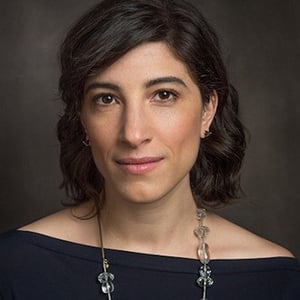
Advisor on Policy, Data for Democracy
Renée has a decade of experience in technological, marketing, and business capacities in a variety of industries including supply chain logistics, venture capital, and derivatives trading. She has served as an advisor to the State Department, Congress, and other state and federal government institutions concerned with the spread of disinformation and propaganda.

Non-resident Distinguished Senior Fellow, Technology & Innovation, R Street Institute
Mike Godwin focuses his research and writing on the areas of patent and copyright reform, surveillance reform, technology policy, freedom of expression and global internet policy.
He previously served as a senior policy advisor at Internews, advising the organization’s public-policy partners in developing and transitional democracies as part of the Global Internet Policy Project.
Mike also served as general counsel for the California-based Wikimedia Foundation, which operates Wikipedia and other collaborative projects. There, he created and directed anti-censorship, privacy, trademark and copyright strategies and policies including Wikimedia’s responses to the SOPA and PIPA initiatives.
Prior to that, Godwin was the first staff counsel for the Electronic Frontier Foundation, which he advised on a range of legal issues centered on freedom of expression and privacy rights during the accelerating growth of Internet access in the United States. His continuing career as an Internet-law thought leader has included a policy fellowship at the Center for Democracy and Technology and a research fellowship at Yale Law School.
Early in his career, he served as a reporter and later editor-in-chief of The Daily Texan. He is also a contributing editor at Reason magazine and is the originator of the widely cited “Godwin’s Law of Nazi Analogies,” which, in 2012, was added to the Oxford English Dictionary.
Godwin received his bachelor’s and juris doctor at the University of Texas at Austin.

Professor of Law and Co-Director, High Tech Law Institute, Santa Clara University School of Law
Eric Goldman is a Professor of Law, and Co-Director of the High Tech Law Institute, at Santa Clara University School of Law. Before he became a full-time academic in 2002, he practiced Internet law for 8 years in the Silicon Valley. His research and teaching focuses on Internet, IP and advertising law topics, and he blogs on these topics at the Technology & Marketing Law Blog [http://blog.ericgoldman.org]. Managing IP magazine has twice named him to a shortlist of North American “IP Thought Leaders,” and he has been named an “IP Vanguard” by the California State Bar’s IP Section.
Head of Policy, Lincoln Network
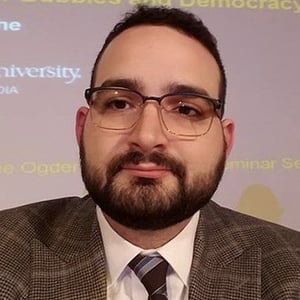
Zach Graves is head of policy at the Lincoln Network, a nonprofit that helps bridge the gap between Silicon Valley and DC. Previously, Zach was technology policy program director at the R Street Institute, where he remains an associate fellow. Prior to R Street, Zach worked at the Cato Institute and the America’s Future Foundation. He is also a fellow at the Internet Law and Policy Foundry.
He holds a master’s from the California Institute of the Arts and a bachelor’s from the University of California at Davis.
Zach is married and lives in Washington.

Program Manager, Academic & Student Programs, Mercatus Center, George Mason University
Anne Hobson is a Program Manager for Academic & Student Programs at the Mercatus Center at George Mason University. She is currently an associate fellow of technology policy at the R Street Institute and a 2017-2019 Internet Law & Policy Foundry fellow. Prior to that, Anne was a Public Policy Associate at Facebook. She is currently pursuing a PhD in economics from George Mason University and is an alum of the Mercatus Center MA Fellowship at George Mason University. She continues to focus on policy issues associated with emerging technologies, such as artificial intelligence, virtual reality, and cybersecurity. She received her B.A. in International Studies from Johns Hopkins University.
Co-Founder & Executive Director, Lincoln Network
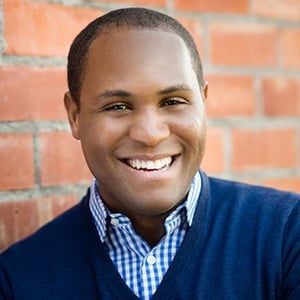
Garrett is the Co-founder & Executive Director of Lincoln, a network where liberty and technology meet.
Garrett is the former CEO/co-founder of SendHub, a venture-backed startup based in Silicon Valley. He previously served as professional staff on the U.S. Senate Foreign Relations Committee, where his oversight portfolio included Afghanistan, Pakistan and Haiti.
Johnson was graduated magna cum laude in three years with a double major in Political Science and English. Johnson was named an academic All-American in 2005 and 2006 and earned the Florida State Golden Torch Award given to the FSU student-athlete with the highest GPA.
Johnson completed graduate studies at the University of Oxford as a Rhodes Scholar and was accepted to Harvard law school. Originally from Florida, he took his undergraduate degrees from Florida State University where he was also a two time NCAA track champion.

Former President, National Religious Broadcasters
Dr. Jerry A. Johnson is the former President of the National Religious Broadcasters. He became president of NRB on November 1, 2013, succeeding Dr. Frank Wright. Before accepting that post, he was President of Criswell College, and former Dean of Academics at Midwestern Baptist Theological Seminary. He also held several positions during 14 years at Southern Baptist Theological Seminary. From 2013-2014 he served as Chairman of the Nominating Committee of the Southern Baptist Convention.

Fellow, Beeck Center, Georgetown University
Lorelei Kelly is an expert on building inclusive and informed democratic systems. She leads the Resilient Democracy Coalition (RDC) and is based at the Beeck Center for Social Impact and Innovation at Georgetown University. The coalition assesses how data, technology and new engagement methods can help build a more resilient democracy, specifically focused on Congress.
Lorelei used to lead the Smart Congress initiative with the Open Technology Institute at New America. She was also at the Stanford Center on International Conflict and Negotiation. A civil-military expert, she has spent a decade leading “Security for a New Century” a bipartisan study group in the House and Senate. Lorelei has worked with hundreds of women candidates across the USA—creating and communicating national security platforms that reflect the needs of a rapidly changing world. She attended Grinnell College, Stanford University and the Air Command and Staff College of the US Air Force. She has co-authored two books and numerous articles. Please see the list of her publications.

Chief Technology Officer of the United States, Office of Science and Technology Policy
Michael Kratsios advises President Donald J. Trump on a broad range of technology policy issues and drives United States technology priorities and strategic initiatives.
Michael has had an integral role in the development and execution of the Trump Administration’s national technology policy agenda since inauguration. Under his leadership, the White House launched initiatives in artificial intelligence, quantum computing, 5G and broadband communications, autonomous vehicles, commercial drones, STEM education, and advanced manufacturing.
Michael encourages the development of emerging technologies in the United States, empowers American companies to commercialize and adopt new technologies, and improves and expands access to the tools necessary for Americans to succeed in the 21st century economy. He is also responsible for aligning the development of new technologies with the Administration’s priorities, including standing up for the American worker, defending American innovations abroad, and protecting the safety and security of the American people.
Michael has represented the United States as the Head of Delegation at multiple international fora, including G7 Technology Ministerials in Italy, Canada, and France; G20 Digital Economy Ministerials in Argentina and Japan; and the OECD Ministerial Council Meeting in Paris. Prior to joining the White House, Michael was a Principal at Thiel Capital. Michael graduated from Princeton University and served as a Visiting Scholar at Beijing’s Tsinghua University.
On August 1, 2019, the U.S. Senate unanimously confirmed Michael as the fourth Chief Technology Officer of the United States.

President and Founder, International Center for Law & Economics
Geoffrey A. Manne is the president and founder of the International Center for Law and Economics (ICLE), a nonprofit, nonpartisan research center based in Portland, Oregon. He is also a distinguished fellow at Northwestern Law School’s Searle Center on Law, Regulation, & Economic Growth. In April 2017 he was appointed by FCC Chairman Ajit Pai to the FCC’s Broadband Deployment Advisory Committee, and he recently served for two years on the FCC’s Consumer Advisory Committee.
Mr. Manne earned his JD and AB degrees from the University of Chicago and is an expert in the economic analysis of law, specializing in competition, telecommunications, consumer protection, intellectual property, and technology policy.
Prior to founding ICLE, Manne was a law professor at Lewis & Clark Law School. From 2006-2009, he took a leave from teaching to develop Microsoft’s law and economics academic outreach program. Manne has also served as a lecturer in law at the University of Chicago Law School and the University of Virginia School of Law. He practiced antitrust law and appellate litigation at Latham & Watkins, clerked for Hon. Morris S. Arnold on the 8th Circuit Court of Appeals, and worked as a research assistant for Judge Richard Posner. He was also once (very briefly) employed by the FTC.
Mr. Manne’s publications have appeared in numerous journals including the Journal of Competition Law and Economics, the Harvard Journal of Law and Technology, the Supreme Court Economic Review, and the Arizona Law Review, among others. With former FTC Commissioner, Joshua Wright, Manne is the editor of a volume from Cambridge University Press entitled, Competition Policy and Intellectual Property Law Under Uncertainty: Regulating Innovation. Manne has also testified on several occasions before Congress and at the FCC and FTC, and he regularly files written comments and amicus briefs on key antitrust, IP, and telecommunications issues. His analysis is frequently published in popular print and broadcasting outlets such as the Wall Street Journal, Wired, Foreign Affairs, NPR, and Bloomberg, among others.
Manne is a member of the American Law and Economics Association, the Canadian Law and Economics Association, and the Society for Institutional & Organizational Economics. He blogs at Truth on the Market (www.truthonthemarket.com) (of which he is also the co-founder), is a contributor at WIRED, and tweets at @geoffmanne. His scholarly publications are available at http://ssrn.com/author=175541.

Founding Partner, Floodgate Capital
Mike Maples, Jr is a Partner at Floodgate. He has been on the Forbes Midas List since 2010 and was also named one of “8 Rising Stars” by FORTUNE Magazine. Before becoming a full-time investor, Mike was involved as a founder and operating executive at back-to-back startup IPOs, including Tivoli Systems (IPO TIVS, acquired by IBM) and Motive (IPO MOTV, acquired by Alcatel-Lucent.)
Some of Mike’s investments include Twitter, Twitch.tv, ngmoco, Weebly, Chegg, Bazaarvoice, Spiceworks, Okta, and Demandforce.
Mike is known for coining the term “Thunder Lizards,” which is a metaphor derived from Godzilla that describes the tiny number of truly exceptional companies that are wildly disruptive capitalist mutations. Mike likes to think of himself as a hunter of the “atomic eggs” that beget these companies.

General Partner, Bullpen Capital
Paul is the founder of four companies including Ahpah Software (a computer security firm acquired by InterTrust); Tribe (one of the world’s first social networks), and Aggregate Knowledge (a big data advertising attribution company acquired in 2014 by Neustar). Paul’s early online gaming innovations in multi-player user experience from almost 20 years ago are the inspiration for several of the modern social gaming offerings. He is the holder of over a dozen core patents covering social networking and big data.
Prior to forming Bullpen, he was an active angel investor and personally invested in the first rounds of Zynga, TubeMogul, and uDemy. Paul founded Bullpen in 2010 and has led several of its key investments including FanDuel, Namely, Ipsy, SpotHero, Classy, and Airmap. Paul holds a BS in Mathematics from Lehigh University and a Masters in Computer Science from Princeton University.

Federal Affairs Manager & Executive Director for Digital Liberty, Americans for Tax Reform
Katie McAuliffe is Federal Affairs Manager at Americans for Tax Reform and Executive Director of Digital Liberty. She focuses her research and advocacy efforts on telecom/technology issues, such as spectrum allocation, internet taxation, electronic communications privacy reform, and tech/telecomm reform. In the telecom field she has experience from not only the legislative side, but the industry perspective as well. Before staffing Congressman Cliff Stearns' (R-Fla.) DC office in various capacities (Staff Assistant/Legislative Correspondent and Budget Legislative Assistant) she spent time as a radio station professional in the US and abroad. Her commentary has been published in The Hill, U.S News & World Report, Townhall.com and The Daily Caller. She received her Master of Mass Communications with a Telecommunications Policy focus from the University of Florida and her B.A. from Virginia Tech.

Legal Director, Electronic Frontier Foundation
Corynne McSherry is the Legal Director at EFF, specializing in intellectual property, open access, and free speech issues. Her favorite cases involve defending online fair use, political expression, and the public domain against the assault of copyright maximalists. As a litigator, she has represented Professor Lawrence Lessig, Public.Resource.Org, the Yes Men, and a dancing baby, among others, and one of her first cases at EFF was In re Sony BMG CD Technologies Litigation (aka the "rootkit" case). In 2015 she was named one of California's Top Entertainment Lawyers. She was also named AmLaw's "Litigator of the Week" for her work on Lenz v. Universal. Her policy work includes leading EFF’s effort to fix copyright (including the successful effort to shut down the Stop Online Piracy Act, or SOPA), promote net neutrality, and promote best practices for online expression. In 2014, she testified before Congress about problems with the Digital Millennium Copyright Act. Corynne comments regularly on digital rights issues and has been quoted in a variety of outlets, including NPR, CBS News, Fox News, the New York Times, Billboard, the Wall Street Journal, and Rolling Stone.
Prior to joining EFF, Corynne was a civil litigator at the law firm of Bingham McCutchen, LLP. Corynne has a B.A. from the University of California at Santa Cruz, a Ph.D from the University of California at San Diego, and a J.D. from Stanford Law School. While in law school, Corynne published Who Owns Academic Work?: Battling for Control of Intellectual Property (Harvard University Press, 2001).
Senior Vice President, Political and Industry Affairs, Consumer Technology Association
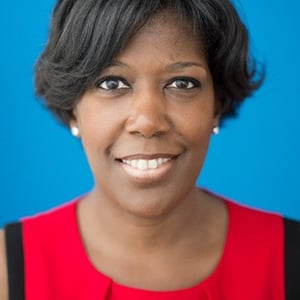
Tiffany M. Moore serves as senior vice president of political and industry affairs for the Consumer Technology Association (CTA)™. Promoted to the newly created position in 2018, Moore’s expanded role includes overseeing CTA’s U.S. jobs, and diversity and inclusion initiatives. In addition, she leads the association’s advocacy efforts on Capitol Hill on issues including communications and technology policy, patent litigation reform, strategic immigration reform and international trade, and overseeing CTA’s political action committee CTAPAC. Moore joined CTA as vice president of government and political affairs in 2015.
Before joining CTA, she served as principal of Moore Consulting and strategic consultant with TwinLogic Strategies. In these roles, Moore advised corporations, trade associations, and coalitions on how to influence technology and innovation policy before Congress and the administration.
Moore’s career in Washington, DC spans 20 years where she has served in a variety of roles including stints as a senior advisor to Congress, a corporate government relations executive, a political appointee at the Office of the U.S. Trade Representative, and a strategic consultant to tech and telecom companies and trade associations.
A proud native of Detroit, MI, Moore earned her master’s degree in international affairs from George Washington University’s Elliott School of International Affairs, and her bachelor’s degree from Western Michigan University.

Founder and Director, TechCongress
Travis Moore was the Legislative Director for Rep. Henry A. Waxman, the former Chairman and Ranking Member of the Energy and Commerce Committee, who had jurisdiction over wide-ranging matters of technology policymaking. Travis has launched a number of programs to build human capital and improve technological capacity inside and outside of Congress including:
Travis is the Co-Founder of Congress Too, a group of 1500 former Congressional staffers that brought the #MeToo movement to Capitol Hill and spearheaded a reform overhaul signed into law in late 2018.
Travis' work has been featured in The New York Times, The Washington Post, Re/code, Politico, The Hill, Roll Call and other outlets. He can be reached at Travis [at] TechCongress.io or @travismoore.

Founder and Executive Director, Code for America
Jennifer Pahlka is the founder and executive director of Code for America. She served as the U.S. Deputy Chief Technology Officer in the White House Office of Science and Technology Policy from 2013–2014, where she architected and helped found the United States Digital Service. She currently serves on the Defense Innovation Board in her personal capacity. She is known for her TED talk, Coding a Better Government, and is the recipient of several awards, including the National Democratic Institute’s Democracy Award and being named by Wired as one of the 25 people who has most shaped the past 25 years. She previously ran the Game Developers Conference, Game Developer magazine, Gamasutra.com, and the Independent Games Festival, followed by the Web 2.0 and Gov 2.0 events. She is a graduate of Yale University and lives in Oakland, California with her daughter, husband, and seven chickens.

Assistant Professor of Economics, SUNY-Purchase College
Liya Palagashvili’s research is broadly in law and economics, political economy, development economics, regulation, and entrepreneurship. She has written on topics relating to labor regulations, entrepreneurship, foreign aid agency rankings and aid effectiveness, self-governing communities, culture and transitional economies in Eastern Europe, federalism, and community policing. Currently, she is conducting interviews with tech entrepreneurs and creating a unique survey to examine early tech start-ups and the regulatory framework in their industries, as well as co-authoring a book that analyzes the policies in response to the 2008 financial crisis.
Liya is also the Law and Economics Fellow with the Classical Liberal Institute at New York University School of Law and a Senior Fellow with the Fraser Institute. She earned her PhD in economics from George Mason University in 2015, and while in graduate school, she was also a Visiting PhD Fellow with the Department of Economics at New York University.
She has published in academic journals such as the History of Political Economy, Journal of Institutional Economics, Supreme Court Economic Review, and the Journal of Law, Economics, and Policy, among others. Liya has also published in media outlets such as the Wall Street Journal, Philadelphia Inquirer, MSN, Yahoo Finance, U.S. News and World Report, and Orange County Register, among others.
In 2016, Liya was named one of the Forbes “30 under 30” in Law & Policy.
Director, Public Policy, Mozilla
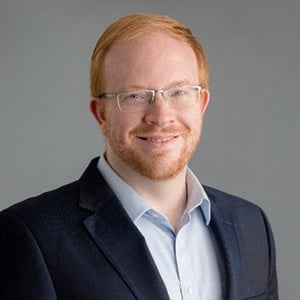
Chris Riley is the Director of Public Policy at Mozilla, working to advance the open internet through public policy analysis and advocacy, strategic planning, coalition building, and community engagement. Chris manages the global Mozilla public policy team and its active engagements in Washington, Brussels, New Delhi, and around the world. Chris works on all things internet policy, motivated by the belief that an open, disruptive internet delivers tremendous socioeconomic benefits, and that if we as a global society don't work to protect and preserve the internet's core features, those benefits will go away. The internet ecosystem isn't perfect - but we have to be smart in how we address its problems while continuing to invest in its strengths. Getting internet policy right is crucial for that future.
Prior to joining Mozilla, Chris worked as a program manager at the U.S. Department of State on Internet freedom, a policy counsel with the non-profit public interest organization Free Press, and an attorney-advisor at the Federal Communications Commission. Chris holds a Ph.D. in Computer Science from Johns Hopkins University, where he worked as a research and teaching assistant and an instructor, and a J.D. from Yale Law School, taking internships at the Electronic Frontier Foundation and the law firm Ropes & Gray. He has published scholarship on topics including innovation policy, cognitive framing, graph drawing, and distributed load balancing.

Executive Director, Mercatus Center, George Mason University
Dan Rothschild is the Executive Director of the Mercatus Center at George Mason University. He leads strategy and oversees all programs and operations for the organization.
Prior to serving in this role at Mercatus, Mr. Rothschild was director of state projects and a senior fellow with the R Street Institute. He joined R Street in October 2013 after two years as the first-ever director of external affairs and coalitions at the American Enterprise Institute. Previously, he spent six years in a variety of policy, communications, and project management positions at the Mercatus Center. He has worked extensively with think tanks throughout the country.
His popular writing and articles and reviews have appeared in the Wall Street Journal, Reason, Weekly Standard, Roll Call, The Hill, Chicago Policy Review, Economic Affairs, and many other popular and policy publications. He was a 2012-13 National Review Institute Washington fellow. Dan has testified before the U.S. Congress and several state legislatures on tax and fiscal policy, government reform, and disaster recovery policy.
Rothschild has a bachelor’s degree from Grinnell College, a master’s degree from the University of Manchester, and a master’s degree in public policy from the Gerald R. Ford School of Public Policy at the University of Michigan.

Vice President, Glen Echo Group
As Vice President at Glen Echo Group, Ellen Satterwhite helps clients formulate policy positions and tell their stories with good one-liners backed by solid data. As a co-author of the FCC’s National Broadband Plan, Consumer Policy Advisor to the Commission and freelance consultant, her work has been written about in Huffington Post, AllThingsD, CNet, Geekwire, GigaOm and CivSource. Previously, Ellen served as Program Director for Gig.U, supporting communities seeking gigabit speeds.
Satterwhite earned a Master’s in Public Affairs from UT Austin and a BA from Grinnell College. She believes brevity is the soul of wit and someone should tell that to YouTube commenters.

Policy Director, Demand Progress
Daniel leads Demand Progress and Demand Progress Education Fund’s efforts on issues that concern governmental transparency/accountability/reform, civil liberties/national security, and promoting an open internet.
He co-founded the Congressional Data Coalition, which brings together organizations from across the political spectrum to advocate for a tech-savvy Congress. Daniel directs the Advisory Committee on Transparency, which supports the work of the Congressional Transparency Caucus, and is a fellow at CodeX, the Stanford Center for Legal Informatics. His new website, EveryCRSReport, recently won a ‘le hackie’ award from D.C. Legal Hackers.
In 2016 Daniel was named to the FastCase 50 and in 2013 Daniel was named among the 'top 25 most influential people under 40 in gov and tech' by FedScoop. He is a nationally recognized expert on federal transparency, accountability, and capacity and has testified before Congress and appeared on NPR, C-SPAN, and other news outlets.
He previously worked as policy director at CREW; policy counsel at the Sunlight Foundation; and as a legislative attorney with the Congressional Research Service. Daniel graduated cum laude from Emory University School of Law.

Managing Director, Econ One
Hal Singer is an expert in antitrust, consumer protection, and regulation. He has researched, published, and testified on competition-related issues in a wide variety of industries, including media, pharmaceuticals, sports, and finance. He has extensive experience providing expert economic and policy advice to regulatory agencies in the United States and Canada, as well as before congressional committees.
Dr. Singer is also a Senior Fellow at the George Washington Institute of Public Policy and an Adjunct Professor at Georgetown University, McDonough School of Business, where he teaches advanced pricing to MBA candidates. In 2018, the American Antitrust Institute honored Dr. Singer with an antitrust enforcement award for his work in the Lidoderm antitrust litigation.

Chairman, Anduril Industries and Partner, Founders Fund
Trae Stephens is Co-Founder and Chairman of Anduril Industries, and additionally a Partner at Founders Fund.
Trae was a senior in high school on 9/11 and was inspired to attend Georgetown University’s School of Foreign Service focusing on Arabic and Security Studies, later serving as a computational linguist building enterprise solutions to Arabic/Persian name matching and data enrichment within the United States Intelligence Community.
After his time in the Intelligence Community, Trae joined as an early employee at Palantir Technologies, where he led teams focused on growth in the intelligence/defense space as well as international expansion, helping large organizations solve their hardest data analysis problems. He was also an integral part of the product team, leading the design and strategy for new product offerings. He simultaneously served as an adjunct faculty member at Georgetown University.
Trae has also served in the office of then Congressman Rob Portman and in the Political Affairs Office at the Embassy of Afghanistan in Washington, D.C. immediately following the installation of Hamid Karzai’s transitional government.

Director of Research, American Economic Liberties Project
Matt Stoller is a public intellectual who writes about the American anti-monopoly
tradition. He is the author of the Simon and Schuster book Goliath: The Hundred Year
War Between Monopoly Power and Democracy. Stoller is the Director of Research at
the American Economic Liberties Project. He publishes an email newsletter called BIG.
Stoller is a former policy advisor to the Senate Budget Committee, and worked in the House of Representatives on the Dodd–Frank Wall Street Reform Act.
He has lectured on competition policy and media at Columbia University, Harvard Law, Duke Law, Bertelsmann Foundation, Vrije Universiteit Brussel, West Point and the National Communications Commission of Taiwan. His writing has appeared in the Washington Post, the New York Times, Fast Company, Foreign Policy, the Guardian, Vice, The American Conservative, and the Baffler.
He has also produced for MSNBC and starred in a short-lived television show on FX called Brand X with Russell Brand.

President, TechFreedom
Berin Szoka serves as President of TechFreedom. Previously, he was a Senior Fellow and the Director of the Center for Internet Freedom at The Progress & Freedom Foundation. Before joining PFF, he was an Associate in the Communications Practice Group at Latham & Watkins LLP, where he advised clients on regulations affecting the Internet and telecommunications industries. Before joining Latham's Communications Practice Group, Szoka practiced at Lawler Metzger Milkman & Keeney, LLC, a boutique telecommunications law firm in Washington, and clerked for the Hon. H. Dale Cook, Senior U.S. District Judge for the Northern District of Oklahoma. Szoka received his Bachelor's degree in economics from Duke University and his juris doctor from the University of Virginia School of Law, where he served as Submissions Editor of the Virginia Journal of Law and Technology. He is admitted to practice law in the District of Columbia and California (inactive).

Senior Fellow, R Street Institute
Prior to R Street, Adam spent 12 years as a senior fellow at the Mercatus Center at George Mason University. Before the Mercatus Center, he served as the president of the Progress and Freedom Foundation. Adam has also worked for the Adam Smith Institute, the Heritage Foundation and the Cato Institute.
Adam has published 10 books on a wide range of topics, including online child safety, internet governance, intellectual property, telecommunications policy, media regulation and federalism.
In 2008, Adam received the Family Online Safety Institute’s “Award for Outstanding Achievement.”

Co-Founder and Co-CEO, Institute for Progress
Caleb Watney is the co-founder and co-CEO of the Institute for Progress.
Caleb manages the metascience and immigration policy teams at IFP. His research focuses on policy levers the U.S. could use to rebuild state capacity and increase long-term rates of innovation.
Previously, Caleb worked as the director of innovation policy at the Progressive Policy Insitute, a technology policy fellow at the R Street Institute, and a graduate research fellow at the Mercatus Center. His commentary has been published in The Washington Post, The Atlantic, Politico, Lawfare, and the National Review. He has also been cited in the New York Times, The Economist, Vox, Ars Technica, and the National Journal. He received his master’s in economics from George Mason University and a bachelor of business administration from Sterling College.
Justice, Fifth District Court of Appeals
Justice John Browning was appointed to the Fifth District Court of Appeals by Governor Greg Abbott on August 24, 2020. Before joining the Court, he was a trial and appellate lawyer for thirty-one years as a partner with large national law firms and his own small law firm. While in private practice, Justice Browning’s vast experience encompassed personal injury and wrongful death; product liability; commercial litigation; intellectual property disputes; employment matters; consumer protection and DTPA cases; professional liability; health care; class action litigation; defamation and media law; and cyberliability and data privacy. He is admitted in both Texas and Oklahoma, as well as before the U.S. District Courts for the Northern, Southern, Eastern, and Western Districts of Texas, the Western District of Oklahoma, the U.S. Court of Appeals for the Fifth Circuit, and the U.S. Supreme Court.
Justice Browning received bachelors degrees in History and Comparative Literature in 1986 from Rutgers University, where he was a National Merit Scholar, Phi Beta Kappa, and Henry Rutgers Scholar. He received his J.D. in 1989 from the University of Texas School of Law, where he received awards for legal writing and advocacy. A former varsity tennis player and teaching professional, Justice Browning won tournaments at the local, state, national, and international levels. During his years in private practice, Justice Browning was rated “AV Preeminent” (5.0 out of 5.0) by Martindale-Hubbell, designated a “Texas Super Lawyer” from 2005-2020, and named to a variety of “Best Lawyers” lists and trial lawyer honorary societies.
Justice Browning has a long record of leadership and service to the bar, and has served as Chair of the Texas Bar Journal Editorial Advisory Board, as Chair of the Computer & Technology Section of the State Bar, as an appointed member of the Professional Ethics Committee, as a member of the State Bar Grievance Committee, as a member of the State Bar Jury Service Committee, and as President of the Rockwall County Bar Association. He also serves on the UT Law Alumni Association Executive Committee. Justice Browning is an elected member of the American Law Institute, a board member of SCRIBES, and a member of the Board of Trustees of the Texas Supreme Court Historical Society.
A noted legal author and CLE speaker, Justice Browning has received the Bar’s highest honors for legal writing, legal ethics, and public service. These include the State Bar of Texas Presidents’ Certificate of Merit; the Texas Bar Foundation’s Dan Rugeley Price Memorial Award; the Lola Wright Foundation Award for lifetime contributions to legal ethics; the Texas Bar College’s Patrick Nester Award for Outstanding Achievement in Continuing Legal Education; the Texas Bar College’s Jim Bowmer Professionalism Award; the Texas Bar Foundation’s Outstanding Law Review Article of the Year Award; the Texas Bar College’s Outstanding CLE Article of the Year Award; the Houston Bar Foundation’s Outstanding Legal Article of the Year Award; the DRI’s G. Duffield Smith Outstanding Publication of the Year Award; the J.L. Turner Foundation Award for Contributions to Legal History; and the Burton Award for Distinguished Achievement in Legal Writing (2009, 2010, 2012, 2014). Justice Browning is the author of four law books, more than forty law review articles, and hundreds of other articles on legal subjects.
Founder, Original Jurisdiction
David Lat is a lawyer turned writer. He publishes Original Jurisdiction, a newsletter on Substack about law and legal affairs, and he writes for newspapers and magazines, including the New York Times, Washington Post, and Wall Street Journal. Prior to launching Original Jurisdiction, David founded Above the Law, one of the nation's most widely read legal news websites, and Underneath Their Robes, a popular blog about federal judges that he wrote under a pseudonym. He is also the author of a novel set in the world of the federal courts, Supreme Ambitions. Before entering the media world, David worked as a federal prosecutor in Newark, New Jersey; a litigation associate at Wachtell, Lipton, Rosen & Katz, in New York; and a law clerk to Judge Diarmuid F. O’Scannlain of the U.S. Court of Appeals for the Ninth Circuit. David graduated from Harvard College and Yale Law School, where he served as an editor of the Yale Law Journal.
Judge, U.S. Court of Appeals, Fifth Circuit
Don Willett serves on the United States Court of Appeals for the Fifth Circuit. Before joining the federal bench, he served 13 years on the Supreme Court of Texas. His career spans decades of public service, including roles as legal counsel to a Texas Attorney General, a Texas Governor, a U.S. Attorney General, and the President of the United States. Raised by a heroic, widowed mom in a town of 32 people, Judge Willett is his family’s first college graduate. He earned a triple-major B.B.A. from Baylor University (where he serves on the Board of Regents) and three degrees from Duke University (where he served on the Board of Visitors): a J.D. with honors, an M.A. in political science, and an LL.M. in judicial studies. After law school, he clerked on the Fifth Circuit and practiced at Haynes and Boone before entering public service. Judge Willett writes and speaks widely on law, judging, and civic life. He serves on the Advisory Board of the School of Civic Leadership at the University of Texas at Austin, was the longtime editor-in-chief of Judicature: The Scholarly Journal for Judges, teaches at various law schools, and publishes in leading law journals and the popular press. He has received more than a dozen Green Bag honors for “exemplary legal writing,” was named Distinguished Jurist of the Year by the Texas Review of Law & Politics and is a member of the American Law Institute and a Life Fellow of the American, Texas, and Austin Bar Foundations. A former rodeo bull rider and professional drummer, Judge Willett was named “Tweeter Laureate of Texas” in 2015. He is the namesake of Don R. Willett Elementary School—home of mighty Willett Wranglers—located barely a mile from where the Willett family doublewide once stood. He and his radiant wife, Tiffany have three children—Jacob, Shane-David, and Geneviève—plus the family pup, Amicus.

Senior Lecturer in Law, University of Chicago Law School
Following his graduation from Harvard Law School, Judge Posner clerked for Justice William J. Brennan, Jr. From 1963 to 1965, he was assistant to Commissioner Philip Elman of the Federal Trade Commission. For the next two years, he was assistant to the solicitor general of the United States. Prior to going to Stanford Law School in 1968 as Associate Professor, Judge Posner served as general counsel of the President's Task Force on Communications Policy. He first came to the University of Chicago Law School in 1969, and was Lee and Brena Freeman Professor of Law prior to his appointment in 1981 as a judge of the US Court of Appeals for the Seventh Circuit. He was the chief judge of the court from 1993 to 2000.
Judge Posner has written a number of books, including Economic Analysis of Law (9th ed., 2014); The Economics of Justice (1981); Law and Literature (3rd ed. 2009); The Problems of Jurisprudence (1990); Cardozo: A Study in Reputation (1990); The Essential Holmes (1992); Sex and Reason (1992); Overcoming Law (1995); The Federal Courts: Challenge and Reform (1996); Law and Legal Theory in England and America (1996); The Problematics of Moral and Legal Theory (1999); Antitrust Law (2d ed. 2001); Law, Pragmatism, and Democracy (2003); Catastrophe: Risk and Response (2004); Preventing Surprise Attacks: Intelligence Reform in the Wake of 9/11 (2005); How Judges Think (2008); A Failure of Capitalism: The Crisis of '08 and the Descent into Depression (2009); The Crisis of Capitalist Democracy (2010); The Behavior of Federal Judges: A Theoretical and Empirical Study of Rational Choice (coauthored with Lee Epstein and William M. Landes) (2013); and Reflections on Judging (2013). He also wrote books on the Clinton impeachment and Bush v. Gore, many articles in legal and economic journals, and book reviews in the popular press.
He has taught administrative law, antitrust, economic analysis of law, history of legal thought, conflict of laws, regulated industries, law and literature, the legislative process, family law, primitive law, torts, civil procedure, evidence, health law and economics, law and science, and jurisprudence. He was the founding editor of the Journal of Legal Studies and (with Orley Ashenfelter) the American Law and Economics Review. He is an Honorary Bencher of the Inner Temple and a corresponding fellow of the British Academy, and he was the President of the American Law and Economics Association from 1995 to 1996 and the honorary President of the Bentham Club of University College, London, for 1998. He has received honorary degrees from leading American and foreign universities, along with a number of awards, including the Thomas Jefferson Memorial Foundation Award in Law from the University of Virginia in 1994, the Marshall-Wythe Medallion from the College of William and Mary in 1998, the 2003 Research Award from the Fellows of the American Bar Foundation, the 2003 John Sherman Award from the US Department of Justice, the Learned Hand Medal for Excellence in Federal Jurisprudence from the Federal bar Council in 2005, the Thomas C. Schelling Award from the John F. Kennedy School of Government at Harvard University in 2005, and the Ronald H. Coase Medal from the American Law and Economics Association in 2010.

Thomas M. Siebel Senior Fellow, The Hoover Institution, Stanford University; Gary T. Schwartz Distinguished Professor of Law Emeritus, UCLA School of Law
Eugene Volokh is the Thomas M. Siebel Senior Fellow at the Hoover Institution (Stanford), as well as the Gary T. Schwartz Distinguished Professor of Law Emeritus and Distinguished Research Professor at UCLA School of Law. He recently retired from teaching at UCLA, after 30 years there, and is now focusing on research.
Volokh is the author of the textbooks The First Amendment and Related Statutes (8th ed. 2023), and Academic Legal Writing (5th ed. 2016), as well as over 100 academic law journal articles, mostly on First Amendment law. He is a member of The American Law Institute; the editor-in-chief of the Journal of Free Speech Law; and the creator and coauthor of The Volokh Conspiracy, a leading legal blog founded in 2002 (hosted at the Washington Post from 2014 to 2017 and now at Reason Magazine).
Judge, U.S. Court of Appeals, Fifth Circuit
Don Willett serves on the United States Court of Appeals for the Fifth Circuit. Before joining the federal bench, he served 13 years on the Supreme Court of Texas. His career spans decades of public service, including roles as legal counsel to a Texas Attorney General, a Texas Governor, a U.S. Attorney General, and the President of the United States. Raised by a heroic, widowed mom in a town of 32 people, Judge Willett is his family’s first college graduate. He earned a triple-major B.B.A. from Baylor University (where he serves on the Board of Regents) and three degrees from Duke University (where he served on the Board of Visitors): a J.D. with honors, an M.A. in political science, and an LL.M. in judicial studies. After law school, he clerked on the Fifth Circuit and practiced at Haynes and Boone before entering public service. Judge Willett writes and speaks widely on law, judging, and civic life. He serves on the Advisory Board of the School of Civic Leadership at the University of Texas at Austin, was the longtime editor-in-chief of Judicature: The Scholarly Journal for Judges, teaches at various law schools, and publishes in leading law journals and the popular press. He has received more than a dozen Green Bag honors for “exemplary legal writing,” was named Distinguished Jurist of the Year by the Texas Review of Law & Politics and is a member of the American Law Institute and a Life Fellow of the American, Texas, and Austin Bar Foundations. A former rodeo bull rider and professional drummer, Judge Willett was named “Tweeter Laureate of Texas” in 2015. He is the namesake of Don R. Willett Elementary School—home of mighty Willett Wranglers—located barely a mile from where the Willett family doublewide once stood. He and his radiant wife, Tiffany have three children—Jacob, Shane-David, and Geneviève—plus the family pup, Amicus.
Founder, Original Jurisdiction
David Lat is a lawyer turned writer. He publishes Original Jurisdiction, a newsletter on Substack about law and legal affairs, and he writes for newspapers and magazines, including the New York Times, Washington Post, and Wall Street Journal. Prior to launching Original Jurisdiction, David founded Above the Law, one of the nation's most widely read legal news websites, and Underneath Their Robes, a popular blog about federal judges that he wrote under a pseudonym. He is also the author of a novel set in the world of the federal courts, Supreme Ambitions. Before entering the media world, David worked as a federal prosecutor in Newark, New Jersey; a litigation associate at Wachtell, Lipton, Rosen & Katz, in New York; and a law clerk to Judge Diarmuid F. O’Scannlain of the U.S. Court of Appeals for the Ninth Circuit. David graduated from Harvard College and Yale Law School, where he served as an editor of the Yale Law Journal.

Technology, Social Media and Professional Ethics
Josh Blackman, John Browning, Stephen Louis A. Dillard, David Lat, Don R. Willett
To what extent can the legal community engage in social media: a critical means to...
Technology, Social Media and Professional Ethics
Josh Blackman, John Browning, Stephen Louis A. Dillard, David Lat, Don R. Willett
To what extent can the legal community engage in social media: a critical means to...
2018 National Lawyers Convention
Good Government through Agency Accountability and Regulatory Transparency
Washington, DCTopics
NLC 2018 Digital Survival Guide
This "Survival Guide" is your one-stop-shop for all things digital at the National Lawyers Convention. Enjoy!...
Reboot 2018 Conference
Regulatory Transparency Project Co-Sponsored Event
San Francisco, CATopics
Liberty Month Revisited: The Tweeter Laureate of Texas Discusses Judges' Use of Social Media
This month we are sharing a selection of pieces from The Federalist Society's Liberty Month...
Judges, Social Media, and the First Amendment
Southern Methodist Student Chapter
Dallas, TXGeorgia State University Law Review Symposium: Invisible Justices - Supreme Court Transparency in the Age of Social Media"
Asserting Influence and Power in the 21st Century: The NLRB Focuses on Assisting Non-Union Employees
Elizabeth Milito
Note from the Editor: This article is a discussion about the National Labor Relations Board’s relationship...
Social Media v. the Government's Desire to Restrict Information