
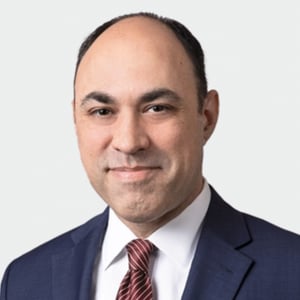
Partner, Baker & Hostetler LLP
Prior to joining BakerHostetler, Allen spent 15 years at the center of the national debate over political regulation. At the FEC, he worked across party lines to restore a key regulatory player to functioning order after years of neglect and partisan gridlock. Those efforts led to the first adoption of a new regulation in over a decade, reform of the commission’s investigations and interagency practices, and more than 150 Statements of Reasons interpreting the Federal Election Campaign Act (FECA). Substantively, Allen prioritized developments at the edges of the FEC’s jurisdiction, particularly those cases where federal election rules conflict with broader principles of corporate, administrative, and constitutional law.
Previously, Allen spent nearly a decade representing organizations across the political spectrum in First Amendment challenges to state and federal laws governing civil society. His practice emphasized motions and appeals, including a dozen arguments before federal appellate and state supreme courts, and appearances before regulatory agencies. In addition to purely campaign finance matters, Allen's cases included the first federal lawsuit in decades addressing the constitutional scope of lobbying laws, litigation establishing the standard for constitutional challenges to FECA under that statute’s specialized review procedures and the successful defense of a state attorney general leading to the invalidation of an FEC regulation.
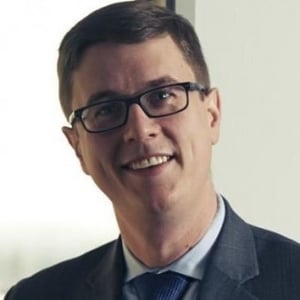
Solicitor General, West Virginia
Michael Williams is the Solicitor General for the State of West Virginia. In that role, Michael represents the State in appeals before state and federal courts, including the U.S. Supreme Court. Michael also coordinates strategic affirmative litigation on the State’s behalf, including litigation against the federal government.
Before joining the Attorney General’s Office, Michael co-led the complex briefing and appeals group at a Michigan boutique firm, representing Fortune 50 companies and others in actions across the country. He also practiced in the litigation groups of two Washington, D.C. firms and clerked with the Appellate Division of the U.S. Attorney’s Office for the District of Maine.
Michael’s work has been honored with a Best Brief Award from the National Associationof Attorneys General and a Leader in the Law Award from Michigan Lawyers Weekly. He often speaks and writes on appellate-related issues.
Michael clerked twice in the Fourth Circuit: once with then-Chief Judge Deborah Chasanow of the U.S. District Court for the District of Maryland and later with Judge G. Steven Agee of the U.S. Court of Appeals for the Fourth Circuit. He attended George Washington University Law School and Bates College.
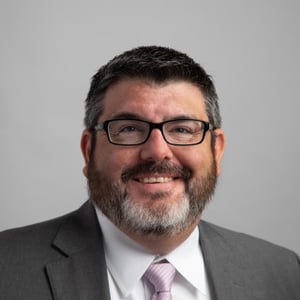
Senior Attorney, Institute for Justice
Paul Avelar is the Managing Attorney of the Institute for Justice Arizona Office. He joined the Institute in March 2010 and litigates free speech, property rights, economic liberty, school choice and other constitutional cases in federal and state courts.
As the head of IJ’s national Braiding Freedom Initiative, Paul represents natural hair braiders across the country to protect their right to earn an honest living. The Initiative uses lawsuits, activism and research to remove laws that require potential braiders to undergo hundreds of costly training hours just to braid hair. Since IJ launched the Braiding Freedom Initiative in 2014, 12 additional states have freed braiders from unnecessary licensing burdens. Paul drafted the model Natural Hair Braiding Protection Act, which has been adopted in Arkansas, Indiana, Iowa, Kentucky, Nebraska, New Hampshire, Texas and South Dakota. He is currently representing braiders in Missouri, where state laws infringe upon their right to earn an honest living.
In his free speech work, Paul has challenged numerous laws that trample First Amendment rights. In Arizona Freedom Club PAC v. Bennett, he represented candidates and independent groups in a successful U.S. Supreme Court challenge to the “matching funds” provision of Arizona’s publicly financed elections system. He represented grassroots groups and individuals in Arizona, Mississippi and Washington, where state laws burdened their political speech by requiring them to register with the government, to navigate complex regulations and to face fines and possible criminal penalties merely because they talked about political issues. In Washington, Paul protected a lawyer’s right to defend, pro-bono, the First Amendment rights of political speakers. Through litigation and legislation, Paul leads the fight against abusive civil forfeiture laws in Arizona and elsewhere.
Paul also co-authored the most comprehensive published study of economic liberty protections in the Arizona Constitution. The Chief Justice of the Arizona Supreme Court appointed Paul to the Task Force on the Review of the Role and Governance Structure of the State Bar of Arizona, where he dissented from the majority report and called on leaders to substantially reform the Bar and state regulation of the practice of law. He often speaks at law schools across the country about constitutional issues and his work at IJ.
Prior to joining IJ-AZ, Paul worked as an attorney in Philadelphia. He clerked for Judge Roger Miner on the 2nd U.S. Circuit Court of Appeals, Justice Andrew Hurwitz on the Arizona Supreme Court, and Judge Daniel Barker on the Arizona Court of Appeals.
Paul graduated manga cum laude from the Arizona State University College of Law in 2004 and was elected to the Order of the Coif. He received his undergraduate degree from Princeton University in 2000.
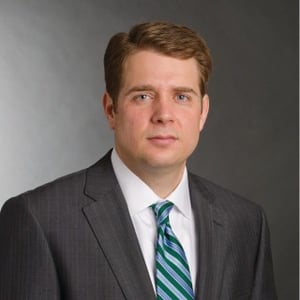
Judge, United States District Court for the District of Arizona
United States District Judge Michael T. Liburdi began his legal career as a law clerk to the Honorable Ruth V. McGregor of the Arizona Supreme Court.
He entered private practice with the law firm of Brown & Bain P.A., which became the Phoenix office of Perkins Coie LLP. He later practiced at Snell & Wilmer L.L.P.
From 2015-2018, Judge Liburdi served as General Counsel to Arizona Governor Douglas A. Ducey. Judge Liburdi provided legal advice to the Governor, advised on appointments to the state judiciary, directed litigation involving the state agencies, and worked with Arizona’s Congressional delegation on legal policy issues.
Immediately prior to his judicial appointment, Judge Liburdi was a shareholder at the international law firm of Greenberg Traurig, LLP.
Judge Liburdi’s private sector practice included complex commercial litigation, antitrust, constitutional law, and political and election law.
Judge Liburdi has served as an adjunct professor of law at the Sandra Day O’Connor College of Law at Arizona State University.
Judge Liburdi earned his Juris Doctorate from the Sandra Day O’Connor College of Law and a Bachelor of Science degree from Arizona State University.
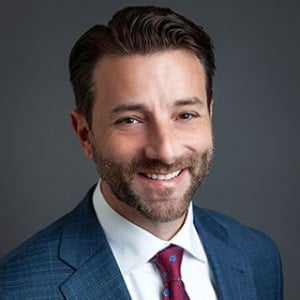
President & CEO, Arizona Chamber of Commerce & Industry
Danny brings more than 16 years of experience in global public affairs and government relations, as well as handling complex legal matters in private practice and public sector service. Prior to joining the Arizona Chamber of Commerce & Industry, Danny was general counsel to the Valor Global leadership team. He focused on helping achieve growth objectives as well as providing continued public affairs guidance in AZ, WA and other States.
Danny worked at Intel, was a shareholder at Greenberg Traurig where he chaired the Phoenix office government law and policy practice. Danny served as Deputy Chief of Staff for Arizona Governor Doug Ducey from 2014 to 2018 where he assisted in the passage of landmark legislation including the Arizona Opioid Epidemic Act and K–12 education funding ballot referral.
Danny was recently named among 2020 Leaders of the Year in Public Policy by Arizona Capitol Times for his contributions in the field of law and public policy. Danny earned his Juris Doctor (cum laude) from Sandra Day O’Connor College of Law at Arizona State University and Bachelor of Arts (cum laude) from Pepperdine University. Danny serves as an adjunct professor at Sandra Day O’Connor College of Law at Arizona State University, is a board member of numerous community organizations. Danny is passionate about orphan care and volunteers with Orphan Outreach for orphaned and vulnerable children in Mathare, Nairobi and Bungoma, Kenya. He and his wife Ann, live in Phoenix with their three children.
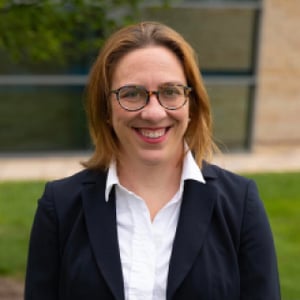
Associate Professor of Law, Sandra Day O'Connor College of Law at Arizona State University
Jennifer L. Selin is an associate professor at the Arizona State University Sandra Day O'Connor College of Law. Her published and ongoing scholarship explores legal institutions and how they work. Using both legal analysis and empirical tools, she demonstrates the structure of the administrative decision-making environment has important consequences for policy implementation.
Prior to joining ASU in 2024, Professor Selin served as senior attorney advisor at the Administrative Conference of the United States. Before working in the federal executive branch, she was a professor at the Universities of Illinois and Missouri.
Selin's scholarship has been published in political science, public administration, and law journals and has been utilized by the Obama, Trump and Biden Administrations, Congress, the Supreme Court, and the media. A proud graduate of Lebanon Valley College, Selin holds a J.D. from Wake Forest University and a Ph.D. from Vanderbilt University. Before first joining academia, she practiced administrative law and specialized in federal electricity market regulation and alternative energy development, licensing and regulation.
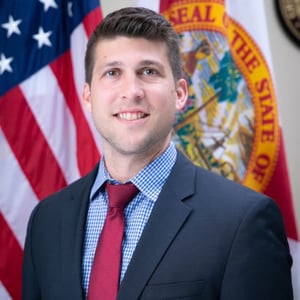
Attorney General, Florida
James Uthmeier is the Attorney General of the State of Florida. Before this, he served as Chief of Staff to Governor Ron DeSantis. Previously, he was General Counsel to the Governor, overseeing litigation and judicial nominations. He also served as a senior advisor at the U.S. Department of Commerce. A Georgetown Law graduate, Uthmeier is an adjunct professor at Florida State University College of Law and co-teaches religious education in Tallahassee.

Professor of Law, Washington University in St. Louis
Professor Daniel Epps teaches first-year criminal law, upper-level courses in criminal procedure, and a seminar on public law theory. His research lies at the intersection of constitutional law and theory, criminal law and procedure, and federal courts. His scholarship has appeared or will appear in the Harvard Law Review, the Yale Law Journal, the Michigan Law Review, the NYU Law Review, the University of Pennsylvania Law Review, the Southern California Law Review, and the Vanderbilt Law Review, and his writing for popular audiences has appeared in the New York Times, the Washington Post, The Guardian, The Boston Globe, Vox, The Atlantic, and the Washington Monthly.
Professor Epps is a nationally recognized expert on the Supreme Court who is regularly quoted in the media. He has particular expertise in Supreme Court reform, where his work is influencing major policy debates. After Presidential candidate Mayor Pete Buttigieg endorsed his and Ganesh Sitaraman’s proposal to restructure the Supreme Court, the plan received widespread attention from the popular press. A pioneering legal podcaster, he currently co-hosts (with William Baude) Divided Argument, a podcast that analyzes the Court’s decisions. Professor Epps is also an experienced Supreme Court litigator; his notable practice experience includes serving as co-counsel for the defendant in Ocasio v. United States, which addressed the scope of criminal conspiracy liability for public-sector extortion, and the successful petition for certiorari and merits briefing in Walden v. Fiore. He also served as co-counsel on the brief of Prof. Stephen E. Sachs as amicus curiae in Atlantic Marine Construction Co. v. U.S. District Court, which The Green Bag Almanac & Reader included on its list of “Exemplary Legal Writing” for 2013.
Professor Epps received his A.B. summa cum laude with highest distinction in Philosophy from Duke University and his J.D. magna cum laude from Harvard Law School, where he was Articles Co-Chair of the Harvard Law Review and won the John M. Olin Law & Economics prize. After law school, he clerked for Judge J. Harvie Wilkinson III of the U.S. Court of Appeals for the Fourth Circuit and for Justice Anthony M. Kennedy of the Supreme Court of the United States. He then spent several years as an appellate specialist at King & Spalding LLP in Washington, D.C. While in practice, he also co-taught Supreme Court Decisionmaking at the University of Virginia School of Law. Immediately prior to joining Washington University Law, he was a Climenko Fellow and Lecturer on Law at Harvard Law School.

Judge, United States Court of Appeals, Fifth Circuit
James C. Ho is a Circuit Judge on the U.S. Court of Appeals for the Fifth Circuit. Before taking the bench on January 4, 2018, he was a partner and co-chair of the national Appellate and Constitutional Law practice group of Gibson, Dunn & Crutcher LLP.
As an appellate litigator for over a decade, including three years as the Solicitor General of Texas, Judge Ho presented 50 oral arguments in federal and state courts nationwide. He won numerous appeals, including three merits cases at the U.S. Supreme Court. He was routinely ranked among the nation’s leading lawyers by Benchmark, Chambers, Law360, The Legal 500, and The National Law Journal, among other publications. His work has been cited favorably by courts at every level of both the federal and state judiciaries. He won a Best Brief Award from the National Association of Attorneys General for every year that he served as solicitor general, and he is the only state solicitor general in history to be invited by the U.S. Supreme Court to express the views of a state.
Judge Ho has served in all three branches of the federal government. On the Senate Judiciary Committee, he served as chief counsel of the Subcommittees on the Constitution and Immigration under Senator John Cornyn. At the Justice Department, he served as Special Assistant to the Assistant Attorney General for Civil Rights and an attorney-advisor at the Office of Legal Counsel. He clerked for Judge Jerry E. Smith of the U.S. Court of Appeals for the Fifth Circuit and Justice Clarence Thomas of the U.S. Supreme Court.
His record of public service also includes appointments as vice chair of the Federal Judicial Evaluation Committee in Texas and co-chair of the National Asian Pacific American Bar Association Judiciary Committee, and as a member of the U.S. Magistrate Judge Merit Selection Panel for the Northern District of Texas, the U.S. delegation to the United Nations Committee on the Elimination of Racial Discrimination, and the Continuity of Government Commission.
In addition, Judge Ho has served as an Adjunct Professor of Law at the University of Texas School of Law, where he taught seminars on U.S. Supreme Court Litigation and Religious Liberty. He has authored numerous articles in respected law reviews nationwide, including an annual feature on exemplary judicial writing for The Green Bag Almanac & Reader. He previously served as senior editor of The Green Bag and as co-editor of Pub. L. Misc.
Judge Ho graduated from Stanford University with honors and a B.A. in Public Policy in 1995, and the University of Chicago Law School with high honors in 1999. Before law school, he was a legislative aide to California State Senator Quentin Kopp. He and his wife Allyson live in Dallas, Texas, with their twin daughter and son.

Judge, United States Court of Appeals, Fifth Circuit
Edith Jones graduated from Alamo Heights High School, where she was a National Merit Scholar. In 1971, she received her B.A. in Economics from Cornell University, graduating with honors. In 1974, she was awarded her J.D. at the University of Texas Law School, where she was a law review editor and received the Order of the Coif.
Judge Jones was the first female partner at Andrews, Kurth, Campbell & Jones (now Hunton Andrews Kurth) where she practiced various types of litigation and bankruptcy cases. Judge Jones went on the federal bench on June 1, 1985.
Judge Jones served as a former member of the National Bankruptcy Review Commission, and as a member of the Judicial Conference Commission on Bankruptcy Rules. Judge Jones served on the White House Fellows Commission. Judge Jones served on the board of the Sam Houston Area Council of the Boy Scouts of America. She has been a member of the Garland Walker Inn of Court in Houston for more than 20 years and its President for at least ten years. Judge Jones is also on the Board of the Calvin Coolidge Presidential Foundation.
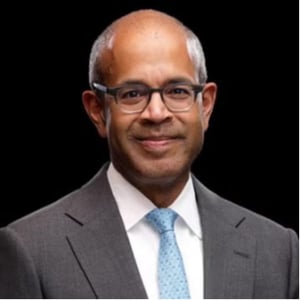
Partner, Davis Polk & Wardwell LLP
Kannon is the head of our Supreme Court & Appellate practice. He has argued 41 cases before the U.S. Supreme Court and has argued more than 150 appeals in courts across the country, including every federal court of appeals and numerous state courts.
Kannon is ranked as a “Star Individual” in appellate law by Chambers USA, where a client notes, “It’s hard to think of enough superlatives to describe his talent, his judgment, his ability, his experience – he is as good as it gets.” Legal 500 U.S. recognizes Kannon in its Hall of Fame for appellate work. A client shares, “His work is the best in the business, and he is a wonderful human being in addition to being a world-class appellate litigator.”
In 2024 and 2022, Kannon was a finalist for the American Lawyer’s “Litigator of the Year” award. He was named “Appellate Litigator of the Year” by Benchmark Litigation in 2021 and was a 2026 finalist for that recognition.
Before entering private practice, Kannon served as an Assistant to the Solicitor General at the U.S. Department of Justice.

Agnes Williams Sesquicentennial Professor of Federal Courts, Georgetown Law
Stephen I. Vladeck is a professor of law at the Georgetown University Law Center, and is a nationally recognized expert on the federal courts; the Supreme Court; national security law; and military justice.
Vladeck is author of the New York Times bestselling book, “The Shadow Docket: How the Supreme Court Uses Stealth Rulings to Amass Power and Undermine the Republic,” which won the 2023 Writers’ League of Texas Book Award for Non-Fiction and was a finalist for the 2024 ABA Silver Gavel Award for Media and the Arts. Vladeck is also a highly regarded appellate advocate, having argued three cases before the U.S. Supreme Court and over a dozen before various lower federal civilian and military courts. He has received numerous awards for his influential and widely cited legal scholarship, his prolific popular writing, his teaching, and his service to the legal profession—including the 2024 University of Texas President’s Research Impact Award and his selection by the Order of the Coif to serve as its Distinguished Visiting Professor for 2025.
Vladeck is CNN’s Supreme Court analyst and editor and author of “One First,” a popular weekly newsletter about the Supreme Court. Together with Bobby Chesney, Vladeck co-hosts the popular and award-winning “National Security Law Podcast.” He is also a co-author of Aspen Publishers’ leading national security law and counterterrorism law casebooks. And he is a member of the Board of Trustees of EarthJustice—the nation’s premier nonprofit public interest environmental law organization.
Vladeck graduated from Yale Law School in 2004—where he was executive editor of the Yale Law Journal and won the Harlan Fiske Stone Prize for outstanding moot court oralist and shared the Potter Stewart Prize for best moot court team performance. After law school, he clerked for the Honorable Marsha S. Berzon on the U.S. Court of Appeals for the Ninth Circuit and the Honorable Rosemary Barkett on the U.S. Court of Appeals for the Eleventh Circuit. He earned a B.A. summa cum laude with Highest Distinction in History and Mathematics from Amherst College in 2001—where he wrote his senior thesis on “Leipzig’s Shadow: The War Crimes Trials of the First World War and Their Implications from Nuremberg to the Present.” A native New Yorker and hopeless Mets fan, Vladeck lives in the District with his wife, Karen (Founder and Managing Partner of Risepoint Search Partners); their daughters, Madeleine and Sydney; and their eleven-year-old pug, Roxanna.
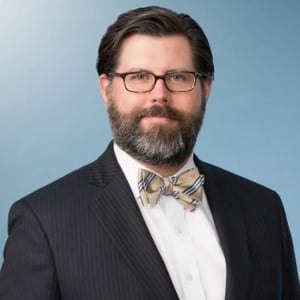
Partner, Faegre Drinker Biddle & Reath LLP
Brian J. Paul is an appellate lawyer and leads law teams in high-stakes commercial litigation. He has briefed and argued everything from weighty abstract constitutional issues to dollars-and-cents business issues and everything in-between, both on appeal and in trial courts around the country. A member of the American Law Institute, recent past-president of the Seventh Circuit Bar Association and top-tier ranked Chambers appellate lawyer, Brian had one client say about him: “Brian is one of the most respected and skilled appellate lawyers, not only in Indianapolis but across the country. He is trusted to deliver timely guidance on complex issues.” Another said: “He is excellent. I enjoyed working with him. He is able to put things into layman’s terms and explains things really well. His written and oral advocacy are short, crisp and to the point.”
Clients hire Brian to digest the complex, and make the complex simple and compelling for busy, generalist judges. In his writing, he strives to cut through jargon and legalese, and distill things down to what’s important. In his oral advocacy, by intense preparation, he strives to be the advocate whom judges trust for the right answers. In the dozens of cases he has argued, Brian has helped clients win on both sides of the “v.” His recent representations include:
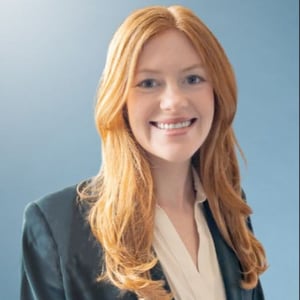
Associate, Faegre Drinker
Melinda Hudson represents clients in a broad range of litigation, dispute resolution and regulatory matters. For state and federal trial and appellate courts, she has drafted motions and briefs on threshold issues of justiciability, the merits of federal and state constitutional and statutory claims, and other legal issues. Melinda’s experience also includes taking depositions of plaintiffs and other witnesses, working with expert witnesses, and presenting oral argument to state and federal courts of appeals.
Before joining Faegre Drinker, Melinda served as a deputy attorney general in the Solicitor General Division in the Office of the Indiana Attorney General. She represented the State of Indiana and its officers and agencies in courts including the Indiana Supreme Court, U.S. Court of Appeals for the Seventh Circuit and the Supreme Court of the United States. She drafted critical motions, appellate briefs, and amici curiae briefs led by Indiana and joined by dozens of other states. Melinda also argued as lead counsel in appellate cases before the Seventh Circuit and Indiana Court of Appeals, and prepared the solicitor general of Indiana for oral arguments in state and federal courts, including the U.S. Supreme Court.
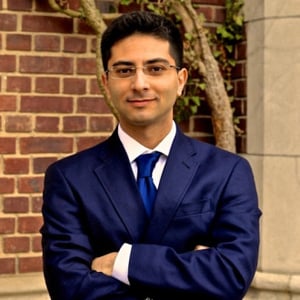
Associate Professor of Law, University of Notre Dame Law School
Sherif Girgis joined Notre Dame Law School in 2021. Prior to joining Notre Dame Law, Sherif practiced law at Jones Day in Washington, D.C., where he focused on appellate and complex civil litigation. Before that, Girgis served as a law clerk to Justice Samuel Alito, Jr., of the U.S. Supreme Court and Judge Thomas B. Griffith of the U.S. Court of Appeals for the D.C. Circuit. Now completing his Ph.D. in philosophy at Princeton, Girgis earned his J.D. at Yale Law School, where he served as an editor of the Yale Law Journal and won the Felix S. Cohen Prize for best paper in legal philosophy. Before law school, he earned a master's degree (B.Phil.) in philosophy from the University of Oxford as a Rhodes Scholar, and his bachelor's degree in philosophy from Princeton, Phi Beta Kappa and summa cum laude. Girgis is coauthor of What Is Marriage? Man and Woman: A Defense, cited in a dissent in United States v. Windsor, and Debating Religious Liberty and Discrimination, released by Oxford University Press in 2017. His work at the intersection of philosophy and law--including criminal law, constitutional liberties, and jurisprudence--has appeared in academic and popular venues including the Yale Law Journal, the Virginia Law Review, the University of Pennsylvania Law Review, the Harvard Journal of Law and Public Policy, the American Journal of Jurisprudence, the Cambridge Companion to Philosophy of Law, The New York Times, and The Wall Street Journal.
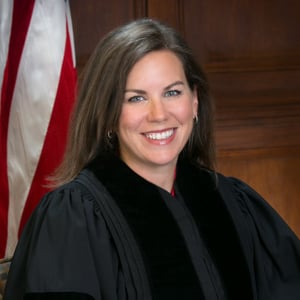
Judge, United States Court of Appeals, Eleventh Circuit
Britt C. Grant is a judge on the U.S. Court of Appeals for the Eleventh Circuit. Judge Grant was appointed to the federal bench in August 2018 after serving as a Justice on the Supreme Court of Georgia. Prior to her judicial appointment, she served as the Solicitor General of Georgia and practiced in the Washington, D.C. office of Kirkland & Ellis. Upon graduation from law school, Judge Grant served as a law clerk to then-Judge Brett M. Kavanaugh of the U.S. Court of Appeals for the District of Columbia Circuit. She earned her J.D., with distinction, from Stanford Law School, where she was the Co-Founder of the Stanford National Security and the Law Society, and the President of the Stanford Law chapter of the Federalist Society. Before enrolling in law school, Judge Grant served in The White House in a variety of domestic policy roles as well as on the staff of Congressman Nathan Deal. Judge Grant earned her B.A., summa cum laude, from Wake Forest University, where she was inducted into Phi Beta Kappa. She now lives in Atlanta, Georgia with her husband and three children.
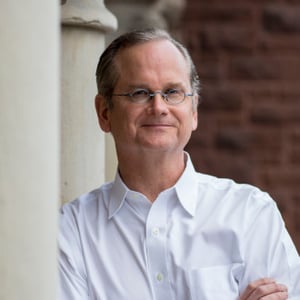
Roy L. Furman Professor of Law and Leadership, Harvard Law School
Lawrence Lessig is the Roy L. Furman Professor of Law and Leadership at Harvard Law School. Prior to returning to Harvard, he taught at Stanford Law School, where he founded the Center for Internet and Society, and at the University of Chicago. He clerked for Judge Richard Posner on the 7th Circuit Court of Appeals and Justice Antonin Scalia on the United States Supreme Court.
Lessig is a founding board member of Creative Commons and serves on the Scientific Board of AXA Research Fund. A member of the American Academy of Arts and Sciences and the American Philosophical Association, he has received numerous awards including a Webby, the Free Software Foundation's Freedom Award, Scientific American 50 Award, and Fastcase 50 Award.
Cited by The New Yorker as “the most important thinker on intellectual property in the Internet era,” Lessig has focused much of his career on law and technology, especially as it affects copyright. His current work addresses “institutional corruption”—relationships which, while legal, weaken public trust in an institution—especially as that affects democracy.
His books include: Fidelity & Constraint: How the Supreme Court Has Read the American Constitution (2019), America, Compromised (2018), Republic, Lost v2 (2015), Republic, Lost: How Money Corrupts Congress—and a Plan to Stop It (2011), Remix: Making Art and Commerce Thrive in the Hybrid Economy (2008), Code v2 (2006), The Future of Ideas (2001), and Code and Other Laws of Cyberspace (1999).
Lessig holds a BA in economics and a BS in management from the University of Pennsylvania, an MA in philosophy from Cambridge University, and a JD from Yale.

Antonin Scalia Professor of Law, Harvard Law School
Stephen E. Sachs is the Antonin Scalia Professor of Law at Harvard Law School, where he teaches civil procedure, conflict of laws, and seminars on constitutional law. His research focuses on the law and theory of constitutional interpretation, the jurisdiction of state and federal courts, the history of procedure and private law, and the role of the general common law in the U.S. legal system.
Sachs has authored numerous articles, essays, and book chapters. He is an elected member of the American Law Institute, an adviser to the ALI’s project on the Restatement of the Law (Third), Conflict of Laws, a former member of the Judicial Conference’s Advisory Committee on Appellate Rules, and a founding member of the Academic Freedom Alliance.
In 2020, Sachs received the Federalist Society’s Joseph Story Award, which recognizes a young academic who has demonstrated excellence in legal scholarship, a commitment to teaching, a concern for students, and who has made a significant public impact in a manner that advances the rule of law in a free society.
Sachs previously taught at Duke University School of Law and as a visiting professor at the University of Chicago Law School. Before entering academia, he practiced in the Washington, D.C., litigation group of Mayer Brown LLP, and he clerked for Chief Justice John G. Roberts Jr. as well as for Judge Stephen F. Williams of the U.S. Court of Appeals for the D.C. Circuit.
Sachs received his J.D. from Yale Law School, where he was executive editor of the Yale Law Journal and served both as executive editor and articles editor of the Yale Law & Policy Review. A Rhodes Scholar, he graduated from Oxford University with a first-class BA (Hons) degree in philosophy, politics, and economics. He received his A.B. degree summa cum laude in history from Harvard University, earning the Sophia Freund Prize.
Sachs is a licensed attorney in Massachusetts and the District of Columbia, and he is authorized to practice before the D.C. Circuit, the Second Circuit, the Seventh Circuit, and the Supreme Court of the United States.

Chief Judge, United States Court of Appeals, Fifth Circuit
Jennifer Walker Elrod is the Chief Judge of the United States Court of Appeals for the Fifth Circuit. She was nominated to the Fifth Circuit in 2007, and she served as a Circuit Judge on the court until assuming the role of Chief Judge in October 2024. Prior to serving as a Circuit Judge, Chief Judge Elrod was appointed and then twice elected Judge of the 190th District Court of Harris County, Texas, where she spent over five years presiding over more than 200 jury and non-jury trials.
Chief Judge Elrod graduated cum laude from Harvard Law School, where she was an active member of the Harvard Federalist Society, an Ames Moot Court finalist, and a Senior Editor of the Harvard Journal of Law & Public Policy. She clerked for the Honorable Sim Lake in the Southern District of Texas. Before serving as a judge, Chief Judge Elrod worked in private practice, focusing on civil litigation, antitrust, and employment matters.
She has been repeatedly recognized for her work as a jurist, as well as for her pro bono work and contributions to the community. She has been named the 2022 Texas Review of Law & Politics’ Jurist of the Year, the 2018 Harvard Federalist Society’s Alumni of the Year, the 2016–17 Texas Association of Civil Trial and Appellate Specialists’ Appellate Judge of the Year, and the 2008 Mexican-American Bar Association of Texas’s Judge of the Year.
Chief Judge Elrod is actively engaged in the academic and legal communities. Chief Judge Elrod currently serves on the Board of Directors and as the Jurist-in-Residence at the South Texas College of Law, where she teaches civil procedure and First Amendment law. She is also a member of the American Law Institute and of the Board of Advisors for the Harvard Journal of Law & Public Policy, and she is a former member of the Board of Regents of her alma mater, Baylor University, and the Board of Visitors at Brigham Young University Law School. She previously served as the Chair of the Codes of Conduct Committee for the Judicial Conference of the United States. She has also served as the M.D. Anderson Visiting Public Service Professor at the Texas Tech University School of Law and as Jurist-in-Residence at Brigham Young University Law School, and she has taught legal writing at the University of Houston Law Center. She presented the Lewis F. Powell, Jr. Distinguished Lecture at the Washington and Lee University School of Law and is a frequent speaker on the topics of trial and appellate procedure, ethics, employment law, and constitutional law. Chief Judge Elrod also serves on the board of the Garland R. Walker Inn of Court, and co-produces an annual musical CLE, for which her pupilage group has won multiple national awards.
Chief Judge Elrod’s publications include: Trial by Siri: AI Comes to the Courtroom; Don’t Mess with Texas Judges: In Praise of the State Judiciary; For Good: Enriching Your Practice and Your Life Through Pro Bono and Community Service; Is the Jury Still Out?: A Case for the Continued Viability of the American Jury; and W(h)ither the Jury? The Diminishing Role of the Jury Trial in our Legal System.
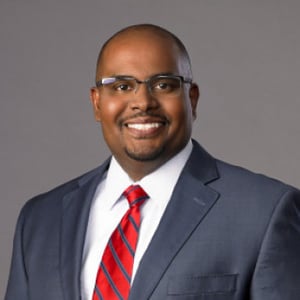
Principal, Kyle George Law Group
Kyle George previously served as Nevada’s First Assistant Attorney General under Attorney General Aaron Ford, where he supervised over 100 attorneys across 9 divisions responsible for legal representation of Nevada’s State Agencies, Boards, and Commissions, as well as civil litigation and regulatory and administrative proceedings.
George has served as General Counsel to the Nevada Governor, counsel and policy advisor to two Members of Congress, a Chief Deputy District Attorney, and as a litigator in private practice. He currently advises clients on state and federal regulatory matters, and government affairs and relations.
George earned his J.D. from Georgetown University Law Center, and he holds bachelor’s and master’s degrees in Chemistry from the University of Nevada, Las Vegas. While at UNLV, he was active in student government and served as President of the Graduate and Professional Student Association.
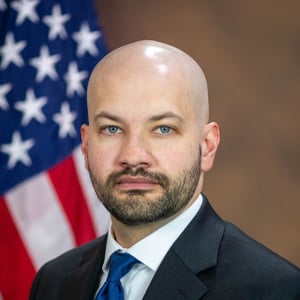
Deputy Assistant Attorney General, U.S. Department of Justice
Eric Hamilton serves as the Deputy Assistant Attorney General for the Federal Programs Branch of the Civil Division. He previously served as the Solicitor General for the State of Nebraska and as an Assistant Solicitor General in the Texas Attorney General’s Office. During the first Trump Administration, Eric worked as an Associate Counsel to the President in the Office of White House Counsel. Earlier in his career, he was in private practice in Washington, D.C. and clerked for Judge Thomas M. Hardiman on the U.S. Court of Appeals for the Third Circuit.
Eric is a graduate of Stanford Law School, where he served on the Stanford Law Review. He holds an undergraduate degree from the University of Nebraska-Lincoln.

Professor of Law, University of Michigan Law School
Christopher J. Walker is a Professor of Law at the University of Michigan. Prior to joining Michigan law faculty in 2022, he spent a decade teaching at The Ohio State University Moritz College of Law. He previously clerked for Justice Anthony Kennedy of the U.S. Supreme Court, worked on the Civil Appellate Staff at the U.S. Department of Justice, and served on the Senate Judiciary Committee staff for the Gorsuch Supreme Court confirmation. Professor Walker’s research focuses on administrative law, regulation, and law and policy at the agency level. Outside the law school, he chaired the American Bar Association’s Section of Administrative Law and Regulatory Practice in 2020-21 and served as one of forty Public Members of the Administrative Conference of the United States from 2016-2022, and he continues to serve in both organizations in various capacities. He also works of counsel at the U.S. Chamber Litigation Center. In 2022, he received the Federalist Society’s Joseph Story Award.

George Mason University Foundation Professor of Law, Antonin Scalia Law School, George Mason University
TODD J. ZYWICKI is George Mason University Foundation Professor of Law at Antonin Scalia Law School at George Mason University and Research Fellow of the George Mason Law and Economics Center. During the Fall 2023 semester he served as the Visiting Scholar in Conservative Thought and Policy for the Bruce Benson Center for the Study of Western Civilization at the University of Colorado-Boulder. From 2020-2021 he was Chair of the Consumer Financial Protection Bureau Taskforce on Federal Consumer Financial Law. In 2021 he was inducted to the American College of Consumer Financial Services Lawyers. He is also a Senior Fellow of the F.A. Hayek Program for the Advanced Study of Politics, Philosophy, and Economics at George Mason University and a former Senior Fellow of the Cato Institute. From 2015-2017 he was Executive Director of the George Mason Law and Economics Center. He served as Co-Editor of the Supreme Court Economic Review from 2006-2017. From 2003-2004, Professor Zywicki served as the Director of the Office of Policy Planning at the Federal Trade Commission. He has also taught at Vanderbilt University Law School, Georgetown University Law Center, Boston College Law School, Mississippi College School of Law, and China University of Political Science and Law.
Professor Zywicki clerked for Judge Jerry E. Smith of the U.S. Court of Appeals for the Fifth Circuit and worked as an associate at Alston & Bird in Atlanta, Georgia, where he practiced bankruptcy and commercial law. He received his J.D. from the University of Virginia, where he was executive editor of the Virginia Tax Review and John M. Olin Scholar in Law and Economics. Professor Zywicki also received an M.A. in Economics from Clemson University and an A.B. cum Laude with high honors in his major from Dartmouth College.
Professor Zywicki is also a Lone Mountain Fellow of the Property and Environment Research Center, a Fellow of the International Centre for Economic Research in Turin, Italy, and a former Senior Fellow of the Goldwater Institute. During the Fall 2008 Semester Professor Zywicki was the Searle Fellow of the George Mason University School of Law and was a 2008-09 W. Glenn Campbell and Rita Ricardo-Campbell National Fellow and the Arch W. Shaw National Fellow at the Hoover Institution on War, Revolution and Peace. He has lectured and consulted with government officials around the world, including Iceland, Italy, Japan, and Guatemala. In 2006 Professor Zywicki served as a Member of the United States Department of Justice Study Group on “Identifying Fraud, Abuse and Errors in the United States Bankruptcy System.”
Professor Zywicki is the author of more than 130 articles in leading law reviews and peer-reviewed economics journals. He is one of the Top 10 most-cited law professors in the field of Commercial Law and one of the Top 25 law professors on Twitter as measured by engagement levels. He is one of the Top 50 Most Downloaded Law Authors at the Social Science Research Network. He has testified multiple times before Congress on issues of consumer bankruptcy law and consumer credit and is a frequent commentator on legal issues in the print and broadcast media, including the Wall Street Journal, New York Times, The Washington Post, The Washington Times, Nightline, The Newshour with Jim Lehrer, Neil Cavuto Show, Fox & Friends, Smerconish, Fox News @ Night with Shannon Bream, Fox Business, CNN, CNBC, Bloomberg News, BBC, The Diane Rehm Show, Lou Dobbs Show, Jerry Doyle Show, and The Laura Ingraham Show.
Professor Zywicki is former Chairman and a current member of the Board of Directors of the Competitive Enterprise Institute, and is a member of the Board of Directors of the Institute for Humane Studies, Bill of Rights Institute, the Executive Committee for the Federalist Society's Financial Institutions and E-Commerce Practice Group, the Board of Trustees of the Foundation for Research on Economics and the Environment. He formerly served on the Governing Board and the Advisory Council for the Financial Services Research Program at George Washington University School of Business. He is currently the Chair of the Academic Advisory Council for the following organizations: The Bill of Rights Institute, the film “We the People in IMAX,” and the McCormick-Tribune Foundation “Freedom Museum” in Chicago, Illinois. He is a member of the Board of Visitors of Ralston College and was a member of the Board of Trustees of Yorktown University. From 2005-2009 he served as an elected Alumni Trustee of the Dartmouth College Board of Trustees.

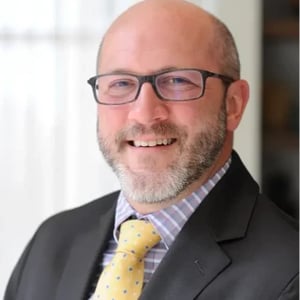
The National Popular Vote Compact: An End Run Around the Electoral College?
Allen J. Dickerson, Chad Ennis, Michael R. Williams
This spring, Virginia joined eighteen other states and DC in the National Popular Vote Interstate...
Plenary Session 2: Legislation, Confirmations, and Oversight– Working and Succeeding in a Legislative Legal Role
Featuring: Ms. Ashley Callen, Partner, Jenner & Block LLP Mr. Michael Fragoso, Partner, Torridon Group...
Panel I: Laboratories of Liberty: State Deregulation and Economic Freedom
Paul Avelar, Michael T. Liburdi, Danny B. Seiden, Jennifer Selin, James William Uthmeier
Featuring: Mr. Paul Avelar, Arizona Office Managing Attorney, Institute for Justice Mr. Danny Seiden, President...
Practice Groups: The Continued Independence of the Judiciary
Daniel Epps, James C. Ho, Edith H. Jones, Kannon K. Shanmugam, Stephen I. Vladeck
Recent times have seen growing criticism of the Supreme Court's legitimacy, with some claiming that...
The 17th Amendment
Cornell Student Chapter
Ithaca, NYTopics
The Timeless Value of the Lincoln-Douglas Debates
With election day fast approaching, debates concluded, and campaigns for the presidency, Senate and House,...
Indiana Supreme Court Upholds Law Restricting Which Candidates Can Appear on Primary Ballots
Brian J. Paul, Melinda Hudson
Indiana requires candidates on a primary election ballot to demonstrate party affiliation by either (1)...
Panel IV: Constitutions, Elections, and Procedure – (How) Can We Change How We Separate Powers?
Sherif Girgis, Britt C. Grant, Lawrence Lessig, Stephen E. Sachs
Suppose we don’t like how our governmental powers are separated. Perhaps we think the executive...
The 17th Amendment
Stanford Student Chapter
Stanford, CADo States Enjoy a Special Solicitude?
Jennifer Walker Elrod, Kyle George, Eric Hamilton, Christopher J. Walker
Over the last two decades, states have played an important and increasing role in federal...