
General Counsel and Vice-President of Litigation, Washington Legal Foundation
Cory Andrews is General Counsel and Vice-President of Litigation for the Washington Legal Foundation (WLF). As counsel of record for WLF and other clients, he has authored more than 100 briefs, at petition and merits stages, in the U.S. Supreme Court. He also frequently litigates in state and federal appellate courts. Before joining WLF, Cory practiced trial and appellate law for White & Case LLP, where he litigated in state and federal courts on behalf of clients in the telecommunications, hospitality, and banking industries. He received his J.D. magna cum laude from the University of Florida, where he was Editor-in-Chief of the Florida Law Review and elected to the Order of the Coif. Upon graduation, Cory served as a law clerk to the Honorable Steven D. Merryday of the U.S. District Court for the Middle District of Florida.
Founder, Paredes Strategies LLC
Troy A. Paredes is the founder of Paredes Strategies LLC. From 2008-2013, Mr. Paredes was a Commissioner of the U.S. Securities and Exchange Commission, having been appointed by President George W. Bush. At the SEC, Mr. Paredes was a strong advocate for small business and the JOBS Act, for solving the information overload problem of securities law disclosure, and for rigorous cost-benefit analysis. He also consistently expressed concerns about the overregulation and overreach of the Dodd-Frank Act. Since leaving government, Mr. Paredes has had an active consulting practice. Mr. Paredes advises on financial regulation, corporate governance, compliance, and governmental and regulatory affairs. He also serves as an expert and adviser in regulatory enforcement investigations and actions and in private litigation involving securities law and corporate law, and he has been an independent compliance consultant/monitor. Before becoming an SEC Commissioner, Mr. Paredes was a professor of law at Washington University in St. Louis and a professor of business (by courtesy) at Washington University’s Olin Business School. Currently, he is the Distinguished Policy Fellow and Lecturer at the University of Pennsylvania Law School and a Lecturer on Law at Harvard Law School. Next year he will be a Distinguished Scholar in Residence at NYU School of Law. Mr. Paredes is the author of numerous academic articles on financial regulation, corporate governance, innovation, and behavioral economics. He also is a co-author (beginning with the 4th edition) of a multi-volume securities regulation treatise with Louis Loss and Joel Seligman entitled Securities Regulation. Mr. Paredes serves on the board of directors of Electronifie Inc. and is a member of the board of advisors of StreetShares, Inc. Mr. Paredes holds a bachelor’s degree in economics from UC Berkeley and earned his J.D. from Yale Law School.
Shareholder, Ogletree, Deakins, Nash, Smoak & Stewart
Chris Murray is Co-Chair of the firm’s Arbitration and Alternative Dispute Resolution Practice Group. In this role, he assists attorneys throughout the firm and clients nationwide to create, roll out, and enforce effective employment arbitration agreements and other ADR programs. Mr. Murray has extensive experience with class/collective action waivers in employment arbitration. Mr. Murray was part of the Ogletree team that successfully defended the use of such waivers in the Fifth Circuit’s landmark decision in D.R. Horton, Inc. v. N.L.R.B. Since then, he has successfully defended the enforceability of class action waivers in numerous subsequent cases and submitted an amicus brief on the subject on behalf of several major employers’ associations in the Supreme Court’s Murphy Oil case. Mr. Murray assists clients and the Firm’s attorneys to draft or revise arbitration programs focused on a client’s specific needs and goals and in light of changing law and evolving best practices.
Partner, Fusion Law, PLLC
Paul is the founding partner of Fusion Law, PLLC. He has extensive experience with state, federal, and global regulators building coalitions and implementing policies to promote innovation in financial services. He is responsible for designing and implementing the first state (Arizona) and federal (CFPB) FinTech sandboxes in the United States. He also designed the CFPB no-action letter and trial disclosure policies. He helped found the first global regulatory innovation coalition (Global Financial Innovation Network) and led the founding of the first U.S. regulatory innovation coalition (American Consumer Financial Innovation Network). He served on the Financial Stability Oversight Council subcommittee on digital assets. He also has drafted state-level laws on blockchain and utility tokens.
Paul also has significant enforcement and litigation experience. He led many multi-state consumer protection enforcement matters as Civil Litigation Division Chief at the Arizona Attorney General’s Office.
Prior to his government service, Paul practiced law in the areas of securities litigation and transactional work for approximately six years at two well-known law firms. He also clerked on the U.S. Court of Appeals for the Fourth Circuit.
Kathleen Q. Abernathy recently returned to Wilkinson Barker Knauer LLP as special counsel. She was previously elected to the Board of Directors of Frontier Communications as an independent director in 2006 following her term as a Commissioner at the Federal Communications Commission from 2001 to 2005. In 2010 she joined the company as Chief Legal Officer and Executive Vice President, Regulatory and Governmental Affairs. Prior to her term as an FCC Commissioner, Ms. Abernathy worked for a number of different telecommunications companies and law firms. She has received numerous awards in recognition of her professional accomplishments and has taught as an adjunct professor at Georgetown University Law Center and Catholic University’s Columbus School of Law. She received her B.S. from Marquette University and her J.D. from Catholic University’s Columbus School of Law.

Founding Partner, Boyden Gray & Associates
Ambassador C. Boyden Gray is the founding partner of Boyden Gray & Associates, a law and strategy firm in Washington, D.C., focused on constitutional and regulatory issues.
Mr. Gray worked in the White House for twelve years, first as counsel to the Vice President during the Reagan administration and then as White House Counsel to President George H.W. Bush. In the Reagan administration, he was Counsel to the Presidential Task Force on Regulatory Relief, for which he wrote the original Executive Order 12291 requiring cost-benefit analysis and White House review of regulations (later renumbered as current EO 12866). In the George H.W. Bush Administration, Mr. Gray was in charge of judicial selection and was also instrumental in the enactment of the Clean Air Act Amendments of 1990, the Energy Policy Act of 1992, and a cap-and-trade system for acid rain emissions. In 1993, he received the Presidential Citizens Medal. Under President George W. Bush, Mr. Gray was U.S. Ambassador to the European Union and U.S. Special Envoy to Europe for Eurasian Energy.
Mr. Gray practiced law for 25 years at the law firm of Wilmer, Cutler & Pickering and was chairman of the Administrative Law and Regulatory Practice Section of the American Bar Association from 2000 to 2002. Early in his career, Mr. Gray helped to develop the Business Roundtable and served as its first counsel. He is an adjunct professor at Antonin Scalia Law School and a former adjunct professor at NYU Law School (teaching energy and environmental law). Mr. Gray is on the Board of Directors of the Atlantic Council, the Federalist Society, Reason Foundation, and the Trust for the National Mall.
Mr. Gray earned his A.B. magna cum laude from Harvard, where he was an editor of the Crimson, and his J.D. with high honors from the University of North Carolina at Chapel Hill, where he was editor-in-chief of the Law Review. Mr. Gray served in the United States Marine Corps, and after law school, he clerked for Earl Warren, Chief Justice of the United States Supreme Court.
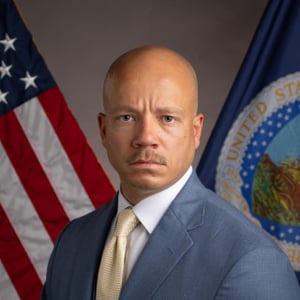
Assistant Secretary for Civil Rights, U.S. Department of Agriculture
Devon Westhill is the Assistant Secretary for Civil Rights at the U.S. Department of Agriculture. The U.S. Senate confirmed President Donald Trump’s nomination of Westhill on October 7, 2025.
Westhill returns to the USDA where he previously headed the civil rights office as Deputy Assistant Secretary in President Trump’s first term. His previous government appointments also include service at the U.S. Department of Labor, liaison to the Administrative Conference of the U.S., and liaison to the White House Initiative on Historically Black Colleges and Universities. Prior to returning to government service, Westhill was President and General Counsel of a nonprofit civil rights organization.
Westhill has testified on civil rights matters before Congress, federal agencies, and as an expert witness in federal court. He has spoken hundreds of times at college campuses, conferences, and on radio and TV programs, and he is frequently quoted in print publications, and his writing has appeared in numerous national outlets. A U.S. Navy veteran, Westhill earned his BA from the University of North Carolina at Chapel Hill and his JD from the University of Florida.
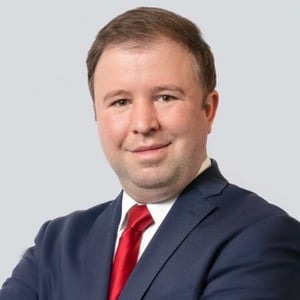
Partner, Wiley Rein LLP
Tom has over 15 years’ experience in private practice and public service at the federal and state levels representing clients in high-stakes appellate and regulatory litigation matters. Tom has argued appeals in the Fourth, Fifth, Ninth, D.C. and Federal Circuits, and the West Virginia Supreme Court of Appeals.
Prior to joining Wiley, Tom was the General Counsel at the Federal Communications Commission (FCC), where he served as the agency’s chief legal officer and briefed dozens of appeals – personally arguing two – in the federal courts of appeals in constitutional and administrative law challenges to the FCC’s orders. Tom managed a team of over 70 attorneys and staff and provided consultation and advice on a wide range of practice areas relating to the FCC’s work, including administrative law, appellate and trial litigation, bankruptcy, ethics, fiscal law, fraud, labor and employment, and public records requests. He has spent his career advising clients on all stages of federal agency rulemaking, adjudication, and litigation, in fields ranging from communications to environmental law to securities to labor and employment. He frequently speaks and writes on legal issues and his articles have appeared in the Wall Street Journal, Washington Post, National Review, Forbes, and Newark Star-Ledger.
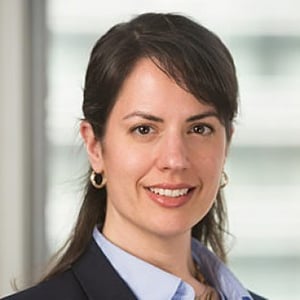
Counsel to Commissioner Hester M. Peirce, U.S. Securities and Exchange Commission
Thaya Brook Knight was associate director of financial regulation studies at the Cato Institute. She is an attorney with extensive experience in securities regulation, small business capital access, and capital markets. Before joining Cato, she co-founded and served as general counsel of CrowdCheck, a company providing due diligence and disclosure services in the online investing market. Following the recent financial crisis, she served as investigative counsel for the congressional oversight panel charged with overseeing the expenditure of Troubled Asset Relief Program funds. She also spent several years with the Washington office of the law firm WilmerHale, where her practice focused on securities litigation, securities enforcement defense, and corporate investigations.
She holds a BA from Middlebury College and a JD from the University of Michigan Law School.

Emulex Corp v. Varjabedian - Post-Decision SCOTUScast
Cory L. Andrews
On April 23, 2019, just one week after argument, the Supreme Court decided Emulex Corp....
From Orange Groves to Cryptocurrency: How Will the SEC Apply Longstanding Tests to New Technologies?
Troy Paredes, Scott Kimpel
Note from the Editor: The Federalist Society takes no positions on particular legal and public...
Courthouse Steps: China Agritech v. Resh
Christopher C. Murray
On March 26, the Supreme Court will hear arguments in China Agritech, Inc. v. Resh,...
Regulatory Federalism
Paul N. Watkins
Emerging technologies in highly regulated areas like financial services give states a unique opportunity to...
How to Regulate the Internet
Kathleen Q. Abernathy
Note from the Editor: This article traces the history of the FCC’s approach to regulating...
The Regulatory Transparency Project: What and Why?
C. Boyden Gray, Devon Westhill
We have grown accustomed to modern government issuing and enforcing new rules to protect certain...
Legal Challenge to the President's Executive Order on Reducing Regulation and Controlling Regulatory Costs - Podcast
Thomas M. Johnson
On January 30, 2017, President Trump issued an Executive Order entitled Reducing Regulation and Controlling...
Topics
The Rule of Lenity: A five-minute guide to navigating the intersection of administrative and criminal law
It is not often that you think of the terms “criminal defense” and “Chevron deference”...
Topics
SCOTUS Orders: Two new cert grants
The Supreme Court issued a new Order List this morning; in addition to several GVRs there were...
Salman v. United States - Post-Decision SCOTUScast
Thaya Brook Knight
On December 6, 2016, the Supreme Court decided Salman v. United States. Bassam Yacoub Salman...