
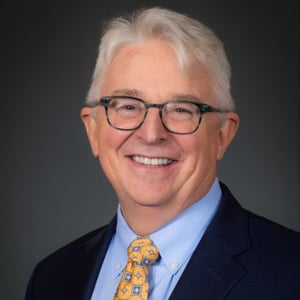
Co-Founder, Defense of Freedom Institute
Jim Blew is a co-founder of DFI, the Defense of Freedom Institute for Public Policy Studies, and president of DFI Action. These DC-based nonprofits promote education freedom, civil rights, and a limited federal role in education and workforce development.
Jim served as U.S. assistant secretary for policy and budget under Betsy DeVos. Prior to his federal service, he worked in state-based education reform for more than 20 years, including leadership roles at StudentsFirst, 50CAN, and the predecessor to the American Federation for Children. He also helped guide the education reform investments of the Walton Family Foundation for nearly a decade until 2014. Before committing himself full time to education reform, Jim worked at political and communications firms in New York and California. He holds a bachelor’s degree from Occidental College and a master’s in business administration from the Yale School of Management.
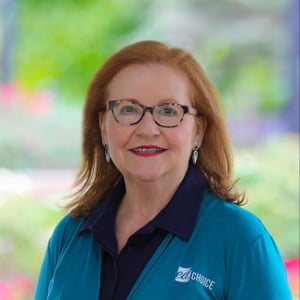
Vice President of Legal Affairs & Director of Legal Defense & Education Center, EdChoice
Leslie Hiner, Esq. is an advocate of educational freedom, a crusader fighting for the unencumbered opportunity of parents to decide how and where their children will be educated. She believes in the power of individuals to change the world, and believes personal liberty will be enhanced when our method of funding K–12 education is changed to empower parents and students before institutions.
As vice president of legal affairs at EdChoice, the nation’s leading educational choice organization, Leslie leads the EdChoice Legal Defense and Education Center for this nonpartisan, charitable nonprofit and engages with other national organizations to support school choice. She is a proven leader, advancing educational freedom and choice for all as a pathway to successful lives and a stronger society.
Hiner is an attorney with extensive state legislative and executive branch experience. In Indiana, she was the first woman chief of staff to the speaker of the house, counsel to the senate president pro tempore, and general counsel/elections deputy to the Secretary of State. She is also a former small business owner, and former litigator in private practice.
A founding board member of one of Indiana’s first charter schools, Leslie served as chairman of the board for the first several years, guiding the school’s growth from about 150 to over 1000 students. She was also directly involved in developing Indiana’s original charter school law, one of the best in the nation, and Indiana’s voucher law, the largest in the country to date.
Leslie is a member of the American Enterprise Institute Leadership Network, serves on the Schools That Can National Advisory Council, and is a Policy Advisor for The Heartland Institute. Leslie is a long-time member of the Federalist Society and a Lugar Series Excellence in Public Service alumna.
Hiner travels the country speaking on educational issues and testifying at public hearings. Recent engagements include the American Enterprise Institute With all deliberate speed: Brown v. Board of Education II 60 years later; Center for Urban Renewal and Education National Policy Summit, “Changing Policy to Change Lives”; National Conference of State Legislatures Summit debate, School Vouchers and Education Savings Accounts: Are They Constitutional; Network of Enlightened Women National Conference, Three Things You Need To Know About Education Policy; International Conference on School Choice and Reform, The Constitutionality of Educational Choice; 100 Black Men of Greater Dallas/Fort Worth, Project Soar’s Mobilizing the Village; Louisville Federalist Society Lawyers’ Chapter, Is School Choice Good Public Policy; American Conservative Union CPAC 2017.
She’s been cited in several publications, including the Wall Street Journal, New York Times, Chicago Tribune, Washington Times, Forbes, US News & World Report, The Hill, Real Clear Policy, Federalist Society DocketWatch, National Review, The Federalist, Zman Magazine, Watchdog, and has appeared on EWTN News Nightly, Wall Street Journal Video Opinion Journal podcasts, David Webb Show on Sirius/XM, ChoiceMediaTV, The Heartland Institute podcasts and school choice events, The Morning Blaze, Issues in Education and many state level broadcasts.
A native of Ohio, she earned her Juris Doctorate from the University of Akron School of Law, her Bachelor of Arts degree from the College of Wooster, and attended Rostad Teachers College as an exchange student in Sweden where she was a student teacher in grades 2 and 3. She and her husband reside in Indianapolis, and have two grown children.
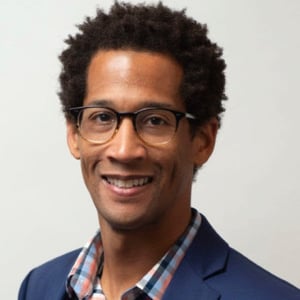
Senior Fellow, American Federation for Children
Shaka Mitchell serves as a Senior Fellow for the American Federation for Children.
He brings experience from several high-performing charter school networks, including Rocketship Education and LEAD Public schools, that serve over 2,500 students in Nashville.
Shaka began his career in education as the Associate Director of Policy and Planning at the D.C.-based Center for Education Reform. He then led outreach efforts at the Institute for Justice, a constitutional law firm based in Arlington, VA.
He is an alumnus of Belmont University where he teaches American Government and Constitutional Law as an adjunct faculty member. He earned his Juris Doctorate from the Wake Forest University School of Law where he sits on the Board of Advisors for the Journal of Law and Policy. Shaka is a co-founder of MoreMarrowDonors.org, a non-profit committed to providing scholarships to bone marrow donors who are matches for patients with various blood diseases. Shaka is the Chair of the Tennessee State Advisory Committee to the U.S. Commission on Civil Rights.
He is a member of the American Enterprise Institute’s Leadership Network and Aspen Institute Civil Society Fellowship. Shaka and his wife Stephanie are members of Edgefield Church in Nashville and are active in several non-profit organizations.
Partner, Schaerr Jaffe LLP
Gene Schaerr specializes in handling—and usually winning—civil appeals, writ proceedings and similar matters, both in appellate courts and in the law-focused proceedings at the trial-court or agency level that often determine success or failure on appeal. He has argued and won dozens of cases in a variety of forums—including the U.S. Supreme Court (where he has argued six cases), every federal circuit, and numerous federal district courts and state appellate courts. His win rate in the dozens of federal appeals he has argued in the past six years is over 75 percent.
He was a coordinator of Sidley Austin's appellate practice from 1993 until 2005, and from 2005 until 2014 was the chair of the nationwide appellate practice at Winston & Strawn—a practice he led to numerous recognitions in such publications as the Appellate Hot List. His personal practice successes have won him repeated recognition in such publications as Best Lawyers in Washington, D.C., Legal 500, D.C. Superlawyers, and Best Lawyers in America. In January 2014, Mr. Schaerr formed his own boutique litigation firm so that he could serve his clients without the conflicts and inefficiencies inherent in big-firm law practice.
Substantively, Mr. Schaerr's experience includes not only virtually every area of federal law, defamation, higher education law, immigration, insurance coverage, labor and employment, patent and trademark, privacy, product liability and warranty, statutory interpretation and tax.He has represented clients in virtually every sector, including automotive, communications, energy, financial services, health care, higher education, insurance, maritime, pharmaceuticals, technology and state and local government. He also teaches courses in Supreme Court litigation, religious freedom litigation and advanced litigation skills as an adjunct professor of law at the Brigham Young University law school.
Mr. Schaerr began law practice in 1987 following clerkships on the U.S. Supreme Court (for Chief Justice Warren Burger and Justice Antonin Scalia) and on the U.S. Court of Appeals for the D.C. Circuit (for then- Judge Kenneth Starr). He graduated in 1985 from the Yale Law School, where he was Editor-in-Chief of the Yale Journal on Regulation and Senior Editor of the Yale Law Journal. From 1991 to 1993, he served in the White House as Associate Counsel to the President, where he had responsibility for a wide range of constitutional and administrative-law issues, including those involving economic regulation, higher education, separation of powers, federalism and religious freedom. He serves as Chairman of the Constitutional Sources Project, a digital resource providing free public access to historical materials relevant to the U.S. Constitution.

Associate, Consovoy McCarthy PLLC
Ms. Bates assists clients with a variety of litigation and appellate matters that encompass constitutional law, administrative law, and commercial litigation. Before joining the firm, Ms. Bates was a law clerk to Judge Kyle Duncan of the U.S. Court of Appeals for the Fifth Circuit. She previously served as a Legal Policy Analyst at the Heritage Foundation, where she researched and wrote about the courts, judicial nominations, and various constitutional issues. She also co-hosted Heritage’s SCOTUS 101 podcast. She earned her B.A. magna cum laude in Politics from Hillsdale College, and her J.D. from the Antonin Scalia Law School at George Mason University. Ms. Bates is a member of the Virginia Bar.
Founding Partner, Benbrook Law Group
Brad has litigated business and public policy matters throughout the United States for over 25 years. He represents businesses of all sizes in civil litigation and disputes with administrative agencies. Brad also regularly represents individuals and groups in constitutional and public policy litigation in the trial and appellate courts. He regularly submits amicus briefs on behalf of clients at the Supreme Court of the United States on significant cases. Brad is often hired as special litigation counsel in complex family law, bankruptcy, and trust and estate litigation.
After graduating from law school, Brad worked as a judicial clerk for Judge J.L. Edmondson of the United States Court of Appeals for the Eleventh Circuit in Atlanta. Brad received his law degree from the University of California at Berkeley after graduating from Stanford University, where he was a four-year letterman on the golf team.
Counsel, Schaerr Jaffe LLP
Stephanie Freudenberg is a litigator who has represented a broad range of public and private clients, including global financial institutions and Fortune 500 companies, in complex commercial litigation matters at all stages of litigation, from discovery at the trial court level through merits briefing on appeal. She has handled a wide range of cases involving securities litigation and enforcement, products liability, contractual disputes, antitrust, white collar defense, and other issues.
After law school, Stephanie clerked for the Honorable Robert B. Kugler on the U.S. District Court for the District of New Jersey and the Honorable Edith Brown Clement on the U.S. Court of Appeals for the Fifth Circuit. Following those clerkships, she spent over five years in litigation practice with the New York and Washington, D.C. offices of the law firm of Sullivan & Cromwell.
Stephanie graduated from Harvard Law School, where she was deputy editor-in-chief for the Harvard Journal of Law and Public Policy and the recipient of five Dean’s Scholar Prizes. She received her undergraduate degree from Princeton University.
She joined Schaerr Jaffe as counsel in November 2024.
Senior Litigation Counsel, New Civil Liberties Alliance
Jacob Huebert is Senior Litigation Counsel at the New Civil Liberties Alliance. He previously served as President and Director of Litigation of the Liberty Justice Center, where he successfully litigated cases to protect constitutional rights, including the landmark Janus v. AFSCME case, in which the U.S. Supreme Court upheld government employees’ First Amendment right to choose for themselves whether to pay money to a union. Jacob was also previously a Senior Attorney at the Goldwater Institute, where he litigated cases on free speech, property rights, and the Second Amendment.
Jacob and his work have appeared in numerous national media outlets, including the Wall Street Journal, New York Times, and Fox News Channel. He is also the author of a book, Libertarianism Today.
Jacob holds a B.A. in economics from Grove City College and a J.D. from the University of Chicago Law School. After law school, he served as a clerk to Judge Deborah Cook of the U.S. Court of Appeals for the Sixth Circuit. Jacob has served as an adjunct law professor at several law schools, teaching courses in advanced appellate advocacy, the law of payments, legal writing, and jurisprudence. Before working in public interest law, Jacob was a litigator in private practice.
Deputy Attorney General, Legal Strategy, Texas
Ryan serves as Deputy Attorney General for Legal Strategy in the Texas Attorney General's Leadership Team. He most recently acted as Associate Deputy Attorney General for Civil Litigation. For the previous four years, Mr. Walters served in the Special Litigation Division—as Special Counsel, Deputy Chief, and eventually Chief. In those positions, he led the Attorney General's most significant litigation against the Biden Administration, including successful challenges to federal rules weakening immigration enforcement and those imposing gender-identity mandates on Texas's workplaces, schools, and hospitals. Prior to his tenure in the Office of the Attorney General, Mr. Walters served as an attorney with the Texas Public Policy Foundation, as an Assistant Attorney General in the Ohio Attorney General’s Office, and as a commercial litigator at two international law firms. He is a graduate of The Ohio State University and holds law degrees from the University of Michigan Law School and the University of California, Berkeley, School of Law.
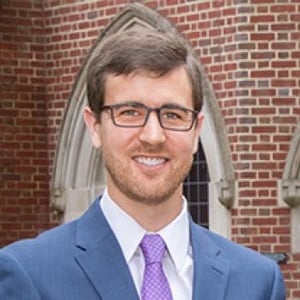
Professor of Law & Helen L. Crocker Faculty Scholar, Stanford Law School
Jud Campbell joined the faculty of Stanford Law School in 2023. He previously served as a professor of law at the University of Richmond School of Law and as a visiting professor of law at the University of Chicago Law School and at Harvard Law School. His academic focus is constitutional history and First Amendment law. His publications include articles in the Stanford Law Review, Yale Law Journal, Harvard Law Review, Texas Law Review, Constitutional Commentary, and Law and History Review. After completing his J.D. at Stanford Law School, he clerked for Judge Diane S. Sykes on the U.S. Court of Appeals for the Seventh Circuit, and for Judge José A. Cabranes on the U.S. Court of Appeals for the Second Circuit. He then served as the Executive Director of the Stanford Constitutional Law Center. He holds a bachelor’s degree from the University of North Carolina at Chapel Hill and two master’s degrees from the London School of Economics, where he studied as a Marshall Scholar.
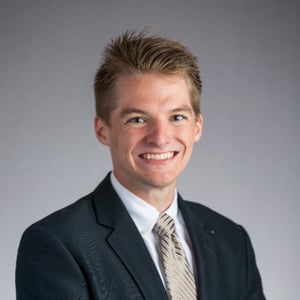
Chief of Staff and Attorney Advisor, FTC Commissioner Mark Meador
John Ehrett is Chief of Staff and Attorney Advisor to FTC Commissioner Mark Meador. He previously served as Senior Counsel at the U.S. Department of Education and Chief Counsel to U.S. Senator Josh Hawley. Prior to that, he was an associate at Gibson Dunn and a law clerk to Judge James Ho on the Fifth Circuit Court of Appeals and Judge Alex Kozinski on the Ninth Circuit Court of Appeals. He is a graduate of Yale Law School and Patrick Henry College.

Partner, Schaerr | Jaffe LLP
Erik Jaffe has been involved in appeals on a broad range of legal issues, including First Amendment challenges to campaign finance reform, Commerce Clause challenges to Health Care Reform and other federal legislation, Equal Protection Clause challenges to affirmative action in education, First Amendment challenges to school vouchers, Fifth Amendment challenges to takings of property, Second Amendment challenges to restrictions on gun ownership, and a wide variety of cases involving patents, copyrights, ERISA, securities fraud, federal preemption, environmental regulation, and other state and federal constitutional and statutory matters. He has represented businesses and non-profit groups, Judges, Senators, former government officials, Nobel Prize winners, and a broad cross-section of private individuals. Mr. Jaffe has been involved in over 120 Supreme Court matters, including filing over 30 cert. petitions, representing half-a-dozen parties on the merits, and filing over 70 amicus briefs at both the cert. and merits stages.
A 1990 graduate of the Columbia University School of Law, Mr. Jaffe was a law clerk to Judge Douglas H. Ginsburg of the United States Court of Appeals for the District of Columbia Circuit from 1990 to 1991. Following that clerkship he spent five years in litigation practice with the Washington, D.C. law firm of Williams & Connolly. In the summer of 1996 he left Williams & Connolly to clerk for Supreme Court Justice Clarence Thomas. At the end of that clerkship he started his own practice, and he was a sole practitioner from 1997 to 2018. He joined the firm of Schaerr | Jaffe LLP in 2018.
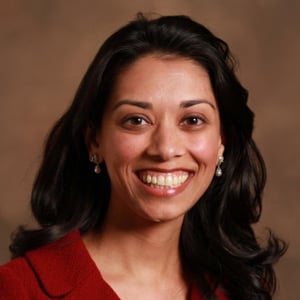
General Counsel, Center for Individual Rights
Darpana Sheth joined CIR as General Counsel in May 2025. She is a nationally recognized constitutional litigator with over two decades of experience serving in in leadership roles at other nonprofit organizations.
Before joining CIR, Darpana served for four years as Vice President of Litigation for the Foundation for Individual Rights and Expression. Prior to that, Darpana was a Senior Attorney with the Institute for Justice, where she also served as Director of the Institute’s National Initiative to End Forfeiture Abuse.
Before finding her calling as a public-interest attorney, Darpana served as an Assistant Attorney General for the State of New York and worked in private practice as a litigation associate at the Manhattan law firm of Chadbourne & Parke, LLP. She also served as law clerk to the Honorable Jerome A. Holmes of the U.S. Court of Appeals for the Tenth Circuit.
A native of Philadelphia, Darpana graduated from the University of Pennsylvania with a Bachelor of Arts in Political Science and History. She earned her law degree from Georgetown University Law Center.
Partner, Schaerr | Jaffe LLP
Erik Jaffe has been involved in appeals on a broad range of legal issues, including First Amendment challenges to campaign finance reform, Commerce Clause challenges to Health Care Reform and other federal legislation, Equal Protection Clause challenges to affirmative action in education, First Amendment challenges to school vouchers, Fifth Amendment challenges to takings of property, Second Amendment challenges to restrictions on gun ownership, and a wide variety of cases involving patents, copyrights, ERISA, securities fraud, federal preemption, environmental regulation, and other state and federal constitutional and statutory matters. He has represented businesses and non-profit groups, Judges, Senators, former government officials, Nobel Prize winners, and a broad cross-section of private individuals. Mr. Jaffe has been involved in over 120 Supreme Court matters, including filing over 30 cert. petitions, representing half-a-dozen parties on the merits, and filing over 70 amicus briefs at both the cert. and merits stages.
A 1990 graduate of the Columbia University School of Law, Mr. Jaffe was a law clerk to Judge Douglas H. Ginsburg of the United States Court of Appeals for the District of Columbia Circuit from 1990 to 1991. Following that clerkship he spent five years in litigation practice with the Washington, D.C. law firm of Williams & Connolly. In the summer of 1996 he left Williams & Connolly to clerk for Supreme Court Justice Clarence Thomas. At the end of that clerkship he started his own practice, and he was a sole practitioner from 1997 to 2018. He joined the firm of Schaerr | Jaffe LLP in 2018.

Partner, Steptoe & Johnson LLP
Stewart Baker is a partner in the law firm of Steptoe & Johnson in Washington, D.C. From 2005 to 2009, he was the first Assistant Secretary for Policy at the Department of Homeland Security. His law practice covers cybersecurity, data protection, homeland security, and travel and foreign investment regulation; he has been awarded one patent.
Mr. Baker has been General Counsel of the National Security Agency and General Counsel of the commission that investigated WMD intelligence failures prior to the Iraq war. He is the author of Skating on Stilts, a book on terrorism, cybersecurity, and other technology issues; he also hosts the weekly Cyberlaw Podcast.

Judge, United States Court of Appeals, Third Circuit
Judge Paul Matey was appointed to the United States Court of Appeals for the Third Circuit in 2019 by President Trump.
Before his judicial service, Judge Matey was a partner at Lowenstein Sandler in New Jersey where he practiced complex commercial litigation and criminal defense. Earlier, Judge Matey was the Senior Vice President, General Counsel and Secretary for University Hospital Newark, an academic medical center and teaching hospital.
He also served as the Deputy Chief Counsel to Governor Chris Christie, and as an Assistant United States Attorney in the District of New Jersey, where he was awarded the Justice Department’s Director’s Award for Superior Performance. He also practiced at the Washington D.C. firm of Kellogg, Hansen, Todd, Figel & Frederick, and served as a law clerk to judges on the United States Court of Appeals for the Third Circuit and the United States District Court for the District of New Jersey.
He earned his bachelor’s degree from the University of Scranton, a Jesuit University, in 1993, and his juris doctorate, summa cum laude, from Seton Hall University School of Law in 2001, where he served as Editor-in-Chief of the Seton Hall Law Review.
In 2019, Judge Matey was elected to membership in the American Law Institute and, since 2020, has lectured on administrative law and the American legal history at Seton Hall.
Partner, Schaerr Jaffe LLP
Gene Schaerr specializes in handling—and usually winning—civil appeals, writ proceedings and similar matters, both in appellate courts and in the law-focused proceedings at the trial-court or agency level that often determine success or failure on appeal. He has argued and won dozens of cases in a variety of forums—including the U.S. Supreme Court (where he has argued six cases), every federal circuit, and numerous federal district courts and state appellate courts. His win rate in the dozens of federal appeals he has argued in the past six years is over 75 percent.
He was a coordinator of Sidley Austin's appellate practice from 1993 until 2005, and from 2005 until 2014 was the chair of the nationwide appellate practice at Winston & Strawn—a practice he led to numerous recognitions in such publications as the Appellate Hot List. His personal practice successes have won him repeated recognition in such publications as Best Lawyers in Washington, D.C., Legal 500, D.C. Superlawyers, and Best Lawyers in America. In January 2014, Mr. Schaerr formed his own boutique litigation firm so that he could serve his clients without the conflicts and inefficiencies inherent in big-firm law practice.
Substantively, Mr. Schaerr's experience includes not only virtually every area of federal law, defamation, higher education law, immigration, insurance coverage, labor and employment, patent and trademark, privacy, product liability and warranty, statutory interpretation and tax.He has represented clients in virtually every sector, including automotive, communications, energy, financial services, health care, higher education, insurance, maritime, pharmaceuticals, technology and state and local government. He also teaches courses in Supreme Court litigation, religious freedom litigation and advanced litigation skills as an adjunct professor of law at the Brigham Young University law school.
Mr. Schaerr began law practice in 1987 following clerkships on the U.S. Supreme Court (for Chief Justice Warren Burger and Justice Antonin Scalia) and on the U.S. Court of Appeals for the D.C. Circuit (for then- Judge Kenneth Starr). He graduated in 1985 from the Yale Law School, where he was Editor-in-Chief of the Yale Journal on Regulation and Senior Editor of the Yale Law Journal. From 1991 to 1993, he served in the White House as Associate Counsel to the President, where he had responsibility for a wide range of constitutional and administrative-law issues, including those involving economic regulation, higher education, separation of powers, federalism and religious freedom. He serves as Chairman of the Constitutional Sources Project, a digital resource providing free public access to historical materials relevant to the U.S. Constitution.
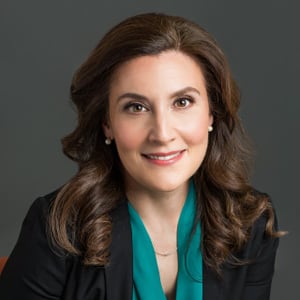
Board Member, U.S. Privacy and Civil Liberties Oversight Board
Beth A. Williams is a Board Member of the United States Privacy and Civil Liberties Oversight Board, an agency whose mission is to ensure that the federal government's efforts to prevent terrorism are balanced with the need to protect privacy and civil liberties.
Prior to her Board service, Ms. Williams was the Assistant Attorney General for the Office of Legal Policy at the United States Department of Justice from August 2017 to December 2020. In that role, she served as the primary policy advisor to the Attorney General and the Deputy Attorney General, and as the Chief Regulatory Officer for the Department. Ms. Williams also led the judicial nomination process for the Department, assisting in the selection and confirmation of more than 230 Article III judges to the bench.
Prior to becoming Assistant Attorney General, Ms. Williams was a litigation and appellate partner at a national law firm, where her practice focused on complex commercial, securities, appellate, and First Amendment litigation. From 2005-2006, Ms. Williams served as Special Counsel to the United States Senate Committee on the Judiciary, where she assisted with the confirmation of Chief Justice John G. Roberts, Jr. and Associate Justice Samuel A. Alito, Jr. to the United States Supreme Court.
Ms. Williams clerked for the Hon. Richard C. Wesley on the United State Court of Appeals for the Second Circuit. She graduated from Harvard College magna cum laude, with a degree in History and Literature, and she earned her law degree from Harvard Law School, where she served as Executive Editor of the Harvard Journal of Law and Public Policy.

Emanuel S. Heller Professor of Law, University of California at Berkeley; Thomas Smith Senior Research Fellow, The Civitas Institute, University of Texas at Austin
John Yoo is the Emanuel Heller Professor of Law at the University of California at Berkeley. He is also the Thomas Smith Senior Research Fellow, Civitas Institute, at the University of Texas at Austin. He is also a Nonresident Senior Fellow at the American Enterprise Institute.
His most recent book, The Politically Incorrect Guide to the Supreme Court, co-authored with Robert Delahunty, was published in 2023. Professor Yoo’s other books include Defender-in-Chief: Trump’s Fight for Presidential Power; Striking Power: How Cyber, Robots, and Space Weapons Change the Rules for War; Point of Attack: Preventive War, International Law, and Global Welfare; and Crisis and Command: A History of Executive Power from George Washington to George Bush.
He is a co-author of volumes 1 and 2 of R. Rossum, G. Tarr, V. Munoz & J. Yoo American Constitution Law (Routledge, 2026), and a co-editor of the eight-volume series on the 250th anniversary of the American Revolution, We Hold These Truths, with Yuval Levin and Adam White of the American Enterprise Institute.
Professor Yoo has published more than 100 articles in academic journals on subjects including national security, constitutional law, international law, and the Supreme Court. He also regularly contributes to the editorial pages of the Wall Street Journal, New York Times, Washington Post, Los Angeles Times, and National Review, among others.
Professor Yoo has served in all three branches of government. He was an official in the U.S. Department of Justice, where he worked on national security and terrorism issues after the 9/11 attacks. He served as general counsel of the U.S. Senate Judiciary Committee. He has been a law clerk for Supreme Court Justice Clarence Thomas and federal appeals Judge Laurence Silberman. He has been a visiting professor at the University of Texas at Austin’s School of Civic Leadership, Seoul National University, the Interdisciplinary Center Herzliya, Keio University, Trento University, the University of Chicago, and the Free University of Amsterdam.
Professor Yoo supervises the Public Law and Policy Program and the California Constitution Center. He also serves on the boards of Founding Forward, the Washington Legal Foundation, the Pacific Legal Foundation, the Ulysses Grant Institute, the Federalist Society’s Separation of Powers and Federalism Division, the Universidad Cientifica del Sur Law School, and the Asia-Pacific Law Institute at Seoul National University. He is a winner of the Federalist Society’s Paul Bator award and the Heritage Foundation’s Edwin Meese III Originalism Lectureship.
Professor Yoo graduated from Yale Law School and summa cum laude from Harvard College.
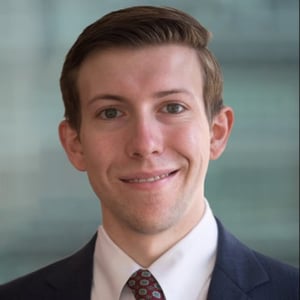
Policy Analyst, Cato Institute
Will Duffield is a policy analyst in the Cato Institute’s Center for Representative Government, where he studies speech and internet governance. His research focuses on the web of government regulation and private rules that govern Americans’ speech online.

Partner, BakerHostetler, Adjunct Fellow, The Manhattan Institute
Andrew Grossman leads BakerHostetler’s Appellate and Major Motion team. He has appeared before the U.S. Supreme Court, nearly all the federal courts of appeals, as well as some state appellate courts, litigating high-profile and complex commercial, administrative and constitutional issues.
Andrew works with practice groups across BakerHostetler to identify and tackle complex issues, advise on administrative law and strategy, tee up issues for appeal and tackle appeals. He has developed and implemented litigation and administrative strategies for clients in several fields and industries.
In addition to his practice, Andrew advises members of Congress on matters of constitutional and administrative law, having testified more than a dozen times before the House and Senate Judiciary Committees. He has been a frequent legal commentator on radio and television, having appeared on Fox News, CNN, MSNBC, CNBC, NPR and its affiliates, CBN and elsewhere. His legal commentary has also appeared in dozens of magazines and newspapers, including The Wall Street Journal, USA Today, The Washington Post, The Washington Times and many others.
Andrew is a Senior Legal Fellow at the Buckeye Institute, an Adjunct Fellow the Manhattan Institute and a member of the leadership of the Federalist Society. He previously served as an adjunct scholar at the Cato Institute’s Robert A. Levy Center for Constitutional Studies and a legal fellow at the Heritage Foundation’s Meese Center for Legal and Judicial Studies. He clerked for Judge Edith H. Jones on the U.S. Court of Appeals for the Fifth Circuit.
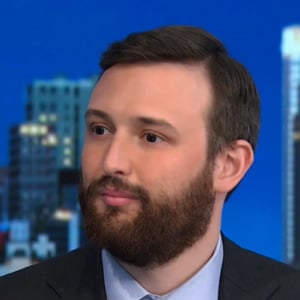
Senior Staff Attorney, Speech, Privacy & Technology Project, ACLU
Brian Hauss is a senior staff attorney with the ACLU’s Speech, Privacy & Technology Project, where he focuses on free expression issues. Since joining the ACLU in 2012, he has litigated cases defending the First Amendment rights of writers, journalists, media organizations, activists, advocacy groups, labor unions and private citizens. He has authored or co-authored numerous Supreme Court amicus curiae briefs on behalf of the ACLU and other groups. He also regularly discusses First Amendment issues in the media and at law schools throughout the country. Brian was a 2021-22 Wasserstein Public Interest Fellow at Harvard Law School. He is a graduate of Yale University and Harvard Law School and served as a law clerk to the Hon. Marsha S. Berzon of the U.S. Court of Appeals for the Ninth Circuit.
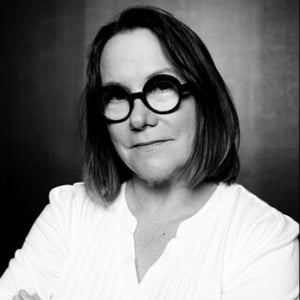
Independent Analyst, None
Allison Hayward most recently served as the Head of Case Selection at the Oversight Board. Previously, she was a Commissioner at the California Fair Political Practices Commission, a Board Member at the Office of Congressional Ethics, and an Assistant Professor of Law at George Mason University School of Law. She also previously worked as Chief of Staff and Counsel in the office of Federal Election Commission Commissioner Bradley A. Smith and practiced election law in California and in Washington DC.
In 1994-1995, Professor Hayward was a judicial clerk for the Honorable Danny J. Boggs, United States Court of Appeal for the Sixth Circuit.
She is a member of the State Bar of California and the District of Columbia Bar.
Partner, Schaerr | Jaffe LLP
Erik Jaffe has been involved in appeals on a broad range of legal issues, including First Amendment challenges to campaign finance reform, Commerce Clause challenges to Health Care Reform and other federal legislation, Equal Protection Clause challenges to affirmative action in education, First Amendment challenges to school vouchers, Fifth Amendment challenges to takings of property, Second Amendment challenges to restrictions on gun ownership, and a wide variety of cases involving patents, copyrights, ERISA, securities fraud, federal preemption, environmental regulation, and other state and federal constitutional and statutory matters. He has represented businesses and non-profit groups, Judges, Senators, former government officials, Nobel Prize winners, and a broad cross-section of private individuals. Mr. Jaffe has been involved in over 120 Supreme Court matters, including filing over 30 cert. petitions, representing half-a-dozen parties on the merits, and filing over 70 amicus briefs at both the cert. and merits stages.
A 1990 graduate of the Columbia University School of Law, Mr. Jaffe was a law clerk to Judge Douglas H. Ginsburg of the United States Court of Appeals for the District of Columbia Circuit from 1990 to 1991. Following that clerkship he spent five years in litigation practice with the Washington, D.C. law firm of Williams & Connolly. In the summer of 1996 he left Williams & Connolly to clerk for Supreme Court Justice Clarence Thomas. At the end of that clerkship he started his own practice, and he was a sole practitioner from 1997 to 2018. He joined the firm of Schaerr | Jaffe LLP in 2018.

Judge, United States Court of Appeals, District of Columbia Circuit
Judge Katsas was appointed to the D.C. Circuit in December 2017. He graduated from Princeton University and Harvard Law School, where he was an executive editor on the Harvard Law Review. Between 1989 and 1992, he served as a law clerk to Judge Edward Becker on the Third Circuit, to then-Judge Clarence Thomas on the D.C. Circuit, and to Justice Thomas on the Supreme Court. Between 1992 and 2001, he was an associate and then partner in the Washington office of Jones Day, where he specialized in appellate and complex civil litigation. Between 2001 and 2009, he served in many senior positions in the Department of Justice, including as Assistant Attorney General for the Civil Division and as Acting Associate Attorney General. In 2009, he returned to Jones Day. From January to December 2017, he served as Deputy Assistant to the President and Deputy Counsel to the President.
Before joining the bench, Judge Katsas argued more than 75 appeals, including three cases in the Supreme Court, 13 cases in the D.C. Circuit, and cases in every other federal court of appeals. By appointment of the Chief Justice, he served on the Advisory Committee on Appellate Rules from 2013 to 2017. In 2016, he was elected to membership in the American Academy of Appellate Lawyers.
Partner, Schaerr | Jaffe LLP
Erik Jaffe has been involved in appeals on a broad range of legal issues, including First Amendment challenges to campaign finance reform, Commerce Clause challenges to Health Care Reform and other federal legislation, Equal Protection Clause challenges to affirmative action in education, First Amendment challenges to school vouchers, Fifth Amendment challenges to takings of property, Second Amendment challenges to restrictions on gun ownership, and a wide variety of cases involving patents, copyrights, ERISA, securities fraud, federal preemption, environmental regulation, and other state and federal constitutional and statutory matters. He has represented businesses and non-profit groups, Judges, Senators, former government officials, Nobel Prize winners, and a broad cross-section of private individuals. Mr. Jaffe has been involved in over 120 Supreme Court matters, including filing over 30 cert. petitions, representing half-a-dozen parties on the merits, and filing over 70 amicus briefs at both the cert. and merits stages.
A 1990 graduate of the Columbia University School of Law, Mr. Jaffe was a law clerk to Judge Douglas H. Ginsburg of the United States Court of Appeals for the District of Columbia Circuit from 1990 to 1991. Following that clerkship he spent five years in litigation practice with the Washington, D.C. law firm of Williams & Connolly. In the summer of 1996 he left Williams & Connolly to clerk for Supreme Court Justice Clarence Thomas. At the end of that clerkship he started his own practice, and he was a sole practitioner from 1997 to 2018. He joined the firm of Schaerr | Jaffe LLP in 2018.

John Marshall Harlan II Professor of Law Emerita, New York Law School; Former President, American Civil Liberties Union
Nadine Strossen, New York Law School Professor Emerita and Senior Fellow at FIRE (the Foundation for Individual Rights and Expression), was national President of the American Civil Liberties Union from 1991 to 2008. An internationally acclaimed free speech scholar and advocate, who regularly addresses diverse audiences and provides media commentary around the world, Strossen is also the Host and Project Consultant for Free To Speak, a 3-hour documentary film series distributed on public television in 2023. Her books about free speech include: Free Speech: What Everyone Needs to Know® (Oxford University Press 2023); HATE: Why We Should Resist It with Free Speech, Not Censorship (Oxford University Press 2018); and Defending Pornography: Free Speech, Sex, and the Fight for Women’s Rights (Scribner 1995), which was republished with a new Preface in 2024 as part of the NYU Classics Series. Her many honors and awards include the National Coalition Against Censorship’s Judy Blume Lifetime Achievement Award for Free Speech. She serves on the Advisory Boards of several organizations that do free speech work, including: ACLU, Academic Freedom Alliance, Foundation Against Intolerance and Racism (FAIR), Heterodox Academy, National Coalition Against Censorship, and the University of Austin.
Partner, Schaerr | Jaffe LLP
Erik Jaffe has been involved in appeals on a broad range of legal issues, including First Amendment challenges to campaign finance reform, Commerce Clause challenges to Health Care Reform and other federal legislation, Equal Protection Clause challenges to affirmative action in education, First Amendment challenges to school vouchers, Fifth Amendment challenges to takings of property, Second Amendment challenges to restrictions on gun ownership, and a wide variety of cases involving patents, copyrights, ERISA, securities fraud, federal preemption, environmental regulation, and other state and federal constitutional and statutory matters. He has represented businesses and non-profit groups, Judges, Senators, former government officials, Nobel Prize winners, and a broad cross-section of private individuals. Mr. Jaffe has been involved in over 120 Supreme Court matters, including filing over 30 cert. petitions, representing half-a-dozen parties on the merits, and filing over 70 amicus briefs at both the cert. and merits stages.
A 1990 graduate of the Columbia University School of Law, Mr. Jaffe was a law clerk to Judge Douglas H. Ginsburg of the United States Court of Appeals for the District of Columbia Circuit from 1990 to 1991. Following that clerkship he spent five years in litigation practice with the Washington, D.C. law firm of Williams & Connolly. In the summer of 1996 he left Williams & Connolly to clerk for Supreme Court Justice Clarence Thomas. At the end of that clerkship he started his own practice, and he was a sole practitioner from 1997 to 2018. He joined the firm of Schaerr | Jaffe LLP in 2018.
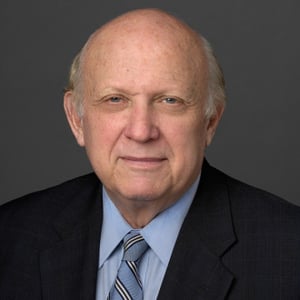
Senior Counsel, Cahill Gordon & Reindel LLP
Floyd Abrams is Senior Counsel in Cahill Gordon & Reindel LLP's litigation practice group.
Floyd has a national trial and appellate practice and extensive experience in high-visibility matters, often involving First Amendment, securities litigation, intellectual property, public policy and regulatory issues. He has argued frequently in the Supreme Court in cases raising issues as diverse as the scope of the First Amendment, the interpretation of ERISA, the nature of broadcast regulation, the impact of copyright law and the continuing viability of the Miranda rule. Most recently, Floyd prevailed in his argument before the Supreme Court on behalf of Senator Mitch McConnell as amicus curiae, defending the rights of corporations and unions to speak publicly about politics and elections in Citizens United v. Federal Election Commission. Floyd's clients have included The McGraw-Hill Companies in a large number of litigations around the country involving claims against its subsidiary, Standard & Poor’s Financial Services LLC, The New York Times in the Pentagon Papers case and others, ABC, NBC, CBS, CNN, Time Magazine, Business Week, The Nation, Reader's Digest, Hearst, AIG, and others in trials, appeals and investigations.
Floyd has represented Standard & Poor’s in litigations about its ratings; he defended the Brooklyn Museum of Art in its legal battles with Mayor Rudolph Giuliani; he represented two of the nation’s largest insurers in litigation under Section 17200 in California and he has frequently testified before congressional committees and prepared clients to do so. In 1998, he represented CNN in investigating and issuing a report on its broadcast accusing the United States of using nerve gas on a military mission in Laos in 1970, and again in 1999 in seeking to persuade the United States Senate to permit the public to view its deliberations as it determined whether or not to convict President Clinton of alleged high crimes and misdemeanors. He represented Nina Totenberg and National Public Radio in the 1992 "leak" investigation conducted by the United States Senate arising out of the confirmation hearing of Justice Clarence Thomas and, in 2004 and 2005, Judith Miller and Matthew Cooper in their efforts to avoid revealing their confidential sources.
In 2006, Floyd was elected to the American Academy of Arts & Sciences, an independent research center that conducts multidisciplinary studies of complex and emerging problems advanced by its 4,600 elected members, who are leaders in the academic disciplines, the arts, business and public affairs from around the world. In 2015, Floyd was honored by Yale Law School with its prestigious Award of Merit. Also in 2015, Floyd received the Walter Cronkite Freedom of Information Award presented by the Connecticut Foundation for Open Government. In 2011, Floyd was awarded the CUNY Graduate School of Journalism's Lifetime Achievement Award. In 1998, Floyd was the recipient of the William J. Brennan, Jr. Award for outstanding contribution to public discourse; the Learned Hand Award of the American Jewish Committee; and the Thurgood Marshall Award of the Association of the Bar of the City of New York. In November, 1999, he received the William J. Brennan, Jr. award of the Libel Defense Resource Center. Floyd was awarded, in 1997, the Milton S. Gould Award for outstanding appellate advocacy by the Office of the Appellate Defender in New York. Previously he had been awarded the Ross Essay Prize of the American Bar Association for his study of the Ninth Amendment of the United States Constitution. He has also received awards from, among others, the American Jewish Congress, Catholic University, the New York and Philadelphia Chapters of the Society of Professional Journalists, Sigma Delta Chi, the New York Civil Liberties Union, the Association for Education in Journalism and Mass Communication, and the National Broadcast Editorial Association.
In November, 2011, Yale Law School announced the formation of The Floyd Abrams Institute for Freedom of Expression, whose mission is to promote free speech, scholarship and law reform on emerging questions concerning traditional and new media. Developed in cooperation with Floyd, the Institute includes a clinic for Yale Law students to engage in litigation, draft model legislation, and advise lawmakers and policy makers on issues of media freedom and informational access.
The American Bar Association awarded Floyd its Certificate of Merit for his article published in The New York Times Magazine entitled "The New Effort to Control Information," which was described by the ABA as a "noteworthy contribution to public understanding of the American system of law and justice."
Described by Senator Daniel Patrick Moynihan as "the most significant First Amendment lawyer of our age," Floyd is top-ranked by Chambers USA. He is listed in Who’s Who Legal, Who’s Who in American Law, and has been awarded with Lifetime Achievement Awards by The New York Law Journal and The American Lawyer (2013).
Floyd, who served as chairman of Mayor Edward Koch's Committee on Appointments, New York City, served as the Chairman of the New York State Zenger Commemoration Planning Committee. Previously, he served as the Chairman of the Communications Committee of the Association of the Bar of the City of New York, as well as Chairman of the Committee on Freedom of Speech and of the Press of the Individual Rights Section of the American Bar Association and of the Committee on Freedom of Expression of the Litigation Section of the American Bar Association.
He has appeared frequently on television on Nightline, the News Hour with Jim Lehrer, Charlie Rose and other programs and has published articles and reviews in The New York Times, The Washington Post, The Yale Law Journal, The Harvard Law Review, and elsewhere.
Floyd served on the Technology and Privacy Advisory Committee of the U.S. Department of Defense in 2003-4 and as the Chair of the New York State Commission on Public Access to Court Records in 2004.
For fifteen years, Floyd was the William J. Brennan, Jr. Visiting Professor of First Amendment Law at the Columbia Graduate School of Journalism. He has, as well, been a Visiting Lecturer at Yale Law School and Columbia Law School and he is author of Friend of the Court: On the Front Lines with the First Amendment, published by Yale University Press (2013) and Speaking Freely: Trials of the First Amendment, published by Viking Press (2005).
Partner, Schaerr | Jaffe LLP
Erik Jaffe has been involved in appeals on a broad range of legal issues, including First Amendment challenges to campaign finance reform, Commerce Clause challenges to Health Care Reform and other federal legislation, Equal Protection Clause challenges to affirmative action in education, First Amendment challenges to school vouchers, Fifth Amendment challenges to takings of property, Second Amendment challenges to restrictions on gun ownership, and a wide variety of cases involving patents, copyrights, ERISA, securities fraud, federal preemption, environmental regulation, and other state and federal constitutional and statutory matters. He has represented businesses and non-profit groups, Judges, Senators, former government officials, Nobel Prize winners, and a broad cross-section of private individuals. Mr. Jaffe has been involved in over 120 Supreme Court matters, including filing over 30 cert. petitions, representing half-a-dozen parties on the merits, and filing over 70 amicus briefs at both the cert. and merits stages.
A 1990 graduate of the Columbia University School of Law, Mr. Jaffe was a law clerk to Judge Douglas H. Ginsburg of the United States Court of Appeals for the District of Columbia Circuit from 1990 to 1991. Following that clerkship he spent five years in litigation practice with the Washington, D.C. law firm of Williams & Connolly. In the summer of 1996 he left Williams & Connolly to clerk for Supreme Court Justice Clarence Thomas. At the end of that clerkship he started his own practice, and he was a sole practitioner from 1997 to 2018. He joined the firm of Schaerr | Jaffe LLP in 2018.
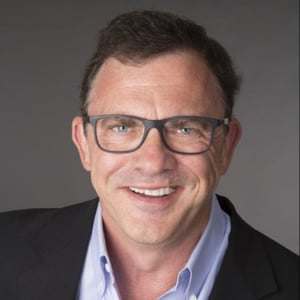
Beauchamp Brogan Distinguished Professor of Law, University of Tennessee College of Law
Professor Reynolds is one of the most prolific scholars on the UT faculty. His special interests are law and technology and constitutional law issues and his work has appeared in a wide variety of publications, including the Columbia Law Review, the Virginia Law Review, the University of Pennsylvania Law Review, the Wisconsin Law Review, the William and Mary Law Review, the Southern California Law Review, the Harvard Journal of Law and Technology, The Columbia Human Rights Law Review, Law and Policy in International Business, Jurimetrics, the Journal of Space Law, and the High Technology Law Journal. Professor Reynolds has also written in the New York Times, the Washington Post, The Atlantic, the Washington Times, the Los Angeles Times, Road & Track, Urb, and the Wall Street Journal, as well as other popular publications. He was for many years a contributing editor at Popular Mechanics magazine, and today writes a regular column for USA Today. He is the co-author of Outer Space: Problems of Law and Policy, and The Appearance of Impropriety: How the Ethics Wars Have Undermined American Government, Business, and Society. His most recent books are The Social Media Upheaval, The Judiciary’s Class War, and The New School: How the Information Age Will Save American Education from Itself.
Professor Reynolds has testified before Congressional committees on space law, international trade, and domestic terrorism. He has been executive chairman of the National Space Society and a member of the White House Advisory Panel on Space Policy. A member of the UT faculty since 1989, Professor Reynolds has received the Harold C. Warner Outstanding Faculty Scholarship Award in W. Allen Separk Outstanding Faculty Scholarship Award, and the Carden Award for Outstanding Scholarship.
A songwriter and producer for such bands as Mobius Dick, The Nebraska Guitar Militia, and The Defenders Of The Faith, Professor Reynolds is a member of the American Society of Composers and Performers and a former member of the National Academy of Recording Arts and Sciences.
Professor Reynolds blogs at InstaPundit.com.

School Choice & the FTCSP
Jim Blew, Leslie Davis Hiner, Shaka Laurence Mitchell, Gene C. Schaerr
School choice has come more to the fore of public awareness in the past several...
A Seat at the Sitting - January 2026
Tiffany H. Bates, Bradley A. Benbrook, Stephanie Lee Freudenberg, Jacob H. Huebert, Ryan Daniel Walters
Each month, a panel of constitutional experts convenes to discuss the Court’s upcoming docket sitting...
Speech and Censorship in the Age of Algorithms
Jud Campbell, John Ehrett, Erik S. Jaffe, Darpana Sheth Nunziata
As government actors and private litigants seek to regulate AI, social media, online obscenity, and...
Power, Persuasion, or Propaganda? [The FedSoc Films Podcast]
Erik S. Jaffe
In this episode of the FedSoc Films Podcast, Erik Jaffe, a partner at Schaerr Jaffe,...
FISA Section 702 Revisited: Originalist Interpretations and Constitutional Constraints
Stewart A. Baker, Paul B. Matey, Gene C. Schaerr, Beth A. Williams, John C. Yoo
Featuring: Hon. Stewart Baker, Of Counsel, Steptoe & Johnson LLP Hon. Beth A. Williams, Board...
Censorship by Proxy?
Will Duffield, Andrew Grossman, Brian Hauss, Allison R. Hayward, Erik S. Jaffe, Gregory G. Katsas
The First Amendment forbids public officials from censoring disfavored speech and speakers. But what happens...
Fireside Chat with Nadine Strossen
Erik S. Jaffe, Nadine Strossen
Free speech champion and icon Nadine Strossen joins Erik Jaffe for a virtual “fireside” chat...
Courthouse Steps Decision Webinar: Americans for Prosperity v. Bonta
Erik S. Jaffe
On July 1, 2021, the Supreme Court issued its decision in Americans for Prosperity Foundation...
Revisiting New York Times v. Sullivan
Floyd Abrams, Erik S. Jaffe, Glenn Reynolds
On April 21, 2021, the Federalist Society's Free Speech & Election Law Practice Group hosted...