
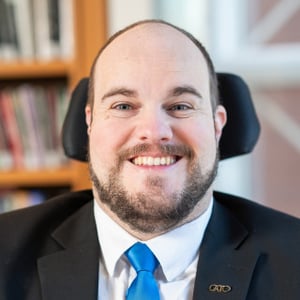
Director, Project on Criminal Justice, Cato Institute
Matthew Cavedon is the Director of the Cato Institute’s Project on Criminal Justice. He focuses on reforming plea-driven mass adjudication, ensuring police accountability, and defending constitutional criminal originalism. Cavedon’s scholarship has been published (or is forthcoming in) publications including the Arizona State Law Journal, Cato Supreme Court Review, Seattle University Law Review, and Georgetown Journal of Law and Public Policy. Formerly a Georgia public defender and fellow at the Institute for Justice, Cavedon has taught law school courses on criminal law and procedure, as well as the First Amendment. Cavedon clerked for a U.S. district court and the Supreme Court of Georgia. He came to Cato following a fellowship at the Emory University Center for the Study of Law and Religion.
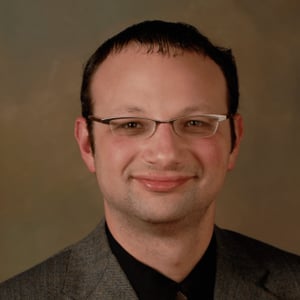
Chief Policy Counsel, Council on Criminal Justice and Senior Advisor, Right on Crime
Marc A. Levin is the Chief Policy Counsel for the Council on Criminal Justice (counciloncj.org) and Senior Advisor for Right on Crime.
An attorney and accomplished author on legal and public policy issues, Marc began the Foundation’s criminal justice program in 2005. This work contributed to nationally praised policy changes that have been followed by dramatic declines in crime and incarceration in Texas. Building on this success, in 2010, Levin developed the concept for the Right on Crime initiative, a TPPF project in partnership with Prison Fellowship and the American Conservative Union Foundation. Right on Crime has become the national clearinghouse for conservative criminal justice reforms and has contributed to the adoption of policies in dozens of states that fight crime, support victims, and protect taxpayers.
In 2014, Levin was named one of the “Politico 50” in the magazine’s annual “list of thinkers, doers, and dreamers who really matter in this age of gridlock and dysfunction.”
Marc has testified on criminal justice policy on four occasions before Congress and has testified before legislatures in states including Texas, Nevada, Kansas, Wisconsin, and California. He also has met personally with leaders such as U.S. Presidents, Speakers of the House, and the Justice Commtitee of the United Kingdom Parliament to share his ideas on criminal justice reform. In 2007, he was honored in a resolution unanimously passed by the Texas House of Representatives that stated, “Mr. Levin’s intellect is unparalleled and his research is impeccable.”
Since 2005, Marc has published dozens of policy papers on topics such as sentencing, probation, parole, reentry, and overcriminalization which are available on the TPPF website. Levin’s articles on law and public policy have been featured in publications such as the Wall Street Journal, USA Today, Texas Review of Law & Politics, National Law Journal, New York Daily News, Jerusalem Post, Toronto Star, Atlanta Journal-Constitution, Philadelphia Inquirer, San Francisco Chronicle, Washington Times, Los Angeles Daily Journal, Charlotte Observer, Dallas Morning News, Houston Chronicle, Austin American-Statesman, San Antonio Express-News and Reason Magazine.
In 1999, Marc graduated with honors from the University of Texas with a B.A. in Plan II Honors and Government. In 2002, Marc received his J.D. with honors from the University of Texas School of Law. Marc was a Charles G. Koch Summer Fellow in 1996. He served as a law clerk to Judge Will Garwood on the U.S. Court of Appeals for the Fifth Circuit and Staff Attorney at the Texas Supreme Court.
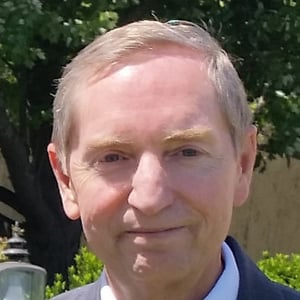
Legal Director & General Counsel, Criminal Justice Legal Foundation
Kent S. Scheidegger has been the Legal Director of the Criminal Justice Legal Foundation since December 1986. He also served as Chairman of the Criminal Law Practice Group of the Federalist Society 2003 to 2005. His articles on criminal and constitutional law have been published in law reviews, national legal publications, and congressional reports. Legal arguments authored by Mr. Scheidegger have been cited and incorporated in several precedent-setting United States Supreme Court decisions.
After receiving a degree in physics with honors from New Mexico State University in 1976, Mr. Scheidegger served for six years in the United States Air Force as a Nuclear Research Officer. He took his law degree with distinction from the University of the Pacific, McGeorge School of Law in 1982 and practiced civil law in Northern California. He was general counsel of California Cooler, Inc. from 1984 until 1986, when he joined the Foundation.
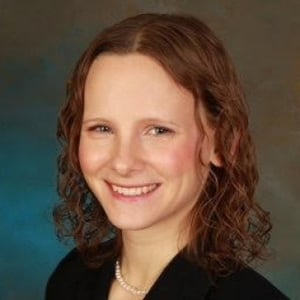
Executive Director, Center for Election Confidence
Lisa L. Dixon serves as the Executive Director of the Center for Election Confidence (formerly known as Lawyers Democracy Fund). Lisa is also a consultant for the Republican National Lawyers Association, serving as their Legal Counsel. Previously, Lisa practiced at Holtzman Vogel, where she specialized in tax-exempt organizations, campaign finance and election law, and lobbying compliance.
During law school, she interned for the Office of Chief Counsel, Procedure and Administration, at the Internal Revenue Service and at the Center for Law and Religious Freedom. Before law school, she served as the Assistant Student Division Director at The Federalist Society for Law and Public Policy Studies and interned at The Heritage Foundation’s Center for Legal and Judicial Studies.
Lisa earned a J.D. from the University of Virginia School of Law, an M.A. in History from the University of Virginia, and a B.A. in History from Hillsdale College. After 18 years on the East Coast, mostly in northern Virginia, she recently returned to her native Michigan, where she lives with her husband and three sons.
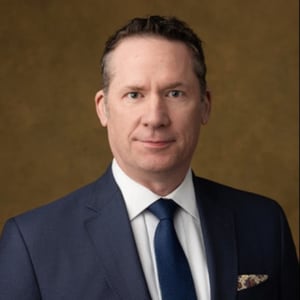
Senior Attorney, Pacific Legal Foundation
Oliver Dunford joined the Pacific Legal Foundation in March 2017. He litigates across the country to defend and advance individual liberty and the rule of law. Oliver’s cases involve the separation of powers, economic liberty, property rights, and the First Amendment.
Oliver remains inspired by the Classical Liberal ideals upon which our Founders declared independence and secured the blessings of liberty. The Constitution’s promises, however, are not self-executing. As James Madison explained, “In framing a government which is to be administered by men over men, the great difficulty lies in this: you must first enable the government to control the governed; and in the next place oblige it to control itself.” Oliver feels lucky that his work helps oblige the government to control itself—to the end that all individuals may pursue their rights of life, liberty, and the pursuit of happiness.
Before joining PLF, Oliver clerked at the Ohio Supreme Court and the Ohio Court of Appeals, and spent more than a decade in private practice working on complex commercial litigation. Originally from Cleveland, Oliver is a graduate of the University of Dayton and Cleveland-Marshall College of Law, where he was a managing editor for the Cleveland State Law Review. Oliver is admitted to the state bars of Florida, California, and Ohio, as well as several federal courts including the United States Supreme Court.
Oliver spends all of his free time following the Cleveland Indians.
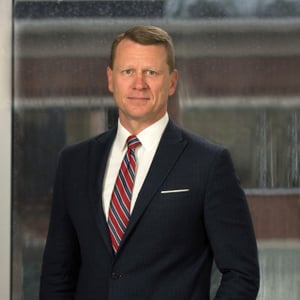
Partner, Phelps Dunbar LLP
Mike Hurst is a partner with Phelps Dunbar LLP where he optimizes his in-depth knowledge of the court system, investigative and prosecutorial agencies, the regulatory arena, and the public policy realm to help clients facing government investigations, enforcement actions, regulatory matters, general litigation and policy issues. Mike currently serves as the General Counsel of the Republican National Committee and as Chairman of the Mississippi Republican Party. He previously served as the U.S. Attorney for the Southern District of Mississippi from 2017-2021, and with over 20 years of experience before judges, juries and policy makers, handling some of the largest and most high-profile cases in Mississippi, he's known for untangling the most complex legal issues.
As U.S. Attorney, Mike was described as a “hard charger,” leading efforts to combat violent crime, human trafficking and public corruption, among many other issues, throughout Mississippi. He almost tripled prosecutions in the U.S. Attorney’s Office over a three-year period, resulting in the most indictments and federal defendants indicted in a one-year period in Mississippi history. He created innovative and national award-winning crime-fighting solutions, like “Project EJECT,” and he established the first statewide, multilevel and multidisciplinary human trafficking body, the Mississippi Human Trafficking Council, to comprehensively and holistically address this criminal scourge.
During his tenure as U.S. Attorney, Mike oversaw some of the biggest cases in Mississippi history: the largest health care fraud scheme (Wade Walters, et. al.), the largest Ponzi scheme (Lamar Adams), the largest False Claims Act health care fraud settlement (Region 8), and the largest nursing home False Claim Act settlement (Hyperion). In addition, as Chief Federal Law Enforcement Officer for the Southern District, Mike coordinated the largest single-state immigration worksite enforcement operation in our nation’s history, involving hundreds of federal law enforcement agents covering seven different locations operated by multiple companies.
Mike’s no show pony – he’s a work horse. Before his tenure as U.S. Attorney, Mike was an Assistant U.S. Attorney for the Southern District of Mississippi for more than eight years. He handled some of the most difficult and complex cases in that office, dealing with white collar crimes, public corruption and financial fraud, including numerous jury trials before almost every federal judge in the Southern District.
He also has experience in the private sector. He has practiced law in Washington, D.C., and has served as a litigator and general counsel for a conservative nonprofit. He also has extensive experience in public policy, having served as the Legislative Director to a U.S. Congressman and as Counsel to the House Judiciary Committee.
Mike has also testified before both the United States Senate and the U.S. House of Representatives on issues ranging from crime to Presidential pardons. He has worked on all sides of the legal, regulatory, investigative, prosecutorial and policy spectrum. The incredible insight gained from this varied experience enables him to find a path forward for clients, no matter how complicated the case.
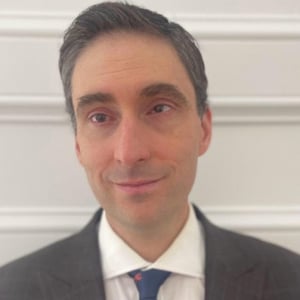
Senior Litigation Counsel, Washington Legal Foundation
Zac joined WLF in 2025 as Senior Litigation Counsel. In that role, he regularly represents WLF and other clients as counsel of record in cases before the U.S. Supreme Court and the federal appellate courts. Before arriving at WLF, Zac served as counsel to Commissioner Allen Dickerson of the Federal Election Commission. Zac also spent eight years litigating First Amendment cases as a staff attorney for the Institute for Free Speech, where he represented clients in federal and state cases across the country. He received his J.D. from George Mason University’s School of Law, where he participated in GMU’s Wiley Rein Supreme Court clinic.
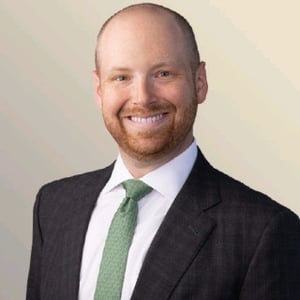
Solicitor General, Iowa Office of the Attorney General
Eric Wessan serves as Iowa’s Solicitor General in the Iowa Attorney General’s Office. In that role, Wessan leads Iowa’s litigation before State and federal appellate courts, including the Iowa and U.S. Supreme Courts. Before that role, Wessan worked on complex commercial litigation at two large law firms in Chicago. Wessan also served as a law clerk for the Honorable James C. Ho on the U.S. Court of Appeals for the Fifth Circuit and for the Honorable John F. Kness on the U.S. District Court for the Northern District of Illinois. Wessan is a graduate of the University of Chicago Law School, with honors, and of the University of Chicago.

Tazewell Taylor Professor of Law and William H. Cabell Research Professor, William & Mary Law School
Jonathan H. Adler joined the William & Mary law faculty as the Tazwell Taylor Professor of Law and William H. Cabell Research Professor in 2025. Prior to joining the faculty, he was the inaugural Johan Verheij Memorial Professor of Law and the founding Director of the Coleman P. Burke Center for Environmental Law at the Case Western Reserve University School of Law.
Professor Adler is the author or editor of seven books, including Climate Liberalism: Perspectives on Liberty, Property and Pollution (Palgrave, 2023), Marijuana Federalism: Uncle Sam and Mary Jane (Brookings Institution Press, 2020), Business and the Roberts Court (Oxford University Press, 2016) and Rebuilding the Ark: New Perspectives on Endangered Species Act Reform (AEI Press, 2011).
His articles have appeared in publications ranging from the Harvard Environmental Law Review and Yale Journal on Regulation to the Wall Street Journal, New York Times, and Washington Post. He has testified before Congress a dozen times, and his work has been cited in the U.S. Supreme Court. A 2024 study identified Professor Adler as the seventh most cited legal academic in administrative and environmental law from 2019 to 2023.
Professor Adler is a contributing editor to Civitas Outlook and a regular contributor to the popular legal blog, The Volokh Conspiracy. A regular commentator on constitutional and regulatory issues, he has appeared on numerous radio and television programs, ranging from the PBS Newshour and National Public Radio to the Fox News Channel and Entertainment Tonight.
Professor Adler is a senior fellow at the Property & Environment Research Center in Bozeman, Montana. In 2018, Professor Adler was elected to membership in the American Law Institute and helped co-found the organization Checks and Balances. In 2024, Professor Adler was appointed a public member of the Administrative Conference of the United States.
Professor Adler clerked for the Honorable David B. Sentelle on the U.S. Court of Appeals for the District of Columbia Circuit.
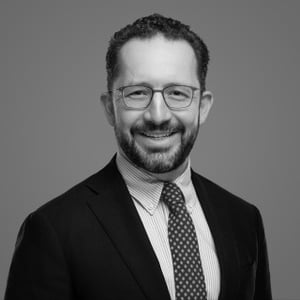
Executive Director, Alliance For Consumers; President & CEO, American Juris Link
O.H. Skinner is the President & CEO of American Juris Link, a nonprofit dedicated to accelerating nonprofit litigation to advance freedom, liberty, and the rule of law. O.H. has a long track record in facilitating strategic nonprofit litigation in his role as the Executive Director at Alliance For Consumers as well as from his time serving Arizona Attorney General Mark Brnovich in senior positions, including as Arizona Solicitor General. O.H. is a graduate of the University of Pennsylvania and Harvard Law School. Prior to joining the Arizona Attorney General's Office, O.H. practiced at WilmerHale and Ropes & Gray in Boston, and clerked for the Hon. J.L. Edmondson of the United States Court of Appeals for the Eleventh Circuit. In 2023, O.H. was a Wasserstein Public Interest Fellow at Harvard Law School, where he counseled students as a Harvard-identified “outstanding public interest attorney.”
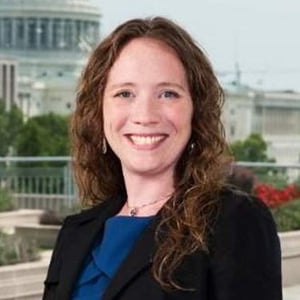
Partner, Luther Strange & Associates
Annie Donaldson Talley is Partner at Luther Strange and Associates. She recently departed the White House after serving as Deputy Assistant to the President and Deputy Counsel to the President. Over the past four years, she provided outside counsel to the Donald J. Trump for President campaign; helped stand up and manage the White House Counsel’s Office; interfaced with agencies across the federal government; and advised the President of the United States, White House Counsel, Chief of Staff and other senior staff across the Executive Office of the President on a broad range of issues from regulatory reform to executive nominations to the day-to-day issues facing the Administration.
Prior to her White House service, Annie Donaldson Talley counseled clients in the non-profit, for-profit, political, and government sectors, as well as high-profile individuals in private practice at Jones Day and Patton Boggs. She provided strategic counseling to clients structuring their affairs to ensure compliance with a web of state and federal laws and represented clients in complex, multi-faceted investigations, leading teams navigating issues of intense public scrutiny.
Annie Donaldson Talley is also a veteran of three presidential campaigns and served in state government. She holds a B.A., summa cum laude, from the University of Alabama and a J.D. from Harvard Law School, where she served on the Harvard Law Review. She lives in Montgomery, Alabama with her husband, Brett.
Solicitor General, West Virginia
Michael Williams is the Solicitor General for the State of West Virginia. In that role, Michael represents the State in appeals before state and federal courts, including the U.S. Supreme Court. Michael also coordinates strategic affirmative litigation on the State’s behalf, including litigation against the federal government.
Before joining the Attorney General’s Office, Michael co-led the complex briefing and appeals group at a Michigan boutique firm, representing Fortune 50 companies and others in actions across the country. He also practiced in the litigation groups of two Washington, D.C. firms and clerked with the Appellate Division of the U.S. Attorney’s Office for the District of Maine.
Michael’s work has been honored with a Best Brief Award from the National Associationof Attorneys General and a Leader in the Law Award from Michigan Lawyers Weekly. He often speaks and writes on appellate-related issues.
Michael clerked twice in the Fourth Circuit: once with then-Chief Judge Deborah Chasanow of the U.S. District Court for the District of Maryland and later with Judge G. Steven Agee of the U.S. Court of Appeals for the Fourth Circuit. He attended George Washington University Law School and Bates College.

Director, Asia & Latin American Program, Inter-American Dialogue
Margaret Myers is director of the Asia & Latin America Program at the Inter-American Dialogue, adjunct researcher with the Núcleo Milenio sobre los Impactos de China en América Latina (ICLAC), and a senior advisor to the United States Institute of Peace. She established the Dialogue’s China and Latin America Working Group in 2011 to examine China’s growing presence in Latin America and the Caribbean. Myers also developed the China-Latin America Finance Database, the first publicly available source of empirical data on Chinese state lending in Latin America, in cooperation with Global China Initiative at Boston University’s Global Development Policy Center.
In addition to maintaining the Dialogue’s China and Latin America and 美洲对话 blogs, Myers has published numerous articles on Chinese leadership dynamics, international capital flows, Chinese agricultural policy, and Asia-Latin America relations, among other topics. The Political Economy of China-Latin America Relations and The Changing Currents of Trans-Pacific Integration: China, the TPP, and Beyond, her co-edited volumes with Dr. Carol Wise and Dr. Adrian Hearn, respectively, were published in 2016. Myers has testified before the House Committee on Foreign Affairs, the Senate Finance and Foreign Relations Committees, and the US-China Security and Economic Commission on the China-Latin America relationship. She is also regularly featured in major domestic and international media, including the Economist, Financial Times, New York Times, The Wall Street Journal, El Comercio, El País, Folha de São Paulo, CNN en Español, and BBC. In 2018, she was identified by Global Americans as part of the “new generation of public intellectuals.”
Before arriving at the Dialogue, Myers worked as a Latin America analyst and China analyst for the US Department of Defense, during which time she was deployed with the US Navy in support of Partnership of the Americas. Myers has also worked as a senior China analyst for Science Applications International Corporation; a consultant for the Inter-American Development Bank; a faculty member at Georgetown University, the George Washington University, and Johns Hopkins SAIS; a mentor for the Indian Foreign Policy Research Institute’s School of Foreign Policy; and for Fauquier County Schools, where she developed the county’s first Mandarin language program. Myers received her bachelor’s degree from the University of Virginia and conducted her graduate work at The George Washington University, Zhejiang University of Technology, and the Johns Hopkins University/Nanjing University Center for Chinese-American Studies. Myers was a Council on Foreign Relations term member. She was also the recipient of a Freeman fellowship for China studies, a Fulbright Specialist grant to research China-Colombia relations in Bogotá, and a Woodrow Wilson Center fellowship to write a forthcoming book on China-Latin America relations.
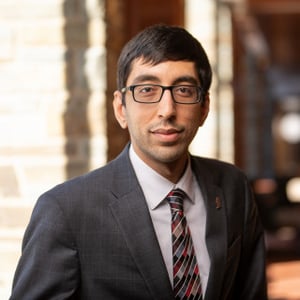
Judicial Law Clerk, U.S. District Court for the Southern District of Florida
Nitin is a recent graduate of Cornell Law School. Before his time in Ithaca, he majored in International Studies and Political Science at Johns Hopkins University and focused on power competition in South Asia during his graduate studies at the University of Oxford.

Senior Fellow, Fletcher School of Law and Diplomacy, Tufts University
Mihaela Papa is a Senior Fellow at the Fletcher School, where she has co-founded and led the Rising Power Alliances project and served as faculty in sustainable development and global governance.
Papa is an expert in negotiation strategy and coalition building, with a focus on BRICS and the transition to sustainability. She started her BRICS research as postdoctoral fellow at Harvard Law School and a visiting scholar at Fudan University's Center for BRICS Studies. Her recent publications analyze BRICS convergence and BRICS-US relations (EJIR, 2023), whether BRICS can de-dollarize global finance (CUP 2022 and ISA-West award), and BRICS resilience (Global Policy 2021). Her publications on environmental foreign policy, climate diplomacy, and global governance appeared in Global Environmental Politics, Global Environmental Change, Climate Policy, and other journals. Her commentary was featured in Foreign Affairs and The Conversation, as well as on CNN, Bloomberg, BBC, AP, News24, the South China Morning Post, and other media outlets.
Papa is also an active practitioner with a proven track record advising institutions on global strategies and leading international collaborations and programs, including at MIT and the Croatian Ministry of Foreign Affairs. She served as a consultant for the U.S. government, the European Commission, and the International Institute for Sustainable Development. Originally a trade economist with a BA from Croatia, she completed her MA in Law and Diplomacy and PhD in International Relations at The Fletcher School, Tufts University.
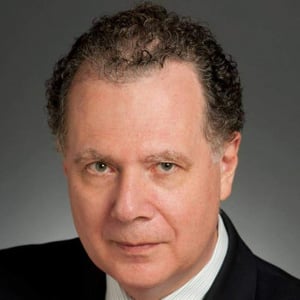
President, Macrostrategy LLC
David P. Goldman is the president of Macrostrategy LLC, a Senior Writer at Law & Liberty, and a Washington Fellow at the Claremont Institute's Center for the American Way of Life.
He writes the "Spengler" column for the Asia Times Online and the "Spengler" blog at PJ media. He is also the author of You Will Be Assimilated: China's Plan to Sino-Form the World (Bombardier Books) and How Civilizations Die (and Why Islam is Dying Too) (Regenery).
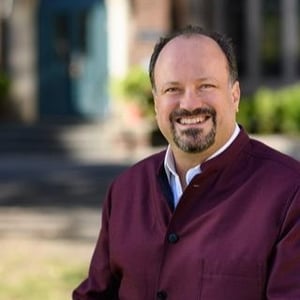
Professor of Near Eastern Studies & Director of the Institute for Transregional Study of the Contemporary Middle East, Princeton University
Prof. Bernard Haykel's research focuses on the political and social tensions that arise from questions about religious identity and authority. He obtained his doctorate in Oriental Studies with a specialization in Islam and history from the University of Oxford in 1998. His teaching and research primarily center around the intersection of intellectual, political, and social history of the Middle East, with a particular emphasis on the Arabian Peninsula. He also has a side interest in the impact of energy resources and rents on politics and society.
Prof. Haykel's work involves analyzing the reception of reformist ideas in contemporary debates among Sunnis and the Zaydi heritage among Shi`is. He is also interested in the history and politics of the countries of the Arabian Peninsula, especially Saudi Arabia. Although he focuses on the modern period, Prof. Haykel is well-versed in pre-modern Islamic literary sources and concepts and considers them crucial foundations for the study of the modern Arab and Muslim worlds.
Prof. Haykel draws inspiration from anthropology, politics, history, and philology in his work. He teaches courses on the history of the Middle East and Islamist politics at the undergraduate level. At the graduate level, he enjoys teaching courses on Arabian history and Islamism, but he is also open to accommodating the needs of NES students who want to read primary texts in areas he is less familiar with. Prof. Haykel has supervised or co-supervised nine completed Ph.D. dissertations so far.
In addition to teaching, Prof. Haykel directs the Institute for the Transregional Study of the Contemporary Middle East, North Africa, and Central Asia. In this role, he organizes lectures and conferences on topics related to the politics and culture of the contemporary Middle East.
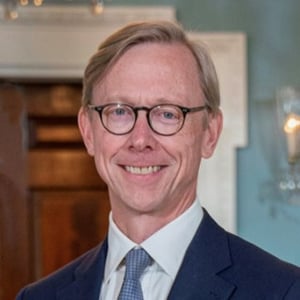
Founder, Latitude, LLC
Brian Hook is the founder of Latitude, LLC, an international strategic consulting firm based in Washington, DC.
Mr. Hook worked on the Romney campaign as senior advisor on foreign policy. He chaired the foreign policy and national security task forces of the Romney Readiness Project. From 2010-2011, he was the foreign policy director of Governor Tim Pawlenty’s presidential campaign.
Mr. Hook served in a number of positions during the Bush Administration, including Assistant Secretary of State for International Organizations; Senior Advisor to the U.S. Ambassador to the United Nations; Special Assistant to the President for Policy, Office of the Chief of Staff; and Counsel, Office of Legal Policy, at the Justice Department.
From 1999-2003, he practiced corporate law at Hogan & Hartson in Washington, D.C.
Before practicing law, he served as a policy advisor to Iowa Governor Terry Branstad and to U.S. Congressman James Leach.
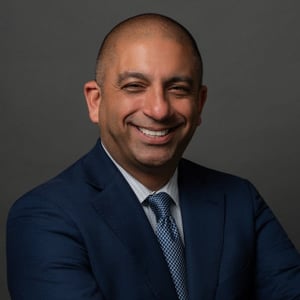
Founder and Executive Director, National Security Institute; Assistant Professor of Law, Antonin Scalia Law School, George Mason University
Jamil N. Jaffer is the Founder and Executive Director of the National Security Institute at the Antonin Scalia Law School at George Mason University where he also serves as an Assistant Professor of Law, Director of the National Security Law and Policy Program, and Director of the Cyber, Intelligence, and National Security LLM Program. Jamil also teaches classes on counterterrorism, intelligence, surveillance, cybersecurity, and other national security matters, as well as a summer course held abroad with U.S. Supreme Court Justice Neil M. Gorsuch. Jamil is also affiliated with Stanford University’s Center for International Security and Cooperation and previously served as a Visiting Fellow at the Hoover Institution from 2016 to 2019.
Jamil is also a Venture Partner with Paladin Capital Group, where he assists the firm with investments across the full range of its themes and theses, including a focus on dual-use national security technologies. Jamil also serves on the board of directors of RangeForce, a cybersecurity training and readiness platform startup and Tozny, a digital identity startup, and on the advisory boards of U.S. Strategic Metals, North America’s largest primary producer of cobalt, a critical mineral used in EV batteries, aerospace, and other national security applications; and Constella Intelligence, a deep and dark web intelligence startup. Jamil also serves as an advisor to Beacon Global Strategies, a strategic advisory firm and Duco, a technology platform startup that connects corporations with geopolitical and international business experts. Jamil is also the managing director of Trigraph Caveat Capital, a private investment vehicle.
Among other things, Jamil currently serves on the Board of Directors for the Greater Washington Board of Trade, the Board of Advisors for the Global Cyber Alliance, and the Advisory Board of the Foundation for the Defense of Democracies’ Center on Cyber and Tech Innovation, the Executive Committee of the Reagan Institute Strategy Group. Jamil is also a Fellow at the Academy for Judaic, Christian, and Islamic Studies, an advisor to the Concordia Summit, and is a member of the Board of Directors for the Center for Intelligence Policy, the Board of Directors of Speech First, and the Executive Committee of the International Law and National Security Practice Group of the Federalist Society.
Immediately prior to his current positions, from 2015-2021, Jamil served as a senior business leader at IronNet Cybersecurity, helping take the company from a bootstrapped first-year technology products startup through two rounds of venture capital fundraising, growing from 40 employees to over 300, and through its listing on New York Stock Exchange. In his role as IronNet's Senior Vice President for Strategy, Partnerships & Corporate Development, Jamil worked directly for the co-CEOs of the company, Gen (ret.) Keith B. Alexander, the former Director of the National Security Agency and Founding Commander of U.S. Cyber Command, and Bill Welch, the former COO of Zscaler and Duo; in that role, Jamil led all of the company’s strategic and technology partnership efforts, including developing go-to-market and technology integration plans with some of the largest cloud platforms and cybersecurity companies in the market, evaluating potential acquisition targets, and developing overall corporate strategy and thought leadership around collective security and collaborative defense in the cyber arena.
Prior to his time at IronNet, Jamil served on the leadership team of the Senate Foreign Relations Committee as Chief Counsel and Senior Advisor under Chairman Bob Corker (R-TN), where he worked on key national security and foreign policy issues, including leading the drafting of the proposed Authorization for the Use of Military Force against ISIS in 2014 and 2015, the AUMF against Syria in 2013, and revisions to the 9/11 AUMF against al Qaeda. Jamil was also the lead architect of the Iran Nuclear Agreement Review Act and two sanctions laws against Russia for its first intervention in Ukraine.
Prior to joining SFRC, Jamil served as Senior Counsel to the House Permanent Select Committee on Intelligence under Chairman Mike Rogers (R-MI) where he led the committee’s oversight of NSA surveillance, NRO intelligence issues, and NGA analytic and collection matters, as well as intelligence community-wide counterterrorism issues. Jamil was also the lead architect of the Cyber Intelligence Sharing and Protection Act, the nation’s first cyber threat intelligence sharing legislation that was signed into law in 2015.
In the Bush Administration, Jamil served in the White House as an Associate Counsel to the President, handling Defense Department, State Department, and intelligence community matters, and serving as one of the White House Counsel’s primary representatives to the National Security Council Deputies Committee.
Prior to the White House, Jamil served on the leadership team of the Justice Department’s National Security Division as Counsel to the Assistant Attorney General for National Security, where he focused on counterterrorism and intelligence matters. At NSD, Jamil helped lead the division’s work on In re: Directives, the first ever two-party litigated matter in the FISA Court and the second case before the FISA Court of Review in its 30-year history. Jamil also led NSD’s efforts on the President’s Comprehensive National Cybersecurity Initiative (CNCI), including the drafting of NSPD-54/HSPD-23, and related classified matters, and advised the National Security Agency (NSA) and U.S. Cyber Command’s predecessor organization, the Joint Function Component Command for Network Warfare (JFCC-NW), on matters related to cyber intelligence collection and offensive cyber activities. For his work on these matters, Jamil was awarded the Assistant Attorney General’s Award for Special Initiative and was among the group of lawyers awarded the Director of National Intelligence’s 2008 Legal Award (Team of the Year – Cyber Legal).
Jamil also served in other positions in the Justice Department, including in the Office of Legal Policy, where he worked on the confirmations of Chief Justice John G. Roberts, Jr. and Justice Samuel A. Alito, Jr. to the United States Supreme Court.
Jamil also served as a lawyer in private practice at Kellogg Huber, a Washington, DC-based litigation boutique, as a policy advisor to Congressman Bob Goodlatte (R-VA), and as a staff member or senior advisor on a number of political campaigns, including two presidential campaigns and a presidential transition team. While in law school, Jamil was a member of the University of Chicago Law Review, managing editor of the Chicago Journal of International Law, and National Symposium Editor of the Harvard Journal of Law & Public Policy. Following law school, Jamil served as a law clerk to Judge Edith H. Jones of the United States Court of Appeals for the Fifth Circuit and, later in his career, as a law clerk to then-Judge Neil M. Gorsuch when he first joined the United States Court of Appeals for the Tenth Circuit as well as a law clerk to Justice Neil Gorsuch when he joined the U.S. Supreme Court.
Jamil has published multiple op-eds and academic articles on national security, foreign policy, cybersecurity, counterterrorism, encryption, and intelligence matters, and is the co-author of a book chapter with former NSA Director Gen. (Ret.) Keith B. Alexander on national security and the press in National Security, Leaks, and the Freedom of the Press: The Pentagon Papers Fifty Years On (2021) and a book chapter with former CIA Director Gen. (ret.) Mike Hayden on ISIS, al Qaeda, and other international terrorist groups in Choosing to Lead: American Foreign Policy for a Disordered World (2015). Jamil has also written book chapters on cybersecurity and surveillance, as well as op-eds and policy papers with former Attorney General Michael B. Mukasey, former National Counterterrorism Center Director Matt Olsen, and Congressman Mike Waltz (R-FL), among others.
Jamil has previously taught graduate-level courses in intelligence law and policy at George Washington University’s Elliott School of International Affairs and the National Intelligence University, served an outside advisor to the Cyberspace Solarium Commission, and has recently testified before committees of the U.S. Senate and House of Representatives on China, cybersecurity, counterterrorism, and other national security matters. Jamil has also recently appeared on a range of national television and radio outlets including CNN, Fox News, Fox Business, MSNBC, Bloomberg, PBS, Voice of America, and National Public Radio, and in various print and online publications, including the Wall Street Journal, New York Times, and the Washington Post on a range of national security matters including cybersecurity, counterterrorism, surveillance, encryption, privacy, and foreign policy issues.
Jamil holds degrees from UCLA (BA, cum laude), the University of Chicago Law School (JD, with honors), and the United States Naval War College (MA, with distinction).
Director, Asia & Latin American Program, Inter-American Dialogue
Margaret Myers is director of the Asia & Latin America Program at the Inter-American Dialogue, adjunct researcher with the Núcleo Milenio sobre los Impactos de China en América Latina (ICLAC), and a senior advisor to the United States Institute of Peace. She established the Dialogue’s China and Latin America Working Group in 2011 to examine China’s growing presence in Latin America and the Caribbean. Myers also developed the China-Latin America Finance Database, the first publicly available source of empirical data on Chinese state lending in Latin America, in cooperation with Global China Initiative at Boston University’s Global Development Policy Center.
In addition to maintaining the Dialogue’s China and Latin America and 美洲对话 blogs, Myers has published numerous articles on Chinese leadership dynamics, international capital flows, Chinese agricultural policy, and Asia-Latin America relations, among other topics. The Political Economy of China-Latin America Relations and The Changing Currents of Trans-Pacific Integration: China, the TPP, and Beyond, her co-edited volumes with Dr. Carol Wise and Dr. Adrian Hearn, respectively, were published in 2016. Myers has testified before the House Committee on Foreign Affairs, the Senate Finance and Foreign Relations Committees, and the US-China Security and Economic Commission on the China-Latin America relationship. She is also regularly featured in major domestic and international media, including the Economist, Financial Times, New York Times, The Wall Street Journal, El Comercio, El País, Folha de São Paulo, CNN en Español, and BBC. In 2018, she was identified by Global Americans as part of the “new generation of public intellectuals.”
Before arriving at the Dialogue, Myers worked as a Latin America analyst and China analyst for the US Department of Defense, during which time she was deployed with the US Navy in support of Partnership of the Americas. Myers has also worked as a senior China analyst for Science Applications International Corporation; a consultant for the Inter-American Development Bank; a faculty member at Georgetown University, the George Washington University, and Johns Hopkins SAIS; a mentor for the Indian Foreign Policy Research Institute’s School of Foreign Policy; and for Fauquier County Schools, where she developed the county’s first Mandarin language program. Myers received her bachelor’s degree from the University of Virginia and conducted her graduate work at The George Washington University, Zhejiang University of Technology, and the Johns Hopkins University/Nanjing University Center for Chinese-American Studies. Myers was a Council on Foreign Relations term member. She was also the recipient of a Freeman fellowship for China studies, a Fulbright Specialist grant to research China-Colombia relations in Bogotá, and a Woodrow Wilson Center fellowship to write a forthcoming book on China-Latin America relations.
Judicial Law Clerk, U.S. District Court for the Southern District of Florida
Nitin is a recent graduate of Cornell Law School. Before his time in Ithaca, he majored in International Studies and Political Science at Johns Hopkins University and focused on power competition in South Asia during his graduate studies at the University of Oxford.
Senior Fellow, Fletcher School of Law and Diplomacy, Tufts University
Mihaela Papa is a Senior Fellow at the Fletcher School, where she has co-founded and led the Rising Power Alliances project and served as faculty in sustainable development and global governance.
Papa is an expert in negotiation strategy and coalition building, with a focus on BRICS and the transition to sustainability. She started her BRICS research as postdoctoral fellow at Harvard Law School and a visiting scholar at Fudan University's Center for BRICS Studies. Her recent publications analyze BRICS convergence and BRICS-US relations (EJIR, 2023), whether BRICS can de-dollarize global finance (CUP 2022 and ISA-West award), and BRICS resilience (Global Policy 2021). Her publications on environmental foreign policy, climate diplomacy, and global governance appeared in Global Environmental Politics, Global Environmental Change, Climate Policy, and other journals. Her commentary was featured in Foreign Affairs and The Conversation, as well as on CNN, Bloomberg, BBC, AP, News24, the South China Morning Post, and other media outlets.
Papa is also an active practitioner with a proven track record advising institutions on global strategies and leading international collaborations and programs, including at MIT and the Croatian Ministry of Foreign Affairs. She served as a consultant for the U.S. government, the European Commission, and the International Institute for Sustainable Development. Originally a trade economist with a BA from Croatia, she completed her MA in Law and Diplomacy and PhD in International Relations at The Fletcher School, Tufts University.

Criminal Law & Procedure at the Supreme Court—A Recap of OT25
Matthew P. Cavedon, Marc Levin, Kent Scheidegger
This term, several important questions of criminal law and procedure reached the Supreme Court, ranging...
Plenary Session 2: Legislation, Confirmations, and Oversight– Working and Succeeding in a Legislative Legal Role
Featuring: Ms. Ashley Callen, Partner, Jenner & Block LLP Mr. Michael Fragoso, Partner, Torridon Group...
A Seat at the Sitting - March 2026
Lisa L. Dixon, Oliver Dunford, Mike Hurst, Zac Morgan, Eric Wessan
Each month, a panel of constitutional experts convenes to discuss the Court’s upcoming docket sitting...
Suncor Energy v. Boulder County: Federalism, Judicial Power, and the Future of Climate Litigation
Jonathan H. Adler, O.H. Skinner, Annie Donaldson Talley, Michael R. Williams
In Suncor Energy, Inc., v. Commissioners of Boulder County, the Supreme Court will consider whether...
BRICS Expansion and Corresponding Implications
Margaret Myers, Nitin R. Nainani, Mihaela Papa
Before the 2010s, Brazil, Russia, India, China, and South Africa were flagged as future growth...
BRICS Expansion and Corresponding Implications
Topics
New START, Nuclear Weapons, and the New Landscape: Arms Control and Deterrence Post-Ukraine
In the winter of February 2023, Russia’s President Vladimir Putin announced that Russia was withdrawing...
Topics
Live and Let LIV?
This post was originally published at Lawfare. For more than a year, the most important...
Topics
Abraham Accords: Promise-Potential; Risk-Reality
The Trump Administration brokered the signing of the Abraham Accords in 2020 with the purpose...
Abraham Accords: Promise-Potential; Risk-Reality
David P. Goldman, Bernard Haykel, Brian H. Hook, Jamil N. Jaffer
As Indonesia, Somalia, Niger, and Mauritania may be next to join the Abraham Accords, what...