
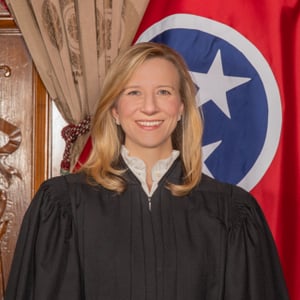
Justice, Supreme Court of Tennessee
Justice Sarah Campbell was confirmed to the Tennessee Supreme Court in 2022. She previously served as an Associate Solicitor General in the Tennessee Attorney General’s Office and as an associate at the law firm of Williams & Connolly LLP in Washington, DC. Justice Campbell earned her law degree from Duke University School of Law, a Master of Public Policy degree from Duke University, and her undergraduate degree from the University of Tennessee, where she received the Torchbearer Award. She served as a law clerk for Justice Samuel A. Alito, Jr. on the United States Supreme Court and Judge William H. Pryor Jr. on the U.S. Court of Appeals for the Eleventh Circuit.
Justice, Supreme Court of Tennessee
Justice Sarah Campbell was confirmed to the Tennessee Supreme Court in 2022. She previously served as an Associate Solicitor General in the Tennessee Attorney General’s Office and as an associate at the law firm of Williams & Connolly LLP in Washington, DC. Justice Campbell earned her law degree from Duke University School of Law, a Master of Public Policy degree from Duke University, and her undergraduate degree from the University of Tennessee, where she received the Torchbearer Award. She served as a law clerk for Justice Samuel A. Alito, Jr. on the United States Supreme Court and Judge William H. Pryor Jr. on the U.S. Court of Appeals for the Eleventh Circuit.
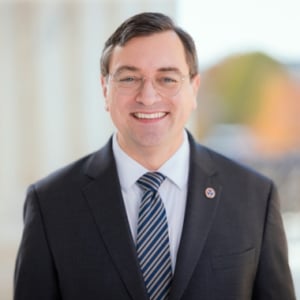
Attorney General of Tennessee
Jonathan Skrmetti was sworn in to an eight-year term as Tennessee’s Attorney General and Reporter on September 1, 2022.
Prior to his current role, General Skrmetti served as Chief Counsel to Governor Bill Lee and as Chief Deputy Attorney General to his predecessor, Tennessee Attorney General Herbert Slatery.
Before working for the State of Tennessee, General Skrmetti was a partner at Butler Snow LLP in Memphis. His legal career began with nearly a decade as a federal prosecutor. He worked at the Civil Rights Division at Main Justice and then at the Memphis U.S. Attorney’s Office and prosecuted sex traffickers, corrupt government officials, and violent white supremacists. In addition, General Skrmetti taught cyberlaw as an adjunct professor at the University of Memphis.
General Skrmetti earned honors degrees from George Washington University, the University of Oxford, and Harvard Law School, where he was editor-in-chief of the Harvard Journal of Law & Public Policy. Following law school, Jonathan clerked for Judge Steven Colloton on the U.S. Court of Appeals for the Eighth Circuit. He lives in Franklin, Tennessee, with his wife and four children.
Justice, Supreme Court of Tennessee
Justice Sarah Campbell was confirmed to the Tennessee Supreme Court in 2022. She previously served as an Associate Solicitor General in the Tennessee Attorney General’s Office and as an associate at the law firm of Williams & Connolly LLP in Washington, DC. Justice Campbell earned her law degree from Duke University School of Law, a Master of Public Policy degree from Duke University, and her undergraduate degree from the University of Tennessee, where she received the Torchbearer Award. She served as a law clerk for Justice Samuel A. Alito, Jr. on the United States Supreme Court and Judge William H. Pryor Jr. on the U.S. Court of Appeals for the Eleventh Circuit.
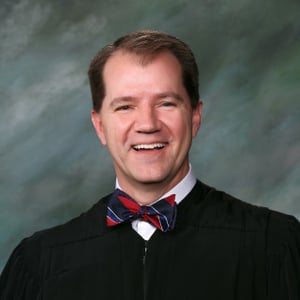
Judge, U.S. Court of Appeals, Fifth Circuit
Don Willett serves on the United States Court of Appeals for the Fifth Circuit.
Before joining the federal bench, Judge Willett served 13 years on the Supreme Court
of Texas. His career spans decades of public service, including roles as legal counsel to
a Texas Attorney General, a Texas Governor, a U.S. Attorney General, and the
President of the United States.
Raised by a heroic widowed mom in a doublewide trailer in a town of 32, Judge
Willett is his family’s first college graduate. He earned a triple-major B.B.A. from Baylor
University—where he serves on the Board of Regents—and three degrees from Duke
University—where he serves on the Board of Visitors: a J.D. with honors, an A.M. in
political science, and an LL.M. in judicial studies. After law school, he clerked on the
Fifth Circuit and practiced at Haynes and Boone before entering public service.
Judge Willett publishes widely in both leading law reviews and national media, including
The Yale Law Journal, The University of Pennsylvania Law Review, and The Wall Street
Journal. The longtime editor-in-chief of Judicature—the Scholarly Journal for Judges, he
holds academic appointments at various law schools and has received more than a
dozen Green Bag honors for “exemplary legal writing.” He was named Distinguished
Jurist of the Year by the Texas Review of Law & Politics, and he is a member of the
American Law Institute and a Life Fellow of the American, Texas, and Austin Bar
Foundations.
A onetime bull rider and professional drummer, Judge Willett was named “Tweeter
Laureate of Texas” in 2015. He is the namesake of Don R. Willett Elementary
School—home of mighty Willett Wranglers—located just a mile from where he grew up.
He and his radiant wife, Tiffany have three children—Jacob, Shane-David, and
Geneviève—plus the family pup, Amicus.
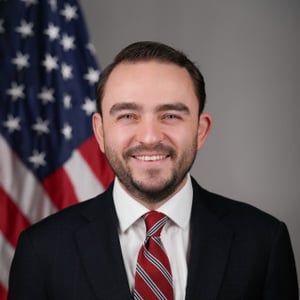
Associate Counsel to the President, White House Counsel's Office
Samuel Adkisson serves as Associate Counsel to the President in the White House Counsel’s Office.
Mr. Adkisson previously practiced law at Cooper & Kirk PLLC, where he focused on high-stakes civil-rights, political, and constitutional disputes. His matters included class actions challenging the FAA’s race-based air traffic controller hiring practices and the University of Oklahoma’s financial aid policies; appellate work on behalf of X Corp.; and the successful defense of Florida’s actions during a 2024 abortion referendum. Before joining Cooper & Kirk, he worked on the landmark case challenging Harvard’s affirmative action policies and helped launch a successful challenge to the State Bar of Texas’s membership policies.
Mr. Adkisson clerked for Chief Justice of the United States John G. Roberts, Jr., Judge Amul R. Thapar of the U.S. Court of Appeals for the Sixth Circuit, and Judge Gregory G. Katsas of the U.S. Court of Appeals for the D.C. Circuit. During Justice Kavanaugh’s confirmation hearings, he worked for Chairman of the Senate Judiciary Committee Charles E. Grassley.
Mr. Adkisson received his J.D. from Yale Law School, where he was President of the Yale Law School Federalist Society and an editor of the Yale Law Journal. He graduated summa cum laude from Vanderbilt University. Prior to joining the Trump Administration in January 2025, he lived on Signal Mountain, TN, with his wife and three children.
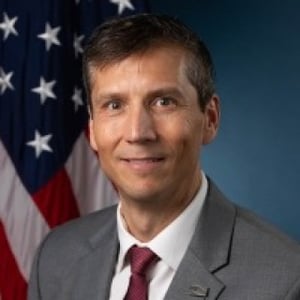
U.S. Attorney, Middle District of Tennessee, U.S. Department of Justice
Braden Boucek was sworn in on December 24, 2025, as the United States Attorney for the Middle District of Tennessee. Prior to becoming United States Attorney, Mr. Boucek served as the senior vice president of litigation at the Southeastern Legal Foundation having previously served as the vice president of legal affairs at the Beacon Center. Mr. Boucek has extensive experience as a prosecutor, starting his career at the Tennessee Attorney General’s Office before serving for two years as an Assistant District Attorney General in Williamson County. He was a federal prosecutor for ten years, first serving as an Assistant United States Attorney in the Western District of Tennessee from 2005 to 2011. From 2011 to 2015, Mr. Boucek was an Assistant United States Attorney in the Middle District of Tennessee, the district he now leads as the United States Attorney.
Justice, Supreme Court of Tennessee
Justice Sarah Campbell was confirmed to the Tennessee Supreme Court in 2022. She previously served as an Associate Solicitor General in the Tennessee Attorney General’s Office and as an associate at the law firm of Williams & Connolly LLP in Washington, DC. Justice Campbell earned her law degree from Duke University School of Law, a Master of Public Policy degree from Duke University, and her undergraduate degree from the University of Tennessee, where she received the Torchbearer Award. She served as a law clerk for Justice Samuel A. Alito, Jr. on the United States Supreme Court and Judge William H. Pryor Jr. on the U.S. Court of Appeals for the Eleventh Circuit.

Member, Sherrard Roe Voigt & Harbison, PLC
Bill Harbison works primarily in the areas of corporate law and trusts and estates.
He also handles litigation in those same practice categories.
Mr. Harbison graduated cum laude from Harvard Law School and received his bachelor’s degree with highest honors in English from the University of
North Carolina at Chapel Hill. He is a member of Phi Beta Kappa.
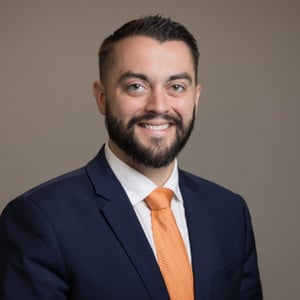
Partner, Consovoy McCarthy PLLC
Mr. Norris helps clients win important questions of federal law in trial and appellate courts across the country. He has represented prominent nonprofits, many States, the Republican Party, and the former President of the United States. He has argued in eight of the twelve federal circuits and twice at the U.S. Supreme Court, including the landmark case Students for Fair Admissions v. Harvard.
Mr. Norris is barred in Tennessee and Virginia, and is an elected member of the American Law Institute. Mr. Norris lives with his family in Knoxville, Tennessee.
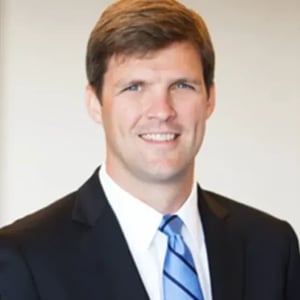
Judge, United States District Court for the Western District of Kentucky
Prior to joining the bench, Judge Beaton was a Partner at Squire Patton Boggs LLP, where he co-chaired the firm’s Appellate & Supreme Court practice group. Judge Beaton’s represented clients engaged in complex commercial litigation in Federal and State courts, and before administrative agencies. Judge Beaton also served as an adjunct professor at the University of Louisville Brandeis School of Law, where he taught constitutional interpretation. Before joining Squire Patton Boggs, Judge Beaton practiced in the Washington, D.C. office of Sidley Austin, LLP, and also served as a legal fellow with the International Justice Mission in Kampala, Uganda. Upon graduation from law school, Judge Beaton served as a law clerk to Justice Ruth Bader Ginsburg of the United States Supreme Court, and to Judge A. Raymond Randolph of the United States Court of Appeals for the D.C. Circuit. Judge Beaton earned his B.A., summa cum laude, from Centre College, and his J.D. from Columbia Law School, where he served as an Articles Editor on the Columbia Law Review.
Justice, Supreme Court of Tennessee
Justice Sarah Campbell was confirmed to the Tennessee Supreme Court in 2022. She previously served as an Associate Solicitor General in the Tennessee Attorney General’s Office and as an associate at the law firm of Williams & Connolly LLP in Washington, DC. Justice Campbell earned her law degree from Duke University School of Law, a Master of Public Policy degree from Duke University, and her undergraduate degree from the University of Tennessee, where she received the Torchbearer Award. She served as a law clerk for Justice Samuel A. Alito, Jr. on the United States Supreme Court and Judge William H. Pryor Jr. on the U.S. Court of Appeals for the Eleventh Circuit.
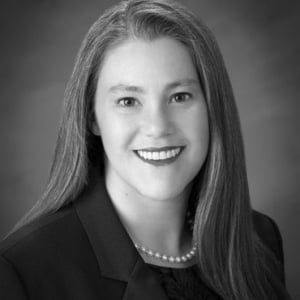
Judge, Arizona Court of Appeals, Division One
The Honorable Jennifer M. Perkins began service on the Arizona Court of Appeals, Division One, on October 30, 2017. At the time of her appointment by Governor Douglas Ducey, Judge Perkins was Assistant Solicitor General for the State of Arizona.
Judge Perkins was born in Portales, New Mexico, and primarily raised in Albuquerque. She attended the prestigious Albuquerque Academy from 1988-1995, before moving to Washington D.C. to attend the Elliott School of International Affairs at the George Washington University as a National Merit Scholar. Therafter, she relocated again to Dallas, Texas, and earned her juris doctor from the SMU Dedman School of Law, graduating cum laude in 2002.
Judge Perkins started her career at the law firm of Browning & Peifer (now Peifer, Hanson, Mullins, and Baker) in Albuquerque, New Mexico. While there, she litigated complex commercial matters including class action plaintiff and defense work, and assisted with employment and contract litigation. In 2003, the judge accompanied the Honorable James O. Browning in transitioning to the federal district court bench, serving as his first law clerk.
After her clerkship, Judge Perkins moved to Arizona to work for the Institute for Justice, Arizona Chapter, a public interest law firm. She spent five years with IJ-AZ litigating civil rights cases in Arizona and across the country. In 2009, the judge became Disciplinary Counsel for the Arizona Commission on Judicial Conduct, where she reviewed and prosecuted ethics complaints against state court judges throughout Arizona. After five years serving the state in this capacity, Judge Perkins entered private practice by joining an appellate law firm in Phoenix. While there, she worked on state and federal appeals involving a wide range of legal subjects, including complex business disputes, property rights, judicial ethics, and personal injury matters.
In January 2015, Judge Perkins joined the Office of the Arizona Attorney General to serve as the first Assistant Solicitor General; in that capacity, she was responsible for oversight of Attorney General Opinions and served as ethics counsel to the entire office. In addition to these two primary roles, the judge assisted on a variety of matters including trial and appellate litigation of election-related matters; federal appellate litigation with the Federalism Unit; state criminal appeals; and drafting amicus briefs on behalf of Arizona in state and federal courts.

Associate Justice, New Jersey Supreme Court
Justice Rachel Wainer Apter was nominated by Gov. Phil Murphy and was sworn in as an associate justice on Oct. 21, 2022.
Born on July 22, 1980, Justice Wainer Apter grew up in Rockaway. She graduated from the University of Pennsylvania and received her law degree from Harvard Law School. After law school, she served as a law clerk for U.S. District Judge Jed Rakoff, U.S. Circuit Judge Robert Katzmann, and U.S Supreme Court Associate Justice Ruth Bader Ginsburg.
At the time of her appointment, Justice Wainer Apter was serving as director of the New Jersey Division on Civil Rights. She previously served as counsel to the New Jersey Attorney General and assistant attorney general.
Before joining the Attorney General’s Office, Justice Wainer Apter worked as a senior staff attorney at the American Civil Liberties Union (ACLU) and in the Supreme Court and Appellate practice at Orrick, Herrington & Sutcliffe.
Justice Wainer Apter and her husband have three children.
Justice, Supreme Court of Tennessee
Justice Sarah Campbell was confirmed to the Tennessee Supreme Court in 2022. She previously served as an Associate Solicitor General in the Tennessee Attorney General’s Office and as an associate at the law firm of Williams & Connolly LLP in Washington, DC. Justice Campbell earned her law degree from Duke University School of Law, a Master of Public Policy degree from Duke University, and her undergraduate degree from the University of Tennessee, where she received the Torchbearer Award. She served as a law clerk for Justice Samuel A. Alito, Jr. on the United States Supreme Court and Judge William H. Pryor Jr. on the U.S. Court of Appeals for the Eleventh Circuit.
Attorney General of Tennessee
Jonathan Skrmetti was sworn in to an eight-year term as Tennessee’s Attorney General and Reporter on September 1, 2022.
Prior to his current role, General Skrmetti served as Chief Counsel to Governor Bill Lee and as Chief Deputy Attorney General to his predecessor, Tennessee Attorney General Herbert Slatery.
Before working for the State of Tennessee, General Skrmetti was a partner at Butler Snow LLP in Memphis. His legal career began with nearly a decade as a federal prosecutor. He worked at the Civil Rights Division at Main Justice and then at the Memphis U.S. Attorney’s Office and prosecuted sex traffickers, corrupt government officials, and violent white supremacists. In addition, General Skrmetti taught cyberlaw as an adjunct professor at the University of Memphis.
General Skrmetti earned honors degrees from George Washington University, the University of Oxford, and Harvard Law School, where he was editor-in-chief of the Harvard Journal of Law & Public Policy. Following law school, Jonathan clerked for Judge Steven Colloton on the U.S. Court of Appeals for the Eighth Circuit. He lives in Franklin, Tennessee, with his wife and four children.
Judge, United States District Court for the Western District of Kentucky
Prior to joining the bench, Judge Beaton was a Partner at Squire Patton Boggs LLP, where he co-chaired the firm’s Appellate & Supreme Court practice group. Judge Beaton’s represented clients engaged in complex commercial litigation in Federal and State courts, and before administrative agencies. Judge Beaton also served as an adjunct professor at the University of Louisville Brandeis School of Law, where he taught constitutional interpretation. Before joining Squire Patton Boggs, Judge Beaton practiced in the Washington, D.C. office of Sidley Austin, LLP, and also served as a legal fellow with the International Justice Mission in Kampala, Uganda. Upon graduation from law school, Judge Beaton served as a law clerk to Justice Ruth Bader Ginsburg of the United States Supreme Court, and to Judge A. Raymond Randolph of the United States Court of Appeals for the D.C. Circuit. Judge Beaton earned his B.A., summa cum laude, from Centre College, and his J.D. from Columbia Law School, where he served as an Articles Editor on the Columbia Law Review.
Justice, Supreme Court of Tennessee
Justice Sarah Campbell was confirmed to the Tennessee Supreme Court in 2022. She previously served as an Associate Solicitor General in the Tennessee Attorney General’s Office and as an associate at the law firm of Williams & Connolly LLP in Washington, DC. Justice Campbell earned her law degree from Duke University School of Law, a Master of Public Policy degree from Duke University, and her undergraduate degree from the University of Tennessee, where she received the Torchbearer Award. She served as a law clerk for Justice Samuel A. Alito, Jr. on the United States Supreme Court and Judge William H. Pryor Jr. on the U.S. Court of Appeals for the Eleventh Circuit.
Judge, Arizona Court of Appeals, Division One
The Honorable Jennifer M. Perkins began service on the Arizona Court of Appeals, Division One, on October 30, 2017. At the time of her appointment by Governor Douglas Ducey, Judge Perkins was Assistant Solicitor General for the State of Arizona.
Judge Perkins was born in Portales, New Mexico, and primarily raised in Albuquerque. She attended the prestigious Albuquerque Academy from 1988-1995, before moving to Washington D.C. to attend the Elliott School of International Affairs at the George Washington University as a National Merit Scholar. Therafter, she relocated again to Dallas, Texas, and earned her juris doctor from the SMU Dedman School of Law, graduating cum laude in 2002.
Judge Perkins started her career at the law firm of Browning & Peifer (now Peifer, Hanson, Mullins, and Baker) in Albuquerque, New Mexico. While there, she litigated complex commercial matters including class action plaintiff and defense work, and assisted with employment and contract litigation. In 2003, the judge accompanied the Honorable James O. Browning in transitioning to the federal district court bench, serving as his first law clerk.
After her clerkship, Judge Perkins moved to Arizona to work for the Institute for Justice, Arizona Chapter, a public interest law firm. She spent five years with IJ-AZ litigating civil rights cases in Arizona and across the country. In 2009, the judge became Disciplinary Counsel for the Arizona Commission on Judicial Conduct, where she reviewed and prosecuted ethics complaints against state court judges throughout Arizona. After five years serving the state in this capacity, Judge Perkins entered private practice by joining an appellate law firm in Phoenix. While there, she worked on state and federal appeals involving a wide range of legal subjects, including complex business disputes, property rights, judicial ethics, and personal injury matters.
In January 2015, Judge Perkins joined the Office of the Arizona Attorney General to serve as the first Assistant Solicitor General; in that capacity, she was responsible for oversight of Attorney General Opinions and served as ethics counsel to the entire office. In addition to these two primary roles, the judge assisted on a variety of matters including trial and appellate litigation of election-related matters; federal appellate litigation with the Federalism Unit; state criminal appeals; and drafting amicus briefs on behalf of Arizona in state and federal courts.
Associate Justice, New Jersey Supreme Court
Justice Rachel Wainer Apter was nominated by Gov. Phil Murphy and was sworn in as an associate justice on Oct. 21, 2022.
Born on July 22, 1980, Justice Wainer Apter grew up in Rockaway. She graduated from the University of Pennsylvania and received her law degree from Harvard Law School. After law school, she served as a law clerk for U.S. District Judge Jed Rakoff, U.S. Circuit Judge Robert Katzmann, and U.S Supreme Court Associate Justice Ruth Bader Ginsburg.
At the time of her appointment, Justice Wainer Apter was serving as director of the New Jersey Division on Civil Rights. She previously served as counsel to the New Jersey Attorney General and assistant attorney general.
Before joining the Attorney General’s Office, Justice Wainer Apter worked as a senior staff attorney at the American Civil Liberties Union (ACLU) and in the Supreme Court and Appellate practice at Orrick, Herrington & Sutcliffe.
Justice Wainer Apter and her husband have three children.
Judge, United States District Court for the Western District of Kentucky
Prior to joining the bench, Judge Beaton was a Partner at Squire Patton Boggs LLP, where he co-chaired the firm’s Appellate & Supreme Court practice group. Judge Beaton’s represented clients engaged in complex commercial litigation in Federal and State courts, and before administrative agencies. Judge Beaton also served as an adjunct professor at the University of Louisville Brandeis School of Law, where he taught constitutional interpretation. Before joining Squire Patton Boggs, Judge Beaton practiced in the Washington, D.C. office of Sidley Austin, LLP, and also served as a legal fellow with the International Justice Mission in Kampala, Uganda. Upon graduation from law school, Judge Beaton served as a law clerk to Justice Ruth Bader Ginsburg of the United States Supreme Court, and to Judge A. Raymond Randolph of the United States Court of Appeals for the D.C. Circuit. Judge Beaton earned his B.A., summa cum laude, from Centre College, and his J.D. from Columbia Law School, where he served as an Articles Editor on the Columbia Law Review.
Justice, Supreme Court of Tennessee
Justice Sarah Campbell was confirmed to the Tennessee Supreme Court in 2022. She previously served as an Associate Solicitor General in the Tennessee Attorney General’s Office and as an associate at the law firm of Williams & Connolly LLP in Washington, DC. Justice Campbell earned her law degree from Duke University School of Law, a Master of Public Policy degree from Duke University, and her undergraduate degree from the University of Tennessee, where she received the Torchbearer Award. She served as a law clerk for Justice Samuel A. Alito, Jr. on the United States Supreme Court and Judge William H. Pryor Jr. on the U.S. Court of Appeals for the Eleventh Circuit.
Judge, Arizona Court of Appeals, Division One
The Honorable Jennifer M. Perkins began service on the Arizona Court of Appeals, Division One, on October 30, 2017. At the time of her appointment by Governor Douglas Ducey, Judge Perkins was Assistant Solicitor General for the State of Arizona.
Judge Perkins was born in Portales, New Mexico, and primarily raised in Albuquerque. She attended the prestigious Albuquerque Academy from 1988-1995, before moving to Washington D.C. to attend the Elliott School of International Affairs at the George Washington University as a National Merit Scholar. Therafter, she relocated again to Dallas, Texas, and earned her juris doctor from the SMU Dedman School of Law, graduating cum laude in 2002.
Judge Perkins started her career at the law firm of Browning & Peifer (now Peifer, Hanson, Mullins, and Baker) in Albuquerque, New Mexico. While there, she litigated complex commercial matters including class action plaintiff and defense work, and assisted with employment and contract litigation. In 2003, the judge accompanied the Honorable James O. Browning in transitioning to the federal district court bench, serving as his first law clerk.
After her clerkship, Judge Perkins moved to Arizona to work for the Institute for Justice, Arizona Chapter, a public interest law firm. She spent five years with IJ-AZ litigating civil rights cases in Arizona and across the country. In 2009, the judge became Disciplinary Counsel for the Arizona Commission on Judicial Conduct, where she reviewed and prosecuted ethics complaints against state court judges throughout Arizona. After five years serving the state in this capacity, Judge Perkins entered private practice by joining an appellate law firm in Phoenix. While there, she worked on state and federal appeals involving a wide range of legal subjects, including complex business disputes, property rights, judicial ethics, and personal injury matters.
In January 2015, Judge Perkins joined the Office of the Arizona Attorney General to serve as the first Assistant Solicitor General; in that capacity, she was responsible for oversight of Attorney General Opinions and served as ethics counsel to the entire office. In addition to these two primary roles, the judge assisted on a variety of matters including trial and appellate litigation of election-related matters; federal appellate litigation with the Federalism Unit; state criminal appeals; and drafting amicus briefs on behalf of Arizona in state and federal courts.
Associate Justice, New Jersey Supreme Court
Justice Rachel Wainer Apter was nominated by Gov. Phil Murphy and was sworn in as an associate justice on Oct. 21, 2022.
Born on July 22, 1980, Justice Wainer Apter grew up in Rockaway. She graduated from the University of Pennsylvania and received her law degree from Harvard Law School. After law school, she served as a law clerk for U.S. District Judge Jed Rakoff, U.S. Circuit Judge Robert Katzmann, and U.S Supreme Court Associate Justice Ruth Bader Ginsburg.
At the time of her appointment, Justice Wainer Apter was serving as director of the New Jersey Division on Civil Rights. She previously served as counsel to the New Jersey Attorney General and assistant attorney general.
Before joining the Attorney General’s Office, Justice Wainer Apter worked as a senior staff attorney at the American Civil Liberties Union (ACLU) and in the Supreme Court and Appellate practice at Orrick, Herrington & Sutcliffe.
Justice Wainer Apter and her husband have three children.
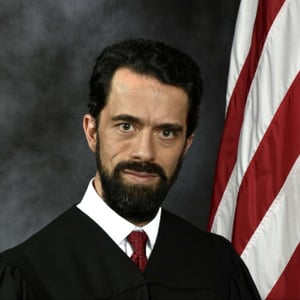
Judge, United States Court of Appeals, Third Circuit
Stephanos Bibas is a judge on the U.S. Court of Appeals for the Third Circuit. Judge Bibas was previously a professor of law and criminology at the University of Pennsylvania Law School. As director of the Penn Law Supreme Court Clinic, he argued six cases before the Supreme Court of the United States and filed briefs in dozens of others. He graduated summa cum laude and Phi Beta Kappa from Columbia University in 1989 with a B.A. in political theory and from Oxford University in 1991 with a B.A. in jurisprudence. He then earned his J.D. from Yale Law School in 1994.
After graduating from Yale Law, Judge Bibas clerked for Judge Patrick Higginbotham of the U.S. Court of Appeals for the Fifth Circuit and Justice Anthony Kennedy on the Supreme Court and was a litigation associate at Covington & Burling LLP in Washington, D.C. Thereafter, Judge Bibas served as an Assistant U.S. Attorney in the Southern District of New York, where he successfully prosecuted the world’s leading expert in Tiffany stained glass for hiring a grave robber to steal priceless Tiffany windows from cemeteries. Before his tenure at Penn Law, Judge Bibas taught at the University of Chicago Law School and the University of Iowa College of Law and was a research fellow at Yale Law School. He has published two books and seventy scholarly articles.

Louis D. Brandeis Professor of Law and Deputy Dean, Harvard Law School
Molly Brady is the Louis D. Brandeis Professor of Law at Harvard Law School, where she teaches property law and related subjects. Her scholarship uses historical analyses of property institutions and land use doctrines to explore broader theoretical questions. Her current research projects involve the relationship between covenants and zoning, the persistence of community knowledge in property doctrine, and the uses of history in state constitutional law. She is also an Associate Reporter for the American Law Institute’s Fourth Restatement of Property.
Previously, Professor Brady taught at the University of Virginia School of Law, where she received the 2019 UVA Student Council Distinguished Teaching Award, the 2018 Z Society Distinguished Faculty Award for “one outstanding member of the University’s faculty who has positively impacted the student body,” and an invitation to the Seven Society 27th Annual Monticello Dinner Series for “exemplary scholarship and transformative instruction of students.” Her recent article, “The Forgotten History of Metes and Bounds,” won both the Association of American Law Schools’ Scholarly Papers Prize for junior faculty members in their first five years of law teaching and the American Society for Legal History’s William Nelson Cromwell Article Prize for the year’s best paper by an early-career scholar.
Professor Brady received an AB summa cum laude in history from Harvard College, where she was elected to Phi Beta Kappa and was awarded the Harvard-Radcliffe Foundation for Women’s Athletics Prize for the top female scholar-athlete. Professor Brady then obtained her JD from Yale Law School, where she was the two-time recipient of the Parker Prize for legal history scholarship and was awarded the Quintin Johnstone Prize in Real Property Law, the Jewell Prize for an outstanding contribution to a Yale Law School journal, and the Cullen Prize for the best paper written by a first-year student. Following graduation, she served as a clerk to Judge Bruce M. Selya on the US Court of Appeals for the First Circuit and practiced at Ropes and Gray in Boston as a corporate associate focusing on intellectual property transactions. After leaving practice, she was in the first graduating class of the PhD in Law program at Yale University.
Justice, Supreme Court of Tennessee
Justice Sarah Campbell was confirmed to the Tennessee Supreme Court in 2022. She previously served as an Associate Solicitor General in the Tennessee Attorney General’s Office and as an associate at the law firm of Williams & Connolly LLP in Washington, DC. Justice Campbell earned her law degree from Duke University School of Law, a Master of Public Policy degree from Duke University, and her undergraduate degree from the University of Tennessee, where she received the Torchbearer Award. She served as a law clerk for Justice Samuel A. Alito, Jr. on the United States Supreme Court and Judge William H. Pryor Jr. on the U.S. Court of Appeals for the Eleventh Circuit.
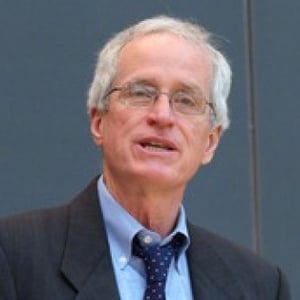
Lecturer, Harvard Law School
James E. Tierney is the former Attorney General of Maine and a Lecturer at Harvard Law School where he teaches a course on the role of state attorneys general while directing the Harvard Attorney General clinic. For thirteen years he was the Director of the National State Attorneys General Program at Columbia Law School, and he has also taught courses at Boston College Law School, Northeastern Law School and the University of Maine School of Law.
Mr. Tierney served as the Attorney General of Maine from 1980 until 1990. During his ten years as Attorney General of Maine, Mr. Tierney played an active role in the National Association of Attorneys General (NAAG) and has instructed newly elected state Attorneys General on the effective performance of their office. Mr. Tierney has also served as a Special Prosecutor in Florida, Pennsylvania, Minnesota and Vermont and, on behalf of NAAG, has authored an analysis of the operations of state grand jury practice throughout the United States. He travels regularly to visit in offices of attorney general where he conducts ethics seminars for incumbent attorneys general and their staffs.
Tierney has served on the Board of both the American Judicature Society and was a member of the Board of Commentators of the Courtroom Television Network. In April of 2006, Professor Tierney was selected as the Columbia Law School Public Interest Professor of the Year. This award, which is given to the faculty member or administrator who has most supported and inspired a significant portion of the public interest law student community, is selected by a vote of students.
Tierney is married to Maine author Elizabeth Strout. He has five children and eight grandchildren.

Alston & Bird Professor of Law, Duke University School of Law
Professor Young teaches constitutional law, federal courts, and foreign relations law. He is one of the nation's leading authorities on the constitutional law of federalism, having written extensively on the Rehnquist Court's "Federalist Revival" and the difficulties confronting courts as they seek to draw lines between national and state authority. He also is an active commentator on foreign relations law, where he focuses on the interaction between domestic and supranational courts and the application of international law by domestic courts. Professor Young also writes on constitutional interpretation and constitutional theory. He has been known to dabble in maritime law and comparative constitutional law.
A native of Abilene, Texas, Professor Young joined the Duke Law faculty in 2008, after serving as the Charles Alan Wright Chair in Federal Courts at the University of Texas at Austin School of Law, where he had taught since 1999. He graduated from Dartmouth College in 1990 and Harvard Law School in 1993. After law school, he served as a law clerk to Judge Michael Boudin of the 1st U.S. Circuit Court of Appeals (1993-94) and to Justice David Souter of the U.S. Supreme Court (1995-96). Professor Young practiced law at Cohan, Simpson, Cowlishaw, & Wulff in Dallas, Texas (1994-95) and at Covington & Burling in Washington, D.C. (1996-98), where he specialized in appellate litigation. He has also been a visiting professor at Harvard Law School (2004-05) and Villanova University School of Law (1998-99), as well as an adjunct professor at Georgetown University Law Center (1997).
Elected to the American Law Institute in 2006, Professor Young is an active participant in both public and private litigation in his areas of interest. He has been the principal author of amicus briefs on behalf of leading constitutional scholars in several recent Supreme Court cases, including Medellin v. Texas(concerning presidential power and the authority of the International Court of Justice over domestic courts) and Gonzales v. Raich (concerning federal power to regulate medical marijuana).

UTK FedSoc Presents: Justice Sarah Campbell
Tennessee Student Chapter
Knoxville, TNFireside Chat with Hon. John Skrmetti
Sarah Keeton Campbell, Jonathan Skrmetti
Featuring: Hon. Jonathan Skrmetti, Attorney General & Reporter, State of Tennessee (Moderator) Hon. Sarah Keeton Campbell,...
Fireside Chat with Hon. John Skrmetti
Washington, DC2025 Freedom of Thought Conference
New Questions of Liberty and Power in Historical Context
Washington, DCLife and the Law: A Conversation with Judge Willett and Justice Campbell
Duke Student Chapter
Durham, NCPanel III: Strategic Litigation for Civil Rights
2024 Tennessee Chapters Conference
Nashville, TNCertification of State-Law Questions by Federal Courts
Benjamin Beaton, Sarah Keeton Campbell, Jennifer Perkins, Rachel Wainer Apter
In Lindenberg v. Jackson National Life Ins. Co., 912 F.3d 348 (2018), the Sixth Circuit declared...
Certification of State-Law Questions by Federal Courts
Benjamin Beaton, Sarah Keeton Campbell, Jennifer Perkins, Rachel Wainer Apter
In Lindenberg v. Jackson National Life Ins. Co., 912 F.3d 348 (2018), the Sixth Circuit declared...
Certification of State-Law Questions by Federal Courts
Panel I: Federalism and the Separation of Powers
Stephanos Bibas, Maureen Brady, Sarah Keeton Campbell, James E. Tierney, Ernest Young
It has been said that American-style split sovereignty provides the people a “double security” for...