

General Partner, Trust Ventures
Salen is a leading expert on navigating the collision points of innovation and regulation. A former law professor at the University of Chicago and founder of its Innovation Clinic, he has advised startups on regulatory strategy across industries. Previously, Salen practiced law at the international law firms of Kirkland & Ellis and Sidley Austin, and advised low-income entrepreneurs in overcoming barriers at the Institute for Justice.
Head of Policy & General Counsel, Crypto, Andreessen Horowitz (a16z)
Miles Jennings joined the a16z Crypto team as General Counsel in August 2021.
Miles was most recently a partner at Latham & Watkins, where he focused on working with startups and investors in heavily regulated sectors including life sciences and, most importantly, crypto. He has been the go-to, trusted advisor for countless startups and crypto projects, guiding them from incorporation through financings, acquisitions, token offerings, and governance matters.
Miles’ experience within the sector stretches back to 2017, when he first began working with ConsenSys, a firm client, and he quickly became one of the most sought-after legal minds working in crypto. During his time at Latham, he co-chaired its global blockchain and cryptocurrency task force, which was composed of over 80 lawyers around the globe. In addition, he worked regularly with almost every venture firm operating in crypto, designing several of the investment structures they use today, and he was counsel to dozens of startups in the sector, including Aave, Bitwise, Avalanche, Element, Idle, Connext, 3Box, and Aztec. Miles was also an editor of Latham’s Global Fintech & Payments blog and has published several articles relating to legal matters relevant to crypto startups.

Former President & CEO, The Federalist Society for Law and Public Policy Studies
Eugene B. Meyer, former President and CEO of the Federalist Society, has served as Executive Director, CEO, and/or President of the organization for more than 40 years. He is responsible for shepherding the organization from a small group of law students to a community of 90,000 lawyers, law students, academics, judges, and others interested in the rule of law. The Society now includes a Student Chapter at nearly every ABA-accredited law school in the country and Lawyers Chapters in 220 major cities across the nation. Gene earned his B.A. in history at Yale in 1975 and his M.A. in political science from the London School of Economics in 1976. Gene currently serves on the boards of the U.S. Chess Center, the Holman Foundation, the Sarah Scaife Foundation, and the advisory board of the Adam Smith Society. He holds the title of International Chess Master.
Constitutional Scholarship Director and Senior Legal Analyst, Pacific Legal Foundation
Anastasia Boden is Director of Constitutional Scholarship at Pacific Legal Foundation, where she leads the organization’s Supreme Court commentary and directs scholarly analysis in support of the firm’s litigation. She has represented entrepreneurs and small businesses nationwide in challenges to onerous licensing regimes, anti-competitive titling restrictions, Certificate of Need (“competitor’s veto”) laws, and other forms of unnecessary red tape that block economic opportunity.
Prior to this role, Anastasia developed nearly a dozen constitutional challenges to Certificate of Need laws across the country, helping spur legislative reform in Montana, Pennsylvania, and West Virginia. Her victories include a ruling invalidating Houston’s busking restrictions, multiple appellate decisions expanding access to the courts for civil rights plaintiffs, and the legislative repeal of Virginia’s happy-hour advertising ban.
Her writings on law and liberty have been featured in USA Today, The Washington Post, The Wall Street Journal, the Los Angeles Times, the Chicago Tribune, Forbes, and more, and she has appeared on Headline News, CBS News, Fox News, ReasonTV, Newsmax, and John Stossel. In 2020, she was featured on Libertarian Party presidential candidate Jo Jorgensen’s Supreme Court shortlist.
Anastasia earned her BA with dean’s honors from the University of California, Santa Barbara, and her JD from Georgetown University Law Center, where she was research assistant to Professor Randy E. Barnett—the “intellectual godfather” of the constitutional challenge to Obamacare. She is the co-creator of the podcast Dissed, about infamous Supreme Court dissents. She authors the biweekly newsletter SCOTUS Scoop and the column, “In Dissent” for SCOTUSblog.

Partner, Wiley Rein, LLP
Megan L. Brown is a partner at Wiley Rein LLP. She has significant litigation, appellate and regulatory experience before state and federal courts and agencies.
Ms. Brown helps businesses respond to federal, state and local regulation and investigations raising administrative law, statutory interpretation, and constitutional issues, including the First Amendment.
Lecturer, Berkeley Law
Ann M. Ravel was nominated to the Federal Election Commission by President Barack Obama on June 21, 2013. After her appointment received the unanimous consent of the United States Senate, Ms. Ravel joined the Commission on October 25, 2013. She served as Chair of the Commission for 2015 and Vice Chair for 2014 before leaving in 2017.
Previously, Ms. Ravel served as Chair of the California Fair Political Practices Commission (FPPC), to which Governor Edmund G. Brown, Jr. appointed her. At the FPPC, Ms. Ravel oversaw the regulation of campaign finance, lobbyist registration and reporting, and ethics and conflicts of interest related to officeholders and public employees. During her tenure at the FPPC, Ms. Ravel was instrumental in the creation of the States’ Unified Network (SUN) Center, a web-based center for sharing information on campaign finance.
Before joining the FPPC, Ms. Ravel served as Deputy Assistant Attorney General for Torts and Consumer Litigation in the Civil Division of the United States Department of Justice. Ms. Ravel also worked as an attorney in the Santa Clara County Counsel’s Office, ultimately serving as the appointed County Counsel from 1998 until 2009. Ms. Ravel represented the County and its elected officials, provided advice on the state Political Reform Act, and initiated groundbreaking programs in elder abuse litigation, educational rights, and consumer litigation on behalf of the Santa Clara County government and the community.
Ms. Ravel has served as an elected Governor on the Board of Governors of the State Bar of California, a member of the Judicial Council of the State of California, and Chair of the Commission on Judicial Nominees Evaluation. In 2014, she was named a California Attorney of the Year by California Lawyer magazine for her work in Government law, and in 2007, the State Bar of California named Ms. Ravel Public Attorney of the Year for her contributions to public service.
Ms. Ravel received her B.A. from the University of California, Berkeley and her J.D. from the University of California, Hastings College of the Law. Ms. Ravel is the daughter of a Latin American immigrant mother and an American father. She was raised in Latin America before her family settled in the San Francisco Bay area, which she considers home.

Senior Scholar, Manhattan Institute; Professor of Law Emerita, University of San Diego
Gail Heriot is a Senior Scholar at the Manhattan Institute, a Professor of Law Emerita at the University of San Diego and the Chairman of the Board of the American Civil Rights Project. She served on the U.S. Commission on Civil Rights for 18 years. Her new book is entitled “Why We Walk on Eggshells: How Our Civil Rights Laws Stifle Our Public Discourse.”
Professor of Law, University of San Diego School of Law
Maimon Schwarzschild is Professor of Law at the University of San Diego, where he has taught
since 1982. He has published extensively on constitutional law, jurisprudence, law and religion,
and civil rights. He is an English barrister and an American lawyer: he was an attorney in the
Civil Rights Division of the US Department of Justice from 1976 to 1981 and practised as a
barrister in London in the 1980s. He was a visiting professor at the Sorbonne for several years,
and has been a visiting professor at the Hebrew University in Jerusalem. He is a Director of the
Institute of Law and Religion at the University of San Diego and a member of the editorial board
of Law and Philosophy. With Gail Heriot he recently co-edited a volume entitled “A Dubious
Expediency: How Race Preferences Damage Higher Education”, published by Encounter Books.
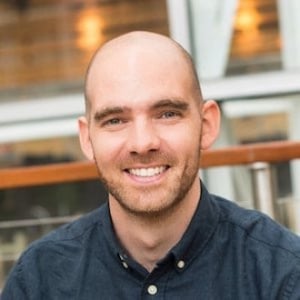
Senior Research Associate, Urban Institute
Yonah Freemark is senior research associate in Metropolitan Housing and Communities at the Urban Institute. His research focuses on the intersection of land use, affordable housing, and transportation. He has published peer-reviewed scholarship in numerous journals, including Urban Affairs Review, Politics & Society, Housing Policy Debate, and the Journal of the American Planning Association.
Previously, Freemark worked for Chicago’s Metropolitan Planning Council and has written for the New York Times, Next City, and CityLab, among others. He holds master’s degrees in both city planning and in transportation, as well as a PhD in urban studies from MIT.

Senior Research Fellow, Mercatus Center, George Mason University
Emily Hamilton is a Senior Research Fellow and Director of the Urbanity Project at the Mercatus Center at George Mason University. Her research focuses on urban economics and land-use policy. Hamilton has authored numerous academic articles and policy papers. Her writing has appeared in USA Today, the Washington Post, and the Los Angeles Times. She contributes to the blog Market Urbanism. Hamilton received her PhD in economics from George Mason University.
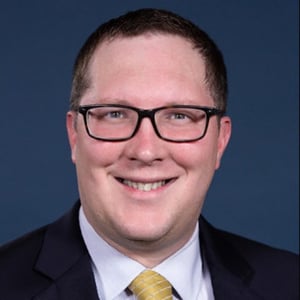
Attorney, Pacific Legal Foundation
Luke A. Wake is an attorney at the Pacific Legal Foundation. Prior to joining PLF, he was a senior staff attorney at the NFIB Small Business Legal Center.
Wake has particular expertise on environmental and land use issues, and has worked on numerous other constitutional issues and matters of importance to small business owners. He is an ardent defender of private property rights, which he believes are essential to the free enterprise system and the foundation of American liberty. As a strong advocate of individual rights and economic liberties, he has built his career defending small business interests.
Wake has focused on a whole host of issues, from employment law matters to regulatory compliance. In addition to serving as a resource for small business owners, Wake is committed to ensuring that the voice of small business is heard in the nation’s courts. As an appellate practitioner, Wake has focused particularly on informing the courts on matters of administrative law and on issues under the Fifth Amendment’s Takings Clause. He is also working to advance small business interests in law review articles, and was recently published in the Berkeley Journal of Law & Ecology. See R.S. Radford & Luke A. Wake, Deciphering and Extrapolating: Searching for Sense in Penn Central, 38 Ecology L.Q. 731, 746-747 (2011).
Before joining the Legal Center’s team, Wake completed a prestigious two-year fellowship as an attorney in the Pacific Legal Foundation’s College of Public Interest Law. Wake is a graduate of Case Western Reserve University School of Law in Cleveland Ohio, and is a member of the California Bar. He completed his undergraduate studies at Elon University in North Carolina in 2006 where he focused on political theory and corporate communications.
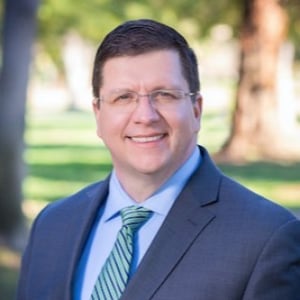
Vice President and Senior Counsel, The Becket Fund for Religious Liberty
Eric Rassbach is Vice President and Senior Counsel at the Becket Fund for Religious Liberty, where he has served since 2003. He has briefed over 90 cases at the United States Supreme Court and has led or been a part of Becket litigation teams in each of Becket’s pathbreaking victories there, including Hosanna-Tabor, Hobby Lobby, Holt v. Hobbs, Zubik v. Burwell, Agudath Israel of America v. Cuomo, and Fulton v. Philadelphia. In 2020, Eric argued Our Lady of Guadalupe School v. Morrissey-Berru to the Supreme Court, garnering a 7-2 win for his Catholic school clients. Eric has also briefed and argued cases in federal appeals courts and state supreme courts across the nation. Eric has also represented clients in appeals to the European Court of Human Rights in Strasbourg, France and in the highest courts of several other countries.
Eric believes passionately in the right of all people to the full measure of religious liberty and has represented members of almost every religious group present in the United States, including Buddhists, Christians, Hindus, Jains, Jews, Muslims, Native Americans, Santeros, and Sikhs, as well as many governmental entities targeted for accommodating religion.
Eric frequently comments on church-state issues in the media, including the New York Times, the Washington Post, the Wall Street Journal, and other major press outlets. He has published legal scholarship in the Harvard Law Review Forum, the Tennessee Law Review, the Illinois Law Review, the Cato Supreme Court Review, and other legal journals, and often speaks to law school audiences.
Before joining Becket, Eric worked at Baker Botts LLP in Houston, where he worked in international project finance. He also served as a law clerk to United States District Court Judge Lee Rosenthal in Houston, Texas.
Eric graduated from Haverford College with a degree in Comparative Literature, is a member of Fitzwilliam College, University of Cambridge, and is a graduate of Harvard Law School. Eric was a 2012-2013 Wasserstein Public Interest Fellow at Harvard Law School. He is Visiting Professor and Executive Director of The Hugh and Hazel Darling Foundation Religious Liberty Clinic at Pepperdine University Caruso School of Law in Malibu, where he leads students in litigating cases in American courts. He is also an Associated Scholar with the Centre for Religious Freedom at Jagiellonian University in Kraków, Poland. Eric is admitted in Texas, DC, California, and Ireland.
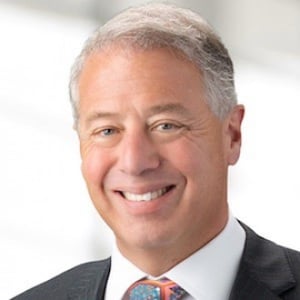
Founding and Managing Partner, Kabateck LLP
As a nationally recognized and respected consumer attorney, Brian Kabateck is a preeminent leader in the fight to ensure access to the justice system. He’s a powerful advocate in the courtroom and at the California State Capitol for consumers’ rights and protections. Formerly, Mr. Kabateck was President of the Consumer Attorneys of California and the Los Angeles County Bar Association.
Mr. Kabateck’s vigorous litigation on behalf of his clients has netted more than a billion dollars in recoveries. He has won many multi-million dollar verdicts, judgments and settlements in the areas of personal injury, insurance bad faith, pharmaceutical litigation, wrongful death, class action, mass torts and disaster litigation.
Because of his deep knowledge of the law and dynamic speaking style, Mr. Kabateck is a frequent analyst for national, local and legal media outlets. He makes regular appearances on CNN, MSNBC, CBS, NBC, ABC, FOX and CW stations. In addition to his television exposure, Mr. Kabateck often speaks at seminars, law schools and industry events.
As the former President of the Consumer Attorneys of California, Mr. Kabateck drew on his strong leadership abilities to bring change to some of the state’s most contentious problems. Under his direction, he brokered a consensus on issues including protecting patient safety and court funding. He has worked tirelessly with the California Legislature and California Department of Insurance to draft many laws for some of the state’s largest industries.
Mr. Kabateck’s ability to straddle the legal and political world has made him a strategic and outspoken advocate for consumer and patient rights. In November, voters will decide whether to overturn the decades old MICRA law which caps non-economic damages at $250,000. Mr. Kabateck is a leader in the fight to lift this outdated and misguided law that deprives the state’s most vulnerable victims from getting the compensation they deserve in medical malpractice cases.
Mr. Kabateck has extensive experience in all judicial forums throughout California. He has argued cases before the California State Supreme Court, California Court of Appeal, Ninth Circuit Court of Appeals, and the Federal Circuit Court of Appeals.

Senior Vice President for Legal Studies, Cato Institute
Clark Neily is senior vice president for legal studies at the Cato Institute. His areas of interest include constitutional law, overcriminalization, civil forfeiture, police accountability, and gun rights. Neily is the author of Terms of Engagement: How Our Courts Should Enforce the Constitution’s Promise of Limited Government. His writing has appeared in the Wall Street Journal, Forbes, and National Review Online, as well as various law reviews, including the Harvard Journal of Law and Public Policy, George Mason Law Review, Georgetown Journal of Law and Public Policy, NYU Journal of Law and Liberty, and Texas Review of Law and Politics. Neily is a frequent guest speaker and lecturer for the Federalist Society, Institute for Humane Studies, and American Constitution Society.
Before joining Cato in 2017, Neily was a senior attorney and constitutional litigator at the Institute for Justice and director of the Institute’s Center for Judicial Engagement. He is also an adjunct professor at the University of Texas School of Law, where he teaches constitutional litigation and public-interest law.
Neily served as co-counsel in District of Columbia v. Heller, the historic case in which the Supreme Court held for the first time that the Second Amendment protects an individual right to own a gun for self-defense.
Neily began his legal career as a law clerk to Judge Royce Lamberth on the U.S. District Court for the District of Columbia. After that he spent four years in the trial department of the Dallas-based firm Thompson & Knight. Neily received his undergraduate and law degrees from the University of Texas, where he was Chief Articles Editor of the Texas Law Review.
Attorney, Pacific Legal Foundation
Luke A. Wake is an attorney at the Pacific Legal Foundation. Prior to joining PLF, he was a senior staff attorney at the NFIB Small Business Legal Center.
Wake has particular expertise on environmental and land use issues, and has worked on numerous other constitutional issues and matters of importance to small business owners. He is an ardent defender of private property rights, which he believes are essential to the free enterprise system and the foundation of American liberty. As a strong advocate of individual rights and economic liberties, he has built his career defending small business interests.
Wake has focused on a whole host of issues, from employment law matters to regulatory compliance. In addition to serving as a resource for small business owners, Wake is committed to ensuring that the voice of small business is heard in the nation’s courts. As an appellate practitioner, Wake has focused particularly on informing the courts on matters of administrative law and on issues under the Fifth Amendment’s Takings Clause. He is also working to advance small business interests in law review articles, and was recently published in the Berkeley Journal of Law & Ecology. See R.S. Radford & Luke A. Wake, Deciphering and Extrapolating: Searching for Sense in Penn Central, 38 Ecology L.Q. 731, 746-747 (2011).
Before joining the Legal Center’s team, Wake completed a prestigious two-year fellowship as an attorney in the Pacific Legal Foundation’s College of Public Interest Law. Wake is a graduate of Case Western Reserve University School of Law in Cleveland Ohio, and is a member of the California Bar. He completed his undergraduate studies at Elon University in North Carolina in 2006 where he focused on political theory and corporate communications.

Paul J. Schierl Professor of Law, University of Notre Dame Law School
Professor Richard W. Garnett teaches and writes in the areas of constitutional law, criminal law, the First Amendment, and law and religion. He is a leading authority on questions and debates regarding religious freedom and church-state relations, and is the founding director of Notre Dame Law School’s Program on Church, State, and Society.
Garnett clerked for the late Chief Justice of the United States, William H. Rehnquist, and also for the late Chief Judge of the United States Court of Appeals for the Eighth Circuit, Richard S. Arnold. He earned his J.D. from Yale Law School in 1995 and his B.A., summa cum laude, from Duke University in 1990. He joined the faculty in 1999 after practicing law in Washington, D.C. with Miller, Cassidy, Larroca & Lewin.
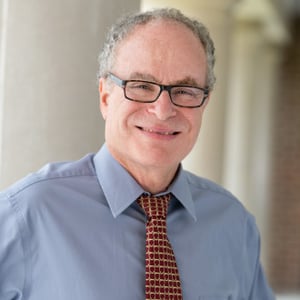
William Rand Kenan, Jr. Distinguished Professor of Law, University of North Carolina School of Law
William (Bill) Marshall joined the Carolina Law faculty in 2001 and serves as the William R. Kenan Jr. Distinguished Professor of Law. His teaching and research interests include the first amendment, presidential power, election law, federal jurisdiction, federal judicial selection, civil procedure, and media law. Marshall is the author of numerous book chapters, articles, and essays on free speech, separation of powers, the Establishment Clause, and the Free Exercise Clause. His work has appeared in the Harvard Law Review, the Yale Law Journal, the Supreme Court Review, and the University of Chicago Law Review, among others.
Marshall received his law degree from the University of Chicago and his undergraduate degree from the University of Pennsylvania. Marshall was Deputy Counsel to the President and Deputy Assistant to the President during the Clinton Administration and also served as the Solicitor General for the State of Ohio. He has taught at the Northwestern, Boston University, Vanderbilt, Ohio State, DePaul, Case Western Reserve, William and Mary, and the University Connecticut law schools. Prior to beginning his teaching career, Marshall was a Special Assistant Attorney General for the State of Minnesota.
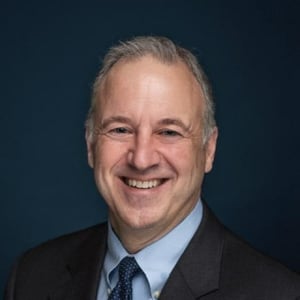
Senior Counsel, Litigation, Defense of Freedom Institute
Don Daugherty is Senior Counsel, Litigation, at the Defense of Freedom Institute for Policy Studies. He previously served as a Senior Counsel at the Institute for Free Speech and the Wisconsin Institute for Law & Liberty. Before that, he was a partner at three of Wisconsin’s largest firms, with nearly 30 years of trial and appellate litigation experience. He has been consistently recognized as among the “Best Lawyers in America,” as well as Wisconsin’s “Super Lawyers.” He received his B.A. from the University of Virginia and his J.D. from Northwestern University Law School. After law school, he served as a clerk to the Honorable Roger J. Miner of the United States Court of Appeals for the Second Circuit.
Don is on the Board of Advisors for the Milwaukee Lawyers’ Chapter of the Federalist Society, and on the Executive Committee of the Federalist Society’s Litigation Practice Group.

Bay Area Lawyers Chapter Mixer
San Francisco Lawyers Chapter and Silicon Valley Lawyers Chapter
San Francisco, CAOpening and a Conversation on Regulation as Opportunity
Salen Churi, Miles Jennings, Ann McDonald, Eugene B. Meyer
Convocation Eugene B. Meyer, President and CEO, The Federalist Society A Conversation on Regulation as Opportunity...
Gender Based Board Quotas, the Fourteenth Amendment, and Meland v. Weber
Anastasia P. Boden, Megan L. Brown, Ann Ravel
On June 21, 2021, the Court of Appeals for the Ninth Circuit ruled a shareholder-plaintiff...
Talks with Authors: A Dubious Expediency
Gail L. Heriot, Maimon Schwarzschild
A Dubious Expediency: How Race Preferences Damage Higher Education is a collection of eight essays written...
Topics
Why Did California's Prop 16 Fail? A County-by-County Assessment
By a margin of 57% to 43%, California voters in 2020 rejected Proposition 16, which...
Deep Dive Episode 157 – Regulating Land Use During a Pandemic
Yonah Freemark, Emily Hamilton, Luke A. Wake
The COVID-19 pandemic has caused significant changes in urban land use. Where possible, companies have...
Courthouse Steps Decision Teleforum: Roman Catholic Diocese of Brooklyn v. Cuomo
Eric Rassbach
On November 25, 2020, the Supreme Court barred New York Governor Andrew Cuomo from enforcing...
Deep Dive Episode 150 – Regulating Business in the Age of COVID-19
Brian Kabateck, Clark Neily, Luke A. Wake
COVID-19 has presented unique challenges for state lawmakers as they attempt to address public health...
COVID-19 and Religious Matters
Richard W. Garnett, William P. Marshall
The COVID-19 pandemic has upended Americans’ daily lives. What one day people took for granted,...
An Imagined Bloc and Other Figments
Donald A. Daugherty
A review of American Justice 2019: The Roberts Court Arrives, by Mark Joseph Stern (University...