
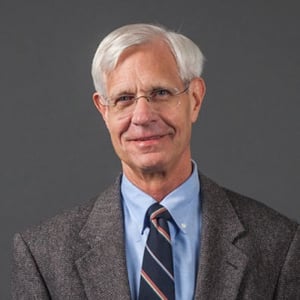
Distinguished University Professor, Antonin Scalia Law School, George Mason University
University Professor Nelson Lund is the author of Rousseau’s Rejuvenation of Political Philosophy: A New Introduction. He has also written widely in the field of constitutional law, including articles on constitutional interpretation, federalism, separation of powers, the Second Amendment, the Commerce Clause, the Speech or Debate Clause, the Equal Protection Clause, and the Uniformity Clause. In addition, he has published articles in the fields of employment discrimination and civil rights, the legal regulation of medical ethics, and the application of economic analysis to legal institutions and legal ethics.
Professor Lund graduated from St. John's College in Annapolis, Maryland, after which he received an MA in philosophy from the Catholic University of America and a PhD in political science from Harvard University. He left the faculty of the University of Chicago to attend its law school, where he served as executive editor of the University of Chicago Law Review and chapter chairman of the Federalist Society for Law and Public Policy Studies. After law school, he held positions at the United States Department of Justice in the Office of the Solicitor General and the Office of Legal Counsel. He also served as a law clerk to the Honorable Patrick E. Higginbotham of the United States Court of Appeals for the Fifth Circuit and to the Honorable Sandra Day O'Connor of the United States Supreme Court. Following his clerkship with Justice O'Connor, Professor Lund served in the White House as associate counsel to the president from 1989 to 1992.
Since joining the faculty at George Mason University's Antonin Scalia Law School, Professor Lund has taught Constitutional Law, Legislation, Federal Election Law, Employment Discrimination, State and Local Government, and seminars on the Second Amendment and on a variety of topics in Jurisprudence.
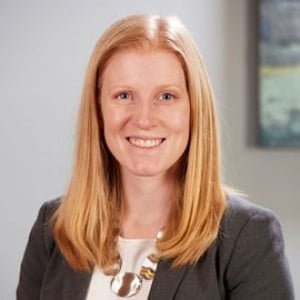
Kaplan Johnson Abate & Bird
Cassie Chambers Armstrong focuses her practice on litigation. She has significant courtroom experience; prior to joining the firm, she was the lead attorney on multiple trials. She has worked on class actions, appeals, and other complex litigation.
Previously, she was a Skadden Fellow at a Kentucky nonprofit, where she formulated and implemented impact litigation strategies.
Her graduate degrees in Public Health and Public Management give her a unique perspective on the intersection between health care, government, and law.
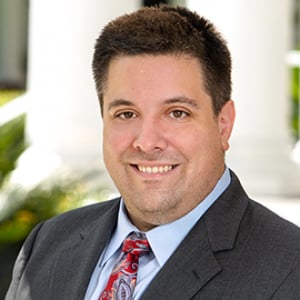
Sheila M. McDevitt Professor of Law and Faculty Director of the Election Law Center, Florida State University College of Law
Professor Morley joined FSU Law in 2018, and teaches and writes in the areas of election law, constitutional law, remedies, and the federal courts. He is best known for his work on election emergencies and post-election litigation, nationwide and other defendant-oriented injunctions, the jurisdiction of the federal courts and their equitable powers more generally. He has testified before congressional committees, made presentations to election officials for the U.S. Election Assistance Commission and participated in bipartisan blue-ribbon groups to develop election reforms. The governor of Florida also appointed Professor Morley to the Criminal Punishment Code Task Force, to propose potential revisions to the legislature.
The U.S. Supreme Court has cited several of his articles, and he was counsel of record for the successful Petitioner in a landmark campaign finance case. Professor Morley has appeared on C-SPAN, Court TV, Fox News and numerous local news programs, and has been quoted in the Washington Post, Los Angeles Times, Roll Call, Politico, U.S. News and World Report, and a wide range of other national publications. His work has been published in many of the nation’s top law reviews, including the Georgetown Law Journal, Northwestern University Law Review, Boston University Law Review and Emory Law Journal.
Before joining FSU Law, Professor Morley was a Climenko Fellow and Lecturer in Law at Harvard Law School. Prior to his experience in academia, he served in government as special assistant to the General Counsel of the Army at the Pentagon, as well as a law clerk for Judge Gerald B. Tjoflat of the U.S. Court of Appeals for the Eleventh Circuit. During his tenure with the Army General Counsel’s office, he was awarded the Meritorious Civilian Service Award and the Army Staff Lapel Pin. He also worked as an associate at Williams & Connolly LLP and the Supreme Court & Appellate group of Winston & Strawn, LLP, both in Washington, D.C.
Professor Morley earned his J.D. from Yale Law School in 2003, where he was a senior editor on the Yale Law Journal; served on the moot court board; and received the Thurman Arnold Prize for Best Oralist in the Morris Tyler Moot Court of Appeals.
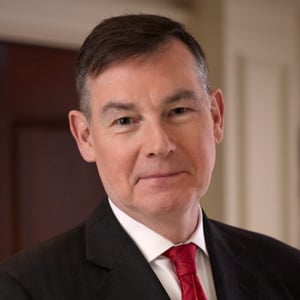
Member, Stoll Keenon Ogden PLLC
John is a Member in Stoll Keenon Ogden’s Louisville office and has been with the firm since 2007. He has a track record of success in Labor and Employment Law spanning 35 years, and is honored to serve as Chair of the Kentucky State Labor Relations Board, which resolves disputes between public employers and their labor organizations.
He is responsible for creating binding legal precedent entitling employers to secure indemnity from other parties in harassment or retaliation cases. He has also established legal precedent holding that the claim for intentional infliction of emotional distress is preempted by statute. In a class discrimination case, he prevailed in challenging a claim brought by the federal government that women were categorically excluded from coal mining jobs.
For his many accomplishments, John has been distinguished with multiple local, state and national recognitions, including more than eight consecutive years of being listed in the Best Lawyers in America® peer-review publication.
Labor, Employment & Employee Benefits: John’s extensive experience encompasses the full breadth of employment law, including traditional labor law, claims of harassment and retaliation, breach of contract disputes and enforcement of trade secrets.
Appellate: Once a trial court decision has been made, John is fully prepared to take cases to court at the state or federal level as necessary to obtain a satisfactory resolution. He has obtained favorable verdicts for both appellants and appellees.
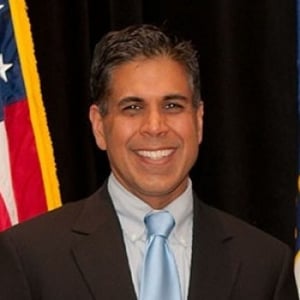
Judge, United States Court of Appeals, Sixth Circuit
Amul R. Thapar serves as a judge on the United States Court of Appeals for the Sixth Circuit. His judicial career began in 2007 when President George W. Bush nominated him to serve on the Eastern District of Kentucky, making him the first South Asian Article III judge in American history. In 2017, he became President Donald J. Trump’s first appellate court nominee.
Before joining the bench, Judge Thapar served as the United States Attorney for the Eastern District of Kentucky. While United States Attorney, Judge Thapar worked on the Attorney General’s Advisory Committee (“AGAC”) and chaired the AGAC’s Controlled Substances and Asset Forfeiture subcommittee. He also served on the Terrorism and National Security subcommittee, the Violent Crime subcommittee, and the Child Exploitation working group.
Judge Thapar has worked in private practice, at Williams & Connolly in Washington, D.C., and Squire, Sanders & Dempsey in Cincinnati, Ohio. He also served as an Assistant United States Attorney in both the Southern District of Ohio and the District of Columbia.
Judge Thapar received his undergraduate degree from Boston College and his law degree from the University of California, Berkeley. After graduating, Judge Thapar worked as a law clerk to the Honorable S. Arthur Spiegel of the United States District Court for the Southern District of Ohio, and the Honorable Nathaniel R. Jones of the United States Court of Appeals for the Sixth Circuit.
Judge Thapar has also published in the Yale Law Journal, Michigan Law Review, and Catholic University Law Review. He teaches courses on originalism, the Federalists and Anti-Federalists, and legal writing at Notre Dame Law School, the University of Virginia School of Law, and Vanderbilt Law School.
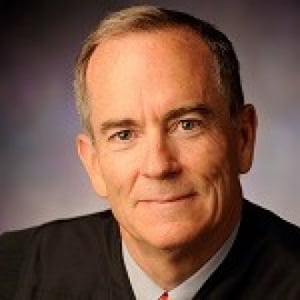
Former Justice, Supreme Court of Kentucky
Laurance B. VanMeter, of Lexington, Kentucky, served on the Kentucky Supreme Court from 2017 to 2025 where he was just the third Justice to have served at all four levels of the Kentucky unified court system. His fellow justices elected him as Chief Justice of Kentucky beginning in January 2023. His term ended in January 2025 following his decision not to seek a second term on the Court.
Before his election to the Supreme Court, Chief Justice VanMeter served thirteen years as a Judge of the Kentucky Court of Appeals, having been first elected in November 2003. He also served as a Fayette Circuit Court judge and as a Fayette District Court judge.
Prior to his judicial service, he was a partner in the Kentucky firm of Stoll, Keenon & Park where his practice included business organization and planning, estate planning, real estate, and taxation, largely with the equine industry. Chief Justice VanMeter served on or chaired various committees within the Kentucky judicial branch: Evidence Rules Review Commission, Civil Rules Committee, Kentucky Bar Association’s Continuing Legal Education Commission, Kentucky Office of Bar Admissions, Board of Trustees of the Kentucky Judicial Form Retirement Systems, Ethics Committee of the Kentucky Judiciary, and Judicial Conduct Commission. In addition, he served as the Court of Appeals’ acting Chief Judge, and as its Chief Judge Pro Tempore.
He earned an undergraduate degree from Vanderbilt University with a major in history in 1980, and his J.D. from the University of Kentucky College of Law in 1983. More recently, he earned an LL.M. degree, May 2020, from Duke University School of Law and, in July 2020, was elected to The American Law Institute. In 2024, Chief Justice VanMeter received the Kentucky Bar Association’s Distinguished Judge Award and his college fraternity’s Award for Distinguished Public Service. He was appointed to the Uniform Law Commission in May 2025.
Kaplan Johnson Abate & Bird
Cassie Chambers Armstrong focuses her practice on litigation. She has significant courtroom experience; prior to joining the firm, she was the lead attorney on multiple trials. She has worked on class actions, appeals, and other complex litigation.
Previously, she was a Skadden Fellow at a Kentucky nonprofit, where she formulated and implemented impact litigation strategies.
Her graduate degrees in Public Health and Public Management give her a unique perspective on the intersection between health care, government, and law.
Sheila M. McDevitt Professor of Law and Faculty Director of the Election Law Center, Florida State University College of Law
Professor Morley joined FSU Law in 2018, and teaches and writes in the areas of election law, constitutional law, remedies, and the federal courts. He is best known for his work on election emergencies and post-election litigation, nationwide and other defendant-oriented injunctions, the jurisdiction of the federal courts and their equitable powers more generally. He has testified before congressional committees, made presentations to election officials for the U.S. Election Assistance Commission and participated in bipartisan blue-ribbon groups to develop election reforms. The governor of Florida also appointed Professor Morley to the Criminal Punishment Code Task Force, to propose potential revisions to the legislature.
The U.S. Supreme Court has cited several of his articles, and he was counsel of record for the successful Petitioner in a landmark campaign finance case. Professor Morley has appeared on C-SPAN, Court TV, Fox News and numerous local news programs, and has been quoted in the Washington Post, Los Angeles Times, Roll Call, Politico, U.S. News and World Report, and a wide range of other national publications. His work has been published in many of the nation’s top law reviews, including the Georgetown Law Journal, Northwestern University Law Review, Boston University Law Review and Emory Law Journal.
Before joining FSU Law, Professor Morley was a Climenko Fellow and Lecturer in Law at Harvard Law School. Prior to his experience in academia, he served in government as special assistant to the General Counsel of the Army at the Pentagon, as well as a law clerk for Judge Gerald B. Tjoflat of the U.S. Court of Appeals for the Eleventh Circuit. During his tenure with the Army General Counsel’s office, he was awarded the Meritorious Civilian Service Award and the Army Staff Lapel Pin. He also worked as an associate at Williams & Connolly LLP and the Supreme Court & Appellate group of Winston & Strawn, LLP, both in Washington, D.C.
Professor Morley earned his J.D. from Yale Law School in 2003, where he was a senior editor on the Yale Law Journal; served on the moot court board; and received the Thurman Arnold Prize for Best Oralist in the Morris Tyler Moot Court of Appeals.
Member, Stoll Keenon Ogden PLLC
John is a Member in Stoll Keenon Ogden’s Louisville office and has been with the firm since 2007. He has a track record of success in Labor and Employment Law spanning 35 years, and is honored to serve as Chair of the Kentucky State Labor Relations Board, which resolves disputes between public employers and their labor organizations.
He is responsible for creating binding legal precedent entitling employers to secure indemnity from other parties in harassment or retaliation cases. He has also established legal precedent holding that the claim for intentional infliction of emotional distress is preempted by statute. In a class discrimination case, he prevailed in challenging a claim brought by the federal government that women were categorically excluded from coal mining jobs.
For his many accomplishments, John has been distinguished with multiple local, state and national recognitions, including more than eight consecutive years of being listed in the Best Lawyers in America® peer-review publication.
Labor, Employment & Employee Benefits: John’s extensive experience encompasses the full breadth of employment law, including traditional labor law, claims of harassment and retaliation, breach of contract disputes and enforcement of trade secrets.
Appellate: Once a trial court decision has been made, John is fully prepared to take cases to court at the state or federal level as necessary to obtain a satisfactory resolution. He has obtained favorable verdicts for both appellants and appellees.
Judge, United States Court of Appeals, Sixth Circuit
Amul R. Thapar serves as a judge on the United States Court of Appeals for the Sixth Circuit. His judicial career began in 2007 when President George W. Bush nominated him to serve on the Eastern District of Kentucky, making him the first South Asian Article III judge in American history. In 2017, he became President Donald J. Trump’s first appellate court nominee.
Before joining the bench, Judge Thapar served as the United States Attorney for the Eastern District of Kentucky. While United States Attorney, Judge Thapar worked on the Attorney General’s Advisory Committee (“AGAC”) and chaired the AGAC’s Controlled Substances and Asset Forfeiture subcommittee. He also served on the Terrorism and National Security subcommittee, the Violent Crime subcommittee, and the Child Exploitation working group.
Judge Thapar has worked in private practice, at Williams & Connolly in Washington, D.C., and Squire, Sanders & Dempsey in Cincinnati, Ohio. He also served as an Assistant United States Attorney in both the Southern District of Ohio and the District of Columbia.
Judge Thapar received his undergraduate degree from Boston College and his law degree from the University of California, Berkeley. After graduating, Judge Thapar worked as a law clerk to the Honorable S. Arthur Spiegel of the United States District Court for the Southern District of Ohio, and the Honorable Nathaniel R. Jones of the United States Court of Appeals for the Sixth Circuit.
Judge Thapar has also published in the Yale Law Journal, Michigan Law Review, and Catholic University Law Review. He teaches courses on originalism, the Federalists and Anti-Federalists, and legal writing at Notre Dame Law School, the University of Virginia School of Law, and Vanderbilt Law School.
Former Justice, Supreme Court of Kentucky
Laurance B. VanMeter, of Lexington, Kentucky, served on the Kentucky Supreme Court from 2017 to 2025 where he was just the third Justice to have served at all four levels of the Kentucky unified court system. His fellow justices elected him as Chief Justice of Kentucky beginning in January 2023. His term ended in January 2025 following his decision not to seek a second term on the Court.
Before his election to the Supreme Court, Chief Justice VanMeter served thirteen years as a Judge of the Kentucky Court of Appeals, having been first elected in November 2003. He also served as a Fayette Circuit Court judge and as a Fayette District Court judge.
Prior to his judicial service, he was a partner in the Kentucky firm of Stoll, Keenon & Park where his practice included business organization and planning, estate planning, real estate, and taxation, largely with the equine industry. Chief Justice VanMeter served on or chaired various committees within the Kentucky judicial branch: Evidence Rules Review Commission, Civil Rules Committee, Kentucky Bar Association’s Continuing Legal Education Commission, Kentucky Office of Bar Admissions, Board of Trustees of the Kentucky Judicial Form Retirement Systems, Ethics Committee of the Kentucky Judiciary, and Judicial Conduct Commission. In addition, he served as the Court of Appeals’ acting Chief Judge, and as its Chief Judge Pro Tempore.
He earned an undergraduate degree from Vanderbilt University with a major in history in 1980, and his J.D. from the University of Kentucky College of Law in 1983. More recently, he earned an LL.M. degree, May 2020, from Duke University School of Law and, in July 2020, was elected to The American Law Institute. In 2024, Chief Justice VanMeter received the Kentucky Bar Association’s Distinguished Judge Award and his college fraternity’s Award for Distinguished Public Service. He was appointed to the Uniform Law Commission in May 2025.
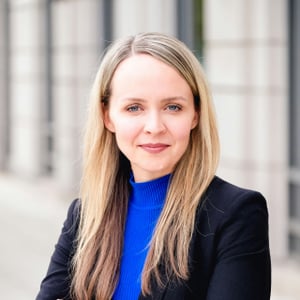
Professor of Law and Faculty Director for the Georgetown Center for the Constitution, Georgetown University Law Center
Stephanie Barclay is a Professor of Law at Georgetown Law School, and the Faculty Director of the Georgetown Center for the Constitution. Her research focuses on the role our different democratic institutions play in protecting minority rights, particularly at the intersection of free speech and religious exercise. Barclay‘s work is published or is forthcoming in leading journals such as the Harvard Law Review, the Chicago Law Review, the University of Pennsylvania Law Review, and the Yale Law Journal Forum. One of her articles was also selected for the 2020 Stanford/Harvard/Yale Junior Faculty Forum. Her work has been featured in many media outlets, including The New York Times, The Wall Street Journal, The Washington Post, USA Today, Bloomberg BNA, The Hill, and Law 360. And her work has also been cited by the U.S. Supreme Court.
Prior to joining Georgetown, Barclay was twice voted Professor of the Year. Barclay has also litigated constitutional cases at both the trial and appellate level, including before the U.S. Supreme Court. Barclay served as a law clerk to Judge N. Randy Smith on the U.S. Court of Appeals for the Ninth Circuit, and to Justice Neil M. Gorsuch of the U.S. Supreme Court.
Barclay is a Faculty Affiliate at the Constitutional Law Center at Stanford Law School; and she is a Nootbaar Fellow at the Nootbaar Institute on Law, Religion, and Ethics at Pepperdine University. She currently serves as the Chair for the AALS Law and Religion Section and as a Member of the Executive Committee for the AALS Constitutional Law Section. She graduated summa cum laude from BYU Law School, where she was elected to the Order of the Coif. She is completing a Ph.D. in Law at Oxford University as a Clarendon Scholar and a Tang Scholar.
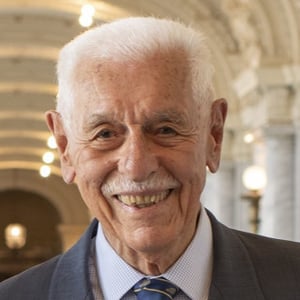
Judge, United States Court of Appeals, Ninth Circuit
Judge Carlos Bea serves as a judge on the United States Court of Appeals for the Ninth Circuit. He received his Bachelor's Degree from Stanford University in 1956 and his J.D. from Stanford Law School in 1958. Judge Bea was born in San Sebastian, Spain, and immigrated with his family to Cuba in 1939. In 1952, he represented Cuba on the Cuban National basketball team in the Helsinki Olympics. Judge Bea became a naturalized citizen of the United States in 1958. He engaged in private practice in San Francisco, principally in the area of civil trials (jury and non-jury), from 1959-75 at Dunne, Phelps & Mills and from 1975-90 at Carlos Bea, A Law Corporation. He taught courses in civil litigation advocacy at Hastings College of Law and Stanford Law School. From 1990 to 2003, Judge Bea served as a judge of the San Francisco Superior Court. He was nominated by President George W. Bush to the United States Court of Appeals for the Ninth Circuit and was confirmed in 2003.
Judge Bea and his wife Louise reside in San Francisco, where they raised their four sons, Sebastian, Alexander, Nicholas, and Dominic.
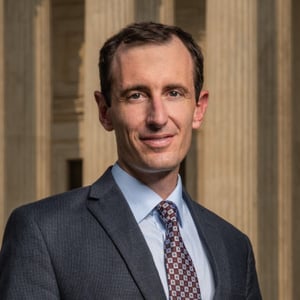
Vice President & Senior Counsel, Becket
Luke Goodrich is the author of Free to Believe: The Battle over Religious Liberty in America and vice president and senior counsel at the Becket Fund for Religious Liberty.
While at Becket, Luke has argued and won precedent-setting cases in the Third, Fifth, Seventh, Ninth, and Eleventh Circuits, and has helped Becket win four major Supreme Court cases in the last seven years: including victories for the Little Sisters of the Poor and Hobby Lobby against the contraception mandate, a victory for a Muslim prisoner under the Religious Land Use and Institutionalized Persons Act, and a unanimous victory in the Supreme Court’s first decision ever on the ministerial exception, which The Wall Street Journal called one of “the most important religious liberty cases in a half century.”
He frequently discusses religious freedom on networks such as CNN, Fox News, ABC, and NPR, and in publications like the Wall Street Journal, USA Today, and New York Times magazine. He also serves as an adjunct professor at the University of Utah S.J. Quinney College of Law, where he teaches constitutional law.
Before joining Becket, he clerked for Judge Michael W. McConnell on the U.S. Court of Appeals for the Tenth Circuit and graduated from the University of Chicago Law School with high honors as a member of the Law Review and the Order of the Coif.
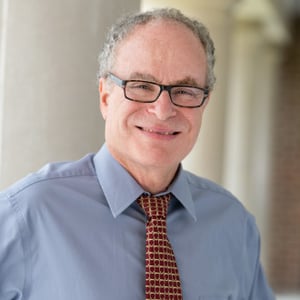
William Rand Kenan, Jr. Distinguished Professor of Law, University of North Carolina School of Law
William (Bill) Marshall joined the Carolina Law faculty in 2001 and serves as the William R. Kenan Jr. Distinguished Professor of Law. His teaching and research interests include the first amendment, presidential power, election law, federal jurisdiction, federal judicial selection, civil procedure, and media law. Marshall is the author of numerous book chapters, articles, and essays on free speech, separation of powers, the Establishment Clause, and the Free Exercise Clause. His work has appeared in the Harvard Law Review, the Yale Law Journal, the Supreme Court Review, and the University of Chicago Law Review, among others.
Marshall received his law degree from the University of Chicago and his undergraduate degree from the University of Pennsylvania. Marshall was Deputy Counsel to the President and Deputy Assistant to the President during the Clinton Administration and also served as the Solicitor General for the State of Ohio. He has taught at the Northwestern, Boston University, Vanderbilt, Ohio State, DePaul, Case Western Reserve, William and Mary, and the University Connecticut law schools. Prior to beginning his teaching career, Marshall was a Special Assistant Attorney General for the State of Minnesota.
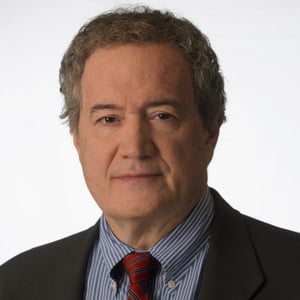
Director of the Program in Human Rights, Catholic University of America
William L. Saunders is Chair Emeritus of the Religious Liberties Practice Group of the Federalist Society. He is also a religious liberty and human rights scholar as well as director of the Center for Human rights at The Catholic University of America. He is Law Fellow with the Institute for Human Ecology, Professor and Director of the Program in Human Rights in the School of Arts & Sciences and Co-director of the Center for Religious Liberty at the Columbus School of Law. Before joining The Catholic University of America, Mr. Saunders served as Senior Vice President and Senior Counsel with Americans United for Life for ten years. From 1999 to 2009, he was Senior Fellow in Bioethics and Human Rights Counsel at the Family Research Council.
Mr. Saunders attended the University of North Carolina at Chapel Hill on a Morehead scholarship. He obtained his degree in law from the Harvard Law School.
Mr. Saunders was featured in Harvard’s first Guide to Conservative Public Interest Law in 2003 and again in the 2008 edition. He served on Harvard’s Advisory Committee for its 2008 celebration of public interest law. A member of the Supreme Court bar, he has authored numerous legal briefs in state, federal, foreign, and international courts.
Mr. Saunders’ book, Unborn Human Life and Fundamental Rights: Leading Constitutional Cases Under Scrutiny, was published in 2019. His articles and book chapters have been published by the university presses of Harvard, Villanova, Brigham Young, Fordham, Georgetown, Houston, Scranton, and the Catholic University of America, as well as by the Intercollegiate Studies Institute, Freedom House, Greenhaven Press, Rowan & Littlefield, Praeger, St. Augustine’s, and Intervarsity press. He has given lectures and participated in debates at many colleges, universities, and law schools, including Princeton, Harvard, Georgetown, and Notre Dame. He delivered the annual J. Michael Miller Lecture at the University of St. Thomas (on international law) in February 2007, the annual R. Wayne Kraft Memorial Lecture (on bioethics) at DeSales University in February 2004 and the annual James Moore Lecture (on human rights violations in Sudan) at Millikin University in 1999. He has also lectured, and/or has been published, in many foreign countries, including Italy, Germany, Poland, Austria, Spain, Greece, Slovakia, Mexico, Qatar, Malaysia, Romania, the Philippines, Hong Kong, and the United Kingdom.
In addition to speaking and writing frequently on bioethics topics, Mr. Saunders has submitted testimony to the President’s Council on Bioethics, as well as to UNESCO’s Committee on Bioethics, and has briefed Congressional staff and state legislatures. He is a regular columnist for the National Catholic Bioethics Quarterly.
Mr. Saunders has appeared often in the media, including BBC World News, CNN, Fox News, Vatican Radio, and National Public Radio. His articles on issues have appeared in a variety of journals, such as First Things, Human Events, Human Life Review, The Legal Times, Communio, The Family in America: A Journal of Public Policy, Ethics & Medics, and Touchstone.
Mr. Saunders served on the official United States delegation to the UN Special Session on Children in 2001/02. In 2011, he was a speaker at an official briefing at the UN, addressing the topic, why euthanasia is not a human right.
In 2004, he served on the NGO Working Committee in connection with the Doha Intergovernmental Conference for the Family.
Mr. Saunders is Senior Fellow with the Religious Freedom Institute, and Affiliated Scholar with the Pellegrino Center for Clinical Ethics at the Georgetown University School of Medicine. He is President of the Fellowship of Catholic Scholars and a member of the boards of the International Association of Catholic Bioethicists, the International Right to Life Federation, the Institute on Religion and Democracy, and the Society of Catholic Social Scientists.
In 1999, Mr. Saunders founded Sudan Relief and Rescue, Inc., to aid the persecuted church in Sudan. He has worked for and written on behalf of the persecuted church for many years.
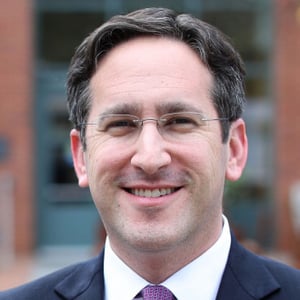
Hardy Cross Dillard Professor of Law; Martha Lubin Karsh and Bruce A. Karsh Bicentennial Professor of Law; Director, Karsh Center for Law and Democracy, University of Virginia School of Law
Micah Schwartzman is the Hardy Cross Dillard Professor of Law, a Martha Lubin Karsh and Bruce A. Karsh Bicentennial Professor of Law, and director of the Karsh Center for Law and Democracy at the University of Virginia School of Law. Schwartzman’s scholarship focuses on law and religion, jurisprudence, and constitutional law. He co-edited The Rise of Corporate Religious Liberty (Oxford University Press) and is co-authoring a forthcoming casebook on Constitutional Law and Religion.
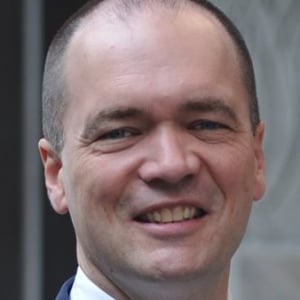
Professor of Law, High Point School of Law
Scott Gaylord directs High Point Law’s Appellate Litigation Clinic and serves as a Professor of Law, teaching Constitutional Law and related upper-level elective courses. The Appellate Clinic works with students to write and file briefs in significant court cases, including appeals before the United States Supreme Court.
Professor Gaylord is a prominent Constitutional Law scholar with an impressive background in both academia and legal practice. He has authored or co-authored 18 substantial law review articles, co-authored a Constitutional Law casebook, and has written more than 35 amicus briefs to the U.S. Supreme Court and federal circuit courts on prominent national cases involving religious liberty and free speech. He is a frequent speaker on constitutional law and First Amendment topics at law schools across the country and has regularly provided commentary on ongoing constitutional issues to national media outlets, including th eNew York Times, USA Today, the Diane Rehm Show, NPR, The National Constitution Center, and Bloomberg Law.
Professor Gaylord also started an appellate advocacy clinic at his former law school and currently serves on the North Carolina Chief Justice’s Commission on Professionalism, along with holding many other service and leadership roles. Prior to joining the academy in 2007, he practiced complex civil and commercial litigation with the Charlotte firm of Robinson Bradshaw & Hinson, and he clerked for Judge Edith H. Jones on the United States Court of Appeals for the Fifth Circuit.
Professor Gaylord earned his B.A. in philosophy and English, summa cum laude, from Colgate University, his Ph.D. in philosophy from the University of North Carolina at Chapel Hill, and his J.D. from Notre Dame Law School, where he also graduated summa cum laude.
William Rand Kenan, Jr. Distinguished Professor of Law, University of North Carolina School of Law
William (Bill) Marshall joined the Carolina Law faculty in 2001 and serves as the William R. Kenan Jr. Distinguished Professor of Law. His teaching and research interests include the first amendment, presidential power, election law, federal jurisdiction, federal judicial selection, civil procedure, and media law. Marshall is the author of numerous book chapters, articles, and essays on free speech, separation of powers, the Establishment Clause, and the Free Exercise Clause. His work has appeared in the Harvard Law Review, the Yale Law Journal, the Supreme Court Review, and the University of Chicago Law Review, among others.
Marshall received his law degree from the University of Chicago and his undergraduate degree from the University of Pennsylvania. Marshall was Deputy Counsel to the President and Deputy Assistant to the President during the Clinton Administration and also served as the Solicitor General for the State of Ohio. He has taught at the Northwestern, Boston University, Vanderbilt, Ohio State, DePaul, Case Western Reserve, William and Mary, and the University Connecticut law schools. Prior to beginning his teaching career, Marshall was a Special Assistant Attorney General for the State of Minnesota.
Kaplan Johnson Abate & Bird
Cassie Chambers Armstrong focuses her practice on litigation. She has significant courtroom experience; prior to joining the firm, she was the lead attorney on multiple trials. She has worked on class actions, appeals, and other complex litigation.
Previously, she was a Skadden Fellow at a Kentucky nonprofit, where she formulated and implemented impact litigation strategies.
Her graduate degrees in Public Health and Public Management give her a unique perspective on the intersection between health care, government, and law.
Sheila M. McDevitt Professor of Law and Faculty Director of the Election Law Center, Florida State University College of Law
Professor Morley joined FSU Law in 2018, and teaches and writes in the areas of election law, constitutional law, remedies, and the federal courts. He is best known for his work on election emergencies and post-election litigation, nationwide and other defendant-oriented injunctions, the jurisdiction of the federal courts and their equitable powers more generally. He has testified before congressional committees, made presentations to election officials for the U.S. Election Assistance Commission and participated in bipartisan blue-ribbon groups to develop election reforms. The governor of Florida also appointed Professor Morley to the Criminal Punishment Code Task Force, to propose potential revisions to the legislature.
The U.S. Supreme Court has cited several of his articles, and he was counsel of record for the successful Petitioner in a landmark campaign finance case. Professor Morley has appeared on C-SPAN, Court TV, Fox News and numerous local news programs, and has been quoted in the Washington Post, Los Angeles Times, Roll Call, Politico, U.S. News and World Report, and a wide range of other national publications. His work has been published in many of the nation’s top law reviews, including the Georgetown Law Journal, Northwestern University Law Review, Boston University Law Review and Emory Law Journal.
Before joining FSU Law, Professor Morley was a Climenko Fellow and Lecturer in Law at Harvard Law School. Prior to his experience in academia, he served in government as special assistant to the General Counsel of the Army at the Pentagon, as well as a law clerk for Judge Gerald B. Tjoflat of the U.S. Court of Appeals for the Eleventh Circuit. During his tenure with the Army General Counsel’s office, he was awarded the Meritorious Civilian Service Award and the Army Staff Lapel Pin. He also worked as an associate at Williams & Connolly LLP and the Supreme Court & Appellate group of Winston & Strawn, LLP, both in Washington, D.C.
Professor Morley earned his J.D. from Yale Law School in 2003, where he was a senior editor on the Yale Law Journal; served on the moot court board; and received the Thurman Arnold Prize for Best Oralist in the Morris Tyler Moot Court of Appeals.
Member, Stoll Keenon Ogden PLLC
John is a Member in Stoll Keenon Ogden’s Louisville office and has been with the firm since 2007. He has a track record of success in Labor and Employment Law spanning 35 years, and is honored to serve as Chair of the Kentucky State Labor Relations Board, which resolves disputes between public employers and their labor organizations.
He is responsible for creating binding legal precedent entitling employers to secure indemnity from other parties in harassment or retaliation cases. He has also established legal precedent holding that the claim for intentional infliction of emotional distress is preempted by statute. In a class discrimination case, he prevailed in challenging a claim brought by the federal government that women were categorically excluded from coal mining jobs.
For his many accomplishments, John has been distinguished with multiple local, state and national recognitions, including more than eight consecutive years of being listed in the Best Lawyers in America® peer-review publication.
Labor, Employment & Employee Benefits: John’s extensive experience encompasses the full breadth of employment law, including traditional labor law, claims of harassment and retaliation, breach of contract disputes and enforcement of trade secrets.
Appellate: Once a trial court decision has been made, John is fully prepared to take cases to court at the state or federal level as necessary to obtain a satisfactory resolution. He has obtained favorable verdicts for both appellants and appellees.
Judge, United States Court of Appeals, Sixth Circuit
Amul R. Thapar serves as a judge on the United States Court of Appeals for the Sixth Circuit. His judicial career began in 2007 when President George W. Bush nominated him to serve on the Eastern District of Kentucky, making him the first South Asian Article III judge in American history. In 2017, he became President Donald J. Trump’s first appellate court nominee.
Before joining the bench, Judge Thapar served as the United States Attorney for the Eastern District of Kentucky. While United States Attorney, Judge Thapar worked on the Attorney General’s Advisory Committee (“AGAC”) and chaired the AGAC’s Controlled Substances and Asset Forfeiture subcommittee. He also served on the Terrorism and National Security subcommittee, the Violent Crime subcommittee, and the Child Exploitation working group.
Judge Thapar has worked in private practice, at Williams & Connolly in Washington, D.C., and Squire, Sanders & Dempsey in Cincinnati, Ohio. He also served as an Assistant United States Attorney in both the Southern District of Ohio and the District of Columbia.
Judge Thapar received his undergraduate degree from Boston College and his law degree from the University of California, Berkeley. After graduating, Judge Thapar worked as a law clerk to the Honorable S. Arthur Spiegel of the United States District Court for the Southern District of Ohio, and the Honorable Nathaniel R. Jones of the United States Court of Appeals for the Sixth Circuit.
Judge Thapar has also published in the Yale Law Journal, Michigan Law Review, and Catholic University Law Review. He teaches courses on originalism, the Federalists and Anti-Federalists, and legal writing at Notre Dame Law School, the University of Virginia School of Law, and Vanderbilt Law School.
Former Justice, Supreme Court of Kentucky
Laurance B. VanMeter, of Lexington, Kentucky, served on the Kentucky Supreme Court from 2017 to 2025 where he was just the third Justice to have served at all four levels of the Kentucky unified court system. His fellow justices elected him as Chief Justice of Kentucky beginning in January 2023. His term ended in January 2025 following his decision not to seek a second term on the Court.
Before his election to the Supreme Court, Chief Justice VanMeter served thirteen years as a Judge of the Kentucky Court of Appeals, having been first elected in November 2003. He also served as a Fayette Circuit Court judge and as a Fayette District Court judge.
Prior to his judicial service, he was a partner in the Kentucky firm of Stoll, Keenon & Park where his practice included business organization and planning, estate planning, real estate, and taxation, largely with the equine industry. Chief Justice VanMeter served on or chaired various committees within the Kentucky judicial branch: Evidence Rules Review Commission, Civil Rules Committee, Kentucky Bar Association’s Continuing Legal Education Commission, Kentucky Office of Bar Admissions, Board of Trustees of the Kentucky Judicial Form Retirement Systems, Ethics Committee of the Kentucky Judiciary, and Judicial Conduct Commission. In addition, he served as the Court of Appeals’ acting Chief Judge, and as its Chief Judge Pro Tempore.
He earned an undergraduate degree from Vanderbilt University with a major in history in 1980, and his J.D. from the University of Kentucky College of Law in 1983. More recently, he earned an LL.M. degree, May 2020, from Duke University School of Law and, in July 2020, was elected to The American Law Institute. In 2024, Chief Justice VanMeter received the Kentucky Bar Association’s Distinguished Judge Award and his college fraternity’s Award for Distinguished Public Service. He was appointed to the Uniform Law Commission in May 2025.
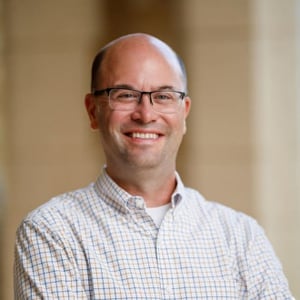
Paul J. Schierl Professor of Law, University of Notre Dame Law School
Professor Richard W. Garnett teaches and writes in the areas of constitutional law, criminal law, the First Amendment, and law and religion. He is a leading authority on questions and debates regarding religious freedom and church-state relations, and is the founding director of Notre Dame Law School’s Program on Church, State, and Society.
Garnett clerked for the late Chief Justice of the United States, William H. Rehnquist, and also for the late Chief Judge of the United States Court of Appeals for the Eighth Circuit, Richard S. Arnold. He earned his J.D. from Yale Law School in 1995 and his B.A., summa cum laude, from Duke University in 1990. He joined the faculty in 1999 after practicing law in Washington, D.C. with Miller, Cassidy, Larroca & Lewin.
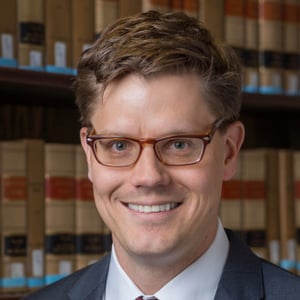
Associate Professor, University of Notre Dame Law School
Jeffrey Pojanowski joined the faculty and community of Notre Dame Law School in 2010. He teaches and writes in the areas of administrative law, jurisprudence, and torts. At present, his scholarship focuses on the legal theory of administrative action, as well as the philosophy and intellectual history of legal reasoning.
Prof. Pojanowski earned his A.B. in Public Policy with highest honors from Princeton University and graduated magna cum laude from Harvard Law School in 2004, where he was Articles Co-Chair for the Harvard Law Review. After law school, he served as a law clerk to then-Judge John Roberts on the United States Court of Appeals for the D.C. Circuit and then to Justice Anthony Kennedy on the Supreme Court of the United States. He then practiced law with Latham & Watkins in Washington, D.C., where he specialized in appellate litigation and administrative-law matters.

The Mythical McCulloch
Nelson Lund
A Review of The Spirit of the Constitution: John Marshall and the 200-Year Odyssey of...
The Future of the Establishment Clause in the Roberts Court
2019 National Lawyers Convention
Washington, DCTopics
2019 National Lawyers Convention Digital Survival Guide
This "Survival Guide" is your one-stop-shop for all things digital at the National Lawyers Convention....
Topics
The Future of the Establishment Clause in the Roberts Court
Next Thursday’s Establishment Clause Panel at the Federalist Society National Lawyer’s Convention will be both...
Stare Decisis Panel
Cassie Chambers Armstrong, Michael T. Morley, John O. Sheller, Amul R. Thapar, Laurance B. VanMeter
On October 7, 2019, The Federalist Society held a panel on Stare Decisis at its...
Stare Decisis Panel
Cassie Chambers Armstrong, Michael T. Morley, John O. Sheller, Amul R. Thapar, Laurance B. VanMeter
On October 7, 2019, The Federalist Society held a panel on Stare Decisis at its...
The Religion Clauses Revisited: Church, State, and the Roberts Court
Duke Student Chapter
Durham, NCStare Decisis Panel
2019 Kentucky Chapters Conference
Frankfort, KYThe Roberts Court in OT 2018
Notre Dame Student Chapter
Notre Dame, INTopics
American Justice 2018: Book Review
“The Shifting Supreme Court” is the latest from the University of Pennsylvania’s “American Justice” series,...