
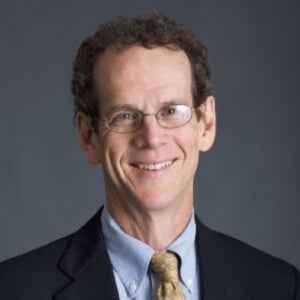
Hon. George J. Mitchell Professor in Law and Public Policy, Georgetown Law
David Cole is the Honorable George J. Mitchell Professor in Law and Public Policy and former National Legal Director of the American Civil Liberties Union (ACLU). He writes about and teaches constitutional law, freedom of speech, and constitutional criminal procedure. He is a regular contributor to The New York Review of Books and is the legal affairs correspondent for The Nation.
David has published widely in law journals and the popular press, including The Yale Law Journal, California Law Review, Stanford Law Review, The New York Times, The Washington Post, The New Yorker, The Atlantic, and The New Republic. He is the author or editor of ten books, several of which have won awards. Less Safe, Less Free: Why America Is Losing the War on Terror, published in 2007, and co-authored with Jules Lobel, won the Palmer Civil Liberties Prize for best book on national security and civil liberties. Enemy Aliens: Double Standards and Constitutional Freedoms in the War on Terrorism received the American Book Award in 2004. No Equal Justice: Race and Class in the American Criminal Justice System was named Best Non-Fiction Book of 1999 by the Boston Book Review and best book on an issue of national policy in1999 by the American Political Science Association.
David received his bachelor’s degree and law degree from Yale University. He worked as a staff attorney for the Center for Constitutional Rights from 1985 to 1990. He has continued to litigate as a professor and, from 2017 to 2024, as National Legal Director of the ACLU. He has litigated many significant constitutional cases at the Supreme Court, including Texas v. Johnson (1989), which extended First Amendment protection to flag burning; Bostock v. Clayton County (2020), which held that discrimination on the basis of sexual orientation and gender identity are prohibited forms of sex discrimination under Title VII; Mahanoy Area Sch. Dist. v. B.L. (2021), which protected student online speech from school discipline; and National Rifle Association v. Vullo (2024), which held that government officials violate the First Amendment when they use their regulatory authority to coerce private parties to blacklist a disfavored political group.
David has received two honorary degrees and numerous awards for his work, including the inaugural Norman Dorsen Presidential Prize from the ACLU for lifetime commitment to civil liberties. The late New York Times columnist Anthony Lewis called David “one of the country’s great legal voices for civil liberties today.” Nat Hentoff called him “a one-man Committee of Correspondence in the tradition of patriot Sam Adams.”

Judge, United States Court of Appeals, Third Circuit
Judge Hardiman was appointed to the United States Court of Appeals for the Third Circuit on January 9, 2007 and was confirmed by the Senate (95-0) on March 15, 2007. Prior to becoming an appellate judge, Judge Hardiman served as a trial judge on the United States District Court for the Western District of Pennsylvania as of November 1, 2003. In 2008, Chief Justice John Roberts appointed Judge Hardiman to the Information Technology Committee of the Judicial Conference of the United States. Judge Hardiman was appointed Chairman of the IT Committee in 2013 and served in that capacity until September 2021. In 2021 he was appointed by the Director of the Administrative Office of the United States Courts to serve as Chair of the Judiciary IT Security Task Force, which completed its work in fall 2023. Chief Justice Roberts appointed Judge Hardiman to the Board of the Federal Judicial Center to serve from March 2020 until March 2024. As part of his work with the Center, Judge Hardiman now serves as Editor in Chief for the Manual for Complex Civil Litigation, Fifth.
Before entering judicial service, Judge Hardiman handled a wide variety of litigation matters in state and federal trial and appellate courts as a partner at Reed Smith LLP (1999-2003), a partner at Titus & McConomy LLP (1996-1999), and as an associate with its predecessor firm, Cindrich & Titus (1992-1996). Judge Hardiman began his legal career as an associate in the Washington, D.C. office of Skadden, Arps, Slate, Meagher & Flom (1990-1992).
A 1987 honors graduate of the University of Notre Dame, Judge Hardiman received his law degree in 1990 from the Georgetown University Law Center, where he served as a Notes and Comments Editor on the Georgetown Law Journal. In 2012, Judge Hardiman was elected as a member of the American Law Institute and was elected to its Council in 2019 and its Executive Committee in 2025. Judge Hardiman regularly teaches a seminar on Advanced Constitutional Law at Duquesne University School of Law and a one-week course entitled “Constitutional Law: the First and Second Amendments” at Georgetown University Law Center.
A native of Waltham, Massachusetts, Judge Hardiman has chambers in Pittsburgh, Pennsylvania. He and his wife Lori married in 1992 and have three children.

Senior Fellow and Director of Constitutional Studies, Manhattan Institute
Ilya Shapiro is a senior fellow and director of constitutional studies at the Manhattan Institute and a contributing editor of City Journal. Previously he was executive director and senior lecturer at the Georgetown Center for the Constitution, and before that a vice president of the Cato Institute.
Shapiro is the author of Lawless: The Miseducation of America’s Elites (2025) and Supreme Disorder: Judicial Nominations and the Politics of America’s Highest Court (2020), coauthor of Religious Liberties for Corporations? (2014), and editor of 11 volumes of the Cato Supreme Court Review (2008-18). He has contributed to a variety of academic, popular, and professional publications, including the Wall Street Journal, Harvard Journal of Law & Public Policy, Washington Post, Los Angeles Times, USA Today, National Review, and Newsweek. He also regularly provides commentary for various media outlets, writes the Shapiro’s Gavel newsletter on Substack, and once appeared on the Colbert Report.
Shapiro has testified many times before Congress and state legislatures and has filed more than 500 amicus curiae “friend of the court” briefs in the Supreme Court. He lectures regularly on behalf of the Federalist Society, is a member of the board of fellows of the Jewish Policy Center, was an inaugural Washington Fellow at the National Review Institute, and has been an adjunct law professor at the George Washington University and University of Mississippi. He is also the chairman of the board of advisers of the Mississippi Justice Institute, a barrister in the Edward Coke Appellate Inn of Court, and a former member of the Virginia Advisory Committee to the U.S. Commission on Civil Rights.
Earlier in his career, Shapiro was a special assistant/adviser to the Multi-National Force in Iraq on rule-of-law issues and practiced at Patton Boggs and Cleary Gottlieb. Before entering private practice, he clerked for Judge E. Grady Jolly of the U.S. Court of Appeals for the Fifth Circuit. He holds an AB from Princeton University, an MSc from the London School of Economics, and a JD from the University of Chicago Law School.

Senior Legal Fellow, Courts and the Constitution, Legal Policy Center, The Heritage Foundation
Zack is a Senior Legal Fellow of Courts and the Constitution at The Heritage Foundation.
He previously served for several years as an Assistant United States Attorney in the Northern District of Florida. Prior to that, he spent two years as an associate in the Washington, D.C. office of Cleary Gottlieb Steen & Hamilton, which he joined after clerking for the Hon. Emmett R. Cox on the United States Court of Appeals for the Eleventh Circuit.
Smith received his undergraduate, master’s, and law degrees from the University of Florida. During law school, Smith served as the Editor in Chief of the Florida Law Review and served on the executive boards of several student organizations, including the UF Chapter of the Federalist Society.

Senior Legal Counsel, Pacific Legal Foundation
Before becoming an attorney, James had been a productive member of society working as an exploration geologist in the late 1970s throughout the southwestern United States. However, after several years of dealing with irrational government bureaucrats and environmental policies untethered from reality, James decided that what the world needs is more lawyers — if they are willing to fight for rationality in regulatory regimes, property rights, and liberty.
James attended the University of Arizona College of Law in Tucson, where he served as an editor for the Law Review and received a J.D. degree in 1983. He had previously received a Masters degree in geological sciences from Brown University and an undergraduate degree from Hamilton College in New York. James received the Professional Achievement Award from the University of Arizona Alumni Association in 2018.
James has worked with Pacific Legal Foundation since 1983, litigating cases from Alaska to Florida. He is a member of the Federalist Society’s Environmental Law and Property Rights Practice Group’s Executive Committee, a member of the American College of Real Estate Lawyers, and an honorary member of Owners Counsel of America, an organization comprised of eminent domain attorneys who represent property owners. The Owners Counsel awarded James its Crystal Eagle award in 2013. In 2022, James was awarded the Brigham-Kanner Property Rights Prize at the William & Mary College of Law. The prize is awarded annually to an individual whose work has advanced the cause of property rights and has contributed to the overall awareness of the important role property rights occupy in the broader scheme of individual liberty.
In 2001, James successfully argued a major property rights case, Palazzolo v. Rhode Island, before the United States Supreme Court, a case which affirmed that rights in regulated property do not disappear when land is bought and sold. He has written extensively on all aspects of property rights and environmental law and frequently speaks on these subjects throughout the nation.
When James is not suing the government he enjoys skiing faster than he should, bicycling, hiking, swimming, and spending quality time with his wife, family, and grandchild.
Mr. Burling’s book Nowhere to Live: The Hidden Story of America’s Housing Crisis is available now on Amazon.
James is a member of the bar only in the states of Alaska and California.
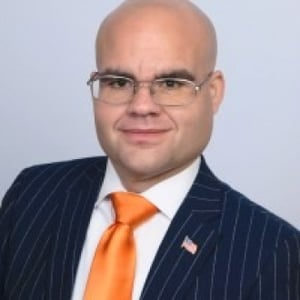
Counsel, Keller Postman LLC
John Masslon is a Counsel at Keller Postman LLC, where he works on a broad range of disputes, including products liability and consumer protections suits. He helps develop legal strategies, writes briefs, and presents argument on legal questions. Before joining Keller Postman, John was senior litigation counsel at Washington Legal Foundation. There, he wrote about 100 amicus briefs supporting free enterprise in courts across the country. He filed the first amicus brief in the Supreme Court supporting the challenge to OSHA’s vaccine mandate. He also filed a brief supporting ending the in-house proceedings at the Securities and Exchange Commission. Previously, John served as assistant solicitor general in a state attorney general’s office. There, he was first chair in a federal trial challenging a state election law that was ultimately upheld. He also wrote the briefs that convinced the state supreme court to uphold the State’s right-to-work statute.
John obtained his B.S. in economics with a minor in mathematical sciences from Clemson University. He then received his J.D. and LL.M. in Taxation from Georgetown University Law Center. After law school, John worked for Judge Arthur J. Schwab of the United States District Court for the Western District of Pennsylvania and clerked for Judge Judith Ference Olson of the Superior Court of Pennsylvania.
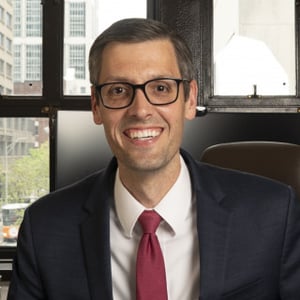
Solicitor General, Tennessee Attorney General's Office
Matt Rice serves as the Solicitor General of Tennessee. Before joining the State, Matt worked in private practice at Williams & Connolly LLP. He clerked for Justice Clarence Thomas on the United States Supreme Court as well as Judge Sandra Ikuta on the United States Court of Appeals for the Ninth Circuit. Before his legal career, Matt played professional baseball in the Tampa Bay Rays organization.
Senior Legal Fellow, Courts and the Constitution, Legal Policy Center, The Heritage Foundation
Zack is a Senior Legal Fellow of Courts and the Constitution at The Heritage Foundation.
He previously served for several years as an Assistant United States Attorney in the Northern District of Florida. Prior to that, he spent two years as an associate in the Washington, D.C. office of Cleary Gottlieb Steen & Hamilton, which he joined after clerking for the Hon. Emmett R. Cox on the United States Court of Appeals for the Eleventh Circuit.
Smith received his undergraduate, master’s, and law degrees from the University of Florida. During law school, Smith served as the Editor in Chief of the Florida Law Review and served on the executive boards of several student organizations, including the UF Chapter of the Federalist Society.
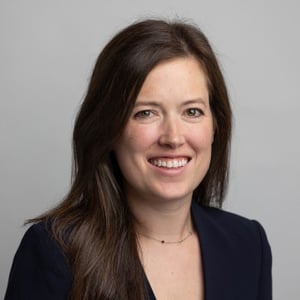
Senior Attorney, Institute of Justice
Kirby Thomas West is a senior attorney at the Institute for Justice, where she is also the co-director of IJ’s National Initiative to End Forfeiture Abuse. She joined IJ in 2018 and litigates cases defending property rights, free speech, and educational choice.
In her time at IJ, Kirby has launched challenges to unconstitutional civil forfeiture and impoundment schemes. She has also litigated educational choice cases, including as part of the IJ team that litigated Carson v. Makin, a landmark educational choice case decided in 2022.
In 2024, Kirby was a Wasserstein Public Interest Fellow at Harvard Law School.
Before joining IJ, Kirby Was an attorney at Baker Botts LLP, in Washington D.C. She clerked for Judge Dennis Shedd of the U.S. Court of Appeals for the Fourth Circuit.
Kirby received her law degree cum laude from Harvard Law School in 2015.
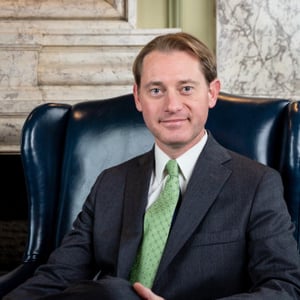
Secretary of State, Commonwealth of Kentucky
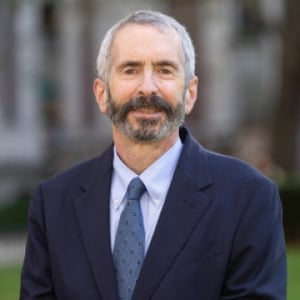
Joseph P. Chamberlain Professor of Legislation, Columbia Law
Since joining the Columbia Law School faculty in 1983, Richard Briffault has combined public and government service with teaching, research, and scholarship. He is the Law School’s authority on state and local government; the news media often turns to him for his expert insight into and analysis of issues central to democracy and the political process such as campaign finance reform, government ethics, gerrymandering, election administration, and fair elections. He is also a leading thinker on “the new preemption,” a critique of states that are increasingly passing ideological laws that override local ordinances. Working with the Local Solutions Support Center, he educates city and county government officials on how to respond to state preemption.
Briffault is a pillar of the Columbia Law School community. He has served as a vice dean at three different times during his career. He sits on the advisory board of The Max Berger ’71 Public Interest/Public Service Fellows Program and on the board of directors of the Columbia Journal of Law & Social Problems.
A prodigious scholar, Briffault has written or coauthored more than 90 law review and journal articles as well as books and monographs, including Dollars and Democracy: A Blueprint for Campaign Finance Reform; Cleaning Up Hazardous Waste: Is There a Better Way?; the fifth, sixth, seventh, eighth, and ninth editions of the casebook State and Local Government Law; and The New Preemption Reader.
Before becoming an academic, Briffault was a clerk to Judge Shirley M. Hufstedler of the 9th U.S. Circuit Court of Appeals, an assistant counsel to New York Governor Hugh L. Carey, and an associate at Paul Weiss Rifkind Wharton & Garrison. During his tenure at Columbia Law, he has served as a member of, or consultant to, an array of New York state and city commissions, including the New York State Moreland Act Commission to Investigate Public Corruption. From 2014 to 2020, Briffault served as chair of the New York City Conflicts of Interest Board. He is the reporter for the American Law Institute’s Project on Principles of Government Ethics, vice-chair of the Citizens Union of the City of New York, and a member of the New York State Bar Association Committee on Professional Ethics.

Professor of Law, Widener University Commonwealth Law School
Judge, United States Court of Appeals, Third Circuit
Judge Hardiman was appointed to the United States Court of Appeals for the Third Circuit on January 9, 2007 and was confirmed by the Senate (95-0) on March 15, 2007. Prior to becoming an appellate judge, Judge Hardiman served as a trial judge on the United States District Court for the Western District of Pennsylvania as of November 1, 2003. In 2008, Chief Justice John Roberts appointed Judge Hardiman to the Information Technology Committee of the Judicial Conference of the United States. Judge Hardiman was appointed Chairman of the IT Committee in 2013 and served in that capacity until September 2021. In 2021 he was appointed by the Director of the Administrative Office of the United States Courts to serve as Chair of the Judiciary IT Security Task Force, which completed its work in fall 2023. Chief Justice Roberts appointed Judge Hardiman to the Board of the Federal Judicial Center to serve from March 2020 until March 2024. As part of his work with the Center, Judge Hardiman now serves as Editor in Chief for the Manual for Complex Civil Litigation, Fifth.
Before entering judicial service, Judge Hardiman handled a wide variety of litigation matters in state and federal trial and appellate courts as a partner at Reed Smith LLP (1999-2003), a partner at Titus & McConomy LLP (1996-1999), and as an associate with its predecessor firm, Cindrich & Titus (1992-1996). Judge Hardiman began his legal career as an associate in the Washington, D.C. office of Skadden, Arps, Slate, Meagher & Flom (1990-1992).
A 1987 honors graduate of the University of Notre Dame, Judge Hardiman received his law degree in 1990 from the Georgetown University Law Center, where he served as a Notes and Comments Editor on the Georgetown Law Journal. In 2012, Judge Hardiman was elected as a member of the American Law Institute and was elected to its Council in 2019 and its Executive Committee in 2025. Judge Hardiman regularly teaches a seminar on Advanced Constitutional Law at Duquesne University School of Law and a one-week course entitled “Constitutional Law: the First and Second Amendments” at Georgetown University Law Center.
A native of Waltham, Massachusetts, Judge Hardiman has chambers in Pittsburgh, Pennsylvania. He and his wife Lori married in 1992 and have three children.

Sudler Family Professor of Constitutional Law, New York University School of Law
Richard H. Pildes is one of the nation’s leading scholars of constitutional law and a specialist in legal issues affecting democracy. He is a Member of the American Academy of Arts and Sciences and the American Law Institute, and has received recognition as a Guggenheim Fellow and a Carnegie Scholar. His acclaimed casebook, The Law of Democracy: Legal Structure of the Political Process (now in its fourth edition), helped create an entirely new field of study in the law schools. The Law of Democracy systematically explores legal and policy issues concerning the structure of democratic elections and institutions, such as the role of money in politics, the design of election districts, the regulation of political parties, the design of voting systems, the representation of minority interests in democratic institutions, and similar issues. He has written extensively on the rise of political polarization in the United States, the Voting Rights Act, the dysfunction of America’s political processes, the role of the Supreme Court in overseeing American democracy, the powers of the American President and Congress, and he has criticized excessively “romantic” understandings of democracy. In addition to his scholarship on these issues, he has written on national-security law, the design of the regulatory state, and American constitutional history and theory.
Respect for his expertise in these areas is reflected in frequent citations of his work in U.S. Supreme Court opinions, the translation of his work into many languages, and his frequent public lectures and appearances around the world, including his nomination with the NBC News Team for an Emmy Award for coverage of the 2000 Presidential election litigation.
His work has been translated and published in Chinese, French, Spanish, and Portuguese. In addition to his scholarship, Professor Pildes plays an active role litigating in these areas. He has won two cases before the United States Supreme Court, including a 2015 victory in Alabama Democratic Conference v. Alabama, a case involving race and redistricting. He served as counsel to a group of former chairmen of the Securities and Exchange Commission in litigation defending the constitutionality of the Sarbanes-Oxley Act; as counsel in election litigation to the Puerto Rico Electoral Commission; as counsel to the government of Puerto Rico; as a federal court-appointed independent expert on voting rights litigation; and as counsel in successful Supreme Court litigation that challenged the way the United States Tax Court operated. He was also a senior legal advisor to the 2008 and 2012 campaigns of President Obama.
Pildes received his A.B. in physical chemistry summa cum laude from Princeton, and his J.D. magna cum laude from Harvard, where he served as Supreme Court Note Editor on the Harvard Law Review. He clerked for Judge Abner J. Mikva of the U.S. Court of Appeals for the District of Columbia Circuit and for Justice Thurgood Marshall of the U.S. Supreme Court. After practicing law in Boston, he began his academic career at the University of Michigan Law School, before joining the NYU School of Law in 2001.

Chairman and Founder, Institute for Free Speech; Josiah H. Blackmore II/Shirley M. Nault Designated Professor of Law, Capital University Law School

Head of AI Policy, Abundance Institute
Neil Chilson is the Head of AI Policy at the Abundance Institute. Prior to this position, he served as a Senior Research Fellow at the Center for Growth and Opportunity. Chilson is a lawyer, computer scientist, and author of the book “Getting Out of Control: Emergent Leadership in a Complex World.”
Chilson was previously the senior research fellow for Technology and Innovation at Stand Together, where he guided efforts to understand and promote the legal and cultural paradigms that best enable people to discover, innovate, and improve all our lives.
Before Stand Together, Chilson was the Chief Technologist at the Federal Trade Commission, where he focused on the economics of privacy and blockchain-related issues. Previously, he was an attorney advisor to Acting FTC Chairman Maureen K. Ohlhausen. In both roles he advised Chairman Ohlhausen and worked with staff on nearly every major technology-related case, report, workshop, or other FTC proceeding since January 2014. Neil joined the FTC from telecom firm Wilkinson Barker Knauer. Neil is frequently quoted by the press and his work has appeared in numerous news outlets, including The Wall Street Journal, The Washington Post, USAToday, and Newsweek. Neil has a J.D. from The George Washington Law School, a M.S. in computer science from University of Illinois, Urbana-Champaign, and a B.S. in computer science from Harding University.
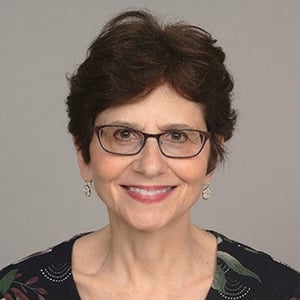
Distinguished Fellow, Institute for Technology Law & Policy, Georgetown Law
Jessica Rich, former Director of the FTC’s Bureau of Consumer Protection, spent more than two and a half decades battling deceptive and fraudulent business practices at the Federal Trade Commission. She is widely recognized as one of the most knowledgeable and well-respected consumer champions in the United States. Rich led the expansion of the FTC’s expertise in technology through the creation of the Office of Technology Research and Investigations (OTech). She also oversaw the development of influential FTC policy reports, including reports on the Internet of Things, Big Data, data brokers, mobile apps, and cross-device tracking.
Most recently, Rich served as the Vice President of Consumer Policy and Mobilization at Consumer Reports, where she led the organization's efforts to address the most urgent threats and pain points consumers face today, such as data privacy and security, health care costs, food safety, corporate accountability, and fairness and transparency in financial markets. She is a graduate of New York University Law School (1987) and Harvard University (1983).
Rich’s work at the Institute includes writing in her areas of expertise, participating in policy convenings, and serving as a resource to the Georgetown Law community.
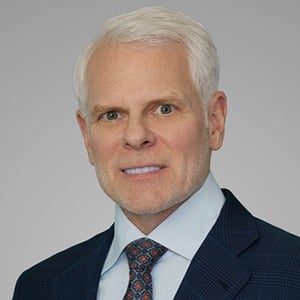
Partner, Kirkland & Ellis LLP
Sean Royall serves as the firm’s Global Practice Head for Antitrust and Consumer Protection. He has spent his entire career handling complex litigation matters and government investigations and is among the country’s most experienced and highly regarded antitrust lawyers. He focuses broadly on antitrust and consumer protection litigation, government investigations, and counseling, and is a highly experienced courtroom litigator with a stellar track record for winning high-stakes cases. Sean is equally effective navigating complex government investigations and advising clients on the details of a wide range of strategic antitrust and consumer protection issues.
Sean previously served at the Federal Trade Commission (FTC) as the Deputy Director of the FTC’s Bureau of Competition. His antitrust career, both in government and private practice, has included work on many major mergers and acquisitions, as well as lead roles in complex litigation matters that often intersect with other areas of law, including patent law, various federal regulatory regimes, consumer protection, and privacy. Sean has deep experience representing clients across a range of industries, including biopharma, healthcare, e-commerce, telecom, financial services, energy, transportation, software, and semiconductors. In addition to his work on U.S. antitrust and consumer protection matters, Sean has worked and advised on many similar cases and investigations in Europe and other parts of the world.
While in government, Sean was the lead trial lawyer in the FTC’s landmark monopolization suit against computer chip maker Rambus Inc., a novel case that established new legal standards applicable to patent disclosure within industry standard-setting consortiums. More recently, Sean played an important role on the trial team for AT&T in the company’s victory over the Department of Justice’s antitrust challenge to AT&T’s US$85 billion acquisition of Time Warner. In addition to his trial experience, Sean has successfully argued appeals in courts around the country.
Sean also has a nationally prominent reputation for his work in the consumer protection area, where he has particularly deep experience handling FTC investigations and associated litigation focused on advertising, marketing, privacy, and data security issues. In 2018-19, for example, Sean served as lead counsel for Facebook in connection with the FTC’s extensive privacy-related investigation and subsequent settlement. He brings to this area of his practice deep knowledge of applicable law and agency practice, as well as the skills of an accomplished litigator.
For well more than a decade, Sean has been given a Band 1 ranking by Chambers USA (2007-2023), which has described him as “top of the field,” “a star in the antitrust world both in counseling and litigation,” and an “extremely talented lawyer and exceptional litigator.”
Sean’s other recognitions include being ranked in Chambers Global for Antitrust – USA (2020-2023); endorsed as “Highly Recommended (Texas)” by Global Competition Review (2022); named a “Litigation Star” for Intellectual Property, Competition/Antitrust, Appellate, and Commercial work by Benchmark Litigation (2023). He is named in Who’s Who Legal in Competition (2021); The Best Lawyers in America as “Antitrust Lawyer of the Year” (2015, 2018); and The Best Lawyers in America as “Litigation: Antitrust Lawyer of the Year” (2019). He has also been named to the “All-Star List” by BTI Services (2017) and deemed a “National Antitrust MVP” by Law360 (2015); a “Mergers and Acquisitions and Antitrust Trailblazer” by National Law Journal (2015); and a “Life Sciences Star” in Antitrust (2022) and Competition and Antitrust (2018–2019) by LMG Life Sciences. Sean was also named one of Lawdragon’s “500 Leading Litigators in America” in 2022.
Partner, Reed Smith LLP
Gerry is a partner in Reed Smith's IP, Tech & Data Group. He focuses his practice on corporate governance, intellectual property, and Internet issues, especially as they relate to privacy, information security and consumer protection. An experienced and pragmatic litigator, Gerry focuses a significant part of his practice on prelitigation and advisory services relating to business strategy for privacy by design, data protection, intellectual property, and emerging technologies and markets, often acting as outside product counsel to leading innovators and disruptive technology companies.
Gerry is designated as a Certified Information Privacy Professional by the International Association of Privacy Professionals. In recent years, he has helped many automotive, health information technology, data management, advertising and consumer technology companies with information management and protection strategy, including some of the most popular consumer products and services of the past decade.

Founder, Libertas-West Project
Karen Lugo is a constitutional law consultant and national security analyst. She was Director of the Center for Tenth Amendment at Texas Public Policy Foundation from 2013 to 2015. When living in California, she was Co-Director of the Center for Constitutional Jurisprudence Center. From 2005 – 2012, she was a clinical visiting and adjunct professor at Chapman University School of Law where she co-taught the advanced Constitutional Law Clinic. Karen has co-authored and written circuit-level and Supreme Court amicus briefs on such issues as FISA Surveillance, Healthcare Reform, Arizona’s Border Security, Gay Marriage, The Ten Commandments, Eminent Domain, Christian Clubs on University Campuses, and Material Support for Terrorists.
Karen is the founder of the Libertas-West Project, a center for study Islamic integration and radicalization issues. In this capacity, she consulted with the Center for Security Policy to write a book on local over-watch of mosque construction and community engagement called: Mosques in America: A Guide to Accountable Permit Hearings and Continuing Citizen Oversight.
Karen writes and speaks for European and American groups on the importance of basing assimilation efforts on principles of Western exceptionalism. She presented a policy brief to the French Conseil d’Etat analyzing the legal implications of banning the burqa. Ms. Lugo has written one of the most comprehensive overviews of sharia law in American courts, American Family Law and Sharia-Compliant Marriages, for the Federalist Society law journal, Engage. She has written several white papers on the American Law for American Courts legislation and sharia tribunals in America.
Ms. Lugo was an appointee to the California Advisory Committee to the U.S. Commission on Civil Rights. She also taught a Human Rights law course on the contrast between French and English Enlightenment theories in Strasbourg, France.
Until moving from California, Ms. Lugo was a member of the David Horowitz Freedom Center Board of Directors. She was also a regular guest on the Orange County PBS local issues debate program, Inside OC, and she is a contributor to Pajamas Media, National Review Online, City Journal, American Spectator, American Greatness, Townhall.com, American Thinker, Daily Caller, and Family Security Matters. She has been interviewed by dozens of radio hosts and has spoken for civic groups on constitutional and cultural concerns.
Attorney at Law, Solo Practitioner
Herb Grey was admitted to the Oregon State Bar in 1981 and for the first 14 years practiced mostly insurance defense litigation in state and federal courts. Since 1994 he has been a solo practitioner in Beaverton with a general civil practice that includes estate planning, probate, protective proceedings, general business matters and a variety of litigation in both state and federal courts. Herb also has extensive experience in litigation of constitutional and civil rights claims with an emphasis on religious liberty and conscience matters. He is admitted to practice before all Oregon trial and appellate courts, as well as the U.S. District Court for Oregon, the Ninth Circuit Court of Appeals and the United States Supreme Court.
Senior Counsel, Senior Vice President of Corporate Engagement, Alliance Defending Freedom
Jeremy Tedesco serves as senior counsel and senior vice president of corporate engagement for Alliance Defending Freedom. In this role, Tedesco leads ADF’s efforts to combat corporate cancel culture and build a business ethic that respects free speech, religious freedom, and human dignity.
Immediately preceding his current role, Tedesco served as senior vice president for communications, during which time he was a lead convener of the Philadelphia Statement, a movement dedicated to restoring free speech and civil discourse. Tedesco also launched a regular video series called Freedom Matters, profiling ADF clients, cases, and issues. The program included 24 videos in its first year, which more than 31 million people viewed.
Previously, Tedesco litigated First Amendment cases at the highest levels. He was part of the legal team that represented cake artist Jack Phillips in Masterpiece Cakeshop v. Colorado Civil Rights Commission before the U.S. Supreme Court and argued Phillips’ case at the Colorado Court of Appeals. He was also the lead brief writer in two other U.S. Supreme Court wins, Reed v. Town of Gilbert and Arizona Christian School Tuition Organization v. Winn. Tedesco has also argued six times before five different federal appellate courts and founded and directed the ADF Center for Conscience Initiatives, where he led efforts to protect individuals from government-coerced speech.
Numerous media outlets, including The Wall Street Journal, Fox News, CNN, The New York Times, USA Today, PBS, NPR, and National Review, have interviewed Tedesco or published his comments.
Tedesco earned his Juris Doctor in 2004 from the Regent University School of Law.
Head of AI Policy, Abundance Institute
Neil Chilson is the Head of AI Policy at the Abundance Institute. Prior to this position, he served as a Senior Research Fellow at the Center for Growth and Opportunity. Chilson is a lawyer, computer scientist, and author of the book “Getting Out of Control: Emergent Leadership in a Complex World.”
Chilson was previously the senior research fellow for Technology and Innovation at Stand Together, where he guided efforts to understand and promote the legal and cultural paradigms that best enable people to discover, innovate, and improve all our lives.
Before Stand Together, Chilson was the Chief Technologist at the Federal Trade Commission, where he focused on the economics of privacy and blockchain-related issues. Previously, he was an attorney advisor to Acting FTC Chairman Maureen K. Ohlhausen. In both roles he advised Chairman Ohlhausen and worked with staff on nearly every major technology-related case, report, workshop, or other FTC proceeding since January 2014. Neil joined the FTC from telecom firm Wilkinson Barker Knauer. Neil is frequently quoted by the press and his work has appeared in numerous news outlets, including The Wall Street Journal, The Washington Post, USAToday, and Newsweek. Neil has a J.D. from The George Washington Law School, a M.S. in computer science from University of Illinois, Urbana-Champaign, and a B.S. in computer science from Harding University.
Distinguished Fellow, Institute for Technology Law & Policy, Georgetown Law
Jessica Rich, former Director of the FTC’s Bureau of Consumer Protection, spent more than two and a half decades battling deceptive and fraudulent business practices at the Federal Trade Commission. She is widely recognized as one of the most knowledgeable and well-respected consumer champions in the United States. Rich led the expansion of the FTC’s expertise in technology through the creation of the Office of Technology Research and Investigations (OTech). She also oversaw the development of influential FTC policy reports, including reports on the Internet of Things, Big Data, data brokers, mobile apps, and cross-device tracking.
Most recently, Rich served as the Vice President of Consumer Policy and Mobilization at Consumer Reports, where she led the organization's efforts to address the most urgent threats and pain points consumers face today, such as data privacy and security, health care costs, food safety, corporate accountability, and fairness and transparency in financial markets. She is a graduate of New York University Law School (1987) and Harvard University (1983).
Rich’s work at the Institute includes writing in her areas of expertise, participating in policy convenings, and serving as a resource to the Georgetown Law community.
Partner, Kirkland & Ellis LLP
Sean Royall serves as the firm’s Global Practice Head for Antitrust and Consumer Protection. He has spent his entire career handling complex litigation matters and government investigations and is among the country’s most experienced and highly regarded antitrust lawyers. He focuses broadly on antitrust and consumer protection litigation, government investigations, and counseling, and is a highly experienced courtroom litigator with a stellar track record for winning high-stakes cases. Sean is equally effective navigating complex government investigations and advising clients on the details of a wide range of strategic antitrust and consumer protection issues.
Sean previously served at the Federal Trade Commission (FTC) as the Deputy Director of the FTC’s Bureau of Competition. His antitrust career, both in government and private practice, has included work on many major mergers and acquisitions, as well as lead roles in complex litigation matters that often intersect with other areas of law, including patent law, various federal regulatory regimes, consumer protection, and privacy. Sean has deep experience representing clients across a range of industries, including biopharma, healthcare, e-commerce, telecom, financial services, energy, transportation, software, and semiconductors. In addition to his work on U.S. antitrust and consumer protection matters, Sean has worked and advised on many similar cases and investigations in Europe and other parts of the world.
While in government, Sean was the lead trial lawyer in the FTC’s landmark monopolization suit against computer chip maker Rambus Inc., a novel case that established new legal standards applicable to patent disclosure within industry standard-setting consortiums. More recently, Sean played an important role on the trial team for AT&T in the company’s victory over the Department of Justice’s antitrust challenge to AT&T’s US$85 billion acquisition of Time Warner. In addition to his trial experience, Sean has successfully argued appeals in courts around the country.
Sean also has a nationally prominent reputation for his work in the consumer protection area, where he has particularly deep experience handling FTC investigations and associated litigation focused on advertising, marketing, privacy, and data security issues. In 2018-19, for example, Sean served as lead counsel for Facebook in connection with the FTC’s extensive privacy-related investigation and subsequent settlement. He brings to this area of his practice deep knowledge of applicable law and agency practice, as well as the skills of an accomplished litigator.
For well more than a decade, Sean has been given a Band 1 ranking by Chambers USA (2007-2023), which has described him as “top of the field,” “a star in the antitrust world both in counseling and litigation,” and an “extremely talented lawyer and exceptional litigator.”
Sean’s other recognitions include being ranked in Chambers Global for Antitrust – USA (2020-2023); endorsed as “Highly Recommended (Texas)” by Global Competition Review (2022); named a “Litigation Star” for Intellectual Property, Competition/Antitrust, Appellate, and Commercial work by Benchmark Litigation (2023). He is named in Who’s Who Legal in Competition (2021); The Best Lawyers in America as “Antitrust Lawyer of the Year” (2015, 2018); and The Best Lawyers in America as “Litigation: Antitrust Lawyer of the Year” (2019). He has also been named to the “All-Star List” by BTI Services (2017) and deemed a “National Antitrust MVP” by Law360 (2015); a “Mergers and Acquisitions and Antitrust Trailblazer” by National Law Journal (2015); and a “Life Sciences Star” in Antitrust (2022) and Competition and Antitrust (2018–2019) by LMG Life Sciences. Sean was also named one of Lawdragon’s “500 Leading Litigators in America” in 2022.
Partner, Reed Smith LLP
Gerry is a partner in Reed Smith's IP, Tech & Data Group. He focuses his practice on corporate governance, intellectual property, and Internet issues, especially as they relate to privacy, information security and consumer protection. An experienced and pragmatic litigator, Gerry focuses a significant part of his practice on prelitigation and advisory services relating to business strategy for privacy by design, data protection, intellectual property, and emerging technologies and markets, often acting as outside product counsel to leading innovators and disruptive technology companies.
Gerry is designated as a Certified Information Privacy Professional by the International Association of Privacy Professionals. In recent years, he has helped many automotive, health information technology, data management, advertising and consumer technology companies with information management and protection strategy, including some of the most popular consumer products and services of the past decade.
Special Counsel for National Security, Computer Crime & Intellectual Property Section, US Department of Justice
Leonard Bailey is Special Counsel for National Security in the Criminal Division’s Computer Crime and Intellectual Property Section. He has prosecuted computer crime cases and routinely advised on cybersecurity, searching and seizing electronic evidence, and conducting electronic surveillance. He has managed DOJ cyber-policy as Senior Counselor to the Assistant Attorney General for the National Security Division and then as an Associate Deputy Attorney General. He has also served as Special Counsel and Special Investigative Counsel for DOJ’s Inspector General. Bailey is a graduate of Yale University and Yale Law School. He has taught law courses at Georgetown Law School and Columbus School of Law in Washington, DC.
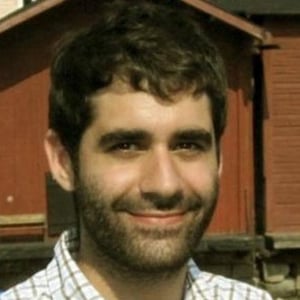
Assistant Professor, Cornell University School of Information Science
Joining the Cornell University School of Information Science faculty in July 2017, Barocas focuses on the ethics of machine learning, particularly applications that affect people’s life chances and their everyday experiences on online platforms. He is currently exploring issues of fairness in machine learning, methods for bringing accountability to automated decision-making, the privacy implications of inference, and the role that privacy plays in mitigating economic inequality.
Before arriving at Cornell, he was a Postdoctoral Researcher at Microsoft Research, where he was part of the Society, Ethics, and AI group. Previously, he spent two years at the Center for Information Technology Policy at Princeton University as a Postdoctoral Research Associate. Barocas completed his doctorate in the Department of Media, Culture, and Communication at New York University, where he remains a Visiting Scholar at the Center for Urban Science + Progress and an affiliate of the Information Law Institute. He also routinely works with the Data & Society Research Institute, where he's an affiliate as well.
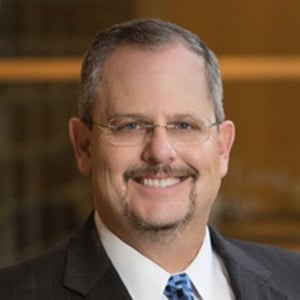
Co-Founder and Executive Chairman, The Providence Group
Dan Caprio, Co-founder and Executive Chairman at The Providence Group (Washington, DC), is an internationally recognized expert on privacy and cybersecurity. He has served as the Chief Privacy Officer and Deputy Assistant Secretary at the Commerce Department, a transatlantic subject matter expert for the European Commission’s Internet of Things formal expert group, a Chief of Staff for a Federal Trade Commission Commissioner and a member of the Department of Homeland Security Data Privacy and Integrity Advisory Committee. In 2002, Dan was a representative for the United States delegation revising the OECD Security Guidelines that formed the basis for the first White House Strategy to Secure Cyberspace.
Head of AI Policy, Abundance Institute
Neil Chilson is the Head of AI Policy at the Abundance Institute. Prior to this position, he served as a Senior Research Fellow at the Center for Growth and Opportunity. Chilson is a lawyer, computer scientist, and author of the book “Getting Out of Control: Emergent Leadership in a Complex World.”
Chilson was previously the senior research fellow for Technology and Innovation at Stand Together, where he guided efforts to understand and promote the legal and cultural paradigms that best enable people to discover, innovate, and improve all our lives.
Before Stand Together, Chilson was the Chief Technologist at the Federal Trade Commission, where he focused on the economics of privacy and blockchain-related issues. Previously, he was an attorney advisor to Acting FTC Chairman Maureen K. Ohlhausen. In both roles he advised Chairman Ohlhausen and worked with staff on nearly every major technology-related case, report, workshop, or other FTC proceeding since January 2014. Neil joined the FTC from telecom firm Wilkinson Barker Knauer. Neil is frequently quoted by the press and his work has appeared in numerous news outlets, including The Wall Street Journal, The Washington Post, USAToday, and Newsweek. Neil has a J.D. from The George Washington Law School, a M.S. in computer science from University of Illinois, Urbana-Champaign, and a B.S. in computer science from Harding University.
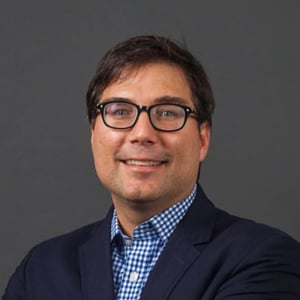
Associate Professor of Law and Director, Program on Economics & Privacy, Antonin Scalia Law School, George Mason University
Associate Professor of Law James C. Cooper brings over a decade of public and private sector experience to his research and teaching. He served as Deputy and Acting Director of the Federal Trade Commission’s Office of Policy Planning, Advisor to Federal Trade Commissioner William Kovacic, and an associate in the antitrust group of Crowell and Moring, LLP. His research on vertical restraints, price discrimination, behavioral economics and antitrust, and privacy policy have appeared in top journals and are widely cited.
Professor Cooper has a BA from the University of South Carolina, received his PhD in economics from Emory University, and his law degree (magna cum laude) from Antonin Scalia Law School, George Mason University, where he was a Levy Fellow and a member of the George Mason Law Review.
He teaches Economics for Lawyers, Advanced Seminar on Law & Economics, and Digital Information Policy Seminar.
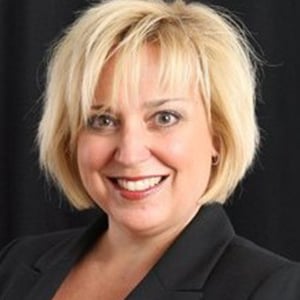
President & CEO, Network Advertising Initiative
As President & CEO of NAI, Leigh Freund leads the organization’s growth and helps set the agenda and strategic priorities. Leigh joined NAI in 2015 after an eleven-year career at AOL Inc., where she served as vice president & chief counsel for global public policy.
Leigh brings more than a decade of substantive expertise in privacy, advertising, and public policy in the digital sector to her work at NAI. She has first-hand knowledge of the tremendous contributions third parties have made in the digital advertising space and she is a passionate believer in strong self-regulation.
During her time at AOL, Leigh led the company’s public policy efforts and was a leading voice on global digital and technology policy. Prior to that role, Leigh headed up the AOL advertising legal team and worked with AOL’s privacy team to promote and develop responsible use and collection of data, and ensure compliance with the industry's self-regulatory programs.
Before joining AOL in 2004, Leigh worked at K&L Gates and on Capitol Hill with Rep. Fred Upton from her home state of Michigan.
Leigh holds an undergraduate degree in political science from Kalamazoo College and a J.D. from Georgetown University. She is an active participant in several industry organizations devoted to compliance with key regulatory initiatives and principles, including the Interactive Advertising Bureau (IAB) and Digital Advertising Alliance (DAA).
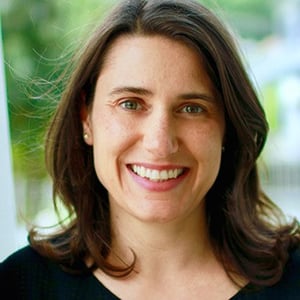
Tech Policy Fellow, Mozilla Foundation
Caroline Holland is currently serving as a Tech Policy Fellow with the Mozilla Foundation. She is exploring antitrust and competition policy issues as they relate to promoting and protecting an open and healthy internet. Holland served in the Obama Administration at the Department of Justice Antitrust Division as the Chief Counsel for Competition Policy and Intergovernmental Relations. In that role, she was involved in several high-profile matters while managing the Division’s competition policy and advocacy efforts, interagency policy initiatives, and congressional relations.
Holland previously served as the Chief Counsel to the Senate Antitrust Subcommittee. She advised Chairs, Senator Klobuchar and Senator Kohl, and led the Subcommittee's bipartisan efforts to examine high-profile mergers and advance competition policy issues involving intellectual property, healthcare, telecommunications, transportation, and criminal antitrust enforcement.
Holland holds a J.D. from Georgetown University Law Center and a B.A. in Public Policy from Trinity College in Hartford, Connecticut. Between college and law school, Ms. Holland spent a year with the Antitrust Division as an honors paralegal and two years as Clerk of the Senate Antitrust Subcommittee.
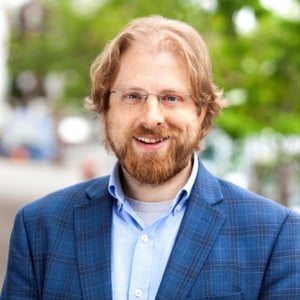
Senior Fellow and Academic Director, Penn Carey Law School
Gus Hurwitz is a Senior Fellow and the Academic Director of the Center for Technology, Innovation & Competition and the University of Pennsylvania Carey Law School where he is working to develop academic and scholarly programs at the intersecution of law, technology, and policy.
He is also Director of Law & Economics Programs at the International Center for Law & Economics (ICLE), a think tank based in Portland, Oregon, where he directs its law and economics-focused research program and helps to translate academic research into applied policy issues.
Hurwitz's research focuses on the regulation of technology, including administrative and regulatory law, antitrust law, torts and products liability, and media law - alongside cognate fields. Inrecent years he has worked on an AI standardization initiative with Seoul National University, a UNICEF-organized study of broadband deployment to public schools in Rwanda, and a book on conglomerate and ecosystems theories of antitrust.
He has published over 30 articles and book chapters, two books (one on cybersecurity law & policy, one on media regulation in the digital era) and have two more in process, over 100 shorter writings (op-eds, shorter analyses, blog posts, &c), hosted over 100 podcast episodes, and regularly appear or am quoted in popular media (including the NY Times, Wall Street Journal, Washington Post, and Associated Press). His work has been cited by legislators, federal courts of appeals, and federal regulatory agencies.
He was previously a full professor and founding director of the Governance & Technology Center at the University of Nebraska, prior to which he was the inaugural research fellow at the Center for Technology, Innovation & Competition (CTIC). From 2007 to 2010, he was a trial attorney with the U.S. Department of Justice Antitrust Division in the Telecommunications and Media Enforcement Section.
He also is, or has been, affiliated with the Classical Liberal Institute at New York University School of Law, the National Security Institute at George Mason University, and the American Enterprise Institute (AEI).
Before attending law school, Hurwitz worked at Los Alamos National Lab and interned at the Naval Research Lab. During this time his work was recognized by the Federal Laboratory Consortium, Los Alamos National Lab, IEEE & ACM, Corporation for Education Network Initiatives in California, R&D Magazine, and even the Guinness Book of World Records.
A current list of Hurwitz’s publications is available on his website: GusHurwitz.net.
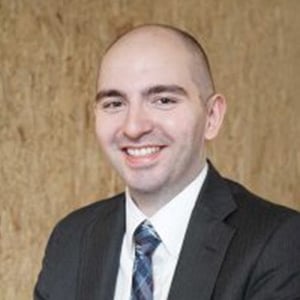
Multistate Policy Director, Common Sense Media
Joseph Jerome serves as Director for Multistate Policy at Common Sense Media, where he focuses on common-sense legislative and policy solutions that support kids’ digital well-being. Joseph has worked at the intersection of law and technology, and has written about AR/VR, the privacy implications of big data, trust deficits in the online sharing economy, and emerging technologies in video games. Previously, he was part of the Privacy & Data Project at the Center for Democracy & Technology, an associate in the cybersecurity and privacy practice at WilmerHale, and counsel at the Future of Privacy Forum. He was a fellow with the Internet Law & Policy Foundry and has taught courses on cybersecurity and privacy compliance. Joseph has a J.D. from the New York University School of Law, where he was an International Law and Human Rights Student Fellow.

Senior Lecturer and Academic Co-Director of the Cyberspace Law and Policy Centre, University of new South Wales Law School
Alana Maurushat is senior lecturer and academic co-director of the Cyberspace Law and Policy Centre at the University of New South Wales Law School. Prior to joining the Faculty of Law at UNSW, she was assistant professor and deputy director of the LLM in Information Technology and Intellectual Property at the University of Hong Kong Faculty of Law. Her research has been focused of intellectual property, information technology law, and cybercrime/cybersecurity.
Dr. Maurushat has done consultancy work with the Canadian and Australian governments, as well as for the NGO, Freedom House. She is also on the Board of Directors of the Internet Fraud Watchdog, and is a member of the International Association of Cybercrime Prevention and the China Information Technology Law Centre.
Dr. Maurushat has a PhD from the University of New South Wales, an LLM from the University of Ottawa, an LLB and BCL from Mcgill, and a BA from the University of Calgary
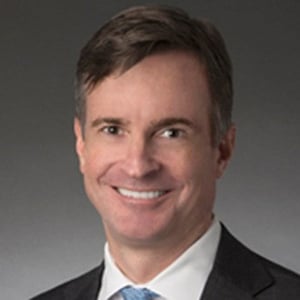
Partner, Sidley Austin, LLP
Jon Nuechterlein, a partner and coleader of Sidley Austin’s Communications Regulatory practice, focuses on telecommunications law, antitrust, and appellate litigation. He rejoined the firm in 2016 after serving as General Counsel of the Federal Trade Commission. Mr. Nuechterlein’s extensive government experience also includes positions as Deputy General Counsel of the Federal Communications Commission, as Assistant to the Solicitor General, and as law clerk to DC Circuit Judge Stephen Williams and Supreme Court Justice David Souter. He is the author (with Phil Weiser) of a widely cited treatise on telecommunications law and policy.
As the FTC’s General Counsel from 2013 to 2016, Mr. Nuechterlein represented the FTC in court, provided legal counsel on a range of antitrust and consumer protection issues, and oversaw the Commission’s appellate litigation activities. Under his leadership, the FTC won a string of high-profile appellate victories.
Mr. Nuechterlein earned his JD at Yale Law School, where he was the articles editor of the Yale Law Journal, and his BA, summa cum laude and Phi Beta Kappa, from Yale College.
Co-Founder and Chief Technology Officer, HackerOne
Alex Rice is the co-founder and chief technology officer of HackerOne, Inc. Mr. Rice leads product and engineering for HackerOne, a platform that enables security researchers to find and report security holes to companies. More than 300 companies, including Adobe, Yahoo, Twitter, Dropbox, Square, and Airbnb, trust HackerOne to enable their vulnerability disclosure process.
Prior to HackerOne, Mr. Rice worked at Facebook for over six years, where he founded the product security team, built one of the industry’s most successful security programs, and introduced new transport layer encryption. He has also served as a senior security researcher at Websense and as a network security engineer for the state of Florida.
Mr. Rice serves on the board of the Internet Bug Bounty, a nonprofit enabling friendly hackers to help build a more secure Internet.
Policy Researcher, RAND Corporation
Sasha Romanosky is a policy researcher at the RAND Corporation and former cyber policy advisor at the Pentagon in the Office of the Secretary of Defense for Policy (OSDP).
He researches topics in the economics of security and privacy, information policy, applied microeconomics, and law and economics. For example, he has examined whether state data breach disclosure laws have reduced consumer identity theft; when and how firms are more likely to be sued when they suffer a data breach, and when they’re more likely to settle. He has also studied the cost of data breaches in order to understand whether corporate losses are really as severe as is commonly believed. And most recently, he collected a dataset of cyber insurance policies to examine how insurance carriers measure and price cyber risk.
He was a Microsoft research fellow in the Information Law Institute at New York University, and was a security professional for over 10 years in the financial and e-commerce industries. He holds a CISSP certification, and is co-author of the Common Vulnerability Scoring System (CVSS), an open standard for scoring computer vulnerabilities. While in DoD, he oversaw two of the Department's most critical vulnerability programs, and advised on numerous other matters related to cyber security and cyber policy.
Romanosky holds a Ph.D. in public policy and management from Carnegie Mellon University, and a B.S. in electrical engineering from the University of Calgary, Canada.
Vice President of Global Government Relations, MediaMath
As VP Government Relations, Danny Sepulveda joins MediaMath after spending the last decade at the highest levels of the US government. Prior to working in the Obama administration, Danny served as Ambassador, Deputy Assistant Secretary in the U.S. State Department under Secretary of State John Kerry, where he travelled the world working on high-level initiatives including cyber policy, digital economy, internet governance and human rights. Danny’s role is focused on shaping, implementing and communicating MediaMath’s policies and practices around the consumer value proposition, privacy protection and public policy.
Executive Director, Center on Race, Inequality, and the Law, New York University School of Law
Vincent M. Southerland joined the Center on Race, Inequality, and the Law as its inaugural Executive Director in February 2017. He has dedicated his career to advancing racial justice and civil rights. Vincent comes to NYU Law after serving as an Assistant Federal Public Defender with the Federal Defenders for the Southern District of New York since 2015. Prior to his time at the Federal Defenders, Vincent spent seven years at the NAACP Legal Defense and Educational Fund, Inc. (LDF), where he was a Senior Counsel. While at LDF, he engaged in litigation and advocacy at the intersection of race and criminal justice, including the successful representation of death-sentenced prisoners across the American South and juveniles sentenced to life imprisonment without parole. He also led LDF’s advocacy efforts around race and policing, and was lead counsel in school desegregation and employment discrimination matters. Vincent previously served as a staff attorney at The Bronx Defenders, and an E. Barrett Prettyman Fellow at Georgetown University Law Center. He began his career as a law clerk to the Honorable Theodore McKee, Judge of the United States Court of Appeals for the Third Circuit, and the Honorable Louis H. Pollak, of the United States District Court for the Eastern District of Pennsylvania. Vincent holds an LLM from Georgetown University Law Center, received his JD from Temple University School of Law and his BA from the University of Connecticut.
Partner, Reed Smith LLP
Gerry is a partner in Reed Smith's IP, Tech & Data Group. He focuses his practice on corporate governance, intellectual property, and Internet issues, especially as they relate to privacy, information security and consumer protection. An experienced and pragmatic litigator, Gerry focuses a significant part of his practice on prelitigation and advisory services relating to business strategy for privacy by design, data protection, intellectual property, and emerging technologies and markets, often acting as outside product counsel to leading innovators and disruptive technology companies.
Gerry is designated as a Certified Information Privacy Professional by the International Association of Privacy Professionals. In recent years, he has helped many automotive, health information technology, data management, advertising and consumer technology companies with information management and protection strategy, including some of the most popular consumer products and services of the past decade.
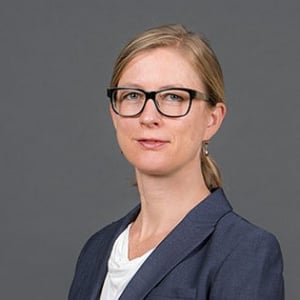
Assistant Professor of Law, George Mason University Antonin Scalia Law School
Megan Stevenson is an economist and legal scholar who became an Assistant Professor of Law at George Mason University, in 2017. Her research uses advanced econometric techniques to evaluate criminal law and policy in areas such as bail, pretrial detention, juvenile justice, and risk assessment. Her studies are published or forthcoming in top journals in both economics and law, such as the Stanford Law Review and the Review of Economics and Statistics. Her research on bail was cited extensively in a landmark federal civil rights decision, O’Donnell v. Harris, and has received widespread media coverage. In addition to legal scholarship, Professor Stevenson has written a number of op-eds for news outlets such as the Houston Chronicle and the Philadelphia Inquirer. Her research has been funded by the National Science Foundation, the Russell Sage Foundation, and the Laura and John Arnold Foundation.
Prior to joining the law faculty at George Mason, Professor Stevenson was a fellow at the Quattrone Center for the Fair Administration of Justice at the University of Pennsylvania Law School (2015-2017). She holds a BA in Interdisciplinary Studies (2009, with highest distinction) and a PhD in Agricultural and Resource Economics (2016), both from the University of California, Berkeley. She teaches Law & Economics and Criminal Law.
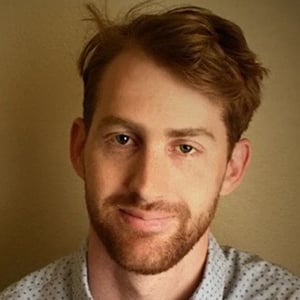
Privacy & Freedom of Speech Postdoctoral Research Associate, Center for Digital Society and Data Studies University of Arizona James E. Rogers College of Law
Mark Verstraete is a Privacy & Freedom of Speech Post-doctoral Research Associate for the Center for Digital Society and Data Studies at the University of Arizona, and will be working primarily for faculty in the University’s James E. Rogers College of Law. His research examines how technology and law distribute power across networks (government, civil society, etc.) and the implications of those distributions. He is a graduate of the University of Georgia and has a JD from Harvard Law School where he was a teaching fellow for a class on Internet privacy and a research assistant to Prof. Brett Frischmann. Mr. Verstraete’s work for the Center and for affiliated faculty in Law will focus on questions of data privacy and related regulations. He is writing a white paper that maps the fake news landscape and identifies possible roadblocks to effective solutions. He is also working on two law review articles: one about automatic execution of private agreements and another about algorithmic decision making by administrative agencies

Assistant Secretary for Civil Rights, U.S. Department of Agriculture
Devon Westhill is the Assistant Secretary for Civil Rights at the U.S. Department of Agriculture. The U.S. Senate confirmed President Donald Trump’s nomination of Westhill on October 7, 2025.
Westhill returns to the USDA where he previously headed the civil rights office as Deputy Assistant Secretary in President Trump’s first term. His previous government appointments also include service at the U.S. Department of Labor, liaison to the Administrative Conference of the U.S., and liaison to the White House Initiative on Historically Black Colleges and Universities. Prior to returning to government service, Westhill was President and General Counsel of a nonprofit civil rights organization.
Westhill has testified on civil rights matters before Congress, federal agencies, and as an expert witness in federal court. He has spoken hundreds of times at college campuses, conferences, and on radio and TV programs, and he is frequently quoted in print publications, and his writing has appeared in numerous national outlets. A U.S. Navy veteran, Westhill earned his BA from the University of North Carolina at Chapel Hill and his JD from the University of Florida.
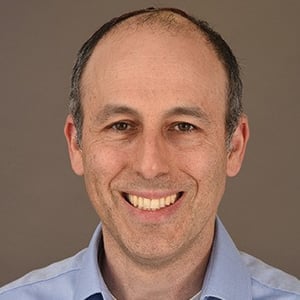
Vice Dean and Professor of Law, University of Haifa Faculty of Law
Tal Zarsky is the vice dean and professor of law at the University of Haifa’s Faculty of Law. His research focuses on information privacy, cyber-security, internet policy, social networks, telecommunications law, online commerce, reputation, and trust. He has published numerous articles and book chapters in the US, Europe, and Israel. His work is often cited in a variety of contexts related to law in the digital age. Among others, he participated in the Data Mining without Discrimination project, funded by the Dutch Research Council (NWO) as well as other national and international research projects. He has advised various Israeli regulators, legislators, and commercial entities on related matters. He has served on a variety of advisory boards and is a frequent evaluator of articles and research grants for various international foundations. Professor Zarsky was a fellow at the Information Society Project, at Yale Law School and a Global Hauser Fellow, at NYU Law School. He completed his doctorate dissertation, which focused on data mining in the Internet Society, at Columbia Law School. He earned a joint BA degree (law and psychology) at the Hebrew University with high honors and his masters degree (in law) from Columbia University.

Daniel Webster Debate Series: Is the Trump Administration Taking the Right Approach to Civil Rights and Free Speech on Campus?
David D. Cole, Thomas M. Hardiman, Ilya Shapiro
The Federalist Society's Georgetown Law Chapter'sDaniel Webster Debate Series presents Daniel Webster Debate Series:Do...
Glossip v. Oklahoma - Post-Decision SCOTUScast
Zack Smith
On February 25, 2025, the U.S. Supreme Court issued their 5-3 opinion in Glossip v. Oklahoma. The Court...
A Seat at the Sitting - October 2024
James S. Burling, John Masslon, Matt Rice, Zack Smith, Kirby Thomas West
Each month, a panel of constitutional experts convenes to discuss the Court’s upcoming docket sitting...
Fair Elections in an Era of Partisanship
Michael G. Adams, Richard Briffault, Michael R. Dimino, Thomas M. Hardiman, Richard H. Pildes, Bradley A. Smith
Recent years have seen unprecedented controversies about election rules, including mail-in ballots and drop boxes,...
Deep Dive Episode 109 – Regulating by Consent Agreement: Examining FTC’s YouTube Settlement and Beyond
Neil Chilson, Jessica Rich, Sean Royall, Gerard Stegmaier
On September 4, 2019, the Federal Trade Commission announced sweeping regulatory changes to the operation...
Deep Dive Episode 109 – Regulating by Consent Agreement: Examining FTC’s YouTube Settlement and Beyond
Executive Branch Review Week Teleforum
TeleforumTopics
When the Government Sues your Client...and then Sues You!
When Americans find themselves in need of an attorney—whether purchasing a new home, fighting a...
Civil Rights Commissions: Enforcers of Social Justice
Karen J. Lugo, Herbert G. Grey, Jeremy Tedesco
Whether called Human Rights, Human Relations, or Civil Rights Commissions, many cities and counties and...
Public Policy Symposium on the Law & Economics of Privacy and Data Security
Regulatory Transparency Project Co-Sponsored Event
Arlington, VAPersonal Remembrances of Chief Justice William Rehnquist
Pittsburgh, Pennsylvania