
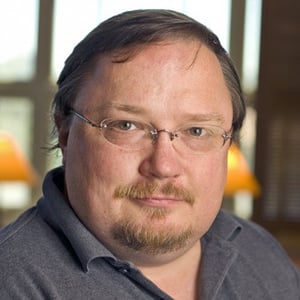
William D. Warren Professor of Law, UCLA School of Law
Stephen Bainbridge is the William D. Warren Distinguished Professor of Law at UCLA School of Law, where he currently teaches Business Associations, Advanced Corporation Law, and Mergers and Acquisitions. In past years, he has also taught Corporate Finance, Securities Regulation, Unincorporated Business Associations and Catholic Social Thought and the Law. Professor Bainbridge previously taught at the University of Illinois Law School (1988-1996). He has also taught at Harvard Law School as the Joseph Flom Visiting Professor of Law and Business (2000-2001), and as a visiting professor at La Trobe University in Melbourne (2005 and 2007) and at Aoyama Gakuin University in Tokyo (1999).
In 2008, Bainbridge received the UCLA School of Law's Rutter Award for Excellence in Teaching. In 1990, the graduating class of the University of Illinois College of Law voted him "Professor of the Year."
Professor Bainbridge is a prolific scholar, whose work covers a variety of subjects, but with a strong emphasis on the law and economics of public corporations. He has written over 100 law review articles which have appeared in such leading journals as the Harvard Law Review, Virginia Law Review, Northwestern University Law Review, Cornell Law Review, Stanford Law Review, and Vanderbilt Law Review. Bainbridge has also written 19 books, including seven in multiple editions. His most recent books include: Outsourcing the Board: How Board Service Providers Can Improve Corporate Governance (Cambridge University Press, 2018) (with M. Todd Henderson); Business Associations: Cases and Materials on Agency, Partnerships, and Corporations (Foundation Press, 10th ed., 2018) (with Klein and Ramseyer); Mergers and Acquisitions: A Transactional Perspective (Foundation Press, 2017) (with Iman Anabtawi).
According to Gregory Sisk and Brian Leiter’s rankings of law professors by scholarly impact, Professor Bainbridge was the third most-frequently cited scholar in corporate and securities law for the period 2013-2017. According to Hein Online, Bainbridge is the 29th most frequently cited scholar in their database of legal publications over the last 10 years and the 23rd most cited for the period January 2018 through August 2019. In SSRN.com’s ranking of the top 3000 legal authors by all-time downloads, Bainbridge is ranked 10th. By that metric, he is the highest ranked member of the UCLA law school faculty. In SSRN.com’s ranking of the top 3000 legal authors by all-time citations to their work, Bainbridge is ranked 55th. By that metric, he is the second highest ranked member of the UCLA law school faculty.
Professor Bainbridge has been a Salvatori Fellow with the Heritage Foundation, a member of the American Bar Association’s Committee on Corporate Laws, a member of the Editorial Advisory Board of the Journal of Markets and Morality, and Chair of the Executive Committee of the Federalist Society’s Corporations, Securities & Antitrust Practice Group.
In May 2014, Professor Bainbridge was the Cameron Fellow at the University of Auckland Faculty of Law. He was the Francis G. Pileggi Distinguished Lecturer in Law at Widener University School of Law in September 2005, and a Distinguished Visiting Scholar at the University of Maryland School of Law in November 2005.
In 2008, 2011, and 2012, Professor Bainbridge was named by the National Association of Corporate Directors' Directorship magazine to its list of the 100 most influential people in the field of corporate governance.
His blog, ProfessorBainbridge.com, was named by the ABA Journal as one of the Top 100 Law Blogs of 2007, 2008, 2010, 2011, and 2012.
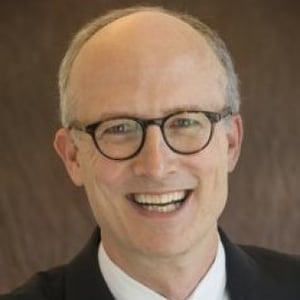
Michael J. Marks Professor of Law, University of Chicago Law School
M. Todd Henderson is the Michael J. Marks Professor of Law at the University of Chicago Law School. Professor Henderson’s research interests include corporations, securities regulation, and law and economics. He has taught classes ranging from Banking Regulation to Torts to American Indian Law.
Professor Henderson received an engineering degree cum laude from Princeton University in 1993. He worked for several years designing and building dams in California before matriculating at the Law School. While at the Law School, Todd was an editor of the Law Review and captained the Law School's all-University champion intramural football team. He graduated magna cum laude in 1998 and was elected to the Order of the Coif. Following law school, Todd served as clerk to the Hon. Dennis Jacobs of the US Court of Appeals for the Second Circuit. He then practiced appellate litigation at Kirkland & Ellis in Washington, DC, and was an engagement manager at McKinsey & Company in Boston, where he specialized in counseling telecommunications and high-tech clients on business and regulatory strategy.
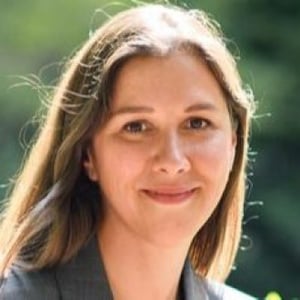
Professor of Law and Co-Director, Institute for Law and Economics, University of Pennsylvania Law School
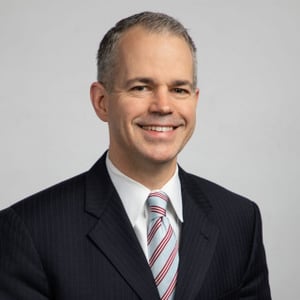
Senior Attorney, Institute for Justice
Michael Bindas is a senior attorney with the Institute for Justice (IJ) and leads IJ’s educational choice team. In this role, he oversees a talented group of IJ attorneys who help policymakers design constitutionally defensible educational choice programs and who defend educational choice programs in courtrooms nationwide. He joined IJ in 2005.
Michael was part of IJ’s litigation team in Espinoza v. Montana Department of Revenue, in which the U.S. Supreme Court held the exclusion of religious options from Montana’s educational choice program unconstitutional, and he led IJ’s defense of the Choice Scholarship Program for elementary and secondary students in Douglas County, Colorado. He also successfully challenged Washington’s denial of special education services to children in religious schools, as well as the state’s exclusion of sectarian options from its state work study program. Currently, he leads IJ’s team in Carson v. Makin, challenging Maine’s exclusion of religious options from its educational choice program.
Prior to leading IJ’s educational choice team, Michael litigated extensively to secure economic liberty, property rights, and freedom of speech throughout the nation. He was counsel of record at the U.S. Supreme Court for Kimbrough Fine Wine & Spirits in Tennessee Wine and Spirits Retailers Association v. Thomas, a successful challenge to Tennessee’s durational residency requirements for retail liquor licenses. He also led successful challenges to the municipal sign codes of St. Louis, Mo. and Norfolk, Va., after those cities attempted to silence protests of their abusive eminent domain practices.
Prior to joining IJ, Michael spent three years as an attorney with Perkins Coie LLP. He is a former law clerk to Judge Rhesa Hawkins Barksdale of the U.S. Court of Appeals for the Fifth Circuit and served as an engineer officer in the United States Army and Pennsylvania Army National Guard before beginning his legal career.
Michael received his law degree cum laude from the University of Pennsylvania Law School in 2001, where he served as Articles Editor for the Journal of Constitutional Law and was elected to the Order of the Coif. He received his undergraduate degree from the United States Military Academy at West Point in 1995.
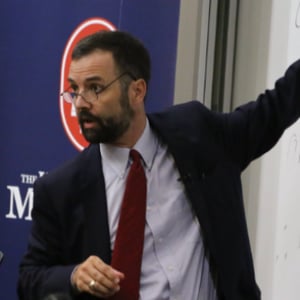
Professor of Law and Jamie L. Whitten Chair in Law and Government, University of Mississippi School of Law
Christopher Green (https://law.olemiss.edu/faculty-directory/christopher-green/) is Professor of Law and Jamie L. Whitten Chair in Law and Government at the University of Mississippi, where he has taught since 2006. He is a graduate of Princeton University and Yale Law School, and has a PhD in philosophy from the University of Notre Dame. He clerked for Judge Rhesa H. Barksdale on the Fifth Circuit and is the author of Equal Citizenship, Civil Rights, and the Constitution: The Original Sense of the Privileges or Immunities Clause (2015) and a large number of articles and essays on constitutional theory and the Fourteenth Amendment, including the two-part Original Sense of the (Equal) Protection Clause and Clarity and Reasonable Doubt in Early State-Constitutional Judicial Review. He is an affiliated scholar with the University of San Diego Center for the Study of Constitutional Originalism.
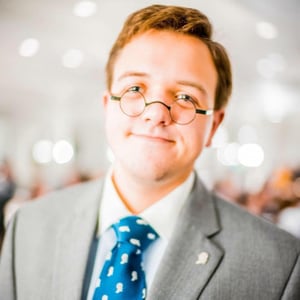
Adam Griffin is a graduate of the University of North Carolina School of Law. During law school, he served as a research assistant to Professor Stephen E. Sachs and UNC Law Dean Martin Brinkley. After law school, Adam spent two years litigating for liberty at the Institute for Justice as an inaugural Law and Liberty Fellow. He then served as a law clerk to Chief Judge Richard E. Myers in the United States District Court for the Eastern District of North Carolina, and previously worked at Pacific Legal Foundation and the Civil Rights Division of the Department of Justice.

Professor Emeritus, Paul M. Hebert Law Center, Louisiana State University
In memoriam
Dr. John Baker is Professor Emeritus of Law, and previously the Dale E. Bennett Professor of Law, at Louisiana State University Law School. He is currently Visiting Professor at Peking University School of Transnational Law (via Zoom) and has been Visiting Professor at The Center for the Constitution, Georgetown Law School (2013-2020). He has also been a Visiting Fellow at Oriel College, the University of Oxford (2012-2014) and taught at Blackfriars Hall, Oxford in 2014. Dr. Baker has also been an adjunct Fellow at the Heritage Foundation (Spring, 2008) and a Distinguished Scholar at the Catholic University of America Law School (2011-12). He has taught at Tulane Law School, George Mason Law School, Pepperdine Law School, New York Law School, Hong Kong University, and the University of Dallas, School of Management and also taught and/or lectured in 17 foreign countries. Notable among his foreign visits are the
following: Visiting Professor at the University of Lyon III (France) (1999-2011); Visiting Professor at the Universidad de los Andes, Chile (2012), as a Fulbright Specialist (2006); and a Fulbright Scholar at various universities in the Philippines. Dr. Baker received his J.D., with honors, from the University of Michigan Law School and his B.A., magna cum laude, from the University of Dallas. He also earned a Ph.D. in Political Thought from the University of London. Baker has taught over a dozen different subjects, mostly courses in public law. His main areas of interest are Constitutional Law (particularly federalism and separation of powers), Criminal Law, Anti-Terrorism Law, International Law, Health Care Law, Mediation, and Comparative Law.
In addition to law review articles and book chapters, Dr. Baker’s academic publications include Hall's Criminal Law: Cases and Materials (with Benson, Force and George; 5th ed. Michie, 1993); An Introduction to the Law of the United States (ed. with Levasseur; University Press of America, 1992). He has also published on Forbes.com, FoxNews.com, in The Washington Times, and a number of times in The Wall Street Journal. He argues in federal court, including two oral arguments in the U.S. Supreme Court. For many years, he co-taught courses for the Federalist Society on separation of powers with the late Supreme Court Justice Antonin Scalia. In September 2016, he co-taught a Supreme Court seminar in China with Justice Samuel Alito. Following law school, he served as a law clerk in federal district court and as an assistant district attorney in New Orleans before joining LSU in 1975. While a professor, he has been as a consultant to USAID, USIA (since rolled into the State Department), the Justice Department, the U.S. Senate Judiciary Subcommittee on Separation of Powers, and the Office of Planning in the White House. He served on an ABA Task Force which issued the report, The Federalization of Crime (1998) and later as a consultant to the “Bi-Partisan Task Force on the Over- federalization of Crime” (2012-2014) created by the U.S. House Judiciary Subcommittee on Crime. Dr. Baker was a co-founder of the first iteration (1995) of Stratfor Inc., a global intelligence agency. He co-authored its first book: The Intelligence Edge (with Friedman, Friedman and Chapman; Crown Books/Random House 1997). In 2022, he began a short, weekly video podcast available on YouTube and Rumble, The Baker Brief.
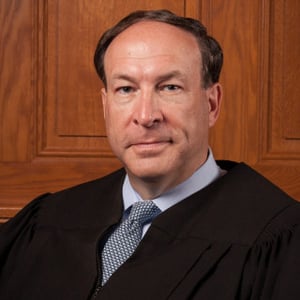
Judge, United States Court of Appeals, Seventh Circuit
Michael B. Brennan was confirmed and sworn in as a Circuit Judge for the U.S. Court of Appeals for the Seventh Circuit in May 2018.
He previously worked as a partner in the Milwaukee law firm of Gass Weber Mullins LLC, where he tried cases and handled appeals in federal and state courts, as a judge on the Milwaukee County Circuit, where he presided over a variety of criminal and civil calendars, and as an assistant district attorney in the Milwaukee County District Attorney’s office.
Brennan’s undergraduate degree is from the University of Notre Dame, and his law degree from Northwestern University School of Law, where he was an editor on the law review and the moot court champion. He served as a law clerk on the U.S. District Court for the Eastern District of Wisconsin and the U.S. Court of Appeals for the Seventh Circuit.

Dr. John Eastman is the former Henry Salvatori Professor of Law & Community Service and former Dean at Chapman University's Dale E. Fowler School of Law, where he had been a member of the faculty since 1999, specializing in Constitutional Law, Legal History, and Property. He is a founding director of the Center for Constitutional Jurisprudence, a public interest law firm affiliated with the Claremont Institute that he founded in 1999. He has a Ph.D. in Government from the Claremont Graduate School and a J.D. from the University of Chicago Law School, and a B.A. in Politics and Economics from the University of Dallas. He serves as the Chairman of the Board of the National Organization for Marriage.
Prior to joining the Chapman law faculty, Dr. Eastman served as a law clerk to the Honorable Clarence Thomas, Associate Justice, Supreme Court of the United States, and to the Honorable J. Michael Luttig, Judge, United States Court of Appeals for the Fourth Circuit and practiced law with the national law firm of Kirkland & Ellis. Dr. Eastman has also represented numerous clients in important constitutional law matters and has argued before the Supreme Court. On behalf of the Claremont Institute Center for Constitutional Jurisprudence, he has participated as amicus curiae before the Supreme Court of the United States, U.S. Courts of Appeals, and State Supreme Courts in more than one hundred cases of constitutional significance, including Boy Scouts of America v. Dale, Zelman v. Simmons-Harris (the school vouchers case), Kelo v. New London, Ct. (eminent domain), and Van Orden v. Perry (the 10 Commandments case). He has also appeared as an expert legal commentator on numerous television and radio programs, including C-SPAN, Fox News, PBS, NewsHour, and The O'Reilly Factor.
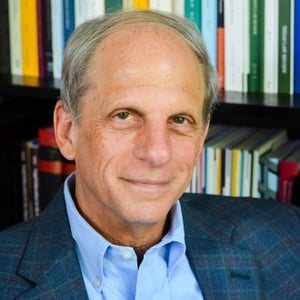
University Professor of Law and Political Science, Vanderbilt Law School
Edward Rubin is University Professor of Law and Political Science at Vanderbilt University. He specializes in administrative law, constitutional law and legal theory. He is the author of Soul, Self and Society: The New Morality and the Modern State (Oxford, 2015); Beyond Camelot: Rethinking Politics and Law for the Modern State (Princeton, 2005) and two books with Malcolm Feeley, Federalism: Political Identity and Tragic Compromise (Michigan, 2011) and Judicial Policy Making and the Modern State: How the Courts Reformed America's Prisons (Cambridge, 1998). In addition, he is the author of two casebooks, The Regulatory State (with Lisa Bressman and Kevin Stack) (3rd ed., 2019); The Payments System (with Robert Cooter) (West, 1990), three edited volumes (one forthcoming) and The Heatstroke Line (Sunbury, 2015) a science fiction novel about the fate of the United States if climate change is not brought under control. Professor Rubin joined Vanderbilt Law School as Dean and the first John Wade–Kent Syverud Professor of Law in July 2005, serving a four-year term that ended in June 2009. Previously, he taught at the University of Pennsylvania Law School from 1998 to 2005, and at the Berkeley School of Law from 1982 to 1998, where he served as an associate dean. Professor Rubin has been chair of the Association of American Law Schools' sections on Administrative Law and Socioeconomics and of its Committee on the Curriculum. He has served as a consultant to the People's Republic of China on administrative law and to the Russian Federation on payments law. He received his undergraduate degree from Princeton and his law degree from Yale.

Senior Fellow and Director of Constitutional Studies, Manhattan Institute
Ilya Shapiro is a senior fellow and director of constitutional studies at the Manhattan Institute and a contributing editor of City Journal. Previously he was executive director and senior lecturer at the Georgetown Center for the Constitution, and before that a vice president of the Cato Institute.
Shapiro is the author of Lawless: The Miseducation of America’s Elites (2025) and Supreme Disorder: Judicial Nominations and the Politics of America’s Highest Court (2020), coauthor of Religious Liberties for Corporations? (2014), and editor of 11 volumes of the Cato Supreme Court Review (2008-18). He has contributed to a variety of academic, popular, and professional publications, including the Wall Street Journal, Harvard Journal of Law & Public Policy, Washington Post, Los Angeles Times, USA Today, National Review, and Newsweek. He also regularly provides commentary for various media outlets, writes the Shapiro’s Gavel newsletter on Substack, and once appeared on the Colbert Report.
Shapiro has testified many times before Congress and state legislatures and has filed more than 500 amicus curiae “friend of the court” briefs in the Supreme Court. He lectures regularly on behalf of the Federalist Society, is a member of the board of fellows of the Jewish Policy Center, was an inaugural Washington Fellow at the National Review Institute, and has been an adjunct law professor at the George Washington University and University of Mississippi. He is also the chairman of the board of advisers of the Mississippi Justice Institute, a barrister in the Edward Coke Appellate Inn of Court, and a former member of the Virginia Advisory Committee to the U.S. Commission on Civil Rights.
Earlier in his career, Shapiro was a special assistant/adviser to the Multi-National Force in Iraq on rule-of-law issues and practiced at Patton Boggs and Cleary Gottlieb. Before entering private practice, he clerked for Judge E. Grady Jolly of the U.S. Court of Appeals for the Fifth Circuit. He holds an AB from Princeton University, an MSc from the London School of Economics, and a JD from the University of Chicago Law School.
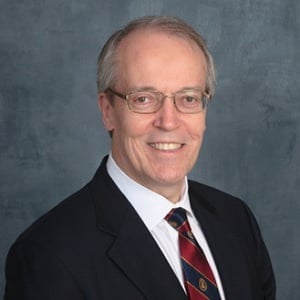
Professor of History, Western Connecticut State University
Kevin R. C. Gutzman is the New York Times best-selling author of five books, including the new Thomas Jefferson—Revolutionary: A Radical’s Struggle to Remake America, a History Book Club Selection. Gutzman is Professor and former Chairman in the Department of History at Western Connecticut State University and a faculty member at LibertyClassroom.com . He holds a bachelor's degree (With Honors and With Special Honors in History), a master of public affairs degree, and a law degree from the University of Texas at Austin, as well as an MA and a PhD in American history from the University of Virginia.
Dr. Gutzman's first book was the New York Times best-seller The Politically Incorrect Guide to the Constitution, which was a Main Selection of the Conservative Book Club. It is the only Jeffersonian account of American constitutional history. His second book, Virginia’s American Revolution: From Dominion to Republic, 1776-1840, explores the issue what the Revolutionaries made of the Revolution in Thomas Jefferson’s home state. After that, he co-authored Who Killed the Constitution? The Federal Government vs. American Liberty from World War I to Barack Obama with New York Times best-selling author Thomas E. Woods, Jr. His fourth book, James Madison and the Making of America, a Main Selection of the History Book Club, received positive reviews from The Wall Street Journal, The Journal of Southern History, The Washington Times, and numerous other publications. His latest book, Thomas Jefferson—Revolutionary: A Radical’s Struggle to Remake America, published on January 31, 2017, was a Selection of the History Book Club.
Gutzman's essay “Lincoln as Jeffersonian: The Colonization Chimera” appeared in Lincoln Emancipated: The President and the Politics of Race, and his “James Madison and Ratification: A Triumph Over Adversity” appeared in A Companion to James Madison and James Monroe. His scholarly articles have appeared in The Journal of Southern History, The Journal of the Early Republic, The Virginia Magazine of History and Biography, The Review of Politics, and The Journal of the Historical Society, among other publications. He has written a hundred book reviews for outlets scholarly and popular, and he has contributed three dozen essays to historical encyclopedias. Gutzman has written for numerous popular magazines and newspapers, including Canada’s National Post, the San Antonio Express-News, and the Richmond Times-Dispatch, among others.
Kevin R. C. Gutzman has appeared on hundreds of radio programs, such as NPR’s “Backstory With the American History Guys” and many of the most prominent commercial programs, terrestrial and satellite, as well as on national television programs including C-SPAN 2's “BookTV,” CNN's “Lou Dobbs Tonight,” Fox News's “The Glenn Beck Program” (both with Beck and with Judge Andrew Napolitano), and NewsMax TV, besides on the BBC and several local television broadcasts. He has been interviewed by reporters from major outlets such as the AP, The Washington Times, The Philadelphia Enquirer, The Washington Post, The Hartford Business Journal, The Houston Chronicle online, Investor's Business Daily, Money Magazine, Connecticut Magazine, and The New York Times, among others.
Gutzman was a featured expert in the documentary movies “John Marshall: Citizen, Statesman, Jurist” and “Nullification: The Rightful Remedy.”
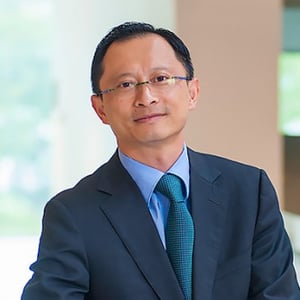
Professor of Law, American University Washington College of Law
Robert L. Tsai is Professor of Law at American University and a prize-winning essayist in constitutional law and history. Though he was born in Taiwan, he has always considered America his home. In fact, one of the proudest moments of his life was the day he was sworn in as a U.S. citizen. Tsai spent his formative years in the Pacific Northwest, working in his parents’ cafe in charming Port Townsend, Washington, and dreaming about the world beyond his small town. He left the area for college and earned a B.A. magna cum laude in History and Political Science from the University of California, Los Angeles, where he was elected to Phi Beta Kappa and received the Carey McWilliams Prize for his honors thesis on the political significance of early Christian teachings.
He then headed to Yale Law School, where he helped edit the Yale Law Journal, served on the Board of the Morris Tyler Moot Court, and was awarded Honorable Mention for Oral Advocacy as a Harlan Fiske Stone Prize Finalist. After graduating from law school, he learned the intricacies of America’s justice system by working as a law clerk for federal judges in New York and Boston: U.S. District Judge Denny Chin (later appointed by President Obama to the U.S. Court of Appeals for the Second Circuit) and U.S. Court of Appeals Judge Hugh H. Bownes (a Carter appointee who passed away in 2003).
After two years of judicial tutelage, Tsai relocated to the South to become a civil rights lawyer in Georgia. Those exhilarating years working with students, clergy, protesters, prisoners, and the homeless left a lasting impression. His first teaching gig was at the University of Oregon Law School, where he earned tenure, along with awards for teaching and research from the law school and the university.
Tsai is the author of three books, Practical Equality: Forging Justice in a Divided Nation (W.W. Norton Feb. 19, 2019), America’s Forgotten Constitutions: Defiant Visions of Power and Community (Harvard 2014), and Eloquence and Reason: Creating a First Amendment Culture (Yale 2008). Practical Equality, which will be published by W.W. Norton in February 2019, is a call to arms to do the hard work of equality, brimming with historical lessons for how to make social progress in tough times. America’s Forgotten Constitutions, which explores how citizens have written a wide range of alternative constitutions to resist mainstream constitutional law, has been called “captivating,” “magisterial,” and “a remarkable feat of excavation.” Eloquence and Reason, his book on the development of America’s free speech values, has been described as “fresh,” “sophisticated,” and “compelling.”
Tsai’s research spans constitutional law, legal history, democratic theory, American political culture, social movements, criminal procedure, presidential leadership, and radical constitutionalism. He has written about the legal obstacles placed in the way of black civil rights activists, President Franklin Roosevelt and freedom of religion, the philosophy of John Brown and his followers, modern white supremacy and the militia movement, the Republic of New Afrika’s ideas about the Constitution, the historical treatment of migrants, early socialism in America, the rise and fall of the “one world” movement, President Obama’s reversal on same-sex marriage, and ideas of equality in the poetry and fiction of Langston Hughes.
His work has been published by the Journal of American History, Contemporary Political Theory, Constitutional Commentary, Perspectives on Politics, Yale Law Journal, Michigan Law Review, Georgetown Law Journal, Washington University Law Review, and Boston University Law Review. His popular essays have appeared in Los Angeles Review of Books, Boston Globe, Washington Post, Politico, Boston Review, and Slate. He has been interviewed by the New York Times, NPR, and CNN. He lives with his family in Washington, D.C.
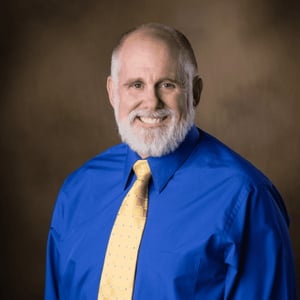
Communications Director, Tenth Amendment Center
Michael Maharrey serves as the national communications director for the Tenth Amendment Center and the managing editor of the SchiffGold blog. He hosts his own podcast, Thoughts from Maharrey Head, as well as the Friday Gold Wrap podcast and the It’s Your Dime interview series for SchiffGold.
Michael is the author of three books. Our Last Hope – Rediscovering the Lost Path to Liberty, makes the historical, philosophical and moral case for nullification. Smashing Myths: Understanding Madison’s Notes on Nullification digs deep into James Madison’s views on nullification, focusing on his writing’s later in life. Finally, Michael joined Tenth Amendment Center executive director Michael Boldin in penning Nullification Objections: Dismantling the Opposition, a book that takes apart the common objections to nullification one at a time. He’s also penned several e-books, including The Power of No: The Historical and Constitutional Basis for State Nullification to Limit Federal Powe and Its Practical Application, The Constitution and the Report of 1800, and The Jefferson Letters, Vol. 1: Kentucky and Virginia Resolutions.
Michael earned a degree in Mass Communications and Media Studies from the University of South Florida St. Petersburg. As a non-traditional student, he won several academic awards and was a member of the school’s ethics bowl team that placed eighth in the nation. Mike played for the USF ice hockey team at the ripe old age of 40, earning American Collegiate Hockey Association Academic All-American honors. He also holds a B.S. degree in Accounting from the University of Kentucky. Along with his formal schooling, he’s had the opportunity to associate with and study under some of the top academics in constitutional history and our founding principles.
Michael speaks at events across the United States, and frequently appears as a guest on local, national and international radio shows advancing constitutional fidelity and liberty through decentralization.
As a working journalist, Michael has written and reported for several newspapers, including the St. Petersburg Times and the Kentucky Gazette, covering local and state politics, and sports. Mike won a pair of 2009 Kentucky Press Association awards while serving as the sports editor for the Woodford Sun in 2009. He also worked for a local television news outlet writing web content for the station’s award-winning website.
Michael lives in Lexington, Ky., with his beautiful wife Cynthia, and has two daughters and a son. Although a native Kentuckian, he spent much of his adult life in Florida and considers the Sunshine state his adopted home. In his spare time, he still plays ice hockey and is equally passionate about defending the Constitution and his crease.

Tazewell Taylor Professor of Law and William H. Cabell Research Professor, William & Mary Law School
Jonathan H. Adler joined the William & Mary law faculty as the Tazwell Taylor Professor of Law and William H. Cabell Research Professor in 2025. Prior to joining the faculty, he was the inaugural Johan Verheij Memorial Professor of Law and the founding Director of the Coleman P. Burke Center for Environmental Law at the Case Western Reserve University School of Law.
Professor Adler is the author or editor of seven books, including Climate Liberalism: Perspectives on Liberty, Property and Pollution (Palgrave, 2023), Marijuana Federalism: Uncle Sam and Mary Jane (Brookings Institution Press, 2020), Business and the Roberts Court (Oxford University Press, 2016) and Rebuilding the Ark: New Perspectives on Endangered Species Act Reform (AEI Press, 2011).
His articles have appeared in publications ranging from the Harvard Environmental Law Review and Yale Journal on Regulation to the Wall Street Journal, New York Times, and Washington Post. He has testified before Congress a dozen times, and his work has been cited in the U.S. Supreme Court. A 2024 study identified Professor Adler as the seventh most cited legal academic in administrative and environmental law from 2019 to 2023.
Professor Adler is a contributing editor to Civitas Outlook and a regular contributor to the popular legal blog, The Volokh Conspiracy. A regular commentator on constitutional and regulatory issues, he has appeared on numerous radio and television programs, ranging from the PBS Newshour and National Public Radio to the Fox News Channel and Entertainment Tonight.
Professor Adler is a senior fellow at the Property & Environment Research Center in Bozeman, Montana. In 2018, Professor Adler was elected to membership in the American Law Institute and helped co-found the organization Checks and Balances. In 2024, Professor Adler was appointed a public member of the Administrative Conference of the United States.
Professor Adler clerked for the Honorable David B. Sentelle on the U.S. Court of Appeals for the District of Columbia Circuit.

Senior Vice President and Litigation Director, Institute for Justice
Dana Berliner serves as Senior Vice President and Litigation Director at the Institute for Justice, where she has worked as a lawyer since 1994.
The focus of Dana’s litigation at IJ has been property rights. She successfully represented the Community Youth Athletic Center, a boxing gym and mentoring program for at-risk youth, which challenged the city of National City’s authorization of taking the CYAC’s property for private development; the California Court of Appeal ruled in 2013 that the authorization of eminent domain was invalid and that National City had violated California’s Public Records Act. Dana also represented the home and business owners in Norwood, Ohio, who, on July 26, 2006, secured a unanimous ruling from the Ohio Supreme Court that the city could not take their property for a privately owned shopping mall and “lifestyle center.” Along with co-counsel Scott Bullock, she represented the homeowners in Kelo v. New London, in which the U.S. Supreme Court ruled that cities could condemn property because other uses may produce an increase in tax dollars and jobs. Dana, along with many others at IJ, worked to turn the nationwide outrage caused by the decision into new state statutes, constitutions and judicial decisions that cut back on eminent domain abuse. She secured a ruling that the Village of Port Chester, N.Y., violated due process in its use of eminent domain to secure waterfront property. Since 2008, Dana has been recognized every year as a “Best Lawyer” in eminent domain and condemnation law by the publication Best Lawyers in America.
On issues of free speech and economic liberty, Dana successfully defended Carla Main and Encounter Books, who wrote and published a book about eminent domain abuse in Texas and across the country, against a defamation suit brought by a developer who stood to receive property taken by eminent domain. She secured a victory in favor of two New Orleans entrepreneurs in a federal First Amendment challenge to the city of New Orleans’ ban on sidewalk book vending. As trial counsel, Dana also secured a ruling that the Nevada Transportation Services Authority violated the rights of several would-be limousine entrepreneurs by subjecting them to an onerous and arbitrary licensing process that gave undue power to existing companies opposing competition. And she successfully represented an aspiring teacher of African hair braiding in Mississippi, as well as two of her students, challenging restrictions on learning and teaching African hair braiding in Mississippi.
In 2012, Dana became IJ’s Litigation Director. She now oversees all of IJ’s litigation, helping other attorneys craft both their major legal theories and their day-to-day litigation strategies. And she helps to set the litigation directions that IJ will take. In 2016, Dana began her role as IJ’s Senior Vice President.
Dana authored Opening the Floodgates: Eminent Domain Abuse in the Post-Kelo World, a report on the use and threatened use of eminent domain for private development in the year since the Kelo decision. Dana also authored Public Power, Private Gain: A Five-Year, State-by-State Report Examining the Abuse of Eminent Domain, the first-ever nationwide study on the abuse of eminent domain, released in 2003.
Dana has been quoted in The New York Times, USA Today, Wall Street Journal, NPR and The Washington Post as well as on various radio and television broadcasts, including 60 Minutes.
Dana received her law and undergraduate degrees from Yale University where she was a member of the Yale Law Journal and represented clients through the legal services program. After law school, she clerked for Judge Jerry Smith on the 5th U.S. Circuit Court of Appeals.
Dana Berliner is a member of the DC and Pennsylvania bars.

Justice, Supreme Court of Arizona
Clint Bolick was appointed by Governor Doug Ducey in January 2016 to serve on the Arizona Supreme Court and was retained by the voters in 2018 and 2024.
Prior to joining the Court, Justice Bolick litigated constitutional cases in state and federal courts from coast to coast, including the U.S. Supreme Court. Among other positions, he served as Vice President for Litigation at the Goldwater Institute and as Co-founder and Vice President for Litigation at the Institute for Justice. He has litigated in support of school choice, freedom of enterprise, private property rights, freedom of speech, and federalism, and against racial classifications and government subsidies.
Justice Bolick received his Juris Doctor degree from the University of California at Davis, where he has been recognized as a distinguished alumnus, and his Bachelor of Arts degree magna cum laude from Drew University. He serves as a research fellow with the Hoover Institution. Among other honors, he was named one of the 90 Greatest DC Lawyers in the Last 30 Years by Legal Times in 2008, received a Bradley Prize in 2006, and was recognized as one of the nation’s three lawyers of the year by American Lawyer in 2002 for his successful defense of school vouchers in Zelman v. Simmons-Harris.
Justice Bolick is a prolific author of a dozen books and hundreds of articles. Among his most recent books are Unshackled: Freeing America’s K-12 Education System: Immigration Wars: Forging an American Solution, co-authored with former Florida Governor Jeb Bush; and David’s Hammer: The Case for an Activist Judiciary. Bolick serves as an adjunct professor of constitutional law at Arizona State University’s Sandra Day O’Connor School of Law and has served as a lecturer at Harvard University’s John F. Kennedy School of Government.
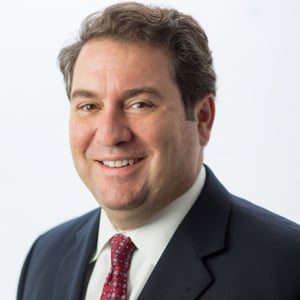
Former Attorney General, State of Arizona
Mark Brnovich served as Arizona's 26th Attorney General from 2015 to 2023. He was first inaugurated in 2015, and again in 2019 after winning re-election. Mark has spent most of his professional life serving as a prosecutor at the local, state, and federal levels. Mark met his wife Susan while they both worked as prosecutors for the Maricopa County Attorney's office. Mark worked in the Gang/Repeat Offender Unit and prosecuted many difficult and high profile cases from 1992 to 1998. He then went on to work as an Assistant Attorney General with the Arizona Attorney General's Office from 1998 to 2003, where he developed an expertise in gambling law. Brnovich later went on to serve as an Assistant United States Attorney for the District of Arizona where he prosecuted public integrity crimes, as well as crimes occurring in Indian Country.
Brnovich has also been a Judge Pro Tem of Maricopa County Superior Court, a Command Staff Judge Advocate in the U.S. Army National Guard, the Director for Constitutional Government at the Goldwater Institute, and the Director of the Arizona Department of Gaming, a law enforcement agency that investigates illegal gambling activity, as well as working with tribal regulators to ensure the integrity of tribal gaming.
Brnovich is known for restoring public confidence in the office of "Arizona's Top Cop" and for assembling some of the nation's most talented public servants for his administration. Mark argued at the United States Supreme Court in defense of the "one-person, one-vote" principle, was featured on 60 Minutes in defense of capital punishment, and has initiated national public education efforts to combat human sex trafficking.
Brnovich has been recognized by the National Federation of Independent Business as a "Champion of Small Business." and was elected by his bi-partisan colleagues to serve as the Chairman of the Conference of Western Attorneys General.
Mark's wife Susan was recently appointed by the United States Senate to serve as a U.S. District Judge for the District of Arizona. He has two teenage daughters and lives in Phoenix.
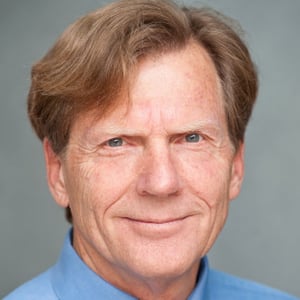
Professor of Law and Christopher N. May Chair, Loyola Law School, Los Angeles
After graduating from Loyola, Allan Ides served as a law clerk to the Honorable Clement F. Haynsworth, Jr., Chief Judge of the United States Court of Appeals for the Fourth Circuit from 1979-80 and then clerked for the Honorable Byron R. White, Associate Justice of the United States Supreme Court from 1980-81. Professor Ides joined the Loyola Law School faculty in the fall of 1982 and served as Associate Dean for Academic Affairs from 1984-87. From 1989-97, Professor Ides was a member of the law school faculty at Washington & Lee in Lexington, Virginia. He returned to Los Angeles and to Loyola in 1997. He has written extensively in the areas of Constitutional Law, Civil Procedure and Federal Jurisdiction and Practice, and is actively involved in various public service projects, ranging from civil rights litigation to the representation of individuals in deportation proceedings.

Judge, United States Court of Appeals, Sixth Circuit
Judge Readler earned his undergraduate and law degrees from the University of Michigan. After graduating, he served as a law clerk to Judge Alan Norris of the United States Court of Appeals for the Sixth Circuit. Judge Readler then began practicing law in the Columbus office of the international law firm Jones Day, eventually spending ten years as a partner in the firm’s Issues and Appeals Practice Group. While at Jones Day, Judge Readler appeared in state and federal trial and appellate courts around the country, most frequently the Supreme Court of Ohio and the Sixth Circuit. Judge Readler also successfully argued before the United States Supreme Court in McQuiggin v. Perkins on behalf of an inmate claiming actual innocence. His other pro bono representations include representing capital defendants before the Tenth Circuit and the Supreme Court of Ohio, as well as representing defendants sentenced to life in prison before the Sixth Circuit. While at Jones Day, Judge Readler traveled to Nairobi with Lawyers Without Borders to train Kenyan lawyers in prosecuting domestic violence cases, and he was also a recipient of the American Marshall Memorial Fellowship awarded by the German Marshall Fund of the United States. Following his career in private practice, Judge Readler served as Acting Assistant Attorney General for the Civil Division of the United States Department of Justice from 2017 to 2019. In that role, Judge Readler led and supervised over 1,000 lawyers in the Department’s largest litigating division, briefing and arguing several cases on behalf of the United States in federal courts across the country, including high-profile cases significant to the Administration and the Department. In March 2019, Judge Readler was confirmed to serve as a Circuit Judge on the Sixth Circuit. He resides in Columbus.
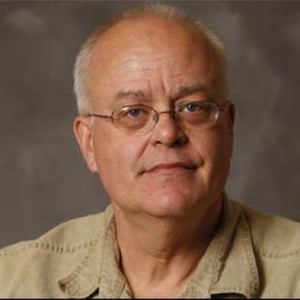
Professor of Law, University of Baltimore School of Law
Professor Garrett Epps joined the University of Baltimore School of Law in 2008. He teaches courses in Constitutional Law, First Amendment, and Fiction and Non-Fiction Writing for Law Students. He is a contributing writer to The Atlantic Online and serves as the magazine's Supreme Court correspondent. He is also a contributing editor of The American Prospect. Epps' most recent book, American Justice 2014: Nine Clashing Visions on the Supreme Court, was published by the University of Pennsylvania Press.
Professor Epps' previous book, American Epic: Reading the U.S. Constitution, was published in 2013 by Oxford University Press. In March 2014, American Epic was named a finalist for the American Bar Association’s Silver Gavel Book award. Two of his previous books, Democracy Reborn: The Fourteenth Amendment and the Fight for Equal Rights in Post-Civil War America (2006) and To an Unknown God: Religious Freedom on Trial (2001), were both also Silver Gavel finalists. A former staff writer for The Washington Post, Epps has written for The New York Times, The New York Review of Books, The Nation, The New Republic and The American Prospect.
He received his LL.M. in Comparative and International Law and his J.D. from Duke University, where he served as articles editor of Law and Contemporary Problems and graduated with the Willis Smith Award for the highest three-year academic average. Before attending law school, Epps earned his M.A. in English Writing in 1975 from Hollins College and his B.A. in 1972 from Harvard College, where he was editor of The Harvard Crimson.
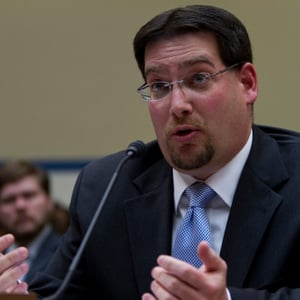
Deputy General Counsel, U. S. House of Representatives, Office of General Counsel
Todd Tatelman has served in the Office of General Counsel since November 2011. Mr. Tatelman previously served as a Legislative Attorney for the American Law Division of the Congressional Research Service. He received his bachelor of arts degrees in Philosophy, Political Science, and Economics from Boston University and his law degree, with honors, from The Catholic University of America, Columbus School of Law, where he was a member of The Catholic University Law Review.

George Mason University Foundation Professor of Law, Antonin Scalia Law School, George Mason University
TODD J. ZYWICKI is George Mason University Foundation Professor of Law at Antonin Scalia Law School at George Mason University and Research Fellow of the George Mason Law and Economics Center. During the Fall 2023 semester he served as the Visiting Scholar in Conservative Thought and Policy for the Bruce Benson Center for the Study of Western Civilization at the University of Colorado-Boulder. From 2020-2021 he was Chair of the Consumer Financial Protection Bureau Taskforce on Federal Consumer Financial Law. In 2021 he was inducted to the American College of Consumer Financial Services Lawyers. He is also a Senior Fellow of the F.A. Hayek Program for the Advanced Study of Politics, Philosophy, and Economics at George Mason University and a former Senior Fellow of the Cato Institute. From 2015-2017 he was Executive Director of the George Mason Law and Economics Center. He served as Co-Editor of the Supreme Court Economic Review from 2006-2017. From 2003-2004, Professor Zywicki served as the Director of the Office of Policy Planning at the Federal Trade Commission. He has also taught at Vanderbilt University Law School, Georgetown University Law Center, Boston College Law School, Mississippi College School of Law, and China University of Political Science and Law.
Professor Zywicki clerked for Judge Jerry E. Smith of the U.S. Court of Appeals for the Fifth Circuit and worked as an associate at Alston & Bird in Atlanta, Georgia, where he practiced bankruptcy and commercial law. He received his J.D. from the University of Virginia, where he was executive editor of the Virginia Tax Review and John M. Olin Scholar in Law and Economics. Professor Zywicki also received an M.A. in Economics from Clemson University and an A.B. cum Laude with high honors in his major from Dartmouth College.
Professor Zywicki is also a Lone Mountain Fellow of the Property and Environment Research Center, a Fellow of the International Centre for Economic Research in Turin, Italy, and a former Senior Fellow of the Goldwater Institute. During the Fall 2008 Semester Professor Zywicki was the Searle Fellow of the George Mason University School of Law and was a 2008-09 W. Glenn Campbell and Rita Ricardo-Campbell National Fellow and the Arch W. Shaw National Fellow at the Hoover Institution on War, Revolution and Peace. He has lectured and consulted with government officials around the world, including Iceland, Italy, Japan, and Guatemala. In 2006 Professor Zywicki served as a Member of the United States Department of Justice Study Group on “Identifying Fraud, Abuse and Errors in the United States Bankruptcy System.”
Professor Zywicki is the author of more than 130 articles in leading law reviews and peer-reviewed economics journals. He is one of the Top 10 most-cited law professors in the field of Commercial Law and one of the Top 25 law professors on Twitter as measured by engagement levels. He is one of the Top 50 Most Downloaded Law Authors at the Social Science Research Network. He has testified multiple times before Congress on issues of consumer bankruptcy law and consumer credit and is a frequent commentator on legal issues in the print and broadcast media, including the Wall Street Journal, New York Times, The Washington Post, The Washington Times, Nightline, The Newshour with Jim Lehrer, Neil Cavuto Show, Fox & Friends, Smerconish, Fox News @ Night with Shannon Bream, Fox Business, CNN, CNBC, Bloomberg News, BBC, The Diane Rehm Show, Lou Dobbs Show, Jerry Doyle Show, and The Laura Ingraham Show.
Professor Zywicki is former Chairman and a current member of the Board of Directors of the Competitive Enterprise Institute, and is a member of the Board of Directors of the Institute for Humane Studies, Bill of Rights Institute, the Executive Committee for the Federalist Society's Financial Institutions and E-Commerce Practice Group, the Board of Trustees of the Foundation for Research on Economics and the Environment. He formerly served on the Governing Board and the Advisory Council for the Financial Services Research Program at George Washington University School of Business. He is currently the Chair of the Academic Advisory Council for the following organizations: The Bill of Rights Institute, the film “We the People in IMAX,” and the McCormick-Tribune Foundation “Freedom Museum” in Chicago, Illinois. He is a member of the Board of Visitors of Ralston College and was a member of the Board of Trustees of Yorktown University. From 2005-2009 he served as an elected Alumni Trustee of the Dartmouth College Board of Trustees.

Partner, Baker Hostetler LLP
David Rivkin is a member of the firm's litigation, international and environmental teams and is co-leader of the firm's national appellate practice. He has extensive experience in constitutional, administrative and international law litigation and has been involved in numerous high-profile cases. With his prior experience in the government sector, David draws on a wealth of knowledge when providing compliance advice to companies and handling enforcement proceedings before government agencies on issues arising out of multilateral and unilateral sanctions, the Foreign Corrupt Practices Act (FCPA), anti-boycott issues, bankruptcy and financial fraud matters, and environmental and energy issues.
David has developed and implemented legislative, regulatory and litigation initiatives for two presidential administrations. Over the years, he has published hundreds of articles, op-eds, book reviews and book chapters on a variety of international, legal, constitutional, defense, arms control, foreign policy, environmental and energy issues for various newspapers and magazines, including The Wall Street Journal, The Washington Post, The New York Times, USA Today and The Los Angeles Times, and has been a frequent commentator and guest on TV and radio shows including ABC, CBS, NBC, CNN, Fox News, NPR and PBS.

James Madison Distinguished Professor of Law and Class of 1941 Research Professor of Law, University of Virginia School of Law
Professor John C. Harrison is the James Madison Distinguished Professor of Law and Class of 1941 Research Professor of Law at the University of Virginia School of Law. He joined the faculty at University of Virginia in 1993 as an associate professor of law after a distinguished career with the U.S. Department of Justice. His teaching subjects include constitutional history, federal courts, remedies, corporations, civil procedure, legislation and property. In 2008 he was on leave from the Law School to serve as counselor on international law in the Office of the Legal Adviser at the U.S. Department of State.
A 1977 graduate of the University of Virginia, Harrison earned his law degree in 1980 at Yale, where he served as editor of the Yale Law Journal and editor and articles editor of the Yale Studies in World Public Order. He was an associate at Patton Boggs & Blow in Washington, D.C., and clerked for Judge Robert Bork on the U.S. Court of Appeals for the District of Columbia Circuit. He worked with the Department of Justice from 1983-93, serving in numerous capacities, including deputy assistant attorney general in the Office of Legal Counsel (1990-93).
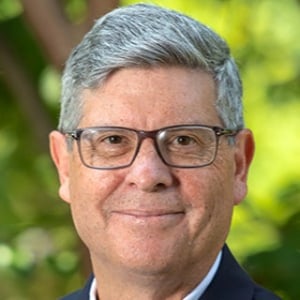
E. Claiborne Robins Distinguished Chair in Law, University of Richmond School of Law
Professor Kurt Lash teaches and writes about constitutional law. Founder and director of the Richmond Program on the American Constitution, Professor Lash has published widely on the subjects of constitutional law and constitutional history, including The Fourteenth Amendment and the Privileges or Immunities of American Citizenship (Cambridge University Press, 2014), The Lost History of the Ninth Amendment (Oxford University Press, 2009), and The American First Amendment in the Twenty-first Century: Cases and Materials(with William W. Van Alstyne) (5th ed., Foundation Press, 2014). An elected member of the American Law Institute, Professor Lash’s work has appeared in numerous legal journals including the Stanford Law Journal, Georgetown Law Journal, Virginia Law Review, andNotre Dame Law Review. He has been a visiting professor at Northwestern University School of Law and is the former director of the University of Illinois College of Law Program in Constitutional Theory, History, and Law.

Professor of Law, Georgetown University Law Center
Nicholas Quinn Rosenkranz teaches constitutional law and federal jurisdiction, and he writes articles for the Harvard Law Review and the Stanford Law Review.
He is currently developing a new theory of constitutional interpretation and judicial review. The first installment, entitledThe Subjects of the Constitution, was published in the Stanford Law Review in May of 2010, and it is among the most downloaded articles about constitutional interpretation, judicial review, and/or federal courts in the history of SSRN. The second installment, The Objects of the Constitution, was published in May of 2011, also in the Stanford Law Review. And the comprehensive version is forthcoming as a book by Oxford University Press.
Rosenkranz has served and advised the federal government in a variety of capacities. He clerked for Judge Frank H. Easterbrook on the U.S. Court of Appeals for the Seventh Circuit (1999-2000) and for Justice Anthony M. Kennedy at the U.S. Supreme Court (October Term 2001). He served as an Attorney-Advisor at the Office of Legal Counsel in the U.S. Department of Justice (November 2002 - July 2004). He often testifies before Congress as a constitutional expert—most recently before the House Financial Services Oversight Subcommittee, regarding the Obama Administration's use of bank settlement agreements to circumvent the Appropriations Clause. He has also filed briefs and presented oral argument before the U.S. Supreme Court. His most recent Supreme Court brief, in Los Angeles v. Patel, was cited by Justice Alito in dissent.
Rosenkranz is a member of the New York Bar and the U.S. Supreme Court Bar. He is a Senior Fellow at the Cato Institute. He serves on the Board of Directors of the Foundation for Individual Rights in Education (FIRE). He is a founding member of Heterodox Academy and a member of its Executive Committee. He also serves on the Board of Directors of the Federalist Society and as the faculty advisor to the Georgetown chapter.

Judge, United States Court of Appeals, Seventh Circuit
Judge Sykes was nominated to the Seventh Circuit by President George W. Bush and confirmed by the Senate in 2004. Prior to her appointment to the federal bench, Judge Sykes served as a justice on the Wisconsin Supreme Court. Governor Tommy G. Thompson appointed her in September 1999 to fill a mid-term vacancy on the state supreme court, and she was elected to a full ten-year term in April 2000. From 1992-1999, Judge Sykes served on the state trial bench in Milwaukee County (elected in 1992 and re-elected in 1998). From 1985-1992, Judge Sykes practiced law with the Milwaukee firm of Whyte & Hirschboeck, S.C., and from 1984-1985, was a law clerk to Federal Judge Terence T. Evans.
Born and raised in the Milwaukee area, Judge Sykes earned a bachelor’s degree in journalism from Northwestern University in 1980 and a law degree from Marquette University Law School in 1984. Between college and law school, Judge Sykes worked as a reporter for The Milwaukee Journal.
Judge Sykes has two sons.
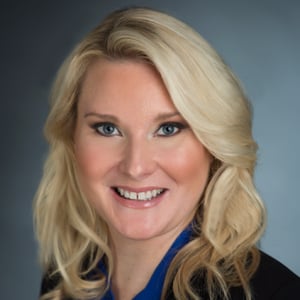
President, Constitutional Accountability Center
Elizabeth is Constitutional Accountability Center’s President. From 2008-2016, she served as CAC's Chief Counsel, representing the Center as well as clients including preeminent constitutional scholars and historians, state and local government organizations, and groups such as the League of Women Voters and the AARP. She frequently participates in Supreme Court litigation and her legal brief writing has been recognized as “exemplary” by the Green Bag Almanac & Reader. Elizabeth has also argued several important cases in the federal courts of appeals on a range of issues, including immigration law, habeas corpus, and sovereign immunity. She joined CAC from private practice at Quinn Emanuel Urquhart & Sullivan in San Francisco, where she was an attorney working with former Stanford Law School Dean Kathleen Sullivan in the firm’s Supreme Court/appellate practice. Previously, Elizabeth was a supervising attorney and teaching fellow at the Georgetown University Law Center appellate litigation clinic, a law clerk for Judge James R. Browning of the U.S. Court of Appeals for the Ninth Circuit, and a lawyer at Pillsbury Winthrop Shaw Pittman, a law firm in Washington. She has appeared as a legal expert for NBC, ABC, PBS, CNN, Fox News, the BBC, Current TV, and NPR, among other outlets. Elizabeth has been quoted extensively in the print media and is a regular contributor to the ABA’s Preview of United States Supreme Court Cases. Her writings have appeared in The New York Times, Reuters, USA Today, Politico, CNN.com, Slate, and on numerous political and legal blogs, such as Huffington Post, SCOTUSblog, and ACSblog. She has also published in the UCLA Journal of Environmental Law & Policy, Syracuse Law Review, The Cato Institute’s Supreme Court Review, and the Yale Journal of International Law. Elizabeth is a graduate of Yale Law School.
Senior Attorney, Institute for Justice
Michael Bindas is a senior attorney with the Institute for Justice (IJ) and leads IJ’s educational choice team. In this role, he oversees a talented group of IJ attorneys who help policymakers design constitutionally defensible educational choice programs and who defend educational choice programs in courtrooms nationwide. He joined IJ in 2005.
Michael was part of IJ’s litigation team in Espinoza v. Montana Department of Revenue, in which the U.S. Supreme Court held the exclusion of religious options from Montana’s educational choice program unconstitutional, and he led IJ’s defense of the Choice Scholarship Program for elementary and secondary students in Douglas County, Colorado. He also successfully challenged Washington’s denial of special education services to children in religious schools, as well as the state’s exclusion of sectarian options from its state work study program. Currently, he leads IJ’s team in Carson v. Makin, challenging Maine’s exclusion of religious options from its educational choice program.
Prior to leading IJ’s educational choice team, Michael litigated extensively to secure economic liberty, property rights, and freedom of speech throughout the nation. He was counsel of record at the U.S. Supreme Court for Kimbrough Fine Wine & Spirits in Tennessee Wine and Spirits Retailers Association v. Thomas, a successful challenge to Tennessee’s durational residency requirements for retail liquor licenses. He also led successful challenges to the municipal sign codes of St. Louis, Mo. and Norfolk, Va., after those cities attempted to silence protests of their abusive eminent domain practices.
Prior to joining IJ, Michael spent three years as an attorney with Perkins Coie LLP. He is a former law clerk to Judge Rhesa Hawkins Barksdale of the U.S. Court of Appeals for the Fifth Circuit and served as an engineer officer in the United States Army and Pennsylvania Army National Guard before beginning his legal career.
Michael received his law degree cum laude from the University of Pennsylvania Law School in 2001, where he served as Articles Editor for the Journal of Constitutional Law and was elected to the Order of the Coif. He received his undergraduate degree from the United States Military Academy at West Point in 1995.
Professor of Law and Jamie L. Whitten Chair in Law and Government, University of Mississippi School of Law
Christopher Green (https://law.olemiss.edu/faculty-directory/christopher-green/) is Professor of Law and Jamie L. Whitten Chair in Law and Government at the University of Mississippi, where he has taught since 2006. He is a graduate of Princeton University and Yale Law School, and has a PhD in philosophy from the University of Notre Dame. He clerked for Judge Rhesa H. Barksdale on the Fifth Circuit and is the author of Equal Citizenship, Civil Rights, and the Constitution: The Original Sense of the Privileges or Immunities Clause (2015) and a large number of articles and essays on constitutional theory and the Fourteenth Amendment, including the two-part Original Sense of the (Equal) Protection Clause and Clarity and Reasonable Doubt in Early State-Constitutional Judicial Review. He is an affiliated scholar with the University of San Diego Center for the Study of Constitutional Originalism.
Adam Griffin is a graduate of the University of North Carolina School of Law. During law school, he served as a research assistant to Professor Stephen E. Sachs and UNC Law Dean Martin Brinkley. After law school, Adam spent two years litigating for liberty at the Institute for Justice as an inaugural Law and Liberty Fellow. He then served as a law clerk to Chief Judge Richard E. Myers in the United States District Court for the Eastern District of North Carolina, and previously worked at Pacific Legal Foundation and the Civil Rights Division of the Department of Justice.

Panel: Corporate Social Responsibility Revisited
Stephen Bainbridge, Todd Henderson, Elizabeth Pollman
This panel will explore recent developments in the debate over corporate social responsibility, which has...
Litigation Update: Restoring the Lost Privileges or Immunities Clause?
Michael Bindas, Christopher R. Green, Adam F. Griffin
A new petition for certiorari at the U.S. Supreme Court presents an invaluable opportunity for...
Litigation Update: Restoring the Lost Privileges or Immunities Clause?
TeleforumTopics
Privileges or Immunities: More Than a Nullity, But Not Boundless
The Federalist Society is pleased to announce its Student Blog Initiative, a project of the...
Horizontal Federalism: May States Project their Sovereignty Beyond Their Borders?
John S. Baker, Michael B. Brennan, John C. Eastman, Edward L. Rubin, Ilya Shapiro
On November 14, 2019, the Federalist Society's Federalism & Separation of Powers Practice Group hosted...
What Is a Constitutional Crisis? Would You Know it if We Were in One?
Kevin R.C Gutzman, Robert L. Tsai, Michael Maharrey
Is the United States experiencing a constitutional crisis--or multiple crises? How would we even know...
Roundtable: Federalism’s Contribution to Economic Liberty: Catalyzing Technological Advancement and Economic Growth
Jonathan H. Adler, Dana Berliner, Clint Bolick, Mark Brnovich, Allan Ides, Chad A. Readler
On March 15-16, 2019, the Federalist Society's student chapter at the ASU Sandra Day O'Connor...
How Should the United States Senate be Elected?
Garrett Epps, Todd B. Tatelman, Todd J. Zywicki
The Constitution did not create a direct democracy; it established a constitutional republic. Its goal...
Sokolow, et al v. Palestinian Liberation Organization Litigation Update
David B. Rivkin
Recently, in a case called Sokolow, et al v. Palestinian Liberation Organization (PLO), the Solicitor...
Reconstructing First Principles: The Fourteenth Amendment and the Constitution
John C. Harrison, Kurt Lash, Nicholas Quinn Rosenkranz, Diane S. Sykes, Elizabeth B. Wydra
The Fourteenth Amendment dramatically changed constitutional law. How are we to understand these changes? Did...