
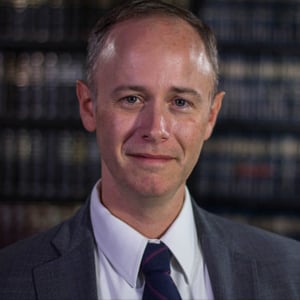
Vice President and Legal Director, National Right to Work Legal Defense and Education Foundation, Inc.
William Messenger is Foundation Vice President and Legal Director. He was a staff attorney for over twenty years and, during that time, represented individuals in numerous cases that sought to expand worker freedom of choice. This includes acting as lead counsel in three cases before the United States Supreme Court. In 2018, Messenger argued Janus v. AFSCME Council 31, where the Supreme Court held it violates the First Amendment for governments and unions to compel individuals to financially support unions and their speech. Originally from Youngstown Ohio, Messenger attended Ohio University as an undergraduate and then the George Washington University School of Law.

Partner, Altshuler Berzon LLP
Scott A. Kronland is partner at Altshuler Berzon LLP. He is a graduate of Cornell University, where he was Editor-In-Chief of The Cornell Daily Sun, and the UC Berkeley School of Law, where he was elected to the Order of the Coif and was a member of the California Law Review. He served as a law clerk to Judge James R. Browning of the United States Court of Appeals for the Ninth Circuit. He is the former Chair of the Executive Committee of the Labor and Employment Law Section of the Bar Association of San Francisco, and is currently an Appellate Representative to the Ninth Circuit Judicial Conference. He is listed as a "Superlawyer" by Northern California Super Lawyers magazine.

Laurence A. Tisch Professor of Law and Director, Classical Liberal Institute, New York University School of Law; Senior Fellow, The Civitas Institute, University of Texas at Austin
Richard A. Epstein is the inaugural Laurence A. Tisch Professor of Law at NYU School of Law. Prior to his joining the faculty, he was a visiting law professor at NYU from 2007 through 2009. He served as the Peter and Kirstin Bedford Senior Fellow at the Hoover Institution from 2000 to 2024. Since 2024 to the present he is a senior lecturer at the Civitas Institute at the University of Texas—Austin. Epstein is also the James Parker Hall Distinguished Service Professor of Law Emeritus and a senior lecturer at the University of Chicago. His initial law school appointment was at the University of Southern California from 1968 to 1972. Epstein received an LL.D., h.c. from the University of Ghent, 2003. He has been a member of the American Academy of Arts and Sciences since 1985 and was a Senior Fellow of the Center for Clinical Medical Ethics at the University of Chicago Division of Biological Sciences, also from 1983. to 2022 He served as editor of the Journal of Legal Studies from 1981 to 1991, and of the Journal of Law and Economics from 1991-2001. From 2001 to 2010 he was a director of the John M. Olin Program in Law and Economics at the University of Chicago.
His newest book, The Myth of Birthright Citizenship: What the Fourteenth Amendment Really Says was published in 2026 (Encounter Books). Prior to that he has published many books including, The Dubious Morality of the Modern Administrative State (Roman & Littlefield 2020).Earlier he published th Classical Liberal Constitution: The Uncertain Quest for Limited Government (Harvard 2014) iHis previous books include Design for Liberty: Private Property, Public Administration and the Rule of Law (Harvard 2011); The Case Against the Employee Free Choice Act (Hoover 2009); Supreme Neglect: How to Revive the Constitutional Protection of Property Rights (Oxford 2008); Antitrust Decrees in Theory and Practice: Why Less is More (AEI 2007); Overdose: How Excessive Government Regulation Stifles Pharmaceutical Innovation (Yale University Press. 2006); How Progressives Rewrote the Constitution (Cato 2006); Cases and Materials on Torts (Aspen Law & Business; 8th ed. 2004); Skepticism and Freedom: A Modern Case for Classical Liberalism (University of Chicago, 2003); Torts (Aspen Law & Business 1999); Principles for a Free Society: Reconciling Individual Liberty with the Common Good (Perseus Books, 1998): Mortal Peril: Our Inalienable Rights to Health Care (Addison-Wesley, 1997); Simple Rules for a Complex World (Harvard, 1995); Bargaining With the State (Princeton, 1993); Forbidden Grounds: The Case Against Employment Discrimination Laws (Harvard , 1992); Takings: Private Property and the Power of Eminent Domain (Harvard, 1985); and Modern Products Liability Law (Greenwood Press, 1980). He has also edited(with Catherine M. Sharkey) Cases and Materials on the Law of Torts (10th edition 2012).
Professor Epstein has written numerous articles on a wide range of legal and interdisciplinary subjects. He has taught courses in administrative law, antitrust law, civil procedure, communications, constitutional law, contracts, corporations, criminal law, employment discrimination law, environmental law, food and drug law health law and policy, legal history, labor law, property, real estate development and finance, jurisprudence, labor law; land use planning, patents, individual, estate and corporate taxation, Roman Law; torts, and workers' compensation.
Professor Epstein also writes a regular column for Civitas Institute, which also sponsors his podcast, The Libertarian with Charles C.W. Cooke, and Law Talk, with Cooke and John Yoo. He also does a podcast with John Batchelor. And appears regularly on the Freedom File with Judge Andrew Napolitano.
Vice President and Legal Director, National Right to Work Legal Defense and Education Foundation, Inc.
William Messenger is Foundation Vice President and Legal Director. He was a staff attorney for over twenty years and, during that time, represented individuals in numerous cases that sought to expand worker freedom of choice. This includes acting as lead counsel in three cases before the United States Supreme Court. In 2018, Messenger argued Janus v. AFSCME Council 31, where the Supreme Court held it violates the First Amendment for governments and unions to compel individuals to financially support unions and their speech. Originally from Youngstown Ohio, Messenger attended Ohio University as an undergraduate and then the George Washington University School of Law.

Partner, BakerHostetler, Adjunct Fellow, The Manhattan Institute
Andrew Grossman leads BakerHostetler’s Appellate and Major Motion team. He has appeared before the U.S. Supreme Court, nearly all the federal courts of appeals, as well as some state appellate courts, litigating high-profile and complex commercial, administrative and constitutional issues.
Andrew works with practice groups across BakerHostetler to identify and tackle complex issues, advise on administrative law and strategy, tee up issues for appeal and tackle appeals. He has developed and implemented litigation and administrative strategies for clients in several fields and industries.
In addition to his practice, Andrew advises members of Congress on matters of constitutional and administrative law, having testified more than a dozen times before the House and Senate Judiciary Committees. He has been a frequent legal commentator on radio and television, having appeared on Fox News, CNN, MSNBC, CNBC, NPR and its affiliates, CBN and elsewhere. His legal commentary has also appeared in dozens of magazines and newspapers, including The Wall Street Journal, USA Today, The Washington Post, The Washington Times and many others.
Andrew is a Senior Legal Fellow at the Buckeye Institute, an Adjunct Fellow the Manhattan Institute and a member of the leadership of the Federalist Society. He previously served as an adjunct scholar at the Cato Institute’s Robert A. Levy Center for Constitutional Studies and a legal fellow at the Heritage Foundation’s Meese Center for Legal and Judicial Studies. He clerked for Judge Edith H. Jones on the U.S. Court of Appeals for the Fifth Circuit.

Professor of Law, University of Michigan Law School
Prof. Samuel Bagenstos, who serves as professor of law, specializes in civil rights law, public law, and litigation. From 2009-2011, he was a political appointee in the U.S. Department of Justice, where he served as the Principal Deputy Assistant Attorney General for Civil Rights, the number-two official in the Civil Rights Division. His accomplishments included the promulgation of the 2010 Americans with Disabilities Act regulations—the first comprehensive update of those regulations since they were first promulgated in 1991—and the reinvigoration of the Civil Rights Division's enforcement of the Supreme Court's decision in Olmstead v. L.C., which guarantees people with disabilities the right to live and receive services in the most integrated setting appropriate. He led the negotiations of significant Olmstead v. L.C., which guarantees people with disabilities the right to live and receive services in the most integrated setting appropriate. He led the negotiations of significant Olmsteadsettlements with the states of Delaware and Georgia, which guarantee appropriate, community-based services to thousands of people with disabilities. He also personally argued major cases in federal district courts and courts of appeals.
As an academic, Prof. Bagenstos has published articles in journals such as the Yale Law Journal, the Columbia Law Review, the California Law Review, the Virginia Law Review, and many others. He also has published two books: Law and the Contradictions of the Disability Rights Movement (2009, Yale University Press); and Disability Rights Law: Cases and Materials (2010, Foundation Press). In his "spare time," Prof. Bagenstos remains an active appellate and Supreme Court litigator in civil rights and federalism cases. In one of the most notable cases he has argued, United States v. Georgia, 546 U.S. 151 (2006), the U.S. Supreme Court upheld, as applied to his client's case, the constitutionality of Title II of the Americans with Disabilities Act. Prof. Bagenstos has also testified before Congress on several occasions, including in support of the Fair Pay Restoration Act, the ADA Amendments Act, the Employment Non-Discrimination Act, and the Convention on the Elimination of All Forms of Discrimination Against Women, as well as on the application of the ADA to advancing technology and the problem of mental illness in prisons.
Prior to joining the Michigan Law faculty, Prof. Bagenstos was a professor of law, and, from 2007 to 2008, also associate dean for research and faculty development at Washington University School of Law. He has been on the faculty of Harvard Law School, and was a visiting professor at UCLA School of Law. He clerked for Judge Stephen Reinhardt on the Ninth Circuit for one year, and then joined the Civil Rights Division of the U.S. Department of Justice. Following that position, he served as law clerk for Justice Ruth Bader Ginsburg of the U.S. Supreme Court. In 1993, Prof. Bagenstos earned his JD, magna cum laude, from Harvard, where he received the Fay Diploma and was articles office co-chair for the Harvard Law Review.
Partner, BakerHostetler, Adjunct Fellow, The Manhattan Institute
Andrew Grossman leads BakerHostetler’s Appellate and Major Motion team. He has appeared before the U.S. Supreme Court, nearly all the federal courts of appeals, as well as some state appellate courts, litigating high-profile and complex commercial, administrative and constitutional issues.
Andrew works with practice groups across BakerHostetler to identify and tackle complex issues, advise on administrative law and strategy, tee up issues for appeal and tackle appeals. He has developed and implemented litigation and administrative strategies for clients in several fields and industries.
In addition to his practice, Andrew advises members of Congress on matters of constitutional and administrative law, having testified more than a dozen times before the House and Senate Judiciary Committees. He has been a frequent legal commentator on radio and television, having appeared on Fox News, CNN, MSNBC, CNBC, NPR and its affiliates, CBN and elsewhere. His legal commentary has also appeared in dozens of magazines and newspapers, including The Wall Street Journal, USA Today, The Washington Post, The Washington Times and many others.
Andrew is a Senior Legal Fellow at the Buckeye Institute, an Adjunct Fellow the Manhattan Institute and a member of the leadership of the Federalist Society. He previously served as an adjunct scholar at the Cato Institute’s Robert A. Levy Center for Constitutional Studies and a legal fellow at the Heritage Foundation’s Meese Center for Legal and Judicial Studies. He clerked for Judge Edith H. Jones on the U.S. Court of Appeals for the Fifth Circuit.
Shareholder, Littler Mendelson P.C.
Maury Baskin focuses his Washington, DC-based practice on national labor policy, challenging excessive government regulation on behalf of small and large businesses, while advising employers in compliance issues. He has extensive experience in dealing with labor relations and union pressure tactics, employment discrimination and wage and hour law. He has represented a variety of industry sectors, advising clients involved in construction, government contracting, higher education, telecommunications, hospitality, security, and nonprofits.
Mr. Baskin has served as lead counsel at all levels of the federal and state courts and before the U.S. Supreme Court, and has recently led successful challenges against nationwide federal labor regulations on behalf of multi-industry coalitions, including the 2016 “white collar” overtime rule and the so-called “blacklisting” rule. He has also succeeded in the courts in numerous cases involving the National Labor Relations Board (NLRB) and the Department of Labor (DOL). Mr. Baskin is the Chair of Littler's Construction Industry Group and has long represented the Associated Builders and Contractors (ABC) national trade association and many of its construction industry members. On their behalf, he has been one of the leading advocates against government-mandated project labor agreements, prevailing wage expansion, and union corporate campaigns.
Associate General Counsel, Service Employees International Union
Walter Kamiat is currently Associate General Counsel of the Service Employees International Union (SEIU), a position he has held since 2004. He is SEIU’s principal counsel in the home care area, where the SEIU represents over one half million workers. He also is active in the SEIU’s appellate litigation program, including its amicus practice before the Supreme Court and the federal appellate courts. Mr. Kamiat assisted in preparing DC Circuit and Fourth Circuit amicus briefs defending the NLRB Posting Rule.
In 2008, Mr. Kamiat served on the Obama Administration’s Labor Department Transition Team, performing the agency review of the Pension Benefit Guarantee Commission.
Prior to working at the SEIU, Mr. Kamiat had almost 30 years’ experience in a wide variety of positions involving labor law and labor-relations institutions. These included serving as counsel to the AFL-CIO Investment Program, a multi-billion dollar union-sponsored pension investment program investing in urban housing and economic development projects (1997-2004), as Visiting Professor of Law at Georgetown University Law School, teaching and writing in labor and employment law (1994-1997), as Associate General Counsel of the AFL-CIO (1988-1994), principally focusing on Supreme Court and appellate litigation, and as an associate at Bredhoff & Kaiser in Washington, DC (1986-1988), principally representing union, employees, and labor sponsored benefit funds.
Mr. Kamiat is a graduate of Stanford Law School, where he was President of the Stanford Law Review. He was a law clerk to U.S. Supreme Court Justice Thurgood Marshall (1984-1985) and to DC Circuit Judge J. Skelly Wright (1983-1984).

Executive Vice President, The Federalist Society
Dean Reuter is Executive Vice President at the Federalist Society for Law and Public Policy Studies. He has served in two federal government agency Offices of the Inspector General, as Counsel to the Inspector General and Deputy Inspector General, responsible for policing the use of federal funds granted and contracted through those agencies. As such, he helped conduct and oversee criminal investigations across the country. He is the principal author of the non-fiction book, The Hidden Nazi: The Untold Story of America's Deal with the Devil, and editor of Liberty’s Nemesis: The Unchecked Expansion of the State and Confronting Terror: 9/11 and the Future of American National Security. He was appointed by the President and served as Vice-Chairman of the Board of Directors of the Corporation for National and Community Service, and recently served as an appointee on the U.S. Commission on Presidential Scholars. He is a graduate of Hood College (BA with Honors) and the University of Maryland School of Law.

Stefan Marculewicz is a Shareholder in the Washington, DC office of Littler Mendelson, P.C., and focuses his legal practice on traditional labor law matters, international labor law and standards, and non-traditional worker representation.
Jennifer Thomas is an Associate in the Washington, DC office of Littler Mendelson, P.C. where she concentrates her practice in the areas of labor and employment law.

Associate, Hogan Lovells LLP
Dominic Perella concentrates his practice on appellate and Supreme Court litigation. Dom has argued before the U.S. Court of Appeals for the District of Columbia Circuit and the D.C. Court of Appeals, and has briefed numerous cases before the Supreme Court and the majority of the federal circuits. He was named, and one of his arguments mentioned, in theNational Law Journal's 2011 Appellate Hot List.
Dom's appellate practice has covered constitutional questions, insurance law, environmental regulation, Medicare regulation, and white-collar criminal appeals, among other areas. He also has developed a focus on communications law, and in that capacity has litigated matters on behalf of cable industry clients and participated in rulemakings before the Federal Communications Commission.
Before joining our legal practice, Dom served as a judicial clerk to The Honorable Sandra L. Lynch, Chief Judge of the U.S. Court of Appeals for the First Circuit. Dom graduatedsumma cum laude from the New York University School of Law, where he was named a Butler Scholar and received the Law Review Association Award for second-highest GPA in the graduating class of 2005.
Executive Vice President, The Federalist Society
Dean Reuter is Executive Vice President at the Federalist Society for Law and Public Policy Studies. He has served in two federal government agency Offices of the Inspector General, as Counsel to the Inspector General and Deputy Inspector General, responsible for policing the use of federal funds granted and contracted through those agencies. As such, he helped conduct and oversee criminal investigations across the country. He is the principal author of the non-fiction book, The Hidden Nazi: The Untold Story of America's Deal with the Devil, and editor of Liberty’s Nemesis: The Unchecked Expansion of the State and Confronting Terror: 9/11 and the Future of American National Security. He was appointed by the President and served as Vice-Chairman of the Board of Directors of the Corporation for National and Community Service, and recently served as an appointee on the U.S. Commission on Presidential Scholars. He is a graduate of Hood College (BA with Honors) and the University of Maryland School of Law.
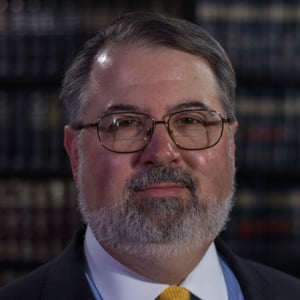
Staff Attorney, National Right to Work Legal Defense Foundation
Experience: Staff Attorney, National Right to Work Legal Defense Foundation, Springfield, VA, 1989-Present; Associate, Borland & Borland, Wilkes-Barre, PA, 1989; Intern, Criminal Division, U.S. Attorney’s Office, Atlanta, GA, U.S. Justice Department, 1988-89; Martindale-Hubbell® AV® Peer Review Rated.
Bar Admissions: Pennsylvania, 1989; District of Columbia, 1991; U.S. Supreme Court, 1992 (admitted only in PA & DC).
Law School: Emory University, J.D., 1989.
College: Hampden-Sydney College, B.A., with Honors in Political Science and History, magna cum laude, 1986.
Member: Federalist Society.
Publications: “Casting an Overdue Skeptical Eye: Knox v. SEIU,” CATO SUPREME COURT REVIEW, September 2012, at 333; “Making Windows into Litigants’ Souls: The Pernicious Potential of Gilpin v. AFSCME,” Engage, Apr. 2004, at 90; Co-author, “Big Labor’s Tyranny of the Minority: Forced Union Dues in Politics,” Federalist Society Free Speech & Election Law Newsletter, Fall 1996.
Reported Decisions (partial listing): Knox v. SEIU Local 1000, 132 S.Ct. 2277 (2012); Locke v. Karass, 555 U.S. 207 (2009); Cummings v. Connell, 402 F. 3d 935 (9th Cir. 2005); Prescott v. County of El Dorado, 177 F.3d 1102 (9th Cir. 1999), vacated, 528 U.S. 1111, reinstated in part, 204 F.3d 984 (9th Cir. 2000); Knight v. Kenai Peninsula Borough School District, 131 F.3d 807 (9th Cir. 1997); Johnson v. Lafayette Firefighters Ass’n, 51 F.3d 726 (7th Cir. 1995); Weaver v. University of Cincinnati, 942 F.2d 1039 (1991), further proceedings, 970 F.2d 1523 (6th Cir. 1992); Dixon v. City of Chicago, 948 F.2d 355 (7th Cir. 1991); Orr v. National Football League Players Ass’n, 147 L.R.R.M. (BNA) 2845 (Va. Cir. Ct. 1994), aff’d, 150 L.R.R.M. (BNA) 2191 (Va. 1995).
Laurence A. Tisch Professor of Law and Director, Classical Liberal Institute, New York University School of Law; Senior Fellow, The Civitas Institute, University of Texas at Austin
Richard A. Epstein is the inaugural Laurence A. Tisch Professor of Law at NYU School of Law. Prior to his joining the faculty, he was a visiting law professor at NYU from 2007 through 2009. He served as the Peter and Kirstin Bedford Senior Fellow at the Hoover Institution from 2000 to 2024. Since 2024 to the present he is a senior lecturer at the Civitas Institute at the University of Texas—Austin. Epstein is also the James Parker Hall Distinguished Service Professor of Law Emeritus and a senior lecturer at the University of Chicago. His initial law school appointment was at the University of Southern California from 1968 to 1972. Epstein received an LL.D., h.c. from the University of Ghent, 2003. He has been a member of the American Academy of Arts and Sciences since 1985 and was a Senior Fellow of the Center for Clinical Medical Ethics at the University of Chicago Division of Biological Sciences, also from 1983. to 2022 He served as editor of the Journal of Legal Studies from 1981 to 1991, and of the Journal of Law and Economics from 1991-2001. From 2001 to 2010 he was a director of the John M. Olin Program in Law and Economics at the University of Chicago.
His newest book, The Myth of Birthright Citizenship: What the Fourteenth Amendment Really Says was published in 2026 (Encounter Books). Prior to that he has published many books including, The Dubious Morality of the Modern Administrative State (Roman & Littlefield 2020).Earlier he published th Classical Liberal Constitution: The Uncertain Quest for Limited Government (Harvard 2014) iHis previous books include Design for Liberty: Private Property, Public Administration and the Rule of Law (Harvard 2011); The Case Against the Employee Free Choice Act (Hoover 2009); Supreme Neglect: How to Revive the Constitutional Protection of Property Rights (Oxford 2008); Antitrust Decrees in Theory and Practice: Why Less is More (AEI 2007); Overdose: How Excessive Government Regulation Stifles Pharmaceutical Innovation (Yale University Press. 2006); How Progressives Rewrote the Constitution (Cato 2006); Cases and Materials on Torts (Aspen Law & Business; 8th ed. 2004); Skepticism and Freedom: A Modern Case for Classical Liberalism (University of Chicago, 2003); Torts (Aspen Law & Business 1999); Principles for a Free Society: Reconciling Individual Liberty with the Common Good (Perseus Books, 1998): Mortal Peril: Our Inalienable Rights to Health Care (Addison-Wesley, 1997); Simple Rules for a Complex World (Harvard, 1995); Bargaining With the State (Princeton, 1993); Forbidden Grounds: The Case Against Employment Discrimination Laws (Harvard , 1992); Takings: Private Property and the Power of Eminent Domain (Harvard, 1985); and Modern Products Liability Law (Greenwood Press, 1980). He has also edited(with Catherine M. Sharkey) Cases and Materials on the Law of Torts (10th edition 2012).
Professor Epstein has written numerous articles on a wide range of legal and interdisciplinary subjects. He has taught courses in administrative law, antitrust law, civil procedure, communications, constitutional law, contracts, corporations, criminal law, employment discrimination law, environmental law, food and drug law health law and policy, legal history, labor law, property, real estate development and finance, jurisprudence, labor law; land use planning, patents, individual, estate and corporate taxation, Roman Law; torts, and workers' compensation.
Professor Epstein also writes a regular column for Civitas Institute, which also sponsors his podcast, The Libertarian with Charles C.W. Cooke, and Law Talk, with Cooke and John Yoo. He also does a podcast with John Batchelor. And appears regularly on the Freedom File with Judge Andrew Napolitano.

The Future of Mandatory Union Dues - Podcast
William L. Messenger, Scott A. Kronland
Friedrichs v. California Teachers Association was anticipated to be one of the most significant cases...
Topics
Implications of the Friedrichs Non-Decision
With the death of Justice Scalia, most Court watchers expected a 4-4 split in Friedrichs...
Supreme Court Splits 4-4 on Major Union Case -- Friedrichs v. California Teachers Association - Podcast
Richard A. Epstein
On Tuesday, March 29, the U.S. Supreme Court announced a 4-4 decision in Friedrichs v....
Free Rider or Free to Speak: Arguments Heard in Friedrichs v. California Teachers Association - Podcast
William L. Messenger
In Friedrichs, the Court will consider whether to overrule Abood v. Detroit Board of Education...
Harris v. Quinn - Post-Decision SCOTUScast
Andrew Grossman
On June 30, 2014, the Supreme Court heard oral argument in Harris v. Quinn. The...
Unionizing Domestic Workers?: Harris v. Quinn Decided - Podcast
Samuel R. Bagenstos, Andrew Grossman
Is Harris v. Quinn a landmark in labor law? The case asked the Court to decide...
NLRB Posting Regulations - Podcast
Maury Baskin, Walter Kamiat, Dean Reuter
On August 30, 2011, with the then-one Republican member dissenting, the National Labor Relations Board...
Labor Organizations by Another Name: The Worker Center Movement and its Evolution into Coverage under the NLRA and LMRDA
Stefan J. Marculewicz, Jennifer Thomas
I. Introduction The labor union, the primary collective advocate for workers’ rights in the United...
41New Rule on Union Dues: Knox v. SEIU - Podcast
Dominic F. Parella, Dean Reuter, W. James Young
In June 2012 the United States Supreme Court announced its decision in Knox v. Service Employees...
The Financial Industry, The Credit Crisis, and Free Market Solutions
Emil Arca, Richard A. Epstein
The New York City Lawyers Chapter hosted this event on December 8, 2008, at the...