

Professor, University of Minnesota Law School
Ilan Wurman is the Julius E. Davis Professor of Law at the University of Minnesota, where he teaches administrative law and constitutional law. He previously taught at Arizona State University. He writes primarily on the Fourteenth Amendment, administrative law, separation of powers, and constitutionalism. His academic writing has appeared in the Yale Law Journal, the Stanford Law Review, the University of Chicago Law Review, the University of Pennsylvania Law Review, the Virginia Law Review, the Duke Law Journal, the Minnesota Law Review, the Notre Dame Law Review, and the Texas Law Review among other journals.
Professor Wurman is the author of a casebook, Administrative Law Theory and Fundamentals: An Integrated Approach (Foundation Press 2d ed. 2024). He is also the author of A Debt Against the Living: An Introduction to Originalism (Cambridge 2017), and The Second Founding: An Introduction to the Fourteenth Amendment (Cambridge 2020). His next book, The Constitution of 1789: A New Introduction, is also forthcoming with Cambridge University Press.
Professor Wurman practices law with the firm Tully Bailey. He has litigated a variety of administrative law and constitutional law cases, including cases involving COVID-19 restrictions, transmission lines, and Appointments Clause challenges. He also devised winning public nuisance theories to force city governments to address the increasingly challenging public camping crises throughout the country.

Laurence A. Tisch Professor of Law and Director, Classical Liberal Institute, New York University School of Law; Director, Classical Liberal Institute, Civitas Institute University of Texas at Austin
Richard A. Epstein is the Laurence A. Tisch Professor of Law, at New York University, a senior research fellow at the Civitas Institute at the University of Texas Austin, and a senior Lecturer, the University of Chicago. He received an LL.D., h.c . from the University of Ghent, 2003 , and an LLD h.c . from the University of Siegen in 2018 and the Bradley Prize in 2011. He has been a member of the American Academy of Arts and Sciences since 1985. He has edited both the Journal of Legal Studies (1981-1991) and the Journal of Law and Economics (1991-2001). He is also a founder and director of the Classical Liberal Institute at NYU Law School. His most recent book is The Classical Liberal Constitution: The Uncertain Quest for Limited Government (2014). His other books include Takings: Private Property and the Power of Eminent Domain ( 1985); Bargaining with the State (1993); Simple Rules for a Complex World (1995); Principles for a Free Society: Reconciling Individual Liberty and the Common Good (1998); Skepticism and Freedom: A Modern Theory of Classical Liberalism (2003); Design for Liberty: Private Property, Public Administration and the Rule of Law (2011), and most recently, The Myth of Birthright citizenship—and Beyond (2026). He has taught courses in , administrative law, antitrust, constitutional, contracts, environmental law, land use planning; real property, torts and water law. He has written and spoken extensively on a wide range of topics, and is writes a regular column for Defining Ideas.
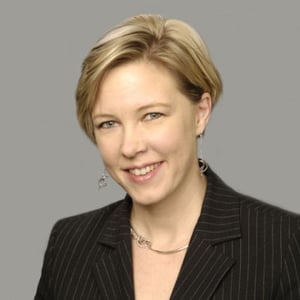
Clinical Professor and Senior Scholar and Senior Fellow for Copyright Research and Policy of C-IP2, Antonin Scalia Law School, George Mason University
Sandra Aistars is Senior Fellow for Copyright Research and Policy and a Senior Scholar at the Center for Intellectual Property x Innovation Policy (C-IP2). She also leads the law school’s Arts & Entertainment Advocacy Program. Professor Aistars has over twenty years of advocacy experience on behalf of copyright and other intellectual property owners. She has served on trade missions and been an industry advisor to the Department of Commerce on intellectual property implications for international trade negotiations; worked on legislative and regulatory matters worldwide; frequently testified before Congress and federal agencies regarding intellectual property matters; chaired cross-industry coalitions and technology standards efforts; and is regularly tapped by government agencies to lecture in U.S. government-sponsored study tours for visiting legislators, judges, prosecutors, and regulators.
Immediately prior to joining Scalia Law, Professor Aistars was the Chief Executive Officer of the Copyright Alliance – a nonprofit, public interest organization that represents the interests of artists and creators across the creative spectrum. While at Scalia Law, she continues to collaborate with the Copyright Alliance as a member of its Academic Advisory Board. Professor Aistars currently serves on the boards of the Washington Area Lawyers for the Arts (WALA) and the Howard Intellectual Property Program (HIPP), and she has previously served as trustee of the Copyright Society of the USA (CSUSA). Professor Aistars has also previously served as Vice President and Associate General Counsel at Time Warner Inc. She began her legal career in private practice at Weil, Gotshal and Manges LLP.
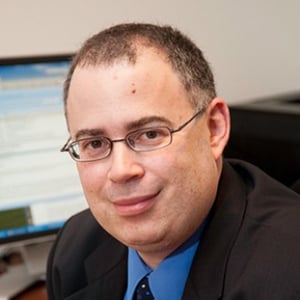
Vice Dean and Professor of Law, Villanova University School of Law
Professor Michael Risch joined the Villanova faculty in 2010 from the West Virginia University College of Law, where he directed the Entrepreneurship, Innovation and Law Program. Prior to joining the West Virginia faculty, he served as an Olin Fellow in Law at Stanford Law School. Professor Risch’s teaching and scholarship focus on intellectual property and internet law, with an emphasis on patents, trade secrets and information access. His articles have been published in the Stanford Law Review and Duke Law Journal, among others; online in the Yale Law Journal Online and PENNumbra; and less formally at the Madisonian, Prawfsblawg, and Patently-O blogs. Two of his articles have been cited by the United States Supreme Court. Professor Risch received his A.B. with honors and distinction in Public Policy and with distinction in Quantitative Economics from Stanford University, and his J.D. with high honors from the University of Chicago Law School. Prior to entering academia, he was a partner at intellectual property boutique Russo & Hale LLP in Palo Alto, California.
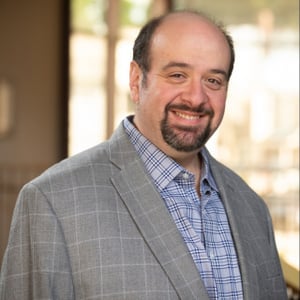
Associate Professor, UNH Franklin Pierce School of Law
Zvi S. Rosen is an Associate Professor at UNH Franklin Pierce School of Law and the Faculty Director of the Franklin Pierce Society for Intellectual Property. He has served as a Assistant Professor at the Southern Illinois University School of Law, as a Visiting Assistant Professor at the Maurice A. Deane School of Law at Hofstra University, and as a Visiting Scholar and Professorial Lecturer in Law at George Washington University School of Law.
In 2015-2016, he was the Abraham L. Kaminstein Scholar in Residence at the U.S. Copyright Office. Mr. Rosen received his J.D. from Northwestern University School of Law in 2005 and LLM in Intellectual Property in 2006 from the George Washington University Law School. He has practiced at Fried, Frank, Harris, Shriver & Jacobson LLP as well as smaller firms and his own practice, and clerked for the Hon. Thomas B. Bennett of the U.S. Bankruptcy Court for the Northern District of Alabama. He has written extensively on the development of modern copyright and trademark law, as well as on bankruptcy law.

Professor of Political Science, University of Pittsburgh
Chris W. Bonneau is Professor of Political Science at the University of Pittsburgh, where he has been since 2002. His research is primarily in the areas of judicial selection (specifically, judicial elections) and judicial decisionmaking. Professor Bonneau’s work has been supported by the National Science Foundation and he has published numerous articles, including in the American Journal of Political Science and Journal of Politics. He is also the coauthor of three books: Strategic Behavior and Policy Choice on the U.S. Supreme Court (2005), In Defense of Judicial Elections (2009), and the award-winning Voters’ Verdicts: Citizens, Campaigns, and Institutions in State Supreme Court Elections (2015).
Professor Bonneau teaches undergraduate classes in constitutional law, judicial politics, and research methods, as well as graduate classes in judicial politics and research design.
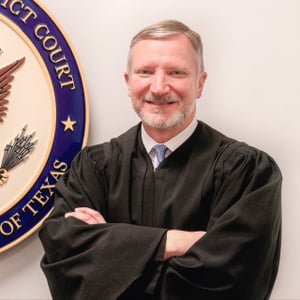
United States District Court, Southern District of Texas
Prior to joining TXSE, Jeff served as acting general counsel of Charles Schwab and led its Office of Legislative and Regulatory Affairs in Washington, D.C. for the past two decades, managing the company's response to public policy initiatives and advocating for policies that aid individual investors. He has over four decades of securities markets experience, starting his career as an options trader at the Philadelphia Stock Exchange, then founding his own trading firm, and later serving on the exchange's Board of Governors. He also served as senior counsel in the Division of Market Regulation at the U.S. Securities and Exchange Commission. Jeff's additional experience in the securities industry includes serving as vice president for regulation and general counsel at the Cincinnati Stock Exchange and as chairman of the Operating Committee of the National Market System Plan governing Nasdaq securities. Jeff holds degrees from the Wharton School of the University of Pennsylvania and Ohio Northern School of Law.

Milton R. Underwood Chair in Free Enterprise, Vanderbilt University Law School
Brian Fitzpatrick is the Milton R. Underwood Chair in Free Enterprise and Professor of Law at Vanderbilt Law School, where his research focuses on class action litigation, federal courts, judicial selection, and constitutional law. He is best known for his empirical studies of class action settlements as well as his book The Conservative Case for Class Actions (University of Chicago Press, 2019). Professor Fitzpatrick joined Vanderbilt's law faculty in 2007 after serving as the John M. Olin Fellow at New York University School of Law. He graduated first in his class from Harvard Law School and went on to clerk for Judge Diarmuid O'Scannlain on the U.S. Court of Appeals for the Ninth Circuit and Justice Antonin Scalia on the U.S. Supreme Court. After his clerkships, Professor Fitzpatrick practiced commercial and appellate litigation for several years at Sidley Austin in Washington, D.C., and served as Special Counsel for Supreme Court Nominations to U.S. Senator John Cornyn. Before earning his law degree, Fitzpatrick graduated summa cum laude with a bachelor's of science in chemical engineering from the University of Notre Dame. He has received the Hall-Hartman Outstanding Professor Award, which recognizes excellence in classroom teaching, for his Civil Procedure and Federal Courts courses.

Partner, Jackson Walker
Arthur offers clients a winning combination of trial and appellate experience gained as a federal prosecutor and more than 20 years of experience in handling patent, copyright, trademark, and trade secrets litigation.
While his practice concentrates on intellectual property litigation, Arthur also has significant experience in internal investigations, False Claims Act suits, partnership and breach of fiduciary duty, breach of contract, and employment litigation. Arthur also has represented clients testifying before Congressional committees.
Arthur writes and speaks frequently on topics ranging from the case against Boston bomber Dzhokhar Tsarnaev to patent litigation reform.
Prior to joining Michael Best, Arthur served as an Assistant United States Attorney in the Southern District of New York, where he was the lead prosecutor in criminal trials, including federal intellectual property crimes. He also argued numerous appeals.
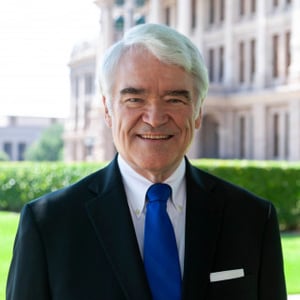
Chief Justice, Texas Supreme Court
Nathan L. Hecht is the 27th Chief Justice of the Supreme Court of Texas. He has been elected to the Court six times, first in 1988 as a Justice, and most recently in 2014 as Chief Justice. He is the longest-serving Member of the Court in Texas history and the senior Texas appellate judge in active service. Throughout his service on the Court, Chief Justice Hecht has overseen revisions to the rules of administration, practice, and procedure in Texas courts, and was appointed by the Chief Justice of the United States to the federal Advisory Committee on Civil Rules. Chief Justice Hecht is also active in the Court's efforts to assure that Texans living below the poverty level, as well as others with limited means, have access to basic civil legal services.
Chief Justice Hecht was appointed to the district court in 1981 and was elected to the court of appeals in 1986. Before taking the bench, he was a partner in the Locke firm in Dallas. Chief Justice Hecht holds a B.A. degree with honors in philosophy from Yale University, and a J.D. degree cum laude from the SMU School of Law, where he was a Hatton W. Sumners Scholar. He clerked for Judge Roger Robb on the U.S. Court of Appeals for the District of Columbia Circuit and was a Lieutenant in the U.S. Navy Reserve Judge Advocate General Corps.
Chief Justice Hecht is First Vice President of the national Conference of Chief Justices. He is a Life Member of the American Law Institute and a member of Council. He is also a member of the Texas Philosophical Society.
His current term ends December 31, 2020.

General Counsel, Texans for Lawsuit Reform
Lee Parsley has worked with TLR since 2002, and now serves as its general counsel. Lee leads a team of attorneys who help identify and research solutions to the challenges facing Texas’ legal system. Lee’s background in civil and appellate law has given him firsthand experience in navigating Texas’ courts. His experience in the legislative process helps TLR engage with lawmakers and stakeholders to ensure Texas is passing principled laws for a fair and efficient legal system.
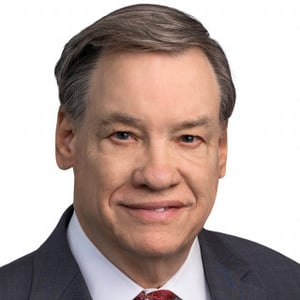
Partner, Baker Botts L.L.P.
Thomas R. Phillips is a partner in the Austin office of Baker Botts L.L.P.,
concentrating in general litigation, including appellate, trial strategy, and alternate
dispute resolution. He was appointed and then elected Chief Justice of the Supreme
Court of Texas in 1988, being one of the first four Republicans (along with Kent Hance,
Eugene Cook, and Bathan Hecht) to win a down-ballot statewide race since
Reconstruction. He was re-elected in 1990, 1996, and 2002 before leaving the Court in
2004.
While in office, Phillips served as president of the Conference of Chief Justices in
1997-98 and as a member of the Federal-State Relations Committee of the
Administrative Conference of the United States and the Institutions of Democracy
Judicial Branch Commission of the Annenberg Public Policy Center. After returning to
private life, he served on the Carter-Baker Commission on Federal Election Reform, the
Texas Historical Commission, the Texas State Historical Society, and the Judicial
Districts Board.
A native of Dallas, Phillips earned a B.A. from Baylor University in 1971 and a
J.D. from Harvard Law School in 1974. He has been awarded honorary doctoral
degrees from St. Edward’s University and Texas Tech University. Prior to becoming
Chief Justice, he practiced law in Houston and served as judge of the 280th District
Court in Harris County. Texas.
He resides with his wife, Dr. Lyn B. Phillips, in a historic home in Bastrop.
Professor of Political Science, University of Pittsburgh
Chris W. Bonneau is Professor of Political Science at the University of Pittsburgh, where he has been since 2002. His research is primarily in the areas of judicial selection (specifically, judicial elections) and judicial decisionmaking. Professor Bonneau’s work has been supported by the National Science Foundation and he has published numerous articles, including in the American Journal of Political Science and Journal of Politics. He is also the coauthor of three books: Strategic Behavior and Policy Choice on the U.S. Supreme Court (2005), In Defense of Judicial Elections (2009), and the award-winning Voters’ Verdicts: Citizens, Campaigns, and Institutions in State Supreme Court Elections (2015).
Professor Bonneau teaches undergraduate classes in constitutional law, judicial politics, and research methods, as well as graduate classes in judicial politics and research design.
United States District Court, Southern District of Texas
Prior to joining TXSE, Jeff served as acting general counsel of Charles Schwab and led its Office of Legislative and Regulatory Affairs in Washington, D.C. for the past two decades, managing the company's response to public policy initiatives and advocating for policies that aid individual investors. He has over four decades of securities markets experience, starting his career as an options trader at the Philadelphia Stock Exchange, then founding his own trading firm, and later serving on the exchange's Board of Governors. He also served as senior counsel in the Division of Market Regulation at the U.S. Securities and Exchange Commission. Jeff's additional experience in the securities industry includes serving as vice president for regulation and general counsel at the Cincinnati Stock Exchange and as chairman of the Operating Committee of the National Market System Plan governing Nasdaq securities. Jeff holds degrees from the Wharton School of the University of Pennsylvania and Ohio Northern School of Law.
Milton R. Underwood Chair in Free Enterprise, Vanderbilt University Law School
Brian Fitzpatrick is the Milton R. Underwood Chair in Free Enterprise and Professor of Law at Vanderbilt Law School, where his research focuses on class action litigation, federal courts, judicial selection, and constitutional law. He is best known for his empirical studies of class action settlements as well as his book The Conservative Case for Class Actions (University of Chicago Press, 2019). Professor Fitzpatrick joined Vanderbilt's law faculty in 2007 after serving as the John M. Olin Fellow at New York University School of Law. He graduated first in his class from Harvard Law School and went on to clerk for Judge Diarmuid O'Scannlain on the U.S. Court of Appeals for the Ninth Circuit and Justice Antonin Scalia on the U.S. Supreme Court. After his clerkships, Professor Fitzpatrick practiced commercial and appellate litigation for several years at Sidley Austin in Washington, D.C., and served as Special Counsel for Supreme Court Nominations to U.S. Senator John Cornyn. Before earning his law degree, Fitzpatrick graduated summa cum laude with a bachelor's of science in chemical engineering from the University of Notre Dame. He has received the Hall-Hartman Outstanding Professor Award, which recognizes excellence in classroom teaching, for his Civil Procedure and Federal Courts courses.
Partner, Jackson Walker
Arthur offers clients a winning combination of trial and appellate experience gained as a federal prosecutor and more than 20 years of experience in handling patent, copyright, trademark, and trade secrets litigation.
While his practice concentrates on intellectual property litigation, Arthur also has significant experience in internal investigations, False Claims Act suits, partnership and breach of fiduciary duty, breach of contract, and employment litigation. Arthur also has represented clients testifying before Congressional committees.
Arthur writes and speaks frequently on topics ranging from the case against Boston bomber Dzhokhar Tsarnaev to patent litigation reform.
Prior to joining Michael Best, Arthur served as an Assistant United States Attorney in the Southern District of New York, where he was the lead prosecutor in criminal trials, including federal intellectual property crimes. He also argued numerous appeals.
Chief Justice, Texas Supreme Court
Nathan L. Hecht is the 27th Chief Justice of the Supreme Court of Texas. He has been elected to the Court six times, first in 1988 as a Justice, and most recently in 2014 as Chief Justice. He is the longest-serving Member of the Court in Texas history and the senior Texas appellate judge in active service. Throughout his service on the Court, Chief Justice Hecht has overseen revisions to the rules of administration, practice, and procedure in Texas courts, and was appointed by the Chief Justice of the United States to the federal Advisory Committee on Civil Rules. Chief Justice Hecht is also active in the Court's efforts to assure that Texans living below the poverty level, as well as others with limited means, have access to basic civil legal services.
Chief Justice Hecht was appointed to the district court in 1981 and was elected to the court of appeals in 1986. Before taking the bench, he was a partner in the Locke firm in Dallas. Chief Justice Hecht holds a B.A. degree with honors in philosophy from Yale University, and a J.D. degree cum laude from the SMU School of Law, where he was a Hatton W. Sumners Scholar. He clerked for Judge Roger Robb on the U.S. Court of Appeals for the District of Columbia Circuit and was a Lieutenant in the U.S. Navy Reserve Judge Advocate General Corps.
Chief Justice Hecht is First Vice President of the national Conference of Chief Justices. He is a Life Member of the American Law Institute and a member of Council. He is also a member of the Texas Philosophical Society.
His current term ends December 31, 2020.
General Counsel, Texans for Lawsuit Reform
Lee Parsley has worked with TLR since 2002, and now serves as its general counsel. Lee leads a team of attorneys who help identify and research solutions to the challenges facing Texas’ legal system. Lee’s background in civil and appellate law has given him firsthand experience in navigating Texas’ courts. His experience in the legislative process helps TLR engage with lawmakers and stakeholders to ensure Texas is passing principled laws for a fair and efficient legal system.
Partner, Baker Botts L.L.P.
Thomas R. Phillips is a partner in the Austin office of Baker Botts L.L.P.,
concentrating in general litigation, including appellate, trial strategy, and alternate
dispute resolution. He was appointed and then elected Chief Justice of the Supreme
Court of Texas in 1988, being one of the first four Republicans (along with Kent Hance,
Eugene Cook, and Bathan Hecht) to win a down-ballot statewide race since
Reconstruction. He was re-elected in 1990, 1996, and 2002 before leaving the Court in
2004.
While in office, Phillips served as president of the Conference of Chief Justices in
1997-98 and as a member of the Federal-State Relations Committee of the
Administrative Conference of the United States and the Institutions of Democracy
Judicial Branch Commission of the Annenberg Public Policy Center. After returning to
private life, he served on the Carter-Baker Commission on Federal Election Reform, the
Texas Historical Commission, the Texas State Historical Society, and the Judicial
Districts Board.
A native of Dallas, Phillips earned a B.A. from Baylor University in 1971 and a
J.D. from Harvard Law School in 1974. He has been awarded honorary doctoral
degrees from St. Edward’s University and Texas Tech University. Prior to becoming
Chief Justice, he practiced law in Houston and served as judge of the 280th District
Court in Harris County. Texas.
He resides with his wife, Dr. Lyn B. Phillips, in a historic home in Bastrop.
Clinical Professor and Senior Scholar and Senior Fellow for Copyright Research and Policy of C-IP2, Antonin Scalia Law School, George Mason University
Sandra Aistars is Senior Fellow for Copyright Research and Policy and a Senior Scholar at the Center for Intellectual Property x Innovation Policy (C-IP2). She also leads the law school’s Arts & Entertainment Advocacy Program. Professor Aistars has over twenty years of advocacy experience on behalf of copyright and other intellectual property owners. She has served on trade missions and been an industry advisor to the Department of Commerce on intellectual property implications for international trade negotiations; worked on legislative and regulatory matters worldwide; frequently testified before Congress and federal agencies regarding intellectual property matters; chaired cross-industry coalitions and technology standards efforts; and is regularly tapped by government agencies to lecture in U.S. government-sponsored study tours for visiting legislators, judges, prosecutors, and regulators.
Immediately prior to joining Scalia Law, Professor Aistars was the Chief Executive Officer of the Copyright Alliance – a nonprofit, public interest organization that represents the interests of artists and creators across the creative spectrum. While at Scalia Law, she continues to collaborate with the Copyright Alliance as a member of its Academic Advisory Board. Professor Aistars currently serves on the boards of the Washington Area Lawyers for the Arts (WALA) and the Howard Intellectual Property Program (HIPP), and she has previously served as trustee of the Copyright Society of the USA (CSUSA). Professor Aistars has also previously served as Vice President and Associate General Counsel at Time Warner Inc. She began her legal career in private practice at Weil, Gotshal and Manges LLP.
Vice Dean and Professor of Law, Villanova University School of Law
Professor Michael Risch joined the Villanova faculty in 2010 from the West Virginia University College of Law, where he directed the Entrepreneurship, Innovation and Law Program. Prior to joining the West Virginia faculty, he served as an Olin Fellow in Law at Stanford Law School. Professor Risch’s teaching and scholarship focus on intellectual property and internet law, with an emphasis on patents, trade secrets and information access. His articles have been published in the Stanford Law Review and Duke Law Journal, among others; online in the Yale Law Journal Online and PENNumbra; and less formally at the Madisonian, Prawfsblawg, and Patently-O blogs. Two of his articles have been cited by the United States Supreme Court. Professor Risch received his A.B. with honors and distinction in Public Policy and with distinction in Quantitative Economics from Stanford University, and his J.D. with high honors from the University of Chicago Law School. Prior to entering academia, he was a partner at intellectual property boutique Russo & Hale LLP in Palo Alto, California.
Associate Professor, UNH Franklin Pierce School of Law
Zvi S. Rosen is an Associate Professor at UNH Franklin Pierce School of Law and the Faculty Director of the Franklin Pierce Society for Intellectual Property. He has served as a Assistant Professor at the Southern Illinois University School of Law, as a Visiting Assistant Professor at the Maurice A. Deane School of Law at Hofstra University, and as a Visiting Scholar and Professorial Lecturer in Law at George Washington University School of Law.
In 2015-2016, he was the Abraham L. Kaminstein Scholar in Residence at the U.S. Copyright Office. Mr. Rosen received his J.D. from Northwestern University School of Law in 2005 and LLM in Intellectual Property in 2006 from the George Washington University Law School. He has practiced at Fried, Frank, Harris, Shriver & Jacobson LLP as well as smaller firms and his own practice, and clerked for the Hon. Thomas B. Bennett of the U.S. Bankruptcy Court for the Northern District of Alabama. He has written extensively on the development of modern copyright and trademark law, as well as on bankruptcy law.
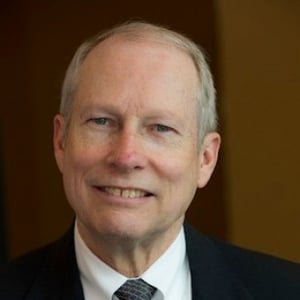
L. Q. C. Lamar Professor of Law, Emory University School of Law
Thomas C. Arthur holds degrees from Yale Law School and Duke University, where he was an Angier B. Duke Scholar and a member of Phi Beta Kappa. Before coming to Emory, he practiced law for eleven years with the Washington, DC office of Kirkland & Ellis. In 1982, he left his law firm partnership to join the Emory Law faculty.
Arthur teaches antitrust, civil procedure, and administrative law, and he has been active on the executive committee of the Antitrust Section of the Association of American Law Schools. His articles in the California and Tulane law reviews have been credited with the founding of a new, "statutory" school of antitrust analysis. His 1991 Emory Law Journal article (co-authored with Professor Richard D. Freer) provoked a nationally noted debate over an important new statute governing the jurisdiction of federal courts. A major antitrust article, "The Costly Quest for Perfect Competition: Kodak and Nonstructural Market Power," was published in the New York University Law Review (vol. 69, April 1994).
Professor of Political Science, University of Pittsburgh
Chris W. Bonneau is Professor of Political Science at the University of Pittsburgh, where he has been since 2002. His research is primarily in the areas of judicial selection (specifically, judicial elections) and judicial decisionmaking. Professor Bonneau’s work has been supported by the National Science Foundation and he has published numerous articles, including in the American Journal of Political Science and Journal of Politics. He is also the coauthor of three books: Strategic Behavior and Policy Choice on the U.S. Supreme Court (2005), In Defense of Judicial Elections (2009), and the award-winning Voters’ Verdicts: Citizens, Campaigns, and Institutions in State Supreme Court Elections (2015).
Professor Bonneau teaches undergraduate classes in constitutional law, judicial politics, and research methods, as well as graduate classes in judicial politics and research design.
United States District Court, Southern District of Texas
Prior to joining TXSE, Jeff served as acting general counsel of Charles Schwab and led its Office of Legislative and Regulatory Affairs in Washington, D.C. for the past two decades, managing the company's response to public policy initiatives and advocating for policies that aid individual investors. He has over four decades of securities markets experience, starting his career as an options trader at the Philadelphia Stock Exchange, then founding his own trading firm, and later serving on the exchange's Board of Governors. He also served as senior counsel in the Division of Market Regulation at the U.S. Securities and Exchange Commission. Jeff's additional experience in the securities industry includes serving as vice president for regulation and general counsel at the Cincinnati Stock Exchange and as chairman of the Operating Committee of the National Market System Plan governing Nasdaq securities. Jeff holds degrees from the Wharton School of the University of Pennsylvania and Ohio Northern School of Law.
Milton R. Underwood Chair in Free Enterprise, Vanderbilt University Law School
Brian Fitzpatrick is the Milton R. Underwood Chair in Free Enterprise and Professor of Law at Vanderbilt Law School, where his research focuses on class action litigation, federal courts, judicial selection, and constitutional law. He is best known for his empirical studies of class action settlements as well as his book The Conservative Case for Class Actions (University of Chicago Press, 2019). Professor Fitzpatrick joined Vanderbilt's law faculty in 2007 after serving as the John M. Olin Fellow at New York University School of Law. He graduated first in his class from Harvard Law School and went on to clerk for Judge Diarmuid O'Scannlain on the U.S. Court of Appeals for the Ninth Circuit and Justice Antonin Scalia on the U.S. Supreme Court. After his clerkships, Professor Fitzpatrick practiced commercial and appellate litigation for several years at Sidley Austin in Washington, D.C., and served as Special Counsel for Supreme Court Nominations to U.S. Senator John Cornyn. Before earning his law degree, Fitzpatrick graduated summa cum laude with a bachelor's of science in chemical engineering from the University of Notre Dame. He has received the Hall-Hartman Outstanding Professor Award, which recognizes excellence in classroom teaching, for his Civil Procedure and Federal Courts courses.
Partner, Jackson Walker
Arthur offers clients a winning combination of trial and appellate experience gained as a federal prosecutor and more than 20 years of experience in handling patent, copyright, trademark, and trade secrets litigation.
While his practice concentrates on intellectual property litigation, Arthur also has significant experience in internal investigations, False Claims Act suits, partnership and breach of fiduciary duty, breach of contract, and employment litigation. Arthur also has represented clients testifying before Congressional committees.
Arthur writes and speaks frequently on topics ranging from the case against Boston bomber Dzhokhar Tsarnaev to patent litigation reform.
Prior to joining Michael Best, Arthur served as an Assistant United States Attorney in the Southern District of New York, where he was the lead prosecutor in criminal trials, including federal intellectual property crimes. He also argued numerous appeals.
Chief Justice, Texas Supreme Court
Nathan L. Hecht is the 27th Chief Justice of the Supreme Court of Texas. He has been elected to the Court six times, first in 1988 as a Justice, and most recently in 2014 as Chief Justice. He is the longest-serving Member of the Court in Texas history and the senior Texas appellate judge in active service. Throughout his service on the Court, Chief Justice Hecht has overseen revisions to the rules of administration, practice, and procedure in Texas courts, and was appointed by the Chief Justice of the United States to the federal Advisory Committee on Civil Rules. Chief Justice Hecht is also active in the Court's efforts to assure that Texans living below the poverty level, as well as others with limited means, have access to basic civil legal services.
Chief Justice Hecht was appointed to the district court in 1981 and was elected to the court of appeals in 1986. Before taking the bench, he was a partner in the Locke firm in Dallas. Chief Justice Hecht holds a B.A. degree with honors in philosophy from Yale University, and a J.D. degree cum laude from the SMU School of Law, where he was a Hatton W. Sumners Scholar. He clerked for Judge Roger Robb on the U.S. Court of Appeals for the District of Columbia Circuit and was a Lieutenant in the U.S. Navy Reserve Judge Advocate General Corps.
Chief Justice Hecht is First Vice President of the national Conference of Chief Justices. He is a Life Member of the American Law Institute and a member of Council. He is also a member of the Texas Philosophical Society.
His current term ends December 31, 2020.
General Counsel, Texans for Lawsuit Reform
Lee Parsley has worked with TLR since 2002, and now serves as its general counsel. Lee leads a team of attorneys who help identify and research solutions to the challenges facing Texas’ legal system. Lee’s background in civil and appellate law has given him firsthand experience in navigating Texas’ courts. His experience in the legislative process helps TLR engage with lawmakers and stakeholders to ensure Texas is passing principled laws for a fair and efficient legal system.
Partner, Baker Botts L.L.P.
Thomas R. Phillips is a partner in the Austin office of Baker Botts L.L.P.,
concentrating in general litigation, including appellate, trial strategy, and alternate
dispute resolution. He was appointed and then elected Chief Justice of the Supreme
Court of Texas in 1988, being one of the first four Republicans (along with Kent Hance,
Eugene Cook, and Bathan Hecht) to win a down-ballot statewide race since
Reconstruction. He was re-elected in 1990, 1996, and 2002 before leaving the Court in
2004.
While in office, Phillips served as president of the Conference of Chief Justices in
1997-98 and as a member of the Federal-State Relations Committee of the
Administrative Conference of the United States and the Institutions of Democracy
Judicial Branch Commission of the Annenberg Public Policy Center. After returning to
private life, he served on the Carter-Baker Commission on Federal Election Reform, the
Texas Historical Commission, the Texas State Historical Society, and the Judicial
Districts Board.
A native of Dallas, Phillips earned a B.A. from Baylor University in 1971 and a
J.D. from Harvard Law School in 1974. He has been awarded honorary doctoral
degrees from St. Edward’s University and Texas Tech University. Prior to becoming
Chief Justice, he practiced law in Houston and served as judge of the 280th District
Court in Harris County. Texas.
He resides with his wife, Dr. Lyn B. Phillips, in a historic home in Bastrop.

Deep Dive Episode 180 – Book Review: Administrative Law Theory and Fundamentals: An Integrated Approach
Ilan Wurman, Richard A. Epstein
With his new casebook, Administrative Law Theory and Fundamentals: An Integrated Approach, Professor Ilan Wurman seeks to provide fresh...
Courthouse Steps Decision Webinar: Google v. Oracle
Sandra Aistars, Michael Risch, Zvi Rosen
On April 5, 2021, the U.S. Supreme Court decided Google v. Oracle. In a 6-2 decision,...
Courthouse Steps Decision Webinar: Google v. Oracle
TeleforumA Chat with the Professors Series: Richard D. Freer
Emory Student Chapter
Atlanta, GAA Chat with the Professors Series: Thomas C. Arthur
Emory Student Chapter
Atlanta, GAPanel One: Proposed Reforms to Texas Judicial Selection
Chris W. Bonneau, Jeffrey Vincent Brown, Brian T. Fitzpatrick, Arthur Gollwitzer, Nathan L. Hecht, E. Lee Parsley, Thomas R. Phillips
On September 14, 2019, The Federalist Society held a panel on Proposed Reforms to Texas...
Panel One: Proposed Reforms to Texas Judicial Selection
Chris W. Bonneau, Jeffrey Vincent Brown, Brian T. Fitzpatrick, Arthur Gollwitzer, Nathan L. Hecht, E. Lee Parsley, Thomas R. Phillips
On September 14, 2019, The Federalist Society held a panel on Proposed Reforms to Texas...
Panel One: Proposed Reforms to Texas Judicial Selection
2019 Texas Chapters Conference
Austin, TXThe Second Amendment In The New Supreme Court
The Civil Rights Practice Group
Washington, DCTopics
Article I: Interview with Prof. Schoenbrod on Congressional Degradation
As Professor Schoenbrod explains in this interview, Congress has an unhealthy fixation with three little words--"the Administrator...