
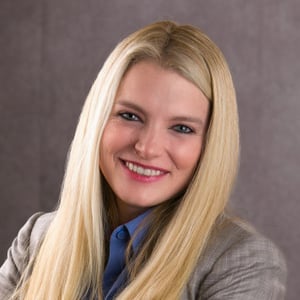
Assistant Professor of Law, South Texas College of Law Houston
Haley Palfreyman Jankowski joined the faculty at South Texas College of Law Houston in 2023. Her scholarly interests include, among other areas, civil procedure law, international law, and tort law. Before teaching, Professor Jankowski was a litigation associate at Orrick, Herrington & Sutcliffe LLC where she specialized in complex commercial litigation and appeals. She also served as a law clerk to the Honorable Jay S. Bybee on the United States Court of Appeals for the Ninth Circuit. Professor Jankowski earned her J.D. summa cum laude, as valedictorian, from Brigham Young University’s J. Reuben Clark School of Law, where she was an Articles Editor for the Brigham Young University Law Review.

Teaching Fellow and Supervising Attorney, Georgetown Law’s Federal Legislation Clinic
Anthony Marcum is a Teaching Fellow and Supervising Attorney at Georgetown Law’s Federal Legislation Clinic. Previously, he served as Counsel for U.S. Senator Ben Sasse. Before that, he was a Resident Fellow at the R Street Institute, where his research focused on the federal judiciary and separation of powers. While at R Street, he was an Adjunct Professor at George Washington University’s Graduate School of Political Management, teaching students seeking a master’s degree in legislative affairs. Earlier in his career, Anthony was a litigation associate in Michigan and law clerk in the U.S. District Court for the District of New Hampshire and U.S. District Court for the Northern District of West Virginia.
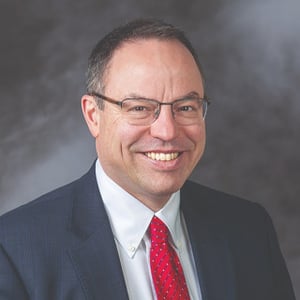
Professor of Law and J. Philip Johnson Faculty Fellow, University of North Dakota School of Law
Michael S. McGinniss is Professor of Law and J. Philip Johnson Faculty Fellow at the University of North Dakota School of Law, where he joined the faculty in 2010 and served as the Dean from 2019 to 2022. He chairs the executive committee for the Federalist Society's Practice Group on Professional Responsibility and Legal Education.
Before entering the legal academy, Professor McGinniss served for twelve years as a Disciplinary Counsel for the Supreme Court of Delaware. He currently teaches courses on Professional Responsibility, Advanced Legal Ethics, Civil Procedure, and Federal Courts. He also serves as Faculty Advisor for the North Dakota Law Review and the UND Law Federalist Society student chapter.
Professor McGinniss’ research and scholarship interests are wide-ranging and include lawyer and judicial ethics, lawyer discipline and regulation of the profession, constitutional law (especially First Amendment, separation of powers, and federalism), and cultural challenges faced by conservatives in the law schools and the legal profession. His most recent law review article, Declaring Independence to Secure Integrity: The Supreme Court Justices' Code of Conduct, was published in the Federalist Society Review. His article Expressing Conscience with Candor: Saint Thomas More and First Freedoms in the Legal Profession, was published in the Harvard Journal of Law & Public Policy.
Professor McGinniss has spoken to Federalist Society lawyer and student chapters across the country about judicial independence and ethics, especially relating to the federal courts and the United States Supreme Court Justices. In addition, he has spoken to several chapters about rising challenges to ideological diversity and targeting of conservative viewpoints in law schools and the legal profession. Although he is very pleased to speak on these and many other topics that may be of interest to lawyer and student chapters, in 2026-2027, he has particular interest in speaking on the topic “Lawyer Discipline as Political ‘Resistance’: Separation of Powers, Federalism, and the Rule of Law,” concerning his work-in-progress on the weaponization of professional disciplinary processes against conservative lawyers for political and ideological purposes.

Tamar is an Assistant Professor. She holds a J.D. degree from the University of British Columbia, and a B.A. (Hons), LL.M., and SJD degrees from the University of Toronto.
Tamar practiced international commercial arbitration in a law firm in Vancouver and as Deputy Counsel at the International Court of Arbitration of the International Chamber of Commerce in Paris. She also acted as legal advisor to the Jerusalem Arbitration Center in Israel and Palestine and was a Graduate Fellow with the conflict resolution group of The Carter Center in Atlanta.
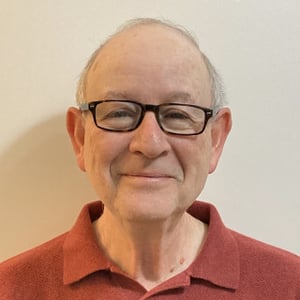
Senior Corporate Governance Fellow, Research Fellow, and Member of the Editorial Advisory Board, RealClearFoundation, Law & Economics Center at George Mason University's Antonin Scalia Law School, and Journal of Corporation Law
Bernard Sharfman is a Senior Corporate Governance Fellow at the RealClearFoundation, a research fellow with the Law & Economics Center at George Mason University's Antonin Scalia Law School, a member of the Journal of Corporation Law’s editorial advisory board.
Mr. Sharfman has written extensively on corporate law and governance and securities regulation. His current working papers include “The Ascertainable Standards that Define the Boundaries of the SEC's Rulemaking Authority” and “The Ascertainable Standards that Guide and Limit the Surface Transportation Board's Authority over the Railroads.”
Mr. Sharfman has written numerous comment letters to the SEC. His op-eds have been published in RealClearMarkets, the Wall Street Journal, the National Review, and the Business Insider. His blog posts can be found on ProMarket, the Oxford Business Law Blog, the Harvard Law School Forum on Corporate Governance, Columbia Law School’s Blue Sky Blog, and Duke Law School's FinReg Blog. Mr. Sharfman has refereed corporate governance articles for the Stanford Law Review and the Yale Law Journal.
Mr. Sharfman, a graduate of the Georgetown University Law Center (J.D., 2000), was an Executive Editor of the Georgetown Journal of Legal Ethics and a recipient of the Saint Thomas More Award.
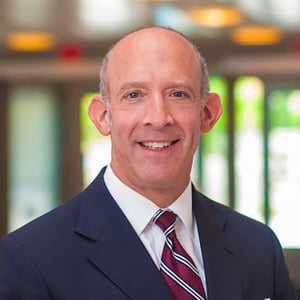
Professor of Law; Director, Business Law Program, American University Washington College of Law
David V. Snyder is professor of law at the American University Washington College of Law and is the director of the Business Law Program. He was also a visiting professor of law at the University of Michigan from January to May 2024. He has been a regular visiting professor at the law school of the University of Paris II (Panthéon-Assas) since 2012, and during 2021-2022, he held a Fernand Braudel Senior Fellowship at the European University Institute (Florence). In 2014, he was awarded a McCormick Fellowship, during which he delivered the Wilson Memorial Lecture (University of Edinburgh).
Professor Snyder’s research and teaching interests are primarily in contracts and commercial law, including their U.S., international, and comparative aspects. He is known for his work on international commercial transactions and is the author (with Martin Davies) of International Transactions in Goods: Global Sales in Comparative Context (Oxford University Press 2014). More particularly, he has devoted considerable effort to using contracts to protect the environment and the human rights of workers in international supply chains, and his book (with Susan A. Maslow) Contracts for Responsible and Sustainable Supply Chains (American Bar Association 2023) includes the Model Contract Clauses produced by a working group and task force that he chairs for the ABA Business Law Section. He is also co-chair of a similar working group in Europe. He has published numerous journal articles and book chapters on these and other topics
A Louisiana native, Professor Snyder graduated summa cum laude from Tulane Law School after earning his undergraduate degree cum laude from Yale. He clerked for the Honorable John M. Duhé Jr. of the United States Court of Appeals for the Fifth Circuit and subsequently joined the D.C. firm of Hogan & Hartson (now Hogan Lovells). He began his academic career at Cleveland-Marshall College at Law Cleveland State University and then moved to Indiana University (Bloomington) before joining the faculty at Tulane Law School. He returned to Washington to accept his current appointment in 2006. In addition, Professor Snyder has served as a visiting professor at the University of Paris 10 (Nanterre La Défense), Boston University, and the College of William and Mary, and he has taught summer courses at the University of Mainz (Germany).
Professor Snyder was chair of the Section on Contracts of the Association of American Law Schools (2005-2006) and chaired the Washington steering committee for the XVIIIth International Congress of Comparative Law (2010). He is an elected member of the American Law Institute, a titular member of the International Academy of Comparative Law, and has served on the board of directors of the Washington Foreign Law Society, the board of editors of the American Journal of Comparative Law, and the scientific council of the French Journal of Legal Policy
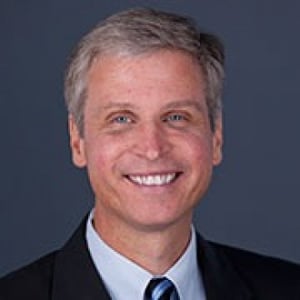
Frank Edwards Tyler Distinguished Professor of Law, University of Kansas School of Law
Stephen Ware is the author of five books, over 60 law review articles and many other publications. His writings have been cited by the Supreme Court of the United States and in at least 37 other cases. Ware teaches and writes on:
each with an international or comparative dimension. An experienced teacher of lawyering skills exercises in which student groups negotiate, mediate, and draft legal documents, Professor Ware takes this approach in his Transnational Dispute Resolution course, which he has customized for universities from Beijing to Istanbul to Kansas.
Ware has testified before both houses of the U.S. Congress, several state legislatures and, as an expert witness, in court. He is a frequent guest lecturer and speaker at academic and professional conferences—having given such presentations throughout the U.S. and in several other countries. He has appeared on numerous television and radio stations and been quoted in The New York Times, Wall Street Journal, USA Today, Financial Times, National Law Journal and many other news outlets. He is an elected member of the American Law Institute (ALI) and has served, at various times in his career, on the editorial board of the Journal of Legal Education and as an arbitrator for the American Arbitration Association.
Ware was named as the Frank Edwards Tyler Distinguished Professor of Law in 2019.
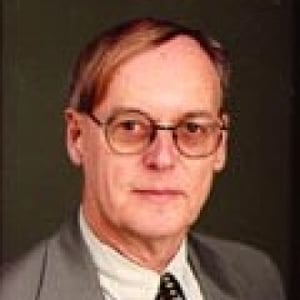
Milton R. Underwood Professor of Law Emeritus and Professor of History Emeritus, Vanderbilt University
James Ely is a renowned legal historian and property rights expert whose career accomplishments were recognized with both the Brigham-Kanner Property Rights Prize and the Owner's Counsel of American Crystal Eagle Award in 2006. He is the author of several books that have received widespread critical acclaim from legal scholars and historians, including The Guardian of Every Other Right: A Constitutional History of Property Rights, The Fuller Court: Justices, Rulings and Legacy in which he examines the work of the Supreme Court between 1888 and 1910, Railroads and American Law in which he systematically explores the way that the rise of the railroad shaped American legal culture, and The Contract Clause: A Constitutional History. He also is the author of numerous articles dealing with the rights of property owners. He served as an editor of both the Oxford Companion to the Supreme Court, and the second edition of the Oxford Guide to Supreme Court Decisions. Professor Ely received the Tennessee History Book Award in 2002 for A History of the Tennessee Supreme Court. Between 1987 and 1999, he served as an associate editor of the American Journal of Legal History. Since Professor Ely joined Vanderbilt faculty in 1972, he has been frequently recognized by students as one of the law school's outstanding teachers.
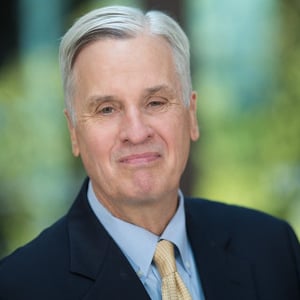
John T. Kipp Chair Emeritus in Corporate and Business Law, The University of Texas at Austin School of Law
Calvin H. Johnson is an American tax lawyer, author, and academic. He holds the John T. Kipp Chair Emeritus at the University of Texas School of Law.
Johnson's scholarship is in the fields of tax law and Constitutional history. His academic tax work has focused on defending the fairness, and efficiency of the tax base. In constitutional history, he relies on the original sources, usually to defend the plenary reach of the Federal government. He is the author of Righteous Anger at the Wicked States: The Meaning of the Founders' Constitution.
Johnson earned a B.A. in Philosophy from Columbia College in 1966, and received a Purple Heart for combat in an infantry reconnaissance unit in Vietnam in 1968. He earned a Juris Doctor from Stanford Law School in 1971 and practiced with Paul, Weiss, Goldberg, Rifkind, and Garrison in the tax department in New York City from 1971 to 1973. Following this he served in the U.S. Treasury, Office of Tax Legislative Council, from 1973 to 1975.
Johnson began his academic career in 1975 as an assistant professor, then associate professor at Rutgers Law School, Newark. He joined the University of Texas School of Law in 1981 as a professor. He now serves as a John T. Kipp Chair in Business and Corporate Law Emeritus at the University of Texas.
Johnson was a Fellow of the Tax Policy Center (joint program of Urban Institute and Brookings Institution) in 2011, a visiting professor at the Office of Chief Counsel, IRS, in 2007, a Member of the Academic Advisers on the Overall Health of the Tax System for the Joint Committee on Taxation in 2001, a Dean's Distinguished Visitor at Vanderbilt Law School in 2000, a Member of the IRS Commissioner's Advisory Group in 1989 and a Guest Scholar at The Brookings Institution in 1980.
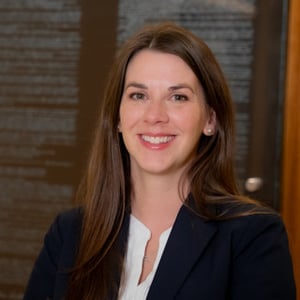
Vice President, Practice Groups, The Federalist Society
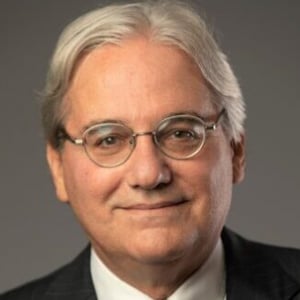
Clinical Professor of Law, Cornell Law School
William A. Jacobson is a Clinical Professor of Law and Director of the Securities Law Clinic.
He is a 1981 graduate of Hamilton College and a 1984 graduate of Harvard Law School. At Harvard he was Senior Editor of the Harvard International Law Journal and Director of Litigation for the Harvard Prison Legal Assistance Project.
Prior to joining the Cornell law faculty in 2007, Professor Jacobson had a highly successful civil litigation and arbitration practice in Providence, Rhode Island, concentrating in investment, employment, and business disputes in the securities industry, including many high profile cases reported in leading newspapers and magazines.
Professor Jacobson has argued cases in numerous federal and state courts, including the Courts of Appeal for the First, Fifth and Sixth Circuits, and the Rhode Island Supreme Court.
Professor Jacobson has a national reputation as a leading practitioner in securities arbitration. He was Treasurer, and is a former member of the Executive Committee and Board of Directors of the Public Investors Arbitration Bar Association, a professional organization of attorneys dedicated to protecting public investors. He frequently is quoted in national media on issues related to investment fraud and investor protection, and in the past has served as one of a small number of private practice attorneys who trained new arbitrators for the Financial Industry Regulatory Authority.
Professor Jacobson is co-author of the Securities Arbitration Desk Reference (Thomson-Reuters), updated annually.
Professor Jacobson also is the founder and publisher of Legal Insurrection, a popular politics and law website. He is frequently quoted in the media on political and legal topics, has authored many Op-Eds in major publications, and appears on television and radio to discuss politics and the law.
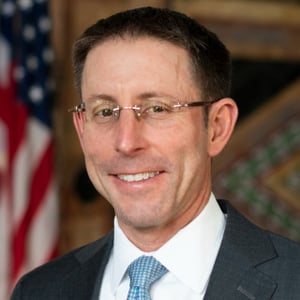
Judge, United States Court of Appeals, Ninth Circuit
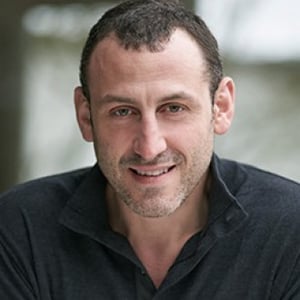
Professor of Law, Northwestern University Pritzker School of Law
Joshua Kleinfeld teaches and writes about political, legal, and moral philosophy, criminal law, and criminal procedure. He also practices law in Northwestern's Juvenile Criminal Defense Clinic. He is a full professor with tenure at the Northwestern Pritzker School of the Law and (by courtesy) in Northwestern’s philosophy department. In 2017-18, he was a visiting professor at Harvard and Stanford Law Schools. He is the recipient of the Bator Award, given annually to one American law professor under the age of 40 who has demonstrated "excellence in legal scholarship, a commitment to teaching, a concern for students, and who has made a significant public impact."
In philosophy, Kleinfeld's research focuses on the idea of "embodied ethical life," as developed in the socio-theoretic tradition of Hegel, Weber, and Durkheim. This tradition aims to understand and critique social life by bringing to light the normative ideas implicit in social practices and institutions. In law, this means that the most interesting philosophical concepts are often those reflected or actualized in legal practice – in the law as judges and lawyers think of it and wield it.
In criminal law and procedure, Kleinfeld has developed a theory known as "reconstructivism," which holds that the chief office of criminal law is not to dole out retributive justice, nor to optimize crime and cost control, but to reconstruct a violated normative order in the wake of a crime. This work, which draws on the thought of Hegel, Durkheim, Jean Hampton, and Antony Duff, develops an alternative to retributive and utilitarian theories of criminal law by focusing on the distinctive social function and sense of justice at work in the criminal system.
Kleinfeld is also involved in practical criminal justice reform. In this vein, he defends children accused of homicide in the Northwestern Juvenile Criminal Defense clinic and assists in litigation efforts meant to reform American criminal law through the courts. He has also developed a view of criminal justice reform known as "democratization," which holds that the root of the American criminal justice crisis is a set of bureaucratic attitudes, structures, and incentives divorced from the American public’s concerns and sense of justice, and that the primary solution is to make criminal justice more community-focused and responsive to lay influences. Working with others, he has developed a number of policy proposals meant to reform American criminal justice in a democratic direction.
Kleinfeld holds a JD from Yale Law School, a PhD in philosophy from the Goethe University of Frankfurt (supervised by Axel Honneth, Klaus Günther, and Rainer Forst), and a BA in philosophy from Yale College. He clerked for Judge J. Harvie Wilkinson on the United States Court of Appeals for the Fourth Circuit; Judge Janice Rogers Brown on the United States Court of Appeals for the D.C. Circuit; and President (chief justice) Aharon Barak of the Supreme Court of Israel. He worked as an Associate at Debevoise & Plimpton LLP in Frankfurt, Germany, in the area of corporate criminal law. Before law school, he worked as a Senior Research Analyst at the White House’s Council on Bioethics.
Milton R. Underwood Professor of Law Emeritus and Professor of History Emeritus, Vanderbilt University
James Ely is a renowned legal historian and property rights expert whose career accomplishments were recognized with both the Brigham-Kanner Property Rights Prize and the Owner's Counsel of American Crystal Eagle Award in 2006. He is the author of several books that have received widespread critical acclaim from legal scholars and historians, including The Guardian of Every Other Right: A Constitutional History of Property Rights, The Fuller Court: Justices, Rulings and Legacy in which he examines the work of the Supreme Court between 1888 and 1910, Railroads and American Law in which he systematically explores the way that the rise of the railroad shaped American legal culture, and The Contract Clause: A Constitutional History. He also is the author of numerous articles dealing with the rights of property owners. He served as an editor of both the Oxford Companion to the Supreme Court, and the second edition of the Oxford Guide to Supreme Court Decisions. Professor Ely received the Tennessee History Book Award in 2002 for A History of the Tennessee Supreme Court. Between 1987 and 1999, he served as an associate editor of the American Journal of Legal History. Since Professor Ely joined Vanderbilt faculty in 1972, he has been frequently recognized by students as one of the law school's outstanding teachers.
John T. Kipp Chair Emeritus in Corporate and Business Law, The University of Texas at Austin School of Law
Calvin H. Johnson is an American tax lawyer, author, and academic. He holds the John T. Kipp Chair Emeritus at the University of Texas School of Law.
Johnson's scholarship is in the fields of tax law and Constitutional history. His academic tax work has focused on defending the fairness, and efficiency of the tax base. In constitutional history, he relies on the original sources, usually to defend the plenary reach of the Federal government. He is the author of Righteous Anger at the Wicked States: The Meaning of the Founders' Constitution.
Johnson earned a B.A. in Philosophy from Columbia College in 1966, and received a Purple Heart for combat in an infantry reconnaissance unit in Vietnam in 1968. He earned a Juris Doctor from Stanford Law School in 1971 and practiced with Paul, Weiss, Goldberg, Rifkind, and Garrison in the tax department in New York City from 1971 to 1973. Following this he served in the U.S. Treasury, Office of Tax Legislative Council, from 1973 to 1975.
Johnson began his academic career in 1975 as an assistant professor, then associate professor at Rutgers Law School, Newark. He joined the University of Texas School of Law in 1981 as a professor. He now serves as a John T. Kipp Chair in Business and Corporate Law Emeritus at the University of Texas.
Johnson was a Fellow of the Tax Policy Center (joint program of Urban Institute and Brookings Institution) in 2011, a visiting professor at the Office of Chief Counsel, IRS, in 2007, a Member of the Academic Advisers on the Overall Health of the Tax System for the Joint Committee on Taxation in 2001, a Dean's Distinguished Visitor at Vanderbilt Law School in 2000, a Member of the IRS Commissioner's Advisory Group in 1989 and a Guest Scholar at The Brookings Institution in 1980.
Vice President, Practice Groups, The Federalist Society
Milton R. Underwood Professor of Law Emeritus and Professor of History Emeritus, Vanderbilt University
James Ely is a renowned legal historian and property rights expert whose career accomplishments were recognized with both the Brigham-Kanner Property Rights Prize and the Owner's Counsel of American Crystal Eagle Award in 2006. He is the author of several books that have received widespread critical acclaim from legal scholars and historians, including The Guardian of Every Other Right: A Constitutional History of Property Rights, The Fuller Court: Justices, Rulings and Legacy in which he examines the work of the Supreme Court between 1888 and 1910, Railroads and American Law in which he systematically explores the way that the rise of the railroad shaped American legal culture, and The Contract Clause: A Constitutional History. He also is the author of numerous articles dealing with the rights of property owners. He served as an editor of both the Oxford Companion to the Supreme Court, and the second edition of the Oxford Guide to Supreme Court Decisions. Professor Ely received the Tennessee History Book Award in 2002 for A History of the Tennessee Supreme Court. Between 1987 and 1999, he served as an associate editor of the American Journal of Legal History. Since Professor Ely joined Vanderbilt faculty in 1972, he has been frequently recognized by students as one of the law school's outstanding teachers.
John T. Kipp Chair Emeritus in Corporate and Business Law, The University of Texas at Austin School of Law
Calvin H. Johnson is an American tax lawyer, author, and academic. He holds the John T. Kipp Chair Emeritus at the University of Texas School of Law.
Johnson's scholarship is in the fields of tax law and Constitutional history. His academic tax work has focused on defending the fairness, and efficiency of the tax base. In constitutional history, he relies on the original sources, usually to defend the plenary reach of the Federal government. He is the author of Righteous Anger at the Wicked States: The Meaning of the Founders' Constitution.
Johnson earned a B.A. in Philosophy from Columbia College in 1966, and received a Purple Heart for combat in an infantry reconnaissance unit in Vietnam in 1968. He earned a Juris Doctor from Stanford Law School in 1971 and practiced with Paul, Weiss, Goldberg, Rifkind, and Garrison in the tax department in New York City from 1971 to 1973. Following this he served in the U.S. Treasury, Office of Tax Legislative Council, from 1973 to 1975.
Johnson began his academic career in 1975 as an assistant professor, then associate professor at Rutgers Law School, Newark. He joined the University of Texas School of Law in 1981 as a professor. He now serves as a John T. Kipp Chair in Business and Corporate Law Emeritus at the University of Texas.
Johnson was a Fellow of the Tax Policy Center (joint program of Urban Institute and Brookings Institution) in 2011, a visiting professor at the Office of Chief Counsel, IRS, in 2007, a Member of the Academic Advisers on the Overall Health of the Tax System for the Joint Committee on Taxation in 2001, a Dean's Distinguished Visitor at Vanderbilt Law School in 2000, a Member of the IRS Commissioner's Advisory Group in 1989 and a Guest Scholar at The Brookings Institution in 1980.
Vice President, Practice Groups, The Federalist Society
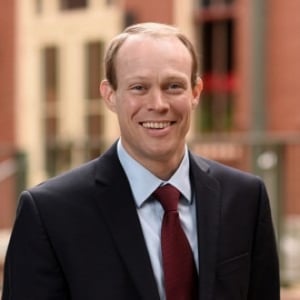
Professor of Law, St. Mary's University Law School
Adam MacLeod is a Professor at St. Mary's University School of Law. He has been a visiting fellow in the James Madison Program in American Ideals and Institutions at Princeton University, a fellow of the Center for Religion, Culture and Democracy, and a Senior Scholar and Thomas Edison Fellow in the Center for Intellectual Property x Innovation Policy at George Mason University. He is co-editor of Christie & Martin's Jurisprudence (4th ed. West 2020) and author of Property and Practical Reason (Cambridge University Press 2015). He has written two other books, dozens of scholarly articles, and more than one hundred essays and book reviews.
Professor MacLeod received his B.A., summa cum laude, from Gordon College and his J.D., magna cum laude, from the University of Notre Dame Law School. After law school, he served as law clerk to Chief Justice Christopher Armstrong and Justice Benjamin Kaplan of the Massachusetts Appeals Court and to Chief Judge Lewis Babcock of the United States District Court for the District of Colorado. He practiced law in the Boston area and has held appointment as a special Deputy Attorney General of Alabama and a lecturer in the Alabama Judicial College. He also serves as an Operational Auxiliarist in the U.S. Coast Guard, advising and providing operational training to Auxiliary and active-duty personnel.
Clerk, U.S. Court of Appeals for the Third Circuit

7 Minute Presentations of Works in Progress Panel 1-B
Washington, DCCourthouse Steps Preview: Moore v. United States
James W. Ely, Calvin H. Johnson, Elizabeth Slattery
On December 5, 2023, the Supreme Court will hear oral argument in Moore v. United...
Courthouse Steps Preview: Moore v. United States
James W. Ely, Calvin H. Johnson, Elizabeth Slattery
On December 5, 2023, the Supreme Court will hear oral argument in Moore v. United...
Courthouse Steps Preview: Moore v. United States
The Equal Protection Project: Challenging DEI Discrimination
Montgomery Federalist Society
Montgomery, ALDelaware v. Pennsylvania and Wisconsin - Post-Decision SCOTUScast
Adam MacLeod
On February 28, 2023, the Supreme Court issued its ruling in Delaware v. Pennsylvania and...
Topics
Perlot v. Green: Free Expression in Law School
One of the most contested arenas for free expression today continues to be . . ....
Fireside Law Chat: The Judge and The Professor
Chicago, ILTopics
Academic Freedom and Public Employee Speech in Florida
The University of Florida sparked an ongoing First Amendment controversy by trying to prevent three...
An Academic Freedom Exception to Government Control of Employee Speech
Nick Cordova
Public employee speech cases often arise as Section 1983 actions in which a public employee...