
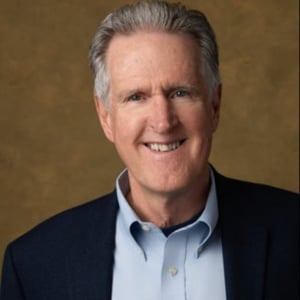
Senior Legal Counsel, Pacific Legal Foundation
Before becoming an attorney, James had been a productive member of society working as an exploration geologist in the late 1970s throughout the southwestern United States. However, after several years of dealing with irrational government bureaucrats and environmental policies untethered from reality, James decided that what the world needs is more lawyers — if they are willing to fight for rationality in regulatory regimes, property rights, and liberty.
James attended the University of Arizona College of Law in Tucson, where he served as an editor for the Law Review and received a J.D. degree in 1983. He had previously received a Masters degree in geological sciences from Brown University and an undergraduate degree from Hamilton College in New York. James received the Professional Achievement Award from the University of Arizona Alumni Association in 2018.
James has worked with Pacific Legal Foundation since 1983, litigating cases from Alaska to Florida. He is a member of the Federalist Society’s Environmental Law and Property Rights Practice Group’s Executive Committee, a member of the American College of Real Estate Lawyers, and an honorary member of Owners Counsel of America, an organization comprised of eminent domain attorneys who represent property owners. The Owners Counsel awarded James its Crystal Eagle award in 2013. In 2022, James was awarded the Brigham-Kanner Property Rights Prize at the William & Mary College of Law. The prize is awarded annually to an individual whose work has advanced the cause of property rights and has contributed to the overall awareness of the important role property rights occupy in the broader scheme of individual liberty.
In 2001, James successfully argued a major property rights case, Palazzolo v. Rhode Island, before the United States Supreme Court, a case which affirmed that rights in regulated property do not disappear when land is bought and sold. He has written extensively on all aspects of property rights and environmental law and frequently speaks on these subjects throughout the nation.
When James is not suing the government he enjoys skiing faster than he should, bicycling, hiking, swimming, and spending quality time with his wife, family, and grandchild.
Mr. Burling’s book Nowhere to Live: The Hidden Story of America’s Housing Crisis is available now on Amazon.
James is a member of the bar only in the states of Alaska and California.
Senior Legal Counsel, Pacific Legal Foundation
Before becoming an attorney, James had been a productive member of society working as an exploration geologist in the late 1970s throughout the southwestern United States. However, after several years of dealing with irrational government bureaucrats and environmental policies untethered from reality, James decided that what the world needs is more lawyers — if they are willing to fight for rationality in regulatory regimes, property rights, and liberty.
James attended the University of Arizona College of Law in Tucson, where he served as an editor for the Law Review and received a J.D. degree in 1983. He had previously received a Masters degree in geological sciences from Brown University and an undergraduate degree from Hamilton College in New York. James received the Professional Achievement Award from the University of Arizona Alumni Association in 2018.
James has worked with Pacific Legal Foundation since 1983, litigating cases from Alaska to Florida. He is a member of the Federalist Society’s Environmental Law and Property Rights Practice Group’s Executive Committee, a member of the American College of Real Estate Lawyers, and an honorary member of Owners Counsel of America, an organization comprised of eminent domain attorneys who represent property owners. The Owners Counsel awarded James its Crystal Eagle award in 2013. In 2022, James was awarded the Brigham-Kanner Property Rights Prize at the William & Mary College of Law. The prize is awarded annually to an individual whose work has advanced the cause of property rights and has contributed to the overall awareness of the important role property rights occupy in the broader scheme of individual liberty.
In 2001, James successfully argued a major property rights case, Palazzolo v. Rhode Island, before the United States Supreme Court, a case which affirmed that rights in regulated property do not disappear when land is bought and sold. He has written extensively on all aspects of property rights and environmental law and frequently speaks on these subjects throughout the nation.
When James is not suing the government he enjoys skiing faster than he should, bicycling, hiking, swimming, and spending quality time with his wife, family, and grandchild.
Mr. Burling’s book Nowhere to Live: The Hidden Story of America’s Housing Crisis is available now on Amazon.
James is a member of the bar only in the states of Alaska and California.

Tazewell Taylor Professor of Law and William H. Cabell Research Professor, William & Mary Law School
Jonathan H. Adler joined the William & Mary law faculty as the Tazwell Taylor Professor of Law and William H. Cabell Research Professor in 2025. Prior to joining the faculty, he was the inaugural Johan Verheij Memorial Professor of Law and the founding Director of the Coleman P. Burke Center for Environmental Law at the Case Western Reserve University School of Law.
Professor Adler is the author or editor of seven books, including Climate Liberalism: Perspectives on Liberty, Property and Pollution (Palgrave, 2023), Marijuana Federalism: Uncle Sam and Mary Jane (Brookings Institution Press, 2020), Business and the Roberts Court (Oxford University Press, 2016) and Rebuilding the Ark: New Perspectives on Endangered Species Act Reform (AEI Press, 2011).
His articles have appeared in publications ranging from the Harvard Environmental Law Review and Yale Journal on Regulation to the Wall Street Journal, New York Times, and Washington Post. He has testified before Congress a dozen times, and his work has been cited in the U.S. Supreme Court. A 2024 study identified Professor Adler as the seventh most cited legal academic in administrative and environmental law from 2019 to 2023.
Professor Adler is a contributing editor to Civitas Outlook and a regular contributor to the popular legal blog, The Volokh Conspiracy. A regular commentator on constitutional and regulatory issues, he has appeared on numerous radio and television programs, ranging from the PBS Newshour and National Public Radio to the Fox News Channel and Entertainment Tonight.
Professor Adler is a senior fellow at the Property & Environment Research Center in Bozeman, Montana. In 2018, Professor Adler was elected to membership in the American Law Institute and helped co-found the organization Checks and Balances. In 2024, Professor Adler was appointed a public member of the Administrative Conference of the United States.
Professor Adler clerked for the Honorable David B. Sentelle on the U.S. Court of Appeals for the District of Columbia Circuit.
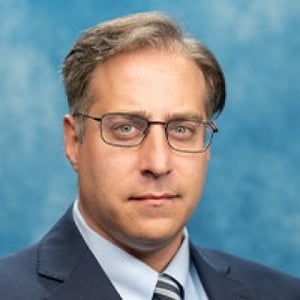
Interim Dean, Florida International University College of Law
Dan Epstein was Vice President at America First Legal and an Associate Professor of Law at St. Thomas University in Miami, Florida. He also advises individuals and small businesses in affirmative and defensive actions against government overreach. Previously, he advised startups on regulatory matters as Director at a venture capital firm. His federal service includes being a Special Assistant to and Senior Associate Counsel to the President and a counsel for the House of Representatives Committee on Oversight and Government Reform. Earlier in his career, Mr. Epstein founded and ran Cause of Action, where he represented clients in government investigations and litigated regulatory, constitutional, political, and public law matters.
He holds a Ph.D. from George Washington University in Political Economy, a J.D. from Emory University School of Law, and a B.A. from Kenyon College. He is active in the Palm Beach community as a member of the Fourth Court of Appeals Judicial Nominating Commission in Florida, a transition team member to Florida Attorney General James Uthmeier, and the Chairman and Trustee of Palm Beach State College.
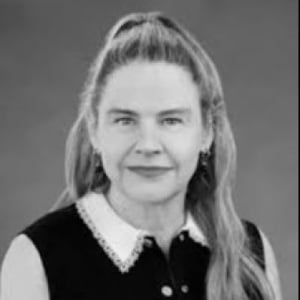
Ralph V. Whitworth Professor in Law, Georgetown University Law Center
Professor Nourse is one of the nation’s leading scholars of Congress, the separation of powers, and statutory interpretation. In addition to her scholarship, she has practiced as an attorney in the White House, the Department of Justice, the Senate, and in private practice. The story of her pioneering work on gender equality is told in Equal: Women Reshape American Law.
Her most recent book is “The Impeachments of Donald Trump: An Introduction to Constitutional Argument” (West 2021). In 2016, Harvard Press published her Misreading Law, Misreading Democracy, on the limits of textualism. She is one of the most-cited scholars on interpretation in the country and has recently co-authored Yale’s revised leading casebook, Statutes, Regulation & Interpretation (West 2024).
Professor Nourse has published widely on the power of the President and the separation of powers, Reclaiming the Constitutional Text from Originalism: The Case of Executive Power, 106 Calif. L. Rev. 1 (2018), and constitutional rights, In Reckless Hands (Norton 2008), the story of Skinner v. Oklahoma and American eugenics.
President Biden appointed Professor Nourse to serve as Vice-Chair of the United States Commission on Civil Rights in 2023, with her term expiring in 2029.
Professor Nourse previously served as Chief Counsel to then Vice President Biden under the Obama Administration. Prior to that role, she practiced as an appellate litigator in the Department of Justice and as Special Counsel to the Senate Judiciary Committee.
Professor Nourse has held chairs at Emory University and the University of Wisconsin. She has been a visiting professor at Yale, NYU, University of Maryland, and Northwestern.
She began her legal career in New York, clerking for legendary trial judge of the Southern District of New York, Edward Weinfeld, and practicing at Paul, Weiss, Rifkind Wharton & Garrison. She left private practice to serve as junior counsel to the Senate-Iran Contra Committee. After serving on the appellate staff of the Civil Division, she was hired as a legal expert for then Senator Joseph Biden.
Professor Nourse is the co-Founder of the Supreme Court Interpretation Lab, which uses big data to analyze trends in Supreme Court analyses. She formerly served as Executive Director of the Georgetown Law Center on Congressional Studies.
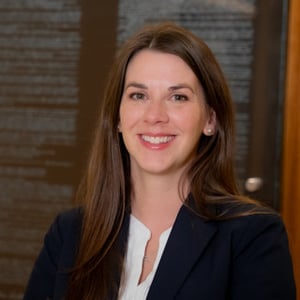
Vice President, Practice Groups, The Federalist Society
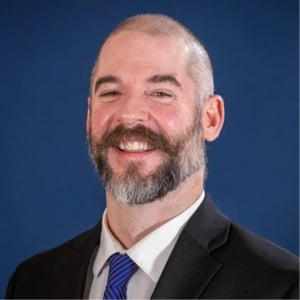
Deputy Director, Regulatory Studies Center, George Washington University
Will Yeatman is deputy director of the GW Regulatory Studies Center. A lawyer, he has spent almost two decades working on federal regulatory policy, with an emphasis on administrative law.
Yeatman has testified many times before Congress and state legislatures, and his scholarly work has appeared in such academic journals as Georgetown Law Journal, Administrative Law Review, and the (forthcoming) Catholic University Law Review. His popular writing has appeared in The Wall Street Journal, Foreign Policy, and Bloomberg.
Yeatman came to the RSC from the Pacific Legal Foundation. Previously, he had been at the Cato Institute’s Center for Constitutional Studies and the Competitive Enterprise Institute. From 2004 to 2006, he served as a Peace Corps volunteer in the Kyrgyz Republic.
Yeatman holds a BA in environmental sciences from the University of Virginia, an MA in international studies from the Denver University Graduate School of International Studies, and a JD from the Georgetown University Law Center. He is a member of the Washington, DC Bar.
Tazewell Taylor Professor of Law and William H. Cabell Research Professor, William & Mary Law School
Jonathan H. Adler joined the William & Mary law faculty as the Tazwell Taylor Professor of Law and William H. Cabell Research Professor in 2025. Prior to joining the faculty, he was the inaugural Johan Verheij Memorial Professor of Law and the founding Director of the Coleman P. Burke Center for Environmental Law at the Case Western Reserve University School of Law.
Professor Adler is the author or editor of seven books, including Climate Liberalism: Perspectives on Liberty, Property and Pollution (Palgrave, 2023), Marijuana Federalism: Uncle Sam and Mary Jane (Brookings Institution Press, 2020), Business and the Roberts Court (Oxford University Press, 2016) and Rebuilding the Ark: New Perspectives on Endangered Species Act Reform (AEI Press, 2011).
His articles have appeared in publications ranging from the Harvard Environmental Law Review and Yale Journal on Regulation to the Wall Street Journal, New York Times, and Washington Post. He has testified before Congress a dozen times, and his work has been cited in the U.S. Supreme Court. A 2024 study identified Professor Adler as the seventh most cited legal academic in administrative and environmental law from 2019 to 2023.
Professor Adler is a contributing editor to Civitas Outlook and a regular contributor to the popular legal blog, The Volokh Conspiracy. A regular commentator on constitutional and regulatory issues, he has appeared on numerous radio and television programs, ranging from the PBS Newshour and National Public Radio to the Fox News Channel and Entertainment Tonight.
Professor Adler is a senior fellow at the Property & Environment Research Center in Bozeman, Montana. In 2018, Professor Adler was elected to membership in the American Law Institute and helped co-found the organization Checks and Balances. In 2024, Professor Adler was appointed a public member of the Administrative Conference of the United States.
Professor Adler clerked for the Honorable David B. Sentelle on the U.S. Court of Appeals for the District of Columbia Circuit.
Interim Dean, Florida International University College of Law
Dan Epstein was Vice President at America First Legal and an Associate Professor of Law at St. Thomas University in Miami, Florida. He also advises individuals and small businesses in affirmative and defensive actions against government overreach. Previously, he advised startups on regulatory matters as Director at a venture capital firm. His federal service includes being a Special Assistant to and Senior Associate Counsel to the President and a counsel for the House of Representatives Committee on Oversight and Government Reform. Earlier in his career, Mr. Epstein founded and ran Cause of Action, where he represented clients in government investigations and litigated regulatory, constitutional, political, and public law matters.
He holds a Ph.D. from George Washington University in Political Economy, a J.D. from Emory University School of Law, and a B.A. from Kenyon College. He is active in the Palm Beach community as a member of the Fourth Court of Appeals Judicial Nominating Commission in Florida, a transition team member to Florida Attorney General James Uthmeier, and the Chairman and Trustee of Palm Beach State College.
Ralph V. Whitworth Professor in Law, Georgetown University Law Center
Professor Nourse is one of the nation’s leading scholars of Congress, the separation of powers, and statutory interpretation. In addition to her scholarship, she has practiced as an attorney in the White House, the Department of Justice, the Senate, and in private practice. The story of her pioneering work on gender equality is told in Equal: Women Reshape American Law.
Her most recent book is “The Impeachments of Donald Trump: An Introduction to Constitutional Argument” (West 2021). In 2016, Harvard Press published her Misreading Law, Misreading Democracy, on the limits of textualism. She is one of the most-cited scholars on interpretation in the country and has recently co-authored Yale’s revised leading casebook, Statutes, Regulation & Interpretation (West 2024).
Professor Nourse has published widely on the power of the President and the separation of powers, Reclaiming the Constitutional Text from Originalism: The Case of Executive Power, 106 Calif. L. Rev. 1 (2018), and constitutional rights, In Reckless Hands (Norton 2008), the story of Skinner v. Oklahoma and American eugenics.
President Biden appointed Professor Nourse to serve as Vice-Chair of the United States Commission on Civil Rights in 2023, with her term expiring in 2029.
Professor Nourse previously served as Chief Counsel to then Vice President Biden under the Obama Administration. Prior to that role, she practiced as an appellate litigator in the Department of Justice and as Special Counsel to the Senate Judiciary Committee.
Professor Nourse has held chairs at Emory University and the University of Wisconsin. She has been a visiting professor at Yale, NYU, University of Maryland, and Northwestern.
She began her legal career in New York, clerking for legendary trial judge of the Southern District of New York, Edward Weinfeld, and practicing at Paul, Weiss, Rifkind Wharton & Garrison. She left private practice to serve as junior counsel to the Senate-Iran Contra Committee. After serving on the appellate staff of the Civil Division, she was hired as a legal expert for then Senator Joseph Biden.
Professor Nourse is the co-Founder of the Supreme Court Interpretation Lab, which uses big data to analyze trends in Supreme Court analyses. She formerly served as Executive Director of the Georgetown Law Center on Congressional Studies.
Vice President, Practice Groups, The Federalist Society
Deputy Director, Regulatory Studies Center, George Washington University
Will Yeatman is deputy director of the GW Regulatory Studies Center. A lawyer, he has spent almost two decades working on federal regulatory policy, with an emphasis on administrative law.
Yeatman has testified many times before Congress and state legislatures, and his scholarly work has appeared in such academic journals as Georgetown Law Journal, Administrative Law Review, and the (forthcoming) Catholic University Law Review. His popular writing has appeared in The Wall Street Journal, Foreign Policy, and Bloomberg.
Yeatman came to the RSC from the Pacific Legal Foundation. Previously, he had been at the Cato Institute’s Center for Constitutional Studies and the Competitive Enterprise Institute. From 2004 to 2006, he served as a Peace Corps volunteer in the Kyrgyz Republic.
Yeatman holds a BA in environmental sciences from the University of Virginia, an MA in international studies from the Denver University Graduate School of International Studies, and a JD from the Georgetown University Law Center. He is a member of the Washington, DC Bar.

Associate, Wiley Rein LLP
Joel S. Nolette is an associate at Wiley Rein LLP, where he advocates on behalf of corporate and individual clients in a broad spectrum of complex litigation matters. In 2017, Joel graduated cum laude from the Georgetown University Law Center, where he served as the Editor in Chief of Volume 15 of the Georgetown Journal of Law and Public Policy. From 2019 to 2021, Joel clerked for the Honorable Raymond W. Gruender of the U.S. Court of Appeals for the Eighth Circuit; and from 2021 to 2022, he clerked for the Honorable Timothy J. Kelly of the U.S. District Court for the District of Columbia. Before attending law school, Joel graduated summa cum laude from Gordon College in Wenham, MA, with his Bachelor of Arts in Biblical Studies and worked as a letter carrier with the U.S. Postal Service.
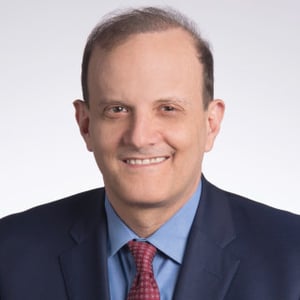
Partner, Duane Morris LLP; Managing Principal, Duane Morris Institute
Jonathan A. Segal is a partner at Duane Morris LLP in the Employment, Labor, Benefits and Immigration Practice Group. He is also the managing principal of the Duane Morris Institute. The Duane Morris Institute provides training for human resource professionals, in-house counsel, benefits administrators and managers at Duane Morris, at client sites and by way of webinar on myriad employment, labor, benefits and immigration matters.
Previously a litigator, Jonathan’s practice now focuses almost entirely on helping employers meet their business objectives or missions by minimizing legal risk, maximizing compliance and focusing on relationship with business objectives or mission and legal requirements or restrictions.
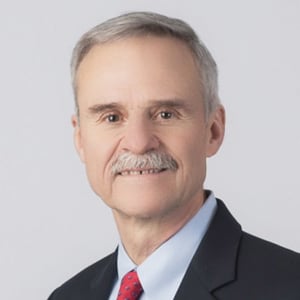
Partner & Deputy General Counsel, Wiley Rein LLP
Rick is a trial lawyer and appellate advocate. As an Assistant U.S. Attorney for the Southern District of New York, Rick learned to love nothing so much as going to trial, unless it is crafting briefs and presenting oral argument in an important appeal. Assistants in that office were fortunate to be able to do both.
Rick represents lawyers and other professionals in malpractice claims, defends insurers in coverage and “bad faith” litigation, and represents clients in commercial litigation. He also represents lawyers in disciplinary proceedings, provides legal ethics advice to law firms, has served as an expert witness on legal ethics and insurance coverage, and is Deputy General Counsel at Wiley.
Rick recently completed a three-year term as Chair of the American Bar Association Standing Committee on Lawyers Professional Liability and now serves as a Special Advisor to the Committee. During his tenure as Chair of the Standing Committee, Rick also served as a member of the Coordinating Council of the ABA Center for Professional Responsibility. Previously, Rick served a three-year term as a member of the Standing Committee. He speaks regularly on professional liability and insurance coverage topics.
Rick has acted as lead counsel for trials in the District of Columbia, Florida, Maryland, New York, Texas, and Virginia, as well as for arbitration hearings. On the appellate side, Rick has presented oral argument in the Supreme Court of the United States; 10 of the federal courts of appeals; the Supreme Courts of Connecticut, Delaware, Maryland, North Carolina, and Ohio; and state intermediate appellate courts in California, Florida, Maryland, New York, and Texas. His strong record of success includes winning his case in the United States Supreme Court and all five state Supreme Court cases.
Beginning with the Marc Rich cases while he was an AUSA (for those who can remember that far back), Rick has handled many high-profile representations, including dealing with the press as appropriate. Those matters include conducting an internal investigation for a U.S. Senator and representing the Senator in connection with a grand jury investigation, representing high-level White House officials in connection with criminal and congressional investigations arising from the Whitewater and Monica Lewinsky investigations, and representing Prof. Alan Dershowitz in connection with a defamation case in Florida.
Rick is an Adjunct Professor at the University of North Carolina School of Law, where he is the co-director of the Supreme Court Program, which operates as a clinic in which students assist in preparing submissions to the United States Supreme Court. From 2003 to 2017, Rick was an Adjunct Instructor in Trial Advocacy at the University of Virginia School of Law.
Deputy Director, Regulatory Studies Center, George Washington University
Will Yeatman is deputy director of the GW Regulatory Studies Center. A lawyer, he has spent almost two decades working on federal regulatory policy, with an emphasis on administrative law.
Yeatman has testified many times before Congress and state legislatures, and his scholarly work has appeared in such academic journals as Georgetown Law Journal, Administrative Law Review, and the (forthcoming) Catholic University Law Review. His popular writing has appeared in The Wall Street Journal, Foreign Policy, and Bloomberg.
Yeatman came to the RSC from the Pacific Legal Foundation. Previously, he had been at the Cato Institute’s Center for Constitutional Studies and the Competitive Enterprise Institute. From 2004 to 2006, he served as a Peace Corps volunteer in the Kyrgyz Republic.
Yeatman holds a BA in environmental sciences from the University of Virginia, an MA in international studies from the Denver University Graduate School of International Studies, and a JD from the Georgetown University Law Center. He is a member of the Washington, DC Bar.
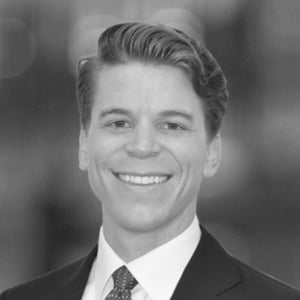
Chief Civil Counsel, Senate Judiciary Committee
Austin Rogers serves as Chief Counsel for the Senate Judiciary Committee, covering the civil portfolio for the Chairman. He obtained dual graduate degrees in Law and Theology from Duke University (summa cum laude), where he served on the Duke Law Journal and Harvard Journal of Law & Public Policy. After law school, he clerked for Chief Judge Steven D. Merryday in the Middle District of Florida. Following his clerkship, he practiced law at White & Case, specializing in commercial and appellate litigation. Prior to serving as Chief Civil Counsel for the Senate Judiciary Committee, he served as Senior Counsel of Oversight and Investigations for the Senate Judiciary Committee.
Austin obtained undergraduate degrees (summa cum laude) in International Business and Theology from Southeastern University and Wheaton College, respectively, and played college soccer at both schools.
He has published First Amendment scholarship in the Duke Law Journal and the Marquette Law Review, and he has a forthcoming article that will be published in the Florida Law Review. He is a member of the District of Columbia Bar, the Republican National Lawyers Association, and the Federalist Society, where he serves in a volunteer capacity. Austin is actively involved in his church and serves on its worship team.
Associate, Wiley Rein LLP
Joel S. Nolette is an associate at Wiley Rein LLP, where he advocates on behalf of corporate and individual clients in a broad spectrum of complex litigation matters. In 2017, Joel graduated cum laude from the Georgetown University Law Center, where he served as the Editor in Chief of Volume 15 of the Georgetown Journal of Law and Public Policy. From 2019 to 2021, Joel clerked for the Honorable Raymond W. Gruender of the U.S. Court of Appeals for the Eighth Circuit; and from 2021 to 2022, he clerked for the Honorable Timothy J. Kelly of the U.S. District Court for the District of Columbia. Before attending law school, Joel graduated summa cum laude from Gordon College in Wenham, MA, with his Bachelor of Arts in Biblical Studies and worked as a letter carrier with the U.S. Postal Service.
Partner, Duane Morris LLP; Managing Principal, Duane Morris Institute
Jonathan A. Segal is a partner at Duane Morris LLP in the Employment, Labor, Benefits and Immigration Practice Group. He is also the managing principal of the Duane Morris Institute. The Duane Morris Institute provides training for human resource professionals, in-house counsel, benefits administrators and managers at Duane Morris, at client sites and by way of webinar on myriad employment, labor, benefits and immigration matters.
Previously a litigator, Jonathan’s practice now focuses almost entirely on helping employers meet their business objectives or missions by minimizing legal risk, maximizing compliance and focusing on relationship with business objectives or mission and legal requirements or restrictions.
Partner & Deputy General Counsel, Wiley Rein LLP
Rick is a trial lawyer and appellate advocate. As an Assistant U.S. Attorney for the Southern District of New York, Rick learned to love nothing so much as going to trial, unless it is crafting briefs and presenting oral argument in an important appeal. Assistants in that office were fortunate to be able to do both.
Rick represents lawyers and other professionals in malpractice claims, defends insurers in coverage and “bad faith” litigation, and represents clients in commercial litigation. He also represents lawyers in disciplinary proceedings, provides legal ethics advice to law firms, has served as an expert witness on legal ethics and insurance coverage, and is Deputy General Counsel at Wiley.
Rick recently completed a three-year term as Chair of the American Bar Association Standing Committee on Lawyers Professional Liability and now serves as a Special Advisor to the Committee. During his tenure as Chair of the Standing Committee, Rick also served as a member of the Coordinating Council of the ABA Center for Professional Responsibility. Previously, Rick served a three-year term as a member of the Standing Committee. He speaks regularly on professional liability and insurance coverage topics.
Rick has acted as lead counsel for trials in the District of Columbia, Florida, Maryland, New York, Texas, and Virginia, as well as for arbitration hearings. On the appellate side, Rick has presented oral argument in the Supreme Court of the United States; 10 of the federal courts of appeals; the Supreme Courts of Connecticut, Delaware, Maryland, North Carolina, and Ohio; and state intermediate appellate courts in California, Florida, Maryland, New York, and Texas. His strong record of success includes winning his case in the United States Supreme Court and all five state Supreme Court cases.
Beginning with the Marc Rich cases while he was an AUSA (for those who can remember that far back), Rick has handled many high-profile representations, including dealing with the press as appropriate. Those matters include conducting an internal investigation for a U.S. Senator and representing the Senator in connection with a grand jury investigation, representing high-level White House officials in connection with criminal and congressional investigations arising from the Whitewater and Monica Lewinsky investigations, and representing Prof. Alan Dershowitz in connection with a defamation case in Florida.
Rick is an Adjunct Professor at the University of North Carolina School of Law, where he is the co-director of the Supreme Court Program, which operates as a clinic in which students assist in preparing submissions to the United States Supreme Court. From 2003 to 2017, Rick was an Adjunct Instructor in Trial Advocacy at the University of Virginia School of Law.
Deputy Director, Regulatory Studies Center, George Washington University
Will Yeatman is deputy director of the GW Regulatory Studies Center. A lawyer, he has spent almost two decades working on federal regulatory policy, with an emphasis on administrative law.
Yeatman has testified many times before Congress and state legislatures, and his scholarly work has appeared in such academic journals as Georgetown Law Journal, Administrative Law Review, and the (forthcoming) Catholic University Law Review. His popular writing has appeared in The Wall Street Journal, Foreign Policy, and Bloomberg.
Yeatman came to the RSC from the Pacific Legal Foundation. Previously, he had been at the Cato Institute’s Center for Constitutional Studies and the Competitive Enterprise Institute. From 2004 to 2006, he served as a Peace Corps volunteer in the Kyrgyz Republic.
Yeatman holds a BA in environmental sciences from the University of Virginia, an MA in international studies from the Denver University Graduate School of International Studies, and a JD from the Georgetown University Law Center. He is a member of the Washington, DC Bar.
Chief Civil Counsel, Senate Judiciary Committee
Austin Rogers serves as Chief Counsel for the Senate Judiciary Committee, covering the civil portfolio for the Chairman. He obtained dual graduate degrees in Law and Theology from Duke University (summa cum laude), where he served on the Duke Law Journal and Harvard Journal of Law & Public Policy. After law school, he clerked for Chief Judge Steven D. Merryday in the Middle District of Florida. Following his clerkship, he practiced law at White & Case, specializing in commercial and appellate litigation. Prior to serving as Chief Civil Counsel for the Senate Judiciary Committee, he served as Senior Counsel of Oversight and Investigations for the Senate Judiciary Committee.
Austin obtained undergraduate degrees (summa cum laude) in International Business and Theology from Southeastern University and Wheaton College, respectively, and played college soccer at both schools.
He has published First Amendment scholarship in the Duke Law Journal and the Marquette Law Review, and he has a forthcoming article that will be published in the Florida Law Review. He is a member of the District of Columbia Bar, the Republican National Lawyers Association, and the Federalist Society, where he serves in a volunteer capacity. Austin is actively involved in his church and serves on its worship team.
Senior Legal Counsel, Pacific Legal Foundation
Before becoming an attorney, James had been a productive member of society working as an exploration geologist in the late 1970s throughout the southwestern United States. However, after several years of dealing with irrational government bureaucrats and environmental policies untethered from reality, James decided that what the world needs is more lawyers — if they are willing to fight for rationality in regulatory regimes, property rights, and liberty.
James attended the University of Arizona College of Law in Tucson, where he served as an editor for the Law Review and received a J.D. degree in 1983. He had previously received a Masters degree in geological sciences from Brown University and an undergraduate degree from Hamilton College in New York. James received the Professional Achievement Award from the University of Arizona Alumni Association in 2018.
James has worked with Pacific Legal Foundation since 1983, litigating cases from Alaska to Florida. He is a member of the Federalist Society’s Environmental Law and Property Rights Practice Group’s Executive Committee, a member of the American College of Real Estate Lawyers, and an honorary member of Owners Counsel of America, an organization comprised of eminent domain attorneys who represent property owners. The Owners Counsel awarded James its Crystal Eagle award in 2013. In 2022, James was awarded the Brigham-Kanner Property Rights Prize at the William & Mary College of Law. The prize is awarded annually to an individual whose work has advanced the cause of property rights and has contributed to the overall awareness of the important role property rights occupy in the broader scheme of individual liberty.
In 2001, James successfully argued a major property rights case, Palazzolo v. Rhode Island, before the United States Supreme Court, a case which affirmed that rights in regulated property do not disappear when land is bought and sold. He has written extensively on all aspects of property rights and environmental law and frequently speaks on these subjects throughout the nation.
When James is not suing the government he enjoys skiing faster than he should, bicycling, hiking, swimming, and spending quality time with his wife, family, and grandchild.
Mr. Burling’s book Nowhere to Live: The Hidden Story of America’s Housing Crisis is available now on Amazon.
James is a member of the bar only in the states of Alaska and California.
Tazewell Taylor Professor of Law and William H. Cabell Research Professor, William & Mary Law School
Jonathan H. Adler joined the William & Mary law faculty as the Tazwell Taylor Professor of Law and William H. Cabell Research Professor in 2025. Prior to joining the faculty, he was the inaugural Johan Verheij Memorial Professor of Law and the founding Director of the Coleman P. Burke Center for Environmental Law at the Case Western Reserve University School of Law.
Professor Adler is the author or editor of seven books, including Climate Liberalism: Perspectives on Liberty, Property and Pollution (Palgrave, 2023), Marijuana Federalism: Uncle Sam and Mary Jane (Brookings Institution Press, 2020), Business and the Roberts Court (Oxford University Press, 2016) and Rebuilding the Ark: New Perspectives on Endangered Species Act Reform (AEI Press, 2011).
His articles have appeared in publications ranging from the Harvard Environmental Law Review and Yale Journal on Regulation to the Wall Street Journal, New York Times, and Washington Post. He has testified before Congress a dozen times, and his work has been cited in the U.S. Supreme Court. A 2024 study identified Professor Adler as the seventh most cited legal academic in administrative and environmental law from 2019 to 2023.
Professor Adler is a contributing editor to Civitas Outlook and a regular contributor to the popular legal blog, The Volokh Conspiracy. A regular commentator on constitutional and regulatory issues, he has appeared on numerous radio and television programs, ranging from the PBS Newshour and National Public Radio to the Fox News Channel and Entertainment Tonight.
Professor Adler is a senior fellow at the Property & Environment Research Center in Bozeman, Montana. In 2018, Professor Adler was elected to membership in the American Law Institute and helped co-found the organization Checks and Balances. In 2024, Professor Adler was appointed a public member of the Administrative Conference of the United States.
Professor Adler clerked for the Honorable David B. Sentelle on the U.S. Court of Appeals for the District of Columbia Circuit.
Interim Dean, Florida International University College of Law
Dan Epstein was Vice President at America First Legal and an Associate Professor of Law at St. Thomas University in Miami, Florida. He also advises individuals and small businesses in affirmative and defensive actions against government overreach. Previously, he advised startups on regulatory matters as Director at a venture capital firm. His federal service includes being a Special Assistant to and Senior Associate Counsel to the President and a counsel for the House of Representatives Committee on Oversight and Government Reform. Earlier in his career, Mr. Epstein founded and ran Cause of Action, where he represented clients in government investigations and litigated regulatory, constitutional, political, and public law matters.
He holds a Ph.D. from George Washington University in Political Economy, a J.D. from Emory University School of Law, and a B.A. from Kenyon College. He is active in the Palm Beach community as a member of the Fourth Court of Appeals Judicial Nominating Commission in Florida, a transition team member to Florida Attorney General James Uthmeier, and the Chairman and Trustee of Palm Beach State College.
Ralph V. Whitworth Professor in Law, Georgetown University Law Center
Professor Nourse is one of the nation’s leading scholars of Congress, the separation of powers, and statutory interpretation. In addition to her scholarship, she has practiced as an attorney in the White House, the Department of Justice, the Senate, and in private practice. The story of her pioneering work on gender equality is told in Equal: Women Reshape American Law.
Her most recent book is “The Impeachments of Donald Trump: An Introduction to Constitutional Argument” (West 2021). In 2016, Harvard Press published her Misreading Law, Misreading Democracy, on the limits of textualism. She is one of the most-cited scholars on interpretation in the country and has recently co-authored Yale’s revised leading casebook, Statutes, Regulation & Interpretation (West 2024).
Professor Nourse has published widely on the power of the President and the separation of powers, Reclaiming the Constitutional Text from Originalism: The Case of Executive Power, 106 Calif. L. Rev. 1 (2018), and constitutional rights, In Reckless Hands (Norton 2008), the story of Skinner v. Oklahoma and American eugenics.
President Biden appointed Professor Nourse to serve as Vice-Chair of the United States Commission on Civil Rights in 2023, with her term expiring in 2029.
Professor Nourse previously served as Chief Counsel to then Vice President Biden under the Obama Administration. Prior to that role, she practiced as an appellate litigator in the Department of Justice and as Special Counsel to the Senate Judiciary Committee.
Professor Nourse has held chairs at Emory University and the University of Wisconsin. She has been a visiting professor at Yale, NYU, University of Maryland, and Northwestern.
She began her legal career in New York, clerking for legendary trial judge of the Southern District of New York, Edward Weinfeld, and practicing at Paul, Weiss, Rifkind Wharton & Garrison. She left private practice to serve as junior counsel to the Senate-Iran Contra Committee. After serving on the appellate staff of the Civil Division, she was hired as a legal expert for then Senator Joseph Biden.
Professor Nourse is the co-Founder of the Supreme Court Interpretation Lab, which uses big data to analyze trends in Supreme Court analyses. She formerly served as Executive Director of the Georgetown Law Center on Congressional Studies.
Vice President, Practice Groups, The Federalist Society
Deputy Director, Regulatory Studies Center, George Washington University
Will Yeatman is deputy director of the GW Regulatory Studies Center. A lawyer, he has spent almost two decades working on federal regulatory policy, with an emphasis on administrative law.
Yeatman has testified many times before Congress and state legislatures, and his scholarly work has appeared in such academic journals as Georgetown Law Journal, Administrative Law Review, and the (forthcoming) Catholic University Law Review. His popular writing has appeared in The Wall Street Journal, Foreign Policy, and Bloomberg.
Yeatman came to the RSC from the Pacific Legal Foundation. Previously, he had been at the Cato Institute’s Center for Constitutional Studies and the Competitive Enterprise Institute. From 2004 to 2006, he served as a Peace Corps volunteer in the Kyrgyz Republic.
Yeatman holds a BA in environmental sciences from the University of Virginia, an MA in international studies from the Denver University Graduate School of International Studies, and a JD from the Georgetown University Law Center. He is a member of the Washington, DC Bar.

Laurence A. Tisch Professor of Law and Director, Classical Liberal Institute, New York University School of Law; Director, Classical Liberal Institute, Civitas Institute University of Texas at Austin
Richard A. Epstein is the inaugural Laurence A. Tisch Professor of Law at NYU School of Law. Prior to his joining the faculty, he was a visiting law professor at NYU from 2007 through 2009. He served as the Peter and Kirstin Bedford Senior Fellow at the Hoover Institution from 2000 to 2024. Since 2024 to the present he is a senior lecturer at the Civitas Institute at the University of Texas—Austin. Epstein is also the James Parker Hall Distinguished Service Professor of Law Emeritus and a senior lecturer at the University of Chicago. His initial law school appointment was at the University of Southern California from 1968 to 1972. Epstein received an LL.D., h.c. from the University of Ghent, 2003. He has been a member of the American Academy of Arts and Sciences since 1985 and was a Senior Fellow of the Center for Clinical Medical Ethics at the University of Chicago Division of Biological Sciences, also from 1983. to 2022 He served as editor of the Journal of Legal Studies from 1981 to 1991, and of the Journal of Law and Economics from 1991-2001. From 2001 to 2010 he was a director of the John M. Olin Program in Law and Economics at the University of Chicago.
His newest book, The Myth of Birthright Citizenship: What the Fourteenth Amendment Really Says was published in 2026 (Encounter Books). Prior to that he has published many books including, The Dubious Morality of the Modern Administrative State (Roman & Littlefield 2020).Earlier he published th Classical Liberal Constitution: The Uncertain Quest for Limited Government (Harvard 2014) iHis previous books include Design for Liberty: Private Property, Public Administration and the Rule of Law (Harvard 2011); The Case Against the Employee Free Choice Act (Hoover 2009); Supreme Neglect: How to Revive the Constitutional Protection of Property Rights (Oxford 2008); Antitrust Decrees in Theory and Practice: Why Less is More (AEI 2007); Overdose: How Excessive Government Regulation Stifles Pharmaceutical Innovation (Yale University Press. 2006); How Progressives Rewrote the Constitution (Cato 2006); Cases and Materials on Torts (Aspen Law & Business; 8th ed. 2004); Skepticism and Freedom: A Modern Case for Classical Liberalism (University of Chicago, 2003); Torts (Aspen Law & Business 1999); Principles for a Free Society: Reconciling Individual Liberty with the Common Good (Perseus Books, 1998): Mortal Peril: Our Inalienable Rights to Health Care (Addison-Wesley, 1997); Simple Rules for a Complex World (Harvard, 1995); Bargaining With the State (Princeton, 1993); Forbidden Grounds: The Case Against Employment Discrimination Laws (Harvard , 1992); Takings: Private Property and the Power of Eminent Domain (Harvard, 1985); and Modern Products Liability Law (Greenwood Press, 1980). He has also edited(with Catherine M. Sharkey) Cases and Materials on the Law of Torts (10th edition 2012).
Professor Epstein has written numerous articles on a wide range of legal and interdisciplinary subjects. He has taught courses in administrative law, antitrust law, civil procedure, communications, constitutional law, contracts, corporations, criminal law, employment discrimination law, environmental law, food and drug law health law and policy, legal history, labor law, property, real estate development and finance, jurisprudence, labor law; land use planning, patents, individual, estate and corporate taxation, Roman Law; torts, and workers' compensation.
Professor Epstein also writes a regular column for Civitas Institute, which also sponsors his podcast, The Libertarian with Charles C.W. Cooke, and Law Talk, with Cooke and John Yoo. He also does a podcast with John Batchelor. And appears regularly on the Freedom File with Judge Andrew Napolitano.
General Counsel, Pacific Legal Foundation

Courthouse Steps Decision: City and County of San Francisco v. Environmental Protection Agency
James S. Burling
City and County of San Francisco v. Environmental Protection Agency concerned whether the Clean Water...
Courthouse Steps Decision: City and County of San Francisco v. Environmental Protection Agency
James S. Burling
City and County of San Francisco v. Environmental Protection Agency concerned whether the Clean Water...
Courthouse Steps Decision: City and County of San Francisco v. Environmental Protection Agency
You’re Fired! Trump, Tenure Protection, and the Future of Humphrey’s Executor
Jonathan H. Adler, Daniel Z. Epstein, Victoria Nourse, Elizabeth Slattery, Will Yeatman
The recent flurry of firings in the federal government has sparked new questions surrounding the...
You’re Fired! Trump, Tenure Protection, and the Future of Humphrey’s Executor
Jonathan H. Adler, Daniel Z. Epstein, Victoria Nourse, Elizabeth Slattery, Will Yeatman
The recent flurry of firings in the federal government has sparked new questions surrounding the...
You’re Fired! Trump, Tenure Protection, and the Future of Humphrey’s Executor
Takings: Private Property and the Power of Eminent Domain
California-Berkeley Student Chapter
Berkeley, CATopics
Lofstad v. Raimondo: Government Accountability and Constitutional Fidelity
Commercial fishing is a tough way to make a living. The industry is highly competitive;...
A Seat at the Sitting - February 2025
Joel S. Nolette, Jonathan A. Segal, Richard A. Simpson, Will Yeatman, Austin Rogers
Each month, a panel of constitutional experts convenes to discuss the Court’s upcoming docket sitting...
A Seat at the Sitting - February 2025
Joel S. Nolette, Jonathan A. Segal, Richard A. Simpson, Will Yeatman, Austin Rogers
Each month, a panel of constitutional experts convenes to discuss the Court’s upcoming docket sitting...