
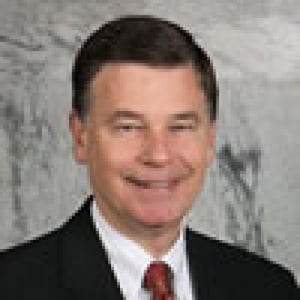
Partner, Stone Pigman Walther Wittmann LLC
Mr. Thomson concentrates his practice in white collar criminal defense, government investigations, and corporate compliance. He has tried over 50 criminal trials to verdict in federal and state courts, and has experience in appellate litigation. His practice also includes civil litigation and information security. Prior to joining Stone Pigman, Mr. Thomson had a 23 year career as a federal prosecutor with the U.S. Department of Justice. He served on special assignment with the National Security Agency, where he worked on matters involving information assurance and intelligence collection.
Prior to private practice, Mr. Thomson was recognized numerous times by government agencies, including a Special Commendation Award given by the U.S. Attorney General for completing the Justice Department's Leadership Excellence and Achievement Program; Special Commendation by FBI Director for outstanding performance for successful corruption prosecution after Hurricane Katrina; Special Award from the U.S. Postal Service for prosecution of corrupt employee; Special Award by New Orleans Police Department, ATF and U.S. Department of Justice for his contributions to Project Exile; and Special Awards for Outstanding Contributions to Drug Law Enforcement from the Drug Enforcement Administration.
Associate, Latham & Watkins
Jonathan Ellis is an associate in the Supreme Court & Appellate Practice in the Washington, D.C. office of Latham & Watkins. His practice focuses on appellate litigation, as well as strategic analysis and briefing in high-stakes district court litigation. Mr. Ellis’ experience includes drafting appellate briefs, dispositive motions, and other pleadings in federal and state courts and administrative agencies, as well as presenting argument in federal court.
Prior to joining Latham, Mr. Ellis served as a law clerk to Chief Justice John G. Roberts, Jr. of the United States Supreme Court and Judge A. Raymond Randolph of the United States Court of Appeals for the D.C. Circuit. He also served as a Bristow Fellow in the Office of the Solicitor General of the United States, where he worked on numerous Supreme Court cases and successfully briefed and argued an appeal in the United States Court of Appeals for the Ninth Circuit.
Senior Staff Attorney, ACLU Capital Punishment Project
Cassy Stubbs is a senior staff attorney with the ACLU Capital Punishment Project. Cassy joined the project in 2006 and since then has served as lead and associate counsel on behalf of death row inmates and defendants in trials and appeals throughout the South, including Alabama, Mississippi, Louisiana, South Carolina, North Carolina and Tennessee. Her clients have included Levon “Bo” Jones, a North Carolina death row inmate who was exonerated in 2008 when the state dismissed all charges against him, and Richard C. Taylor, a severely mentally ill man who was sentenced to death after a sham trial in Tennessee, but who won a new trial on appeal and was subsequently sentenced to life imprisonment.
Cassy has also worked with numerous organizations and ACLU affiliates to file amicus briefs in capital cases in state and federal courts around the country. She has written policy papers, editorials and blog posts on a wide range of capital issues, such as the persistence of racial disparities in capital punishment and the fundamental flaws of purported claims that the death penalty deters future murders.
Before joining the ACLU, Cassy worked as a New Mexico State public defender in Aztec, N.M. Previously, she litigated employment discrimination and wage and hour cases in state and federal court with Bet Tzedek Legal Services in Los Angeles, and with the New York Civil Liberties Union in New York City. She served as lead counsel in multiple influential employment cases, includingWet Seal v. Ochoa,In Re Metro FulfillmentandLochren v. Suffolk County.
Cassy is admitted to the bars of North Carolina, New York, New Mexico, and California. She received her B.S, with honors, from Brown University in 1996 and graduated magna cum laude from New York University School of Law in 2000. She served as a judicial clerk for Judge Harry Pregerson on the 9th Circuit Court of Appeals.
Former Adjunct Professor of Law; former Special Counsel to the President; former federal prosecutor, Georgetown Law (ret.)
Bill Otis is a former Adjunct Professor of Law at Georgetown University, a one-time federal prosecutor, and a former Special White House Counsel for President George H. W. Bush. After graduating from Stanford Law School, he started his career in the Criminal Division of the Justice Department, then became chief of appeals for the US Attorney's Office for the Eastern District of Virginia. In the 1980's he served on the Department's "Train the Trainer" team, which taught US Attorneys Offices across the county how to implement the then-new Sentencing Reform Act. He has held several posts in the federal government, including Special Assistant to the Secretary of Energy and Counselor to the head of the Drug Enforcement Administration, in addition to the White House post. He has testified before Congress on issues in criminal procedure, illegal drugs, the US Sentencing Commission, and the death penalty, and has given numerous media interviews on those and other subjects. He currently teaches a seminar at Georgetown Law titled "Conservatism in Law in America" with his wife, Federalist Society co-founder Lee Liberman Otis.

Executive Vice President, The Federalist Society
Dean Reuter is Executive Vice President at the Federalist Society for Law and Public Policy Studies. He has served in two federal government agency Offices of the Inspector General, as Counsel to the Inspector General and Deputy Inspector General, responsible for policing the use of federal funds granted and contracted through those agencies. As such, he helped conduct and oversee criminal investigations across the country. He is the principal author of the non-fiction book, The Hidden Nazi: The Untold Story of America's Deal with the Devil, and editor of Liberty’s Nemesis: The Unchecked Expansion of the State and Confronting Terror: 9/11 and the Future of American National Security. He was appointed by the President and served as Vice-Chairman of the Board of Directors of the Corporation for National and Community Service, and recently served as an appointee on the U.S. Commission on Presidential Scholars. He is a graduate of Hood College (BA with Honors) and the University of Maryland School of Law.

Anne Shea Ransdell and William Garland "Buck" Ransdell, Jr. Distinguished Professor of Law, University of North Carolina School of Law
Carissa Byrne Hessick joined the Carolina Law faculty in 2016. She serves as the Anne Shea Ransdell and William Garland “Buck” Ransdell, Jr. Distinguished Professor of Law and as the director of the Prosecutors and Politics Project. Her teaching and research interests include criminal law, the structure of the criminal justice system, criminal sentencing, and child pornography crimes. Hessick is the author of multiple law review articles, essays, and op eds on plea bargaining, the powers and selection of prosecutors, Sixth Amendment sentencing rights, and criminal statutes. Her work has appeared in the California Law Review, the Cornell Law Review, the L.A. Times, the UCLA Law Review, and the Virginia Law Review, among others. She founded the Prosecutors and Politics Project in 2018. And she currently serves as the Reporter for the ABA Criminal Justice Section’s Sentencing Standards Task Force.
Hessick attended Yale Law School, where she was an editor of the Yale Law Journal and winner of the Potter Stewart Prize for the Morris Tyler Moot Court of Appeals. After graduating from law school, she clerked for Judge Barbara S. Jones on the Southern District of New York and for Judge A. Raymond Randolph on the D.C. Circuit. She also worked as a litigation associate at Wachtell, Lipton, Rosen & Katz in New York City. Before joining the faculty at Carolina Law, Hessick taught on the faculties at Arizona State University’s Sandra Day O’Connor College of Law and the University of Utah’s S.J. Quinney College of Law. She also spent two years as a Climenko Fellow at Harvard Law School.
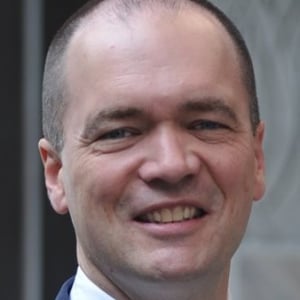
Professor of Law, High Point School of Law
Scott Gaylord directs High Point Law’s Appellate Litigation Clinic and serves as a Professor of Law, teaching Constitutional Law and related upper-level elective courses. The Appellate Clinic works with students to write and file briefs in significant court cases, including appeals before the United States Supreme Court.
Professor Gaylord is a prominent Constitutional Law scholar with an impressive background in both academia and legal practice. He has authored or co-authored 18 substantial law review articles, co-authored a Constitutional Law casebook, and has written more than 35 amicus briefs to the U.S. Supreme Court and federal circuit courts on prominent national cases involving religious liberty and free speech. He is a frequent speaker on constitutional law and First Amendment topics at law schools across the country and has regularly provided commentary on ongoing constitutional issues to national media outlets, including th eNew York Times, USA Today, the Diane Rehm Show, NPR, The National Constitution Center, and Bloomberg Law.
Professor Gaylord also started an appellate advocacy clinic at his former law school and currently serves on the North Carolina Chief Justice’s Commission on Professionalism, along with holding many other service and leadership roles. Prior to joining the academy in 2007, he practiced complex civil and commercial litigation with the Charlotte firm of Robinson Bradshaw & Hinson, and he clerked for Judge Edith H. Jones on the United States Court of Appeals for the Fifth Circuit.
Professor Gaylord earned his B.A. in philosophy and English, summa cum laude, from Colgate University, his Ph.D. in philosophy from the University of North Carolina at Chapel Hill, and his J.D. from Notre Dame Law School, where he also graduated summa cum laude.

Founding Partner, Boyden Gray & Associates
Ambassador C. Boyden Gray is the founding partner of Boyden Gray & Associates, a law and strategy firm in Washington, D.C., focused on constitutional and regulatory issues.
Mr. Gray worked in the White House for twelve years, first as counsel to the Vice President during the Reagan administration and then as White House Counsel to President George H.W. Bush. In the Reagan administration, he was Counsel to the Presidential Task Force on Regulatory Relief, for which he wrote the original Executive Order 12291 requiring cost-benefit analysis and White House review of regulations (later renumbered as current EO 12866). In the George H.W. Bush Administration, Mr. Gray was in charge of judicial selection and was also instrumental in the enactment of the Clean Air Act Amendments of 1990, the Energy Policy Act of 1992, and a cap-and-trade system for acid rain emissions. In 1993, he received the Presidential Citizens Medal. Under President George W. Bush, Mr. Gray was U.S. Ambassador to the European Union and U.S. Special Envoy to Europe for Eurasian Energy.
Mr. Gray practiced law for 25 years at the law firm of Wilmer, Cutler & Pickering and was chairman of the Administrative Law and Regulatory Practice Section of the American Bar Association from 2000 to 2002. Early in his career, Mr. Gray helped to develop the Business Roundtable and served as its first counsel. He is an adjunct professor at Antonin Scalia Law School and a former adjunct professor at NYU Law School (teaching energy and environmental law). Mr. Gray is on the Board of Directors of the Atlantic Council, the Federalist Society, Reason Foundation, and the Trust for the National Mall.
Mr. Gray earned his A.B. magna cum laude from Harvard, where he was an editor of the Crimson, and his J.D. with high honors from the University of North Carolina at Chapel Hill, where he was editor-in-chief of the Law Review. Mr. Gray served in the United States Marine Corps, and after law school, he clerked for Earl Warren, Chief Justice of the United States Supreme Court.

Senior Legal Fellow, Edwin Meese III Institute for the Rule of Law, Advancing American Freedom
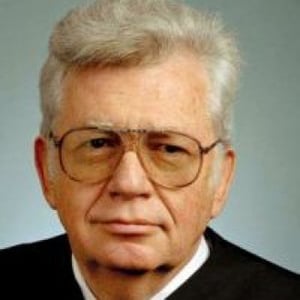
Judge, U.S. Court of Appeals, District of Columbia Circuit
Judge Sentelle was appointed United States Circuit Judge in October 1987, served as Chief Judge from February 11, 2008 until February 11, 2013, and took senior status on February 12, 2013. He is a 1968 graduate of the University of North Carolina Law School. Following law school, he practiced with the firm of Uzzell & DuMont until he became an Assistant U.S. Attorney in Charlotte, N.C. in 1970. From 1974 to 1977, he served as a North Carolina State District Judge but left the bench in 1977 to become a partner with the firm of Tucker, Hicks, Sentelle, Moon & Hodge. In 1985, Judge Sentelle joined the U.S. District Court, Western District of North Carolina, in Asheville, where he served until his appointment to the D.C. Circuit. Judge Sentelle was the Presiding Judge of the Special Division for the Purpose of Appointing Independent Counsels (1992-2006). He also served as the Chair of the U.S. Judicial Conference's Executive Committee (2010-2013). Judge Sentelle served for over 20 years as President of the Edward Bennett Williams Inn of the American Inns of Court.

A Comprehensive Strategy Targeting Recidivist Criminals with Continuous Real-Time GPS Monitoring: Is Reverse Engineering Crime Control Possible?
Peter M. Thomson
One of the most pressing criminal justice challenges facing the nation is reducing the incidence...
North Carolina Appellate Court Decides when Municipality May Be Held Liable in Public Park Case
Jonathan Y. Ellis
In June 2007, seventeen-year-old Eric Williams died tragically at a public park in Elizabeth City,...
State Court Docket Watch Fall 2011
In an effort to increase dialogue about state court jurisprudence, the Federalist Society presents State...
Justice for Sale? Debating Judicial Elections and "Merit-Based" Alternatives for the Selection of Judges in North Carolina
Charlotte, North CarolinaDodd-Frank: Costly, Complex…Constitutional? Assessing the Constitutionality of the Dodd-Frank Wall Street Reform and Consumer Protection Act of 2010
Charlotte, North CarolinaDeath Penalty Debate
Cassandra Stubbs, William G. Otis, Dean Reuter
Recently, an Ohio jury recommended a death sentence for Mr. Anthony Sowell, who lured 11...
Voter ID: Protecting Election Security
Raleigh, North CarolinaJ.D.B. v. North Carolina - Post-Decision SCOTUScast
Carissa Byrne Hessick
On June 16, 2011, the Supreme Court announced its decision in J.D.B. v. North Carolina....
Happy Hour with Chief Judge Robert J. Conrad
The Role of the Courts in National Security
Houston, Texas