

Senior Fellow and Director of Constitutional Studies, Manhattan Institute
Ilya Shapiro is a senior fellow and director of constitutional studies at the Manhattan Institute and a contributing editor of City Journal. Previously he was executive director and senior lecturer at the Georgetown Center for the Constitution, and before that a vice president of the Cato Institute.
Shapiro is the author of Lawless: The Miseducation of America’s Elites (2025) and Supreme Disorder: Judicial Nominations and the Politics of America’s Highest Court (2020), coauthor of Religious Liberties for Corporations? (2014), and editor of 11 volumes of the Cato Supreme Court Review (2008-18). He has contributed to a variety of academic, popular, and professional publications, including the Wall Street Journal, Harvard Journal of Law & Public Policy, Washington Post, Los Angeles Times, USA Today, National Review, and Newsweek. He also regularly provides commentary for various media outlets, writes the Shapiro’s Gavel newsletter on Substack, and once appeared on the Colbert Report.
Shapiro has testified many times before Congress and state legislatures and has filed more than 500 amicus curiae “friend of the court” briefs in the Supreme Court. He lectures regularly on behalf of the Federalist Society, is a member of the board of fellows of the Jewish Policy Center, was an inaugural Washington Fellow at the National Review Institute, and has been an adjunct law professor at the George Washington University and University of Mississippi. He is also the chairman of the board of advisers of the Mississippi Justice Institute, a barrister in the Edward Coke Appellate Inn of Court, and a former member of the Virginia Advisory Committee to the U.S. Commission on Civil Rights.
Earlier in his career, Shapiro was a special assistant/adviser to the Multi-National Force in Iraq on rule-of-law issues and practiced at Patton Boggs and Cleary Gottlieb. Before entering private practice, he clerked for Judge E. Grady Jolly of the U.S. Court of Appeals for the Fifth Circuit. He holds an AB from Princeton University, an MSc from the London School of Economics, and a JD from the University of Chicago Law School.
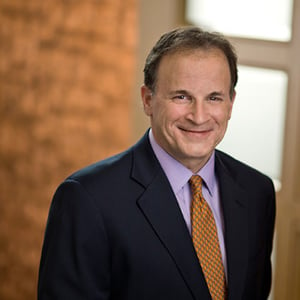
Partner, Boies Schiller Flexner
Jonathan Sherman is a general commercial litigator who combines 25 years of business litigation and First Amendment expertise to specialize in the strategic use of reputation, a unique approach to resolving information age and knowledge economy disputes.
Named since 2012 to its annual list of American’s “500 Leading Lawyers”, Lawdragon calls Jonathan a “nimble advocate with a sharp legal mind” who “can handle any task” and whose “passion for the law bubbles forth with astonishing ferocity.” A recent profile called him “Floyd Abrams meets David Boies with a side order of Hunter S. Thompson.”
Jonathan has tried cases, argued appeals, and resolved multi-party disputes in securities, financial institution, business defamation, intellectual property, unfair competition, antitrust and free speech matters. He has represented an eclectic mix of clients: from mining to media, finance to fashion, reinsurance to online gaming, political figures and cultural critics, among others. He is both a plaintiff’s lawyer and a traditional defense counsel.
At ease under heavy scrutiny since his earliest years of practice representing Court TV in the OJ Simpson criminal proceedings, Jonathan is now among the world’s leading advocates for public access to courts. The New York Times has twice published his op-ed pieces. A former member of the New York State Bar Association’s Media Law Committee, he has taught at Yale, Stanford and Fordham, and lectured in London, Brussels, Budapest and elsewhere.
Jonathan is a Trustee of DC’s acclaimed Shakespeare Theatre Company in Washington, DC, and has been listed in Who’s Who in America since 2000.
Attorney
Maya M. Noronha is a civil rights attorney.
As special counsel for external affairs at First Liberty Institute, Maya worked for the largest legal organization in the United States dedicated exclusively to defending religious liberty for all Americans.
Previously, Maya worked at the U.S. Department of Health and Human Services, as acting chief of staff of the Administration for Children and Families; principal advisor to the Commissioner of the Administration on Children, Youth, and Families; and senior advisor to the Director of the Office for Civil Rights and regulatory reform officer. She provided advice on federal civil rights laws that prohibit discrimination on the basis of conscience, religion, race, color, national origin, limited English proficiency, sex, disability, age, and health information in both health care and human services.
In the area of election law, Maya has advised officials elected to or candidates for President, U.S. Senate, U.S. House of Representatives, Governor, state legislature, city council, and magisterial district judge. She practiced law at Baker Hostetler LLP, where she was on the Political Law and Federal Advocacy Teams, advising clients on voting rights, redistricting, election integrity, campaign finance, financial reporting, ethics compliance, as well as conducting trial and appellate litigation. She also has delivered legislative testimony, planned continuing legal education conferences on election law, and published about voting rights and election administration.
In addition to addressing the Federalist Society, she has delivered remarks to the White House Initiative on Asian American Pacific Islanders, United States Senate, Women in Government Relations, Georgetown University, George Mason University School of Law, the Columbus School of Law at the Catholic University of America, and Arizona State University Cronkite School of Journalism.
Maya is in Phi Beta Kappa, a member of the Alpha Sigma Nu Jesuit Honor Society, and a John Carroll Scholar. Forbes Magazine recognized Maya as one of its 30 under 30 in Law and Public Policy.
She serves concurrently on the Federalist Society’s Free Speech & Election Law Executive Committee and the American Bar Association’s Standing Committee on Election Law.
Education
· J.D., Georgetown University Law Center, 2011
· A.B., Georgetown University, 2005
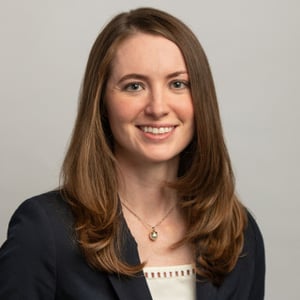
Renée Flaherty is an attorney with the Institute for Justice. She joined the Institute in 2013 and litigates cases to secure property rights, economic liberty and school choice in federal and state courts.
Renée successfully represented families in defense of North Carolina’s Opportunity Scholarship Program, which was upheld by the North Carolina Supreme Court in July 2015.
Renée’s views have been published in USA Today and The Wall Street Journal.
Prior to joining the Institute for Justice, Renée worked in private practice as a tax controversy associate at the Washington, D.C., office of Bingham McCutchen, LLP. She received her law degree from Harvard Law School in 2011, where she was an editor of the Harvard Negotiation Law Review and served on the Executive Board of the Federalist Society. Renée graduated from the University of Texas at Austin with a Bachelor of Arts in Philosophy and a Bachelor of Business Administration. Renée is originally from Odessa, Texas.
Renée Flaherty is a member of the D.C. bar.
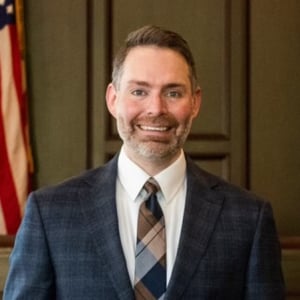
Judge, North Carolina Court of Appeals
Richard Dietz has served as a judge on the North Carolina Court of Appeals for eight years.
Judge Dietz comes from a mountain family of railroad and telephone workers. From an early age, his parents encouraged him to study hard and to get an education. He succeeded, becoming the first in his family to attend college. He went on to graduate first in his class from Wake Forest University School of Law and later earned a master’s degree from Duke University School of Law.
As a lawyer, Judge Dietz became one of the most accomplished appellate advocates in North Carolina. He has personally argued in the U.S. Supreme Court—something only a handful of lawyers in the State have ever done—and is a board-certified specialist in appellate practice. He handled cases in a wide range of constitutional areas including gun rights, religious liberty, and the free speech rights of students.
Before joining the Court of Appeals, Judge Dietz was a partner at Kilpatrick Townsend & Stockton LLP, a 650-lawyer international law firm with its roots in North Carolina. He also served as a law clerk for two highly regarded federal judges—Judge Emory Widener on the U.S. Court of Appeals for the Fourth Circuit and Judge Samuel Wilson on the U.S. District Court in Virginia—and served as a research fellow in international law at Kyushu University in Japan.
Judge Dietz joined the Court of Appeals in 2014 and is now the third-most senior judge on the 15-member court. He has distinguished himself on the Court by writing thoughtful opinions that are concise and easy for the public to read and understand.
Judge Dietz is happily married to Kelley Dietz, who is both the love of his life and his most trusted advisor. Kelley is a former Capitol Hill staffer and political appointee of President George W. Bush who now works in higher education.
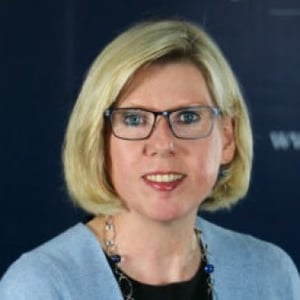
Vice President of Marketing and Communications, John Locke Foundation
As Vice President of Marketing and Communications, Donna shares the foundation’s message of freedom, free markets, and limited government across media platforms. She co-hosts Carolina Journal Radio, a weekly syndicated radio show produced by JLF and heard on more than a dozen stations across North Carolina. Donna came to JLF in 2003 after freelance writing for Carolina Journal and contributing to projects for the North Carolina Education Alliance. Her career has been spent in marketing, public relations, and broadcasting, and includes time at UNC-TV and The Arizona Republic, the daily newspaper serving metropolitan Phoenix. Donna is a graduate of Arizona State University and is married to Rick Martinez. She and Rick co-host “You Don’t Say,” a daily radio talk show heard on NewsRadio 680 WPTF in the Triangle.
Partner, Boies Schiller Flexner
Jonathan Sherman is a general commercial litigator who combines 25 years of business litigation and First Amendment expertise to specialize in the strategic use of reputation, a unique approach to resolving information age and knowledge economy disputes.
Named since 2012 to its annual list of American’s “500 Leading Lawyers”, Lawdragon calls Jonathan a “nimble advocate with a sharp legal mind” who “can handle any task” and whose “passion for the law bubbles forth with astonishing ferocity.” A recent profile called him “Floyd Abrams meets David Boies with a side order of Hunter S. Thompson.”
Jonathan has tried cases, argued appeals, and resolved multi-party disputes in securities, financial institution, business defamation, intellectual property, unfair competition, antitrust and free speech matters. He has represented an eclectic mix of clients: from mining to media, finance to fashion, reinsurance to online gaming, political figures and cultural critics, among others. He is both a plaintiff’s lawyer and a traditional defense counsel.
At ease under heavy scrutiny since his earliest years of practice representing Court TV in the OJ Simpson criminal proceedings, Jonathan is now among the world’s leading advocates for public access to courts. The New York Times has twice published his op-ed pieces. A former member of the New York State Bar Association’s Media Law Committee, he has taught at Yale, Stanford and Fordham, and lectured in London, Brussels, Budapest and elsewhere.
Jonathan is a Trustee of DC’s acclaimed Shakespeare Theatre Company in Washington, DC, and has been listed in Who’s Who in America since 2000.
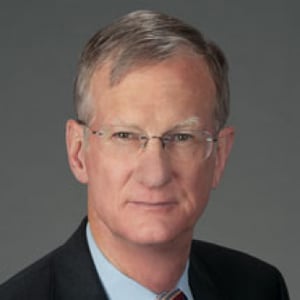
Legal Scholar and Solo Practitioner
Jack received his B.A. in History from the University of Virginia in 1977, graduating with Highest Distinction. After graduating Yale Law School in 1980, he served active duty in the U.S. Army's JAG Corps, rising to the rank of Major, where he represented the United States in more than 250 cases.
He practiced for a decade as an Associate for Bradley Arant in Birmingham, Alabama. He proudly served the State of Alabama in the Office of the Attorney General, both as Deputy and Assistant Attorney General, handling complex civil and criminal litigation cases for the people of Alabama. In 2000, he won the "Best Brief Award" from the National Association of Attorneys General for his brief in a case decided by the U.S. Supreme Court, James Alexander v. Martha Sandoval – a case he won. He was Special Assistant to the Inspector General for the Corporation for National and Community Service, Visiting Legal Fellow for the Center for Judicial and Legal Studies for the Heritage Foundation, Of Counsel at Strickland Brockington Lewis, a solo practitioner, and General Counsel for Indigo Energy.
Most recently, he "re-upped" for military service, volunteering his legal services to the Georgia State Defense Force where twice each month he provided legal services for National Guardsmen who were being deployed. He wore his military uniform for the last time in October 2024.
Jack Park passed away on March 16, 2026.
Attorney
Maya M. Noronha is a civil rights attorney.
As special counsel for external affairs at First Liberty Institute, Maya worked for the largest legal organization in the United States dedicated exclusively to defending religious liberty for all Americans.
Previously, Maya worked at the U.S. Department of Health and Human Services, as acting chief of staff of the Administration for Children and Families; principal advisor to the Commissioner of the Administration on Children, Youth, and Families; and senior advisor to the Director of the Office for Civil Rights and regulatory reform officer. She provided advice on federal civil rights laws that prohibit discrimination on the basis of conscience, religion, race, color, national origin, limited English proficiency, sex, disability, age, and health information in both health care and human services.
In the area of election law, Maya has advised officials elected to or candidates for President, U.S. Senate, U.S. House of Representatives, Governor, state legislature, city council, and magisterial district judge. She practiced law at Baker Hostetler LLP, where she was on the Political Law and Federal Advocacy Teams, advising clients on voting rights, redistricting, election integrity, campaign finance, financial reporting, ethics compliance, as well as conducting trial and appellate litigation. She also has delivered legislative testimony, planned continuing legal education conferences on election law, and published about voting rights and election administration.
In addition to addressing the Federalist Society, she has delivered remarks to the White House Initiative on Asian American Pacific Islanders, United States Senate, Women in Government Relations, Georgetown University, George Mason University School of Law, the Columbus School of Law at the Catholic University of America, and Arizona State University Cronkite School of Journalism.
Maya is in Phi Beta Kappa, a member of the Alpha Sigma Nu Jesuit Honor Society, and a John Carroll Scholar. Forbes Magazine recognized Maya as one of its 30 under 30 in Law and Public Policy.
She serves concurrently on the Federalist Society’s Free Speech & Election Law Executive Committee and the American Bar Association’s Standing Committee on Election Law.
Education
· J.D., Georgetown University Law Center, 2011
· A.B., Georgetown University, 2005

Courthouse Steps: Packingham v. North Carolina
TeleforumSupreme Court Preview: Packingham v. North Carolina - Podcast
Jonathan Sherman, Melissa Sherry
On February 27, the Supreme Court will hear oral argument in Packingham v. North Carolina....
Supreme Court Preview: Packingham v. North Carolina
TeleforumMcCrory v. Harris and Bethune-Hill v. Virginia State Board of Elections - Post-Argument SCOTUScast
John J. Park
On December 5, 2016, the Supreme Court heard oral argument in McCrory v. Harris and...
Redistricting Tested in the Supreme Court - Podcast
Maya Noronha
On December 5, the U.S. Supreme Court will hold oral arguments on two redistricting cases,...
Redistricting Tested in the Supreme Court
TeleforumEminent Domain
The Implications of North Carolina's Bill Banning Transgender Bathrooms
2016 North Carolina Judicial Candidate Forum
Raleigh, North CarolinaMisunderstanding of Statistics Confounds Analyses of Criminal Justice Issues in Baltimore and Voter ID Issues in Texas and North Carolina
I have written here before, most recently in “Things the President Doesn’t Know About Racial Disparities” (Aug....