
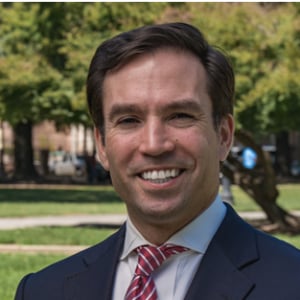
Partner, Worrell Sides LLP
Denton focuses his law practice in the area of estates and trusts, including estate administration and private wealth planning, as well as asset protection, business succession, general business, and corporate-related matters. His extensive business, financial, and legal background brings a unique perspective for his clients.
Prior to his current practice, Denton handled complex business litigation for a boutique Raleigh firm, ranging in matters from shareholder and fiduciary litigation, to contractual disputes, to state constitutional law issues. Denton clerked for Justice Paul M. Newby on the Supreme Court of North Carolina, primarily handling Business Court and complex civil appeals. His litigation experience provides valuable insight to his clients, especially in drafting and creating plans to avoid future litigation issues.
During law school, Denton had the privilege to serve as Editor-In-Chief of the Wake Forest Law Review, and was also selected by the faculty for the prestigious Dean’s Leadership Award. Prior to practicing law, he worked in wealth management and finance in Charlotte for over ten years, helping to establish and develop an independent registered investment advisory firm. As a Certified Financial Planner, he represented clients throughout the Southeast on various financial transactions, estate and trust matters, securities and investments, and corporate matters. He has extensive insurance experience and practiced as a Chartered Life Underwriter with the American College. He has represented families and their companies throughout the country.

Shareholder, Baker Do`nelson
John is a complex-problem solver and seasoned litigator who has successfully represented clients in a wide range of commercial litigation matters for almost 20 years. He frequently advocates for clients in cases involving contract and corporate ownership issues, real estate and eminent domain disputes, and claims of unfair competition or fraud. John regularly practices in federal and state trial and appellate courts throughout North Carolina, including the North Carolina Business Court. He has been admitted pro hac in a number of states in the South and the Midwest, and he handles binding arbitrations before the American Arbitration Association and other quasi-judicial bodies. In addition to his advocacy work, John serves as a trusted advisor for his clients, providing strategic, solution-oriented advice both before and after disputes arise.
John also maintains an active constitutional and political law practice. His clients have included multiple presidential, senatorial, and congressional campaigns; gubernatorial and other statewide candidates and campaigns; legislative, judicial, and local candidates; and national- and state-level political party committees. He has represented legislative officers in multiple states and defended state agencies' actions when challenged on constitutional or statutory grounds. John previously served as General Counsel for the North Carolina Republican Party and as both chairman and a member of the North Carolina State Board of Ethics and Election Enforcement.
John also counsels his clients on various employment and education law issues, including discrimination and wage and hour claims, as well as school choice and charter school issues.
After law school, John served as a law clerk for the Honorable Glen M. Williams, Senior U.S. District Judge for the Western District of Virginia. He has lived in Raleigh since completing his clerkship.
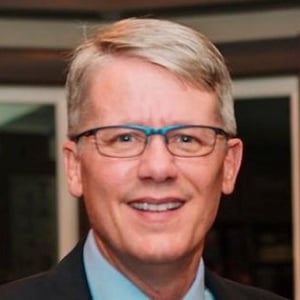
Professor, University of North Carolina at Wilmington
Mike Adams is a professor at the University of North Carolina at Wilmington (UNCW). He writes a weekly column for The Daily Wire and speaks frequently on First Amendment and pro-life issues. After graduating from Mississippi State University in 1993 with a PhD in Criminology, his research emphasized social psychological causes of crime and delinquency. He won the Faculty Member of the Year Award from the Office of the Dean of Students in 1998 and again in 2000. Later, after his involvement in a free speech controversy in the wake of the 9/11 attack his research emphasis shifted to threats to free speech, due process, and academic integrity in higher education. In 2006, he was denied a promotion full professor and filed suit in federal court alleging that UNCW retaliated against him for his criticism the diversity movement in general as well as his criticism of specific policies within his own university. The retaliation lawsuit set up a legal challenge concerning whether Garcetti v. Ceballos (2006), which denied First Amendment protection to public employees who were commenting about their “official duties,” applied to college professors. In Adams v. UNCW (2011), the 4th Circuit Court of Appeals unanimously ruled in his favor. The ruling set up a federal trial on the issue of retaliation, which he also won before a jury in federal district court in Greenville, North Carolina.

Professor of History, Brooklyn College and the CUNY Graduate Center
KC Johnson is professor of history at Brooklyn College and the CUNY Graduate Center, where he has taught since 1999. He has written 13 books on topics in U.S. political history, U.S. foreign policy, and legal and policy debates surrounding campus due process and civil liberties. His Duke lacrosse case blog, Durham-in-Wonderland, was named ABA Journal’s Best Ethics Blog in 2007; and he continues to blog on higher-ed matters at the blog Minding the Campus.
FIRE

Partner, Baker & Hostetler LLP
Richard Raile is a partner at Baker Hostetler, where he is a member of their Litigation team. He focuses his practice on appeals and major motions. He frequently plays the principal role in drafting briefs for clients and in delivering oral argument, including on dispositive motions, bench trials and appeals. He has represented parties and amici curiae at every level of the judiciary, from trial courts to merits litigation in the U.S. Supreme Court and state supreme courts.
His litigation experience runs the gamut of subject matters, including everything from commercial, civil rights, constitutional, campaign finance, voting rights, labor and bankruptcy law.
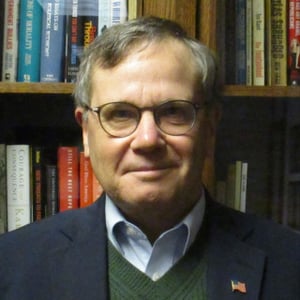
Senior Fellow in Constitutional Jurisprudence, Independence Institute
Professor Robert G. Natelson is a constitutional scholar and author.
Rob’s constitutional scholarship has been cited repeatedly by justices and parties at the U.S. Supreme Court—as well as by federal appeals courts, and at least 18 state supreme courts.
Rob’s research into the Constitution’s original meaning has carried him to libraries throughout the United States and in Britain, including four months at Oxford University. His books and articles span many different parts of the Constitution, including groundbreaking studies of the Necessary and Proper Clause, the Indian Commerce Clause, federalism, Founding-Era interpretation, regulation of elections, and the amendment process of Article V. He created the first-ever online bibliography for 18th century materials used in constitutional research. He is a contributing author to the Encyclopedia of the Supreme Court of the United States (on Magna Carta). He contributed eight essays to the third edition of the Heritage Guide to the Constitution: five on the amendment procedure and one each on the Guarantee Clause, the Postal Clause, and the Recess Appointments Clause.
U.S. Supreme Court justices have relied explicitly on Rob’s research in 41 citations in 13 separate cases.
Senior Fellow in Constitutional Jurisprudence, Independence Institute
Professor Robert G. Natelson is a constitutional scholar and author.
Rob’s constitutional scholarship has been cited repeatedly by justices and parties at the U.S. Supreme Court—as well as by federal appeals courts, and at least 18 state supreme courts.
Rob’s research into the Constitution’s original meaning has carried him to libraries throughout the United States and in Britain, including four months at Oxford University. His books and articles span many different parts of the Constitution, including groundbreaking studies of the Necessary and Proper Clause, the Indian Commerce Clause, federalism, Founding-Era interpretation, regulation of elections, and the amendment process of Article V. He created the first-ever online bibliography for 18th century materials used in constitutional research. He is a contributing author to the Encyclopedia of the Supreme Court of the United States (on Magna Carta). He contributed eight essays to the third edition of the Heritage Guide to the Constitution: five on the amendment procedure and one each on the Guarantee Clause, the Postal Clause, and the Recess Appointments Clause.
U.S. Supreme Court justices have relied explicitly on Rob’s research in 41 citations in 13 separate cases.
Senior Fellow in Constitutional Jurisprudence, Independence Institute
Professor Robert G. Natelson is a constitutional scholar and author.
Rob’s constitutional scholarship has been cited repeatedly by justices and parties at the U.S. Supreme Court—as well as by federal appeals courts, and at least 18 state supreme courts.
Rob’s research into the Constitution’s original meaning has carried him to libraries throughout the United States and in Britain, including four months at Oxford University. His books and articles span many different parts of the Constitution, including groundbreaking studies of the Necessary and Proper Clause, the Indian Commerce Clause, federalism, Founding-Era interpretation, regulation of elections, and the amendment process of Article V. He created the first-ever online bibliography for 18th century materials used in constitutional research. He is a contributing author to the Encyclopedia of the Supreme Court of the United States (on Magna Carta). He contributed eight essays to the third edition of the Heritage Guide to the Constitution: five on the amendment procedure and one each on the Guarantee Clause, the Postal Clause, and the Recess Appointments Clause.
U.S. Supreme Court justices have relied explicitly on Rob’s research in 41 citations in 13 separate cases.

Senior Counsel, Litigation, Defense of Freedom Institute
Don Daugherty is Senior Counsel, Litigation, at the Defense of Freedom Institute for Policy Studies. He previously served as a Senior Counsel at the Institute for Free Speech and the Wisconsin Institute for Law & Liberty. Before that, he was a partner at three of Wisconsin’s largest firms, with nearly 30 years of trial and appellate litigation experience. He has been consistently recognized as among the “Best Lawyers in America,” as well as Wisconsin’s “Super Lawyers.” He received his B.A. from the University of Virginia and his J.D. from Northwestern University Law School. After law school, he served as a clerk to the Honorable Roger J. Miner of the United States Court of Appeals for the Second Circuit.
Don is on the Board of Advisors for the Milwaukee Lawyers’ Chapter of the Federalist Society, and on the Executive Committee of the Federalist Society’s Litigation Practice Group.
General Counsel and Group Vice President, Ford Motor Company

Topics
Docket Watch: Cooper v. Berger et al.
“A frequent recurrence to fundamental principles is absolutely necessary to preserve the blessings of liberty.” ...
Cooper v. Berger
H. Denton Worrell, John E. Branch
In State ex rel. Cooper v. Berger, No. 52PA17-2 (N.C. Jan. 26, 2018), the Supreme Court...
The Student Right to Counsel
Mike S. Adams, KC Johnson, Adam Kissell
Note from the Editor: This article argues that a student right to counsel in quasi-criminal...
Partisan Gerrymandering and Party Rights: Why Gill v. Whitford Undermines All Future Partisan-Gerrymandering Claims
Richard B. Raile
Note from the Editor: This article discusses the Supreme Court’s opinion in Gill v. Whitford...
“Advice” in the Constitution’s Advice and Consent Clause: New Evidence from Contemporaneous Sources
Robert G. Natelson
Note from the Editor: This article discusses the proper interpretation of the Constitution’s Advice and...
Why Constitutional Lawyers Need to Know Latin
Robert G. Natelson
Note from the Editor: This article discusses the role of the Latin language and other...
It's Not About the Cake
Winston-Salem, NCThe Founders Interpret the Constitution: The Division of Federal and State Powers
Robert G. Natelson
Note from the Editor: This article surveys ratification-era statements by defenders of the proposed Constitution...
A View of D.C. from N.C. with David Leitch
Charlotte, NCThe Supreme Court in Crisis: A Good Read, But No Crisis
Donald A. Daugherty
A review of: American Justice 2017: The Supreme Court in Crisis, by Kimberly Robinson (University...