
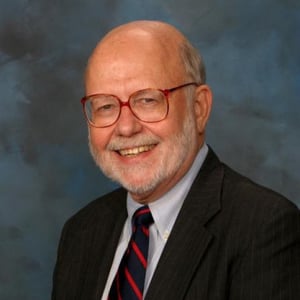
Principal, Ely & Company, Inc.
Bert Ely has specialized in deposit insurance and banking structure issues since 1981. In 1986, he became an early predictor of the S&L crisis and a taxpayer bailout of the FSLIC. In 1991, he was the first person to correctly predict the non-crisis in commercial banking; in 1992, he predicted an eventual taxpayer bailout of the Japanese banking system.
Bert continuously monitors conditions in the banking and S&L industries, monetary policy, and the growing federalization of credit risk. He has helped to draft legislation to enact the cross-guarantee concept for privatizing banking regulation and its related deposit insurance and systemic risks. He has testified on numerous occasions before congressional committees on banking issues and he often speaks on these matters to bankers and others.
Bert first established his consulting practice in 1972. Before that, he was the chief financial officer of a public company, a consultant with Touche, Ross & Company, and an auditor with Ernst & Ernst. He received his MBA from the Harvard Business School in 1968 and his Bachelor's degree in economics in 1964 from Case Western Reserve University.

General Counsel, Strive
Before joining Strive, Alexandra served as the Director of Regulatory Affairs at River Financial, where she handled all regulatory and government matters and served as product counsel. Prior to her time at River, Alexandra worked at the U.S. Department of Treasury, first in the General Counsel’s office and then as the youngest-ever Executive Secretary, where she worked directly with Secretary Mnuchin. Alexandra previously worked as an associate in the Washington, D.C. office of Akin Gump. She clerked for then-Justice Allison Eid on the Colorado Supreme Court and Judge Jennifer Elrod on the U.S. Court of Appeals for the Fifth Circuit. She holds a J.D. from the University of Texas and a B.A. from The King’s College.

Partner, Norton Rose Fulbright
Steven Lofchie advises financial institutions on regulatory issues and financial instruments.
In his regulatory practice, Steven counsels clients on securities laws, the CEA, and related bankruptcy issues. His transactional practice focuses on securities credit and derivative transactions.
Steven is the founder and manager of an acclaimed legal website (now renamed Fried Frank Regulatory Intelligence) that has been endorsed by former chairpersons of both the SEC and CFTC. Subscribers to the website include government regulators and major buy- and sell-side firms.
Chambers USA has ranked Steven in Band 1 for eight years running, for both financial services regulation and derivatives. He is the only lawyer in the country to be top-ranked in both of those categories. Steven was also part of the team that was named 2020 Regulatory Team of the Year by IFLR Americas. The Best Lawyers in America recognized Steven as “Lawyer of the Year” for Administrative/Regulatory Law in New York in 2017, and U.S. News and World Report ranked him as the best regulatory lawyer in New York for 2014. In 2012, a derivatives transaction developed by Steven was cited as the best international structured product of the year by International Financial Law Review.
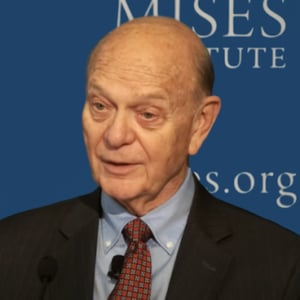
Senior Fellow, Mises Institute
Alex J. Pollock is a Senior Fellow with the Mises Institute, providing thought and policy leadership on financial issues and the study of financial systems. His work includes cycles of booms and busts, financial crises with their political responses, housing finance, government-sponsored enterprises, risk and uncertainty, central banking, banking and financial regulation, corporate governance, retirement finance, student loans, and the politics of finance.
He previously served as the Principal Deputy Director of the Office of Financial Research in the U.S. Treasury Department 2019-2021. He was a Distinguished Senior Fellow with the R Street Institute 2015-2019 and 2021, and a resident fellow at the American Enterprise Institute, 2004-2015. Among the many aspects of his AEI work, he developed the One Page Mortgage Form to give borrowers in clear form the key information they need in order to know what they are committing themselves to. He was President and CEO of the Federal Home Loan Bank of Chicago from 1991 to 2004. There he invented the Mortgage Partnership Finance program, which successfully created front-end mortgage credit risk sharing beginning in 1997. His decades of banking experience include being a Visiting Scholar at the Federal Reserve Bank of St. Louis, 1991.
Pollock was a director of the CME Group 2004-2019 and of Ascendium Education Group 1989-2019. He is a director and past-chairman of the Great Books Foundation and a past president of the International Union for Housing Finance.
He is the co-author of Surprised Again! - The COVID Crisis and the New Market Bubble (2022), and the author of Finance and Philosophy—Why We’re Always Surprised (2018) and Boom and Bust: Financial Cycles and Human Prosperity (2011), as well as numerous articles and Congressional testimony.
Pollock is a graduate of Williams College, the University of Chicago, and Princeton University.
His work is available on alexjpollock.com.
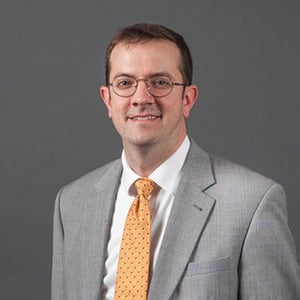
Associate Professor of Law, Antonin Scalia Law School, George Mason University
Associate Professor of Law J.W. Verret joined the Antonin Scalia Law School, George Mason University faculty in 2008. In 2013, he took leave for two years to serve as the Chief Economist and Senior Counsel for the U.S. House Committee on Financial Services. He received his JD and MA in Public Policy from Harvard Law School and the Harvard Kennedy School of Government, respectively, in 2006. While in law school, Professor Verret served an Olin Fellowship in Law and Economics at the Harvard Program on Corporate Governance under the guidance of Prof. Lucian Bebchuk.
Professor Verret then served as a law clerk for Vice-Chancellor John W. Noble of the Delaware Court of Chancery. Prior to joining the faculty at Scalia Law, Professor Verret was an associate in the SEC Enforcement Defense Practice Group at Skadden, Arps in Washington, D.C. He has written extensively on corporate law topics, including Delaware's Guidance, co-written with Chief Justice Myron T. Steele of the Delaware Supreme Court. His academic work has been featured in the Yale Journal on Regulation, The Business Lawyer, the Delaware Journal of Corporate Law, the Stanford Law Review, the University of Pennsylvania Journal of Business Law, and the Virginia Law and Business Review. Professor Verret was selected by the Northwestern Law School Searle Center on Law, Regulation, and Economic Growth for a 2009-2010 Searle-Kaufmann Research Fellowship.
Professor Verret is also a Senior Scholar at the Mercatus Center Working Group on Financial Markets, where he regularly briefs Congressional staff, members of Congress, SEC Commissioners and other financial regulatory agencies on financial regulation topics. He also directs the Corporate Federalism Initiative, where he obtains research grants for a network of students and faculty scholars who study the division between states and the federal government as sources of corporate law. Professor Verret has been invited to testify before various House and Senate Committees four times during the financial crisis of 2009 regarding all of the central provisions of the Obama Administration's 2009 financial regulatory reform proposals. For a full list of Professor Verret's C-Span appearances, including testimony before the U.S. House of Representatives and the U.S. Senate, see http://www.c-spanvideo.org/jwverret.
Professor Verret has been an invited panelist for various television appearances, including an interview on The NewsHour with Jim Lehrer. Professor Verret has been quoted in various media on financial regulation and corporate law topics, including the New York Times, CNN Money, the CNN Political Ticker, CNBC, ABC News, Investor's Business Daily, ESPN.com, The American Banker, The American Lawyer, The Huffington Post, CBS.com, and AP News. Professor Verret's op-eds have been featured in Forbes, The Chicago Tribune, The Orange County Register, and The Wall Street Journal. Professor Verret is also a regular guest contributor to three of the most noted corporate law and financial regulation law blogs: the Harvard Law School Corporate Governance and Financial Regulation Forum, Deallawyers.com, and The Conglomerate.

Partner, Skadden, Arps, Slate, Meagher and Flom, LLP and Affiliates
Boris Bershteyn is a partner at Skadden, Arps, Slate, Meagher and Flom, LLP. He served as acting Administrator of the Office of Information and Regulatory Affairs in 2012 and 2013, and as General Counsel of the Office of Management and Budget (OMB) starting 2011. In 2010 and 2011, Bershteyn served as Special Assistant to the President and Associate White House Counsel, focusing on legal issues in regulatory, economic, health, and environmental policy. In 2009 and 2010, he served as the Deputy General Counsel of OMB. Earlier in his career, he served as a law clerk to Justice David H. Souter of the U.S. Supreme Court and Judge José A. Cabranes of the U.S. Court of Appeals for the Second Circuit. He holds a B.A. in Economics and Political Science from Stanford University and a J.D. from Yale Law School. Among other positions, Bershteyn serves as Senior Fellow of the Administrative Conference of the United States, the Chair of the Board of Advisors of the Institute for Policy Integrity at NYU Law School, and Trustee of the U.S. Supreme Court Historical Society.
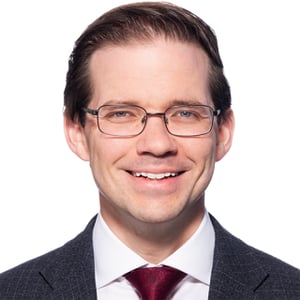
Of Counsel, Covington & Burling LLP
The Honorable Paul J. Ray is currently Of Counsel at Covington & Burling LLP where he advises clients on regulatory opportunities and challenges and helps them formulate and execute advocacy strategies for their regulatory policy priorities before the executive branch and Congress.
During the first Trump Administration, Paul held various senior positions at the Office of Information and Regulatory Affairs (OIRA) within the White House’s Office of Management and Budget, including as acting, and then Senate-confirmed, head of the office. As OIRA Administrator (the "regulations czar"), Paul supervised the review of hundreds of regulations from across the government, drafted numerous executive orders governing the regulatory process, and led the Administration’s regulatory reform effort. As a result of this experience, Paul is well-positioned to help clients understand and achieve regulatory policy priorities in the context of the government’s regulatory agenda and ongoing reform efforts.
Most recently, Paul was also the Director of the Roe Institute for Economic Policy Studies at The Heritage Foundation. In that role, he supervised the formulation of the Foundation’s economic and regulatory policy recommendations and provided technical assistance to congressional committees and staff regarding legislative changes to the regulatory process. In addition to his role at The Heritage Foundation, Paul also served as a Senior Advisor at a strategic advisory firm. Before his time in government, Paul practiced law at a law firm in Washington, specializing in administrative law matters.
Prior to his role at the White House, Paul was Counselor to the Secretary at the U.S. Department of Labor. There he led departmental efforts in high-profile rulemakings and helped formulate the Department’s legal positions and strategy.
Paul served as a law clerk to Supreme Court Justice Samuel Alito and as a law clerk to the Honorable Debra Livingston of the U.S. Court of Appeals for the Second Circuit.
Paul is a thought leader in the conservative legal movement and is a frequent commentator and speaker on regulatory policy and reform matters, including at law schools, professional gatherings, and other venues. He is the Chairman of Innovations in Peacebuilding International and the Regulatory Process Working Group of the Federalist Society’s Regulatory Transparency Project and a public member of the Administrative Conference of the United States. Paul is also an adjunct lecturer at the Hillsdale College School of Government.
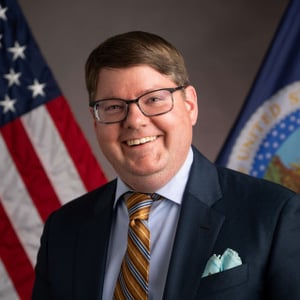
Deputy Secretary of Agriculture, U.S. Department of Agriculture
Judge Stephen Alexander Vaden was appointed as the Deputy Secretary of the U.S. Department of Agriculture on July 7, 2025. Alongside Secretary Brooke L. Rollins, Deputy Secretary Vaden leads the Department’s operations and implements policies that support America’s food and farm systems. A native of Union City, Tennessee, Deputy Secretary Vaden brings expertise in agricultural policy, law, and rural development. Previously, he served as a judge on the U.S. Court of International Trade and as General Counsel of USDA. Throughout Deputy Secretary Vaden’s time as General Counsel, he led successful Supreme Court litigation, advanced regulatory reform, and supported the implementation of the 2018 Farm Bill. He is a graduate of Yale Law School and Vanderbilt University. A public servant with strong agricultural roots, Deputy Secretary Vaden is committed to revitalizing rural America and ensuring an abundant, affordable, and safe U.S. food supply.

Director of Health Policy Studies, Cato Institute
Michael F. Cannon is the Cato Institute’s director of health policy studies. His scholarship spans public health; regulation of clinicians, medical facilities, pharmaceuticals, and medical devices; employer‐sponsored and other private health insurance; Medicare; Medicaid; CHIP; the Veterans Health Administration; medical malpractice litigation; administrative law; international health systems; political philosophy; and more. Cannon is “an influential health‐care wonk” (Washington Post) and “the most famous libertarian health care scholar” (Washington Examiner). Washingtonian magazine named Cannon one of Washington, DC’s “Most Influential People” in 2021, 2022, and 2023.
Cannon has appeared on ABC, Al Jazeera, BBC, CBS, CNN, CNBC, C‑SPAN, Fox News Channel, NPR, and other broadcast media. His articles have appeared in the Wall Street Journal; the New York Times; USA Today; the Washington Post; the Los Angeles Times; SCOTUSBlog; Forum for Health Economics and Policy; JAMA Internal Medicine; Health Matrix: Journal of Law‐Medicine; Harvard Health Policy Review; the Yale Journal of Health Policy, Law, and Ethics; the Journal of Health Politics, Policy and Law; and Quinnipiac Health Law Journal. His latest book is Recovery: A Guide to Reforming the U.S. Health Sector.
Cannon was previously a domestic policy analyst for the U.S. Senate Republican Policy Committee, where he advised the Senate leadership on health, education, labor, welfare, and the Second Amendment. He is a member of the Board of Advisers of Harvard Health Policy Review and the Federalist Society Regulatory Transparency Project’s FDA & Health Working Group.
Cannon holds an MA in economics and a JM in law and economics from George Mason University and a BA in American government from the University of Virginia.

Partner, Steptoe & Johnson LLP
Stewart Baker is a partner in the law firm of Steptoe & Johnson in Washington, D.C. From 2005 to 2009, he was the first Assistant Secretary for Policy at the Department of Homeland Security. His law practice covers cybersecurity, data protection, homeland security, and travel and foreign investment regulation; he has been awarded one patent.
Mr. Baker has been General Counsel of the National Security Agency and General Counsel of the commission that investigated WMD intelligence failures prior to the Iraq war. He is the author of Skating on Stilts, a book on terrorism, cybersecurity, and other technology issues; he also hosts the weekly Cyberlaw Podcast.
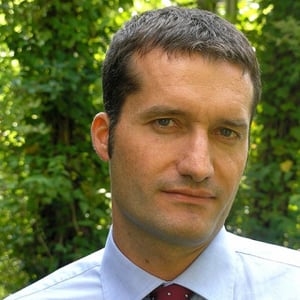
Professor of International and European Law, University Grenoble Alpes
Theodore Christakis is Professor of International and European Law at University Grenoble Alpes, Director of Research for Europe with the Cross-Border Data Forum, and a former Distinguished Visiting Fellow at the New York University Cybersecurity Centre. He is also Chair on the Legal and Regulatory Implications of Artificial Intelligence with the Multidisciplinary Institute on AI (ai-regulation.com), Director of the Centre for International Security and European Studies, and Co-Director of the Grenoble Alpes Data Institute. He is a honorary member of the Institut Universitaire de France.
At the national level, he has exercised responsibilities on digital issues as an active member of the French National Committee for Digital Ethics (created in December 2019 at the request of the French Prime Minister) and as a past member of the French National Digital Council, an independent advisory commission of the French government (2018-2020).
He has published or co-edited 11 books, he is author or co-author of more than 90 academic articles and book chapters, and he has been invited to give lectures and present his work at conferences, workshops, and seminars on over a hundred occasions in more than 31 different countries.
As an international expert he has advised governments, international organisations, and private companies on issues concerning international and European law, cybersecurity, artificial intelligence, and data protection law. He also has experience working as external Data Protection Officer (GDPR compliance) for tech companies.
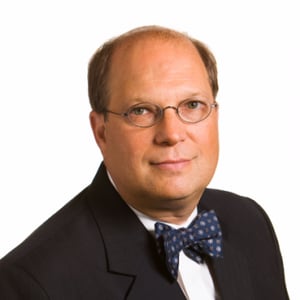
Professorial Lecturer in Law, The George Washington University
Paul Rosenzweig is an accomplished writer and speaker with a national reputation in cyber security and homeland security. He is the founder of Red Branch Consulting PLLC, a homeland security consulting company. He is also a Senior Advisor to The Chertoff Group. Mr. Rosenzweig formerly served as Deputy Assistant Secretary for Policy in the Department of Homeland Security.
He is a Professorial Lecturer in Law at George Washington University, and a Senior Fellow in the Tech, Law & Security Program at the American University, Washington College of Law. He serves as an advisor to and former member of the American Bar Association Standing Committee on Law and National Security, and a Contributing Editor of the Lawfare blog. He is a member of the ABA Cybersecurity Legal Task Force and of the United States Court of Appeals for the District of Columbia Circuit Advisory Committee on Admissions and Grievances. He serves, as well, as a Hearing Committee Member of the District of Columbia Board of Professional Responsibility. In 2011 he was a Carnegie Fellow in National Security Journalism at the Medill School of Journalism, Northwestern University.
Mr. Rosenzweig is a cum laude graduate of the University of Chicago Law School. He has an M.S. in Chemical Oceanography from the Scripps Institution of Oceanography, University of California at San Diego and a B.A from Haverford College. Following graduation from law school he served as a law clerk to the Honorable R. Lanier Anderson, III of the United States Court of Appeals for the Eleventh Circuit.
He is the author of Cyber Warfare: How Conflicts in Cyberspace are Challenging America and Changing the World and of three video lecture series from The Great Courses, Thinking About Cybersecurity: From Cyber Crime to Cyber Warfare; The Surveillance State: Big Data, Freedom, and You; and Investigating American Presidents.
He is the co-author (with James Jay Carafano) of Winning the Long War: Lessons from the Cold War for Defeating Terrorism and Preserving Freedom and co-editor (with Jill D. Rhodes and Robert S. Litt) of the Cybersecurity Handbook (3rd ed.). He is also co-editor (with Timothy McNulty and Ellen Shearer) of two books, Whistleblowers, Leaks and the Media: The First Amendment and National Security, and National Security Law in the News: A Guide for Journalists, Scholars, and Policymakers. Mr. Rosenzweig is a member of the Literary Society of Washington.
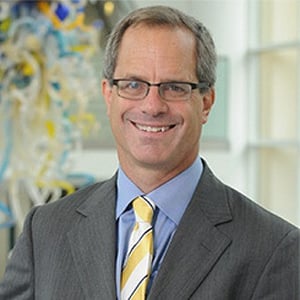
Elizabeth and Thomas Holder Chair, Scheller College of Business, Georgia Institute of Technology
Peter Swire has been a leading privacy and cyberlaw scholar, government leader, and practitioner since the rise of the Internet in the 1990’s. He came to the Georgia Institute of Technology in 2013, where he is the Elizabeth and Tommy Holder Chair in the Scheller College of Business, and Professor in the School of Cybersecurity and Privacy. He is senior counsel with the law firm of Alston & Bird LLP.
Swire served as one of five members of President Obama’s Review Group on Intelligence and Communications Technology. Prior to that, he was co-chair of the global Do Not Track process for the World Wide Web Consortium. He is a Senior Fellow with the Future of Privacy Forum, and has served on the National Academy of Sciences & Engineering Forum on Cyber Resilience.
Under President Clinton, Swire was the Chief Counselor for Privacy, in the U.S. Office of Management and Budget, the first person to have U.S. government-wide responsibility for privacy policy. Under President Obama, he was Special Assistant to the President for Economic Policy.
Principal, Ely & Company, Inc.
Bert Ely has specialized in deposit insurance and banking structure issues since 1981. In 1986, he became an early predictor of the S&L crisis and a taxpayer bailout of the FSLIC. In 1991, he was the first person to correctly predict the non-crisis in commercial banking; in 1992, he predicted an eventual taxpayer bailout of the Japanese banking system.
Bert continuously monitors conditions in the banking and S&L industries, monetary policy, and the growing federalization of credit risk. He has helped to draft legislation to enact the cross-guarantee concept for privatizing banking regulation and its related deposit insurance and systemic risks. He has testified on numerous occasions before congressional committees on banking issues and he often speaks on these matters to bankers and others.
Bert first established his consulting practice in 1972. Before that, he was the chief financial officer of a public company, a consultant with Touche, Ross & Company, and an auditor with Ernst & Ernst. He received his MBA from the Harvard Business School in 1968 and his Bachelor's degree in economics in 1964 from Case Western Reserve University.
General Counsel, Strive
Before joining Strive, Alexandra served as the Director of Regulatory Affairs at River Financial, where she handled all regulatory and government matters and served as product counsel. Prior to her time at River, Alexandra worked at the U.S. Department of Treasury, first in the General Counsel’s office and then as the youngest-ever Executive Secretary, where she worked directly with Secretary Mnuchin. Alexandra previously worked as an associate in the Washington, D.C. office of Akin Gump. She clerked for then-Justice Allison Eid on the Colorado Supreme Court and Judge Jennifer Elrod on the U.S. Court of Appeals for the Fifth Circuit. She holds a J.D. from the University of Texas and a B.A. from The King’s College.
Partner, Norton Rose Fulbright
Steven Lofchie advises financial institutions on regulatory issues and financial instruments.
In his regulatory practice, Steven counsels clients on securities laws, the CEA, and related bankruptcy issues. His transactional practice focuses on securities credit and derivative transactions.
Steven is the founder and manager of an acclaimed legal website (now renamed Fried Frank Regulatory Intelligence) that has been endorsed by former chairpersons of both the SEC and CFTC. Subscribers to the website include government regulators and major buy- and sell-side firms.
Chambers USA has ranked Steven in Band 1 for eight years running, for both financial services regulation and derivatives. He is the only lawyer in the country to be top-ranked in both of those categories. Steven was also part of the team that was named 2020 Regulatory Team of the Year by IFLR Americas. The Best Lawyers in America recognized Steven as “Lawyer of the Year” for Administrative/Regulatory Law in New York in 2017, and U.S. News and World Report ranked him as the best regulatory lawyer in New York for 2014. In 2012, a derivatives transaction developed by Steven was cited as the best international structured product of the year by International Financial Law Review.
Senior Fellow, Mises Institute
Alex J. Pollock is a Senior Fellow with the Mises Institute, providing thought and policy leadership on financial issues and the study of financial systems. His work includes cycles of booms and busts, financial crises with their political responses, housing finance, government-sponsored enterprises, risk and uncertainty, central banking, banking and financial regulation, corporate governance, retirement finance, student loans, and the politics of finance.
He previously served as the Principal Deputy Director of the Office of Financial Research in the U.S. Treasury Department 2019-2021. He was a Distinguished Senior Fellow with the R Street Institute 2015-2019 and 2021, and a resident fellow at the American Enterprise Institute, 2004-2015. Among the many aspects of his AEI work, he developed the One Page Mortgage Form to give borrowers in clear form the key information they need in order to know what they are committing themselves to. He was President and CEO of the Federal Home Loan Bank of Chicago from 1991 to 2004. There he invented the Mortgage Partnership Finance program, which successfully created front-end mortgage credit risk sharing beginning in 1997. His decades of banking experience include being a Visiting Scholar at the Federal Reserve Bank of St. Louis, 1991.
Pollock was a director of the CME Group 2004-2019 and of Ascendium Education Group 1989-2019. He is a director and past-chairman of the Great Books Foundation and a past president of the International Union for Housing Finance.
He is the co-author of Surprised Again! - The COVID Crisis and the New Market Bubble (2022), and the author of Finance and Philosophy—Why We’re Always Surprised (2018) and Boom and Bust: Financial Cycles and Human Prosperity (2011), as well as numerous articles and Congressional testimony.
Pollock is a graduate of Williams College, the University of Chicago, and Princeton University.
His work is available on alexjpollock.com.
Associate Professor of Law, Antonin Scalia Law School, George Mason University
Associate Professor of Law J.W. Verret joined the Antonin Scalia Law School, George Mason University faculty in 2008. In 2013, he took leave for two years to serve as the Chief Economist and Senior Counsel for the U.S. House Committee on Financial Services. He received his JD and MA in Public Policy from Harvard Law School and the Harvard Kennedy School of Government, respectively, in 2006. While in law school, Professor Verret served an Olin Fellowship in Law and Economics at the Harvard Program on Corporate Governance under the guidance of Prof. Lucian Bebchuk.
Professor Verret then served as a law clerk for Vice-Chancellor John W. Noble of the Delaware Court of Chancery. Prior to joining the faculty at Scalia Law, Professor Verret was an associate in the SEC Enforcement Defense Practice Group at Skadden, Arps in Washington, D.C. He has written extensively on corporate law topics, including Delaware's Guidance, co-written with Chief Justice Myron T. Steele of the Delaware Supreme Court. His academic work has been featured in the Yale Journal on Regulation, The Business Lawyer, the Delaware Journal of Corporate Law, the Stanford Law Review, the University of Pennsylvania Journal of Business Law, and the Virginia Law and Business Review. Professor Verret was selected by the Northwestern Law School Searle Center on Law, Regulation, and Economic Growth for a 2009-2010 Searle-Kaufmann Research Fellowship.
Professor Verret is also a Senior Scholar at the Mercatus Center Working Group on Financial Markets, where he regularly briefs Congressional staff, members of Congress, SEC Commissioners and other financial regulatory agencies on financial regulation topics. He also directs the Corporate Federalism Initiative, where he obtains research grants for a network of students and faculty scholars who study the division between states and the federal government as sources of corporate law. Professor Verret has been invited to testify before various House and Senate Committees four times during the financial crisis of 2009 regarding all of the central provisions of the Obama Administration's 2009 financial regulatory reform proposals. For a full list of Professor Verret's C-Span appearances, including testimony before the U.S. House of Representatives and the U.S. Senate, see http://www.c-spanvideo.org/jwverret.
Professor Verret has been an invited panelist for various television appearances, including an interview on The NewsHour with Jim Lehrer. Professor Verret has been quoted in various media on financial regulation and corporate law topics, including the New York Times, CNN Money, the CNN Political Ticker, CNBC, ABC News, Investor's Business Daily, ESPN.com, The American Banker, The American Lawyer, The Huffington Post, CBS.com, and AP News. Professor Verret's op-eds have been featured in Forbes, The Chicago Tribune, The Orange County Register, and The Wall Street Journal. Professor Verret is also a regular guest contributor to three of the most noted corporate law and financial regulation law blogs: the Harvard Law School Corporate Governance and Financial Regulation Forum, Deallawyers.com, and The Conglomerate.
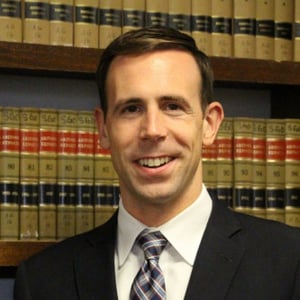
Shareholder, Greenberg Traurig, LLP
Dominic E. Draye has litigated at every level of the state and federal judiciary—from state trial court to the Supreme Court of the United States. His practice focuses on constitutional, regulatory, and environmental matters, and he has represented clients in both the public and private sectors. In the federal appellate courts, Mr. Draye has represented clients in the Second, Fifth, Seventh, Ninth, and D.C. Circuits.
Before joining Greenberg, Mr. Draye served as the Solicitor General of Arizona, where he briefed and argued the State’s highest-profile civil and criminal appeals and served as lead counsel for several multi-state coalitions litigating over agency rulemaking in the D.C. Circuit. Prior to government service, Mr. Draye was a litigator in the Washington, D.C., office of Kirkland & Ellis LLP, where his practice focused on legal issues and appeals.
Mr. Draye is a sought-after speaker on topics of administrative and constitutional law. He clerked for Hon. Edith H. Jones on the United States Court of Appeals for the Fifth Circuit and attended the University of Pennsylvania Law School.
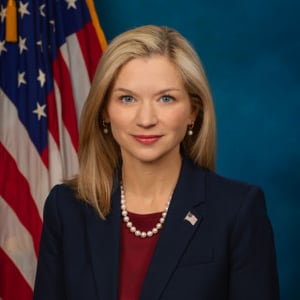
U.S. Attorney, U.S. Attorney's Office for the District of Utah
Melissa Holyoak was nominated by President Trump to serve as U.S. Attorney for the District of Utah on January 29, 2026. Holyoak was appointed on November 17, 2025 by Attorney General Pam Bondi to serve as Interim U.S. Attorney for the District of Utah.
Prior to that, Holyoak served as a Commissioner of the Federal Trade Commission from March 25, 2024 until her appointment as U.S. Attorney. During her FTC tenure, Commissioner Holyoak strove to vigorously enforce the antitrust and consumer protection laws while acting within the agency’s constitutional and statutory remit. She spoke widely about a range of FTC priorities, including improving competition enforcement, effectively applying existing laws to emerging trends in technology, and protecting children and teens online. She also published numerous statements about FTC matters.
Holyoak brings extensive experience as a litigator and leader. She served as Solicitor General with the Utah Attorney General’s Office where she oversaw the civil appeals, criminal appeals, constitutional defense and special litigation, and antitrust and data privacy divisions. She also managed multistate matters including those involving consumer protection and antitrust claims.
Before taking on that role, she served as president and general counsel of Hamilton Lincoln Law Institute, a Washington, D.C.-based public interest law firm and in other public interest attorney positions with the Competitive Enterprise Institute and the Center for Class Action Fairness. Holyoak represented class members challenging unfair class actions and consumers fighting regulatory abuse in federal district courts and appellate courts across the country.
Holyoak has argued in the Fifth, Seventh, Eighth, Ninth, Tenth and D.C. Circuits. She is a former prosecutor and attorney with O’Melveny & Myers LLP. She graduated from the University of Utah S.J. Quinney College of Law in 2003 as a member of the Order of the Coif and the Law Review. Holyoak is a member of the bars of Utah, D.C., and Missouri (inactive). Her husband Dr. Joshua Holyoak is a urologist and together they have four beautiful children.
Partner, Skadden, Arps, Slate, Meagher and Flom, LLP and Affiliates
Boris Bershteyn is a partner at Skadden, Arps, Slate, Meagher and Flom, LLP. He served as acting Administrator of the Office of Information and Regulatory Affairs in 2012 and 2013, and as General Counsel of the Office of Management and Budget (OMB) starting 2011. In 2010 and 2011, Bershteyn served as Special Assistant to the President and Associate White House Counsel, focusing on legal issues in regulatory, economic, health, and environmental policy. In 2009 and 2010, he served as the Deputy General Counsel of OMB. Earlier in his career, he served as a law clerk to Justice David H. Souter of the U.S. Supreme Court and Judge José A. Cabranes of the U.S. Court of Appeals for the Second Circuit. He holds a B.A. in Economics and Political Science from Stanford University and a J.D. from Yale Law School. Among other positions, Bershteyn serves as Senior Fellow of the Administrative Conference of the United States, the Chair of the Board of Advisors of the Institute for Policy Integrity at NYU Law School, and Trustee of the U.S. Supreme Court Historical Society.
Of Counsel, Covington & Burling LLP
The Honorable Paul J. Ray is currently Of Counsel at Covington & Burling LLP where he advises clients on regulatory opportunities and challenges and helps them formulate and execute advocacy strategies for their regulatory policy priorities before the executive branch and Congress.
During the first Trump Administration, Paul held various senior positions at the Office of Information and Regulatory Affairs (OIRA) within the White House’s Office of Management and Budget, including as acting, and then Senate-confirmed, head of the office. As OIRA Administrator (the "regulations czar"), Paul supervised the review of hundreds of regulations from across the government, drafted numerous executive orders governing the regulatory process, and led the Administration’s regulatory reform effort. As a result of this experience, Paul is well-positioned to help clients understand and achieve regulatory policy priorities in the context of the government’s regulatory agenda and ongoing reform efforts.
Most recently, Paul was also the Director of the Roe Institute for Economic Policy Studies at The Heritage Foundation. In that role, he supervised the formulation of the Foundation’s economic and regulatory policy recommendations and provided technical assistance to congressional committees and staff regarding legislative changes to the regulatory process. In addition to his role at The Heritage Foundation, Paul also served as a Senior Advisor at a strategic advisory firm. Before his time in government, Paul practiced law at a law firm in Washington, specializing in administrative law matters.
Prior to his role at the White House, Paul was Counselor to the Secretary at the U.S. Department of Labor. There he led departmental efforts in high-profile rulemakings and helped formulate the Department’s legal positions and strategy.
Paul served as a law clerk to Supreme Court Justice Samuel Alito and as a law clerk to the Honorable Debra Livingston of the U.S. Court of Appeals for the Second Circuit.
Paul is a thought leader in the conservative legal movement and is a frequent commentator and speaker on regulatory policy and reform matters, including at law schools, professional gatherings, and other venues. He is the Chairman of Innovations in Peacebuilding International and the Regulatory Process Working Group of the Federalist Society’s Regulatory Transparency Project and a public member of the Administrative Conference of the United States. Paul is also an adjunct lecturer at the Hillsdale College School of Government.
Deputy Secretary of Agriculture, U.S. Department of Agriculture
Judge Stephen Alexander Vaden was appointed as the Deputy Secretary of the U.S. Department of Agriculture on July 7, 2025. Alongside Secretary Brooke L. Rollins, Deputy Secretary Vaden leads the Department’s operations and implements policies that support America’s food and farm systems. A native of Union City, Tennessee, Deputy Secretary Vaden brings expertise in agricultural policy, law, and rural development. Previously, he served as a judge on the U.S. Court of International Trade and as General Counsel of USDA. Throughout Deputy Secretary Vaden’s time as General Counsel, he led successful Supreme Court litigation, advanced regulatory reform, and supported the implementation of the 2018 Farm Bill. He is a graduate of Yale Law School and Vanderbilt University. A public servant with strong agricultural roots, Deputy Secretary Vaden is committed to revitalizing rural America and ensuring an abundant, affordable, and safe U.S. food supply.
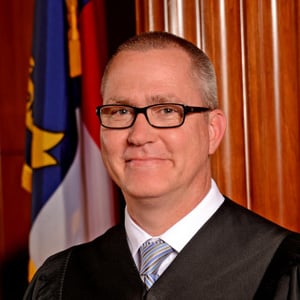
Curtis "Trey" Allen was born in Robeson County to Curtis and Elaine Allen. He obtained a bachelor's degree from UNC Pembroke and a law degree from UNC Chapel Hill.
Trey began his legal career as a judge advocate in the United States Marine Corps. He spent most of his time in the USMC overseas, and his military service included a deployment to Iraq during Operation Iraqi Freedom. As a judge advocate, Trey advised commanding generals and subordinate commanders on military justice and operational law matters, prosecuted violations of the Uniform Code of Military Justice, and helped fellow Marines resolve personal legal issues.
After being honorably discharged, Trey completed a clerkship with Justice (now Chief Justice) Paul Newby of the NC Supreme Court. He then practiced education law and became a partner at Tharrington Smith LLP in Raleigh. While in private practice, Trey successfully litigated cases involving constitutional and other claims before administrative agencies, federal and state trial courts, and appellate courts, including the NC Supreme Court. In 2013 he joined the faculty at UNC Chapel Hill, where his research, writing, and teaching focused on local government law. Trey was named Coates Distinguished Term Associate Professor of Public Law and Government for 2020-2022.
Following Paul Newby's installation as Chief Justice in January 2021, Trey was appointed General Counsel for the NC Administrative Office of the Courts. In that capacity, he provides legal guidance on a broad range of subjects to court officials across the state.
Trey is married to Teryn Melissa Smith Allen, another Robeson County native. Together they have five (awesome) children, all of whom they homeschool. Church activities, sports, and Scouting take up much of the family's free time.
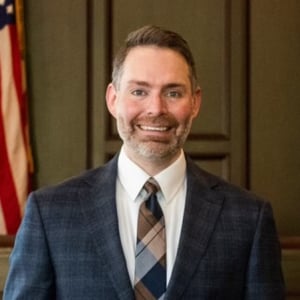
Judge, North Carolina Court of Appeals
Richard Dietz has served as a judge on the North Carolina Court of Appeals for eight years.
Judge Dietz comes from a mountain family of railroad and telephone workers. From an early age, his parents encouraged him to study hard and to get an education. He succeeded, becoming the first in his family to attend college. He went on to graduate first in his class from Wake Forest University School of Law and later earned a master’s degree from Duke University School of Law.
As a lawyer, Judge Dietz became one of the most accomplished appellate advocates in North Carolina. He has personally argued in the U.S. Supreme Court—something only a handful of lawyers in the State have ever done—and is a board-certified specialist in appellate practice. He handled cases in a wide range of constitutional areas including gun rights, religious liberty, and the free speech rights of students.
Before joining the Court of Appeals, Judge Dietz was a partner at Kilpatrick Townsend & Stockton LLP, a 650-lawyer international law firm with its roots in North Carolina. He also served as a law clerk for two highly regarded federal judges—Judge Emory Widener on the U.S. Court of Appeals for the Fourth Circuit and Judge Samuel Wilson on the U.S. District Court in Virginia—and served as a research fellow in international law at Kyushu University in Japan.
Judge Dietz joined the Court of Appeals in 2014 and is now the third-most senior judge on the 15-member court. He has distinguished himself on the Court by writing thoughtful opinions that are concise and easy for the public to read and understand.
Judge Dietz is happily married to Kelley Dietz, who is both the love of his life and his most trusted advisor. Kelley is a former Capitol Hill staffer and political appointee of President George W. Bush who now works in higher education.
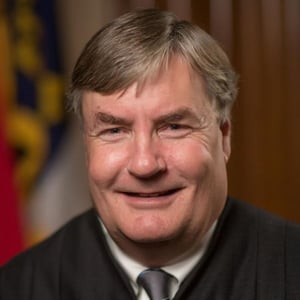
North Carolina Court of Appeals
Sam J. Ervin, IV, was born in Morganton, North Carolina, on November 18, 1955. He attended the public schools in Burke County, North Carolina, graduating from Freedom High School in 1974. In 1978, Judge Ervin was awarded an A.B., magna cum laude, from Davidson College. After graduating from Davidson, he attended Harvard Law School, from which he received a J.D., cum laude, in 1981.
From 1981 until 1999, Judge Ervin practiced law with the Morganton, North Carolina firm of Byrd, Byrd, Ervin, Whisnant, McMahon, P.A., and its predecessors. While in private practice, Judge Ervin handled a wide variety of civil, criminal, and administrative matters, including many appeals to the North Carolina Court of Appeals and the Supreme Court of North Carolina.
In 1999, Judge Ervin was nominated for a seat on the North Carolina Utilities Commission by Governor James B. Hunt, Jr. He was nominated for a second term on the Utilities Commission by Governor Michael F. Easley in 2007. Both appointments were confirmed by the General Assembly. The Utilities Commission is a quasi-judicial body that is responsible for regulating electric, natural gas, telecommunications, water and sewer, and certain types of transportation service provided to retail customers in North Carolina by privately-owned entities. During his service as a member of the Utilities Commission, Judge Ervin was involved in deciding many important regulatory matters, including, but not limited to, electric and natural gas rate proceedings, electric and natural gas business combination proceedings, proceedings involving applications by electric utilities for authority to construct new generation and transmission facilities, proceedings involving the approval of telecommunications price regulation plans, proceedings arbitrating or otherwise examining the terms and conditions under which competitive telecommunications providers were allowed to interconnect with incumbents, and proceedings addressing issues relating to the adequacy of water and sewer service in certain specific locations.
In addition, Judge Ervin was extensively involved in the activities of the National Association of Regulatory Utility Commissioners (NARUC), having served as Chairman of that organization's Subcommittee on Nuclear Issues and Waste Disposal from 2002 until 2005; as Chairman of that organization's Committee on Electricity from 2004 until 2007; and as a member of its Task Force on Climate Policy from 2007 through 2008. As part of his involvement in NARUC, Judge Ervin supervised its participation in the process that led to the implementation of the Energy Policy Act of 2005. While a member of the Utilities Commission, Judge Ervin testified on two different occasions before the Subcommittee on Energy and Air Quality of the Committee on Commerce of the United States House of Representatives. Judge Ervin was a regular speaker at energy-related conferences and seminars during his service as a Utilities Commissioner.
Judge Ervin has also been, at various times, involved in a wide variety of church-related, bar-related, and charitable activities. He is married to Mary Temple Ervin and has two children and two step-children.
Judge Ervin was elected to the North Carolina Court of Appeals at the November 4, 2008, general election. His term as a member of the Court of Appeals commenced on January 1, 2009, and extends until December 31, 2017.
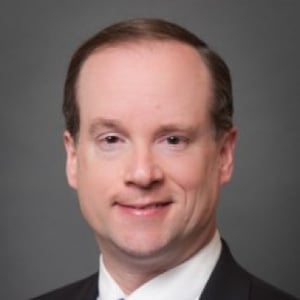
President, John William Pope Foundation
John Hood is president of the John William Pope Foundation. Hood also serves on the board of the John Locke Foundation, the state policy think tank he helped found in 1989 and led as its president for more than two decades.
Since 1986, Hood has written a syndicated column on politics and public policy for North Carolina newspapers. It appears regularly in more than 50 papers across the state. A frequent radio and television commentator, Hood is the author of seven nonfiction books on such subjects as business, advertising, public policy, and political history. His latest three books — Mountain Folk, Forest Folk, and Water Folk — are historical-fantasy novels set in early America.
A former Bradley Fellow at the Heritage Foundation, Hood teaches at Duke University’s Sanford School of Public Policy. His articles have appeared in magazines such as Readers’ Digest, The New Republic, National Review, Military History, and Reason as well as newspapers such as The Wall Street Journal and USA Today. His broadcast appearances include CNN, NBC News, National Public Radio, and Fox News.
At Locke, Hood created the E.A. Morris Fellowship for Emerging Leaders, which prepares young North Carolinians for leadership roles in the public and private sectors. He also serves on the faculty and as board chair of the NC Institute of Public Leadership; as co-chair of the North Carolina Leadership Forum, based at Duke University; as vice-chair of the James G. Martin Center for Academic Renewal, State Policy Network, and the Carolina Liberty Foundation; and on the board the Student Free Press Association.
Hood received his BA in journalism from the University of North Carolina at Chapel Hill, where he serves as vice chair of North Carolina Public Radio-WUNC and on the foundation board of the Hussman School of Journalism and Media. He earned a MA in liberal studies and a graduate certificate in nonprofit management from UNC-Greensboro.
A native of Mecklenburg County, Hood now resides in Wake County with his wife, two sons, and a stepdaughter.
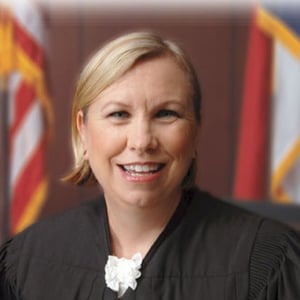
Judge, North Carolina Court of Appeals
Lucy Inman, a judge on the North Carolina Court of Appeals, is a candidate for the North Carolina Supreme Court in 2020. Judge Inman was elected statewide to the Court of Appeals in 2014.
Judge Inman was raised in Raleigh by parents who taught her the value of hard work and respect for people of all races, faiths, and walks of life. She graduated from Sanderson High School and earned a degree in English from N.C. State University.
Judge Inman’s first career was as a newspaper reporter. While covering court proceedings, she was inspired to participate in the justice system. She then moved to Chapel Hill and earned her law degree from UNC School of Law in 1990. Her first job after law school was working as a law clerk for North Carolina Supreme Court Chief Justice Jim Exum.
Judge Inman went on to practice civil litigation for 18 years, first in Los Angeles and then back home in Raleigh. Her clients included small business owners, large corporations, famous individuals, and lesser known -- but no less important -- survivors of negligence, fraud, and sexual abuse.
In 2010, Judge Inman was appointed by Governor Beverly Perdue to serve as a special superior court judge. She served in that role for four years, presiding in hearings and jury trials across North Carolina. Since her election to the Court of Appeals, Judge Inman has authored over 400 appellate decisions in a wide variety of cases, including criminal, civil, and constitutional disputes. She has presided in thousands of other cases.
Judge Inman brings hard work and respect for all others to her personal and professional life every day. She hopes to bring these values, and equal justice for all, to the North Carolina Supreme Court.
Judge Inman and her husband Billy Warden live in Raleigh. They have two college-age children and a black lab rescue who keeps their nest from ever being empty.
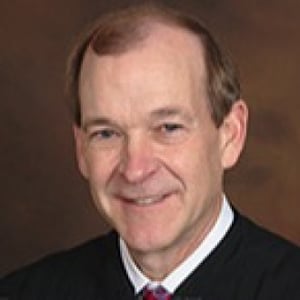
James C. Dever III serves as a United States District Judge for the Eastern District of North Carolina. President George W. Bush nominated Judge Dever (then age 39) in May 2002, and the United States Senate unanimously confirmed him. Before serving as a United States District Judge, Judge Dever served as a United States Magistrate Judge for fifteen months. He served as Chief Judge from October 2011 through October 2018.
Judge Dever received his B.B.A., with high honors, from the University of Notre Dame in 1984. He attended Notre Dame on a four-year ROTC scholarship. He was a Distinguished Military Graduate, was elected to Beta Gamma Sigma, and received the Raymond P. Kent Award (which is awarded to the graduating senior with the highest average in finance/economics classes). He received his J.D., with high honors, from Duke University School of Law in 1987. At Duke, he served as editor-in-chief of the Duke Law Journal, was elected to the Order of the Coif, and received numerous academic awards.
After graduating from law school, he served for one year as a law clerk for Judge J. Clifford Wallace of the U.S. Court of Appeals for the Ninth Circuit. Following his clerkship, Judge Dever was the sole attorney entering active duty in the Air Force selected to serve in the Air Force General Counsel’s Honors Program at the Pentagon. While on active duty, he provided legal advice to and conducted litigation for the Secretary of the Air Force. He served on active duty in the Air Force at the Pentagon from October 1988 until September 1992. At the conclusion of his service, he received the Meritorious Service Medal.
Judge Dever then returned to North Carolina and joined Maupin Taylor & Ellis, P.A. in Raleigh. While in private practice, he engaged in a wide variety of complex civil litigation and served on the law firm’s management committee. He was repeatedly listed in the Best Lawyers in America and in Business North Carolina’s Legal Elite for Employment Law. Since 1997, Judge Dever has taught employment law and criminal procedure as an adjunct law professor at Campbell University’s Norman Adrian Wiggins School of Law. Since 2008, Judge Dever has co-taught a seminar on sentencing and punishment as a senior lecturing fellow at Duke University School of Law. Since 2009, he has taught criminal procedure as a senior lecturing fellow at Duke University School of Law. In 2014, Chief Justice John Roberts appointed Judge Dever to serve on the Advisory Committee on Criminal Rules, where Judge Dever served until 2021. Judge Dever also serves as a member of Duke Law School's Board of Visitors.
Judge Dever’s chambers are in Raleigh, North Carolina.

Executive Director, North Carolina Justice Center
Mr. Glazier has held his current position as Executive Director of the North Carolina Justice Center since 2015. The Justice Center focuses on anti-poverty work in the areas of education, immigration, health care, housing, workers’ rights, consumer law, and budget and tax policy.
Prior to his position as Executive Director of the Justice Center, Mr. Glazier served seven terms from 2003-2015 as state representative from Cumberland County in the North Carolina General Assembly. Mr. Glazier received multiple Legislator of Year Awards, and also received the Order of the Long Leaf Pine from Governor McCrory in 2015.
Mr. Glazier received his law degree from Wake Forest University School of Law in 1981 and his undergraduate degree from Penn State University in 1977.
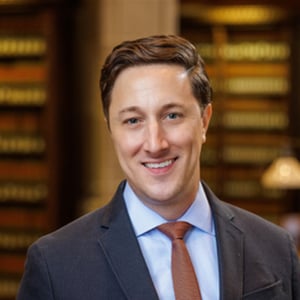
Professor of Law, Notre Dame Law School
Professor Derek Muller is a nationally-recognized scholar in the field of election law. His research focuses on the role of states in the administration of federal elections, the constitutional contours of voting rights and election administration, the limits of judicial power in the domain of elections, and the Electoral College.
He has published more than two dozen academic works, and his op-eds have appeared in the New York Times, the Los Angeles Times, and the Wall Street Journal. He has testified before Congress, and he is a contributor at the Election Law Blog. He is a co-author on a Federal Courts casebook published by Carolina Academic Press. He is also the co-reporter on a new Restatement of the Law, Election Litigation, an effort led by the American Law Institute.
Professor Muller teaches Election Law, Civil Procedure, and Evidence.

Partner, Nelson Mullins Riley & Scarborough LLP
Phil regularly represents management in labor/employment law and related matters. He advises clients on covenants not to compete and litigates claims involving restrictive covenants, trade secrets, and other business-related litigation. Phil also regularly defends management and employers in employment discrimination cases and counsels management on how to prevent or reduce the risk of these lawsuits.

What’s Next for Crypto: Implications of Deflated Prices and Turmoil in Cryptocurrency Markets
Bert Ely, Alexandra Gaiser, Steven Lofchie, Alex J. Pollock, J.W. Verret
Events of 2022 brought a "crypto winter," with average prices of cryptocurrencies falling about 70%...
What’s Next for Crypto: Implications of Deflated Prices and Turmoil in Cryptocurrency Markets
Topics
ABA 2022 Annual Meeting
The American Bar Association recently held its 2022 Annual Meeting in Chicago, Illinois. The event included...
Supreme Court Roundup
Reno Lawyers Chapter
Creatures of Statute: Administrative Agencies in Practice
Boris Bershteyn, Paul J. Ray, Stephen Alexander Vaden
Join the Federalist Society’s Regulatory Transparency Project and Capitol Hill Chapter for the first in...
Creatures of Statute: Administrative Agencies in Practice
Washington, DCExplainer Episode 39 - Tax Exclusions for Employer-Sponsored Health Insurance
Michael F. Cannon
In this episode, Michael F. Cannon argues that the federal income tax exclusion of employer-sponsored...
Supreme Court Candidate Forum
Inaugural North Carolina Chapters Conference
Raleigh, NCDeep Dive Episode 235 - A Discussion on the US-EU Trans-Atlantic Data Privacy Framework
Stewart A. Baker, Theodore Christakis, Paul Rosenzweig, Peter Swire
The US-EU Trans-Atlantic Data Privacy Framework, announced in March of this year, is a new...
Panel 2: The Law of Democracy: Recent and Future Developments in Election Law
Inaugural North Carolina Chapters Conference
Raleigh, NC