

Professor of Law, South Texas College of Law Houston
Josh Blackman is a national thought leader on constitutional law and the United States Supreme Court. Josh’s work was quoted during two presidential impeachment trials. He has testified before Congress and advises federal and state lawmakers. Josh regularly appears on TV, including NBC, CBS, ABC, Fox, and the BBC. Josh is also a frequent guest on NPR and other syndicated radio programs. He has published commentaries in the New York Times, Wall Street Journal, Washington Post, and leading national publications.
Since 2012, Josh has served as a professor at the South Texas College of Law Houston. He holds the Centennial Chair of Constitutional Law. Josh is an Adjunct Fellow at the Manhattan Institute. Josh has written more than seven dozen law review articles that have been cited more than a thousand times. Josh was selected as the Jurist of the Year by the Texas Journal of Law & Public Policy, received the inaugural Meese III Originalism Award, and was awarded the Inaugural Joseph Story Award. Josh was selected by Forbes Magazine for the “30 Under 30” in Law and Policy. Josh is the President of the Harlan Institute, and founded FantasySCOTUS, the Internet’s Premier Supreme Court Fantasy League. He blogs at the Volokh Conspiracyand posts@JoshMBlackman.
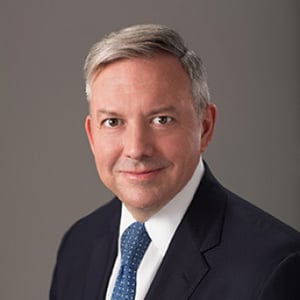
First Court of Appeals, Texas
Michael Massengale was appointed to the First Court of Appeals by Governor Rick Perry on June 15, 2009. He was elected in 2010 and re-elected to a full term in 2012.
Justice Massengale is board certified in civil appellate law by the Texas Board of Legal Specialization. Before joining the court, he was a partner in the trial department at Baker Botts L.L.P. where he specialized in commercial litigation involving corporate mergers and acquisitions, fraudulent transfers, securities fraud, and antitrust. He has also tried a number of personal injury and property damage lawsuits to jury verdicts.
He graduated with honors from The University of Texas School of Law. He earned the Outstanding Editor Award from the Texas Law Review, having published his student note, served as Book Review Editor, and edited the ninth edition of Texas Rules of Form. After law school, he clerked for Judge Harold R. DeMoss, Jr. of the United States Court of Appeals for the Fifth Circuit. He is a graduate of Dartmouth College and an Eagle Scout.
Among other civic and professional activities, Justice Massengale serves as a commissioner on the Permanent Judicial Commission For Children, Youth & Families where he chairs the Training Committee and oversees the Commission's judicial and attorney training programs. He is an elected member of the American Law Institute. He also curates a blog on the history of the Texas Constitution, atwww.texconst.wordpress.com. His wife, Lindsey, is a board-certified ophthalmologist specializing in diseases of the vitreous and retina.
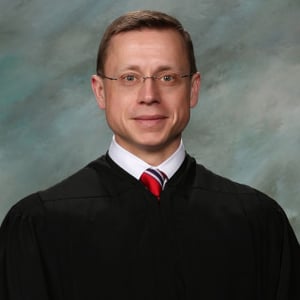
Judge, United States Court of Appeals, Fifth Circuit
Andrew Oldham is a Circuit Judge on the United States Court of Appeals for the Fifth Circuit. Before ascending to the bench, Judge Oldham served as General Counsel to Texas Governor Greg Abbott, where he advised the Governor on a range of issues under federal and state law and managed litigation in which the Governor was an interested party. Before that he served as Deputy Solicitor General for the State of Texas, where he represented Texas in federal courts across the country, including twice before the United States Supreme Court. Before moving to Texas, Judge Oldham was an attorney at Kellogg Hansen Todd Figel & Frederick in Washington, D.C. His practice focused on appellate litigation in federal courts of appeals throughout the country. Before entering private practice, Judge Oldham served as a law clerk to Justice Samuel A. Alito, Jr., at the Supreme Court of the United States and to Judge David B. Sentelle of the U.S. Court of Appeals for the District of Columbia Circuit. He also worked as an attorney-adviser in the Office of Legal Counsel at the U.S. Department of Justice from 2006 to 2008. Judge Oldham earned a B.A. from the University of Virginia with highest honors, a Truman Scholarship for graduate school, an M. Phil., first class (with distinction), from Cambridge University, and a J.D., magna cum laude, from Harvard Law School.

Senior Fellow and Director of Constitutional Studies, Manhattan Institute
Ilya Shapiro is a senior fellow and director of constitutional studies at the Manhattan Institute and a contributing editor of City Journal. Previously he was executive director and senior lecturer at the Georgetown Center for the Constitution, and before that a vice president of the Cato Institute.
Shapiro is the author of Lawless: The Miseducation of America’s Elites (2025) and Supreme Disorder: Judicial Nominations and the Politics of America’s Highest Court (2020), coauthor of Religious Liberties for Corporations? (2014), and editor of 11 volumes of the Cato Supreme Court Review (2008-18). He has contributed to a variety of academic, popular, and professional publications, including the Wall Street Journal, Harvard Journal of Law & Public Policy, Washington Post, Los Angeles Times, USA Today, National Review, and Newsweek. He also regularly provides commentary for various media outlets, writes the Shapiro’s Gavel newsletter on Substack, and once appeared on the Colbert Report.
Shapiro has testified many times before Congress and state legislatures and has filed more than 500 amicus curiae “friend of the court” briefs in the Supreme Court. He lectures regularly on behalf of the Federalist Society, is a member of the board of fellows of the Jewish Policy Center, was an inaugural Washington Fellow at the National Review Institute, and has been an adjunct law professor at the George Washington University and University of Mississippi. He is also the chairman of the board of advisers of the Mississippi Justice Institute, a barrister in the Edward Coke Appellate Inn of Court, and a former member of the Virginia Advisory Committee to the U.S. Commission on Civil Rights.
Earlier in his career, Shapiro was a special assistant/adviser to the Multi-National Force in Iraq on rule-of-law issues and practiced at Patton Boggs and Cleary Gottlieb. Before entering private practice, he clerked for Judge E. Grady Jolly of the U.S. Court of Appeals for the Fifth Circuit. He holds an AB from Princeton University, an MSc from the London School of Economics, and a JD from the University of Chicago Law School.
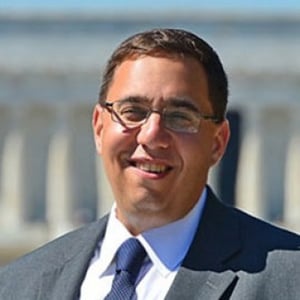
Partner, Consovoy McCarthy Park PLLC
Mr. Consovoy assists clients on a broad range of litigation and appellate issues primarily before the Supreme Court of the United States and federal appellate and district courts, as well as before federal agencies. Mr. Consovoy represents clients in cases involving constitutional issues, interpretation and enforcement of federal statutes, administrative law, civil rights disputes, and a variety of other civil litigation issues. Mr. Consovoy recently argued two cases—Spokeo v. Robbins and Evenwel v. Abbott—before the Supreme Court of the United States.
Mr. Consovoy is a former law clerk to Supreme Court Justice Clarence Thomas, Judge Edith H. Jones of the United States Court of Appeals for the Fifth Circuit, and the 17th Judicial Circuit of Virginia. Mr. Consovoy is a member of the Edward Coke Appellate Inn of Court and was named by Law360 as a “rising star” in appellate law for 2013. Since 2011, Mr. Consovoy has been the co-director of the Supreme Court Clinic at the Antonin Scalia Law School at George Mason University, where he also is the co-director of the Administrative Law Clinic.
Mr. Consovoy earned his B.A. from Monmouth University, and his J.D. magna cum laude from George Mason University School of Law. Mr. Consovoy is a member of the Virginia and District of Columbia bars.
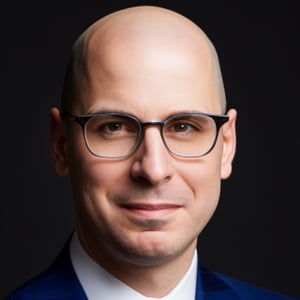
Partner and Lecturer
Adam Mortara graduated from the University of Chicago in 1996 with a B.Sc. in chemistry. He then attended Magdalene College, Cambridge, where he received a masters degree in astrophysics on a British Marshall Scholarship.
Mr. Mortara graduated from the University of Chicago Law School with highest honors in 2001. Following graduation, he clerked for Judge Patrick Higginbotham of the U.S. Court of Appeals for the Fifth Circuit and then for Justice Clarence Thomas of the Supreme Court of the United States. After his clerkships, he was a Temple Bar Scholar of the American Inns of Court.
From 2003 to 2020, Mr. Mortara was with Bartlit Beck LLP where he tried high stakes intellectual property cases and, more notably, Students For Fair Admissions v. Harvard. He retired from Bartlit Beck and founded Lawfair LLC, a civil and voting rights firm. He has been a Lecturer in Law at the University of Chicago Law School since 2007, where he teaches Federal Habeas Corpus, Federal Jurisdiction, Criminal Procedure, and Writing for the Judiciary.
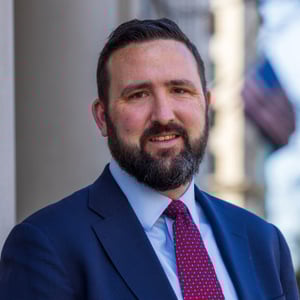
Partner, First & Fourteenth PLLC
Michael Francisco is a public and commercial litigator with extensive appellate experience who often serves as a strategic advisor to clients facing acute legal challenges. He has represented clients nationally for public impact litigation, bet-the-company lawsuits, and in defense of constitutional rights. Michael served as a law clerk to Supreme Court Justice Neil Gorsuch and Judge Timothy Tymkovich of the United States Court of Appeals for the Tenth Circuit.
Michael regularly takes on challenging matters where citizens must rely on the judiciary to vindicate their rights. His experience runs the gambit from successfully seeking injunctive relief, winning critical legal motions, defending judgments on appeal, overturning multi-million-dollar judgments, and obtaining discretionary high court review. He relishes the opportunity to develop a well-crafted legal strategy to solve the most novel and complex problems that may arise.
Michael has deep experience with political litigation representing candidates, voters, political parties, and advocacy organizations for ballot access, election administration, campaign finance, and for the unfortunate trend of criminalization of political activity.
After deciding to pursue a legal career to defend religious liberty, Michael has regularly engaged in constitutional litigation under the religion clauses and the free speech clause. He has been involved in many recent U.S. Supreme Court cases involving these core freedoms, including Groff v. DeJoy, 303 Creative v. Elenis, Masterpiece Cakeshop v. Colorado Civil Rights Commission, National Institute of Family & Life Advocates v. Becerra, Trinity Lutheran Church v. Pauley, and similar cases in lower courts on topics ranging from the ministerial exception, church property disputes, to religious land use disputes.
As an appellate advocate Michael frequently handles matters before the U.S. Supreme Court, federal courts of appeals, and Colorado appellate courts. He has argued four times before the Colorado Supreme Court and briefed 19 cases before the U.S. Supreme Court.
Michael also frequently advises clients on strategic public matters challenging federal government authority and overreach. He has regularly litigated business disputes, employment matters, as well as represented clients before state and federal administrative agencies or arbitration panels.
Prior to joining First & Fourteenth, Michael was a partner at McGuireWoods, LLP in Washington D.C., representing litigation, white collar, and government investigation clients.
At home Michael is married with four children and he enjoys many outdoor activities, ranging from competitive shooting to fixing his jeep.
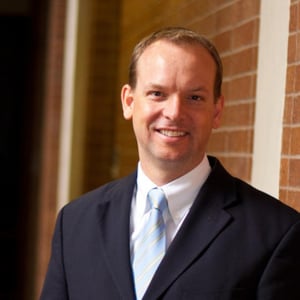
Sterling and Eleanor Colton Endowed Chair in Law; Associate Director, International Center for Law and Religion Studies, BYU Law
Professor Moore is a scholar of foreign relations law, international law, international human rights, and international development. His publications have appeared in the Harvard, Columbia, Virginia, and Northwestern Law Reviews, among others. Professor Moore has taught international law, international human rights, U.S. foreign relations law, civil procedure, legal scholarship, a plenary powers colloquium, and an international religious freedom clinic. As a teacher, he has been recognized with the University's R. Wayne Hansen Teaching and Learning Fellowship, the BYU Law Alumni Association Teacher of the Year Award, and the Student Bar Association First Year Professor of the Year Award. He is a member of the American Law Institute.
As a human rights expert, Professor Moore serves on the Organization for Security and Cooperation in Europe’s Moscow Mechanism. In 2020, he was elected to a brief term on the Human Rights Committee, a body of independent experts that oversees states’ compliance with the International Covenant on Civil and Political Rights. Professor Moore also serves as an Associate Director of the International Center for Law and Religion Studies, which seeks to secure the blessings of religious freedom and belief for everyone.
Between 2017 and 2019, Professor Moore served, variously, as the Acting Deputy Administrator and General Counsel of the U.S. Agency for International Development, the federal government’s lead agency for international development and humanitarian assistance. From 2016 to 2017, he was the Associate Dean for Research and Academic Affairs at Brigham Young University Law School. He was a Visiting Professor at the George Washington University Law School from 2008 to 2009.
Before joining BYU, Professor Moore clerked for Justice Samuel A. Alito, Jr. during the U.S. Supreme Court’s 2007 Term. From 2003 to 2007, Professor Moore was an assistant and then associate professor at the University of Kentucky College of Law. He arrived at the University of Kentucky after researching and teaching at the University of Chicago Law School as an Olin Fellow from 2001 to 2003. From 2000 to 2001, Professor Moore clerked for Judge Samuel A. Alito, Jr. on the U.S. Court of Appeals for the Third Circuit. From 1996 to 2000, he was an Honor Program trial attorney at the U.S. Department of Justice, Civil Division, Federal Programs Branch.
Professor Moore is a summa cum laude graduate of Brigham Young University Law School, where he served as Editor in Chief of the Law Review and graduated first in his class. He received his BA from Brigham Young University, where he was a Benson scholar and graduated summa cum laude, with University Honors, and as co-valedictorian of his college. He and his wife Natalie are the parents of seven wonderful children.

Borderline Executive Action: Is President Obama's Immigration Action Constitutional?
The Texas Constitution and Its Bill of Rights
Houston, TexasWhen Can the Executive Decide Not to Enforce the Law?
Dallas, TexasThe Role of Police on the Beat
David Boaz on The Libertarian Mind
Palo Alto, CaliforniaThe War on Drugs
College Admissions and Affirmative Action
Marijuana and the States: How Should Federalism Principles Inform the Federal Government’'s Response to State Marijuana Initiatives?
Targeted Killing in US Practice and Law
Should the US Enforce International Law