
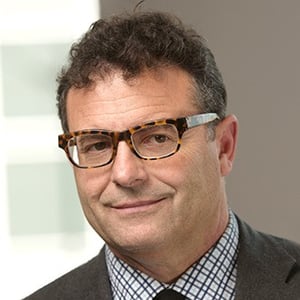
Senior Fellow and Director, Center for Monetary and Financial Alternatives, Cato Institute
George Selgin is a senior fellow and director of the Center for Monetary and Financial Alternatives at the Cato Institute and Professor Emeritus of Economics at the University of Georgia. He is the author of The Theory of Free Banking (Rowman & Littlefield, 1988), Bank Deregulation and Monetary Order (Routledge, 1996), Good Money: Birmingham Button Makers, the Royal Mint, and the Beginnings of Modern Coinage (University of Michigan Press, 2008), Money: Free and Unfree (The Cato Institute, 2015), Less Than Zero: The Case for a Falling Price Level in a Growing Economy (The Cato Institute, 2018), and Floored! How a Misguided Fed Experiment Deepened and Prolonged the Great Recession (The Cato Institute 2018). Selgin holds a B.A. in economics and zoology from Drew University, and a Ph.D. in economics from New York University.
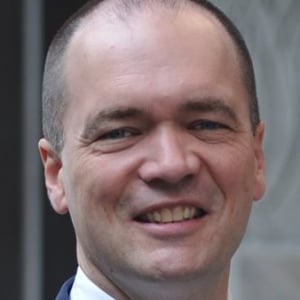
Professor of Law, High Point School of Law
Scott Gaylord directs High Point Law’s Appellate Litigation Clinic and serves as a Professor of Law, teaching Constitutional Law and related upper-level elective courses. The Appellate Clinic works with students to write and file briefs in significant court cases, including appeals before the United States Supreme Court.
Professor Gaylord is a prominent Constitutional Law scholar with an impressive background in both academia and legal practice. He has authored or co-authored 18 substantial law review articles, co-authored a Constitutional Law casebook, and has written more than 35 amicus briefs to the U.S. Supreme Court and federal circuit courts on prominent national cases involving religious liberty and free speech. He is a frequent speaker on constitutional law and First Amendment topics at law schools across the country and has regularly provided commentary on ongoing constitutional issues to national media outlets, including th eNew York Times, USA Today, the Diane Rehm Show, NPR, The National Constitution Center, and Bloomberg Law.
Professor Gaylord also started an appellate advocacy clinic at his former law school and currently serves on the North Carolina Chief Justice’s Commission on Professionalism, along with holding many other service and leadership roles. Prior to joining the academy in 2007, he practiced complex civil and commercial litigation with the Charlotte firm of Robinson Bradshaw & Hinson, and he clerked for Judge Edith H. Jones on the United States Court of Appeals for the Fifth Circuit.
Professor Gaylord earned his B.A. in philosophy and English, summa cum laude, from Colgate University, his Ph.D. in philosophy from the University of North Carolina at Chapel Hill, and his J.D. from Notre Dame Law School, where he also graduated summa cum laude.
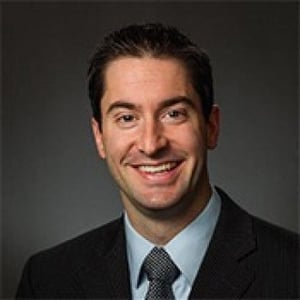
Chief Legal Counsel, Alliance Defending Freedom
Jim Campbell serves as chief legal counsel with Alliance Defending Freedom, where he leads the U.S. Legal Advocacy team. In that role, Campbell oversees all U.S. litigation teams and Allied Legal Affairs.
Prior to joining ADF in March 2023, Campbell was the solicitor general in the office of Nebraska Attorney General Douglas J. Peterson and Michael T. Hilgers. In that role, he represented the state of Nebraska in cases before state and federal courts and oversaw all civil appeals for the state. In February 2023, Campbell argued Biden v. Nebraska before the U.S. Supreme Court, a case in which Nebraska and five other states challenged the Biden administration’s attempt to forgive over $400 billion in federal student loans for over 40 million individuals.
Before joining the Nebraska attorney general’s office in January 2020, Campbell worked as senior counsel with ADF. In that role, he defended his clients’ religious freedom and freedom of speech, with a particular focus on appellate work. Campbell has also authored many articles and legal commentary pieces, including some published by USA Today and The Washington Post.
A native of northeastern Ohio, Campbell earned his Juris Doctor from the University of Akron School of Law, where he graduated summa cum laude in 2006. Following law school, he clerked for the Honorable Alice M. Batchelder of the U.S. Court of Appeals for the 6th Circuit. Campbell is admitted to the state bars of Ohio, Arizona, and Nebraska. He is also admitted to multiple federal district and appellate courts, including the U.S. Supreme Court.
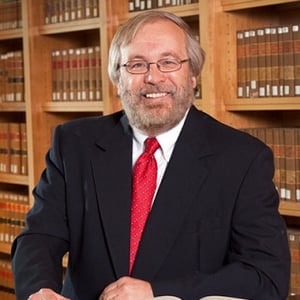
Welpton & Wise Professor of Law, University of Nebraska College of Law
Professor Rick Duncan is the Welpton & Wise Professor of Law at the University Of Nebraska College Of Law. He is a graduate of the Cornell Law School and served as an editor of the Cornell Law Review. He teaches Constitutional Law with a special emphasis on the law of religious freedom, free speech, and federalism. Duncan has written numerous books, articles, and commentaries on a wide variety of legal topics. His recent publications include an article on Justice Scalia’s legacy, another on Kermit Gosnell and Roe v. Wade, a piece on the Electoral College and Federalism, a 2019 piece on Masterpiece Cakeshop and the First Amendment, and three recent articles on the “no compelled speech” doctrine as a First Amendment defense against authoritarianism and tyranny. His most recent article, on School Choice and the First Amendment, will be published in 2023 in Case Western Law Review. He is also the co-author of a book on Secured Transactions under Article 9 of the UCC. He served as Chairman of the Nebraska Advisory Committee to the U.S. Commission on Civil Rights during the Reagan Administration. He also loves to speak at Federalist Society meetings around the country on life, liberty, and the pursuit of federalism.
Duncan has five children, five grandchildren, and a wonderful wife who help him pursue happiness. He loves lifting weights (particularly going heavy on the incline bench press), attending Broadway musicals and plays, including Hamilton: An American Musical which he has seen 12 times (possibly a Nebraska record). He regularly reads both the Bible and the New York Times because it is important to keep up with what both sides have to say. He loves following major league baseball, especially the San Diego Padres. And his favorite legal aphorism is “first come rights then comes government to secure those rights.”
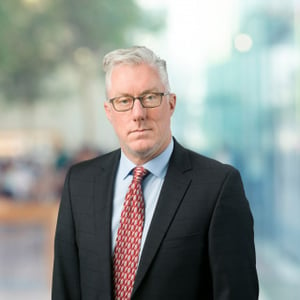
Shareholder, Maynard Nexsen PC
Christian is a Shareholder in Maynard Nexsen’s Government Investigations & White Collar Defense practice group. An award-winning defense attorney, Christian’s practice focuses on the representation of business entities and individuals under investigation or facing allegations of criminal and civil wrongdoing. He is a trial lawyer with more than 14 years in private practice who has handled hundreds of criminal matters throughout North Carolina and in federal courts nationally.
Christian has handled high-profile matters involving antitrust violations, political corruption, securities fraud, and countless allegations of fraudulent business dealings. He has successfully defended individuals facing potential professional licensure suspension or revocation.
His practice includes representation of businesses and individuals served with Grand Jury Subpoenas and Target Letters and asked to provide trial testimony, including counseling other attorneys and surgeon witnesses. Christian works with attorneys throughout the firm to ensure that his clients are afforded the most comprehensive representation.
Of equal importance to Christian’s success as a litigator is his ability to help those suspected of criminal wrongdoing, including those who may become a target of an ongoing investigation, avoid charges altogether. Christian has negotiated non-prosecution agreements, pretrial diversion agreements, deferred prosecutions, and the outright dismissal of charges in numerous cases.
Prior to joining Maynard Nexsen, Christian was a Founder and Managing Partner of Dysart Willis, a full-service criminal defense firm. Dysart, a Raleigh native, opened Dysart Willis in 2010 after a clerkship at the Supreme Court of North Carolina and a one-year Fellowship in the Center for Criminal Justice and Professional Responsibility at Duke Law School.
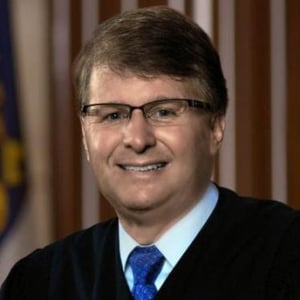
Founding Dean & Professor, Kenneth F. Kahn School of Law at High Point University
Hon. Mark Martin is the founding dean and professor of law at the Kenneth F. Kahn School of Law at High Point University.
Mark served as Chief Justice of the North Carolina Supreme Court from 2014-2019. He also served on that Court as an Associate Justice, on the North Carolina Court of Appeals, and on a North Carolina Superior Court.
The Chief Justice of the United States appointed Mark to the Committee on Federal-State Jurisdiction of the United States Judicial Conference. He also served on the board of directors of the Conference of Chief Justices.
Mark chairs the Thomson Reuters Judicial Advisory Council. He is a member of the American Law Institute, where he assists with the Third Restatement, Conflict of Laws, and serves on the Region 15 Advisory Committee.
Mark has served on the adjunct faculties of Duke University, North Carolina Central University, and the University of North Carolina law schools. Mark co-taught a course on the various modes of constitutional interpretation with Associate Justice Samuel A. Alito, Jr. of the United States Supreme Court from 2020-2022.
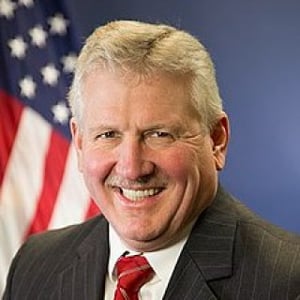
Former U.S. Attorney, Western District of North Carolina
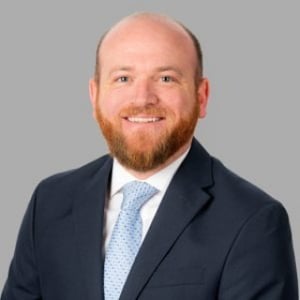
Attorney, Cranfill Sumner, LLP
Chad Rhoades is an attorney with Cranfill Sumner, LLP and is a member of the firm’s Administrative, Regulatory and Government Law and White Collar, Government Investigations, and Special Matters practice groups. Chad is also a member of Mincey Bell Milnor, an affiliate boutique group of Cranfill Sumner LLP based in Washington, D.C. Chad is an experienced litigator with extensive policy and political experience at both the federal and state level across multiple branches of government. Prior to joining Cranfill Sumner, Chad was an Assistant United States Attorney for the Eastern District of North Carolina, served as Chief Counsel to United States Senator Thom Tillis, and worked in state government at the North Carolina General Assembly.
As a federal prosecutor, Chad prosecuted hundreds of criminal cases, led violent crime reduction task forces, chaired nine jury trials, and successfully argued before the Fourth Circuit Court of Appeals. Chad has led complex investigations and indicted sophisticated criminal organizations engaged in drug trafficking, violent crime, fraud, firearms trafficking, and money laundering. Prior to joining the United States Attorney’s Office, Chad served as Chief Counsel to United States Senator Thom Tillis. As Chief Counsel, Chad advised on matters that included firearms policy, antitrust, criminal justice reform, whistleblower protection, Electronic Communications Privacy Act, data privacy, campaign finance, and congressional and oversight investigations. During his time on Capitol Hill, Chad helped the office author, introduce, and shepherd bipartisan legislation. He also guided the office through the nomination and confirmation of Supreme Court justices, circuit court judges, and high-level executive appointments. Before his time in Washington, D.C., Chad worked in state government at the North Carolina General Assembly where he practiced and advised in election and campaign law. Chad received his undergraduate degree from North Carolina State University and law degree from Campbell University.

Senior Legal Fellow and Manager, National Security Law Program, The Heritage Foundation
Charles “Cully” Stimson is a widely recognized expert in national security, homeland security, crime control, drug policy and immigration. A senior legal fellow at The Heritage Foundation since 2007, Stimson became Manager of the National Security Law Program in Heritage’s Institute for Constitutional Government in April 2013 after serving as Heritage’s chief of staff for a year.
Stimson writes and lectures on policy issues such as the law of armed conflict, terrorist detainee policy and interrogations, the Geneva Conventions, military commissions, the Patriot Act and FISA, criminal law and the death penalty, immigration and the war on drugs. As chief of staff to then-Heritage President Edwin J. Feulner, he was a key adviser on public policy matters as well as manager of Feulner’s office staff and Heritage’s day-to-day operations.
Stimson’s many research papers, op-eds and articles include special reports such as “Adult Time for Adult Crime,” a comprehensive study on the constitutionality of life sentences for teen-age murderers, and Sexual Assault in the Military: Understanding the Problem and How to Fix It, a ground-breaking paper detailing the inner workings of the military justice system compared to its civilian counterpart. His work on criminal and immigration law has been cited in briefs before the U.S. Supreme Court.
He testifies before the U.S. Senate and House on national security issues, and recently testified before the Senate Armed Services Committee on the Law of Armed Conflict, Law of War, and the 2001 Authorization for Use of Military Force.
Before joining the think tank in 2007, Stimson served as Deputy Assistant Secretary of Defense for Detainee Affairs. He advised then-Secretaries of Defense Donald Rumsfeld and Robert Gates and coordinated the Pentagon’s global detention policy and operations, including at Guantanamo Bay and in Iraq and Afghanistan. He was chairman of detainee-related panels such as the Defense Senior Leadership Oversight Committee, and the Special Detainee Follow Up Group. He represented the United States before the U.N. in Geneva, Switzerland in May 2006 where he led the DOD delegation in defense of the United States’ Second Period Report on the Convention Against Torture.
An accomplished trial lawyer, Stimson worked as a prosecutor at the local, state and federal levels, where he concentrated on violent crimes such as homicide, sexual assault and domestic violence. A third generation naval officer, Cully also served as a military prosecutor, defense counsel, and recently served as Deputy Chief Judge of the Navy-Marine Corps Trial Judiciary. He continues to serve, with the rank of Captain, as the Commanding Officer of the Preliminary Hearing Unit.
Stimson’s thousands of media interviews and appearances include Fox News Channel, MSNBC, CNN, BBC, NPR and C-SPAN. He has been quoted by most major newspapers, including The Washington Post, Wall Street Journal, New York Times, Los Angeles Times, and London Times.
A businessman and educator by training, Stimson is Vice Chairman of his family’s commercial real estate company in Seattle. Before 9/11, he was a Vice President at a New York-based global financial services and insurance brokerage firm where ran the private equity mergers and acquisitions D.C. operation.
Stimson holds a law degree from the George Mason University School of Law, where he later taught as an Adjunct Professor of Law. He is a graduate of Kenyon College, where he was Captain of the men’s varsity soccer team and an All-Conference player. He also studied at Harvard and Exeter universities. An avid soccer player and triathlete, he serves as Chairman of the Board of the United States Soccer Foundation, the charitable giving arm of U.S. Soccer.
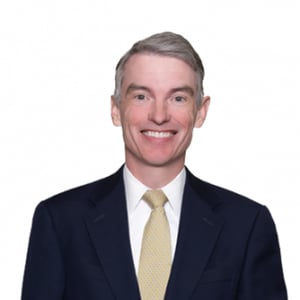
Partner, Robinson Bradshaw & Hinson, P.A.
Stephen Cox represents business clients in the litigation and arbitration of complex commercial matters, focusing on construction, employment and corporate governance disputes. Admitted to practice in North Carolina and South Carolina, he has represented parties in numerous class actions and derivative actions and has significant experience in both states' business courts. Stephen has appeared before the U.S. Court of Appeals for the Fourth Circuit and the U.S. Supreme Court. He has handled numerous arbitrations before JAMS, the American Arbitration Association and the Financial Industry Regulatory Authority, and he regularly serves as an arbitrator and mediator himself.
Stephen represented a national chemical supplier in a case of first impression in North Carolina involving the application of the UCC’s “good faith” pricing standard to a multimillion-dollar chemical requirements contract. He was also on a Robinson Bradshaw team engaged to defend an international shipping firm in an action where the trial court had already certified a class seeking over $100 million in damages and denied summary judgment. Stephen and the firm’s lawyers successfully petitioned for decertification of the class—a decision that led to the end of the litigation.
Stephen serves on Robinson Bradshaw's board of directors.
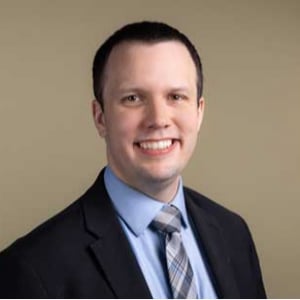
Partner, Consovoy McCarthy
Mr. Dickey represents clients in trial and appellate courts, with a focus on constitutional issues and complex litigation. He has argued multiple times in both federal and state appellate courts. He has also served as lead counsel in high-profile challenges to state law. Recently, Mr. Dickey served as court-assigned amicus in the U.S. Court of Appeals for the Fourth Circuit to present a novel challenge to Article III jurisdiction to enforce agency orders.
Before joining Consovoy McCarthy, Mr. Dickey worked at a major international law firm, where he was elected partner. He also served as an Associate White House Counsel. In that role, he assisted with the confirmation proceedings for Justice Amy Coney Barrett. Earlier in his career, Mr. Dickey was an Assistant Solicitor General in the West Virginia Attorney General’s office, where he assisted with key appellate matters for the state and served as lead trial counsel defending the state’s right-to-work law.
Mr. Dickey served as a law clerk to Justice Clarence Thomas of the U.S. Supreme Court and Judge William H. Pryor Jr. of the U.S. Court of Appeals for the Eleventh Circuit. He graduated with high honors from the University of Chicago Law School, where he was selected to the Order of the Coif. He earned his B.A., magna cum laude, from Samford University. Mr. Dickey is a member of the Virginia, Alabama, District of Columbia, North Carolina, and West Virginia bars.
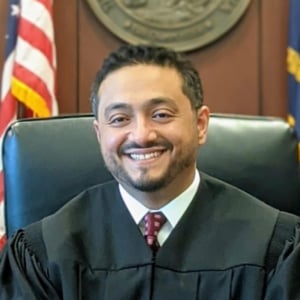
District Court Judge, Wake County, North Carolina
Rashad Ahmed Hauter serves as a District Court Judge in Wake County, North Carolina. He is a graduate of Campbell University School of Law and the University of North Carolina at Chapel Hill. He was appointed to the bench in 2021 and was elected to a full term in 2022. Judge Hauter is the first Yemeni American judge in the United States and the first Muslim American judge in North Carolina. Recently, he was appointed by the President Pro Tempore of the North Carolina Senate to serve on the Judicial Standards Commission. Prior to his judgeship, Judge Hauter served as an Assistant District Attorney, a statewide resource prosecutor, and an attorney in private practice.
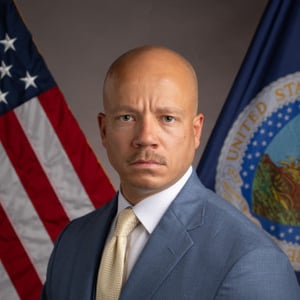
Devon Westhill is the Assistant Secretary for Civil Rights at the U.S. Department of Agriculture. The U.S. Senate confirmed President Donald Trump’s nomination of Westhill on October 7, 2025.
Westhill returns to the USDA where he previously headed the civil rights office as Deputy Assistant Secretary in President Trump’s first term. His previous government appointments also include service at the U.S. Department of Labor, liaison to the Administrative Conference of the U.S., and liaison to the White House Initiative on Historically Black Colleges and Universities. Prior to returning to government service, Westhill was President and General Counsel of a nonprofit civil rights organization.
Westhill has testified on civil rights matters before Congress, federal agencies, and as an expert witness in federal court. He has spoken hundreds of times at college campuses, conferences, and on radio and TV programs, and he is frequently quoted in print publications, and his writing has appeared in numerous national outlets. A U.S. Navy veteran, Westhill earned his BA from the University of North Carolina at Chapel Hill and his JD from the University of Florida.
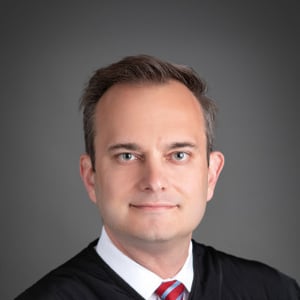
United States Magistrate Judge, Eastern District of North Carolina
Robert T. Numbers, II serves as a United States Magistrate Judge in the United States District Court for the Eastern District of North Carolina.
Judge Numbers received degrees in Political Science and Economics, with honors, from Wake Forest University. After completing his undergraduate work, Judge Numbers obtained his law degree from the University of Notre Dame where he served on the Notre Dame Law Review.
Upon his graduation from law school, Judge Numbers joined the Winston-Salem office of a large, regional law firm. From 2005 until 2010, Judge Numbers’ practice focused on civil rights claims against local municipalities and government contractors. In 2010, Judge Numbers joined the firm’s Raleigh office and concentrated his practice on complex business litigation in state and federal courts.
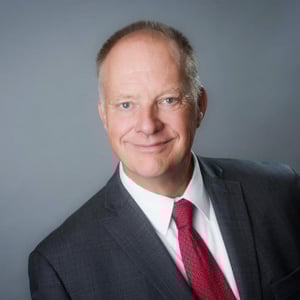
Associate Justice, Minnesota Supreme Court (ret.)
Former Minnesota Supreme Court Justice Barry Anderson is a 1976 graduate of Gustavus Adolphus College in St. Peter, Minnesota and a 1979 graduate of the University of Minnesota Law School. He was a member of the Minnesota Court of Appeals from August 1998 until his appointment to the Supreme Court. He was sworn in and joined the court on October 13, 2004, and served through to his retirement on May 10, 2024.
He previously was a partner in the Minneapolis and Hutchinson law firm of Arnold, Anderson & Dove, PLLP, and also served the City of Hutchinson as City Attorney from 1987 to 1998. He is certified by the Minnesota State Bar Association as a civil trial specialist.
Justice Anderson’s background includes substantial public service including as a board member and chair of variety of community organizations including service clubs, task forces and a local public access channel as well as a wide variety of other community activities.
Justice Anderson also served on the Minnesota Judicial Council, the managing body for the Minnesota Judicial Branch. He is also a frequent contributor to continuing legal education efforts on both appellate advocacy issues as well as general trial practice.
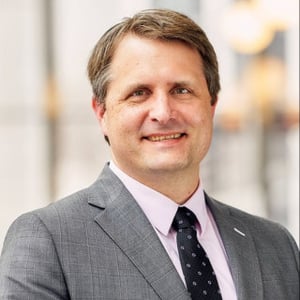
Partner, Lockridge Grindal Nauen
David Zoll is a partner at Lockridge Grindal Nauen here in Minneapolis where he specializes in complex litigation matters and appeals. He frequently represents governmental entities and businesses in high-profile cases involving environmental, business, and constitutional law. Students at the at the University of Minnesota Law School may also recognize him as adjunct Professor Zoll where he teaches an Advanced Environmental Law seminar—next offered in Spring 2025.
David also has a specialized practice in political law. He advises political parties, candidates, and independent organizations on compliance with complex and ever-changing regulations. David assisted in the representation of Governor Mark Dayton in the 2010 gubernatorial election recount and was part of the trial team representing Senator Al Franken in the 2008 senatorial election contest. David also advises non-profits regarding compliance with state and federal laws relating to lobbying, issue advocacy, and campaign activities.
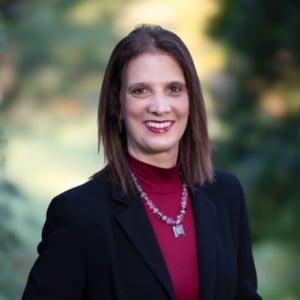
Head of Antitrust and Competition Law, Ericsson
Dina Kallay is the head of Antitrust of Ericsson where she covers the American and Asian continents and also advises on Intellectual Property matters. Prior to joining Ericsson in 2013, Dina served over six years as Counsel for Intellectual Property and International Antitrust at the U.S. Federal Trade Commission (“FTC”). As Counsel for I.P. at the FTC, Dina focused on worldwide antitrust-intellectual property matters, including standard-setting issues, as well as on Asian and multilateral competition matters. She worked closely with the three Chinese antimonopoly agencies and has also spent a year with the FTC Bureau of Competition, working on antitrust conduct and merger enforcement matters in high-tech industries. Prior to joining the FTC, Dina practiced antitrust and intellectual property law at a couple of law firms, most recently with the Washington DC office of Howrey LLP. She also worked as in-house antitrust counsel for Microelectrónica Española, where her work focused around the I.P. policy of the European Telecommunications Standards Institute (ETSI). Before that she clerked at the European Commission Directorate General for Competition (DG COMP) unit for Information Industries and Consumer Electronics, where she worked on antitrust investigations and policy matters involving intellectual property. Ms. Kallay holds a doctorate from the University of Michigan Law School, where her doctoral dissertation focused on antitrust-IP interface issues, and was later published as a book - The Law and Economics of Antitrust and Intellectual Property (Edward Elgar, 2004). Dina has written and spoken extensively on antitrust and intellectual property, and has also taught both subjects as an adjunct professor at the Hebrew University and Bar Ilan University. She is a member of the District of Columbia, New York, England and Wales (Solicitor) and Israel bars.
Former NAAG Antitrust Task Force Chair and Former Assistant Attorney General at Wisconsin Department of Justice
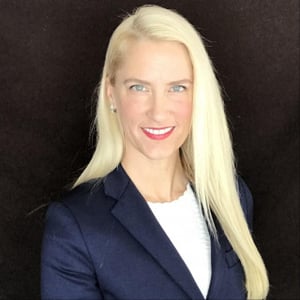
As former Chair of the NAAG Multistate Antitrust Task Force and as Wisconsin's Assistant Attorney General for Antitrust from 2005-2024, Gwendolyn has extensive experience litigating antitrust cases on behalf of the State of Wisconsin- including merger enforcement, cartel prosecutions. She was the lead attorney in State of Wisconsin v. Indivior, where she led 42 Attorneys General in their successful case against the manufacturer of Suboxone, resulting in a $102.5 million settlement. Gwendolyn was also on the trial team for the States' challenge to the T-Mobile/Sprint merger.
Gwendolyn was co-chair of the Pharmaceutical Industry Working Group in the National Association of Attorneys General Antitrust Task Force, and was a delegate to the “Future of Pharma Mergers” international initiative spearheaded by the FTC, and lead the Reimagining Pharma Attorney Generals Advisory Group.
Active in the American Bar Association, she is a member of the Antitrust Section Council. Gwendolyn was also the 2023 recipient of the NAAG (nationwide) Attorney General Career Staff Award, and was named as a “Woman Making History” by Wisconsin Lawyer magazine in 2024.

Constitutional Economics with Professor George Selgin
Nashville Lawyers Chapter
Nashville, TNTopics
The D.C. Circuit's Approach to Stays on EPA Rules
The D.C. Circuit rarely stays EPA rules as it considers challenges to them, and seldom...
Panel III: Supreme Court Candidate Forum
2024 North Carolina Chapters Conference
Raleigh, NCNebraska Lawyers Chapter Annual Event
at the Nebraska State Bar Association Meeting
La Vista, NEPanel II: Criminal Justice Reform: Is more needed or did we go too far? A look back at the First Step Act and Raise the Age
2024 North Carolina Chapters Conference
Raleigh, NCPanel I: DEI in the Courts
2024 North Carolina Chapters
Raleigh, NCTopics
The Fed’s Remarkable ‘Independence’ Claim
This post originally appeared in The Daily Economy. In the course of human events, the...
Welcome Remarks
2024 North Carolina Chapters Conference
Raleigh, NCWho Is Entitled to Ballot Access in Minnesota - A discussion on the Joan Growe, et al., vs. Steve Simon, Minnesota Secretary of State decision
Co-Sponsored by the Minnesota Lawyers Chapter & University of Minnesota Law School Student Chapter
Minneapolis, MNFireside Chat with Gwendolyn Cooley
Dina Kallay, Gwendolyn J. Lindsay Cooley
Please join us for a fireside chat with Gwendolyn Cooley, former Chair of the National...