
Shareholder, Jackson Lewis PC
Paul DeCamp is a Shareholder in the Washington, D.C. Region office of Jackson Lewis P.C. and leader of the firm’s Wage and Hour Practice Group. His practice focuses exclusively on management-side wage and hour law.
Mr. DeCamp devotes much of his practice to complex litigation, including class, collective, and hybrid actions. He has served as lead or co-counsel in scores of class and putative class cases around the country involving such industries as restaurants, pharmaceutical sales, financial services, retail, medical supplies, security, health care, information technology, and aerospace. Mr. DeCamp also defends federal and state agency investigations, conducts preventive compliance reviews, and provides day-to-day advice and counsel regarding such issues as exempt/non-exempt classification, permissible pay deductions, measuring working time, regular rate calculations for premium overtime pay, determining proper pay and duties for tipped employees, complying with state laws concerning meal and rest periods, and independent contractor status. He has provided extensive wage and hour guidance in a variety of industries including restaurants and hospitality, retail, wholesale distribution, health care, financial services, oil and gas, and government contracting.
Before joining Jackson Lewis, Mr. DeCamp served as Administrator of the U.S. Department of Labor’s Wage and Hour Division, the chief federal officer responsible for interpreting and enforcing the Nation’s wage and hour laws on behalf of roughly 135 million workers in 7.3 million workplaces around the country. Appointed by the President, he was in charge of a federal agency with close to 1,300 employees in more than 220 offices nationwide, operating on an annual budget of more than $170 million.
Mr. DeCamp has testified in Congress on a variety of wage and hour topics, most recently in 2014. He is a frequent speaker at seminars and conferences across the country, as well as an author of numerous articles and book chapters regarding wage and hour law and litigation. He is a member of the American Employment Law Council and the editorial advisory board for Thompson Publishing Group’s four Fair Labor Standards Act publications. Since 2011, Mr. DeCamp has been listed as one of the country's leading labor and employment lawyers in Chambers USA: America's Leading Lawyers for Business. He has also been selected for inclusion in Virginia Super Lawyers since 2013, after having been listed twice in Virginia Super Lawyers Rising Stars. OS Restaurant Partners (now Bloomin’ Brands), which operates Outback Steakhouse and Carrabba’s Italian Grill, among other restaurant concepts, has twice recognized Mr. DeCamp’s team at Jackson Lewis as “Purveyor of the Year.”
Mr. DeCamp received his A.B. in Government, magna cum laude, from Harvard College in 1992. In 1995, he earned his J.D. from the Columbia University School of Law, where he was a Notes Editor for the Columbia Law Review and the Director of the First-Year Moot Court Program. After law school, he clerked for the Honorable Alan E. Norris of the U.S. Court of Appeals for the Sixth Circuit.

Professor Emerita of Law, George Mason University Antonin Scalia School of Law
Professor Emerita Joyce Lee Malcolm is an historian and constitutional scholar active in the area of constitutional history, focusing on the development of individual rights in Great Britain and America. She is the author of eight books, most recently The Tragedy of Benedict Arnold: An American Life, May 2018. Professor Malcolm has written many books and articles on gun control, the Second Amendment, and individual rights. Her work was cited several times in the recent U.S. Supreme Court opinion in District of Columbia v. Heller.
Professor Malcolm has previously taught at Princeton University, Bentley College, Boston University, Northeastern University and Cambridge University. She was also a Senior Advisor at the Massachusetts Institute of Technology Security Studies Program, a Visiting Scholar at Massachusetts Center for Renaissance Studies, and is a Bye Fellow at Robinson College, Cambridge University.
Her seventh book, Peter's War: A New England Slave Boy and the American Revolution, was published by Yale University Press in 2009. "Magna Carta in America: Entrenched," a chapter authored by Professor Malcolm, appears in Magna Carta: The Foundation of Freedom 1215-2015 (Nicholas Vincent, Third Millennium Publishing). Her essays have appeared in The Wall Street Journal, The Financial Times, USA Today, The Boston Globe and other newspapers.
Wayne A. Abernathy, Wild Bells
Wayne A. Abernathy is a former U.S. Treasury Assistant Secretary for Financial Institutions under President George W. Bush, receiving the Alexander Hamilton Award in recognition of his service. In that office he was also a member of the Board of Directors of the Securities Investor Protection Corporation. Prior to his work at the Treasury, Mr. Abernathy served as Staff Director of the Senate Banking Committee, under Chairman Phil Gramm.
Following his service at the Treasury, Mr. Abernathy worked for 15 years on the staff of the American Bankers Association, as Executive Vice President for Financial Institutions Policy and Regulatory Affairs.
Previous experience with the Senate Banking Committee includes serving as Staff Director of the Subcommittee on Securities during 1995-1998. From 1989 until 1994, Mr. Abernathy was a Republican economist for the committee. He previously worked as a senior legislative assistant for Senator Gramm during 1987-1989 and as an economist for the Banking Committee’s Subcommittee on International Finance and Monetary Policy during 1981-1986, under Chairman Jake Garn.
Mr. Abernathy earned his bachelor’s degree in International Studies from The Johns Hopkins University in 1978. In 1980, he received a master’s degree in International Studies from the School of Advanced International Studies of The Johns Hopkins University.
Chief Justice, Florida Supreme Court
Justice Charles Canady was born in Lakeland, Florida, in 1954. He is married to Jennifer Houghton, and they have two children. He received his B.A. from Haverford College in 1976 and his J.D. from the Yale Law School in 1979.
Justice Canady practiced law with the firm of Holland and Knight in Lakeland from 1979 through 1982. He practiced with the firm of Lane, Trohn, et al., from 1983 through 1992.
From November 1984 to November 1990, Justice Canady served three terms in the Florida House of Representatives, and from January 1993 to January 2001, he served four terms in the United States House of Representatives. Throughout his service in Congress, Justice Canady was a member of the House Judiciary Committee. For three terms, from January 1995 to January 2001, Justice Canady was the Chairman of the House Judiciary Subcommittee on the Constitution.
Upon leaving Congress, Justice Canady became General Counsel to Governor Jeb Bush. He was appointed by Governor Bush to the Second District Court of Appeal for a term beginning November 20, 2002.
On August 28, 2008, Justice Canady was appointed to the Florida Supreme Court by Governor Charlie Crist and took office on September 8, 2008. He served as Chief Justice from July 2010 through June 2012. In March 2018, he was elected by his colleagues to serve as Chief Justice for a second time, with his two-year term starting July 1, 2018, and a third time starting July 1, 2020.

Vice President, Edwin Meese III Institute for the Rule of Law, Advancing American Freedom
John G. Malcolm oversees Advancing American Freedom’s work to increase understanding of the Constitution and the rule of law as Vice President of the organization’s Edwin Meese III Institute for the Rule of Law. Malcolm brings to the challenge a wealth of legal expertise and experience in both the public and private sectors.
Prior to joining Advancing American Freedom in 2025, Malcolm was the Vice President of the Institute for Constitutional Government and the Director of the Meese Center for Legal and Judicial Studies at the Heritage Foundation. Prior to joining Heritage in 2012, Malcolm was general counsel at the U.S. Commission on International Religious Freedom, as well as a distinguished practitioner in residence at Pepperdine Law School. From 2004 to 2009, Malcolm was executive vice president and director of worldwide anti-piracy operations for the Motion Picture Association.
Malcolm served as a deputy assistant attorney general in the Department of Justice’s Criminal Division from 2001 to 2004, where he oversaw sections on computer crime and intellectual property, domestic security, child exploitation and obscenity, and special investigations. Immediately prior to that, he was a founding partner in the Atlanta law firm of Malcolm & Schroeder, LLP.
From 1990 to 1997, Malcolm was an assistant U.S. attorney in Atlanta, assigned to the fraud and public corruption section, and also an associate independent counsel, investigating fraud and abuse in the Department of Housing and Urban Development. He was honored with the Director’s Award for Superior Performance for his work in connection with the successful prosecution of Walter Leroy Moody Jr., who assassinated an 11th Circuit judge and the head of the Savannah chapter of the NAACP.
A graduate of Harvard Law School and Columbia College, Malcolm began his career as a law clerk to a federal district court judge and a federal appellate court judge, and as an associate at the Atlanta-based law firm of Sutherland, Asbill & Brennan (new Eversheds Sutherland).
Malcolm, who resides in Washington, D.C., serves on the Board of Trustees of the Washington National Opera and is a Senate-confirmed member of the Board of Directors of the Legal Services Corporation, the largest funder of civil legal aid in the United States.
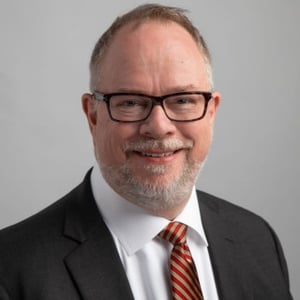
Managing Attorney of the Washington Office, Institute for Justice
William R. Maurer is the Managing Attorney of the Washington state office of the Institute for Justice, which engages in litigation in the areas of economic liberty, private property rights, educational choice, & freedom of speech.
Maurer is an advocate against the criminalization of poverty and the governmental use of the criminal and civil enforcement systems to raise revenue. He was lead counsel in a class action challenging the use of tickets to raise revenue in the city of Pagedale, Missouri. The suit resulted in a federal consent decree that reformed the city’s ticketing and municipal court system. He regularly speaks, teaches, and writes about the abuse of fines and fees in the criminal justice system. He was a participant in summits on taxation by citation put on by the White House and Department of Justice during the Obama Administration. His work on the issue includes serving as an advisory board member of the Fines and Fees Justice Center.
In addition to his work on criminal and civil justice reform, Maurer is a First Amendment litigator. In 2011, he successfully argued before the U.S. Supreme Court that Arizona’s punitive campaign financing regime was unconstitutional. Before the Washington Supreme Court, he successfully argued against efforts to classify radio commentary as a contribution under the state’s campaign finance law.
His cases and advocacy have been covered in the Washington Post, the New York Times, the Economist, the Wall Street Journal, and other major media outlets.
Maurer was named a “Washington Superlawyer” by Washington Law & Politics Magazine for several years. He is a chapter author in numerous legal reference works and has written several articles for law reviews and legal publications across the country.
Prior to joining IJ-WA, Maurer clerked for Washington Supreme Court Justice Richard Sanders and then practiced law at Perkins Coie LLP. Maurer received his law degree in 1994 from the University of Wisconsin – Madison, where he was an editor of the Wisconsin Law Review. He received his BA from Bard College in 1989.
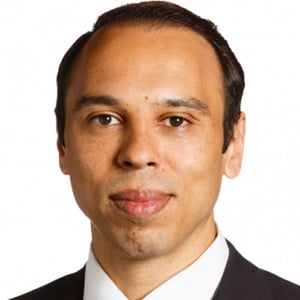
Vice President of Domestic and Economic Policy, The Heritage Foundation
Roger Severino is Vice President of Economic and Domestic Policy, and the Joseph C. and Elizabeth A. Anderlik Fellow at The Heritage Foundation.
Severino is a national authority on civil rights, conscience and religious freedom, the administrative state, and information privacy, particularly as applied to health care law and policy. Find his tweets at @RogerSeverino_.
Severino spearheaded the HHS Accountability Project while a Senior Fellow at EPPC from 2021 to 2023. Previously, Severino was Director of HHS’ Office for Civil Rights, where he led a team of over 250 staff enforcing our nation’s civil rights, conscience and religious freedom, and health information privacy laws. He served from 2017 to 2021 and was the longest-serving OCR director of the past three decades.
Prior to joining HHS, Severino served for two years as Director of the DeVos Center for Religion and Civil Society at Heritage, advocating for life, family, and religious-freedom policies. Before that, he was a trial attorney for seven years at the U.S. Department of Justice’s Civil Rights Division where he enforced the Fair Housing Act and the Civil Rights Act of 1964. Severino started his legal career at the Becket Fund for Religious Liberty, where he was Legal Counsel and Chief Operations Officer and defended the rights of people of all faiths under federal and international law.
Severino has been profiled in The New York Times, The Atlantic, The Wall Street Journal, and The Hill and has appeared on Fox News, CNN, MSNBC, NPR, and PBS, among others. In 2020, The New York Times dubbed him and his wife Carrie, “a conservative power couple” to be reckoned with.
Severino holds a JD from Harvard Law School, a master’s degree in public policy, with highest distinction, from Carnegie Mellon University, and a bachelor’s degree in business from the University of Southern California. He was appointed by President Trump to the Administrative Conference of the United States and is a member of the District of Columbia and the Commonwealth of Virginia bars.
As OCR director, Severino founded the federal government’s first division dedicated exclusively to conscience and religious freedom compliance and enforcement. He enforced the Weldon Amendment for the first time against a state (California) after it coerced families and religious organizations into paying for abortion insurance coverage, leading to a $200 million federal funding disallowance. He also enforced laws protecting pro-life pregnancy resource centers from discrimination by states hostile to their message and enforced laws prohibiting forced participation in abortions by medical professionals.
With respect to civil rights, Severino protected older persons and people with disabilities from being denied life-saving care due to discriminatory “quality of life” judgments, especially during the COVID-19 pandemic. He also achieved a landmark sexual harassment resolution with Michigan State University in the wake of the Larry Nassar sexual assault scandal and protected the rights of non-English speakers to have equal access to health and human services.
In the area of health privacy, he secured the largest HIPAA monetary settlement in history and achieved the largest number of enforcement resolutions both in a single year and across four years. He also facilitated the transformational use of Skype, Zoom, and Facetime for delivery of telehealth during the COVID-19 pandemic and beyond.
His regulatory reform activities resulted in a comprehensive conscience protection regulation and proposed a life-affirming disability rights regulation. He achieved regulatory savings of $3.6 billion in health care industry costs over five years and identified and proposed an additional $3.2 billion in cost savings from the repeal of ineffective and unnecessary regulatory burdens.
Severino is a Spanish speaker who teaches salsa and west coast swing in his spare time.

Professor of Law, University of San Diego School of Law (Retired)
Gail Heriot is a recently retired law professor from the University of San Diego. She also served as a member of the U.S. Commission on Civil Rights from 2007 to 2025. She is also the chairman of the board of the American Civil Rights Project and the chair emerita of the Civil Rights practice group at the Federalist Society for Law & Public Policy.
Professor Heriot is a prolific writer in the area of civil rights. She is the author of many law review articles. She is also the editor (along with Maimon Schwarzschild) of the 2021 anthology, A Dubious Expediency: How Race Preferences Damage Higher Education. Her upcoming book is entitled, Why We Walk on Eggshell: How Our Civil Rights Laws Helped Bring About the Woke Era—And the Trump Era, Too.
Her writings for a general audience have appeared in the Wall Street Journal, the San Diego Union-Tribune, the National Review and many other newspapers and magazines.
In 1996, she co-chaired the successful “Yes on Proposition 209” campaign, which amended the California Constitution to prohibit state-sponsored discrimination or preferential treatment based on race, sex, color, ethnicity or national origin. In 2020, she co-chaired the “No on Proposition 16” campaign, which successfully prevented Proposition 209’s repeal.
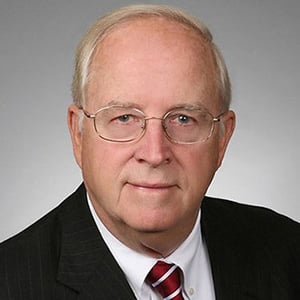
Of Counsel, Kirkland & Ellis LLP
John focuses his practice on labor and employment litigation and counseling employers on mergers, acquisitions and consolidations, downsizing, plant relocations, union representation elections, labor negotiations, strikes and lockouts, NLRB unfair labor practices, arbitration, wage and hour, wrongful discharge and equal employment. John, a former NLRB General Counsel and Labor Department official, was selected as a global leader in the field of employment & labor law in The International Who's Who of Labor and Employment Lawyers by Law Business Research, The Best Lawyers in America, and Super Lawyers.
John earned his B.A. from Brown University and both his J.D. and LL.M. from Georgetown.

Attorney at Law
James P. Scanlan is an attorney specializing in the use of statistics in litigation. He has published about 60 articles on legal or public policy issues. About half have pertained to the use of statistics in the law and the social and medical sciences, especially regarding the patterns by which standard measures of differences between outcome rates tend to be systematically affected by the prevalence of an outcome. Most notably, the rarer an outcome the greater tends to be the relative difference in experiencing and the smaller tends to be the relative difference in avoiding it, a pattern termed “Scanlan’s Rule” by scholars in the UK. Thus, for example, improvements in health or healthcare tend to decrease relative differences in favorable health outcomes, while increasing relative differences in the corresponding adverse outcomes; increasing loan approval rates tends to decrease relative differences in approval rates while increasing relative differences in rejection rates. Without recognizing this and related patterns it is not possible to soundly interpret data on group differences in outcome rates.

CEO, Sharf & Associates
As EEOC's Chief Psychologist in the mid-1970s, Jim drafted the Uniform Guidelines on Employee Selection Procedures He subsequently returned to government to serve as Special Assistant to EEOC's Chairman for whom he drafted the "race norming" prohibition in the Civil Rights Act of 1991.
Jim has successfully defended the validity generalization (VG) of measures of cognitive ability (Taylor v. James River Corp., 1989 WL 165953 (S.D. Ala. 1989; McCoy v. Willamette Industries, Inc. U.S. District Court for the Southern District of Georgia, Savannah Dicision, Civil Action No. CV401-075 (2001)) - his VG reasoning having been affirmed by the Fifth Circuit (Bernard v. Gulf Oil Corp., 890 F.2d. 735, 744 (5th Cir. 1989). Jim has also successfully defended validity generalization challenged by OFCCP (TIMKEN) and EEOC (SMECO).
For four years, Jim was industrial psychology's expert writing the licensing exam required of all psychologists in the U.S. and Canada. Jim was awarded the M. Scott Myers Award for Applied Research in the Workplace by the Society for Industrial/ Organizational Psychology for developing the valid, legally defensible employment tests used by TSA to hire fifty-thousand airport security screeners.
With Metrics Reporting, Inc., Jim and the Competency Validation Center team are now partnering with the Hope Street Group nonprofit network both to document and to assess legally defensible, job-related competencies in the healthcare and manufacturing sectors. GOALS: Employers will be able to communicate Talent Supply Chain competencies; Individuals will accumulate stackable credentials documenting their competencies; and Talent Suppliers will align competency-based education with employer requirements.

Who Needs Congress?: The Labor Department’s Rulemaking and Sub-Regulatory Efforts
Cincinnati, OhioSelf-Defense: Our Most Basic Right or a Danger to Public Safety?
Tallahassee, FloridaDodd-Frank: Where Are We After Six Years?
Cleveland, OhioTopics
Bank of America Penalty Thrown Out in Crisis-Era 'Hustle' Case
Yesterday, the Court of Appeals for the 2nd Circuit threw out major penalties levied against...
Book Review: Dark Money and Plutocrats United
William R. Maurer
Note from the Editor: This book review takes a critical look at two recent books that...
Dinner with Justice Charles T. Canady
Washington, District of ColumbiaZubik v. Burwell - Post-Decision SCOTUScast
Roger Severino
On May 16, 2016, the Supreme Court decided Zubik v. Burwell, the lead case in...
Arguments For and Against the Death Penalty Today
Atlanta, GeorgiaTopics
Bank settlements include 'donations' to 'community development' organizations
Nicholas Rosenkranz writes for the Volokh Conspiracy: The Justice Department has celebrated its settlements with...
Disparate Impact: Reducing Innovation in the Workplace?
Gail L. Heriot, John S. Irving, James Scanlan, James Sharf
The slogan "Personnel is policy" reflects the principle that hiring the right people is one...