
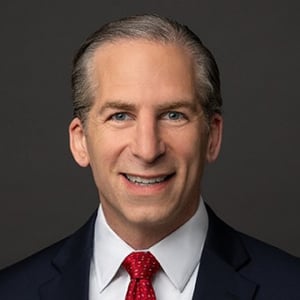
Partner, Cahill Gordon & Reindel LLP; Special Professor of Law, Maurice A. Dean School of Law, Hofstra University
Gary E. Kalbaugh is a nationally recognized leader in commodities, futures, and derivatives law.
Gary is a partner in the New York office of Cahill Gordon & Reindel LLP as well as a Special Professor of Law at the Maurice A. Deane School of Law at Hofstra University, where he teaches derivatives law and banking law.
A preeminent authority in the derivatives field, Gary is the author of the principal treatise Derivatives Law and Regulation (3rd ed. 2021) and serves as Editor-in-Chief of the Futures and Derivatives Law Report, the foremost industry publication. He is a past chair of the New York City Bar Association’s Committee on the Regulation of Futures and Derivatives and has over 15 years of experience as a professor teaching derivatives and banking law.
Gary is the leading derivatives lawyer in the digital assets space, and one of few to truly understand the technical side of emerging financial technology. He serves on the CFTC’s Future of Finance Subcommittee, reflecting his recognized leadership at the intersection of financial regulation and emerging technologies. A frequent speaker, writer, and commentator on derivatives, banking law, artificial intelligence, and digital assets regulation, he has served as conference co-chair for the American Bar Association’s “Artificial Intelligence and Derivatives Market” conference and regularly speaks at major industry conferences on cutting-edge issues in financial regulation and technology. Gary is sought after as a thought leader on the evolving landscape of digital asset regulation and the regulatory implications of AI in financial markets.
At ING, Gary served as Deputy General Counsel and Director, where he chaired swap dealer and security-based swap dealer regulatory committees and provided strategic leadership on U.S., European, and other regulations impacting the organization. He had global responsibility for U.S. derivatives regulatory issues and maintained strong relationships with regulators. Gary also co-developed ING legal’s global artificial intelligence training program and was responsible for U.S. regulatory issues relating to ING’s blockchain-based pilot programs and crypto initiatives.
Previously, Gary served as a lecturer-in-law at Columbia Law School and held senior roles at WestLB, where he was executive director, counsel, and chief U.S. data protection officer and chaired the global Dodd-Frank and underwriting committees. He began his career as an associate at a notable international firm.
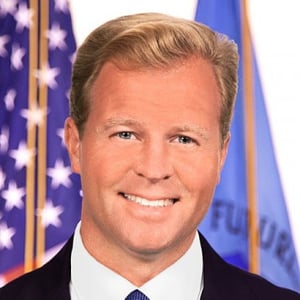
Commissioner, Commodity Futures Trading Commission
Brian D. Quintenz was nominated by President Trump to serve as a Commissioner of the Commodity Futures Trading Commission on May, 12, 2017, was unanimously confirmed by the Senate on August 3, 2017, and was sworn into office on August 15, 2017 for the remainder of a five-year term expiring in April 2020.
Prior to his appointment to the CFTC, Mr. Quintenz founded and served as the Managing Principal and Chief Investment Officer of Saeculum Capital Management, a registered Commodity Pool Operator that specialized in risk management and technical analysis investment strategies.
Mr. Quintenz started his career in finance at Hill-Townsend Capital, a Registered Investment Advisor established to focus solely on U.S. bank and financial company investment opportunities. While there, Mr. Quintenz performed rigorous fundamental valuation analysis on regional and global banks, projected future earnings estimates, and implemented proprietary hedging strategies.
Prior to working in the financial markets, Mr. Quintenz worked for Congresswoman Deborah Pryce (OH-15) for several years ultimately becoming her senior policy advisor.
Mr. Quintenz graduated Magna Cum Laude from Duke University with a major in Public Policy Studies and received an MBA from Georgetown University McDonough School of Business, where he was inducted into the Phi Beta Gamma honors society.
Follow Commissioner Brian D. Quintenz: 
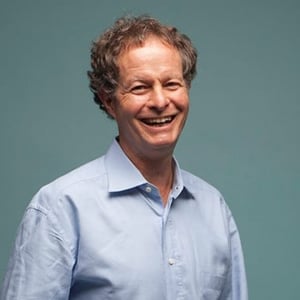
Co-Founder and CEO, Whole Foods Market
John Mackey, co-founder and CEO of Whole Foods Market, has built the natural and organic grocer from a single store in Austin, Texas in 1978, into a Fortune 500 company, which went public in 1992, and was purchased by Amazon in 2017. Today Whole Foods Market is a top U.S. supermarket with more than 500 stores and 95,000 Team Members across the U.S., Canada and U.K
While devoting his career to helping shoppers satisfy their lifestyle needs with quality natural and organic foods, Mackey has also focused on building a more conscious way of doing business. He was the visionary for Whole Planet Foundation to help end poverty in developing nations, the Local Producer Loan Program, which provided $25 million in low interest loans to help local food producers expand their businesses, and the Global Animal Partnership’s rating scale for humane farm animal treatment.
Mackey has been recognized as one of Fortune’s “World’s 50 Greatest Leaders,” Ernst & Young’s “Entrepreneur of the Year Overall Winner for the United States,” Institutional Investor’s “Best CEO in America,” Barron’s “World’s Best CEO,” MarketWatch’s “CEO of the Year,” Fortune’s “Businessperson of the Year,” and Esquire’s “Most Inspiring CEO.”
A strong believer in free market principles, Mackey co-founded the Conscious Capitalism Movement (http://consciouscapitalism.org/) and co-authored a New York Times and Wall Street Journal best-selling book entitled “Conscious Capitalism: Liberating the Heroic Spirit of Business” (Harvard Business Review Press 2013) to boldly defend and reimagine capitalism, and encourage a way of doing business that is grounded in ethical consciousness. Mackey cut his pay to $1 in 2006 and continues to work for Whole Foods Market out of passion to see the business realize its potential for deeper purpose, for the joy of leading a great company and to answer the call to service that he feels in his heart.
Most recently, Mackey has focused on returning to the company’s roots around healthy eating and lifestyle choices. A passionate advocate of healthy eating education, he laid the foundation for health and wellness programs for team members and customers. Mackey is co-author of The Whole Foods Diet: The Lifesaving Plan for Health and Longevity (Grand Central Life & Style 2017); and The Whole Foods Cookbook: 120 Delicious and Healthy Plant-Centered Recipes (Grand Central Life & Style 2018).
Mackey is an avid backpacker and long-distance hiker. He lives in Austin, TX with his wife Deborah.

Secretary, U.S. Department of Agriculture
Sonny Perdue came by his knowledge of agriculture the old fashioned way: he was born into a farming family in Bonaire, Georgia. From childhood, and through his life in business and elected office, Perdue has experienced the industry from every possible perspective. Uniquely qualified as a former farmer, agribusinessman, veterinarian, state legislator, and governor of Georgia, he became the 31st United States Secretary of Agriculture on April 25, 2017.
Perdue’s policies as U.S. Secretary of Agriculture will be guided by four principles which will inform his decisions. First, he will maximize the ability of the men and women of America’s agriculture and agribusiness sector to create jobs, to produce and sell the foods and fiber that feed and clothe the world, and to reap the earned reward of their labor. It should be the aim of the American government to remove every obstacle and give farmers, ranchers, and producers every opportunity to prosper. Second, he will prioritize customer service every day for American taxpayers and consumers. They will expect, and have every right to demand, that their government conduct the people’s business efficiently, effectively, and with the utmost integrity. Third, as Americans expect a safe and secure food supply, USDA will continue to serve in the critical role of ensuring the food we put on the table to feed our families meets the strict safety standards we’ve established. Food security is a key component of national security, because hunger and peace do not long coexist. And fourth, Perdue will always remember that America’s agricultural bounty comes directly from the land. And today, those land resources sustain more than 320 million Americans and countless millions more around the globe. Perdue’s father’s words still ring true: We’re all stewards of the land, owned or rented, and our responsibility is to leave it better than we found it.
Additionally, Perdue recognizes that American agriculture needs a strong advocate to promote its interests to international markets. The United States is blessed to be able to produce more than its citizens can consume, which implies that we should sell the bounty around the world. The relationship between the USDA and its trade representatives, as well as with the U.S. Trade Representative and Department of Commerce, will be vital. The work of promoting American agricultural products to other countries will begin with those relationships and will benefit us domestically, just as it will fulfill the moral imperative of helping to feed the world. Perdue has pledged to be an unapologetic advocate for American agriculture.
Under Secretary Perdue, the USDA will always be facts-based and data-driven, with a decision-making mindset that is customer-focused. He will seek solutions to problems and not lament that the agency might be faced with difficult challenges.
As a youngster growing up on a dairy and diversified row crop farm in rural Georgia, Perdue never fully realized that the blessings of purposeful, meaningful work would serve him as well as they have in life. When he was a young boy feeding the calves and plowing the fields, he was an integral part of the workforce on his father’s farm. As the son of a mother who was an English teacher for 42 years, he benefitted from her teachings as well – not just by instilling in him the beliefs he still holds dear, but also by lending him an appreciation and respect for language and proper grammar. But more than anything in his life, it was the family farm which shaped Sonny Perdue. He has lived and breathed the exhilaration of a great crop and the despair and devastation of a drought. He learned by experience what his father told him as a child, “If you take care of the land, the land will take care of you.”
The work ethic cemented in him by his farming roots has remained with Sonny Perdue throughout his life. As a younger man, he served his country in the U.S. Air Force, rising to the rank of Captain. After earning a Doctor of Veterinary Medicine from the University of Georgia, he put that training to use in private practice in North Carolina. As a member of the Georgia State Senate for eleven years, he eventually ascended to the position of President Pro Tempore as elected by his senate colleagues. As a two-term governor of Georgia, he was credited with transforming a budget deficit into a surplus, dramatically increasing the student performance in public schools, and fostering an economic environment that allowed employers to flourish and manufacturers and agricultural producers to achieve record levels of exports. He followed these accomplishments with a successful career in agribusiness, where he focused on commodities and transportation in enterprises that have spanned the southeastern United States. These experiences have proven invaluable in his current role as principal advocate for American agriculture and all that it serves.
Perdue is a strong believer in good government, in that it should operate efficiently and serve the needs of its customers: the people of the United States. As a state senator, he was recognized as a leading authority on issues including energy and utilities, agriculture, transportation, emerging technologies and economic development, and for his ability to grasp the nuances of complex problems. As governor, he reformed state budget priorities, helped Georgians create more than 200,000 new jobs, and promoted his home state around the world to attract new businesses. In 2009, the Reason Foundation’s Innovators in Action magazine recognized Perdue as a leader who “aggressively pursued new strategies to increase the effectiveness and efficiency of government and deliver better value at less cost to taxpayers.” In addition, he was named “Public Official of the Year” in October 2010 by Governing Magazine. To this day, his thoughts are never very far from the wishes of the citizens – the true owners of the government.
Perdue’s views on agriculture have always been shaped by his first-hand knowledge of all of its aspects, both as a farmer and as an agribusinessman. He appreciates the daily concerns and needs of American farmers, while also understanding the intricacies of global commodities markets. He is acknowledged as a national leader in agriculture, having served as a board member for the National Grain & Feed Association, and as President of both the Georgia Feed and Grain Association and the Southeastern Feed and Grain Association. Perdue has long-standing, close relationships with the leadership of the American Farm Bureau and has been recognized by the Georgia 4-H and FFA programs, among others, for his leadership in agriculture.
As the product of Georgia, a state where agriculture is the leading economic driver, Perdue recognizes that agriculture is an issue and industry which cuts across political party boundaries. He recognizes that the size, scope, and diversity of America’s agricultural sector requires reaching across the aisle so that partisanship doesn’t get in the way of good solutions for American farmers, ranchers, and consumers.
Perdue has been married to Mary Ruff Perdue for 45 years and has four adult children and fourteen grandchildren. He and his wife have served as foster parents for eight children awaiting adoption. Perdue remains a licensed airplane and helicopter pilot and avid outdoor sportsman.

Co-Founder & CEO, Eat JUST Inc.
Eat Just, Inc. (formerly Hampton Creek) is bringing healthier and more affordable food to everyone, everywhere. We believe that solving the problem means solving the problem for everybody—not just those who can afford it. Our technology, which is based upon understanding plants from every corner of the planet, enables consumers, food manufactures, and the largest retailers around the world, to offer better, healthier products, at a more affordable cost.
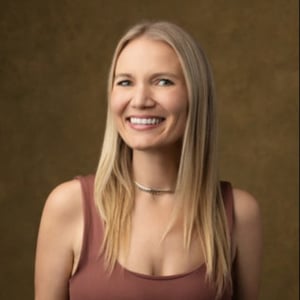
Constitutional Scholarship Director and Senior Legal Analyst, Pacific Legal Foundation
Anastasia Boden is Director of Constitutional Scholarship at Pacific Legal Foundation, where she leads the organization’s Supreme Court commentary and directs scholarly analysis in support of the firm’s litigation. She has represented entrepreneurs and small businesses nationwide in challenges to onerous licensing regimes, anti-competitive titling restrictions, Certificate of Need (“competitor’s veto”) laws, and other forms of unnecessary red tape that block economic opportunity.
Prior to this role, Anastasia developed nearly a dozen constitutional challenges to Certificate of Need laws across the country, helping spur legislative reform in Montana, Pennsylvania, and West Virginia. Her victories include a ruling invalidating Houston’s busking restrictions, multiple appellate decisions expanding access to the courts for civil rights plaintiffs, and the legislative repeal of Virginia’s happy-hour advertising ban.
Her writings on law and liberty have been featured in USA Today, The Washington Post, The Wall Street Journal, the Los Angeles Times, the Chicago Tribune, Forbes, and more, and she has appeared on Headline News, CBS News, Fox News, ReasonTV, Newsmax, and John Stossel. In 2020, she was featured on Libertarian Party presidential candidate Jo Jorgensen’s Supreme Court shortlist.
Anastasia earned her BA with dean’s honors from the University of California, Santa Barbara, and her JD from Georgetown University Law Center, where she was research assistant to Professor Randy E. Barnett—the “intellectual godfather” of the constitutional challenge to Obamacare. She is the co-creator of the podcast Dissed, about infamous Supreme Court dissents. She authors the biweekly newsletter SCOTUS Scoop and the column, “In Dissent” for SCOTUSblog.
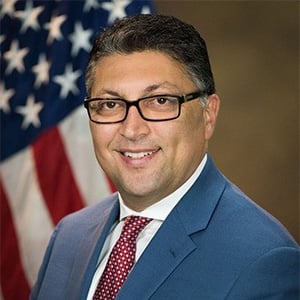
Adjunct Professor of Law, University of Pennsylvania
Makan Delrahim is currently an Adjunct Professor of Law at the University of Pennsylvania.
Previously he served as Assistant Attorney General for the Antitrust Division, Deputy Assistant to the President, and Deputy White House Counsel. Mr. Delrahim’s rich antitrust background covers the full range of industries, issues, and institutions touched upon by the work of the Antitrust Division. He is a former partner in the Los Angeles office of a national law firm. He served in the Antitrust Division from 2003 to 2005 as a Deputy Assistant Attorney General, overseeing the Appellate, Foreign Commerce, and Legal Policy sections. During that time, he played an integral role in building the Antitrust Division’s engagement with its international counterparts and was involved in civil and criminal matters. He has served on the Attorney General’s Task Force on Intellectual Property and as Chairman of the Merger Working Group of the International Competition Network. Mr. Delrahim was also a Commissioner on the Antitrust Modernization Commission from 2004 to 2007. Earlier in his career, Mr. Delrahim served as antitrust counsel, and later as the Staff Director and Chief Counsel of the U.S. Senate Judiciary Committee.

Partner, Sullivan & Cromwell LLP
Andrei Iancu is a partner at Sullivan & Cromwell and one of the leading voices in intellectual property law and innovation policy. He is a former Undersecretary of Commerce for Intellectual Property and Director of the U.S. Patent and Trademark Office (USPTO), a position to which he was confirmed unanimously by the Senate. Andrei has decades of experience representing plaintiffs and defendants in IP matters across the technical and scientific spectra, including medical devices, genetic testing, therapeutics, the Internet, telephony, TV broadcasting, video game systems and computer peripherals. He represents clients in litigation and trials before the district courts, the U.S. International Trade Commission and the USPTO, the Federal Circuit and U.S. Supreme Court, and also counsels clients on obtaining, licensing, enforcing and defending against IP rights globally.
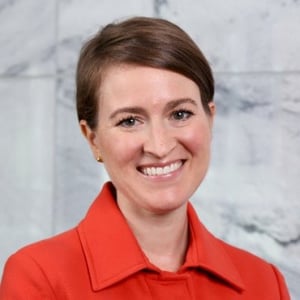
Fuller E. Callaway Chair of Law, University of Georgia School of Law
Elizabeth Chamblee Burch joined the School of Law faculty in 2011. She was promoted to the rank of full professor in 2015 and served a visiting professor at Harvard Law School in 2017. After holding the Charles H. Kirbo Chair of Law for two years, she assumed the Fuller E. Callaway Chair of Law in 2019. She is the author of Mass Tort Deals: Backroom Bargaining in Multidistrict Litigation (Cambridge University Press 2019) and her teaching and research interests include civil procedure, class actions and mass torts.
Burch is an award-winning scholar whose groundbreaking work on multidistrict litigation and class actions won the American Law Institute’s Early Career Scholars Medal in 2015, the Fred C. Zacharias Memorial Prize for Professional Responsibility Scholarship in 2016 and the Mangano Dispute Resolution Advancement Award in 2019.
Burch has published over 30 articles and essays in respected journals such as the New York University Law Review, Yale Law Journal, Cornell Law Review, Virginia Law Review, Vanderbilt Law Review, Washington University Law Review, Boston University Law Review and George Washington Law Review, among others. She co-authors a casebook titled The Law of Class Actions and Other Aggregate Litigation with the late Richard A. Nagareda, Robert G. Bone, Charles Silver, and Patrick Woolley.
Burch has delivered over 70 lectures at research institutions across the United States and abroad to diverse audiences—from law professors at their annual meeting to federal judges at their judicial retreats, lawyers and jurists at the American Law Institute and the American Bar Association, and psychologists at the International Congress on the Psychology of Law. She was elected as a member of the American Law Institute in 2013, and she is a frequent commentator in various international and national news media such as National Public Radio’s Marketplace, BBC World News, The New York Times, The Wall Street Journal, USA Today and The L.A. Times.
Before joining the School of Law's faculty, she was an assistant professor at Florida State University College of Law, where she received the university-wide Graduate Teaching Award and was voted “Professor of the Year” by second- and third-year students. Burch began her academic career in 2006 at Cumberland School of Law, part of Samford University, where she received the Harvey S. Jackson Excellence in Teaching Award and the Lightfoot, Franklin & White Faculty Scholarship Award. In 2014, she received the School of Law’s John C. O’Byrne Memorial Award for Significant Contributions Furthering Student-Faculty Relations.
Before entering the legal academy, Burch worked as an associate at Holland & Knight in Atlanta, where she practiced in the area of complex litigation, including securities class actions. She has served as the mass torts subcommittee chair for the American Bar Association's Class Action and Derivative Suits Committee, on the executive board for the Association of American Law Schools’ Scholarship Committee and as a co-editor of the Mass Tort Litigation Blog.
She earned her bachelor's degree cum laude from Vanderbilt University and her Juris Doctor cum laude from Florida State University, where she served as the writing and research editor for the Florida State University Law Review.
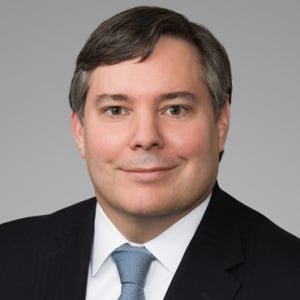
Partner, Kirkland & Ellis LLP
Mr. Doug Smith has litigated cases at both the trial and appellate stage in state and federal courts throughout the country, including commercial, mass tort, product liability, securities, bankruptcy, environmental, and intellectual property cases. He is a member of the American Law Institute and has published on a wide variety of legal topics.
VP, Legal Policy and Copyright Counsel, Copyright Alliance
Terry Hart joined the Copyright Alliance in 2013. He has been quoted by publications such as Politico, The Hollywood Reporter, and BNA’s Patent, Trademark, and Copyright Daily. His articles have appeared in publications including the George Mason Law Review, SCOTUSBlog, and IP Watchdog. He speaks regularly and has appeared at events such as the Copyright Society Mid-Winter Meeting, the Fordham IP Law & Policy Conference, the CPIP Fall Conference, the IPO Annual Meeting, and the WIPO/USPTO Summer School on IP.
Since 2010, Terry has blogged at Copyhype on copyright law, history, and policy. The blog was named one of the top 100 legal blogs by the American Bar Association in 2011 and has been cited in law review articles, legal filings, and books.
In addition, he is an adjunct professor at George Mason University School of Law, where he teaches copyright law.
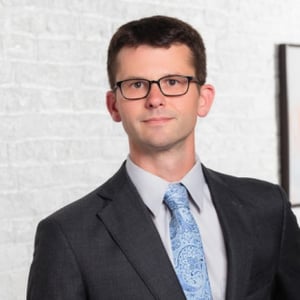
Counsel, Hunton Andrews Kurth
The former Principal Deputy Solicitor General in Virginia’s Office of the Attorney General, Matt is a seasoned appellate and trial court attorney. As counsel, Matt focuses on appellate litigation as well as helping clients frame complex legal issues before trial courts and administrative agencies.
Before joining Hunton Andrews Kurth LLP, Matt served for nearly four years in the Solicitor General’s division of the Office of the Attorney General of Virginia. He represented the Commonwealth, its agencies and its officials in significant and sensitive cases pending before the US Supreme Court, the US Courts of Appeals, the Supreme Court of Virginia and federal and state trial courts. Before the US Supreme Court, Matt briefed, argued and won a 5-4 victory in Currier v. Virginia, 138 S. Ct. 2144 (2018). That case involved a “complicated” constitutional question about the double jeopardy clause, which resulted in one commentator noting “the exceptionally high intellectual plane of the Supreme Court’s discourse” during the argument (SCOTUSBlog 2018). Matt was also the principal attorney defending the sentence imposed on Lee Boyd Malvo, one of the “D.C. Snipers,” including drafting the successful petition for writ of certiorari, granted by the US Supreme Court in 2019. Recently, Matt argued before the full en banc US Court of Appeals for the Fourth Circuit in Manning v. Caldwell, a case challenging the constitutionality of Virginia’s habitual drunkard laws, and successfully represented the Virginia State Bar before the Supreme Court of Virginia in Morrissey v. Virginia State Bar.
Before joining the Attorney General’s office, Matt frequently represented clients before the Federal Energy Regulatory Commission (FERC) in proceedings arising under the Federal Power Act and the Natural Gas Act. Immediately after law school, Matt served as a law clerk for Judge E. Grady Jolly on the US Court of Appeals for the Fifth Circuit.
Matt also co-teaches a course on the Constitution and State Attorneys General at the University of Richmond School of Law.
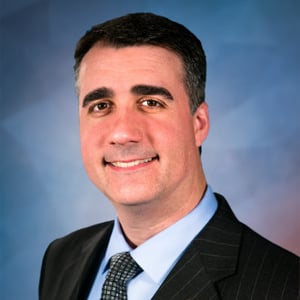
Director, Faculty Programs & Division Administrator, The Federalist Society
Anthony Deardurff serves as Director of Faculty Programs & Division Administrator. He previously practiced complex commercial and appellate litigation in the Washington, D.C. office of WilmerHale, LLP, and clerked on both the U.S. Court of Appeals for the Eleventh Circuit and the U.S. District Court for the Southern District of Texas. Mr. Deardurff earned his J.D. cum laude from Notre Dame Law School and his B.A. summa cum laude from the University of Dallas, where he was elected to Phi Beta Kappa. He holds a license to practice in both Illinois and the District of Columbia.
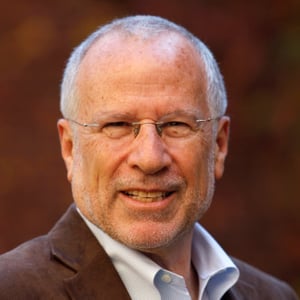
David and Mary Harrison Distinguished Professor of Law, University of Virginia School of Law
Frederick Schauer is David and Mary Harrison Distinguished Professor of Law at the University of Virginia, and previously was Frank Stanton Professor of the First Amendment at Harvard University. A Fellow of the American Academy of Arts and Sciences and recipient of a Guggenheim Fellowship, Schauer is the author of The Law of Obscenity (BNA, 1976), Free Speech: A Philosophical Enquiry (Cambridge, 1982), Playing By the Rules: A Philosophical Examination of Rule-Based Decision-Making in Law and in Life (Oxford, 1991), Profiles, Probabilities, and Stereotypes (Harvard, 2003), Thinking Like a Lawyer: A New Introduction to Legal Reasoning (Harvard, 2009), and The Force of Law (Harvard, 2015). The editor of Karl Llewellyn, The Theory of Rules (Chicago, 2011), and a founding editor of Legal Theory, he has chaired the Section on Constitutional Law of the Association of American Law Schools and the Committee on Philosophy and Law of the American Philosophical Association. In 2005 he wrote the Foreword to the Harvard Law Review’s Supreme Court issue, and has written widely on freedom of speech, constitutional interpretation, evidence, legal reasoning, and the philosophy of law.

David Boies Professor of Law, Yale Law School

Wayne A. Abernathy, Wild Bells
Wayne A. Abernathy is a former U.S. Treasury Assistant Secretary for Financial Institutions under President George W. Bush, receiving the Alexander Hamilton Award in recognition of his service. In that office he was also a member of the Board of Directors of the Securities Investor Protection Corporation. Prior to his work at the Treasury, Mr. Abernathy served as Staff Director of the Senate Banking Committee, under Chairman Phil Gramm.
Following his service at the Treasury, Mr. Abernathy worked for 15 years on the staff of the American Bankers Association, as Executive Vice President for Financial Institutions Policy and Regulatory Affairs.
Previous experience with the Senate Banking Committee includes serving as Staff Director of the Subcommittee on Securities during 1995-1998. From 1989 until 1994, Mr. Abernathy was a Republican economist for the committee. He previously worked as a senior legislative assistant for Senator Gramm during 1987-1989 and as an economist for the Banking Committee’s Subcommittee on International Finance and Monetary Policy during 1981-1986, under Chairman Jake Garn.
Mr. Abernathy earned his bachelor’s degree in International Studies from The Johns Hopkins University in 1978. In 1980, he received a master’s degree in International Studies from the School of Advanced International Studies of The Johns Hopkins University.
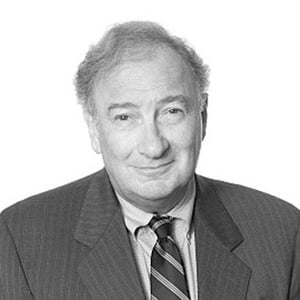
Retired, Winston & Strawn LLP
Jerry Loeser is of counsel in the Chicago office of Winston & Strawn, and his practice focuses on banking regulation. He has extensive experience in counseling financial services clients on, among other things, bank acquisitions, privacy, financial modernization, the USA PATRIOT Act, Basel II and III, lending limits, capital, trust, affiliate transactions, and Federal Reserve, OCC, FDIC, and CFPB regulations.
Prior to working at large corporate law firms, Jerry was chief regulatory and compliance counsel for Comerica Bank, where he also served as senior vice president and deputy general counsel and as general counsel of its retail bank division. Before that, he served as chief regulatory in-house counsel at Wells Fargo & Co. Jerry began his legal career advising the Board of Governors of the Federal Reserve System in Washington, D.C.


A Conversation with Commissioner Brian D. Quintenz of the Commodity Futures Trading Commission
TeleforumDeep Dive Episode 140 – It Can Be Done Live: The Future of Our Food
John Mackey, Sonny Perdue, Josh Tetrick, Anastasia P. Boden
The creators of the award-winning documentary, They Say It Can’t Be Done, in partnership with...
An Update on Patents and Antitrust
Makan Delrahim, Andrei Iancu
Join us as our experts give an update on the intersection of patent and antitrust...
Mass Tort Deals: Backroom Bargaining in Multidistrict Litigation?
Elizabeth Chamblee Burch, Douglas Geoffrey Smith
Multidistrict litigation has been the subject of much controversy in recent years. Defendants lament the...
Deep Dive Episode 76 – State-Sponsored Piracy? The Allen v. Cooper Case
Michael Bynum, Terry Hart, Matthew McGuire
What happens when a state agency uses without authorization copyrighted videos and pictures of Blackbeard’s...
Topics
Why D.C. Should Not Adopt ABA Model Rule 8.4(g)
The D.C. Bar Rules of Professional Responsibility Review Committee is holding a public comment period...
Topics
Article I: Interview with Prof. Schoenbrod on Congressional Degradation
As Professor Schoenbrod explains in this interview, Congress has an unhealthy fixation with three little words--"the Administrator...
Speak Freely: Why Universities Must Defend Free Speech
Anthony M. Deardurff, Frederick Schauer, Keith E. Whittington
In Speak Freely, Prof. Whitting ton argues that universities have a distinctive and important mission...
Topics
Sports Gambling Decision is a Major Victory for Federalism
This post has been contributed from The Volokh Conspiracy with permission by the author. Click...
Consumer Financial Protection Bureau Update - January 2017 - Podcast
Wayne A. Abernathy, Julius L. Loeser
Members of the Federalist Society’s Financial Services & E-Commerce Practice Group Executive Committee will provide...