
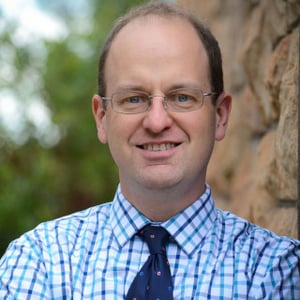
Professor of Law, University of Wyoming College of Law
George Mocsary is an expert in corporate and small-business law, and the law of firearms.
Currently, he is Professor of Law, Founder & Director of Firearms Research Center, and Director of the Business Planning Practicum and at the University of Wyoming College of Law.
Professor Mocsary teaches and writes about Agency & Partnership, Contracts, Corporations, Securities Regulation, the Second Amendment, and Firearms Law, including the intersection of Firearms Law and private law. He is a co-author of Firearms Law and the Second Amendment: Regulation, Rights, and Policy (3rd ed. 2021), the first casebook on this topic.
Prior to his appointment at Wyoming, he served as an Associate Professor of Law at the Southern Illinois University School of Law and spent two years as a Visiting Assistant Professor at the University of Connecticut School of Law. He practiced corporate and bankruptcy law at Cravath, Swaine and Moore in New York, and clerked for the Honorable Harris L. Hartz of the U.S. Court of Appeals for the Tenth Circuit.
Professor Mocsary holds a J.D. from Fordham Law School and an M.B.A. from the University of Rochester Simon School of Business. At Fordham, he graduated first in his class, and served as Notes and Articles Editor of the Fordham Law Review. He has published in the George Washington Law Review, George Mason Law Review, Fordham Law Review, Duke Law Journal Online, and other journals. His work has been cited by the Supreme Court of the United States, several U.S. Courts of Appeals, the Supreme Court of Illinois, the Delaware Court of Chancery, and other courts.

Harry Kalven, Jr. Professor of Law & Faculty Director, Constitutional Law Institute, University of Chicago Law School
William Baude is a Professor of Law and the Faculty Director of the Constitutional Law Institute at the University of Chicago Law School, where he teaches federal courts, constitutional law, and conflict of laws. His current research interests include different aspects of the Fourteenth Amendment (particularly both Section One and Section Three) and the nature of judicial discretion.
Among his other activities Baude is: the co-editor of two textbooks, The Constitution of the United States and Hart & Wechsler's Federal Courts in the Federal System; an Affiliated Scholar at the Center for the Study of Constitutional Originalism; a founding member of the Academic Freedom Alliance; a member of the American Law Institute; an occasional blogger at The Volokh Conspiracy; and a podcaster on Divided Argument. He also recently served on the Presidential Commission on the Supreme Court of the United States.
Professor Baude received his BS in Mathematics from the University of Chicago and his JD from Yale Law School. He then clerked for then-Judge Michael McConnell on the United States Court of Appeals, and Chief Justice John Roberts on the United States Supreme Court. Before joining the Chicago faculty, he was a fellow at the Stanford Constitutional Law Center, and a lawyer in Washington, DC.
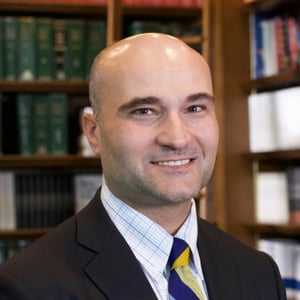
Deputy Attorney General, Legal Strategy, Texas
Ryan serves as Deputy Attorney General for Legal Strategy in the Texas Attorney General's Leadership Team. He most recently acted as Associate Deputy Attorney General for Civil Litigation. For the previous four years, Mr. Walters served in the Special Litigation Division—as Special Counsel, Deputy Chief, and eventually Chief. In those positions, he led the Attorney General's most significant litigation against the Biden Administration, including successful challenges to federal rules weakening immigration enforcement and those imposing gender-identity mandates on Texas's workplaces, schools, and hospitals. Prior to his tenure in the Office of the Attorney General, Mr. Walters served as an attorney with the Texas Public Policy Foundation, as an Assistant Attorney General in the Ohio Attorney General’s Office, and as a commercial litigator at two international law firms. He is a graduate of The Ohio State University and holds law degrees from the University of Michigan Law School and the University of California, Berkeley, School of Law.
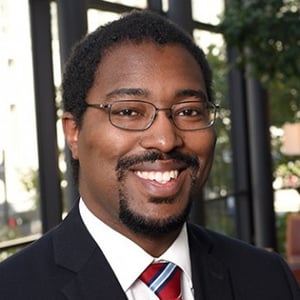
Partner, Taft Stettinius & Hollister LLP
Philip litigates complex matters in state and federal courts. He has briefed appeals in multiple U.S. Courts of Appeals, including the Sixth, Seventh, and Ninth Circuits, as well as state appellate courts in Ohio, Kentucky, and Georgia. Philip has also represented amici at both the cert petition and merits stages in the U.S. Supreme Court.
Prior to joining Taft, Philip served as a law clerk for Judge Raymond M. Kethledge of the U.S. Court of Appeals for the Sixth Circuit, Judge Amul R. Thapar of the U.S. District Court for the Eastern District of Kentucky, and Judge Lavenski R. Smith of the U.S. Court of Appeals for the Eighth Circuit.
Philip serves on the board of directors for the Cincinnati and Northern Kentucky lawyers chapters of the Federalist Society. He was a 2018 James Wilson Fellow with the James Wilson Institute, a 2013 John Marshall Fellow with the Claremont Institute Center for Constitutional Jurisprudence, and a 2011 Blackstone Fellow with the Alliance Defending Freedom.
Philip received his undergraduate degree, with Highest Honors, from Ouachita Baptist University. He received his J.D. from the University of Virginia School of Law, where he served as the submissions review editor for the Journal of Law and Politics.
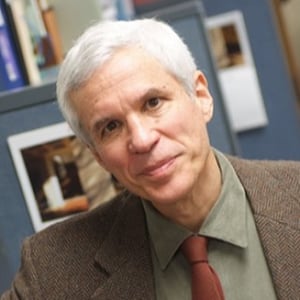
Professor of Law, Emeritus, Washington and Lee University School of Law
David Bruck directed Washington and Lee's death penalty defense clinic, the Virginia Capital Case Clearinghouse, from 2004 to 2020. Prior to coming to W&L, Bruck practiced criminal law in South Carolina for 28 years, and specialized in the defense of capital cases at the trial, appellate and post-conviction stages. Over the course of his career, he has served as Richland County (Columbia, S.C.) Public Defender, as Chief Attorney of the South Carolina Office of Appellate Defense, and since 1992 as Federal Death Penalty Resource Counsel to the federal defender system nationwide.
Bruck has argued seven death penalty cases in the United States Supreme Court, including Skipper v. South Carolina, 476 U.S. 1 (1986), and Simmons v. South Carolina, 512 U.S. 154 (1994), and over 70 capital appeals in state and lower federal courts. He has represented capital defendants at trial in more than 20 cases, including State v. Susan Smith (1995), in which he and co-counsel Judy Clarke obtained a life sentence after their client was convicted of drowning her two small children.
Bruck has testified before U.S. Congressional committees on death penalty-related legislation on nine occasions, has presented CLE trainings and federal judicial workshops on capital litigation in more than thirty states and U.S. territories, and since 2005 has served as Chair of the National Consortium for Capital Defense Training. In 1996 the ABA Section of Litigation selected Bruck to receive the John Minor Wisdom Public Service & Professionalism Award, and in 2001 he received the Significant Contributions to Criminal Justice Award from the California Attorneys for Criminal Justice.
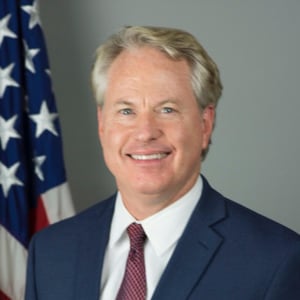
Retired Assistant United States Attorney
Steve Mellin is a recently retired federal prosecutor. He worked for the Department of Justice for over 30 years in offices all over the United States. His career focused on prosecuting violent criminals, including terrorism and death penalty homicide cases. While working in Alexandria, Virginia, Mr. Mellin was involved in the 9-11 terrorism investigations and prosecutions. While at Main Justice, he worked on numerous death penalty cases across the US, culminated his terrorism work with the successful prosecution of the Boston Marathon bomber.
Steve is a graduate of the University of Texas and George Mason University School of Law.
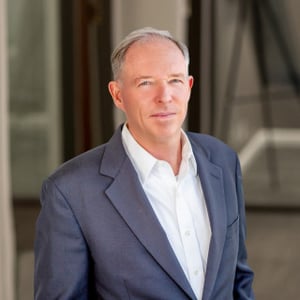
Partner, Ashcroft Law Firm
With more than 20 years government experience, Johnny Sutton has acquired expertise as a front-line trial prosecutor and a top policy advisor to a Governor and a President. Mr. Sutton runs the Austin office of the Ashcroft Law Firm which specializes in internal investigations, white-collar criminal defense and helping companies comply with federal law.
From November 2001 to April 2009, Sutton led one of the largest and busiest United States Attorney’s Offices in the nation. The Western District of Texas covers 93,000 square miles, 68 counties and 660 miles of U.S.-Mexico border. As U.S. Attorney, Mr. Sutton managed more than 300 employees, a $28 million annual budget and directed 43,000 federal prosecutions and thousands of civil cases. Under Mr. Sutton’s leadership, the office led the nation in drug convictions, was second in illegal alien prosecutions, won more than 105 public corruption convictions and sent nearly 400 violent criminal gang members to prison.
In 2003, then-United States Attorney General John Ashcroft appointed Mr. Sutton to the Attorney General’s Advisory Committee—a panel of 17 U.S. Attorneys that advise the General and help carry out the President’s national goals. Sutton served from 2003 until 2009 and was chairman for nearly two years.
After leading the Bush-Cheney Department of Justice Transition Team in 2000, Mr. Sutton was named Associate Deputy Attorney General. He held the position until becoming U.S. Attorney.
From 1995 to 2000, Mr. Sutton served as the Criminal Justice Policy Director for then-Governor George W. Bush. Mr. Sutton was the chief policy advisor to the Governor on all criminal justice issues.
From 1988 to 1995, Mr. Sutton was a prosecutor in the Harris County District Attorney’s Office (Houston, TX) where he tried more than 60 first chair felony jury trials and had only three acquittals. He also successfully tried 17 murder jury trials, including seven for capital murder.
Mr. Sutton attended the University of Texas at Austin on a baseball scholarship where he was a two year lettermen and the starting left fielder for the 1983 University of Texas National Championship baseball team. Mr. Sutton was voted the Most Valuable Player of the NCAA Central Regional Baseball Tournament in 1983. Mr. Sutton is fluent in Spanish and conversant in Portuguese.
Mr. Sutton has dedicated his career to defending the innocent and standing up for the rule of law.
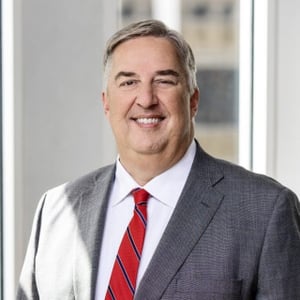
Member, Ifrah Law
After 27 years as a prosecutor, James (“Jim”) Trusty brings to Ifrah Law extensive experience in complex, multi-district white collar litigation, especially in matters involving RICO, The Computer Fraud and Abuse Act, and The Money Laundering Control Act of 1986.
Jim has represented a wide variety of individuals and corporations in the white-collar space. He regularly represents professional athletes, both criminally and civilly, and during 2022 and 2023 he represented President Trump during pre-indictment litigation relating to the Mar-a-Lago and January 6 cases.
Prior to joining Ifrah Law, Jim had a long career in public service, most recently as Chief of the Organized Crime Section at the United States Department of Justice. For seven years, Jim was ultimately responsible for investigating and prosecuting regional, national, and international cases, supervising significant pleadings, and providing strategic and tactical guidance in investigations and multi-defendant trials. In addition to running the RICO Review Unit, which reviewed and approved all criminal RICO cases brought by federal prosecutors, he also was in charge of establishing and promoting policies focused on immigration reform, firearms trafficking, proposed Congressional testimony for DOJ officials, and internet gambling. Significant and sensitive matters on which he worked include the post-conviction review of the Alaska corruption case related to U.S. v. Theodore Stevens and the investigation into allegations of misconduct by a sitting U.S. Attorney and one of her subordinates.
Prior to his work at DOJ, Jim acted as Assistant U.S. Attorney in Greenbelt, Maryland, where he investigated and prosecuted a wide variety of white-collar and other criminal cases, including The Washington area Sniper investigation. He also prosecuted three death penalty cases and was a member of the Attorney General’s Capital Review Committee, responsible for assessing capital-eligible cases such as the Boston Marathon Bomber and the Charleston Church massacre.
In 2018, Jim was appointed by the Governor of Maryland to serve on The Task Force to Study Maryland’s Criminal Gang Statutes. The Task Force assessed the efficacy of existing state laws as they apply to gang-related criminal activity in the state and presented its findings and recommendations to the Governor.
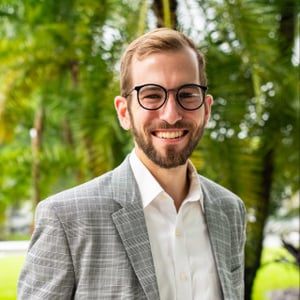
AI Innovation and Law Fellow, University of Texas School of Law
Kevin Frazier is an AI Innovation and Law Fellow with University of Texas School of Law.

Head of AI Policy, Abundance Institute
Neil Chilson is the Head of AI Policy at the Abundance Institute. Prior to this position, he served as a Senior Research Fellow at the Center for Growth and Opportunity. Chilson is a lawyer, computer scientist, and author of the book “Getting Out of Control: Emergent Leadership in a Complex World.”
Chilson was previously the senior research fellow for Technology and Innovation at Stand Together, where he guided efforts to understand and promote the legal and cultural paradigms that best enable people to discover, innovate, and improve all our lives.
Before Stand Together, Chilson was the Chief Technologist at the Federal Trade Commission, where he focused on the economics of privacy and blockchain-related issues. Previously, he was an attorney advisor to Acting FTC Chairman Maureen K. Ohlhausen. In both roles he advised Chairman Ohlhausen and worked with staff on nearly every major technology-related case, report, workshop, or other FTC proceeding since January 2014. Neil joined the FTC from telecom firm Wilkinson Barker Knauer. Neil is frequently quoted by the press and his work has appeared in numerous news outlets, including The Wall Street Journal, The Washington Post, USAToday, and Newsweek. Neil has a J.D. from The George Washington Law School, a M.S. in computer science from University of Illinois, Urbana-Champaign, and a B.S. in computer science from Harding University.
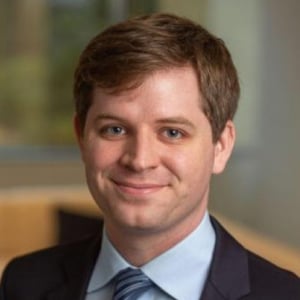
Senior Research Fellow, Institute for Law & AI
Charlie is a Senior Research Fellow on LawAI's U.S. Law and Policy team. He advises state and federal policy makers on AI governance topics and publishes research on legal questions with significant practical relevance to U.S. AI policy. His recent research examines issues including federal preemption of state AI laws, federal and state AI whistleblower protection legislation, and the likely consequences of the end of Chevron deference for the future of AI regulation. Charlie received his J.D. from Yale Law School, where he was an Editor for the Yale Journal on Regulation.

Associate, Consovoy McCarthy PLLC
Ms. Bates assists clients with a variety of litigation and appellate matters that encompass constitutional law, administrative law, and commercial litigation. Before joining the firm, Ms. Bates was a law clerk to Judge Kyle Duncan of the U.S. Court of Appeals for the Fifth Circuit. She previously served as a Legal Policy Analyst at the Heritage Foundation, where she researched and wrote about the courts, judicial nominations, and various constitutional issues. She also co-hosted Heritage’s SCOTUS 101 podcast. She earned her B.A. magna cum laude in Politics from Hillsdale College, and her J.D. from the Antonin Scalia Law School at George Mason University. Ms. Bates is a member of the Virginia Bar.
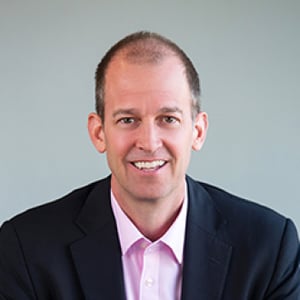
Founding Partner, Benbrook Law Group
Brad has litigated business and public policy matters throughout the United States for over 25 years. He represents businesses of all sizes in civil litigation and disputes with administrative agencies. Brad also regularly represents individuals and groups in constitutional and public policy litigation in the trial and appellate courts. He regularly submits amicus briefs on behalf of clients at the Supreme Court of the United States on significant cases. Brad is often hired as special litigation counsel in complex family law, bankruptcy, and trust and estate litigation.
After graduating from law school, Brad worked as a judicial clerk for Judge J.L. Edmondson of the United States Court of Appeals for the Eleventh Circuit in Atlanta. Brad received his law degree from the University of California at Berkeley after graduating from Stanford University, where he was a four-year letterman on the golf team.
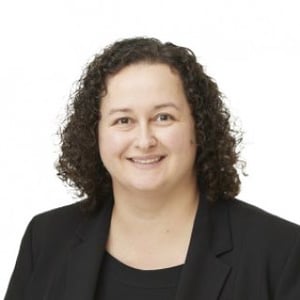
Counsel, Schaerr Jaffe LLP
Stephanie Freudenberg is a litigator who has represented a broad range of public and private clients, including global financial institutions and Fortune 500 companies, in complex commercial litigation matters at all stages of litigation, from discovery at the trial court level through merits briefing on appeal. She has handled a wide range of cases involving securities litigation and enforcement, products liability, contractual disputes, antitrust, white collar defense, and other issues.
After law school, Stephanie clerked for the Honorable Robert B. Kugler on the U.S. District Court for the District of New Jersey and the Honorable Edith Brown Clement on the U.S. Court of Appeals for the Fifth Circuit. Following those clerkships, she spent over five years in litigation practice with the New York and Washington, D.C. offices of the law firm of Sullivan & Cromwell.
Stephanie graduated from Harvard Law School, where she was deputy editor-in-chief for the Harvard Journal of Law and Public Policy and the recipient of five Dean’s Scholar Prizes. She received her undergraduate degree from Princeton University.
She joined Schaerr Jaffe as counsel in November 2024.
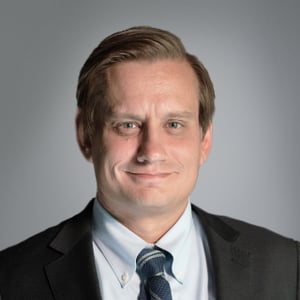
Senior Litigation Counsel, New Civil Liberties Alliance
Jacob Huebert is Senior Litigation Counsel at the New Civil Liberties Alliance. He previously served as President and Director of Litigation of the Liberty Justice Center, where he successfully litigated cases to protect constitutional rights, including the landmark Janus v. AFSCME case, in which the U.S. Supreme Court upheld government employees’ First Amendment right to choose for themselves whether to pay money to a union. Jacob was also previously a Senior Attorney at the Goldwater Institute, where he litigated cases on free speech, property rights, and the Second Amendment.
Jacob and his work have appeared in numerous national media outlets, including the Wall Street Journal, New York Times, and Fox News Channel. He is also the author of a book, Libertarianism Today.
Jacob holds a B.A. in economics from Grove City College and a J.D. from the University of Chicago Law School. After law school, he served as a clerk to Judge Deborah Cook of the U.S. Court of Appeals for the Sixth Circuit. Jacob has served as an adjunct law professor at several law schools, teaching courses in advanced appellate advocacy, the law of payments, legal writing, and jurisprudence. Before working in public interest law, Jacob was a litigator in private practice.
Deputy Attorney General, Legal Strategy, Texas
Ryan serves as Deputy Attorney General for Legal Strategy in the Texas Attorney General's Leadership Team. He most recently acted as Associate Deputy Attorney General for Civil Litigation. For the previous four years, Mr. Walters served in the Special Litigation Division—as Special Counsel, Deputy Chief, and eventually Chief. In those positions, he led the Attorney General's most significant litigation against the Biden Administration, including successful challenges to federal rules weakening immigration enforcement and those imposing gender-identity mandates on Texas's workplaces, schools, and hospitals. Prior to his tenure in the Office of the Attorney General, Mr. Walters served as an attorney with the Texas Public Policy Foundation, as an Assistant Attorney General in the Ohio Attorney General’s Office, and as a commercial litigator at two international law firms. He is a graduate of The Ohio State University and holds law degrees from the University of Michigan Law School and the University of California, Berkeley, School of Law.
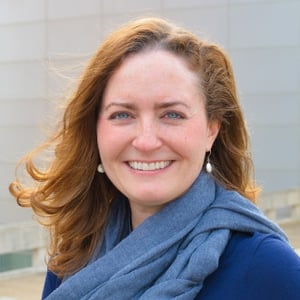
Assistant Professor of Law, The Ohio State University - Moritz College of Law
Bridget Dooling is a nationally recognized expert on administrative law and regulatory policy. Her scholarship on regulatory matters has been or will be published in leading legal journals including the Duke Law Journal, the Administrative Law Review, the Minnesota Law Review Headnotes, the American University Law Review and The Annals of Health Law.
Professor Dooling teaches courses on legislation and regulation, administrative law and other regulatory topics. She is a Senior Fellow at the Administrative Conference of the United States (ACUS) and recently served on the Council of the American Bar Association’s Section of Administrative Law and Regulatory Practice.
Prior to joining the faculty at Ohio State, Dooling was a research professor with the George Washington University Regulatory Studies Center and a professor of law (by courtesy) at GW Law. Before that, Professor Dooling spent over 10 years in the federal government as a deputy chief, senior policy analyst and attorney for the Office of Information and Regulatory Affairs at the U.S. Office of Management and Budget.
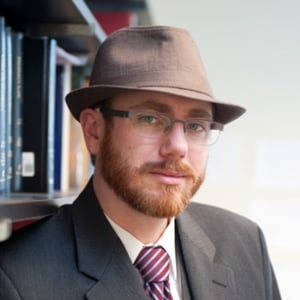
Professor of Law and Associate Dean, Boston College Law School; Nonresident Senior Fellow, American Enterprise Institute, Boston College Law School
Professor Lyons is a Professor and Associate Dean at Boston College Law School. He specializes in telecommunications and tech policy, energy, and administrative law. Before joining the faculty, he practiced at the firm of Munger, Tolles and Olson in Los Angeles. He also clerked for the Judge Cynthia Holcomb Hall of the Ninth Circuit Court of Appeals.
Professor Lyons is also a Nonresident Senior Fellow at the American Enterprise Institute, where he has written over 250 blog posts on tech policy issues, including net neutrality, telecommunications regulation, First Amendment issues with tech regulation, and generative AI.
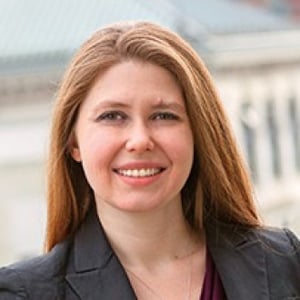
Professor of Law, Brooklyn Law School
Professor Mulligan teaches Internet law, intellectual property law, and trusts & estates. Her research addresses efforts to adapt intellectual property law for the digital age, the relationship between law and technology, and theories of constitutional interpretation. Recently, she has written about the Internet of Things, robot punishment, and early translations of the Constitution.
While at Brooklyn, Professor Mulligan researched as a visiting scholar at the Georgetown Center for the Constitution and taught as a visiting associate professor at Yale Law School. Previously, she taught at the University of Georgia and was a postdoctoral associate and lecturer in law at the Information Society Project at Yale Law School. Her scholarship has been published in a variety of journals and law reviews, including Georgia Law Review, SMU Law Review, and Constitutional Commentary.
Professor Mulligan earned her bachelor’s degree cum laude and her law degree cum laude from Harvard University, where she worked as a production and article editor for the Harvard Journal of Law & Technology. Before entering academia, she served as a law clerk for Judge Charles F. Lettow of the U.S. Court of Federal Claims.

Professor of Law, University of Michigan Law School
Christopher J. Walker is a Professor of Law at the University of Michigan. Prior to joining Michigan law faculty in 2022, he spent a decade teaching at The Ohio State University Moritz College of Law. He previously clerked for Justice Anthony Kennedy of the U.S. Supreme Court, worked on the Civil Appellate Staff at the U.S. Department of Justice, and served on the Senate Judiciary Committee staff for the Gorsuch Supreme Court confirmation. Professor Walker’s research focuses on administrative law, regulation, and law and policy at the agency level. Outside the law school, he chaired the American Bar Association’s Section of Administrative Law and Regulatory Practice in 2020-21 and served as one of forty Public Members of the Administrative Conference of the United States from 2016-2022, and he continues to serve in both organizations in various capacities. He also works of counsel at the U.S. Chamber Litigation Center. In 2022, he received the Federalist Society’s Joseph Story Award.

Professor of Law, Texas A&M University School of Law
Daniel E. Walters is an a Professor of Law at the Texas A&M University School of Law. Prior to joining the Texas A&M faculty, he was an Assistant Professor of Law at Penn State Law, and before that a Regulation Fellow at the University of Pennsylvania Carey School of Law. He earned a JD from the University of Michigan Law School and a PhD in political science from the University of Wisconsin-Madison. He clerked for the Honorable M. Margaret McKeown on the U.S. Court of Appeals for the Ninth Circuit. He is also admitted to practice law (but inactive) in Illinois.
Professor Walters writes about administrative and regulatory law, with a particular focus on the implications of democratic theory for the administrative state, on public participation in administrative processes, on deference doctrines, on empirical studies of administrative behavior, and on the court-agency relationship. He also writes about climate change and energy law, with an emphasis on electric transmission lines, grid governance, the food-climate nexus, and climate legislation. His articles have appeared in many of the top journals in law and public administration, including the Yale Law Journal, the Stanford Law Review, the Michigan Law Review, the Cornell Law Review, the Georgetown Law Journal, the University of Pennsylvania Law Review, the Southern California Law Review, the Emory Law Journal, the Iowa Law Review, the Harvard Environmental Law Review, the Administrative Law Review, Ecology Law Quarterly, and the Journal of Public Administration Research & Theory (JPART), among others. He is a co-editor, with Cary Coglianese, of a forthcoming book: Regulation in a Turbulent Era. He is a former winner of the Richard D. Cudahy Writing Competition on Administrative & Regulatory Law (student category) and the Beryl A. Radin Award for best article in JPART, and his work has been included in the Environmental Law Institute’s Environmental Law & Policy Review’s list of top environmental law review articles.
Professor Walters is an active volunteer in several professional organizations, including the ABA Section of Administrative Law & Regulatory Practice (the Section) and the Foundation for Natural Resources and Energy Law (FNREL). Since 2020, he has served as the Editor-in-Chief of Administrative & Regulatory Law News, the ABA Section’s quarterly magazine, and in 2023 he was recently elected to a three-year term on the Section’s Council of Advisors. He has served since 2022 on the Natural Resources Law Teacher’s Planning Committee within FNREL, and before that he was a Trustee with the organization from 2021-2022.
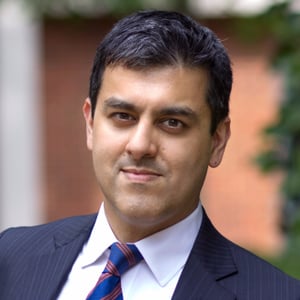
Professor of Law, University of Virginia School of Law
Aditya Bamzai is a professor of law at the University of Virginia. He teaches administrative law, civil procedure, computer crime and conflicts of law, and he has written about these and related subjects. He has argued cases relating to the separation of powers and national security in the U.S. Supreme Court, Foreign Intelligence Surveillance Court of Review, D.C. Circuit and other federal courts of appeals. From 2019 to 2021, he served as a Member of the Privacy and Civil Liberties Oversight Board, a federal agency charged with ensuring that the government’s national security efforts are balanced with the need to protect privacy and civil liberties. Before entering the academy, Bamzai was an attorney-adviser in the Office of Legal Counsel of the U.S. Department of Justice, and an appellate attorney in both private practice and for the National Security Division of the Department of Justice. Earlier in his career, he was a law clerk to Justice Antonin Scalia of the Supreme Court of the United States and to Judge Jeffrey Sutton of the Sixth Circuit Court of Appeals.

Associate Dean for Research and Intellectual Life, McKnight Presidential Professor in Law, Distinguished McKnight University Professor, Harlan Albert Rogers Professor in Law, Associate Director, Corporate Institute, University of Minnesota Law School
Professor Kristin E. Hickman is the McKnight Presidential Professor in Law, a Distinguished McKnight University Professor, and Harlan Albert Rogers Professor in Law at the University of Minnesota Law School. She also has taught at Harvard Law School and Northwestern University School of Law. Professor Hickman teaches and writes primarily in the areas of administrative law, tax administration, and statutory interpretation. Her articles on these topics have appeared in the Columbia Law Review, Cornell Law Review, Virginia Law Review, Duke Law Journal, and other publications. She also co-authors the Administrative Law Treatise with Richard J. Pierce, Jr., and a casebook on federal administrative law with Pierce and Christopher J. Walker. Her scholarly work has been cited several times in opinions of the United States Supreme Court as well as regularly in lower court judicial opinions and court briefs.
In 2018-19, Professor Hickman served as Special Adviser to the Administrator of the Office of Information and Regulatory Affairs in Washington, D.C. She presently serves as a Senior Fellow, and previously served as a public member and chair of the judicial review committee, for the Administrative Conference of the United States. She also is a Fellow of the American College of Tax Counsel.
Professor Hickman received her B.S. degree in business administration with a concentration in accounting and a secondary major in history from Trinity University in San Antonio, Texas. After practicing for several years as a certified public accountant, Professor Hickman earned her J.D. degree, magna cum laude, from Northwestern University School of Law, where she was awarded the Raoul Berger Prize and the Lowden Wigmore Prize for her scholarly writings. Following law school, Professor Hickman clerked for The Honorable David B. Sentelle of the United States Court of Appeals for the District of Columbia Circuit and practiced law as an associate with the Chicago office of Skadden, Arps, Slate, Meagher & Flom, concentrating on corporate and international tax transactions and matters.
Associate Professor of Law, Washington University School of Law
Andrea Scoseria Katz is an Associate Professor of Law at Washington University School of Law in St. Louis. She teaches and writes about constitutional law, with a focus on presidential power. Her work draws from constitutional law, legal history, political theory and comparative politics to explore questions of separation-of-powers theory, constitutionalism, and the development of the American president and the modern administrative state, especially during the Progressive Era (1890-1920). Professor Katz received a PhD in Political Science from Yale University and a JD from Yale Law School. After law school, Professor Katz clerked at the European Court of Human Rights in Strasbourg, France for Judge András Sajó, and in the District of Massachusetts for Judge Michael A. Ponsor. She has been a visiting researcher at the University of Rio de Janeiro, the University of São Paulo, the University of Tokyo, and was a Golieb Fellow in Legal History at NYU Law School before joining the Washington University faculty in Fall 2020.
Professor of Law, University of Wyoming College of Law
George Mocsary is an expert in corporate and small-business law, and the law of firearms.
Currently, he is Professor of Law, Founder & Director of Firearms Research Center, and Director of the Business Planning Practicum and at the University of Wyoming College of Law.
Professor Mocsary teaches and writes about Agency & Partnership, Contracts, Corporations, Securities Regulation, the Second Amendment, and Firearms Law, including the intersection of Firearms Law and private law. He is a co-author of Firearms Law and the Second Amendment: Regulation, Rights, and Policy (3rd ed. 2021), the first casebook on this topic.
Prior to his appointment at Wyoming, he served as an Associate Professor of Law at the Southern Illinois University School of Law and spent two years as a Visiting Assistant Professor at the University of Connecticut School of Law. He practiced corporate and bankruptcy law at Cravath, Swaine and Moore in New York, and clerked for the Honorable Harris L. Hartz of the U.S. Court of Appeals for the Tenth Circuit.
Professor Mocsary holds a J.D. from Fordham Law School and an M.B.A. from the University of Rochester Simon School of Business. At Fordham, he graduated first in his class, and served as Notes and Articles Editor of the Fordham Law Review. He has published in the George Washington Law Review, George Mason Law Review, Fordham Law Review, Duke Law Journal Online, and other journals. His work has been cited by the Supreme Court of the United States, several U.S. Courts of Appeals, the Supreme Court of Illinois, the Delaware Court of Chancery, and other courts.

Courthouse Steps Oral Argument: Wolford v. Lopez
George A. Mocsary
In New York State Rifle & Pistol Association v. Bruen (2022), the Supreme Court invalidated...
Courthouse Steps Oral Argument: Wolford v. Lopez
Courthouse Steps Oral Argument: Galette v. New Jersey Transit Corporation
William Baude, Ryan Daniel Walters, Philip D. Williamson
In August 2018, Cedric Galette sustained injuries when his stopped vehicle was struck by a...
Emerging Issues in Federal Death Penalty Litigation
David Bruck, Steve Mellin, Johnny Sutton, James Trusty
Recent federal prosecutions have renewed attention on the administration and future of the federal death...
Tech Roundup Episode 29 - An AI Roundup of 2025 and What Lies Ahead for 2026
Kevin Frazier, Neil Chilson, Charlie Bullock
Join tech and legal experts Prof. Kevin Frazier (University of Texas School of Law), Neil...
Preliminary Thoughts on Legal Issues Relating to the Maduro Seizure
Prof. Roger Alford, Professor of Law, Notre Dame Law School Prof. Soledad Bertelsen, Assistant Professor...
A Seat at the Sitting - January 2026
Tiffany H. Bates, Bradley A. Benbrook, Stephanie Lee Freudenberg, Jacob H. Huebert, Ryan Daniel Walters
Each month, a panel of constitutional experts convenes to discuss the Court’s upcoming docket sitting...
Panel: Abundance and the Law
Bridget Dooling, Daniel Lyons, Christina M. Mulligan, Christopher J. Walker, Daniel E. Walters
Prof. Bridget Dooling, Assistant Professor of Law, Michael E. Moritz College of Law, Ohio State University...
Welcome Remarks by AALS President-Elect Danielle Conway
Event Video: Welcome Remarks by AALS President-Elect Danielle Conway
Welcome & Luncheon Debate: Resolved: The President Has the Indefeasible Power of Removal
Aditya Bamzai, Kristin E. Hickman, Andrea Katz
Resolved: The President Has the Indefeasible Power of Removal Prof. Aditya Bamzai, Professor of Law, University...