
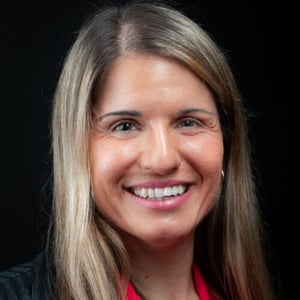
Associate Professor of Law, Ave Maria School of Law
Before arriving at Ave Maria School of Law, Professor Jennifer (Barrow) Jenkins was a Climenko Fellow and Lecturer on Law at Harvard University School of Law. Professor Barrow was born in Plymouth, Massachusetts, and grew up in Tampa, Florida. Professor Barrow received a B.S. in the American Legal System from the United States Military Academy at West Point. She served as an Army intelligence officer in Afghanistan and Iraq, receiving the Bronze Star in 2010. Professor Barrow is a graduate of Harvard Law School and was an editor for the International Law Journal, Journal of Law and Public Policy, Journal on Legislation, and the National Security Journal. After law school, Professor Barrow clerked for Judge Ralph K. Winter on the U.S. Court of Appeals for the Second Circuit. She then served as a Supreme Court Fellow, placed at the U.S. Sentencing Commission, where she helped revise a draft amendment to the career offender provision of the U.S. Sentencing Guidelines. Her primary teaching interests include criminal law and procedure, torts, and military law. Her scholarship focuses on criminal law and military law, with an emphasis on sentencing. Her research scrutinizes the increased power of the legislative, executive, and judicial branches at the expense of the jury and suggests reforms.
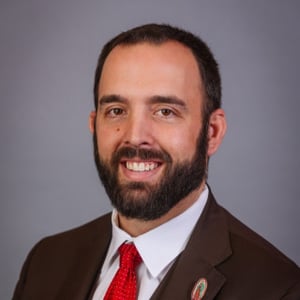
State Representative, Ohio House of Representatives, District 56
State Representative Adam Mathews is serving his second term in the Ohio House of Representatives. He represents the 56th Ohio House District, which encompasses southwest and central Warren County including Lebanon, South Lebanon, and Mason.
Rep. Mathews worked as a civilian engineer for the Naval Nuclear Propulsion Program before returning to Notre Dame to become an intellectual property attorney. He continues to practice and represents inventors, small businesses, and entrepreneurs. He formerly served as the Vice Mayor of Lebanon. The representative is also an intellectual property and corporate attorney, and that he is licensed and has appeared before the 9th Circuit Court of Appeals and the Supreme Court of the United States
Mathews is also very involved in his community. He has served as the Chairman of the Board of Directors for Elizabeth’s New Life Center, a network of pro-life women’s centers throughout Southwest Ohio. He also serves on the Board of Directors for the Cincinnati Federalist Society, St. Thomas More Society of Cincinnati, the Warren County Republican Party, and Kiwanis of Lebanon.
Mathews was formerly Chairman of the Intellectual Property Section of the Ohio State Bar Association, President of the Notre Dame Club of Dayton, and a member of the St. Francis de Sales Parish Council and Knights of Columbus. He currently serves on the Board of Directors for the Lebanon Area Chamber of Commerce.
He married his wife Amanda in 2011, and they live with their five children in Lebanon.
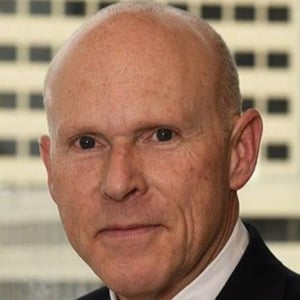
Partner, Taft Stettinius & Hollister
Robert McBride is the partner-in-charge of the Kentucky office of Taft Stettinius & Hollister. As a seasoned trial attorney, he is experienced in investigating and prosecuting a wide variety of criminal matters. As lead attorney, Bob prosecuted cases involving complex financial frauds, money laundering, federal tax violations, healthcare fraud, national security matters, violations of the Export Control Act, immigration, and human trafficking crimes, and public corruption. He also prosecuted narcotics trafficking organizations, firearms violations and crimes against children. As a prosecutor, Bob successfully tried many federal cases to jury verdict. Bob is also experienced in litigating forfeiture claims, habeas actions and appeals before the Sixth Circuit Court of Appeals.
Bob has a long record serving the United States as an attorney before entering private practice. He was an Assistant United States Attorney in the Eastern District of Kentucky for over 15 years. As an AUSA, Bob first chaired criminal jury trials in U.S. District Court and handled appeals before the Sixth Circuit Court of Appeals. Additionally, he was the District’s National Security Prosecutor and the Anti-Terrorism Advisory Council Coordinator. Bob also held several leadership positions. In 2006, he was assigned as the manager of the London Branch Office. Shortly thereafter, he was promoted to Criminal Chief and served in that position until January 2010. As Criminal Chief, Bob supervised the Criminal Division’s personnel and exercised oversight of all prosecutions in the District. More recently, he was the supervisor of the Ft. Mitchell Branch Office, where he handled a number of high profile investigations and prosecutions.
Bob also served in the United States Navy, Judge Advocate General’s Corps, for 10 years. His major assignments included senior prosecutor on the Island of Guam, Officer-in-Charge of a Detachment in New Orleans focusing on criminal defense, and Staff Judge Advocate, Recruit Training Command. Bob attained the rank of Lieutenant Commander. He was also an enlisted Combat Engineer in the Army National Guard.
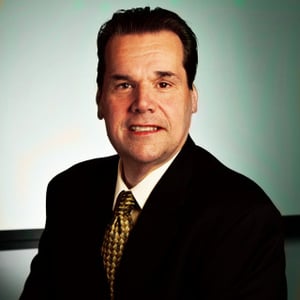
Partner, Patrick Doerr
Mr. Rando has represented clients in matters involving computer hardware and software, silicon chip manufacturing, biotechnology, medical devices, pharmaceuticals, chemical compounds, food additives, alternative energy, AI, autonomous vehicles, blockchain, consumer electronics, communications, internet, and e-commerce. He has appeared in courts across the country, including the Southern and Eastern Districts of New York and multiple U.S. Courts of Appeals.
As appellate counsel, Mr. Rando has served as counsel of record or co-counsel in more than 30 amicus briefs filed before the U.S. Supreme Court and Federal Circuit on issues of patent law, statutory interpretation, separation of powers, and constitutional law. Noteworthy filings include eBay Inc. v. MercExchange (2006), Oil States v. Greene’s Energy (2017), American Axle v. Neapco (2021), Amgen v. Sanofi (2023), and Cellect v. Vidal (2024).
Mr. Rando is a Fellow of the Academy of Court-Appointed Masters, having served by judicial appointment as Special Master in numerous complex patent cases, including multi-day Markman hearings and post-discovery proceedings. He also serves as a court-appointed Mediator and Neutral in both patent and commercial disputes.
He has played an active role in judicial and legislative engagement. Mr. Rando co-developed and conducted lecture series for the SDNY and EDNY Patent Pilot Program Judges and Clerks, covering the America Invents Act and Section 101 eligibility post-Alice and Mayo. He represented both the Federal Bar Association (FBA) and New York Intellectual Property Law Association (NYIPLA) at the Tillis/Coons Section 101 Patent Reform Roundtable, and submitted written testimony to the U.S. Senate Judiciary Committee in 2019.
Mr. Rando is a former president of the NYIPLA (2023–2024) and has held nearly every leadership position in the organization. He also served as Chair of the FBA’s Intellectual Property Law Section and was a founding member and president of the FBA’s EDNY Chapter. He is a founding member of the Association of Amicus Counsel, and an active contributor to the Federalist Society IP Practice Group Executive Committee.
He frequently lectures at CLE programs, universities, and legal associations on IP, constitutional law, and appellate advocacy. He has been quoted extensively in publications such as Law360, Bloomberg Law, WIPR, and National Law Journal. His scholarly publications include articles in The Federal Lawyer, Touro Law Review, and IPWatchdog.
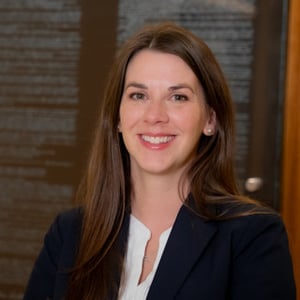
Vice President, Practice Groups, The Federalist Society
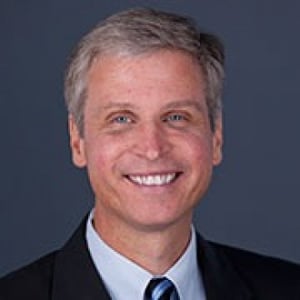
Frank Edwards Tyler Distinguished Professor of Law, University of Kansas School of Law
Stephen Ware is the author of five books, over 60 law review articles and many other publications. His writings have been cited by the Supreme Court of the United States and in at least 37 other cases. Ware teaches and writes on:
each with an international or comparative dimension. An experienced teacher of lawyering skills exercises in which student groups negotiate, mediate, and draft legal documents, Professor Ware takes this approach in his Transnational Dispute Resolution course, which he has customized for universities from Beijing to Istanbul to Kansas.
Ware has testified before both houses of the U.S. Congress, several state legislatures and, as an expert witness, in court. He is a frequent guest lecturer and speaker at academic and professional conferences—having given such presentations throughout the U.S. and in several other countries. He has appeared on numerous television and radio stations and been quoted in The New York Times, Wall Street Journal, USA Today, Financial Times, National Law Journal and many other news outlets. He is an elected member of the American Law Institute (ALI) and has served, at various times in his career, on the editorial board of the Journal of Legal Education and as an arbitrator for the American Arbitration Association.
Ware was named as the Frank Edwards Tyler Distinguished Professor of Law in 2019.
Associate Professor of Law, Ave Maria School of Law
Before arriving at Ave Maria School of Law, Professor Jennifer (Barrow) Jenkins was a Climenko Fellow and Lecturer on Law at Harvard University School of Law. Professor Barrow was born in Plymouth, Massachusetts, and grew up in Tampa, Florida. Professor Barrow received a B.S. in the American Legal System from the United States Military Academy at West Point. She served as an Army intelligence officer in Afghanistan and Iraq, receiving the Bronze Star in 2010. Professor Barrow is a graduate of Harvard Law School and was an editor for the International Law Journal, Journal of Law and Public Policy, Journal on Legislation, and the National Security Journal. After law school, Professor Barrow clerked for Judge Ralph K. Winter on the U.S. Court of Appeals for the Second Circuit. She then served as a Supreme Court Fellow, placed at the U.S. Sentencing Commission, where she helped revise a draft amendment to the career offender provision of the U.S. Sentencing Guidelines. Her primary teaching interests include criminal law and procedure, torts, and military law. Her scholarship focuses on criminal law and military law, with an emphasis on sentencing. Her research scrutinizes the increased power of the legislative, executive, and judicial branches at the expense of the jury and suggests reforms.
State Representative, Ohio House of Representatives, District 56
State Representative Adam Mathews is serving his second term in the Ohio House of Representatives. He represents the 56th Ohio House District, which encompasses southwest and central Warren County including Lebanon, South Lebanon, and Mason.
Rep. Mathews worked as a civilian engineer for the Naval Nuclear Propulsion Program before returning to Notre Dame to become an intellectual property attorney. He continues to practice and represents inventors, small businesses, and entrepreneurs. He formerly served as the Vice Mayor of Lebanon. The representative is also an intellectual property and corporate attorney, and that he is licensed and has appeared before the 9th Circuit Court of Appeals and the Supreme Court of the United States
Mathews is also very involved in his community. He has served as the Chairman of the Board of Directors for Elizabeth’s New Life Center, a network of pro-life women’s centers throughout Southwest Ohio. He also serves on the Board of Directors for the Cincinnati Federalist Society, St. Thomas More Society of Cincinnati, the Warren County Republican Party, and Kiwanis of Lebanon.
Mathews was formerly Chairman of the Intellectual Property Section of the Ohio State Bar Association, President of the Notre Dame Club of Dayton, and a member of the St. Francis de Sales Parish Council and Knights of Columbus. He currently serves on the Board of Directors for the Lebanon Area Chamber of Commerce.
He married his wife Amanda in 2011, and they live with their five children in Lebanon.
Partner, Taft Stettinius & Hollister
Robert McBride is the partner-in-charge of the Kentucky office of Taft Stettinius & Hollister. As a seasoned trial attorney, he is experienced in investigating and prosecuting a wide variety of criminal matters. As lead attorney, Bob prosecuted cases involving complex financial frauds, money laundering, federal tax violations, healthcare fraud, national security matters, violations of the Export Control Act, immigration, and human trafficking crimes, and public corruption. He also prosecuted narcotics trafficking organizations, firearms violations and crimes against children. As a prosecutor, Bob successfully tried many federal cases to jury verdict. Bob is also experienced in litigating forfeiture claims, habeas actions and appeals before the Sixth Circuit Court of Appeals.
Bob has a long record serving the United States as an attorney before entering private practice. He was an Assistant United States Attorney in the Eastern District of Kentucky for over 15 years. As an AUSA, Bob first chaired criminal jury trials in U.S. District Court and handled appeals before the Sixth Circuit Court of Appeals. Additionally, he was the District’s National Security Prosecutor and the Anti-Terrorism Advisory Council Coordinator. Bob also held several leadership positions. In 2006, he was assigned as the manager of the London Branch Office. Shortly thereafter, he was promoted to Criminal Chief and served in that position until January 2010. As Criminal Chief, Bob supervised the Criminal Division’s personnel and exercised oversight of all prosecutions in the District. More recently, he was the supervisor of the Ft. Mitchell Branch Office, where he handled a number of high profile investigations and prosecutions.
Bob also served in the United States Navy, Judge Advocate General’s Corps, for 10 years. His major assignments included senior prosecutor on the Island of Guam, Officer-in-Charge of a Detachment in New Orleans focusing on criminal defense, and Staff Judge Advocate, Recruit Training Command. Bob attained the rank of Lieutenant Commander. He was also an enlisted Combat Engineer in the Army National Guard.
Partner, Patrick Doerr
Mr. Rando has represented clients in matters involving computer hardware and software, silicon chip manufacturing, biotechnology, medical devices, pharmaceuticals, chemical compounds, food additives, alternative energy, AI, autonomous vehicles, blockchain, consumer electronics, communications, internet, and e-commerce. He has appeared in courts across the country, including the Southern and Eastern Districts of New York and multiple U.S. Courts of Appeals.
As appellate counsel, Mr. Rando has served as counsel of record or co-counsel in more than 30 amicus briefs filed before the U.S. Supreme Court and Federal Circuit on issues of patent law, statutory interpretation, separation of powers, and constitutional law. Noteworthy filings include eBay Inc. v. MercExchange (2006), Oil States v. Greene’s Energy (2017), American Axle v. Neapco (2021), Amgen v. Sanofi (2023), and Cellect v. Vidal (2024).
Mr. Rando is a Fellow of the Academy of Court-Appointed Masters, having served by judicial appointment as Special Master in numerous complex patent cases, including multi-day Markman hearings and post-discovery proceedings. He also serves as a court-appointed Mediator and Neutral in both patent and commercial disputes.
He has played an active role in judicial and legislative engagement. Mr. Rando co-developed and conducted lecture series for the SDNY and EDNY Patent Pilot Program Judges and Clerks, covering the America Invents Act and Section 101 eligibility post-Alice and Mayo. He represented both the Federal Bar Association (FBA) and New York Intellectual Property Law Association (NYIPLA) at the Tillis/Coons Section 101 Patent Reform Roundtable, and submitted written testimony to the U.S. Senate Judiciary Committee in 2019.
Mr. Rando is a former president of the NYIPLA (2023–2024) and has held nearly every leadership position in the organization. He also served as Chair of the FBA’s Intellectual Property Law Section and was a founding member and president of the FBA’s EDNY Chapter. He is a founding member of the Association of Amicus Counsel, and an active contributor to the Federalist Society IP Practice Group Executive Committee.
He frequently lectures at CLE programs, universities, and legal associations on IP, constitutional law, and appellate advocacy. He has been quoted extensively in publications such as Law360, Bloomberg Law, WIPR, and National Law Journal. His scholarly publications include articles in The Federal Lawyer, Touro Law Review, and IPWatchdog.
Vice President, Practice Groups, The Federalist Society
Frank Edwards Tyler Distinguished Professor of Law, University of Kansas School of Law
Stephen Ware is the author of five books, over 60 law review articles and many other publications. His writings have been cited by the Supreme Court of the United States and in at least 37 other cases. Ware teaches and writes on:
each with an international or comparative dimension. An experienced teacher of lawyering skills exercises in which student groups negotiate, mediate, and draft legal documents, Professor Ware takes this approach in his Transnational Dispute Resolution course, which he has customized for universities from Beijing to Istanbul to Kansas.
Ware has testified before both houses of the U.S. Congress, several state legislatures and, as an expert witness, in court. He is a frequent guest lecturer and speaker at academic and professional conferences—having given such presentations throughout the U.S. and in several other countries. He has appeared on numerous television and radio stations and been quoted in The New York Times, Wall Street Journal, USA Today, Financial Times, National Law Journal and many other news outlets. He is an elected member of the American Law Institute (ALI) and has served, at various times in his career, on the editorial board of the Journal of Legal Education and as an arbitrator for the American Arbitration Association.
Ware was named as the Frank Edwards Tyler Distinguished Professor of Law in 2019.
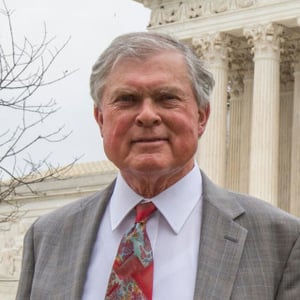
Senior Fellow, Independent Institute
Dr. Stephen P. Halbrook is a Senior Fellow at the Independent Institute. He has taught legal and political philosophy at George Mason University, Howard University, and Tuskegee Institute, and he received his J.D. from the Georgetown University Law Center and Ph.D. in social philosophy from Florida State University.
The winner of three cases before the U.S. Supreme Court (Printz v. United States, United States v. Thompson/Center Arms Company, and Castillo v. United States), he has testified before the Subcommittee on the Constitution of the Senate Judiciary Committee, Senate Subcommittee on the Constitution, Subcommittee on Crime of the House Judiciary Committee, Senate Governmental Affairs Committee, and House Committee on the District of Columbia.
A contributor to numerous scholarly volumes, he is the author of the books, Gun Control in Nazi-Occupied France: Tyranny and Resistance; Gun Control in the Third Reich: Disarming the Jews and “Enemies of the State”; The Founders’ Second Amendment: Origins of the Right to Bear Arms; That Every Man Be Armed: Evolution of a Constitutional Right; A Right to Bear Arms; Firearms Law Deskbook: Federal and State Criminal Practice; Securing Civil Rights: Freedmen, the Fourteenth Amendment, and the Right to Bear Arms; State and Federal Bills of Rights and Constitutional Guarantees; and Target Switzerland: Swiss Armed Neutrality in World War II. Dr. Halbrook’s scholarly articles have appeared in such journals as the Arizona Journal of International and Comparative Law, Drug Law Report, George Mason University Law Review, Journal of Air Law and Commerce, Journal of Law and Policy, Law & Contemporary Problems, National Law Journal, Northern Kentucky Law Review, St. John’s Journal of Legal Commentary; Seton Hall Constitutional Law Journal, Tennessee Law Review, University of Dayton Law Review, Valparaiso University Law Review, Vermont Law Review, and William & Mary Bill of Rights Journal.
Dr. Halbrook's popular articles have appeared in such publications as the Wall Street Journal, Newsday, San Francisco Chronicle, National Review, Investor’s Business Daily, Kansas City Star, Washington Examiner, Shreveport Times, Sacramento Bee, Providence Journal, Tampa Tribune, Pittsburgh Tribune-Review, History News Network, San Antonio Express-News, The Daily Caller, Detroit News, Honolulu Star Advertiser, Birmingham News, Environmental Forum, USA Today, and Washington Times. He has also appeared on numerous national TV/radio programs on CNN, Fox News Channel, Fox Business Network, Court TV, NewsMax TV, CBN, Voice of America, and C-SPAN.

Senior Counsel, First Liberty Institute
Stephanie N. Taub serves as Senior Counsel with First Liberty Institute, focusing on litigation, appellate advocacy, and legal education.
While at First Liberty, her article on the rights of faith-based organizations under Title VII of the Civil Rights Act of 1964 has been published in the Texas Review of Law and Politics. She has also authored pieces published in National Review, the Daily Signal, the Washington Times, the Des Moines Register, and the New York Daily News. In 2017, Taub was named one of 15 recipients of the James Wilson Fellowship in natural law.
Before joining First Liberty, Taub worked as a law clerk to the Honorable Reed O’Connor in the U.S. District Court of the Northern District of Texas.
Taub is a Harvard Law School graduate in the class of 2014 and a Blackstone Fellow in the class of 2012. During law school, she served as Co-President of the HLS Christian Fellowship and Managing Technical Editor of the Harvard Human Rights Journal. Taub spent her law school summers defending religious liberty in public interest law firms and clerking in the Texas Office of Solicitor General.
For her undergraduate studies at the University of Southern California, Taub graduated summa cum laude, majoring in Business Administration with a minor in Philosophy.
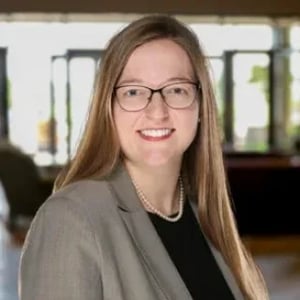
Counsel, First Liberty Institute
Kayla Toney is Associate Counsel with First Liberty Institute, concentrating on religious liberty matters and First Amendment rights for clients of all faiths.
Prior to joining First Liberty, Kayla litigated religious freedom cases as a Constitutional Law Fellow at the Becket Fund for Religious Liberty. She clerked for Judge Gregory E. Maggs on the U.S. Court of Appeals for the Armed Forces, where she gained valuable experience in the military justice system. Kayla also worked as a litigation associate in the D.C. office of Winston & Strawn LLP, where she enjoyed working on pro bono religious liberty matters.
Kayla earned her law degree from George Washington University, where she served as president of the Federalist Society chapter, a member of the GW International Law Review, and a writing fellow. She graduated summa cum laude from Grove City College with a degree in history and economics.
A native of Michigan, Kayla is based in First Liberty’s Washington, D.C. office and is licensed to practice law in Virginia and D.C.
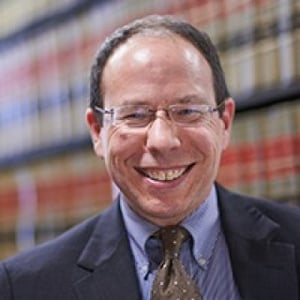
Professor of Law, Michigan State University (currently serving as FCC General Counsel)
Professor Candeub joined the MSU Law faculty in fall 2004. He is also a Fellow with MSU's Institute of Public Utilities. Prior to joining MSU, he served as an advisor at the Federal Communications Commission (FCC). From 1998 to 2000, Professor Candeub was a litigation associate for the Washington D.C. firm of Jones, Day, Reavis & Pogue and also has served as a corporate associate with Cleary, Gottlieb, Steen & Hamilton, also in Washington, D.C. Immediately following law school, he clerked for Chief Judge J. Clifford Wallace, U.S. Court of Appeals for the Ninth Circuit. While in law school, Professor Candeub was an articles editor for the University of Pennsylvania Law Review.
Professor Candeub's scholarly interests focus on the law and regulation of communications, internet, technology. His numerous law review articles and scholarly papers have placed him at the center of legal and policy controversies, and he often writes for popular outlets such as the Wall Street Journal and US News. Federal courts, including the U.S. Supreme Court, have cited and relied upon his work.
He joined the Trump administration in 2019 as Deputy Assistant Secretary of Commerce for Telecommunications and Information and assumed the role of Acting Assistant Secretary. He later joined the Department of Justice as Deputy Associate Attorney General.
Professor Candeub is a senior fellow at the D.C.-based Center of Renewing America.
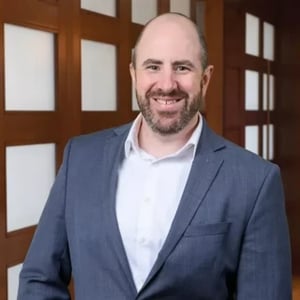
Shareholder, Reinhart Boerner Van Deuren s.c.
Robert Driscoll is a shareholder in Reinhart's Labor and Employment Practice. He is an experienced, accomplished attorney who works to understand his clients' goals and provide them with effective legal and business solutions.
Rob counsels employers to help them avoid disputes with an emphasis on discrimination (including disability discrimination), wage and hour issues and employment contracts of all kinds. Rob's practice also includes all areas of traditional labor law, such as collective bargaining, labor arbitrations, proceedings before the National Labor Relations Board, and advising employers of their rights under the National Labor Relations Act.
He understands that trials can be costly and time-consuming, and clients appreciate that he offers creative options to resolve disputes without litigation. However, when litigation is unavoidable, he's a confident and diligent legal partner, devising effective strategies for prevailing. Rob's litigation experience includes wage and hour claims (both individual and class actions), employment and fair housing discrimination and noncompetition agreements. He also represents clients in appeals.
Prior to joining the firm, Rob was a law clerk for the Hon. Diane S. Sykes, U.S. Court of Appeals for the Seventh Circuit in Milwaukee.
Rob proudly serves on the Board of Directors for GPS Education Partners, an organization that works to validate technical career paths and provide students and their communities pathways to prosperity.

President, Harned Strategies LLC
Karen Harned is President at Harned Strategies LLC. Previously, she served as Executive Director of the National Federation of Independent Business Small Business Legal Center, a post she held from 2002-2022. Prior to joining the Legal Center, Ms. Harned was an attorney at a Washington, D.C. law firm specializing in food and drug law, where she represented several small and large businesses and their respective trade associations before Congress and federal agencies. She also served as Assistant Press Secretary to U.S. Senator Don Nickles of Oklahoma from August of 1989 to March of 1993. Ms. Harned received her B.A. from the University of Oklahoma in 1989 and her J.D. from The George Washington University National Law Center in 1995. She is admitted to practice in the District of Columbia.
As Executive Director of the NFIB Small Business Legal Center, Ms. Harned commented regularly on small business cases before federal and state courts, as well as the U.S. Supreme Court. She has appeared on Fox News, Fox Business, NBC Nightly News, CNN, CNBC and MSNBC, as well as National Public Radio, CBS Radio, and radio outlets across the country. Her opinion editorials and articles regarding healthcare, lawsuit abuse, regulation, and other issues important to small business have been published in newspapers and other publications nationwide.
Ms. Harned has testified before Congress on the small business impact of regulation and the civil justice system. Additionally, she has conducted numerous webinars and legal compliance seminars for small business owners across the country on issues relating to employment law, including unionization and immigration.
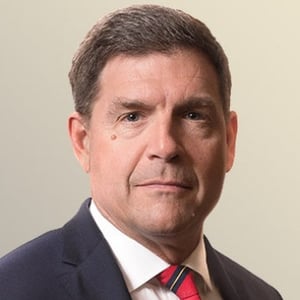
Partner, King & Spalding
John Richter is a trial and investigations partner in the Special Matters and Investigations Practice Group, and represents and defends companies, Boards of Directors, Board committees, and individuals facing a variety of white-collar criminal and regulatory enforcement matters, parallel civil litigation, and internal corporate investigations. John previously served as the Acting Assistant Attorney General in charge of the Criminal Division at the U.S. Department of Justice and as the U.S. Attorney for the Western District of Oklahoma, having been nominated by President George W. Bush and confirmed by unanimous consent of the U.S. Senate.
Professor of Law, Michigan State University (currently serving as FCC General Counsel)
Professor Candeub joined the MSU Law faculty in fall 2004. He is also a Fellow with MSU's Institute of Public Utilities. Prior to joining MSU, he served as an advisor at the Federal Communications Commission (FCC). From 1998 to 2000, Professor Candeub was a litigation associate for the Washington D.C. firm of Jones, Day, Reavis & Pogue and also has served as a corporate associate with Cleary, Gottlieb, Steen & Hamilton, also in Washington, D.C. Immediately following law school, he clerked for Chief Judge J. Clifford Wallace, U.S. Court of Appeals for the Ninth Circuit. While in law school, Professor Candeub was an articles editor for the University of Pennsylvania Law Review.
Professor Candeub's scholarly interests focus on the law and regulation of communications, internet, technology. His numerous law review articles and scholarly papers have placed him at the center of legal and policy controversies, and he often writes for popular outlets such as the Wall Street Journal and US News. Federal courts, including the U.S. Supreme Court, have cited and relied upon his work.
He joined the Trump administration in 2019 as Deputy Assistant Secretary of Commerce for Telecommunications and Information and assumed the role of Acting Assistant Secretary. He later joined the Department of Justice as Deputy Associate Attorney General.
Professor Candeub is a senior fellow at the D.C.-based Center of Renewing America.
Shareholder, Reinhart Boerner Van Deuren s.c.
Robert Driscoll is a shareholder in Reinhart's Labor and Employment Practice. He is an experienced, accomplished attorney who works to understand his clients' goals and provide them with effective legal and business solutions.
Rob counsels employers to help them avoid disputes with an emphasis on discrimination (including disability discrimination), wage and hour issues and employment contracts of all kinds. Rob's practice also includes all areas of traditional labor law, such as collective bargaining, labor arbitrations, proceedings before the National Labor Relations Board, and advising employers of their rights under the National Labor Relations Act.
He understands that trials can be costly and time-consuming, and clients appreciate that he offers creative options to resolve disputes without litigation. However, when litigation is unavoidable, he's a confident and diligent legal partner, devising effective strategies for prevailing. Rob's litigation experience includes wage and hour claims (both individual and class actions), employment and fair housing discrimination and noncompetition agreements. He also represents clients in appeals.
Prior to joining the firm, Rob was a law clerk for the Hon. Diane S. Sykes, U.S. Court of Appeals for the Seventh Circuit in Milwaukee.
Rob proudly serves on the Board of Directors for GPS Education Partners, an organization that works to validate technical career paths and provide students and their communities pathways to prosperity.
President, Harned Strategies LLC
Karen Harned is President at Harned Strategies LLC. Previously, she served as Executive Director of the National Federation of Independent Business Small Business Legal Center, a post she held from 2002-2022. Prior to joining the Legal Center, Ms. Harned was an attorney at a Washington, D.C. law firm specializing in food and drug law, where she represented several small and large businesses and their respective trade associations before Congress and federal agencies. She also served as Assistant Press Secretary to U.S. Senator Don Nickles of Oklahoma from August of 1989 to March of 1993. Ms. Harned received her B.A. from the University of Oklahoma in 1989 and her J.D. from The George Washington University National Law Center in 1995. She is admitted to practice in the District of Columbia.
As Executive Director of the NFIB Small Business Legal Center, Ms. Harned commented regularly on small business cases before federal and state courts, as well as the U.S. Supreme Court. She has appeared on Fox News, Fox Business, NBC Nightly News, CNN, CNBC and MSNBC, as well as National Public Radio, CBS Radio, and radio outlets across the country. Her opinion editorials and articles regarding healthcare, lawsuit abuse, regulation, and other issues important to small business have been published in newspapers and other publications nationwide.
Ms. Harned has testified before Congress on the small business impact of regulation and the civil justice system. Additionally, she has conducted numerous webinars and legal compliance seminars for small business owners across the country on issues relating to employment law, including unionization and immigration.
Partner, King & Spalding
John Richter is a trial and investigations partner in the Special Matters and Investigations Practice Group, and represents and defends companies, Boards of Directors, Board committees, and individuals facing a variety of white-collar criminal and regulatory enforcement matters, parallel civil litigation, and internal corporate investigations. John previously served as the Acting Assistant Attorney General in charge of the Criminal Division at the U.S. Department of Justice and as the U.S. Attorney for the Western District of Oklahoma, having been nominated by President George W. Bush and confirmed by unanimous consent of the U.S. Senate.
Associate Professor of Law, Ave Maria School of Law
Before arriving at Ave Maria School of Law, Professor Jennifer (Barrow) Jenkins was a Climenko Fellow and Lecturer on Law at Harvard University School of Law. Professor Barrow was born in Plymouth, Massachusetts, and grew up in Tampa, Florida. Professor Barrow received a B.S. in the American Legal System from the United States Military Academy at West Point. She served as an Army intelligence officer in Afghanistan and Iraq, receiving the Bronze Star in 2010. Professor Barrow is a graduate of Harvard Law School and was an editor for the International Law Journal, Journal of Law and Public Policy, Journal on Legislation, and the National Security Journal. After law school, Professor Barrow clerked for Judge Ralph K. Winter on the U.S. Court of Appeals for the Second Circuit. She then served as a Supreme Court Fellow, placed at the U.S. Sentencing Commission, where she helped revise a draft amendment to the career offender provision of the U.S. Sentencing Guidelines. Her primary teaching interests include criminal law and procedure, torts, and military law. Her scholarship focuses on criminal law and military law, with an emphasis on sentencing. Her research scrutinizes the increased power of the legislative, executive, and judicial branches at the expense of the jury and suggests reforms.
State Representative, Ohio House of Representatives, District 56
State Representative Adam Mathews is serving his second term in the Ohio House of Representatives. He represents the 56th Ohio House District, which encompasses southwest and central Warren County including Lebanon, South Lebanon, and Mason.
Rep. Mathews worked as a civilian engineer for the Naval Nuclear Propulsion Program before returning to Notre Dame to become an intellectual property attorney. He continues to practice and represents inventors, small businesses, and entrepreneurs. He formerly served as the Vice Mayor of Lebanon. The representative is also an intellectual property and corporate attorney, and that he is licensed and has appeared before the 9th Circuit Court of Appeals and the Supreme Court of the United States
Mathews is also very involved in his community. He has served as the Chairman of the Board of Directors for Elizabeth’s New Life Center, a network of pro-life women’s centers throughout Southwest Ohio. He also serves on the Board of Directors for the Cincinnati Federalist Society, St. Thomas More Society of Cincinnati, the Warren County Republican Party, and Kiwanis of Lebanon.
Mathews was formerly Chairman of the Intellectual Property Section of the Ohio State Bar Association, President of the Notre Dame Club of Dayton, and a member of the St. Francis de Sales Parish Council and Knights of Columbus. He currently serves on the Board of Directors for the Lebanon Area Chamber of Commerce.
He married his wife Amanda in 2011, and they live with their five children in Lebanon.
Partner, Taft Stettinius & Hollister
Robert McBride is the partner-in-charge of the Kentucky office of Taft Stettinius & Hollister. As a seasoned trial attorney, he is experienced in investigating and prosecuting a wide variety of criminal matters. As lead attorney, Bob prosecuted cases involving complex financial frauds, money laundering, federal tax violations, healthcare fraud, national security matters, violations of the Export Control Act, immigration, and human trafficking crimes, and public corruption. He also prosecuted narcotics trafficking organizations, firearms violations and crimes against children. As a prosecutor, Bob successfully tried many federal cases to jury verdict. Bob is also experienced in litigating forfeiture claims, habeas actions and appeals before the Sixth Circuit Court of Appeals.
Bob has a long record serving the United States as an attorney before entering private practice. He was an Assistant United States Attorney in the Eastern District of Kentucky for over 15 years. As an AUSA, Bob first chaired criminal jury trials in U.S. District Court and handled appeals before the Sixth Circuit Court of Appeals. Additionally, he was the District’s National Security Prosecutor and the Anti-Terrorism Advisory Council Coordinator. Bob also held several leadership positions. In 2006, he was assigned as the manager of the London Branch Office. Shortly thereafter, he was promoted to Criminal Chief and served in that position until January 2010. As Criminal Chief, Bob supervised the Criminal Division’s personnel and exercised oversight of all prosecutions in the District. More recently, he was the supervisor of the Ft. Mitchell Branch Office, where he handled a number of high profile investigations and prosecutions.
Bob also served in the United States Navy, Judge Advocate General’s Corps, for 10 years. His major assignments included senior prosecutor on the Island of Guam, Officer-in-Charge of a Detachment in New Orleans focusing on criminal defense, and Staff Judge Advocate, Recruit Training Command. Bob attained the rank of Lieutenant Commander. He was also an enlisted Combat Engineer in the Army National Guard.
Partner, Patrick Doerr
Mr. Rando has represented clients in matters involving computer hardware and software, silicon chip manufacturing, biotechnology, medical devices, pharmaceuticals, chemical compounds, food additives, alternative energy, AI, autonomous vehicles, blockchain, consumer electronics, communications, internet, and e-commerce. He has appeared in courts across the country, including the Southern and Eastern Districts of New York and multiple U.S. Courts of Appeals.
As appellate counsel, Mr. Rando has served as counsel of record or co-counsel in more than 30 amicus briefs filed before the U.S. Supreme Court and Federal Circuit on issues of patent law, statutory interpretation, separation of powers, and constitutional law. Noteworthy filings include eBay Inc. v. MercExchange (2006), Oil States v. Greene’s Energy (2017), American Axle v. Neapco (2021), Amgen v. Sanofi (2023), and Cellect v. Vidal (2024).
Mr. Rando is a Fellow of the Academy of Court-Appointed Masters, having served by judicial appointment as Special Master in numerous complex patent cases, including multi-day Markman hearings and post-discovery proceedings. He also serves as a court-appointed Mediator and Neutral in both patent and commercial disputes.
He has played an active role in judicial and legislative engagement. Mr. Rando co-developed and conducted lecture series for the SDNY and EDNY Patent Pilot Program Judges and Clerks, covering the America Invents Act and Section 101 eligibility post-Alice and Mayo. He represented both the Federal Bar Association (FBA) and New York Intellectual Property Law Association (NYIPLA) at the Tillis/Coons Section 101 Patent Reform Roundtable, and submitted written testimony to the U.S. Senate Judiciary Committee in 2019.
Mr. Rando is a former president of the NYIPLA (2023–2024) and has held nearly every leadership position in the organization. He also served as Chair of the FBA’s Intellectual Property Law Section and was a founding member and president of the FBA’s EDNY Chapter. He is a founding member of the Association of Amicus Counsel, and an active contributor to the Federalist Society IP Practice Group Executive Committee.
He frequently lectures at CLE programs, universities, and legal associations on IP, constitutional law, and appellate advocacy. He has been quoted extensively in publications such as Law360, Bloomberg Law, WIPR, and National Law Journal. His scholarly publications include articles in The Federal Lawyer, Touro Law Review, and IPWatchdog.
Vice President, Practice Groups, The Federalist Society
Frank Edwards Tyler Distinguished Professor of Law, University of Kansas School of Law
Stephen Ware is the author of five books, over 60 law review articles and many other publications. His writings have been cited by the Supreme Court of the United States and in at least 37 other cases. Ware teaches and writes on:
each with an international or comparative dimension. An experienced teacher of lawyering skills exercises in which student groups negotiate, mediate, and draft legal documents, Professor Ware takes this approach in his Transnational Dispute Resolution course, which he has customized for universities from Beijing to Istanbul to Kansas.
Ware has testified before both houses of the U.S. Congress, several state legislatures and, as an expert witness, in court. He is a frequent guest lecturer and speaker at academic and professional conferences—having given such presentations throughout the U.S. and in several other countries. He has appeared on numerous television and radio stations and been quoted in The New York Times, Wall Street Journal, USA Today, Financial Times, National Law Journal and many other news outlets. He is an elected member of the American Law Institute (ALI) and has served, at various times in his career, on the editorial board of the Journal of Legal Education and as an arbitrator for the American Arbitration Association.
Ware was named as the Frank Edwards Tyler Distinguished Professor of Law in 2019.
Professor of Law, Michigan State University (currently serving as FCC General Counsel)
Professor Candeub joined the MSU Law faculty in fall 2004. He is also a Fellow with MSU's Institute of Public Utilities. Prior to joining MSU, he served as an advisor at the Federal Communications Commission (FCC). From 1998 to 2000, Professor Candeub was a litigation associate for the Washington D.C. firm of Jones, Day, Reavis & Pogue and also has served as a corporate associate with Cleary, Gottlieb, Steen & Hamilton, also in Washington, D.C. Immediately following law school, he clerked for Chief Judge J. Clifford Wallace, U.S. Court of Appeals for the Ninth Circuit. While in law school, Professor Candeub was an articles editor for the University of Pennsylvania Law Review.
Professor Candeub's scholarly interests focus on the law and regulation of communications, internet, technology. His numerous law review articles and scholarly papers have placed him at the center of legal and policy controversies, and he often writes for popular outlets such as the Wall Street Journal and US News. Federal courts, including the U.S. Supreme Court, have cited and relied upon his work.
He joined the Trump administration in 2019 as Deputy Assistant Secretary of Commerce for Telecommunications and Information and assumed the role of Acting Assistant Secretary. He later joined the Department of Justice as Deputy Associate Attorney General.
Professor Candeub is a senior fellow at the D.C.-based Center of Renewing America.
Shareholder, Reinhart Boerner Van Deuren s.c.
Robert Driscoll is a shareholder in Reinhart's Labor and Employment Practice. He is an experienced, accomplished attorney who works to understand his clients' goals and provide them with effective legal and business solutions.
Rob counsels employers to help them avoid disputes with an emphasis on discrimination (including disability discrimination), wage and hour issues and employment contracts of all kinds. Rob's practice also includes all areas of traditional labor law, such as collective bargaining, labor arbitrations, proceedings before the National Labor Relations Board, and advising employers of their rights under the National Labor Relations Act.
He understands that trials can be costly and time-consuming, and clients appreciate that he offers creative options to resolve disputes without litigation. However, when litigation is unavoidable, he's a confident and diligent legal partner, devising effective strategies for prevailing. Rob's litigation experience includes wage and hour claims (both individual and class actions), employment and fair housing discrimination and noncompetition agreements. He also represents clients in appeals.
Prior to joining the firm, Rob was a law clerk for the Hon. Diane S. Sykes, U.S. Court of Appeals for the Seventh Circuit in Milwaukee.
Rob proudly serves on the Board of Directors for GPS Education Partners, an organization that works to validate technical career paths and provide students and their communities pathways to prosperity.
President, Harned Strategies LLC
Karen Harned is President at Harned Strategies LLC. Previously, she served as Executive Director of the National Federation of Independent Business Small Business Legal Center, a post she held from 2002-2022. Prior to joining the Legal Center, Ms. Harned was an attorney at a Washington, D.C. law firm specializing in food and drug law, where she represented several small and large businesses and their respective trade associations before Congress and federal agencies. She also served as Assistant Press Secretary to U.S. Senator Don Nickles of Oklahoma from August of 1989 to March of 1993. Ms. Harned received her B.A. from the University of Oklahoma in 1989 and her J.D. from The George Washington University National Law Center in 1995. She is admitted to practice in the District of Columbia.
As Executive Director of the NFIB Small Business Legal Center, Ms. Harned commented regularly on small business cases before federal and state courts, as well as the U.S. Supreme Court. She has appeared on Fox News, Fox Business, NBC Nightly News, CNN, CNBC and MSNBC, as well as National Public Radio, CBS Radio, and radio outlets across the country. Her opinion editorials and articles regarding healthcare, lawsuit abuse, regulation, and other issues important to small business have been published in newspapers and other publications nationwide.
Ms. Harned has testified before Congress on the small business impact of regulation and the civil justice system. Additionally, she has conducted numerous webinars and legal compliance seminars for small business owners across the country on issues relating to employment law, including unionization and immigration.
Partner, King & Spalding
John Richter is a trial and investigations partner in the Special Matters and Investigations Practice Group, and represents and defends companies, Boards of Directors, Board committees, and individuals facing a variety of white-collar criminal and regulatory enforcement matters, parallel civil litigation, and internal corporate investigations. John previously served as the Acting Assistant Attorney General in charge of the Criminal Division at the U.S. Department of Justice and as the U.S. Attorney for the Western District of Oklahoma, having been nominated by President George W. Bush and confirmed by unanimous consent of the U.S. Senate.

A Seat at the Sitting - March 2023
Jennifer Jenkins, Adam Mathews, Robert K. McBride, Robert J. Rando, Elizabeth Slattery, Stephen J. Ware
Each month, a panel of constitutional experts convenes to discuss the Court’s upcoming docket sitting...
A Seat at the Sitting - March 2023
Jennifer Jenkins, Adam Mathews, Robert K. McBride, Robert J. Rando, Elizabeth Slattery, Stephen J. Ware
Each month, a panel of constitutional experts convenes to discuss the Court’s upcoming docket sitting...
A Seat at the Sitting - March 2023
The March Docket in 90 minutes or Less
TeleforumText-and-History or Means-End Scrutiny? A Response to Professor Nelson Lund's Critique of Bruen
Stephen P. Halbrook
Professor Nelson Lund’s “Bruen’s Preliminary Preservation of the Second Amendment,” recently published in the Federalist...
A Cord of Three Strands: How Kennedy v. Bremerton School District Changed Free Exercise, Establishment, and Free Speech Clause Doctrine
Stephanie Taub, Kayla Ann Toney
In 2015, Bremerton High School football coach Joseph Kennedy lost his job for kneeling at...
Topics
State Sovereignty at Stake in Dispute Between New York and New Jersey
Can a state surrender some of its sovereignty? Of course. It’s how our current federal...
A Seat at the Sitting - February 2023
Adam Candeub, Robert S. Driscoll, Karen Harned, John C. Richter
Each month, a panel of constitutional experts convenes to discuss the Court’s upcoming docket...
A Seat at the Sitting - February 2023
Adam Candeub, Robert S. Driscoll, Karen Harned, John C. Richter
Each month, a panel of constitutional experts convenes to discuss the Court’s upcoming docket...
A Seat at the Sitting - February 2023
The February Docket in 90 minutes or Less
TeleforumTopics
Civil Justice Update Highlights Key Changes in 2022, Outlook for 2023
The Federalist Society has released its annual Civil Justice Update. The paper is a must-read...