
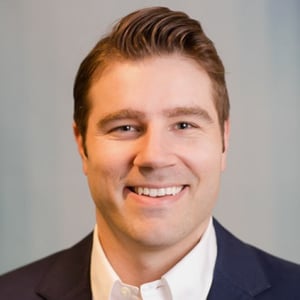
General Counsel, ACT | The App Association
I lead the App Association's legislative initiatives on behalf of 5,000 small mobile software and connected device companies in the app economy. My portfolio includes consumer privacy; broadband deployment; cybersecurity matters; standards-essential patent issues; connected health; and digital trade issues. I also advise on executive branch and judiciary projects related to telecommunications, connected health, intellectual property, and workforce development.
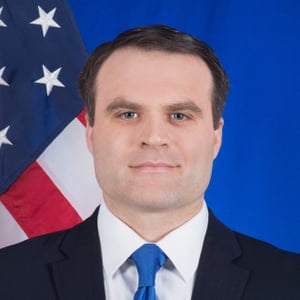
Deputy Coordinator for Countering Violent Extremism, U.S. Department of State
Christopher K. Harnisch is the Deputy Coordinator for Countering Violent Extremism. In this capacity, he is responsible for developing and implementing strategies to counter terrorist messaging and recruitment, including terrorists’ use of the Internet. He also oversees terrorist detention policy.
Prior to his appointment to the Bureau of Counterterrorism, Harnisch served as the Director for Transnational Threats and the Director for Afghanistan at the National Security Council. A Virginia native, he returned to the area following several years in Silicon Valley where he served as a Strategic Sourcing and Operations Product Development Manager at Apple. Before his time in the private sector, Harnisch worked in the public policy and defense arenas. From 2011 to 2012, he served as an Army Intelligence Officer on NATO’s counter-corruption task force in Afghanistan. Previous to that, he worked on the Critical Threats Project at the American Enterprise Institute, where he researched and wrote about al-Qa’ida’s emerging safe havens, focusing especially on those in Yemen and Somalia. He served on the staff of Vice President Dick Cheney.
Chris earned a B.A. in International Studies from Middlebury College and an MBA and M.A. in International Relations from Yale University.
He has published pieces on foreign policy in numerous publications, including The Wall Street Journal, Washington Post, and National Review Online, and he has appeared as a guest analyst on various public panels and television and radio broadcasts. Recently, he has worked on initiatives aimed at bridging the civil-military divide, including co-chairing the Veterans Summit at Yale University. He is a Term Member at the Council on Foreign Relations.
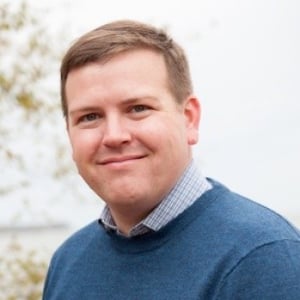
Deputy Director, Program on Extremism, George Washington University
Seamus Hughes is the Deputy Director of the Program on Extremism at George Washington University. He is an expert on terrorism, homegrown violent extremism, and countering violent extremism (CVE). Hughes has authored numerous reports for the Program including ‘ISIS in America: From Retweets to Raqqa’ and ‘The Travelers: American Jihadists in Syria and Iraq.’ He regularly provides commentary to media outlets, including the New York Times, The Washington Post, The Wall Street Journal, Los Angeles Times, The Atlantic, CNN, MSNBC, FoxNews, BBC, PBS, and CBS’ 60 Minutes. He has testified before the U.S. Congress on multiple occasions.
Hughes previously worked at the National Counterterrorism Center (NCTC), serving as a lead staffer on U.S. government efforts to implement a national CVE strategy. He regularly led engagements with Muslim American communities across the country, provided counsel to civic leaders after high-profile terror-related incidents, and met with families of individuals who joined terrorist organizations. Hughes created a groundbreaking intervention program to help steer individuals away from violence through non-law enforcement means, and worked closely with the FBI Joint Terrorism Task Force, Fusion Centers, and U.S. Attorney Offices.
Prior to NCTC, Hughes served as the Senior Counterterrorism Advisor for the U.S. Senate Homeland Security and Governmental Affairs Committee. He organized over a dozen congressional hearings on the threat of homegrown violent extremism, and led fact-finding delegations to the various European and Middle Eastern countries. He authored two reports for the Senate: “A Ticking Time Bomb: Counterterrorism Lessons from the U.S. Government’s Failure to Prevent the Fort Hood Attack” and “Zachary Chesser: A Case Study in Online Islamist Radicalization and Its Meaning for the Threat of Homegrown Terrorism.”
Hughes has authored numerous legislative bills, including sections of the 9/11 Commission Recommendations Act and the Special Agent Samuel Hicks Families of Fallen Heroes Act. He is a graduate of the University of Maryland, and a recipient of the National Security Council Outstanding Service Award and two NCTC Director’s Awards for outstanding service. He teaches classes at George Washington University and Georgetown University.
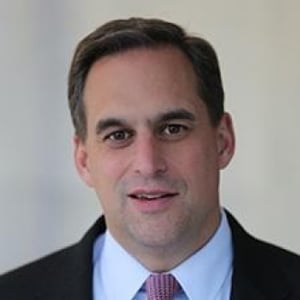
Harold Brown Chair; Director, Transnational Threats Project; and Senior Adviser, International Security Program, Center for Strategic and International Studies
Seth G. Jones holds the Harold Brown Chair, is director of the Transnational Threats Project, and is a senior adviser to the International Security Program at the Center for Strategic and International Studies (CSIS). He teaches at Johns Hopkins University’s School of Advanced International Studies (SAIS) and the Center for Homeland Defense and Security (CHDS) at the U.S. Naval Postgraduate School.
Prior to joining CSIS, Dr. Jones was the director of the International Security and Defense Policy Center at the RAND Corporation. He also served as representative for the commander, U.S. Special Operations Command, to the assistant secretary of defense for special operations. Before that, he was a plans officer and adviser to the commanding general, U.S. Special Operations Forces, in Afghanistan (Combined Forces Special Operations Component Command–Afghanistan). In 2014, Dr. Jones served on a congressionally mandated panel that reviewed the FBI’s implementation of counterterrorism recommendations contained in the 9/11 Commission Report.
Dr. Jones specializes in counterterrorism, counterinsurgency, unconventional warfare, and covert action, including a focus on al Qaeda and ISIS. He is the author of A Covert Action: Reagan, the CIA, and the Cold War Struggle in Poland (W.W. Norton, 2018), Waging Insurgent Warfare (Oxford University Press, 2016), Hunting in the Shadows: The Pursuit of al Qa'ida after 9/11 (W.W. Norton, 2012), and In the Graveyard of Empires: America’s War in Afghanistan (W.W. Norton, 2009). Dr. Jones has published articles in a range of journals, such as Foreign Affairs, Foreign Policy, and International Security, as well as newspapers and magazines like the New York Times, Washington Post, and Wall Street Journal. Dr. Jones is a graduate of Bowdoin College and received his M.A. and Ph.D. from the University of Chicago.
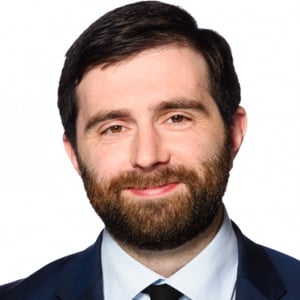
Margaret Thatcher Fellow, Margaret Thatcher Center for Freedom, The Heritage Foundation
Robin Simcox is the Margaret Thatcher Fellow at The Heritage Foundation’s Margaret Thatcher Center for Freedom, where he specializes in counter-terrorism and national security policy.
Simcox has testified before Congress on multiple occasions on issues related to ISIS, al-Qaeda and associated movements. He has also provided oral evidence to a committee of Parliament established to examine British intelligence policy.
Simcox’s commentary has been published in newspapers such as The Washington Post, The Wall Street Journal, Los Angeles Times, The (London) Telegraph, and The Guardian. It also has appeared in magazines and journals such as Foreign Affairs, Foreign Policy, The Atlantic, West Point’s CTC Sentinel, and The Weekly Standard. He regularly appears on a variety of broadcast and cable news outlets, including Fox News Channel, MSNBC, CNN, CBS, BBC, and Sky News.
Prior to arriving at Heritage in January 2016, Simcox was a research fellow at the Henry Jackson Society, a foreign policy think tank in London. While there, he authored several important works on the terrorist group al-Qaeda, including "Al-Qaeda in the United States," a 728-page monograph profiling every known court conviction in America linked to al-Qaeda.
In joining Heritage’s Thatcher Center for Freedom and assuming the fellowship that bears the name of the former British prime minister, he became part of the leading policy center in Washington dedicated to strengthening the Anglo-American “special relationship” as well as U.S. and British leadership of the broader transatlantic alliance. Established in 2005, the Thatcher Center is the only public policy center in the world dedicated to advancing the vision and ideals of Lady Thatcher, who died in 2013.
Robin received a master of science degree in U.S. foreign policy from the Institute for the Study of the Americas, University of London, and a bachelor of arts degree in international history from the University of Leeds. He studied for a year at the University of Newcastle, Australia.
Harold Brown Chair; Director, Transnational Threats Project; and Senior Adviser, International Security Program, Center for Strategic and International Studies
Seth G. Jones holds the Harold Brown Chair, is director of the Transnational Threats Project, and is a senior adviser to the International Security Program at the Center for Strategic and International Studies (CSIS). He teaches at Johns Hopkins University’s School of Advanced International Studies (SAIS) and the Center for Homeland Defense and Security (CHDS) at the U.S. Naval Postgraduate School.
Prior to joining CSIS, Dr. Jones was the director of the International Security and Defense Policy Center at the RAND Corporation. He also served as representative for the commander, U.S. Special Operations Command, to the assistant secretary of defense for special operations. Before that, he was a plans officer and adviser to the commanding general, U.S. Special Operations Forces, in Afghanistan (Combined Forces Special Operations Component Command–Afghanistan). In 2014, Dr. Jones served on a congressionally mandated panel that reviewed the FBI’s implementation of counterterrorism recommendations contained in the 9/11 Commission Report.
Dr. Jones specializes in counterterrorism, counterinsurgency, unconventional warfare, and covert action, including a focus on al Qaeda and ISIS. He is the author of A Covert Action: Reagan, the CIA, and the Cold War Struggle in Poland (W.W. Norton, 2018), Waging Insurgent Warfare (Oxford University Press, 2016), Hunting in the Shadows: The Pursuit of al Qa'ida after 9/11 (W.W. Norton, 2012), and In the Graveyard of Empires: America’s War in Afghanistan (W.W. Norton, 2009). Dr. Jones has published articles in a range of journals, such as Foreign Affairs, Foreign Policy, and International Security, as well as newspapers and magazines like the New York Times, Washington Post, and Wall Street Journal. Dr. Jones is a graduate of Bowdoin College and received his M.A. and Ph.D. from the University of Chicago.
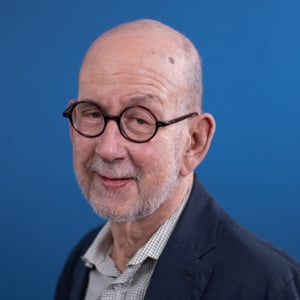
Freedom Scholar, Foundation for Defense of Democracies
Dr. Michael Ledeen is freedom scholar at FDD, and is an internationally-renowned scholar on Iran, Iraq, terrorism, and international security, and a world-renowned Italianist and expert on fascism. Ledeen has served as a consultant to the National Security Council and the Departments of State and Defense, and as a special advisor to the Secretary of State.
He is the author of more than 35 books, including Field of Fight: How to Win the War Against Radical Islam and its Allies, co-authored with General Michael T. Flynn (St. Martin’s Press, 2016). His previous books include Accomplice to Evil: Iran and the War Against the West; The War Against the Terror Masters; The Iranian Time Bomb; Tocqueville on American Character; and Freedom Betrayed: How America Led a Global Democratic Revolution, Won the Cold War, and Walked Away.
Ledeen regularly appears on cable news and talk radio programs, blogs at Forbes, The Hill, and PJ Media, and contributes periodically to The Wall Street Journal. Michael holds a PhD in Modern European History and Philosophy from the University of Wisconsin, and has taught at Washington University in St. Louis and the University of Rome.
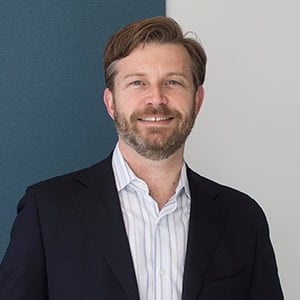
Senior Executive & Director, Center for City Solutions, National League of Cities
Brooks Rainwater is the senior executive and director of the National League of Cities’ (NLC) Center for City Solutions. Rainwater drives the organization’s research agenda, community engagement efforts, and leadership education programming to help city leaders create strong local economies, safe and vibrant neighborhoods, world-class infrastructure, and a sustainable environment.
As an advocate for strong local leadership, Rainwater leads a team of experts across the field of urban policy, and regularly advises cities both in the United States and globally on critical issues faced now and yet to come. He has published a wide variety of reports and articles on innovative solutions that lead to vibrant and successful cities.
Rainwater speaks regularly across the country and overseas on issues facing city leaders. Under his leadership of the Center, it has grown and developed a host of new programs from land use and equitable development to alternative energy and resilience to urban innovation and enhanced city governance strategies.
Rainwater’s research and interests include advancements in technology and city innovation, the sharing economy, and how the rise of state preemption is impacting local authority. His expertise is a draw for media outlets, including the TODAY Show, Wall Street Journal, The Washington Post, CNN, NPR, and the New York Times. Rainwater also frequently contributes to publications such as Fast Company, Forbes, CityLab, Business Insider, TechCrunch, and Fortune.
Prior to joining NLC, Rainwater was Director of Public Policy for the American Institute of Architects (AIA). While there he developed the Local Leaders research series and spearheaded the Cities as a Lab initiative focused on the key role cities play as creative instigators of innovative practices.
Rainwater serves on numerous boards with current and past service to the STAR Communities Board, the American Library Association Public Policy Advisory Council, the International Advisory Board for the City of Rotterdam, and the Arlington County Environment and Energy Conservation Commission.
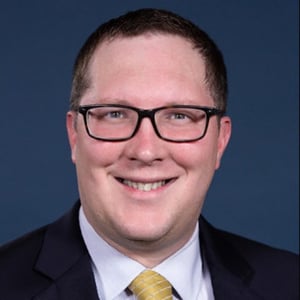
Attorney, Pacific Legal Foundation
Luke A. Wake is an attorney at the Pacific Legal Foundation. Prior to joining PLF, he was a senior staff attorney at the NFIB Small Business Legal Center.
Wake has particular expertise on environmental and land use issues, and has worked on numerous other constitutional issues and matters of importance to small business owners. He is an ardent defender of private property rights, which he believes are essential to the free enterprise system and the foundation of American liberty. As a strong advocate of individual rights and economic liberties, he has built his career defending small business interests.
Wake has focused on a whole host of issues, from employment law matters to regulatory compliance. In addition to serving as a resource for small business owners, Wake is committed to ensuring that the voice of small business is heard in the nation’s courts. As an appellate practitioner, Wake has focused particularly on informing the courts on matters of administrative law and on issues under the Fifth Amendment’s Takings Clause. He is also working to advance small business interests in law review articles, and was recently published in the Berkeley Journal of Law & Ecology. See R.S. Radford & Luke A. Wake, Deciphering and Extrapolating: Searching for Sense in Penn Central, 38 Ecology L.Q. 731, 746-747 (2011).
Before joining the Legal Center’s team, Wake completed a prestigious two-year fellowship as an attorney in the Pacific Legal Foundation’s College of Public Interest Law. Wake is a graduate of Case Western Reserve University School of Law in Cleveland Ohio, and is a member of the California Bar. He completed his undergraduate studies at Elon University in North Carolina in 2006 where he focused on political theory and corporate communications.
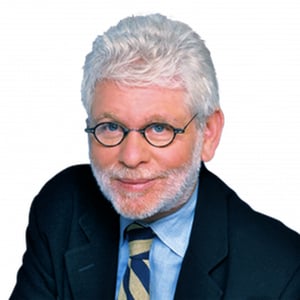
Columnist, The Washington Post
Richard Cohen writes a weekly political column for The Washington Post. He also contributes to the PostPartisan blog. Cohen joined The Post in 1968 as a reporter and covered night police, city hall, education, state government and national politics. As the paper’s chief Maryland correspondent, he was one of two reporters who broke the story of the investigation of former Vice President Agnew. In 1976, he began writing a column that ran on the front of the Metro section. His columns have appeared on the op-ed page of The Post since 1984. He is the author, with Jules Witcover, of “A Heartbeat Away: The Investigation and Resignation of Spiro T. Agnew ” (1974). He has received the Sigma Delta Chi and Washington-Baltimore Newspaper Guild Awards for his investigative reporting.
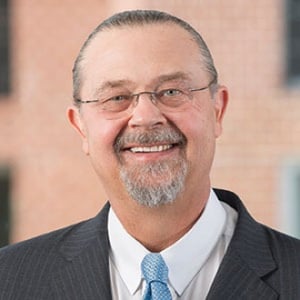
Managing Director and Co-Chair, Communications, Media, and Internet Practice, NERA Economic Consulting
Dr. Eisenach is a Managing Director and Co-Chair of NERA's Communications, Media, and Internet Practice, and also serves on the firm’s Board of Directors. He is also an Adjunct Professor at George Mason University Law School, where he teaches Regulated Industries, and a Visiting Scholar at the American Enterprise Institute. Previously, Dr. Eisenach has served in senior policy positions at the US Federal Trade Commission and the White House Office of Management and Budget, and taught at Harvard University's Kennedy School of Government and Virginia Polytechnic Institute and State University.
Dr. Eisenach's consulting practice focuses on economic analysis of competition, regulatory, intellectual property and consumer protection issues. He has submitted expert reports and testified in US federal court as well before the Antitrust Division of the U.S. Department of Justice, the Federal Trade Commission, the Copyright Royalty Board, the Federal Communications Commission, the International Trade Commission, US Tax Court, several state public utility commissions, and courts and regulatory bodies in Australia, Canada, the United Kingdom, the Caribbean, and South America. He has also advised clients in some of the world’s largest information technology sector mergers.
He has written or edited 19 books and monographs, including Broadband Competition in the Internet Ecosystem and Competition, Innovation and the Microsoft Monopoly: Antitrust in the Digital Marketplace. His writings have also appeared in scholarly journals such as The Review of Network Economics, as well as in popular outlets like Forbes, The New York Times, and The Wall Street Journal.
Prior to joining NERA, Dr. Eisenach was a managing director and principal at Navigant Economics, and before that he served as Chairman of Empiris LLC, Criterion Economics, and CapAnalysis, LLC. Among his other previous affiliations, Dr. Eisenach has served as President and Senior Fellow at The Progress & Freedom Foundation; as a scholar the Heritage Foundation, and the Hudson Institute; as a member of the 1980-81 Reagan-Bush Transition Team on the Federal Trade Commission, the 2000-2001 Bush-Cheney Transition Team on the Federal Communications Commission, the Virginia Governor's Commission on E-Communities, and the Virginia Attorney General's Task Force on Identity Theft. In 2016-2017 he led the Trump-Pence Transition Team for the Federal Communications Commission.
Dr. Eisenach received his PhD in economics from the University of Virginia and his BA in economics from Claremont McKenna College.
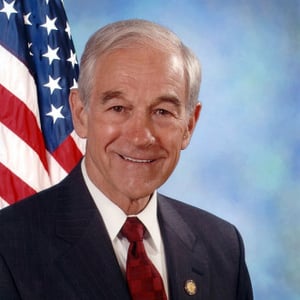
Former United States Representative, 14th Congressional District of Texas
PAUL, Ronald Ernest, (father of Rand Paul), a Representative from Texas; born in Pittsburgh, Allegheny County, Pa., August 20, 1935; graduated from Dormont High School, Dormont, Pa., 1953; B.A., Gettysburg College, Gettysburg, Pa., 1957; M.D., Duke University Medical Center, Durham, N.C., 1961; internship and residency training, Henry Ford Hospital, Detroit, Mich., 1961 and 1962; obstetrics and gynecology training, University of Pittsburgh, Pittsburgh, Pa., 1965-1968; medical doctor; United States Air Force, 1963-1965; United States Air National Guard, 1965-1968; delegate, Texas state Republican convention, 1974; unsuccessful candidate for election to the Ninety-fourth Congress in 1974; elected as a Republican to the Ninety-fourth Congress, by special election to fill the vacancy created by the resignation of United States Representative Robert R. Casey (April 3, 1976-January 3, 1977); unsuccessful candidate for reelection to the Ninety-fifth Congress in 1976; elected to the Ninety-sixth and to the two succeeding Congresses (January 3, 1979-January 3, 1985); was not a candidate for reelection to the House of Representatives in 1984, but was an unsuccessful candidate for nomination to the United States Senate; author; unsuccessful Libertarian Party candidate for election for President of the United States in 1988; elected as a Republican to the One Hundred Fifth and to the seven succeeding Congresses (January 3, 1997-January 3, 2013); unsuccessful candidate for the Republican presidential nomination in 2008; unsuccessful candidate for the Republican presidential nomination in 2012; was not a candidate for reelection to the One Hundred Thirteenth Congress in 2012.
Former Assistant Attorney General, U.S. Department of Justice, Civil Division
During the Reagan Administration, Richard Willard served as Assistant Attorney General in charge of the Civil Division, the largest litigation division of the US Department of Justice. There, he chaired the Reagan Administration's Tort Policy Working Group and developed its proposals for reforming civil litigation, workplace drug testing, and preventing unauthorized disclosure of classified information.
More recently, he served as senior vice president and general counsel for Bristol-Myers Squibb Co. and Gillette Company, where he led large worldwide legal departments, advised on strategic transactions, and enabled launch of new products with strong intellectual property protection.
Mr. Willard's private practice involved corporate counseling and litigation of cases raising public policy concerns. He served as lead counsel in complex litigation involving multiple claims, parties, and jurisdictions. He frequently appeared in trial and appellate courts around the country, including six arguments in the Supreme Court.
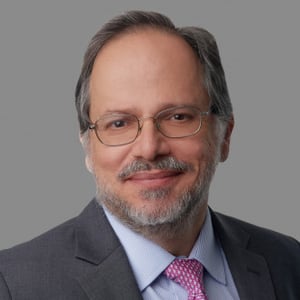
Director of Law & Policy, Environmental Integrity Project
Following Princeton and the University of Chicago Law School, David began practicing law at Paul, Weiss, Rifkind, Wharton & Garrison. Eventually tiring of litigation where the result was a wire transfer from Entity A to Entity B, in the early 1990’s David began his environmental law career at the Massachusetts Attorney General’s Office. Since then, he has litigated dozens of cases under all of the major environmental statutes including, as Sierra Club’s Chief Climate Counsel, initiating and managing Massachusetts v. EPA. Most recently, he has been busy challenging FERC’s permitting of natural gas pipelines and LNG export terminals. Apart from litigation, David has helped lead efforts on both greenhouse gas regulation and global warming legislation (and may be the only person ever invited to testify by both Barbara Boxer and James Inhofe).
He has drafted a range of federal climate legislation, advised states as to their greenhouse gas regulatory authority (and for many years has represented environmental groups defending state GHG regulations from dormant Commerce Clause challenges). David has designed and taught courses on “Environmental Litigation” at Georgetown University Law Center and “Environmental Law and Science” at the William and Mary Law School/Virginia Institute of Marine Science.
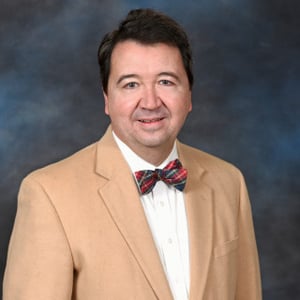
Judge, United States Court of Appeals, Sixth Circuit
John K. Bush is a Circuit Judge on the United States Court of Appeals for the Sixth Circuit.
His chambers are in Louisville, Kentucky. Prior to joining the court, Judge Bush was a partner in the
Louisville office of the firm Bingham Greenebaum Doll (now Dentons Bingham Greenebaum),
where he also was co-chair of the firm’s litigation department. He began his legal practice in the
Washington, D.C. office of Gibson Dunn & Crutcher.
Judge Bush served as a law clerk for Judge J. Smith Henley of the United States Court of
Appeals for the Eighth Circuit. He was graduated summa cum laude from Vanderbilt University,
and cum laude from Harvard Law School. He is an adjunct lecturer at The George Washington
University Law School and the Brandeis School of Law at the University of Louisville.
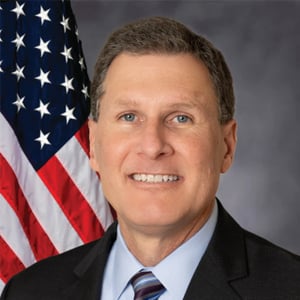
United States Attorney, Eastern District of California
Mr. Grant was appointed by Attorney General Pam Bondi to serve as the United States Attorney for the Eastern District of California beginning on August 11, 2025. Pursuant to 28 U.S.C. § 546(d), he was further appointed by the district court effective December 9, 2025.
Mr. Grant is a veteran of the Department of Justice, having served twice in Washington, D.C.: from 1991 to 1993 as an Attorney-Adviser in the Office of Legal Counsel, and from 2017 to 2021 as a Deputy Assistant Attorney General in the Environment and Natural Resources Division (ENRD). During his tenure at ENRD, he supervised more than a hundred Department litigators advancing the interests of the United States and its agencies in both enforcement and defensive matters, both civil and criminal.
In addition to his service in the Department, Mr. Grant has decades of experience in private practice in Washington, D.C. and Sacramento. That experience includes arguments in the U.S. Supreme Court, the California Supreme Court, and numerous other federal and state courts.
Mr. Grant served as a law clerk to Chief Justice Warren E. Burger (retired) and Associate Justice Clarence Thomas during the Supreme Court’s October 1994 Term. Earlier he served as a law clerk to Judge Edith H. Jones of the U.S. Court of Appeals for the Fifth Circuit in Houston, Texas.
Mr. Grant grew up in Modesto, California and raised his family in Sacramento County. He attended the University of California, Berkeley, from which he earned a bachelor’s degree in economics (1986) and a law degree (1990).
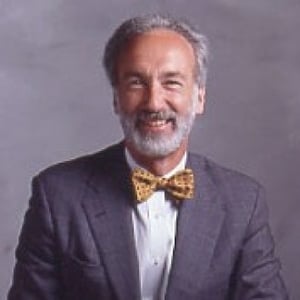
Emeritus Dean and Professor of Law, Lewis & Clark Law School
Professor Huffman joined the law school faculty in 1973, was appointed Acting Dean in 1993 and Dean in 1994, and returned to full time teaching in 2006. Born in Fort Benton, Montana, Jim graduated from Montana State University, the Fletcher School of Law and Diplomacy at Tufts University, and the University of Chicago Law School. He has been a visiting professor at Auckland University in New Zealand, the University of Oregon, the University of Athens in Greece and Universidad Francisco Marroquin in Guatemala. He was also a fellow at the Humane Studies Institute and a Distinguished Bradley Scholar at the Heritage Foundation. Jim serves on the boards of the National Crime Victims Law Institute, the Foundation for Research on Economics and the Environment, the Classroom Law Project, and the Rocky Mountain Mineral Law Foundation. He is a member and former Chair of the Executive Committee of the Environment and Property Rights Practice Group of the Federalist Society. He is a member of the Montana Bar Association and is admitted to practice before the United States Court of Appeals for the Federal Circuit and the United States Supreme Court. He is the author of more than 100 articles and chapters on a wide array of legal topics.

Senior Fellow, Ave Maria School of Law and Host of the Four Boxes Diner Second Amendment Channel
Mark W. Smith is a visiting member of the Senior Common Room, New College, Oxford University and a Visiting Fellow in Pharmaceutical Public Policy and Law in the Department of Pharmacology, Oxford University. Mark is also a Distinguished Scholar and Senior Fellow of Law and Public Policy at the Ave Maria School of Law. He hosts the Four Boxes Diner YouTube Channel (youtube.com/TheFourBoxesDiner), which addresses Second Amendment scholarship, cases, history and related issues, and whose videos have received almost 90 million views. Mark's scholarship has been cited by federal courts and by parties before the United States Supreme Court in Viramontes v. Cook County, New York State Rifle & Pistol Ass’n v. Bruen and in United States v. Rahimi. He is a graduate of the NYU School of Law. Mark is also a New York Times bestselling author who appears frequently in the national media including on the Fox News Channel.
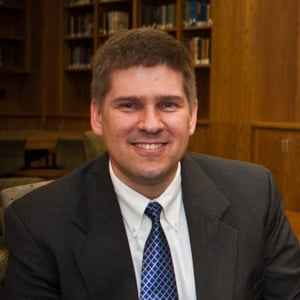
Associate Professor of Law, Brigham Young University J. Reuben Clark Law School
Eric Talbot Jensen teaches and writes in the areas of Public International Law, Criminal Law, The Law of Armed Conflict, International Criminal Law, and National Security Law. His recent scholarship has appeared in the Texas, Temple, Houston, and Israel Law Reviews, as well as the Stanford Law and Policy Review, Virginia Journal of International Law, Vanderbilt Journal of Transnational Law, and Stanford Journal of International Law. Professor Jensen is a co-author on an Oxford University text analyzing application of the laws of war to the war on terror and is also co-authoring a law school casebook on the Law of Armed Conflict for Aspen Publishing.
Prior to joining the BYU law faculty in 2011, Professor Jensen spent 2 years teaching at Fordham Law School in New York City and 20 years in the United States Army as both a Cavalry Officer and as a Judge Advocate. During his time as a Judge Advocate, Professor Jensen served in various positions including as the Chief of the Army’s International Law Branch; Deputy Legal Advisor for Task Force Baghdad; Professor of International and Operational Law at The Judge Advocate General’s Legal Center and School; legal advisor to the US contingent of UN Forces deployed to Skopje, Macedonia as part of UNPREDEP; and legal advisor in Bosnia in support of Operation Joint Endeavor/Guard.
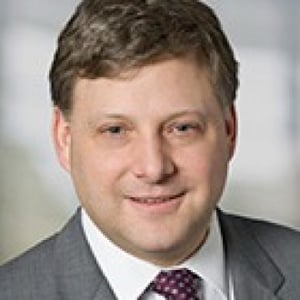
Partner, Sullivan & Cromwell LLP
Eric Kadel is engaged in a wide variety of corporate, transactional and regulatory matters. He is a member of the Firm’s Corporate and Finance, Financial Services, Investment Management, Alternative Investment Management, Cybersecurity, and Commodities, Futures and Derivatives Groups. With regard to financings, Mr. Kadel regularly represents participants in capital markets transactions, and dealers and end users in connection with structuring and documenting a wide variety of swaps and other derivatives, including equity, credit default and commodity swaps, options and forwards. Mr. Kadel’s work in the investment management area includes advising public and private investment companies and investment advisers on a wide variety of transactional, regulatory, compliance and other matters, including registration and regulation. Mr. Kadel also advises clients of the Firm regarding developments in the laws regulating the financial services industry and on cybersecurity issues. Mr. Kadel is currently an adjunct professor at George Washington University Law School.
In addition, Mr. Kadel is one of the principal partners in the Firm’s International Trade and Investment practice. He counsels and represents clients on questions about U.S. economic sanctions, including those administered by the Treasury Department’s Office of Foreign Assets Control (“OFAC”), United States antiboycott requirements under the Export Administration Regulations administered and enforced by the Commerce Department’s Office of Antiboycott Compliance within the Bureau of Industry and Security, Bank Secrecy Act/anti‐money laundering laws and the U.S. Foreign Corrupt Practices Act (“FCPA”). Mr. Kadel’s practice includes analysis of proposed transactions and business relationships; due diligence and design and review of compliance procedures and strategies; and internal investigations, voluntary disclosures and government enforcement actions. Mr. Kadel also regularly advises clients regarding questions arising under Exon-Florio and the transaction review process administered by the Committee on Foreign Investment in the United States (“CFIUS”), and has represented clients before CFIUS on many national security reviews.

Professor Emeritus of Law, Antonin Scalia Law School, George Mason University
Jeremy A. Rabkin is a Professor Emeritus of Law at the Antonin Scalia Law School, George Mason University. Before joining the faculty in June 2007, he was for over two decades a professor in the Department of Government at Cornell University. Professor Rabkin serves on the board of directors of the Center for Individual Rights, a public interest law firm based in Washington, D.C. Previously he was a board member of the U.S. Institute of Peace and the board of academic advisors of the American Enterprise Institute.
Professor Rabkin’s books include Law Without Nations? (Princeton University Press, 2005). He authored “If You Need a Friend, Don’t Call a Cosmopolitan,” a chapter in Varieties of Sovereignty and Citizenship (Sigal R. Ben-Porath & Rogers M. Smith eds., University of Pennsylvania Press, 2012). His articles have appeared in major law reviews and political science journals and his journalistic contributions in a range of magazines and newspapers, including the Washington Post and the Wall Street Journal.
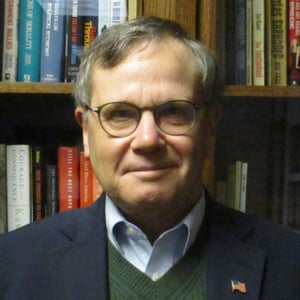
Senior Fellow in Constitutional Jurisprudence, Independence Institute
Professor Robert G. Natelson is a constitutional scholar and author.
Rob’s constitutional scholarship has been cited repeatedly by justices and parties at the U.S. Supreme Court—as well as by federal appeals courts, and at least 18 state supreme courts.
Rob’s research into the Constitution’s original meaning has carried him to libraries throughout the United States and in Britain, including four months at Oxford University. His books and articles span many different parts of the Constitution, including groundbreaking studies of the Necessary and Proper Clause, the Indian Commerce Clause, federalism, Founding-Era interpretation, regulation of elections, and the amendment process of Article V. He created the first-ever online bibliography for 18th century materials used in constitutional research. He is a contributing author to the Encyclopedia of the Supreme Court of the United States (on Magna Carta). He contributed eight essays to the third edition of the Heritage Guide to the Constitution: five on the amendment procedure and one each on the Guarantee Clause, the Postal Clause, and the Recess Appointments Clause.
U.S. Supreme Court justices have relied explicitly on Rob’s research in 41 citations in 13 separate cases.
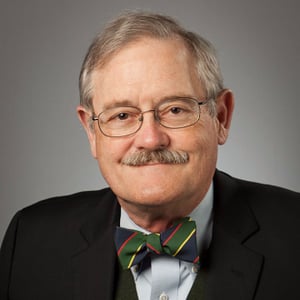
Paul Whitfield Horn Professor, Texas Tech University School of Law
Professor Casto received his law degree from the University of Tennessee-Knoxville and a Doctor of the Science of Law degree from Columbia University. He joined the Texas Tech faculty in 1983 after practicing law for a number of years. He has written a number of well received books and articles on international tort law and on the federal courts. The United States Supreme Court has frequently cited or relied upon his published scholarship. He is a member of the American Law Institute and holds a Paul Whitfield Horn Professorship, which is the highest honor that Texas Tech may bestow on a faculty member. He is currently writing a book on the process of providing legal advice in government.
He has written three well-received books: The Supreme Court in the Early Republic, Oliver Ellsworth and the Creation of the Federal Republic, and Foreign Affairs and the Constitution in the Age of Fighting Sail. Professor Casto has written articles on judicial review, foreign policy, and the relationship between religion and public life in the Founding Era.
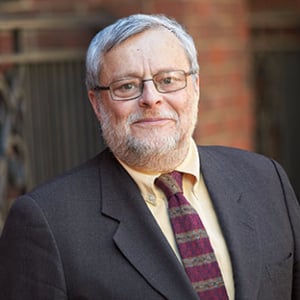
Dwight D. Opperman Professor of Law; Director, Center for Labor, New York University School of Law
Samuel Estreicher is a nationally preeminent scholar in US and international-comparative labor and employment law and arbitration law. He has authored more than a dozen books, including Beyond Elite Law: Access to Civil Justice in America (with Joy Radice, Cambridge Univ. 2016); leading casebooks on legislation and regulatory state, labor law and employment discrimination and employment law; and published more than 200 articles in professional and academic journals. He served as Chief Reporter for the American Law Institute’s Restatement of Employment Law (2015). After clerking for Judge Harold Leventhal of the US Court of Appeals for the DC Circuit, practicing in a labor law firm, and clerking for Justice Lewis F. Powell Jr. of the US Supreme Court, Prof. Estreicher joined the NYU School of Law faculty in 1978. In addition to serving as counsel to major law firms, he is the former secretary of the Labor and Employment Law Section of the American Bar Association, a former chair of the Committee on Labor and Employment Law of the Association of the Bar of the City of New York.15). He maintains an active appellate and ADR practice. The Labor and Employment Research Association awarded him its 2010 Susan C. Eaton Award for Outstanding Scholar-Practitioner. In recent years, Estreicher also has published work in public international law and authored several briefs in the Supreme Court and US courts of appeals on employment and US foreign relations law issues. Prof. Estreicher received his BA from Columbia College, his MS in industrial relations from Cornell University, and his JD from Columbia Law School, where he was editor-in-chief of the Columbia Law Review. He is a member of the College of Labor and Employment Lawyers and was appointed in 2016 by the UN Secretary General as a member of the UN’s Internal Justice Commission.
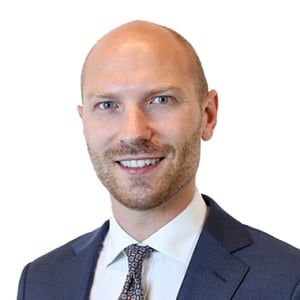
Executive Director, ADF International
Paul Coleman serves as executive director of ADF International from its headquarters in Vienna, overseeing the advocacy and operations of the global, alliance-building human rights organization.
Specializing in international human rights and European law, Mr. Coleman has been involved in more than 20 cases before the European Court of Human Rights and has authored complaints and submissions to the Inter-American Court of Human Rights, International Criminal Court, Court of Justice of the European Union, UN Human Rights Committee, and numerous national courts.
Mr. Coleman was part of the legal team in the historic Eweida and others v. United Kingdom case, where the court handed down a landmark ruling on religious freedom. Mr. Coleman has also authored legal submissions in numerous precedent-setting cases before the European Court, including three Grand Chamber victories. In Gross v. Switzerland, he submitted that no right to assisted suicide or euthanasia exists under the European Convention on Human Rights. In F.G. v. Sweden, Mr. Coleman argued that European countries have a duty to protect Christian converts escaping persecution in their native countries. In Nagy v. Hungary, he argued that churches must have the freedom to manage their internal affairs without interference from the government or other state bodies.
Coleman earned his LL.M. and postgraduate diploma in legal practice, with distinction, from the Northumbria Law School. He obtained a Bachelor of Laws, with first-class honours, from Newcastle University. Coleman is a solicitor of the Senior Courts of England and Wales and is the author of two books and numerous articles.
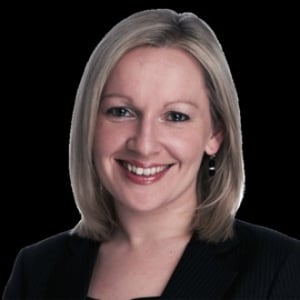
CEO, Vulcan Consulting Ltd
Lucinda Creighton is a former Irish Minister for European Affairs and CEO of Vulcan Consulting Ltd. As a member of the Irish Parliament for nine years, she ran Ireland’s Presidency of the Council of the European Union in 2013, and represented the EU in trade talks with the United States, leading to the formal start of TTIP negotiations in 2013. From 2012 to 2014 she also served as Vice President of the European People’s Party – the largest political party in Europe. Ms. Creighton is an advisory board member of the International Republican Institute and the European Council on Foreign Relations. By training, she is a Barrister and qualified as a New York attorney.
In addition to leading Vulcan Consulting, she is retained as a special advisor on Brexit by Fipra, the international public affairs company. Through this connection, she also collaborates with the London School of Economics providing advisory services on the fallout from Brexit. Vulcan Consulting advises a range of corporate clients on EU policy, regulatory and political issues. They specialise in assisting CEOs and other members of leadership teams in understanding the political and decision making environment in Europe.
Distinguished Senior Fellow, Gatestone Institute
Soeren Kern is a Distinguished Senior Fellow of the Gatestone Institute, and the Senior Analyst for Transatlantic Relations at the Madrid-based Grupo de Estudios Estratégicos / Strategic Studies Group. One of the oldest and most influential foreign policy think tanks in Spain, the Strategic Studies Group is closely tied to Spain's center-right Partido Popular/Popular Party and former Spanish Prime Minister José Maria Aznar.
A political scientist by training, Soeren specializes in European politics as well as US and European defense- and security-related issues. He is also an essayist on European anti-Americanism and the roles of America and Europe in the world.
Mr. Kern is a contributing analyst for Jane's Information Group on Basque and Islamist terrorism in Spain. He writes for Jane's Intelligence Review, Jane's Intelligence Weeklyand Jane's Terrorism and Security Monitor.
Mr. Kern is a regular commentator about European politics and transatlantic relations for newspapers and radio programs in Spain, Europe and the United States. He teaches international relations at the Universidad Antonio de Nebrija, a private university in Madrid.
Previously, Mr. Kern was Senior Analyst for Transatlantic Relations at the Madrid-based Elcano Royal Institute for Strategic and International Affairs. He served in the US Air Force(stationed in Germany) during the last decade of the Cold War, and worked as a defense analyst at Science Applications International Corporation (SAIC), one of the leading corporate think tanks advising the Pentagon on nuclear non-proliferation. He was also the Washington-based managing editor of Arms Control Today, the strategic affairs monthly magazine.
Mr. Kern graduated from the School of Foreign Service at Georgetown University in Washington, DC, and has also studied at the Hebrew University of Jerusalem. He has visited more than one hundred countries, including most of those in the Middle East.
Mr. Kern is a dual citizen of the United States and Germany, and is fluent in English, German and Spanish. He lives in Spain with his wife Mónica.
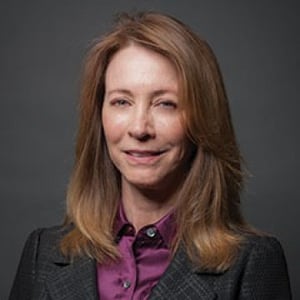
Founder, Libertas-West Project
Karen Lugo is a constitutional law consultant and national security analyst. She was Director of the Center for Tenth Amendment at Texas Public Policy Foundation from 2013 to 2015. When living in California, she was Co-Director of the Center for Constitutional Jurisprudence Center. From 2005 – 2012, she was a clinical visiting and adjunct professor at Chapman University School of Law where she co-taught the advanced Constitutional Law Clinic. Karen has co-authored and written circuit-level and Supreme Court amicus briefs on such issues as FISA Surveillance, Healthcare Reform, Arizona’s Border Security, Gay Marriage, The Ten Commandments, Eminent Domain, Christian Clubs on University Campuses, and Material Support for Terrorists.
Karen is the founder of the Libertas-West Project, a center for study Islamic integration and radicalization issues. In this capacity, she consulted with the Center for Security Policy to write a book on local over-watch of mosque construction and community engagement called: Mosques in America: A Guide to Accountable Permit Hearings and Continuing Citizen Oversight.
Karen writes and speaks for European and American groups on the importance of basing assimilation efforts on principles of Western exceptionalism. She presented a policy brief to the French Conseil d’Etat analyzing the legal implications of banning the burqa. Ms. Lugo has written one of the most comprehensive overviews of sharia law in American courts, American Family Law and Sharia-Compliant Marriages, for the Federalist Society law journal, Engage. She has written several white papers on the American Law for American Courts legislation and sharia tribunals in America.
Ms. Lugo was an appointee to the California Advisory Committee to the U.S. Commission on Civil Rights. She also taught a Human Rights law course on the contrast between French and English Enlightenment theories in Strasbourg, France.
Until moving from California, Ms. Lugo was a member of the David Horowitz Freedom Center Board of Directors. She was also a regular guest on the Orange County PBS local issues debate program, Inside OC, and she is a contributor to Pajamas Media, National Review Online, City Journal, American Spectator, American Greatness, Townhall.com, American Thinker, Daily Caller, and Family Security Matters. She has been interviewed by dozens of radio hosts and has spoken for civic groups on constitutional and cultural concerns.

Betting on Loot Boxes: Is Regulation a Winning Issue? [POLICYbrief]
Graham Dufault
Loot boxes are a type of microtransaction found in video games that have caused controversy...
ISIS Today: Prisoners, Escapees, Returnees, and Resurgent Fighters
Christopher K. Harnisch, Seamus Hughes, Seth Jones, Robin Simcox
What is the current status of ISIS worldwide? Some European countries have cancelled ISIS-travelers’ citizenship...
Book Review: A Covert Action: Reagan, the CIA, and the Cold War Struggle in Poland
Seth Jones, Michael Ledeen
In his book, A Covert Action: Reagan, the CIA, and the Cold War Struggle in...
Analyzing the Regulatory Thicket
Brooks Rainwater, Luke A. Wake
Regulation is a pervasive and increasingly a contentious issue in 21st Century America. The propriety...
Improving National Drug Policy [Archive Collection]
Richard Cohen, Jeffrey Eisenach, Ron Paul, Richard K. Willard
On September 9, 1988, then-presidential candidate Ron Paul spoke on a panel at the Federalist...
Climate Change Nuisance Suits
David Bookbinder, John K. Bush, Eric Grant, James L. Huffman, Mark W. Smith
Should climate change responsibility be evaluated in the courts or by the elected policymaking branches?...
The Third Annual Mike Lewis Memorial Teleforum: Cyberwar and International Law
Eric Jensen, Eric J. Kadel, Jeremy A. Rabkin
There is broad agreement that international law applies to cyber conflict. There is less agreement...
“Advice” in the Constitution’s Advice and Consent Clause: New Evidence from Contemporaneous Sources
Robert G. Natelson
Note from the Editor: This article discusses the proper interpretation of the Constitution’s Advice and...
Courthouse Steps: Jesner v. Arab Bank Decided
William R. Casto, Samuel Estreicher
On April 24, Jesner v. Arab Bank was decided 5-4 in favor of the respondent. ...
EU ‘Incitement to Hate’ Policies: Targets, Cases, and Consequences
Paul Coleman, Lucinda Creighton, Soeren Kern, Karen J. Lugo
As member states of the European Union have adopted laws and programs to curtail inflammatory...