

Sterling Professor of Law and Political Science, Yale Law School
Akhil Reed Amar is Sterling Professor of Law and Political Science at Yale University, where he teaches constitutional law in both Yale College and Yale Law School. After graduating from Yale College, summa cum laude, in 1980 and from Yale Law School in 1984, and clerking for Judge (later Justice) Stephen Breyer, Amar joined the Yale faculty in 1985 at the age of 26. He is Yale’s only living professor to have won the University’s unofficial triple crown — the Sterling Chair for scholarship, the DeVane Medal for teaching, and the Lamar Award for alumni service.
Amar’s work has won awards from both the American Bar Association and the Federalist Society, and he has been cited by Supreme Court justices across the spectrum in more than 50 cases — tops among scholars under age 70. According to both Fred Shapiro’s landmark 2021 study of lifetime scholarly citations and Heinonline’s most recent tabulation of lifetime law-review citations, Amar is America’s second most-cited legal scholar still under age 70. He is a member of the American Academy of Arts and Sciences and has written widely for popular publications, including The New York Times, The Washington Post, The Wall Street Journal, Time, and The Atlantic. He was an informal consultant to the popular TV show The West Wing and his scholarship has been showcased on many broadcasts, including The Colbert Report, Morning Joe, AC360, Velshi, Fox News @ Night with Shannon Bream, Fareed Zakaria GPS, Erin Burnett Outfront, and Constitution USA with Peter Sagal.
He is the author of more than a hundred law review articles and several books, including The Bill of Rights (1998 — winner of the Yale University Press Governors’ Award), America’s Constitution (2005 — winner of the ABA’s Silver Gavel Award), America’s Unwritten Constitution (2012 — named one of the year’s 100 best nonfiction books by The Washington Post), and The Constitution Today (2016 — named one of the year’s top ten nonfiction books by Time magazine). The first volume of his ambitious trilogy on American constitutional history from the Founding to the present, The Words That Made Us: America’s Constitutional Conversation, 1760-1840, came out in May 2021. The second volume, Born Equal: Remaking America’s Constitution, 1840-1920, will be published in September 2025 and is already available for pre-order. All together, his nonfiction books have won two starred reviews from Publishers Weekly and three starred reviews from Kirkus—tops, it is believed, among legal scholars under age 70. Together with Vikram David Amar (YLS ’88), he has a bi-weekly column on the Supreme Court on the distinguished website SCOTUSblog. Along with Andy Lipka, he co-hosts a popular and free weekly podcast, Amarica’s Constitution, whose listeners are eligible for CLE credit in most American jurisdictions. A wide assortment of his articles and op-eds and video links to many of his public lectures and free online courses may be found at akhilamar.com.
Archivist of the United States, National Archives and Records Administration
David S. Ferriero was confirmed as 10th Archivist of the United States on November 6, 2009.
Previously, Mr. Ferriero served as the Andrew W. Mellon Director of the New York Public Libraries (NYPL). He was part of the leadership team responsible for integrating the four research libraries and 87 branch libraries into one seamless service for users, creating the largest public library system in the United States and one of the largest research libraries in the world. Mr. Ferriero was in charge of collection strategy; conservation; digital experience; reference and research services; and education, programming, and exhibitions.
Among his responsibilities at the NYPL was the development of the library’s digital strategy, which currently encompasses partnerships with Google and Microsoft, a web site that reaches more than 25 million unique users annually, and a digital library of more than 750,000 images that may be accessed free of charge by any user around the world.
Before joining the NYPL in 2004, Mr. Ferriero served in top positions at two of the nation’s major academic libraries, the Massachusetts Institute of Technology in Cambridge, MA, and Duke University in Durham, NC. In those positions, he led major initiatives including the expansion of facilities, the adoption of digital technologies, and a reengineering of printing and publications.
Mr. Ferriero earned bachelor’s and master’s degrees in English literature from Northeastern University in Boston and a master’s degree from the Simmons College of Library and Information Science, also in Boston. After serving in the Navy during the Vietnam War, he started in the humanities library at MIT, where he worked for 31 years, rising to associate director for public services and acting co-director of libraries.
In 1996, Mr. Ferriero moved to Duke University, where he served as University Librarian and Vice Provost for Library Affairs until 2004. At Duke, he raised more than $50 million to expand and renovate the university’s library and was responsible for instructional technology initiatives, including overseeing Duke’s Center for Instructional Technology.
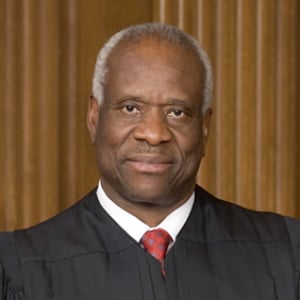
Associate Justice, Supreme Court of the United States
Clarence Thomas, Associate Justice, was born in the Pinpoint community near Savannah, Georgia on June 23, 1948. He attended Conception Seminary from 1967-1968 and received an A.B., cum laude, from Holy Cross College in 1971 and a J.D. from Yale Law School in 1974. He was admitted to law practice in Missouri in 1974, and served as an Assistant Attorney General of Missouri, 1974-1977; an attorney with the Monsanto Company, 1977-1979; and Legislative Assistant to Senator John Danforth, 1979-1981. From 1981–1982 he served as Assistant Secretary for Civil Rights, U.S. Department of Education, and as Chairman of the U.S. Equal Employment Opportunity Commission, 1982-1990. From 1990–1991, he served as a Judge on the United States Court of Appeals for the District of Columbia Circuit. President Bush nominated him as an Associate Justice of the Supreme Court and he took his seat October 23, 1991. He married Virginia Lamp on May 30, 1987 and has one child, Jamal Adeen by a previous marriage.
Professor of Law, Case Western Reserve University School of Law
Professor Dent taught law at New York University, Cardozo, and the New York Law School before joining the faculty in 1990. Earlier he had clerked for Judge Paul R. Hays of the U.S. Court of Appeals, Second Circuit, and practiced corporate law in New York with Debevoise, Plimpton, Lyons & Gates. He teaches Business Associations, Mergers and Acquisitions, and Business Planning and is the faculty supervisor for the Business Organizations Concentration. He has published many articles on corporate and securities law, including “Academics in Wonderland: The Team Production and Director Primacy Models of Corporate Governance,” Houston Law Review (2008); “Corporate Governance: Still Broke, No Fix in Sight,” Journal of Corporation Law (2005); “Lawyers and Trust in Business Alliances,” Business Lawyer (2002); and “Gap Fillers and Fiduciary Duties in Strategic Alliances,” The Business Lawyer (2001). He also writes on law and religion, as in “Civil Rights for Whom: Gay Rights Versus Religious Freedom,” University of Kentucky Law Journal (2006-07); and “How Does Same-Sex Marriage Threaten You?,” Rutgers Law Review (2007). Mr. Dent serves as a director of the National Association of Scholars and as president of the Ohio Association of Scholars. He serves as an officer of Cleveland Chapter of the Federalist Society. He heads the Law Section of the Association for the Study of Free Institutions. He is chairman of the Ohio State Advisory Committee to the U.S. Commission on Civil Rights.
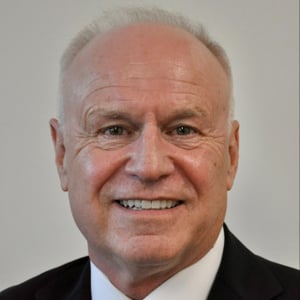
Former Director (consultant), International Affairs, The Federalist Society
From 2005 to 2025, Jim Kelly served on a consulting basis as the Federalist Society’s Director of International Affairs, responsible for outreach to law students, lawyers, and judges in Canada, Europe, and Israel. From 2005 to 2008, he served on the U.S. National Commission to UNESCO, and as Chairman of its Social and Human Sciences Committee. From 2001 to 2008, he served as an official U.S. delegate to five international human rights conferences. In 2019, the U.S. State Department appointed Jim to serve as one of the two U.S. members on the European Commission for Democracy through Law (the “Venice Commission”). In 2020, the State Department named him as an expert to the OSCE Moscow Mechanism. In March 2022, he initiated Ukraine’s consideration and use of the Moscow Mechanism to conduct the first official international investigation of the Russia-Ukraine conflict, which resulted in the Report on Violations of International Humanitarian and Human Rights Law, War Crimes and Crimes Against Humanity Committed in Ukraine (1 April – 25 June 2022). Jim is the Founder of, and Director of Research for, Global Governance Watch, a web-based project that monitors the global governance activities of the UN’s sustainable development and ESG agenda. In 2022, in connection with his position as a Lecturer at the Busch School of Business at Catholic University of America, he authored Evolution of Business, Human Rights, & ESG, consisting of 28 one-hour presentations about the technocratic, anti-democratic, anti-capitalist, and religious nature and practices of the ESG movement. Jim is Founder and President of Solidarity Center for Law and Justice, P.C., which, since 2001, has filed amicus curiae briefs in five landmark U.S. Supreme Court educational and religious liberty cases. He is the Founder and General Counsel of the Georgia GOAL Scholarship Program, Georgia’s largest K-12 tuition tax credit scholarship program, which, since 2008, has awarded scholarships worth $224.3 million to 21,744 students for use at the accredited private K-12 schools of their choice. He has served on the Georgia Judicial Nominating Commission and Georgia Board of Juvenile Justice. In 2005, he authored Christianity, Democracy, and the American Ideal, a collection of the writings of the French-Catholic philosopher, Jacques Maritain. Jim earned his BBA and Law degrees from the University of Georgia. He also earned a Master of Taxation degree from Georgia State University, a Master of Non-Profit Management degree from Regis University, and a Master of International Relations degree from Salve Regina University. Jim and his wife, Lisa, reside in the Atlanta area.
Garwood Visiting Professor and Visiting Fellow, James Madison Pr, Cleveland-Marshall College of Law
David F. Forte is Professor of Law at Cleveland State University, where he was the inaugural holder of the Charles R. Emrick, Jr.- Calfee Halter & Griswold Endowed Chair. This fall, Professor Forte will be the Garwood Visiting Professor at Princeton University in the Department of Politics, and Visiting Fellow at the James Madison Program in American Ideals and Institutions. He holds degrees from Harvard College, Manchester University, England, the University of Toronto and Columbia University.
During the Reagan administration, Professor Forte served as chief counsel to the United States delegation to the United Nations and alternate delegate to the Security Council. He has authored a number of briefs before the United States Supreme Court, and has frequently testified before the United States Congress and consulted with the Department of State on human rights and international affairs issues. His advice was specifically sought on the approval of the Genocide Convention, on world-wide religious persecution, and Islamic extremism. He has appeared and spoken frequently on radio and television, both nationally and internationally. In 2002, the Department of State sponsored a speaking tour for Professor Forte in Amman, Jordan, and he was also a featured speaker to the Meeting of Peoples in Rimini, Italy, a meeting which gathers over 500,000 people from all over Europe. He has also been called to testify before the state legislatures of Ohio, Kansas, and Idaho as well as the New York City Council. He has assisted in drafting a number of pieces of legislation for the Ohio General Assembly dealing with abortion, international trade, and federalism. He has sat as acting judge on the municipal court of Lakewood Ohio and was chairman of Professional Ethics Committee of the Cleveland Bar Association. He has received a number of awards for his public service, including the Cleveland Bar Association’s President’s Award, the Cleveland State University Award for Distinguished Service, the Cleveland State University Distinguished Teaching Award, and the Cleveland-Marshall College of Law Alumni Award for Faculty Excellence. He served as Consultor to the Pontifical Council for the Family under Pope St. John Paul II and Pope Benedict XVI. In 2003, Dr. Forte was a Distinguished Fulbright Chair at the University of Trento and returned there in 2004 as a Visiting Professor. For the academic year, 2008-2009, Professor Forte was Senior Visiting Scholar at the Center for the Study of Religion and the Constitution in at the Witherspoon Institute in Princeton, New Jersey. He was the Robert E. Henderson Constitution Day Lecturer at the Ashbrook Center at Ashland University, and he has given over 300 invited addresses and papers at more than 100 academic institutions. His work has been cited by the U.S. Supreme Court.
Professor Forte was a Bradley Scholar at the Heritage Foundation, and Visiting Scholar at the Liberty Fund. He has been President of the Ohio Association of Scholars, was on the Board of Directors of the Philadelphia Society, and is also adjunct Scholar at the Ashbrook Center. He has been appointed to the Ohio State Advisory Committee to the U.S. Commission on Civil Rights. He has also been a Civil War re-enactor and a Merit Badge Counselor for the Boy Scouts.
He writes and speaks nationally on topics such as constitutional law, religious liberty, Islamic law, the rights of families, and international affairs. He served as book review editor for the American Journal of Jurisprudence and has edited a volume entitled, Natural Law and Contemporary Public Policy, published by Georgetown University Press. His book, Islamic Law Studies: Classical and Contemporary Applications, has been published by Austin & Winfield. He is Senior Editor of The Heritage Guide to the Constitution (2006), 2d edition (2014), published by Regnery & Co, a clause by clause analysis of the Constitution of the United States.
His teaching competencies include Constitutional Law, the First Amendment, Islamic Law, Jurisprudence, Natural Law, International Law, International Human Rights, the Presidency, and Constitutional History.
Former Director (consultant), International Affairs, The Federalist Society
From 2005 to 2025, Jim Kelly served on a consulting basis as the Federalist Society’s Director of International Affairs, responsible for outreach to law students, lawyers, and judges in Canada, Europe, and Israel. From 2005 to 2008, he served on the U.S. National Commission to UNESCO, and as Chairman of its Social and Human Sciences Committee. From 2001 to 2008, he served as an official U.S. delegate to five international human rights conferences. In 2019, the U.S. State Department appointed Jim to serve as one of the two U.S. members on the European Commission for Democracy through Law (the “Venice Commission”). In 2020, the State Department named him as an expert to the OSCE Moscow Mechanism. In March 2022, he initiated Ukraine’s consideration and use of the Moscow Mechanism to conduct the first official international investigation of the Russia-Ukraine conflict, which resulted in the Report on Violations of International Humanitarian and Human Rights Law, War Crimes and Crimes Against Humanity Committed in Ukraine (1 April – 25 June 2022). Jim is the Founder of, and Director of Research for, Global Governance Watch, a web-based project that monitors the global governance activities of the UN’s sustainable development and ESG agenda. In 2022, in connection with his position as a Lecturer at the Busch School of Business at Catholic University of America, he authored Evolution of Business, Human Rights, & ESG, consisting of 28 one-hour presentations about the technocratic, anti-democratic, anti-capitalist, and religious nature and practices of the ESG movement. Jim is Founder and President of Solidarity Center for Law and Justice, P.C., which, since 2001, has filed amicus curiae briefs in five landmark U.S. Supreme Court educational and religious liberty cases. He is the Founder and General Counsel of the Georgia GOAL Scholarship Program, Georgia’s largest K-12 tuition tax credit scholarship program, which, since 2008, has awarded scholarships worth $224.3 million to 21,744 students for use at the accredited private K-12 schools of their choice. He has served on the Georgia Judicial Nominating Commission and Georgia Board of Juvenile Justice. In 2005, he authored Christianity, Democracy, and the American Ideal, a collection of the writings of the French-Catholic philosopher, Jacques Maritain. Jim earned his BBA and Law degrees from the University of Georgia. He also earned a Master of Taxation degree from Georgia State University, a Master of Non-Profit Management degree from Regis University, and a Master of International Relations degree from Salve Regina University. Jim and his wife, Lisa, reside in the Atlanta area.
Lecturer in Law, UCLA Law
Amjad Mahmood Khan teaches Fundamentals of U.S. Contract Law for Foreign Lawyers. A partner at Brown, Neri, Smith & Khan LLP (bnsklaw.com), he represents both plaintiffs and defendants in a wide range of high-stakes business litigation, including disputes related to commercial contracts, civil fraud, business torts, intellectual property, energy, insurance, antitrust and unfair competition and the False Claims Act. Amjad's clients have included a range of high-profile corporations, executives and organizations, including mortgage lenders, energy companies, technology firms, major airlines, municipalities and religious establishments. Amjad has extensive stand-up trial experience, having won multiple significant jury verdicts, including an award of approximately $12.5 million in compensatory and punitive damages. Amjad has significant appellate experience briefing and arguing appeals in both state and federal courts across the nation. Amjad has been recognized as a “Rising Star” by Southern California Super Lawyers every year since 2012.
Amjad previously served as litigation counsel at Akin Gump Strauss Hauer & Feld LLP, associate at Latham & Watkins LLP and judicial clerk to the Honorable Warren J. Ferguson at the Ninth Circuit U.S. Court of Appeals.
Amjad received his J.D. in 2004 from Harvard Law School. While in law school, Amjad served as editor-in-chief of the Harvard Human Rights Law Journal and as a teaching assistant to Professor Scott Brewer (Contracts, Jurisprudence). Amjad graduated summa cum laude from Claremont McKenna College in 2001, with a B.A. in Government and English (Literature).
In addition to his litigation practice, Amjad devotes a considerable portion of his time to pro bono matters. Amjad has special expertise in asylum and refugee law, deportation defense and providing legal aid to disaster victims. Amjad was co-chair of Latham & Watkins’ global human rights and refugee practice group. Amjad has first chaired over two dozen successful immigration and asylum matters. Amjad has received numerous awards and accolades for his pro bono work, which includes sharing the 2012 Muslim Advocates Thurgood Marshall Award. Amjad has also served as an expert witness in asylum cases and has testified five times before the U.S. House of Representatives on the human rights abuses of religious minorities in the Near East and South Asia. Amjad is also a term member of the Council on Foreign Relations.
Amjad has published articles on qui tam and derivative suit litigation in Financial Fraud Law Report and Securities Regulation and Law Report. Amjad’s academic work focuses on transnational legal studies, comparative constitutional law and national security. He is a recognized expert on religious freedom in the Islamic world, and his scholarship has appeared in Harvard International Law Journal,Harvard National Security Law Journal, Harvard Human Rights Journaland Richmond Journal of Global Law and Business.
Director of Legal Affairs, Center for Political Studies
Jacob Mchangama is director of legal affairs at the Center for Political Studies, a think tank based in Copenhagen, where he focuses on advocacy and academic research in the fields of human rights with a specific focus on freedom of expression. He is also an external lecturer in international human rights law at the University of Copenhagen. He has published numerous articles in academic journals as well as in international newspapers such as Wall Street Journal Europe, Globe and Mail, National Review, Reason, The Australian, South China Morning Post, Jerusalem Post, Hürriet Daily News, Voice of Russia, China Post, and Daily News (Egypt). His work has been mentioned in international media including the Economist, Courrier International and CBS.com. He is a frequent commentator for Danish TV and radio. In 2010 he was voted the most influential Danish public intellectual under the age of 40 by Danish newspaper Politiken.
Research Fellow, Hudson Institute
Before joining Hudson in 2011, Tadros was a Senior Partner at the Egyptian Union of Liberal Youth, an organization that aims to spread the ideas of classical liberalism in Egypt. He has received his MA in Democracy and Governance from Georgetown University and his BA in Political Science from the American University in Cairo. Mr. Tadros has previously interned at the American Enterprise Institute, where he worked on the Muslim Brotherhood and worked as a consultant for the Hudson Institute on Moderate Islamic Thinkers, and most recently the Heritage Foundation on Religious Freedom in Egypt. In 2007 he was chosen by the State Department in its first Leaders for Democracy Fellowship Program in collaboration with Syracuse University's Maxwell School. His articles have previously been published by the Wall Street Journal, the American Thinker, the American Interest and the Weekly Standard. Mr. Tadros is a Professional Lecturer at Johns Hopkins University's School of Advanced International Studies.
Former Vice President & Director, External Relations, The Federalist Society for Law and Public Policy Studies
Jonathan Bunch is the former Vice President and Director of External Relations for the Federalist Society for Law and Public Policy Studies. Jonathan was responsible for a broad range of strategic, programming, and media relations decisions that were integral to the Society's mission. In addition to his work for the Society, Jonathan regularly advised other organizations and public officials on matters of legal policy and judicial selection. Before joining the Society, Jonathan ran a 501c4 in Missouri, where he had served on the staff of Missouri Governor Matt Blunt and as a law clerk for The Honorable Stephen N. Limbaugh Jr. on the Supreme Court of Missouri. Jonathan is a graduate of John Brown University and the University of Missouri School of Law. He lives in Northern Virginia with his wife, Amanda, and their four children.
Senior Fellow, Hudson Institute
Paul Marshall is a Senior Fellow at the Hudson Institute's Center for Religious Freedom and the author and editor of more than twenty books on religion and politics, especially religious freedom, including more recently, Blind Spot: When Journalists Don't Get Religion (2009), Religious Freedom in the World (2008), Radical Islam's Rules: The Worldwide Spread of Extreme Sharia Law (2005), The Rise of Hindu Extremism (2003), Islam at the Crossroads (2002), God and the Constitution (2002), The Talibanization of Nigeria (2002), Massacre at the Millennium (2001), Religious Freedom in the World (2000), Egypt's Endangered Christians (1999), Just Politics(1998), Heaven Is Not My Home (1998), A Kind of Life Imposed on Man (1996), and the best-selling, award-winning survey of religious persecution worldwide Their Blood Cries Out (1997).
He is the author of several hundred articles, and his writings have been translated into Russian, German, French, Dutch, Spanish, Portuguese, Norwegian, Danish, Albanian, Japanese, Malay, Korean, Arabic, Farsi, and Chinese. He is in frequent demand for lectures and media appearances, including interviews on ABC Evening News; CNN; PBS; Fox; the British, Australian, Canadian, South African, and Japanese Broadcasting Corporations; and Al Jazeera. His work has been published in, or is the subject of, articles in the New York Times, Wall St. Journal, Washington Post, Los Angeles Times, Washington Times, Boston Globe, Dallas Morning News, Christian Science Monitor, First Things, New Republic, Weekly Standard, Reader's Digest, and many other newspapers and magazines.
Director, Center for Religious Freedom, Hudson Institute
An international human-rights lawyer for over thirty years, Nina Shea joined Hudson Institute as a Senior Fellow in November 2006, where she directs the Center for Religious Freedom. Shea works extensively for the advancement of individual religious freedom and other human rights in U.S. foreign policy as it confronts an ascendant Islamic extremism, as well as nationalist and remnant communist regimes. She undertakes scholarship and advocacy in defense of those persecuted for their religious beliefs and identities and on behalf of diplomatic measures to end religious repression and violence abroad, whether from state actors or extremist groups.
Ms. Shea was appointed by the U.S. House of Representatives to serve seven terms as a Commissioner on the U.S. Commission on International Religious Freedom (June 1999 - March 2012). During the Soviet era, Shea’s first client before the United Nations was Soviet Nobel Peace Laureate Andrei Sakharov. Since then, she has been appointed as a U.S. delegate to the United Nation's main human rights body by both Republican and Democratic administrations. She also served as a member of the Clinton administration's Advisory Committee on Religious Freedom Abroad. In 2009, she was appointed to serve as a member of the U.S. National Commission to UNESCO.
Ms. Shea played a leading role in building grassroot support for the adoption of the International Religious Freedom Act (1998). For seven years ending in 2005, she helped organize and lead a coalition of churches and religious groups that worked to end a religious war against non-Muslims and dissident Muslims in southern Sudan. In 2014, she initiated and helped lead a coalition of hundreds of prominent American religious leaders to issue The Pledge of Solidarity for Persecuted Iraqi, Syrian and Egyptian Christians and Other Minorities, which was released by a bi-partisan Congressional panel on May 7. In summer 2014, she met with Pope Francis to discuss the persecution of Christians in the Middle East.
At Hudson, she has organized conferences for Nigerian schoolgirls and others who survived Boko Haram attacks, Christian converts formerly imprisoned in Iran, Coptic bishops from Egypt, Catholic bishops from China and the Gulf, Muslim scholars, and many others. Ms. Shea advocates in the nation's capital on behalf of a broad range of persecuted religious minorities around the world; and, for such work, was honored by the Ahmadiyya Muslim Community USA with the Community's inaugural "Ahmadiyya Muslim Humanitarian Award."
She has authored and/or edited four widely-acclaimed reports on Saudi state educational materials that promote extremist views and in 2011 had an opportunity to travel to Saudi Arabia and speak directly about her findings with the Ministers of Education, Justice and Islamic Affairs. Her reports include: Ten Years On: Saudi Arabia's Textbooks Still Promote Religious Violence (2011), Update: Saudi Arabia's Curriculum of Intolerance (2008), Saudi Arabia's Curriculum of Intolerance (2006), and Saudi Publications on Hate Ideology Invade American Mosques (2005), all of which translated and analyzed Saudi governmental publications that teach hatred and violence against the religious "other."
She is the co-author of Silenced: How Apostasy & Blasphemy Codes are Choking Freedom Worldwide, with a Foreword by Kyai Haji Abdurrahman Wahid, the former President of Indonesia and head of Nahdlatul Ulama, the world's largest Muslim organization (Oxford University Press, 2011). Her most recent book, which she also co-authored, is Persecuted: The Global Assault on Christians (Thomas Nelson Publishers, 2013). She regularly presents testimony before Congress, delivers public lectures, organizes briefings and conferences, and writes frequently on religious freedom issues. Her writings have appeared in the Wall Street Journal, Washington Post, CQ Researcher, Weekly Standard, National Review Online, CNN, Fox, The Daily Beast, HuffingtonPost, and RealClearWorld, among others.
For the ten years prior to joining Hudson, Ms. Shea worked at Freedom House, where she directed the Center for Religious Freedom, an entity which she had helped found in 1986 as the Puebla Institute.
She is a member of the bar of the District of Columbia. She is a graduate of Smith College, and American University's Washington College of Law.

Judge, United States Court of Appeals, Ninth Circuit
Judge Carlos Bea serves as a judge on the United States Court of Appeals for the Ninth Circuit. He received his Bachelor's Degree from Stanford University in 1956 and his J.D. from Stanford Law School in 1958. Judge Bea was born in San Sebastian, Spain, and immigrated with his family to Cuba in 1939. In 1952, he represented Cuba on the Cuban National basketball team in the Helsinki Olympics. Judge Bea became a naturalized citizen of the United States in 1958. He engaged in private practice in San Francisco, principally in the area of civil trials (jury and non-jury), from 1959-75 at Dunne, Phelps & Mills and from 1975-90 at Carlos Bea, A Law Corporation. He taught courses in civil litigation advocacy at Hastings College of Law and Stanford Law School. From 1990 to 2003, Judge Bea served as a judge of the San Francisco Superior Court. He was nominated by President George W. Bush to the United States Court of Appeals for the Ninth Circuit and was confirmed in 2003.
Judge Bea and his wife Louise reside in San Francisco, where they raised their four sons, Sebastian, Alexander, Nicholas, and Dominic.
Head of the Unit for Prospective Analysis and Regulation, Federal Commission of Telecommunications
Luis Lucatero is currently head of regulatory policy within the Federal Communications Commission in Mexico. Luis Lucatero studied physics at Hokkaido University in Japan and continued graduate school at Ecole Politechnique in France. Luis Lucatero has twelve years of experience in telecommunications having worked at Alcatel-Lucent Head Quarters in France in a variety of positions ranging from research scientist, business developer, and Head of Wireless Policy. Luis Lucatero has advised various governments on telecommunications policy in Europe, India, Latin America and Africa, and plays a major role as an activist for internet usage as agent of societal transformation.
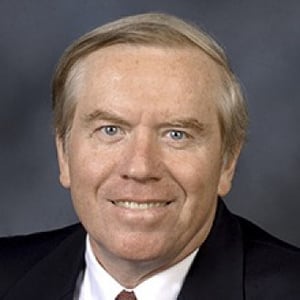
Edward J. Phelps Professor of Law and Economics and Kauffman Distinguished Research Scholar in Law, Economics, and Entrepreneurship, Yale Law School
Professor George L. Priest passed away on Dec. 17, 2024. Please read his obituary here.
George L. Priest is the Edward J. Phelps Professor of Law and Economics and Kauffman Distinguished Research Scholar in Law, Economics, and Entrepreneurship at Yale Law School. An internationally recognized expert, Professor Priest has focused his research over the past two decades on antitrust, the operation of private and public insurance, and the role of the legal system in promoting economic growth. He joined Yale Law School in 1981 and is co-director of the John M. Olin Center for Law, Economics and Public Policy, which facilitates the scholarly work of the Yale law and economics faculty and supports student interest and research in the field. Before coming to Yale, Professor Priest taught law at the University of Chicago, SUNY/Buffalo, and UCLA. His subject areas are antitrust; capitalism; regulated industries; torts; and insurance and public policy. Professor Priest holds a B.A. from Yale and a J.D. from the University of Chicago.
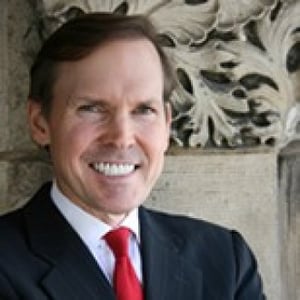
Founder and Chairman, Criterion Economics, LLC
J. Gregory Sidak is founder and chairman of Criterion Economics, L.L.C. Sidak is an expert on antitrust, regulation, patents and intellectual property, FRAND royalties for standard-essential patents, telecommunications, energy, and contractual disputes, and on damages and valuation in complex litigation and international arbitration generally. He has served clients throughout the Americas, Europe, Asia, and the Pacific. He has also served as a court-appointed neutral economic expert on damages and liability. Sidak is also a founding co-editor of the Journal of Competition Law & Economics, the preeminent international journal on antitrust law and economics, which has been published quarterly by the Oxford University Press since 2005.
Sidak studied law and economics at Stanford University and served as Judge Richard Posner’s first law clerk. He formerly was a staff member of the President’s Council of Economic Advisers and was deputy general counsel of the Federal Communications Commission. Sidak has previously held academic positions at Yale University, Georgetown University, and the American Enterprise Institute for Public Policy Research. His books and articles have been cited by the Supreme Court of the United States, the Supreme Court of Canada, and the European Commission.

Professor of Law, Stanford Law School
Orin S. Kerr is a Professor of Law at Stanford Law School, where he teaches and writes in the areas of criminal procedure and computer crime law. Kerr earned mechanical engineering degrees from Princeton University and Stanford University before graduating with a J.D. from Harvard Law School. He is a former law clerk to Justice Anthony M. Kennedy at the United States Supreme Court and Judge Leonard I. Garth of the U.S. Court of Appeals for the Third Circuit.
President and Executive Director, Electronic Privacy Information Center
Marc Rotenberg is President and Executive Director of the Electronic Privacy Information Center (EPIC) in Washington, DC. He teaches information privacy law at Georgetown University Law Center and frequently testifies before Congress on emerging privacy and civil liberties issues. He testified before the 9-11 Commission on "Security and Liberty: Protecting Privacy, Preventing Terrorism." He has served on several national and international advisory panels, including the expert panels on Cryptography Policy and Computer Security for the OECD, the Legal Experts on Cyberspace Law for UNESCO, and the Countering Spam program of the ITU. He chairs the ABA Committee on Privacy and Information Protection. He is a founding board member and former Chair of the Public Interest Registry, which manages the .ORG domain. He is editor of "The Privacy Law Sourcebook," and co-editor of "Information Privacy Law" (Aspen Publishing 2006) and "Litigation Under the Federal Open Government Laws" (EPIC 2010). He is a graduate of Harvard College and Stanford Law School. He served as Counsel to Senator Patrick J. Leahy on the Senate Judiciary Committee after graduation from law school. He is the recipient of several awards, including the World Technology Award in Law, the American Lawyer Award for Top Lawyers Under 45, the Norbert Weiner Award for Social and Professional Responsibility, and the Vicennial medal from Georgetown University.
Senior Vice President, Chief Legal Officer and General Counsel, Ryan LLC
John Smith is the Senior Vice President, Chief Legal Officer and General Counsel at Ryan, LLC. Based at Ryan’s global headquarters in Dallas, Texas, John Smith brings more than 20 years of experience as a proven leader in the legal, business, and national security communities, including all three branches of the United States Government.
Prior to joining Ryan, Mr. Smith spent 12 years in Texas and Virginia at Raytheon Technologies, an American multinational aerospace and defense corporation. He pioneered roles as the company’s first cybersecurity lawyer and first privacy lawyer. During the last seven years, as a divisional Vice President and General Counsel, Mr. Smith led the legal departments of the two Raytheon divisions focused primarily on services.
Before Raytheon, Mr. Smith served as Associate Counsel to U.S. President George W. Bush. He was the lead lawyer for the White House Homeland Security Council staff. He began his legal career by clerking for Judge Samuel Alito, a few years before Alito’s elevation to the U.S. Supreme Court, and then by practicing at the international law firm of Covington & Burling.
Mr. Smith served a decade as a U.S. Army reservist and two years as a missionary in Ukraine and Russia, a few years after the collapse of the Soviet Union. He graduated with high honors from both Princeton University and Brigham Young University Law School.
Partner, Steptoe & Johnson LLP
Michael A. Vatis is a partner in the New York office of Steptoe & Johnson LLP. His practice focuses on Internet, e-commerce, and technology matters, providing legal advice and strategic counsel on matters involving privacy, security, encryption, intelligence, law enforcement, Internet gambling, and international regulation of Internet content. He also is an experienced appellate litigator, representing clients before the US Supreme Court and federal courts of appeals.
Mr. Vatis has spent most of his career addressing cutting edge issues at the intersection of law, policy, and technology. He was the founding director of the National Infrastructure Protection Center at the FBI, the first government organization responsible for detecting, warning of, and responding to cyber attacks, including computer crimes, cyber terrorism, cyber espionage, and information warfare. Before that, Mr. Vatis served as Associate Deputy Attorney General and Deputy Director of the Executive Office for National Security in the Department of Justice, where he advised the Attorney General and Deputy Attorney General and coordinated the Department’s activities involving counterterrorism, intelligence, encryption, and cyber crime. In that capacity, he also helped lead the development of the nation’s first policies regarding critical infrastructure protection. Mr. Vatis served as Special Counsel at the Department of Defense, where he handled sensitive legal and policy issues for the Secretary and Deputy Secretary of Defense and the General Counsel, receiving the Secretary of Defense Award for Excellence.
After leaving the government in 2001, Mr. Vatis served as the first Director of the Institute for Security Technology Studies at Dartmouth, a federally funded counterterrorism and cyber security research institute. He was simultaneously the founding Chairman of the Institute for Information Infrastructure Protection (I3P). I3P, a consortium of leading cyber security research organizations, worked with industry, government, and academia to develop a comprehensive research and development agenda to improve the security of the nation’s computer and communications networks. Mr. Vatis also served as the Executive Director of the Markle Task Force on National Security in the Information Age, a highly influential group of technology company executives, former government officials, and civil libertarians that recommended ways the government could more effectively use information and technology to combat terrorism while preserving civil liberties. Mr. Vatis was the principal author of the group’s second report, whose recommendations were adopted by the 9/11 Commission and included in the 2004 Intelligence Reform Act.
Mr. Vatis has been a Senior Fellow at New York University Law School’s Center on Law and Security and a member of numerous expert working groups on counterterrorism, intelligence, and technology issues. He is currently a member of the National Academy of Science/National Research Council Committee on the Policy Consequences and Legal/Ethical Implications of Offensive Information Warfare and served on the Commission on Cyber Security for the 44th Presidency, an independent group of cyber security experts who examined existing and potential cyber security threats and developed recommendations for the US government and private businesses. Mr. Vatis has also regularly testified before congressional committees on counterterrorism, intelligence, and cyber security issues. He is also interviewed frequently on television, radio, and in print media, and has been a guest lecturer at many prestigious law schools and universities and a speaker at industry conferences worldwide.

Fellow, National Security Institute, Antonin Scalia Law School, George Mason University
Vince Vitkowsky chaired the Executive Committee of the Federalist Society’s International and National Security Law and Policy Practice Group for over a decade. He is also a Fellow at the National Security Institute of George Mason University Law School. Vince spent 45 years in private practice, primarily in AmLaw 100/200 firms and their spin-offs. His practice included domestic and international commercial arbitration and litigation, as well as cyber risks and liabilities. Vince's current focus is on national security policy, artificial intelligence, cybersecurity, and counterterrorism. He has often written and spoken on national security and other public policy issues. Among other affiliations, Vince has been an Adjunct Fellow at the Center for Law and Counterterrorism of the Foundation for the Defense of Democracies, a member of the Executive Committee of the American Branch of the International Law Association, and Co-Chair of the Committee on Interventions and Trial Observations of the International Bar Association’s Human Rights Institute. He received his B.A. from Northwestern University and his J.D. from Cornell Law School.
Associate Professor of Law, Brigham Young University J. Reuben Clark Law School
Eric Talbot Jensen teaches and writes in the areas of Public International Law, Criminal Law, The Law of Armed Conflict, International Criminal Law, and National Security Law. His recent scholarship has appeared in the Texas, Temple, Houston, and Israel Law Reviews, as well as the Stanford Law and Policy Review, Virginia Journal of International Law, Vanderbilt Journal of Transnational Law, and Stanford Journal of International Law. Professor Jensen is a co-author on an Oxford University text analyzing application of the laws of war to the war on terror and is also co-authoring a law school casebook on the Law of Armed Conflict for Aspen Publishing.
Prior to joining the BYU law faculty in 2011, Professor Jensen spent 2 years teaching at Fordham Law School in New York City and 20 years in the United States Army as both a Cavalry Officer and as a Judge Advocate. During his time as a Judge Advocate, Professor Jensen served in various positions including as the Chief of the Army’s International Law Branch; Deputy Legal Advisor for Task Force Baghdad; Professor of International and Operational Law at The Judge Advocate General’s Legal Center and School; legal advisor to the US contingent of UN Forces deployed to Skopje, Macedonia as part of UNPREDEP; and legal advisor in Bosnia in support of Operation Joint Endeavor/Guard.
Professor of Law, Fordham University School of Law
Professor Andrew Kent teaches and writes about constitutional law, foreign relations law, federal courts and procedure, national security law, public international law, professional responsibility and legal ethics. He received the Dean’s Distinguished Research Award (2016-17) for his scholarship.
After graduating from Yale Law School, Professor Kent clerked for the Hon. Robert A. Katzmann of the U.S. Court of Appeals for the Second Circuit and the Hon. Carol B. Amon of the U.S. District Court for the Eastern District of New York. Before joining Fordham’s faculty, he was a Climenko Fellow at Harvard Law School and an attorney at both Sullivan & Cromwell and WilmerHale.
From 2014-2015, Professor Kent served as Senior Counsel to the Solicitor General, State of New York, Office of the Attorney General.
Professor Kent is a member of the New York City Bar’s Professional Responsibility Committee. He provides appellate representation to the indigent as a member of the Pro Bono Panel of the U.S. Court of Appeals for the Second Circuit.
Leitner Family Professor of International Law and Co-Founder & Co-Director of the Center on Asian Americans & the Law, Fordham University School of Law
Thomas H. Lee is the Leitner Family Professor of International Law at Fordham, where he teaches civil procedure, constitutional law, federal courts, international law, and the U.S. law of civil-military relations. His meticulously researched and historically-grounded scholarship has argued that the Eleventh Amendment reflected the classical international law principle that only a sovereign state—not its citizens or subjects— has rights against other sovereign states; that the Alien Tort Statute was a national-security peacekeeping statute, not an international human-rights statute, enacted in 1789 when the United States was a militarily weak state; and that the Natural Born Citizen Clause regarding presidential eligibility reflected natural-law principles of membership by descent as well as domestic birthplace. His current research examines the nature of Article III judicial power and the role of the federal courts in American society.
He is Co-Director of the Center on Asian Americans and the Law, Special Counsel at Hughes Hubbard & Reed, and a Member of the American Law Institute. He was Special Counsel to the General Counsel of the U.S. Department of Defense, a Member of the ICSID Panel of Conciliators, Adviser to the Constitutional Court of Korea, and Visiting Professor at Columbia, Harvard, and the University of Virginia law schools, as well as Faculty Director of International and Graduate Studies at Fordham from 2006 to 2019. Before his academic career, Lee clerked for Judge Michael Boudin of the First Circuit and Justice David Souter of the Supreme Court and served as an active-duty U.S. naval cryptology officer, afloat on submarines and surface combatants and ashore in Korea, Japan, and with the National Security Agency. He holds A.B. (summa cum laude), A.M. (Regional Studies—East Asia), and J.D. degrees from Harvard, where he was Articles Chair of the Harvard Law Review and a Ph.D. candidate (ABD) in Government.
Senior Fellow, National Security Institute, Antonin Scalia School of Law, George Mason University; Retired Professor, Distinguished Fellow and Co-Founder, Center for National Security Law, University of Virginia School of Law (1987-2020)
Robert F. Turner holds both professional and academic doctorates from the University of Virginia School of Law. He co-founded the Center for National Security Law with Professor John Norton Moore in April 1981 and served as its associate director for 39 years, except for two periods of government service in the 1980s and during 1994-95, when he occupied the Charles H. Stockton Chair of International Law at the U.S. Naval War College in Newport, Rhode Island. He retired from UVA in January 2020 and currently serves as a non-resident senior fellow at the GMU National Security Institute. He also served briefly in 2020 as President of the Crime Prevention Research Center—one of the most respected pro-Second Amendment groups in the country—while its founder, Dr. John Lott, was on leave of absence.
A former Army captain and veteran of two tours in Vietnam, Turner served as a research associate and public affairs fellow at Stanford's Hoover Institution on War, Revolution and Peace before spending five years in the mid-1970s as national security adviser to U.S. Senator Robert P. Griffin, a member of the Senate Foreign Relations Committee (where Turner anticipated by seven years the Supreme Court’s landmark INS v. Chadha decision, striking down legislative vetoes). He also served in the executive branch during the Reagan administration as a member of the Senior Executive Service, first in the Pentagon as special assistant to the undersecretary of defense for policy, then in the White House as counsel to the President's Intelligence Oversight Board, and at the State Department as principal deputy and then acting assistant secretary for legislative affairs. In 1986, he became the first president of the congressionally established United States Institute of Peace.
A former three-term chairman of the ABA Standing Committee on Law and National Security (and for many years editor of the ABA National Security Law Report), Turner also chaired the Executive-Congressional Relations Subcommittee of the ABA Section on International Law and Practice and chaired or co-chaired the National Security Law Subcommittee of the Federalist Society’s International and National Security Law Practice Group for several years.
Turner taught undergraduate courses at Virginia on international law, U.S. foreign policy, the Vietnam War and foreign policy and the law in what is now the Woodrow Wilson Department of Politics. In addition, he co-taught National Security Law and advanced national security law seminars on the Indochina War and on war and peace with Moore at the Law School.
The author or editor of 18 books and monographs (including co-editor of the Center's 1,600-page National Security Law & Policy casebook, National Security Law Documents, and Legal Issues in the Struggle Against Terror) and numerous articles in law reviews and other professional journals, Turner has also contributed articles to most of the major U.S. newspapers, including The New York Times and USA Today. In an op-ed published in The International Herald Tribune in September 1990, he and Moore were the first to call for a war-crimes trial for Iraqi dictator Saddam Hussein and for international controls over Iraq's weapons of mass destruction, and the following month he wrote the lead story in The Washington Post Sunday Outlook Section, “Killing Saddam: Would It Be a Crime?,” arguing that Hussein would be a lawful target during Operation Desert Storm. (His reasoning contributed to the modern legal justification for drone strikes targeting specific terrorist leaders.) Three years before the terrorist attacks of September 11, 2001, Turner published an op-ed in USA Today entitled: “In Self-defense, U.S. Has Right to Kill bin Laden.”
In July 2007, he co-authored an article in The Washington Post with former U.S. Marine Corps Commandant General P.X. Kelley, “War Crimes and the White House,” criticizing the use of unlawful “enhanced interrogation techniques” by the Central Intelligence Agency. On the 40th anniversary of the fall of Saigon he authored an article in The Wall Street Journal, “Saigon’s Fall Still Echoes Today,” noting that after the war ended, Hanoi admitted it had made a decision in 1959 to open the Ho Chi Minh Trail and start sending troops, weapons and supplies into South Vietnam to overthrow its government — just as the United States had charged. In 2010 Turner received the first “person of the year” award from SACEI, a major Vietnamese-American human rights organization.
A frequent lecturer and debater, Turner has spoken at more than 100 law schools around the nation and in other fora — taking on as many as four opponents at a time. His debate opponents have included former or future deans of Yale, Stanford, the University of Chicago and Berkeley law schools. Following a 1987 debate against Dean Harlan Cleveland (Rhodes Scholar, U.S. Ambassador to NATO, and Presidential Medal of Freedom recipient) in which Turner defended the legality of U.S. support for the Nicaraguan contras during the Reagan Administration, the host student debating societies awarded Turner the victory by an 85-to-15 percent margin.
Turner has also written and lectured widely on University of Virginia founder and America’s third president Thomas Jefferson. In 2000-2001 he chaired the Jefferson-Hemings Scholars Commission. In his 2012 book Master of the Mountain, Jefferson critic Henry Wiencek described Turner as “Jefferson’s chief scholarly defender."
A former distinguished lecturer at the U.S. Military Academy at West Point, Turner is a member of the Council on Foreign Relations, the Academy of Political Science, the Committee on the Present Danger, The Heterodox Academy, and other professional organizations. He maintained a 4.0 gpa as a graduate student at Stanford in History and Political Science and in the UVA Department of Government and Foreign Affairs and was the first person admitted directly to the UVA academic law doctorate (SJD) program without first being required to earn an LL.M. master’s degree. He was selected for inclusion in Who’s Who in American Law less than two years after graduating from law school and Who’s Who in the World before he reached the age of 40. Turner has testified before more than a dozen different congressional committees on issues of international or constitutional law and other topics.
Assistant Professor, Savannah Law School
Professor D’Agostino is an Assistant Professor teaching Torts and Evidence. He also has interests in contracts, international business law, law and philosophy, and law and science, particularly the effects of modern science on law. Formerly a Legal Fellow in the D.C. office of Congressman Tom Price of Georgia, a Researcher at Georgetown University Law Center, and a Visiting Scholar at the Southeastern Legal Foundation, he also served as a U.S. Senate Judiciary Committee Law Clerk for Senator Tom Coburn of Oklahoma and as a Legal Intern for the U.S. Attorney’s Office for the District of Columbia, Civil Division.
Professor D’Agostino was a member of the Editorial Board of the Virginia Law Review and Executive Editor of the Virginia Journal of International Law. In 2010, he served on the National Symposium Editorial Board of the Harvard Journal of Law & Public Policy and as a pro bono researcher for the U.N. Special Rapporteur on Violence Against Women. He helped to organize the Federalist Society’s 2011 National Student Symposium held at the University of Virginia School of Law and keynoted by U.S. Supreme Court Justice Clarence Thomas, a Savannah area native.

David and Mary Harrison Distinguished Professor of Law, University of Virginia School of Law
Paul G. Mahoney is a David and Mary Harrison Distinguished Professor and served as dean of the Law School from 2008-16. Mahoney's teaching and research areas are securities regulation, law and economic development, corporate finance, financial derivatives and contracts. He has published widely in law reviews and peer-reviewed finance and law and economics journals. His book, “Wasting a Crisis: Why Securities Regulation Fails,” was published by the University of Chicago Press in 2015.
Mahoney joined the Law School faculty in 1990 after practicing law with the New York firm of Sullivan & Cromwell and clerking for Judge Ralph K. Winter, Jr. of the U.S. Court of Appeals for the Second Circuit and Justice Thurgood Marshall of the U.S. Supreme Court. He served as academic associate dean at the Law School from 1999 to 2004 and has held the Albert C. BeVier Research Chair and the Brokaw Chair in Corporate Law. He has been a visiting professor at the University of Chicago Law School, the University of Southern California Law School and the University of Toronto Faculty of Law. He has also worked on legal reform projects in Kazakhstan, Kyrgyzstan, Mongolia and Nepal.
Mahoney is a member of the Council on Foreign Relations and a fellow of the American Academy of Arts and Sciences. In 2018 he joined Securities and Exchange Commission’s Investor Advisory Committee. He served as an associate editor of the Journal of Economic Perspectives from 2004 to 2007 and as a director of the American Law and Economics Association from 2002 to 2004. He is a past recipient of the All-University Outstanding Teacher Award and the Law School's Traynor Award for excellence in faculty scholarship.
John C. Jeffries, Jr., Distinguished Professor of Law, University of Virginia School of Law
Paul B. Stephan is an expert on international business, international dispute resolution and comparative law, with an emphasis on Soviet and post-Soviet legal systems. In addition to writing prolifically in these fields, Stephan has advised governments and international organizations, taken part in cases in the Supreme Court of the United States, the federal courts, and various foreign judicial and arbitral proceedings, and lectured to professionals and scholarly groups around the world on issues raised by the globalization of the world economy. During 2006-07, he served as counselor on international law in the U.S. Department of State, and in 2020-21 as special counsel to the general counsel in the Department of Defense. He was a coordinating reporter for the American Law Institute’s Restatement (Fourth) of the Foreign Relations Law of the United States.
Stephan received his B.A. and M.A. from Yale University in 1973 and 1974, respectively, and his J.D. from the University of Virginia in 1977. Before returning to Virginia, he clerked for Judge Levin Campbell of the U.S. Court of Appeals for the First Circuit and for U.S. Supreme Court Justice Lewis F. Powell Jr. He has taught as a visiting professor at the Moscow State Institute for International Relations, the University of Vienna, Münster University, Lausanne University, Melbourne University, University of Pantheon-Assas (Paris II), Sciences Po, Paris I, the Interdisciplinary Centre Herzliya, Sydney University, the Peking University School of Transnational Law in Shenzhen, China, the University of Tartu’s Pärna College, and Liverpool University. He also has visited at Columbia Law School and Duke Law School, and served as a scholar in residence in the London office of Wilmer Hale.
After the collapse of the Soviet Union, Stephan took part in a variety of projects involving law reform in former socialist states. He worked in Russia, Georgia, Ukraine, Albania and Slovakia on behalf of the U.S. Treasury and in Kazakhstan and Azerbaijan on behalf of the International Monetary Fund. He also organized training programs for tax administrators and judges from all of the formerly socialist countries under the auspices of the Organization for Economic Cooperation and Development. His casebooks on international business, international trade and investment, and Doing Business in Emerging Markets are used at law schools both in the United States and abroad. He is the co-author, with Robert Scott, of The Limits of Leviathan: Contract Theory and the Enforcement of International Law (Cambridge University Press, 2006), and the author of The World Crisis and International Law: The Knowledge Economy and the Battle for the Future (2023). His current research focuses on the legal issues related to the Russian invasion of Ukraine and legal responses to the rise of big data.

Judge, United States Court of Appeals, Seventh Circuit
Judge Sykes was nominated to the Seventh Circuit by President George W. Bush and confirmed by the Senate in 2004. Prior to her appointment to the federal bench, Judge Sykes served as a justice on the Wisconsin Supreme Court. Governor Tommy G. Thompson appointed her in September 1999 to fill a mid-term vacancy on the state supreme court, and she was elected to a full ten-year term in April 2000. From 1992-1999, Judge Sykes served on the state trial bench in Milwaukee County (elected in 1992 and re-elected in 1998). From 1985-1992, Judge Sykes practiced law with the Milwaukee firm of Whyte & Hirschboeck, S.C., and from 1984-1985, was a law clerk to Federal Judge Terence T. Evans.
Born and raised in the Milwaukee area, Judge Sykes earned a bachelor’s degree in journalism from Northwestern University in 1980 and a law degree from Marquette University Law School in 1984. Between college and law school, Judge Sykes worked as a reporter for The Milwaukee Journal.
Judge Sykes has two sons.

George Mason University Foundation Professor of Law, Antonin Scalia Law School, George Mason University
TODD J. ZYWICKI is George Mason University Foundation Professor of Law at Antonin Scalia Law School at George Mason University and Research Fellow of the George Mason Law and Economics Center. During the Fall 2023 semester he served as the Visiting Scholar in Conservative Thought and Policy for the Bruce Benson Center for the Study of Western Civilization at the University of Colorado-Boulder. From 2020-2021 he was Chair of the Consumer Financial Protection Bureau Taskforce on Federal Consumer Financial Law. In 2021 he was inducted to the American College of Consumer Financial Services Lawyers. He is also a Senior Fellow of the F.A. Hayek Program for the Advanced Study of Politics, Philosophy, and Economics at George Mason University and a former Senior Fellow of the Cato Institute. From 2015-2017 he was Executive Director of the George Mason Law and Economics Center. He served as Co-Editor of the Supreme Court Economic Review from 2006-2017. From 2003-2004, Professor Zywicki served as the Director of the Office of Policy Planning at the Federal Trade Commission. He has also taught at Vanderbilt University Law School, Georgetown University Law Center, Boston College Law School, Mississippi College School of Law, and China University of Political Science and Law.
Professor Zywicki clerked for Judge Jerry E. Smith of the U.S. Court of Appeals for the Fifth Circuit and worked as an associate at Alston & Bird in Atlanta, Georgia, where he practiced bankruptcy and commercial law. He received his J.D. from the University of Virginia, where he was executive editor of the Virginia Tax Review and John M. Olin Scholar in Law and Economics. Professor Zywicki also received an M.A. in Economics from Clemson University and an A.B. cum Laude with high honors in his major from Dartmouth College.
Professor Zywicki is also a Lone Mountain Fellow of the Property and Environment Research Center, a Fellow of the International Centre for Economic Research in Turin, Italy, and a former Senior Fellow of the Goldwater Institute. During the Fall 2008 Semester Professor Zywicki was the Searle Fellow of the George Mason University School of Law and was a 2008-09 W. Glenn Campbell and Rita Ricardo-Campbell National Fellow and the Arch W. Shaw National Fellow at the Hoover Institution on War, Revolution and Peace. He has lectured and consulted with government officials around the world, including Iceland, Italy, Japan, and Guatemala. In 2006 Professor Zywicki served as a Member of the United States Department of Justice Study Group on “Identifying Fraud, Abuse and Errors in the United States Bankruptcy System.”
Professor Zywicki is the author of more than 130 articles in leading law reviews and peer-reviewed economics journals. He is one of the Top 10 most-cited law professors in the field of Commercial Law and one of the Top 25 law professors on Twitter as measured by engagement levels. He is one of the Top 50 Most Downloaded Law Authors at the Social Science Research Network. He has testified multiple times before Congress on issues of consumer bankruptcy law and consumer credit and is a frequent commentator on legal issues in the print and broadcast media, including the Wall Street Journal, New York Times, The Washington Post, The Washington Times, Nightline, The Newshour with Jim Lehrer, Neil Cavuto Show, Fox & Friends, Smerconish, Fox News @ Night with Shannon Bream, Fox Business, CNN, CNBC, Bloomberg News, BBC, The Diane Rehm Show, Lou Dobbs Show, Jerry Doyle Show, and The Laura Ingraham Show.
Professor Zywicki is former Chairman and a current member of the Board of Directors of the Competitive Enterprise Institute, and is a member of the Board of Directors of the Institute for Humane Studies, Bill of Rights Institute, the Executive Committee for the Federalist Society's Financial Institutions and E-Commerce Practice Group, the Board of Trustees of the Foundation for Research on Economics and the Environment. He formerly served on the Governing Board and the Advisory Council for the Financial Services Research Program at George Washington University School of Business. He is currently the Chair of the Academic Advisory Council for the following organizations: The Bill of Rights Institute, the film “We the People in IMAX,” and the McCormick-Tribune Foundation “Freedom Museum” in Chicago, Illinois. He is a member of the Board of Visitors of Ralston College and was a member of the Board of Trustees of Yorktown University. From 2005-2009 he served as an elected Alumni Trustee of the Dartmouth College Board of Trustees.
Ronald N. Boyce Presidential Professor of Criminal Law and University Distinguished Professor of Law, The University of Utah College of Law
Paul G. Cassell is an internationally recognized legal scholar on criminal and civil justice, crime victims' rights, constitutional law, evidence, judicial process, and other legal issues. Cassell received a B.A. (1981) and a J.D. (1984) from Stanford University, where he graduated Order of the Coif and was President of the Stanford Law Review. He clerked for then-Judge Antonin Scalia when Scalia was on the U.S. Court of Appeals for the D.C. Circuit (1984-85) and for Chief Justice Warren Burger of the United States Supreme Court (1985-86). Cassell then served as an Associate Deputy Attorney General with the U.S. Justice Department (1986-88) and as an Assistant U.S. Attorney for the Eastern District of Virginia (1988 to 1991). Cassell joined the faculty at the College of Law in 1992, where he taught full-time until he was sworn in as a U.S. District Court Judge for the District of Utah in July 2002. In November 2007, he resigned his judgeship to return full-time to the College of Law to teach, write, and litigate concerning issues relating to crime victims' rights and criminal and civil justice reform. Professor Cassell has also published numerous law review articles in journals such as the Stanford Law Review, the Michigan Law Review, the Harvard Journal of Law and Public Policy, and the Journal of Criminal Law and Criminology. He is a co-author of the nation's only law school textbook on crime victims' rights, Victims in Criminal Procedure (various editions, most recently in its fifth edition published in 2025). Professor Cassell has argued pro bono cases relating to criminal procedure and crime victims' rights before the United States Supreme Court, the 2nd, 4th, 5th, 6th, 7th, 8th, 9th, 10th, 11th, and D.C. Circuits (including the 5th and 11th Circuits en banc), several U.S. District Courts, the Utah Supreme Court, and the Arizona Supreme Court. In 2020, Cassell received the Ronald Wilson Reagan Public Policy Award - National Crime Victims' Service Award from the U.S. Department of Justice. Cassell is a member of the American Law Institute, a fellow of the American Bar Foundation, and an inaugural member of the Council on Criminal Justice. He is also an occasional blogger at The Volokh Conspiracy.
Professor of Law, The University of Utah S.J. Quinney College of Law
In collaboration with other leading experts at the University of Utah S.J. Quinney College of Law, Professor Guiora helps lead the school's efforts to provide cutting-edge research, innovative training, and public service initiatives in the prevention and mitigation of global conflict.
Professor Guiora writes and lectures extensively on issues such as the legal aspects of counterterrorism, rearticulating international law, global perspectives on counterterrorism, terror financing, international law and morality in armed conflict, educating IDF commanders and soldiers on international law and morality, religion and terrorism, domestic terror courts, self defense, and geo-politics and international law. He has testified before the U.S. Senate Judiciary Committee on handling terrorism detainees within the American justice system, and before a subcommittee of the U.S. House of Representatives Committee on Homeland Security on the effectiveness, accountability, and resilience in homeland security. As an expert commentator, Professor Guiora is frequently interviewed by and quoted in the media, including CNN, the Washington Post, PBS, the New York Times, the Wall Street Journal, the Los Angeles Times, the Chicago Sun Times, the BBC, the Associated Press, the Jersualem Post, Al-Jazerrah TV, the Bloomberg Report, C-Span, the Christian Science Monitor, Fox TV, the New York Daily News, and NPR.
Prior to joining the faculty at the College of Law, Professor Guiora was Professor of Law and the Founding Director of the Institute for Global Security Law and Policy at Case Western Reserve University School of Law. Before joining Case Western in 2004, Professor Guiora served for 19 years in the Israel Defense Forces Judge Advocate General's Corps (Lt. Col. Ret.), where he held a number of senior command positions, including Commander of the IDF School of Military Law, Judge Advocate for the Navy and Home Front Command, and the Legal Advisor to the Gaza Strip. During his military service, Professor Guiora was involved in the capture of the PLO weapons ship Karine A, implementation of the Gaza-Jericho Agreement, the Israeli-Palestinian Interim Agreement, and "Safe Passage" between the Gaza Strip and the West Bank. Professor Guiora also had command responsibility for the development of an interactive software program that teaches an eleven point code-of-conduct based on International Law, Israeli Law, and the IDF code. This internationally acclaimed program is used to teach IDF soldiers and commanders their obligations regarding a civilian population during an armed conflict. Based on this experience, Professor Guiora was invited by the Center for Civic Education and Leadership Development of the Armed Forces of the Federal Republic of Germany to discuss research and developments in the ethical education of armed forces.
Professor Guiora teaches Criminal Law, Criminal Procedure, International Law, Global Perspectives on Counterterrorism, and Religion and Terrorism, and he uses innovative scenario-based instruction methods to educate students regarding national and international security issues.
Partner, Sidley Austin LLP
RICHARD D. KLINGLER is a partner based in the Washington, D.C., office. He focuses his practice on national security matters and complex litigation in U.S. courts involving constitutional law and cross-border disputes. He has extensive litigation and regulatory experience working on behalf of telecommunications, finance, energy, and media clients. He has participated in matters before the U.S. Supreme Court, other appellate courts, and trial and regulatory bodies. He has worked extensively on matters being addressed in Congressional and other investigations or pending before Executive Branch departments and agencies.
Mr. Klingler joined the firm in 1990 and first became a partner in 1996. He served from 2006-2007 as the General Counsel and Legal Adviser on the National Security Council staff, advising senior government officials on an array of intelligence, defense, foreign policy, litigation, and investigatory matters. From 2005-2007, he served in the Office of the Counsel to the President, concluding as Senior Associate Counsel to the President. His work focused on litigation, Congressional investigations, and issues before the Departments of State and Homeland Security. He worked from 1997-2002 as an investment banker with Credit Suisse First Boston on equity capital market and M&A transactions in the telecommunications, energy, and finance sectors. From 1994-96 he worked in Australia as Regulatory Advisor and then Regulatory Counsel for Telstra Corp., where he addressed litigation, legislative, transactional, and regulatory issues.
Mr. Klingler is an Adjunct Fellow with the American Enterprise Institute, addressing counter-terrorism legal issues, and, from 1993-94, was Guest Scholar at The Brookings Institution, which published his book, The New Information Industry: Regulatory Challenges and the First Amendment (1996). He testified several times before Congress on Constitutional, counter-terrorism, and sovereign immunity issues, and has written on public policy matters for various national publications.
Mr. Klingler was a law clerk to U.S. Supreme Court Justice Sandra Day O'Connor (1989-90) and Judge Kenneth W. Starr of the U.S. Court of Appeals for the D.C. Circuit (1988-89). He obtained law degrees from Oxford University, which he attended as a Rhodes Scholar, and from Stanford Law School, where he was Senior Articles Editor of The Stanford Law Review and a member of Order of the Coif.

The Constitution Turns 225 with Clarence Thomas
Akhil Reed Amar, David Ferriero, Clarence Thomas
On September 12, 2012, the Federalist Society, celebrated the 225th Anniversary of the Constitution with with special...
Perry v. Schwarzenegger: Is Traditional Marriage Unconstitutional?
George W. Dent
Note from the Editor: This article and the article in this issue by Mark Strasser...
Multinational Businesses and the Matrix of Human Rights Governance Networks
James P. Kelly
For decades, human rights activists have successfully petitioned state and national governments in developed countries...
Panel I: The Muslim World
David F. Forte, James P. Kelly, Amjad M. Khan, Jacob Mchangama, Samuel Tadros
The 1989 fatwa against Salman Rushdie and the deadly 2006 Danish cartoon riots brought worldwide...
Silenced: How Apostasy and Blasphemy Codes are Choking Freedom Worldwide - An Overview by the Authors
Jonathan Bunch, Paul Marshall, Nina Shea
The 1989 fatwa against Salman Rushdie and the deadly 2006 Danish cartoon riots brought worldwide...
Antitrust Enforcement and Price Squeeze
Carlos T. Bea, Luis Felipe Lucatero Govea, George L. Priest, J. Gregory Sidak
With Cofeco due to issue its final opinion in its recent action against Telcel, this...
Panel Two: Economic Security
Orin S. Kerr, Marc Rotenberg, John Smith, Michael Vatis, Vincent Vitkowsky
Both President Bush and President Obama directed comprehensive reviews of America's cyber security strategy. The...
Domestic & Legal Issues Arising from American Intervention in Libya
Addie Bendory, Eric Jensen, Andrew Kent, Thomas Lee, Robert F. Turner
On April 6, 2011, the Fordham Student Chapter of the Federalist Society and the Federalist Society's International...
Panel IV: Economic Uncertainty and the Role of the Courts
Joseph D'Agostino, Paul G. Mahoney, Paul B. Stephan, Diane S. Sykes, Todd J. Zywicki
This panel will assess the role of the courts in an uncertain economic climate. Given...
Miranda & Terror Suspects - Podcast
Paul G. Cassell, Amos N. Guiora, Richard D. Klingler
To what extent are law enforcement personnel required to read the standard Miranda warning to...