
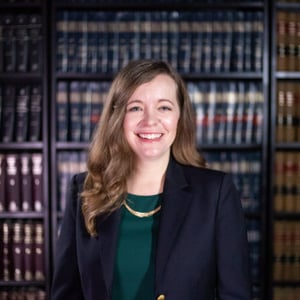
Associate Corporate Counsel and Staff Attorney, National Right to Work Legal Defense and Education Foundation, Inc.
Since January 2020, Amanda Freeman has been the National Right To Work Legal Defense Foundation’s Associate Corporate Counsel, working closely with Corporate Counsel Richard Clair who has been with the Foundation for more than forty-five years.
Amanda has also been, and continues to be, a staff attorney at the Foundation since September 2013. As a staff attorney, Amanda represents both public and private sector employees in disputes in federal and state courts and administrative agencies. She has also handled many settlements with employers and unions resolving disputes before they reached a court or agency.
Amanda was lead attorney in many cases and unfair labor practice charges challenging and seeking implementation of Michigan’s Right to Work law, which was effective March 28, 2013 – February 13, 2024. Clarkston Educ. Ass’n v. Conwell, 319 Mich. App. 422 (2017), appeal denied, 501 Mich. 1027 (2019); Saginaw Educ. Ass’n v. Eady-Miskiewicz, 319 Mich. App. 422 (2017), appeal denied, 501 Mich. 1027 (2018) (lead counsel for Appellees Snyder and Carr).
Prior to joining the Foundation, Amanda clerked for the Honorable Glen A. Huff (August 2011 – August 2013) and for the Honorable Robert J. Humphreys (August 2009 – July 2011) who were both on the Court of Appeals of Virginia.
Before and during law school, Amanda gained experience in the legal field while working as an administrative assistant and then a paralegal at Mauck & Baker, LLC in Chicago, Illinois, and as an intern at Lentz, Stepanovich & Bergethon, PLC in Virginia Beach, VA.

Shareholder, Littler
Bradford J. Kelley has a broad practice representing employers in employment anti-discrimination and wage and hour matters. He focuses on advising clients about emerging technologies, including artificial intelligence (AI), and their impact in the workplace.
Brad is an internationally recognized workplace AI authority. He advises clients on how to maximize the benefits of using AI in the workplace while minimizing potential legal and business risks. His deep background in this area provides employers with the tools and insights they need to develop, deploy, and monetize AI and other emerging technologies to bolster business operations and efficiency.
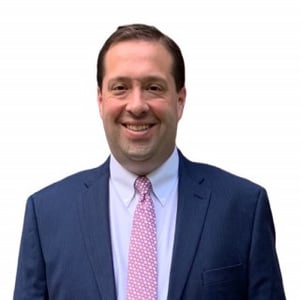
U.S. Equal Employment Opportunity Commission, Chief Counsel and Chief of Staff (OCL)
Mr. Rogers is Chief Counsel and Chief of Staff to a Commissioner at the U.S. EEOC, where he works extensively on regulations, guidance, policies, and proposed litigation and amicus briefs. Previously, he served in the Wage and Hour Division at the U.S. DOL after 12 years in private practice, representing and advising clients on wage and hour, discrimination, labor relations, and workplace violence issues.
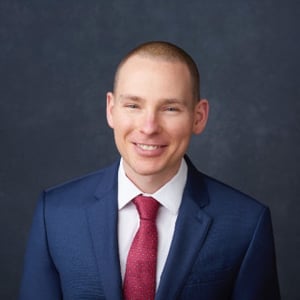
Shareholder & Co-Chair of the Workplace Policy Institute, Littler Mendelson P.C.
Alexander T. MacDonald advises employers on all aspects of the employment and labor landscape, focusing on emerging legislation and regulation. He has extensive experience advising businesses on worker classification, arbitration, the administrative and regulatory process, and the future of work. He frequently writes, publishes, and speaks on these subjects. His work has been cited by scholars and appellate courts. He is a recognized voice for the management perspective.
Alexander is a co-chair of the Workplace Policy Institute (WPI) team. With WPI, he advises employers on legislative, administrative, and regulatory developments at the state and federal level. He advocates for employers in the regulatory and administrative process. He also helps employers protect their businesses by understanding and anticipating cutting-edge legal developments.
Alexander also has extensive experience in traditional labor law. He represents management in all aspects of labor-management relations, including unfair labor practice charges, grievance arbitrations, representation elections, contract negotiations, and related litigation, including litigation in the U.S. courts of appeals.
Before joining Littler, Alexander served as the director, future of work, for a major technology company. He also worked in a national labor and employment law firm and a major public-sector general counsel’s office. He was a law clerk to the senior judges in the District of Columbia Court of Appeals.
He is also a veteran of the U.S. Air Force. He served in Operations Enduring Freedom and Iraqi Freedom. In law school, he graduated first in his class
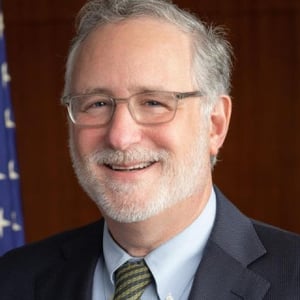
Solicitor, National Labor Relations Board
Fred Jacob is the Solicitor of the National Labor Relations Board. As Solicitor, Mr. Jacob serves as the chief legal adviser and consultant to the entire Board on all questions of law regarding the Board’s general operations and on major questions of law and policy concerning the adjudication of NLRB cases in the Courts of Appeals and the U.S. Supreme Court. The Solicitor also acts as the Board’s legal representative and liaison to the General Counsel and other offices of the Board. From 1997 to 2014, Mr. Jacob worked as an attorney, supervisor, and Deputy Assistant General Counsel in the NLRB’s Appellate and Supreme Court Litigation Branch. Before joining management, he served as Grievance Chair of the NLRB Professional Association, the union representing Washington, DC-based NLRB attorneys.
Prior to his appointment as the NLRB's Solicitor, Mr. Jacob spent four years as Solicitor of the Federal Labor Relations Authority. In that role, he represented the FLRA before all federal courts, advised FLRA components on legal issues arising under the Federal Service Labor-Management Relations Statute, and served as the FLRA’s in-house counsel. Mr. Jacob also clerked on the United States Court of Appeals for the Fourth Circuit and worked in private practice.
Mr. Jacob is also a Professorial Lecturer in Law at The George Washington University Law School and has previously taught labor and employment law courses at Georgetown University Law Center and the College of William and Mary School of Law.
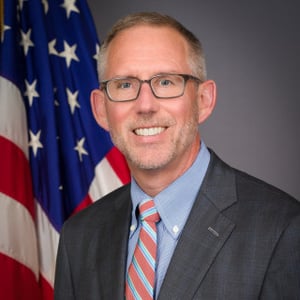
Partner, Morgan, Lewis & Bockius, former Chairman of the National Labor Relations Board
John F. Ring, currently a partner at Morgan, Lewis & Bockius, served as a Board Member of the National Labor Relations Board (NLRB) from 2018 to 2022 and as its Chairman from 2018 to 2021. He has been with Morgan Lewis for almost 30 years, where he served as co-chair of the firm’s Labor / Management Relations practice and Practice Group Leader for the Washington Office Labor and Employment Law Practice. He represented client interests in all aspects of labor law, including collective bargaining, workforce restructuring, employee benefits, labor‐management-related counseling, litigation, and litigation avoidance strategies. Mr. Ring has an extensive background in negotiating and administering collective bargaining agreements most notably in the multi‐employer bargaining context, as well as experience with multi‐employer pension plans. Mr. Ring received his J.D. and B.A. from the Catholic University of America.
Associate Corporate Counsel and Staff Attorney, National Right to Work Legal Defense and Education Foundation, Inc.
Since January 2020, Amanda Freeman has been the National Right To Work Legal Defense Foundation’s Associate Corporate Counsel, working closely with Corporate Counsel Richard Clair who has been with the Foundation for more than forty-five years.
Amanda has also been, and continues to be, a staff attorney at the Foundation since September 2013. As a staff attorney, Amanda represents both public and private sector employees in disputes in federal and state courts and administrative agencies. She has also handled many settlements with employers and unions resolving disputes before they reached a court or agency.
Amanda was lead attorney in many cases and unfair labor practice charges challenging and seeking implementation of Michigan’s Right to Work law, which was effective March 28, 2013 – February 13, 2024. Clarkston Educ. Ass’n v. Conwell, 319 Mich. App. 422 (2017), appeal denied, 501 Mich. 1027 (2019); Saginaw Educ. Ass’n v. Eady-Miskiewicz, 319 Mich. App. 422 (2017), appeal denied, 501 Mich. 1027 (2018) (lead counsel for Appellees Snyder and Carr).
Prior to joining the Foundation, Amanda clerked for the Honorable Glen A. Huff (August 2011 – August 2013) and for the Honorable Robert J. Humphreys (August 2009 – July 2011) who were both on the Court of Appeals of Virginia.
Before and during law school, Amanda gained experience in the legal field while working as an administrative assistant and then a paralegal at Mauck & Baker, LLC in Chicago, Illinois, and as an intern at Lentz, Stepanovich & Bergethon, PLC in Virginia Beach, VA.
Shareholder, Littler
Bradford J. Kelley has a broad practice representing employers in employment anti-discrimination and wage and hour matters. He focuses on advising clients about emerging technologies, including artificial intelligence (AI), and their impact in the workplace.
Brad is an internationally recognized workplace AI authority. He advises clients on how to maximize the benefits of using AI in the workplace while minimizing potential legal and business risks. His deep background in this area provides employers with the tools and insights they need to develop, deploy, and monetize AI and other emerging technologies to bolster business operations and efficiency.
U.S. Equal Employment Opportunity Commission, Chief Counsel and Chief of Staff (OCL)
Mr. Rogers is Chief Counsel and Chief of Staff to a Commissioner at the U.S. EEOC, where he works extensively on regulations, guidance, policies, and proposed litigation and amicus briefs. Previously, he served in the Wage and Hour Division at the U.S. DOL after 12 years in private practice, representing and advising clients on wage and hour, discrimination, labor relations, and workplace violence issues.

Politics in the Workplace: The Legal and Business Challenges
Amanda K. Freeman, Bradford J. Kelley, Andrew Rogers
In the aftermath of the 2024 elections, and as citizens continue to engage in discourse...
Politics in the Workplace: The Legal and Business Challenges
Washington DC, DCTopics
Parting Shots: The FTC’s Outgoing Leadership Expands Antitrust Exemptions for Labor Activity to Independent Contractors
Earlier this week, the Federal Trade Commission issued new enforcement guidance on “protected labor activity”...
Topics
May the EEOC Embed Interrogatories in Subpoenas?
A routine subpoena from the Equal Employment Opportunity Commission to an employer might include items...
Topics
The Public Service Freedom to Negotiate Act: How the Presidential Election Could Affect State Labor Relations
This November, when voters cast their ballots for president, few of them will be thinking...
Predistribution, Labor Standards, and Ideological Drift: Why Some Conservatives Are Embracing Labor Unions (and Why They Shouldn't)
Alexander T. MacDonald
Common ground isn’t always a good thing. For example, consider the growing popularity of “predistribution.”...
Topics
Georgia Fruit and Vegetable Growers Association v. DOL: Post-Loper Bright Pushback on Agency Overreach
The long period of labor peace to which Americans are so accustomed is the product...
Topics
Competition Non Sequitur: The NLRB’s Foray Into Antitrust Law
The word ultracrepidarian comes from an old Roman story about a shoemaker. Though good at...
Topics
The Accidental Success of the NLRA: How a Law about Unions Achieved Its Goals by Giving Us Fewer Unions
In today’s politics, agreement is a rare beast. So it’s notable when it shows up. And...
A Discussion of Labor Law: Is the Taft-Hartley Act Being Interpreted as Written?
Fred B. Jacob, John F. Ring
The 1947 Taft-Hartley amendments to the National Labor Relations Act, doggedly opposed by organized labor,...