
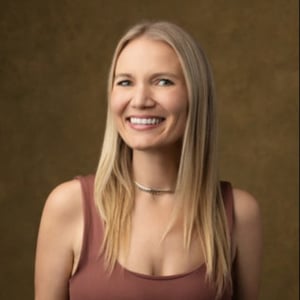
Constitutional Scholarship Director and Senior Legal Analyst, Pacific Legal Foundation
Anastasia Boden is Director of Constitutional Scholarship at Pacific Legal Foundation, where she leads the organization’s Supreme Court commentary and directs scholarly analysis in support of the firm’s litigation. She has represented entrepreneurs and small businesses nationwide in challenges to onerous licensing regimes, anti-competitive titling restrictions, Certificate of Need (“competitor’s veto”) laws, and other forms of unnecessary red tape that block economic opportunity.
Prior to this role, Anastasia developed nearly a dozen constitutional challenges to Certificate of Need laws across the country, helping spur legislative reform in Montana, Pennsylvania, and West Virginia. Her victories include a ruling invalidating Houston’s busking restrictions, multiple appellate decisions expanding access to the courts for civil rights plaintiffs, and the legislative repeal of Virginia’s happy-hour advertising ban.
Her writings on law and liberty have been featured in USA Today, The Washington Post, The Wall Street Journal, the Los Angeles Times, the Chicago Tribune, Forbes, and more, and she has appeared on Headline News, CBS News, Fox News, ReasonTV, Newsmax, and John Stossel. In 2020, she was featured on Libertarian Party presidential candidate Jo Jorgensen’s Supreme Court shortlist.
Anastasia earned her BA with dean’s honors from the University of California, Santa Barbara, and her JD from Georgetown University Law Center, where she was research assistant to Professor Randy E. Barnett—the “intellectual godfather” of the constitutional challenge to Obamacare. She is the co-creator of the podcast Dissed, about infamous Supreme Court dissents. She authors the biweekly newsletter SCOTUS Scoop and the column, “In Dissent” for SCOTUSblog.
Retired
Tom Gede retired in 2023 as a principal in Morgan Lewis Consulting LLC and of counsel to the firm. He currently consults on a variety of legal and policy matters for both public and private clients. Tom has a national reputation and distinguished background in federal Indian law. Prior to retirement, he represented clients in complex governmental matters in litigation, administrative and regulatory proceedings, including high-profile matters involving state governments. A former senior deputy in the California Attorney General’s office, Tom was amicus coordinator and Supreme Court counsel, and argued cases in the US Supreme Court, the California Supreme Court, and numerous state and federal appellate courts.
Tom also served as executive director of the Conference of Western Attorneys General (CWAG), coordinating activities on key legal and policy issues, such as federal Indian law, energy, environmental, public lands, financial services, and telecommunications, for the attorneys general of 18 western states and territories. In 2016, Tom was elected as a Member of the American Law Institute (ALI), and served as an Adviser on the Restatement of the Law Third - The Law of American Indians. Tom also taught federal Indian law as an adjunct law professor at the University of the Pacific - McGeorge School of Law. He served as an assistant editor for and the author of the Indian gaming chapter in CWAG’s American Indian Law Deskbook (2d & 3d eds.). He has been engaged in Indian gaming and Indian law matters for more than three decades, having focused on the gaming compacts with Indian tribes, as well as complex civil and criminal jurisdiction, land, natural resources, water and law enforcement issues in Indian country. He has testified before Congress on American Indian and Native Alaskan issues. In 2012 he was appointed by Speaker John Boehner to serve on the United States Indian Law and Order Commission, where he examined criminal justice issues in Indian country and Alaska, resulting in the issuance of an important report to the President and Congress.
Principal, Sharon Fast Gustafson, Attorney at Law, PLC
SHARON FAST GUSTAFSON is the immediate past General Counsel of the U.S. Equal Employment Opportunity Commission (EEOC), where she enforced Title VII of the Civil Rights Act of 1964, the Americans with Disabilities Act, and the Age Discrimination in Employment Act.
Ms. Gustafson graduated with honors from Georgetown Law Center in 1991 and has concentrated her practice in employment law. She worked for four years in the labor and employment law group at Jones, Day in Washington, D.C. Since that time, she has had a broad-based solo practice advising and representing employers and employees in handling all aspects of the employment relationship, in compliance with federal and state workplace laws, and in designing and implementing sound employment policies and practices.
Ms. Gustafson is an experienced litigator in federal and state courts; before administrative agencies, including the EEOC, state and local civil rights offices, and the Department of Labor (DOL) Wage and Hour Division; and in mediation and arbitration. She is admitted to practice in state and federal courts in Virginia, Maryland, and the District of Columbia, and in the United States Supreme Court.
Ms. Gustafson successfully litigated a pregnancy discrimination case, Young v. UPS, 575 U.S. 206 (2015), from EEOC intake to a successful outcome at the U.S. Supreme Court. In 2016, she received the Metropolitan Washington Employment Lawyers Association’s “Lawyer of the Year” award “in recognition of outstanding dedication to Civil Rights, Equality, and Justice.”
Ms. Gustafson represents both employers and employees in matters relating to employment law.
Senior Staff Attorney, Speech, Privacy & Technology Project, ACLU
Brian Hauss is a senior staff attorney with the ACLU’s Speech, Privacy & Technology Project, where he focuses on free expression issues. Since joining the ACLU in 2012, he has litigated cases defending the First Amendment rights of writers, journalists, media organizations, activists, advocacy groups, labor unions and private citizens. He has authored or co-authored numerous Supreme Court amicus curiae briefs on behalf of the ACLU and other groups. He also regularly discusses First Amendment issues in the media and at law schools throughout the country. Brian was a 2021-22 Wasserstein Public Interest Fellow at Harvard Law School. He is a graduate of Yale University and Harvard Law School and served as a law clerk to the Hon. Marsha S. Berzon of the U.S. Court of Appeals for the Ninth Circuit.

Professor of Law, Antonin Scalia Law School, George Mason University
ILYA SOMIN is Professor of Law at George Mason University and the B. Kenneth Simon Chair in Constitutional Studies at the Cato Institute. His research focuses on constitutional law, property law, democratic theory, federalism, and migration rights. He is the author of Free to Move: Foot Voting, Migration, and Political Freedom (Oxford University Press, revised and expanded edition, 2022), Democracy and Political Ignorance: Why Smaller Government is Smarter (Stanford University Press, revised and expanded second edition, 2016), and The Grasping Hand: Kelo v. City of New London and the Limits of Eminent Domain (University of Chicago Press, 2015, rev. paperback ed., 2016), coauthor of A Conspiracy Against Obamacare: The Volokh Conspiracy and the Health Care Case (Palgrave Macmillan, 2013), and co-editor of Eminent Domain: A Comparative Perspective (Cambridge University Press, 2017). Democracy and Political Ignorance has been translated into Italian and Japanese.
Somin’s work has appeared in numerous scholarly journals, including the Yale Law Journal, Stanford Law Review, Northwestern University Law Review, Georgetown Law Journal, Critical Review, and others. Somin has also published articles in a variety of popular press outlets, including the New York Times, Washington Post, Wall Street Journal, Los Angeles Times, CNN, NBC, The Atlantic, USA Today, Boston Globe, US News and World Report, South China Morning Post, National Law Journal and Reason. He has been quoted or interviewed by the New York Times, Washington Post, Wall Street Journal, Time, Newsweek, The Economist, the Christian Science Monitor, the Financial Times, The Guardian, the Associated Press, CBS, MSNBC, NPR, BBC, Reuters, the Canadian Broadcasting Corporation, the Australian Broadcasting Corporation, Radio Free Europe/Radio Liberty, Al Jazeera, and the Voice of America, among other media.
Somin’s writings have been cited in decisions by the United States Supreme Court, multiple state supreme courts and lower federal courts, and the Supreme Court of Israel. He is co-counsel for the plaintiffs in VOS Selections, Inc. v. Trump, a case challenging the constitutionality of President Trump’s “Liberation Day” tariffs. Somin has testified on the use of drones for targeted killing in the War on Terror before the US Senate Judiciary Subcommittee on the Constitution, Civil Rights, and Human Rights. In 2009, he testified on property rights issues at the United States Senate Judiciary Committee confirmation hearings for Supreme Court Justice Sonia Sotomayor. Somin writes regularly for the popular Volokh Conspiracy law and politics blog, now affiliated with Reason magazine (previously affiliated with the Washington Post from 2014 to 2017). From 2006 to 2013, he served as Co-Editor of the Supreme Court Economic Review, one of the country’s top-rated law and economics journals.
Somin has served as a visiting professor at the University of Pennsylvania Law School. He has also been a visiting professor or scholar at the Georgetown University Law Center, the University of Hamburg, Germany, the University of Torcuato Di Tella in Buenos Aires, Argentina, Uriel Reichman University in Israel, and Zhengzhou University in China. He is a University Affiliate of the Schar School of Policy and Government at George Mason University, and an affiliated faculty member of the George Mason University Institute for Immigration Research. Before joining the faculty at George Mason, Somin was the John M. Olin Fellow in Law at Northwestern University Law School in 2002-2003. In 2001-2002, he clerked for the Hon. Judge Jerry E. Smith of the U.S. Court of Appeals for the Fifth Circuit. Professor Somin earned his B.A., Summa Cum Laude, at Amherst College, M.A. in Political Science from Harvard University, and J.D. from Yale Law School.

Senior Vice President for Legal Studies, Cato Institute
Clark Neily is senior vice president for legal studies at the Cato Institute. His areas of interest include constitutional law, overcriminalization, civil forfeiture, police accountability, and gun rights. Neily is the author of Terms of Engagement: How Our Courts Should Enforce the Constitution’s Promise of Limited Government. His writing has appeared in the Wall Street Journal, Forbes, and National Review Online, as well as various law reviews, including the Harvard Journal of Law and Public Policy, George Mason Law Review, Georgetown Journal of Law and Public Policy, NYU Journal of Law and Liberty, and Texas Review of Law and Politics. Neily is a frequent guest speaker and lecturer for the Federalist Society, Institute for Humane Studies, and American Constitution Society.
Before joining Cato in 2017, Neily was a senior attorney and constitutional litigator at the Institute for Justice and director of the Institute’s Center for Judicial Engagement. He is also an adjunct professor at the University of Texas School of Law, where he teaches constitutional litigation and public-interest law.
Neily served as co-counsel in District of Columbia v. Heller, the historic case in which the Supreme Court held for the first time that the Second Amendment protects an individual right to own a gun for self-defense.
Neily began his legal career as a law clerk to Judge Royce Lamberth on the U.S. District Court for the District of Columbia. After that he spent four years in the trial department of the Dallas-based firm Thompson & Knight. Neily received his undergraduate and law degrees from the University of Texas, where he was Chief Articles Editor of the Texas Law Review.
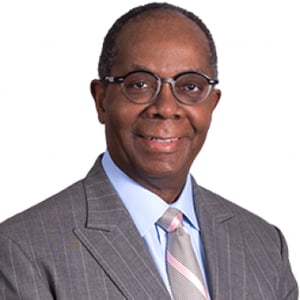
Managing Partner, Crabbe Brown & James LLP
Larry James has been at the heart of the Columbus business, legal, civic, and political scene for the last thirty years. He is a respected litigator, as well as an advisor to local and national leaders. In recognition of his many achievements, the law firm changed its name from Crabbe, Brown, Jones, Potts & Schmidt to Crabbe, Brown & James in January 2001.
In 2011, The Ohio State University selected Mr. James as lead counsel to represent its student athletes in NCAA investigations. In 2013, Armen Keteyian published his book The System: The Glory and Scandal of Big-Time College Football, a chapter of which is dedicated to Larry’s work in representing the OSU football players.
In 2012, Mr. James and his wife, Donna, were awarded the American Red Cross of Greater Columbus’ Humanitarians of the Year Award. In 2015, noted journalist Wil Haygood published his award-winning book Showdown: Thurgood Marshall and the Supreme Court Nomination That Changed America, which he dedicated to Mr. James.
Mr. James is a life member of the Sixth Circuit Judicial Conference, and he has served as General Counsel of the National Fraternal Order of Police since 2001.
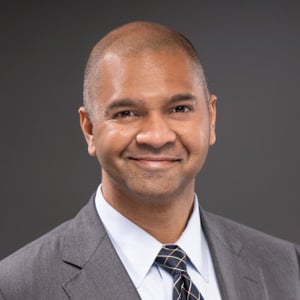
Senior Fellow, Stand Together Trust
Vikrant Reddy is a senior fellow at Stand Together Trust, specializing in the area of criminal justice reform. Reddy previously served as a senior policy analyst at the Texas Public Policy Foundation (TPPF), where he managed the launch of TPPF’s national Right on Crime initiative in 2010. He has worked as a research assistant at the Cato Institute, as a judicial clerk to the Hon. Gina M. Benavides in Texas, and as an attorney in private practice. He is a member of the State Bar of Texas, and he serves on the Executive Committee of the Criminal Law Practice Group of the Federalist Society. He is also an appointee to the U.S. Commission on Civil Rights Texas State Advisory Committee.
Reddy’s research and scholarly opinions have appeared in a range of national media outlets, including USA Today, National Review, The Federalist, and others.
Reddy earned his law degree from the Southern Methodist University School of Law. He received his undergraduate degree from the University of Texas at Austin.
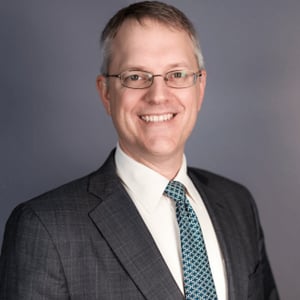
President and General Counsel, New Civil Liberties Alliance
NCLA’s President and General Counsel, Mark Chenoweth, has observed the administrative state up close and personal from perches in all four branches of the federal government. Mark served as the first chief of staff to Congressman Mike Pompeo, as legal counsel to Commissioner Anne Northup at the U.S. Consumer Product Safety Commission, as an attorney advisor in the Office of Legal Policy at the U.S. Department of Justice, and as a law clerk to the Hon. Danny J. Boggs on the U.S. Court of Appeals for the Sixth Circuit.
Mark has worked in several different roles in the private sector as well. He began his legal career in D.C. as a regulatory associate at Wilmer, Cutler & Pickering. He then returned to his home state of Kansas to serve as in-house counsel for Koch Industries. Most recently he spent over four years as general counsel of the Washington Legal Foundation.
Mark is a graduate of Yale College and the University of Chicago Law School, where he co-founded the Institute for Justice Clinic on Entrepreneurship and became a Tony Patiño Fellow. Mark has been widely quoted and/or published in newspapers and websites including the New York Times, San Francisco Chronicle, New Hampshire Union Leader, and Metropolitan Corporate Counsel. He has also had recurring op-eds in the Los Angeles Daily Journal, and at Forbes.com.
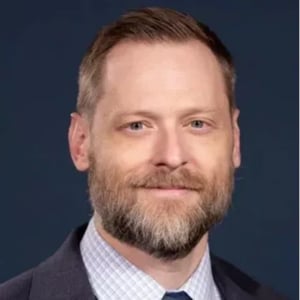
Litigation Director, Center for Individual Rights
Caleb Kruckenberg is CIR’s Litigation Director.
Caleb previously worked as a prosecutor, a public defender, a lobbyist for a national advocacy organization and, most recently, an impact litigator protecting the separation of powers at both the Pacific Legal Foundation and the New Civil Liberties Alliance. He has won major victories against numerous federal agencies, including the U.S. Department of Justice, Department of Labor, Bureau of Alcohol Tobacco and Firearms, and the Securities and Exchange Commission. He is also proud to have sued every U.S. attorney general, eight so far, since he has been litigating against the government on behalf of liberty-minded clients. Caleb has also argued more than 20 times in the U.S. Courts of Appeals, winning cases in 8 of the 12 regional circuit courts.
He graduated cum laude from Temple University Beasley School of Law in Philadelphia, where he was the lead articles editor for the Temple Law Review. Caleb also attended the Pennsylvania Academy of the Fine Arts, where he studied figurative painting.
Managing Partner, Crabbe Brown & James LLP
Larry James has been at the heart of the Columbus business, legal, civic, and political scene for the last thirty years. He is a respected litigator, as well as an advisor to local and national leaders. In recognition of his many achievements, the law firm changed its name from Crabbe, Brown, Jones, Potts & Schmidt to Crabbe, Brown & James in January 2001.
In 2011, The Ohio State University selected Mr. James as lead counsel to represent its student athletes in NCAA investigations. In 2013, Armen Keteyian published his book The System: The Glory and Scandal of Big-Time College Football, a chapter of which is dedicated to Larry’s work in representing the OSU football players.
In 2012, Mr. James and his wife, Donna, were awarded the American Red Cross of Greater Columbus’ Humanitarians of the Year Award. In 2015, noted journalist Wil Haygood published his award-winning book Showdown: Thurgood Marshall and the Supreme Court Nomination That Changed America, which he dedicated to Mr. James.
Mr. James is a life member of the Sixth Circuit Judicial Conference, and he has served as General Counsel of the National Fraternal Order of Police since 2001.
Senior Vice President for Legal Studies, Cato Institute
Clark Neily is senior vice president for legal studies at the Cato Institute. His areas of interest include constitutional law, overcriminalization, civil forfeiture, police accountability, and gun rights. Neily is the author of Terms of Engagement: How Our Courts Should Enforce the Constitution’s Promise of Limited Government. His writing has appeared in the Wall Street Journal, Forbes, and National Review Online, as well as various law reviews, including the Harvard Journal of Law and Public Policy, George Mason Law Review, Georgetown Journal of Law and Public Policy, NYU Journal of Law and Liberty, and Texas Review of Law and Politics. Neily is a frequent guest speaker and lecturer for the Federalist Society, Institute for Humane Studies, and American Constitution Society.
Before joining Cato in 2017, Neily was a senior attorney and constitutional litigator at the Institute for Justice and director of the Institute’s Center for Judicial Engagement. He is also an adjunct professor at the University of Texas School of Law, where he teaches constitutional litigation and public-interest law.
Neily served as co-counsel in District of Columbia v. Heller, the historic case in which the Supreme Court held for the first time that the Second Amendment protects an individual right to own a gun for self-defense.
Neily began his legal career as a law clerk to Judge Royce Lamberth on the U.S. District Court for the District of Columbia. After that he spent four years in the trial department of the Dallas-based firm Thompson & Knight. Neily received his undergraduate and law degrees from the University of Texas, where he was Chief Articles Editor of the Texas Law Review.
Senior Fellow, Stand Together Trust
Vikrant Reddy is a senior fellow at Stand Together Trust, specializing in the area of criminal justice reform. Reddy previously served as a senior policy analyst at the Texas Public Policy Foundation (TPPF), where he managed the launch of TPPF’s national Right on Crime initiative in 2010. He has worked as a research assistant at the Cato Institute, as a judicial clerk to the Hon. Gina M. Benavides in Texas, and as an attorney in private practice. He is a member of the State Bar of Texas, and he serves on the Executive Committee of the Criminal Law Practice Group of the Federalist Society. He is also an appointee to the U.S. Commission on Civil Rights Texas State Advisory Committee.
Reddy’s research and scholarly opinions have appeared in a range of national media outlets, including USA Today, National Review, The Federalist, and others.
Reddy earned his law degree from the Southern Methodist University School of Law. He received his undergraduate degree from the University of Texas at Austin.
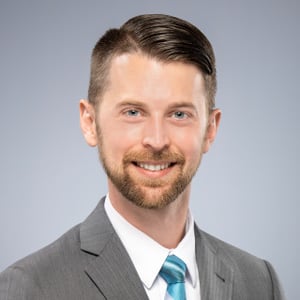
Vice President, Americans for Prosperity

Director, Project on Criminal Justice, Cato Institute
Matthew Cavedon is the Director of the Cato Institute’s Project on Criminal Justice. He focuses on reforming plea-driven mass adjudication, ensuring police accountability, and defending constitutional criminal originalism. Cavedon’s scholarship has been published (or is forthcoming in) publications including the Arizona State Law Journal, Cato Supreme Court Review, Seattle University Law Review, and Georgetown Journal of Law and Public Policy. Formerly a Georgia public defender and fellow at the Institute for Justice, Cavedon has taught law school courses on criminal law and procedure, as well as the First Amendment. Cavedon clerked for a U.S. district court and the Supreme Court of Georgia. He came to Cato following a fellowship at the Emory University Center for the Study of Law and Religion.
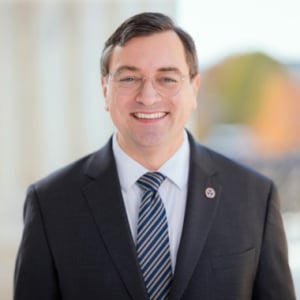
Attorney General of Tennessee
Jonathan Skrmetti was sworn in to an eight-year term as Tennessee’s Attorney General and Reporter on September 1, 2022.
Prior to his current role, General Skrmetti served as Chief Counsel to Governor Bill Lee and as Chief Deputy Attorney General to his predecessor, Tennessee Attorney General Herbert Slatery.
Before working for the State of Tennessee, General Skrmetti was a partner at Butler Snow LLP in Memphis. His legal career began with nearly a decade as a federal prosecutor. He worked at the Civil Rights Division at Main Justice and then at the Memphis U.S. Attorney’s Office and prosecuted sex traffickers, corrupt government officials, and violent white supremacists. In addition, General Skrmetti taught cyberlaw as an adjunct professor at the University of Memphis.
General Skrmetti earned honors degrees from George Washington University, the University of Oxford, and Harvard Law School, where he was editor-in-chief of the Harvard Journal of Law & Public Policy. Following law school, Jonathan clerked for Judge Steven Colloton on the U.S. Court of Appeals for the Eighth Circuit. He lives in Franklin, Tennessee, with his wife and four children.

Vice President, Edwin Meese III Institute for the Rule of Law, Advancing American Freedom
John G. Malcolm oversees Advancing American Freedom’s work to increase understanding of the Constitution and the rule of law as Vice President of the organization’s Edwin Meese III Institute for the Rule of Law. Malcolm brings to the challenge a wealth of legal expertise and experience in both the public and private sectors.
Prior to joining Advancing American Freedom in 2025, Malcolm was the Vice President of the Institute for Constitutional Government and the Director of the Meese Center for Legal and Judicial Studies at the Heritage Foundation. Prior to joining Heritage in 2012, Malcolm was general counsel at the U.S. Commission on International Religious Freedom, as well as a distinguished practitioner in residence at Pepperdine Law School. From 2004 to 2009, Malcolm was executive vice president and director of worldwide anti-piracy operations for the Motion Picture Association.
Malcolm served as a deputy assistant attorney general in the Department of Justice’s Criminal Division from 2001 to 2004, where he oversaw sections on computer crime and intellectual property, domestic security, child exploitation and obscenity, and special investigations. Immediately prior to that, he was a founding partner in the Atlanta law firm of Malcolm & Schroeder, LLP.
From 1990 to 1997, Malcolm was an assistant U.S. attorney in Atlanta, assigned to the fraud and public corruption section, and also an associate independent counsel, investigating fraud and abuse in the Department of Housing and Urban Development. He was honored with the Director’s Award for Superior Performance for his work in connection with the successful prosecution of Walter Leroy Moody Jr., who assassinated an 11th Circuit judge and the head of the Savannah chapter of the NAACP.
A graduate of Harvard Law School and Columbia College, Malcolm began his career as a law clerk to a federal district court judge and a federal appellate court judge, and as an associate at the Atlanta-based law firm of Sutherland, Asbill & Brennan (new Eversheds Sutherland).
Malcolm, who resides in Washington, D.C., serves on the Board of Trustees of the Washington National Opera and is a Senate-confirmed member of the Board of Directors of the Legal Services Corporation, the largest funder of civil legal aid in the United States.

Senior Fellow, Administrative Conference of the United States
Paul D. Kamenar is a Washington, D.C. public policy and appellate attorney who counsels clients on legal, regulatory, and public policy matters. He is also a Senior Fellow of the Administrative Conference of the United States and guest lectures at the U.S. Naval Academy on National Security Law. He has been a speaker at several conferences across the country on overcriminalization and regulatory enforcement, including those sponsored by the American Bar Association, George Mason University Law School, S.J. Quinney College of Law-University of Utah, American University Washington College of Law, Northwestern University School of Law, and the Cleveland Chapter of the Federalist Society. He also has briefed Members of Congress and their staff on overcriminalization issues along with representatives from the National Association of Criminal Defense Lawyers and the Heritage Foundation. He and his clients have also testified before congressional committees on these issues. He was Senior Executive Counsel of the Washington Legal Foundation, Clinical Professor of Law at George Mason University Law School from 1999-2005, and adjunct professor at Georgetown University Law Center teaching a separation of powers/appellate advocacy seminar. He is a graduate of Georgetown Law and received his undergraduate degree from Rutgers College.
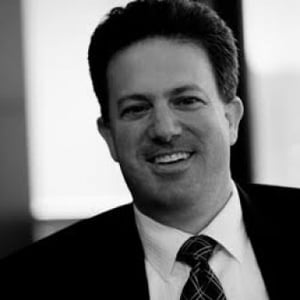
Partner, MoloLamken
Jeff Lamken, founder of MoloLamken, is a nationally recognized appellate practitioner, has argued 22 cases before the U.S. Supreme Court and briefed dozens more on a wide range of topics, including administrative law, the First Amendment, antitrust, bankruptcy, civil rights, criminal procedure, energy law, intellectual property, search and seizure law, separation of powers, and telecommunications law. He has also handled matters in virtually all the federal courts of appeals and many state appellate courts. Mr. Lamken also develops, briefs, and argues critical motions in significant trial matters.
Before founding MoloLamken, Mr. Lamken headed Baker Botts' Supreme Court and Appellate Practice in Washington, D.C. Mr. Lamken has served as an Assistant to the Solicitor General in the United States Department of Justice, and was a partner in the Washington D.C. litigation boutique Kellogg Huber & Hansen.
Of Counsel, Buchanan Ingersoll & Rooney PC
Senior Fellow, Administrative Conference of the United States
Paul D. Kamenar is a Washington, D.C. public policy and appellate attorney who counsels clients on legal, regulatory, and public policy matters. He is also a Senior Fellow of the Administrative Conference of the United States and guest lectures at the U.S. Naval Academy on National Security Law. He has been a speaker at several conferences across the country on overcriminalization and regulatory enforcement, including those sponsored by the American Bar Association, George Mason University Law School, S.J. Quinney College of Law-University of Utah, American University Washington College of Law, Northwestern University School of Law, and the Cleveland Chapter of the Federalist Society. He also has briefed Members of Congress and their staff on overcriminalization issues along with representatives from the National Association of Criminal Defense Lawyers and the Heritage Foundation. He and his clients have also testified before congressional committees on these issues. He was Senior Executive Counsel of the Washington Legal Foundation, Clinical Professor of Law at George Mason University Law School from 1999-2005, and adjunct professor at Georgetown University Law Center teaching a separation of powers/appellate advocacy seminar. He is a graduate of Georgetown Law and received his undergraduate degree from Rutgers College.

President, Leadership Conference on Civil and Human Rights
Vanita Gupta is the President of The Leadership Conference on Civil and Human Rights. She previously served as the acting Principal Deputy Assistant Attorney General for the Civil Rights Division and the top civil rights prosecutor for the United States Department of Justice. Before her work at the DOJ she was a civil rights lawyer and the Deputy Legal Director of the American Civil Liberties Union (ACLU), where she oversaw the ACLU's national criminal justice reform efforts. She is a graduate of Yale and New York University Law School.

A Seat at the Sitting - April 2023
Anastasia P. Boden, Thomas F. Gede, Sharon Fast Gustafson, Brian Hauss, Ilya Somin
Each month, a panel of constitutional experts convenes to discuss the Court’s upcoming docket sitting...
Lange v. California - Post-Decision SCOTUScast
Clark Neily, Larry H. James, Vikrant P. Reddy
On June 23rd, 2021 the Supreme Court decided Lange v. California, a case which concerned...
Litigation Update: Brown v. Becerra
Mark Chenoweth, Caleb Kruckenberg
The U.S. Centers for Disease Control and Prevention (CDC) issued a moratorium on evictions nationwide...
Courthouse Steps Oral Argument Teleforum: Lange v. California
Larry H. James, Clark Neily, Vikrant P. Reddy
In Lange v. California, defendant Arthur Lange challenges the application of the exigent circumstances exception...
State Court Docket Watch: In Re Individuals in Custody of the State of Hawai’i
Jeremiah Grant Mosteller
As COVID-19 spread across our country, many jurisdictions struggled with how to protect those in...
Party Like It’s 1935?: Gundy v. United States and the Future of the Non-Delegation Doctrine
Matthew P. Cavedon, Jonathan Skrmetti
Note from the Editor: This article discusses Gundy v. United States, a case involving the...
The Problem with the Proliferation of Collateral Consequences
John G. Malcolm
Note from the Editor: This article discusses collateral consequences of criminal convictions and argues that...
Criminal Regulatory Statutes: Is “Deliberate Indifference” Sufficient Mens Rea For A “Knowing" Violation? Case Update: Todd Farha v. United States - Podcast
John G. Malcolm, Paul D. Kamenar, Jeff Lamken
Todd Farha v. United States, currently pending on a petition for writ of certiorari to the...
Abusive Civil and Criminal Enforcement: The Farmer and the CEO - Podcast
Robert A. Johnson, Paul D. Kamenar
Are federal prosecutors abusing their enforcement powers in the civil and criminal context? The news...
Vanita Gupta, Department of Justice’s Top Civil Rights Prosecutor, on Criminal Justice Reform and Policing - Podcast
Vanita Gupta
Vanita Gupta, Principal Deputy Assistant Attorney General of the Department of Justice’s Civil Rights Division, delivered...